A Calming Guide to the Best Skincare Routine for Sensitive Skin
The best skincare routine for sensitive skin is all about three things: calming inflammation, repairing the skin barrier, and providing gentle hydration. It’s not about a 10-step process with a dozen different products. Instead, it’s a “less is more” philosophy that leans on soothing, high-quality ingredients.
Why Your Sensitive Skin Needs a Specialized Routine

If you're constantly fighting redness, that tight, uncomfortable feeling, and flare-ups that seem to come out of nowhere, you know that sensitive skin is more than just a passing issue. It’s a sign that your skin's natural defense system is compromised, causing it to overreact to triggers that most people wouldn’t even notice.
This means your skin is basically in a constant state of high alert. Everyday things like environmental pollution, stress, or even a hidden fragrance in your laundry detergent can be enough to push it over the edge.
Understanding Your Skin's Protective Barrier
Think of your skin barrier like a brick wall. The skin cells are the "bricks," and natural fats like ceramides are the "mortar" holding everything together. For those with sensitive skin, that mortar is often weak or has gaps, which allows two things to happen: irritants get in, and precious moisture gets out.
This is why a great sensitive skin routine isn't about piling on more products. It’s about being strategic and gentle, with a laser focus on barrier repair. When that barrier is healthy and strong, your skin can finally protect itself, leading to a calmer and more resilient complexion. A targeted product like the Barb N.P. Soothing Gel is formulated specifically to reinforce this barrier, delivering instant calm to irritated skin.
The goal isn't just to put out fires when they happen—it's to build a foundation of skin health that makes your skin less reactive over time. By choosing the right ingredients and avoiding common triggers, you empower your skin to do its job properly.
The Rise of Gentle, Effective Skincare
You’re definitely not alone in this. The demand for gentle but effective skincare has exploded, showing a massive global shift in how we think about our skin. The market for sensitive skincare products hit USD 44.60 billion in 2023 and is expected to climb to nearly USD 80.97 billion by 2030.
This growth is fueled by a huge number of people—a reported 71% worldwide—who now say they have sensitive skin. That’s a massive jump from just a couple of decades ago. This trend makes one thing clear: people are tired of harsh products and are actively looking for smarter, kinder solutions for their skin. For a closer look at what works, this guide on the best skincare for sensitive skin is full of great insights.
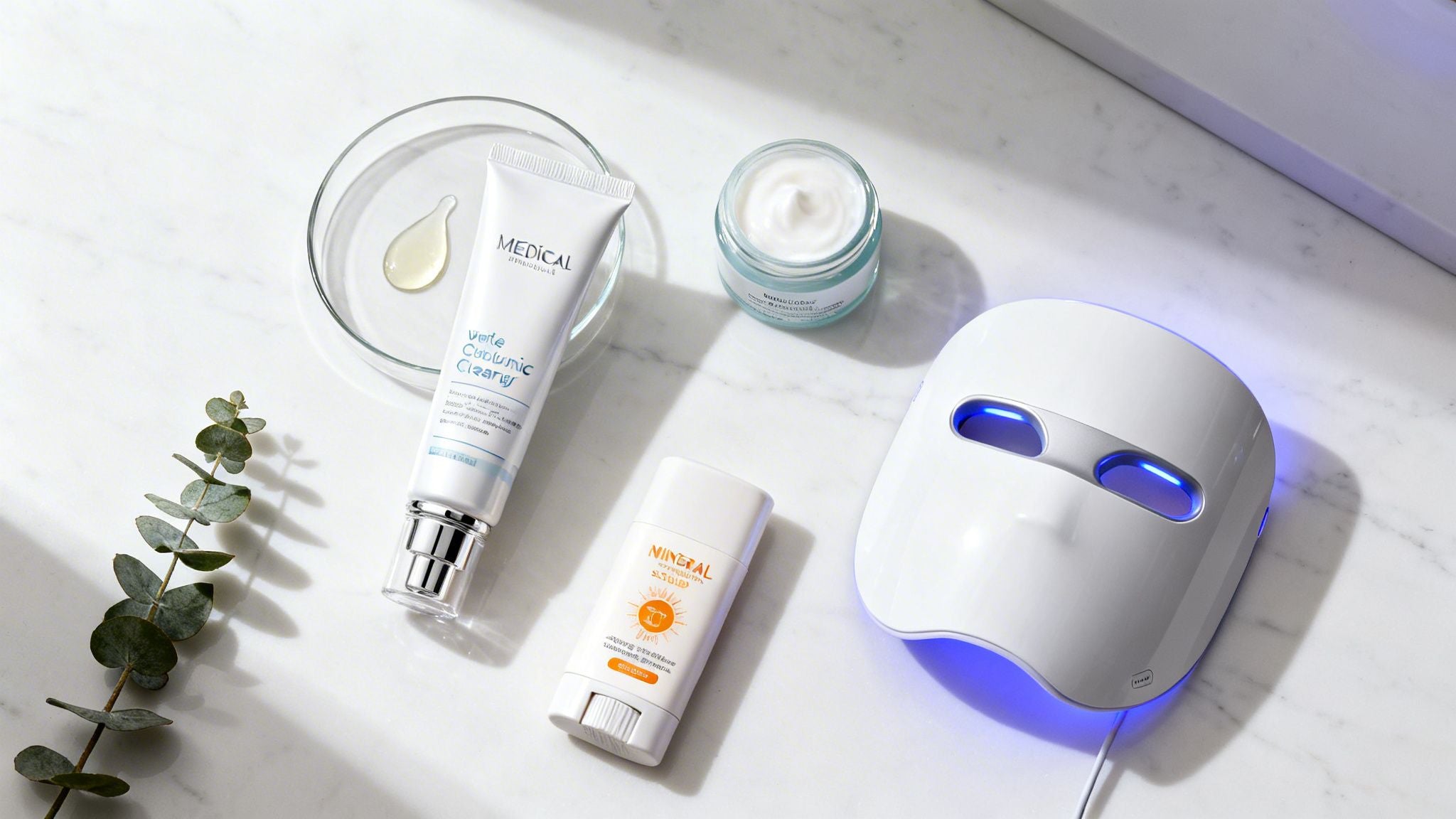
At BotoxBarb, we believe in using targeted, medical-grade ingredients to bring lasting calm to the skin. Instead of a cluttered countertop, we focus on a few high-performance essentials that actually deliver results. A perfect example is the Barb N.P. Facial Mask. It's a wireless, comfortable mask with three different light settings designed to tackle everything from calming redness to promoting healing, making it a powerful—yet incredibly gentle—tool in your skincare arsenal.
Building Your Gentle Morning Skincare Routine
Your morning routine is all about one thing: protection. Forget deep cleaning or aggressive treatments. For sensitive skin, the goal is to gently prep and shield your face from the daily onslaught of environmental stressors like pollution and UV rays. The best approach is always a minimal, calming one.
Believe it or not, many people with sensitive skin don't even need a full cleanse in the morning. Your skin isn't "dirty" after sleeping. In fact, stripping it with a cleanser can remove the beneficial oils your body worked hard to produce overnight—oils that are crucial for protecting your skin barrier.
To Cleanse or Not to Cleanse
Often, a simple splash of lukewarm water is all you need. Hot water is a fast track to irritation and moisture loss, while icy cold water can be a shock to the system. Lukewarm is that perfect, gentle middle ground that wakes up your skin without causing any drama.
If your skin feels a bit oily or you just prefer that clean-slate feeling, reach for a non-foaming, cream-based cleanser. These formulas are designed to clean without disrupting the skin's delicate acid mantle, leaving you feeling soft and comfortable—never tight or dry. A great option is the Barb N.P. Soothing Cleanser, which effectively cleanses while maintaining the skin’s essential moisture.
Remember to pat your skin dry with a soft towel, never rub. Friction is a sneaky, often overlooked trigger for redness and irritation. Every single movement should be gentle and deliberate.
Hydration and Targeted Support
With your skin clean and still slightly damp, it’s perfectly primed to drink up hydrating and supportive ingredients. This is your moment to layer in products that will calm, plump, and strengthen its defenses for the day ahead.
Start with a hydrating toner or essence. You'll want an alcohol-free formula packed with soothing ingredients like glycerin, centella asiatica (cica), or chamomile. Misting it on or gently patting it in with your fingertips is the kindest way to apply it.
Next up is your targeted serum. This is where you bring in the medical-grade heavy hitters that can address specific concerns without causing irritation. Two absolute superstars for sensitive skin are:
- Hyaluronic Acid: This humectant is like a magnet for moisture, drawing water into the skin for a plumping effect that can soften fine lines and create a smooth, hydrated canvas.
- Niacinamide: A true workhorse, niacinamide (a form of vitamin B3) helps calm inflammation, reduce redness, strengthen the skin barrier, and even keep oil in check.
When it comes to serums, less is more. A pea-sized amount is plenty. Gently press it into your skin to minimize friction and boost absorption.
Lock It In With a Moisturizer
A great moisturizer for sensitive skin does more than just hydrate. It acts as a sealant, locking in the serum you just applied and reinforcing your skin's protective barrier. Look for formulas with ingredients like ceramides, squalane, or peptides.
These ingredients are brilliant because they mimic the natural fats in your own skin, helping to fill in any "gaps" in your barrier. A strong, healthy barrier is your best defense against irritants and moisture loss throughout the day.
The Non-Negotiable Final Step: Sunscreen
If you do only one thing for your sensitive skin in the morning, let it be this: apply sunscreen. Sun exposure is one of the biggest culprits behind inflammation, and it can seriously weaken an already compromised skin barrier. For sensitive complexions, mineral-based sunscreens are the gold standard.
Also known as physical sunscreens, mineral formulas use active ingredients like zinc oxide and titanium dioxide. Instead of being absorbed into the skin like chemical sunscreens, they sit on top and create a physical shield that deflects UV rays. This drastically cuts down the risk of irritation. For a closer look, you can learn more about choosing the best sunscreen for sensitive skin in our detailed guide.
Always, always choose a broad-spectrum formula with an SPF of 30 or higher. Apply it generously as the very last step in your routine, about 15 minutes before you head outside, to make sure you’re fully protected.
Your Calming Evening Skincare Ritual
Nighttime is when your skin shifts from defense to repair. While you sleep, your skin is hard at work regenerating cells, healing daily damage, and restoring balance. A dedicated evening ritual is your chance to support this natural process, giving your sensitive skin the deep, uninterrupted nourishment it needs to wake up feeling soothed and resilient.
This routine is all about two things: gently removing the day's impurities without stripping your skin, and then layering on restorative treatments that work in sync with your body’s overnight healing cycle.

The Gentle Double Cleanse Method
The thought of washing your face twice might sound like a recipe for irritation, but when done right, the double cleanse is one of the kindest and most effective ways to clean sensitive skin. It’s designed to thoroughly remove stubborn layers like makeup and mineral sunscreen—things a single cleanse often misses—without any harsh scrubbing.
The method is broken into two simple parts:
- First Cleanse (Oil or Balm): Start with an oil or balm cleanser on dry skin. These formulas are brilliant at dissolving oil-based impurities like SPF, sebum, and makeup. Just massage it gently over your face, and you’ll feel everything melt away without tugging at your skin.
- Second Cleanse (Water-Based): After rinsing, follow up with a gentle, hydrating, water-based cleanser—the same cream or gel you use in the morning. This step whisks away any leftover residue and water-based debris like sweat and dirt, leaving your skin perfectly prepped but not tight.
This two-step approach is far more respectful of your delicate skin barrier than trying to get the job done with one aggressive cleanser.
Restore and Rebuild with Targeted Treatments
Once your skin is clean and receptive, it’s time to move into the "repair" phase. This is your window to introduce potent serums packed with ingredients that support cell turnover and strengthen your skin barrier.
A well-formulated serum delivers a concentrated dose of actives much deeper into the skin than a moisturizer can. For an evening routine focused on calming and rebuilding, I recommend looking for ingredients like ceramides, peptides, or growth factors. These are literally the building blocks of healthy skin. If you're looking for guidance, learning about the best serums for sensitive skin can help you find a formula that targets your specific concerns.
The key to applying evening treatments is patience. Let each layer, especially your serum, absorb for at least 60 seconds before moving on. This prevents pilling and ensures each product can do its job without interference.
Elevate Your Ritual with Advanced Light Therapy
To truly amplify your skin’s overnight repair process, integrating a tool like an at-home LED mask can make a world of difference. This step transforms your routine from a daily chore into a therapeutic, spa-like experience, offering targeted benefits that topical products alone can't always achieve.
The Barb N.P. Facial Mask is an excellent choice for a sensitive skin routine. It’s designed with both comfort and efficacy in mind, featuring a wireless design that lets you relax without being tethered to an outlet. Its comfortable fit rests gently on your face, making your treatment session a truly calming moment of self-care.
This device comes with 3 distinct light settings to address different concerns:
- Red Light: This is the go-to for sensitive skin. Red light therapy is known for penetrating the skin to reduce inflammation, calm redness, and stimulate collagen—all of which are crucial for healing and repair.
- Blue Light: If you deal with occasional breakouts alongside sensitivity, the blue light setting helps by targeting and neutralizing acne-causing bacteria.
- Amber Light: This setting is wonderful for promoting a brighter, more even-toned complexion by aiding in lymphatic flow and reducing the look of dark spots.
Using the red light setting for just 10-15 minutes a few times a week can give your skin a significant healing boost, making it less reactive and visibly calmer over time.
Seal Everything with a Nourishing Moisturizer
The final, essential step in your evening ritual is to lock in all those beneficial ingredients with a rich, nourishing moisturizer. Night creams are typically thicker than day creams for a good reason—they create a protective seal that prevents transepidermal water loss (TEWL) while you sleep.
Look for a formula that's free of fragrance and loaded with barrier-loving ingredients like ceramides, squalane, and shea butter. This final layer ensures your skin stays hydrated and protected all night, so you can wake up to a complexion that feels soft, plump, and noticeably more comfortable.
Decoding Ingredients for Sensitive Skin

Walking down the skincare aisle can feel like a pop quiz you didn't study for. One wrong ingredient, and you're facing a week of redness, stinging, and regret.
This is why mastering the art of reading an ingredient label is the single most important skill for managing sensitive skin. It’s not about flashy marketing or brand loyalty; it's about what’s actually inside the bottle. This knowledge empowers you to build a routine that actively calms, strengthens, and protects your delicate skin barrier.
Ingredient Cheat Sheet for Sensitive Skin
To make things simple, I've put together a quick-reference guide. Think of this as your cheat sheet for decoding labels at a glance, so you can confidently choose products that will nurture your skin, not antagonize it.
| Ingredient | Why You Should Embrace It | Why You Should Avoid It |
|---|---|---|
| Ceramides | They're the natural lipids that hold skin cells together, acting as the "mortar" for a strong skin barrier. | Not applicable—these are essential for skin health. |
| Hyaluronic Acid | This master hydrator pulls moisture into the skin, holding up to 1,000x its weight in water for a plump, comfortable feel. | Not applicable—it's a hydration hero for all skin types. |
| Niacinamide | A true multitasker, it calms redness, supports ceramide production, and refines texture. | In very high concentrations (over 10%), it can occasionally cause flushing. Stick to 2-5% formulas. |
| Squalane | A lightweight oil that mimics your skin's natural sebum, it provides incredible moisture without clogging pores. | Not applicable—it's non-comedogenic and universally loved by sensitive skin. |
| Synthetic Fragrance | Not applicable—fragrance offers no skincare benefit. | This is a catch-all term for thousands of chemicals that are top-tier irritants. Always choose fragrance-free. |
| Sulfates (SLS/SLES) | Not applicable—these are harsh detergents. | They strip your skin's protective oils, leaving it tight, dry, and vulnerable to irritation. Look for "sulfate-free" cleansers. |
| Drying Alcohols | Not applicable—these offer no benefits for sensitive skin. | SD alcohol or denatured alcohol are incredibly dehydrating and can seriously damage your skin barrier. |
| Chemical Sunscreens | Not applicable—mineral sunscreens are a safer bet. | Ingredients like oxybenzone can cause stinging and allergic reactions. Mineral filters like zinc oxide are much gentler. |
Remember, this isn't about being perfect—it's about being informed. By focusing on barrier-loving ingredients and avoiding common triggers, you give your skin the best possible chance to thrive.
Ingredients We Love for Calm, Strong Skin
Think of these ingredients as your skin's support system. They are scientifically proven to fortify your natural defenses, soothe inflammation, and provide deep hydration without causing drama.
- Ceramides: As the building blocks of your skin barrier, adding them back topically is a non-negotiable for repairing damage and locking in moisture.
- Hyaluronic Acid: This gives your skin that juicy, hydrated feeling. It draws moisture from the air, instantly plumping fine lines and easing tightness.
- Niacinamide (Vitamin B3): A true superstar. It visibly reduces redness, helps minimize pores, and encourages your skin to produce its own ceramides. It's a must-have.
- Squalane: A beautifully lightweight and non-greasy oil that provides exceptional moisture and antioxidant benefits. It feels like your own skin, but better.
Soothing botanicals also play a key role. For example, aloe vera gel for facial care is a classic for a reason—it’s fantastic at taking the heat out of an unexpected flare-up.
Common Irritants to Sidestep
Knowing what to avoid is just as critical. The following ingredients are frequently behind the redness, itching, and general misery that sensitive skin types know all too well.
- Synthetic Fragrances: Often listed as "parfum," this is the number one offender. It’s an umbrella term for countless potential irritants. My advice? Go fragrance-free, always.
- Sulfates (SLS and SLES): These harsh detergents create a satisfying foam but strip your skin of its natural oils, leaving it compromised and irritated.
- Drying Alcohols: Watch out for SD alcohol, denatured alcohol, or isopropyl alcohol on labels. They give products a quick-drying feel but are devastating to your skin barrier in the long run.
- Certain Chemical Sunscreens: Ingredients like oxybenzone can cause stinging in sensitive individuals. I always recommend mineral sunscreens with zinc oxide and titanium dioxide—they are a much safer, gentler bet.
Building a routine you trust means investing in medical-grade products that put skin health first. For instance, the Barb N.P. Soothing Gel is a perfect example of a formula that prioritizes calming, barrier-friendly ingredients to give irritated skin immediate relief.
When you focus on high-quality components and steer clear of known triggers, you can finally achieve the calm, healthy complexion you deserve.
Lifestyle Habits That Support Calm Skin
A truly effective skincare routine for sensitive skin goes beyond what you put on your face—it’s about your whole life. Lasting calm comes from a 360-degree approach, tackling both the internal and external triggers that cause irritation.
Think of it like this: your skincare products are working hard on the surface, but simple lifestyle shifts can dramatically reduce inflammation from within, making your skin far more resilient. When you manage your diet, stress, and environment, you create the perfect foundation for your products to do their best work.
Nourish Your Skin from the Inside Out
What you eat has a direct line to your skin’s inflammatory response. While everyone’s food triggers are a little different, focusing on an anti-inflammatory diet is one of the best things you can do to calm sensitive, reactive skin.
- Omega-3 Fatty Acids: These are your skin’s best friends. Found in foods like salmon, walnuts, and flaxseeds, they are absolute powerhouses at dialing down systemic inflammation.
- Antioxidant-Rich Fruits & Veggies: Load up on berries, leafy greens, and other colorful produce. They help fight off the free radical damage that weakens your skin’s protective barrier.
- Probiotic Foods: A happy gut often means happy skin. Foods like yogurt, kefir, or kimchi help balance your gut microbiome, which studies have linked to skin conditions like eczema and rosacea.
On the flip side, it’s a smart move to dial back on pro-inflammatory foods. Things like refined sugar, processed snacks, and for some people, excessive dairy, are common culprits behind flare-ups.
Master Your Stress Response
Stress is a massive trigger for sensitive skin. When you’re stressed, your body pumps out cortisol, a hormone that fuels inflammation and compromises your skin barrier. This can lead to everything from frustrating redness to unexpected breakouts. For calm skin, managing stress isn't optional.
You can't always control the stress in your life, but you can absolutely change how you respond to it. Just 10 minutes of dedicated mindfulness a day can lower cortisol levels enough to help keep your skin in a much happier state.
This doesn't have to be complicated. Simple deep breathing exercises, a quick walk outside, or even an at-home light therapy session with the Barb N.P. Facial Mask can work wonders. The mask’s comfortable, wireless design makes it easy to take a moment for yourself while the calming red light setting gets to work reducing inflammation. It’s a brilliant way to turn a moment of stress management into a proactive skincare treatment.
The Art of the Patch Test
Let's be real: trying a new product with sensitive skin always feels like a gamble. A patch test is your non-negotiable insurance policy against a full-face disaster, and it's a simple step that can save you from days of misery.
- Pick a Hidden Spot: Dab a small amount of the new product somewhere inconspicuous, like just behind your ear or on the inside of your arm.
- Wait and Watch: Leave it alone for at least 24 hours. Don't put any other products over that little spot.
- Check for a Reaction: Look closely for any signs of trouble—redness, itching, swelling, or any kind of irritation. If you see anything, that product is a "no" for your face.
If the area is perfectly calm after 24 to 48 hours, you’re generally good to go. This one small habit is a total game-changer for preventing widespread irritation.
Know When to Get Professional Help
A great at-home routine can do a lot, but it has its limits. Sometimes, a persistent issue is your skin’s way of telling you it needs more—a sign of an underlying condition that requires a professional diagnosis. It's time to book a consultation if you're experiencing:
- Persistent Redness or Rosacea Flares: If flushing and redness are your new normal and aren't getting better with gentle care.
- Breakouts That Just Won't Quit: Acne on sensitive skin often needs a specialized, targeted approach to clear up without causing more irritation.
- Suspected Allergic Reactions: Things like hives, severe itching, or swelling need immediate medical attention.
- Eczema or Dermatitis: These conditions require a proper diagnosis to be managed effectively long-term.
A professional can give you a personalized treatment plan, which might include prescription-strength topicals or in-office procedures that can provide the relief that over-the-counter products just can't deliver.
Common Questions About Sensitive Skincare
Even with the best plan, you're bound to have questions as you settle into a new routine. Learning to manage sensitive skin is really a journey of listening to what it needs and making small, thoughtful adjustments along the way. Here are some of the most common questions we hear in the clinic, with quick answers to keep you on the right track.
How Long Until I See Results?
This is probably the biggest hurdle—managing your own expectations. While some calming effects, like less tightness or itching, can feel almost immediate, it takes real time for your skin to heal and rebuild its protective barrier.
Patience is your best friend here. True, visible changes in redness and overall resilience usually line up with your skin's natural cell turnover cycle, which takes about 28 to 30 days. You have to stick with a gentle routine consistently for at least one full month before you can really judge if it's working—unless, of course, you see immediate signs of a bad reaction.
Can I Use Actives Like Retinol?
The thought of using powerful "actives" like retinol or exfoliating acids can definitely be scary for sensitive skin, but they aren't totally off-limits. The key is to be incredibly strategic and always start with the "low and slow" method.
Instead of reaching for a high-strength retinol right away, think about gentler, more modern alternatives first:
- Granactive Retinoid: A less irritating cousin of traditional retinol that gives you similar anti-aging benefits with a much lower risk of a reaction.
- Polyhydroxy Acids (PHAs): These are the kindest chemical exfoliants out there. Their larger molecule size means they don't sink in too deep, so they just gently buff off dead cells from the surface without causing chaos underneath.
When you're ready to add an active, start with just one application, once a week. You can also try the "sandwich method" to soften the blow: apply a thin layer of moisturizer, then your active, then another layer of moisturizer on top. This creates a buffer that can dramatically minimize irritation.
If you notice persistent redness, flaking, or stinging that doesn't go away, that’s your skin's way of saying "stop." It’s a clear signal the product is too strong for you right now, and it's best to consult a professional for better-tolerated options.
What's the Single Most Important Product for Sensitive Skin?
If you had to strip your routine down to just one essential product, the answer is always the same: a broad-spectrum, mineral-based sunscreen with an SPF of 30 or higher. Sun exposure is a massive trigger for inflammation and is one of the fastest ways to break down an already fragile skin barrier.
While some chemical sunscreens can sting or cause reactions, mineral filters like zinc oxide and titanium dioxide are different. They work by sitting on top of your skin and forming a physical shield that deflects UV rays. Using it every single day, no exceptions, is the most impactful habit you can build for long-term skin health.
What if My Skin Suddenly Becomes Sensitive?
When sensitivity seems to pop up out of nowhere, it's usually triggered by an external factor, not a fundamental change in your skin type. Think of it as your skin sending up a flare. The most common culprits are over-exfoliating, trying too many new products at once, high stress levels, or even a change in your environment, like a new climate or different water hardness.
The first step is always to dial it way back. Pare your routine down to the bare essentials: a gentle cleanser, a simple barrier-repair moisturizer, and your daily sunscreen. That’s it. Once your skin has calmed down, you can slowly reintroduce your other products one by one, leaving several days in between each new addition. This process of elimination is the only real way to figure out what caused the reaction in the first place.
At BotoxBarb, our philosophy is all about building confidence through healthy, resilient skin. Our hand-picked collection of medical-grade products, including powerful tools like the Barb N.P. Facial Mask, is designed to support your journey to a calm, comfortable complexion. Explore our collection and find the perfect, gentle solutions for your sensitive skin.