Difference Between Serum and Moisturizer a Skincare Guide
It’s one of the most common questions I hear from clients: “Do I really need both a serum and a moisturizer?” The skincare aisle is packed with options, and it’s easy to wonder if you can just pick one and call it a day.
The short answer is no. While they both hydrate, they have completely different jobs. Think of it this way: a serum is your targeted treatment, and a moisturizer is your protective seal. You wouldn't skip your main course and go straight to dessert, right? Using them together is the secret to getting real, lasting results from your routine.
Serum vs. Moisturizer: What You Need to Know
At its core, the difference between a serum and a moisturizer comes down to their function and molecular size.
Serums are lightweight, potent formulas packed with a high concentration of active ingredients. Their molecules are tiny, allowing them to penetrate deep into the skin to address specific concerns like fine lines, dark spots, or loss of firmness. They are the workhorses of your routine.
For example, a product like our BARB N.P. Retinal Advanced Night Serum is built to deliver powerful ingredients where they matter most. It uses retinaldehyde—a potent form of Vitamin A—to speed up cell turnover and soften wrinkles, but it’s balanced with bakuchiol and niacinamide to keep the skin calm and happy. This is a perfect example of a serum doing its specialized job: targeted age management.
Moisturizers, on the other hand, are your skin’s bodyguard. Their molecules are larger, so they work on the skin's surface. Their primary role is to create a protective barrier that locks in hydration and all the powerful actives from your serum, while also shielding your skin from environmental stressors.
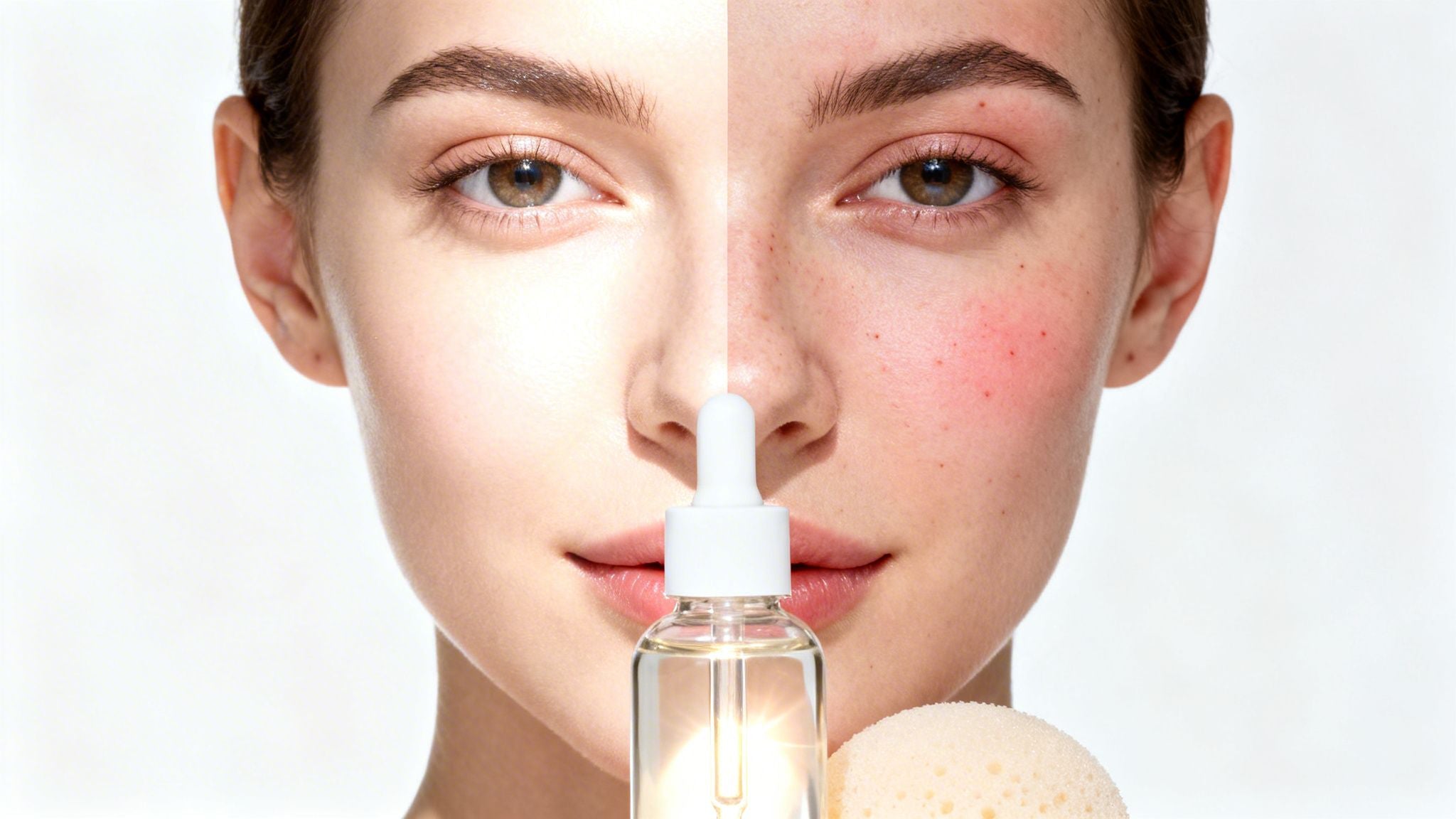
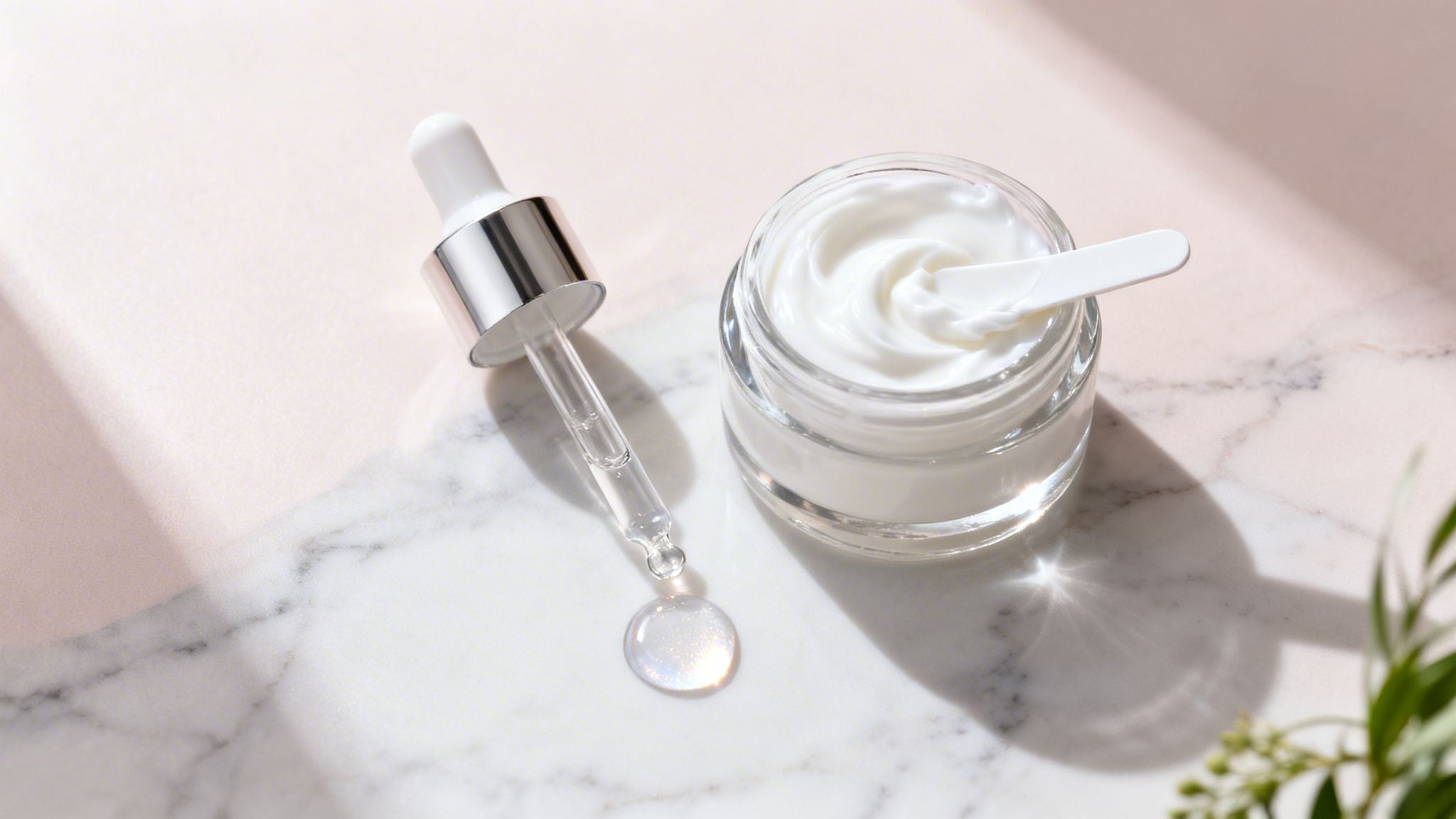
This graphic breaks down their roles perfectly—one is for deep treatment, the other for surface protection.

As you can see, serums are designed to deliver a targeted payload, while moisturizers are all about providing that crucial protective seal.
For a quick reference, here’s a simple breakdown of how they stack up.
Serum vs Moisturizer at a Glance
| Characteristic | Serum | Moisturizer |
|---|---|---|
| Primary Function | Treat specific skin concerns | Hydrate and protect the skin barrier |
| Texture | Lightweight, thin, fast-absorbing | Richer, creamier, or gel-like |
| Molecule Size | Small, for deep penetration | Large, to stay on the surface |
| Active Ingredients | Highly concentrated | Lower concentration |
| Application Step | After cleansing, before moisturizer | After serum, before SPF (in AM) |
This table makes it clear: they aren’t interchangeable. They’re partners designed to work in synergy.
Key Takeaway: Serums treat, and moisturizers protect. You apply the serum first to deliver potent ingredients deep into the skin, then layer the moisturizer on top to seal in all that goodness and keep your skin hydrated.
They are not competitors in your routine; they are essential teammates. Understanding how to use them together is the key to building a skincare regimen that actually delivers on its promises.
For a deeper dive into common skincare questions and product distinctions, you can read more skincare insights on our blog.
Exploring The Science Behind Each Formula
Ever wonder why a serum feels so slippery and light, while a moisturizer feels richer and more substantial? It’s not just about feel—it’s about function. Each formula is engineered with a specific job in mind, and that purpose dictates everything from its texture to the size of its molecules.
The real difference between a serum and a moisturizer comes down to how they're designed to interact with your skin. One is a deep-diving specialist, the other is a protective guardian.
Serums: The Targeted Delivery Specialists
Think of a serum as an express delivery service for your skin cells. They are almost always water-based and formulated with incredibly small molecules. This lightweight structure is intentional—it allows the serum to slip past the skin’s surface and travel deeper into the epidermis.
This is where it delivers a potent, concentrated dose of active ingredients like antioxidants, peptides, or retinoids, precisely where they can influence cellular behavior and create real change.
- For Anti-Aging: A serum can deliver ingredients like retinaldehyde to speed up cell turnover and kickstart collagen production.
- For Brightening: It can carry Vitamin C or niacinamide deep enough to help break up and fade hyperpigmentation.
- For Hydration: It can infuse the skin’s lower layers with humectants for a plumping, inside-out effect.
This targeted action is why the global facial serum market was valued at USD 5.84 billion in 2024 and continues to grow. Anti-aging serums alone grabbed a 31.92% share of that revenue, proving that savvy consumers are investing in preventive care. The most popular formulas—making up 44.90% of the market—are water-based, perfect for delivering actives like hyaluronic acid that plump the skin beautifully before treatments at practices like BotoxBarb.
Moisturizers: The Protective Surface Guardians
In contrast, moisturizers are the guardians of your skin’s surface. They are intentionally formulated with larger molecules that aren’t designed to penetrate deeply. Their critical role is to form a protective, breathable seal over the stratum corneum—your skin’s outermost layer.
A moisturizer’s job is to create a comprehensive barrier. It hydrates, softens, and—most importantly—prevents the dreaded transepidermal water loss (TEWL), which is when precious moisture evaporates right out of your skin.
Moisturizers accomplish this with a strategic blend of three key ingredient types:
- Humectants: These are moisture magnets like glycerin and hyaluronic acid. They pull water from the air and from the deeper layers of your skin, drawing it up to the surface for an instant dose of hydration. If you’re looking to master hydration, our guide on hyaluronic acid serum for dehydrated skin is a must-read.
- Emollients: These are the skin-softeners—lipids and oils like ceramides and squalane. They work by filling in the tiny gaps between your skin cells, smoothing rough texture and helping to repair your skin’s natural barrier.
- Occlusives: Think of these as a final seal. Ingredients like shea butter or petrolatum form a physical barrier on the skin’s surface to lock in all that moisture and goodness, preventing it from escaping.
Together, these components create a formula that comforts, protects, and perfectly complements the deep, targeted work of your serum. It’s never a question of serum or moisturizer; it’s about understanding how to layer them both for truly healthy, high-functioning skin.
The Art of Layering for Maximum Efficacy

You’ve invested in potent serums and a luxe moisturizer, but if you’re applying them in the wrong order, you might as well be pouring them down the drain. How you layer your skincare is just as critical as the products themselves.
Think of it this way: the order of application determines whether your products can actually reach their target and do their job. Get it right, and you unlock their full potential. Get it wrong, and you’re just wasting time and money.
The Golden Rule: Thinnest to Thickest
The non-negotiable rule in any effective routine is to apply products from the thinnest to thickest consistency. This isn’t just an old wives' tale; it’s pure science, and it’s what truly separates the impact of a serum and moisturizer.
A lightweight serum is formulated with small molecules designed to travel deep into the skin to deliver a high concentration of active ingredients. It absolutely must go on clean, dry skin first to have a clear path to work its magic.
Slathering on a thick cream first would create an impenetrable barrier, blocking your expensive serum from ever being absorbed. It’s like putting on your coat before your shirt—it just doesn’t work.
After your serum has had a moment to absorb, then comes your moisturizer. Its richer texture and larger molecules are designed to work on the skin’s surface, creating a protective seal. This locks in all the potent actives from your serum and provides the lasting hydration your skin barrier needs to stay strong and healthy.
Pro Tip: I always tell my clients to wait about 60 seconds between applying serum and moisturizer. This gives the serum enough time to fully penetrate, so it isn’t just getting diluted or smeared around by the cream you apply on top.
For a deeper dive into crafting the perfect product sequence, our guide on how to layer serums for optimal results breaks it all down.
Morning vs. Evening Layering Strategy
Your skin’s needs shift dramatically from morning to night, and your layering strategy must adapt accordingly. Think of your morning routine as your daily shield and your evening routine as your overnight repair crew.
-
Morning Routine (Defense): The goal here is pure protection. You’re arming your skin against the day's environmental assaults, from UV rays to pollution. After cleansing, apply an antioxidant serum (like Vitamin C) to fight off free radical damage. Follow that with a moisturizer to hydrate and seal, and always, always finish with a broad-spectrum SPF 30 or higher.
-
Evening Routine (Repair): Night is when your skin's natural repair processes kick into high gear. This is your window to use powerful, corrective treatments. After cleansing, apply a targeted serum like our BARB N.P. Retinal Advanced Night Serum. This potent formula uses retinal, a powerhouse active, to accelerate cell renewal and soften fine lines while you sleep. Lock in those hard-working ingredients with a nourishing moisturizer to support your skin’s recovery.
Matching Products to Your Skin's Unique Needs
There’s no "one-size-fits-all" answer in skincare. A truly great routine isn't about having the most products—it's about having the right ones for your skin's specific needs. The key is to correctly diagnose what your skin is asking for and then choose a serum and moisturizer that work together to deliver results.
Think of it this way: your skin type is your starting point. Are you navigating oily, breakout-prone skin, or is your main concern dryness and fine lines? Maybe you're focused on fading stubborn hyperpigmentation. Your answers dictate the perfect product combination.
This personalized strategy explains the core functional divide in skincare. While market data shows that 70% of people use a facial moisturizer daily for general hydration, serums are chosen for their targeted, high-potency benefits. For instance, anti-aging serums drove 31.92% of revenue in 2024 as women seek powerful, specific solutions for their concerns.
For Dry or Mature Skin
If your skin feels tight, looks flaky, or you're focused on softening signs of aging, your mission is twofold: deliver deep hydration and rebuild your skin barrier. You need a serum that can quench the deeper layers of your skin and a moisturizer that creates a protective seal to lock it all in.
- Serum Choice: A hyaluronic acid serum is a staple for a reason. It acts like a magnet for water, drawing it into the skin for an immediate plumping effect that smooths fine lines. For more advanced repair, a serum that actively supports the skin's foundational structure is a game-changer.
- Moisturizer Choice: This is where you bring in the rich, comforting creams. Look for formulas packed with ceramides and emollients that mimic your skin's natural lipids. They work to fill in the tiny cracks in a compromised barrier, creating a surface that’s soft, strong, and resilient. You can explore our top picks in our guide to the best moisturizers for dry, mature skin.
This duo works synergistically to replenish what time and environmental aggressors have taken away, restoring that supple, bouncy feel to your skin.
At BotoxBarb, we often recommend the Epicutis Lipid Serum for clients with compromised or aging skin. Its proprietary formula provides the essential lipids needed to rebuild a healthy skin barrier, which is crucial for supporting the beautiful results from treatments like Botox and Dysport.
For Oily or Acne-Prone Skin
For those with oily or acne-prone complexions, the first instinct is often to skip moisturizer entirely. This is a major mistake that can actually make your skin produce even more oil. The right pairing will balance oil production and clarify pores without ever stripping the skin.
- Serum Choice: A niacinamide serum is an absolute superstar for this skin type. It’s a multi-tasking hero that helps regulate sebum, visibly minimize pores, and calm the inflammation that comes with breakouts.
- Moisturizer Choice: Forget heavy, rich creams. You need a lightweight, oil-free gel or water-based moisturizer. These formulas provide crucial hydration without clogging pores or adding unwanted shine, helping to keep your skin balanced and clear.
This combination proves that even oily skin needs both steps. The serum gets to the root of the issue—excess oil and breakouts—while the moisturizer provides the weightless hydration your skin needs to stop overcompensating.
Supercharge Your Routine with At-Home Technology

So, you’ve mastered the difference between serums and moisturizers—that’s the foundation of any solid skincare regimen. Now, let’s talk about how to take those results from great to exceptional by bringing professional-grade technology into your home.
Think of it as adding a power-up to your routine. You've already chosen the perfect serum to target your specific concerns and the right moisturizer to protect your skin barrier. At-home devices are the key to making those products work even harder, pushing their active ingredients deeper for more visible, lasting change. For my clients at BotoxBarb who are truly committed to achieving their best skin, this is the logical next step.
Introducing the BARB N.P. Facial Mask
To truly elevate your routine, I recommend the BARB N.P. Facial Mask. This isn't just another skincare gadget; it's a powerful, at-home LED therapy device specifically designed to supercharge your products. Its best feature is the incredibly comfortable, wireless design that fits your face perfectly, so you’re not tethered to a wall during your treatment.
The mask features three distinct, therapeutic light settings that work in synergy with your skincare. You can customize your session based on exactly what your skin needs on any given day.
- Red Light: This is your go-to for anti-aging. It penetrates deep into the skin to stimulate collagen and elastin production, which helps firm the skin and soften the look of fine lines and wrinkles.
- Blue Light: If you're dealing with breakouts, blue light is your best friend. It targets and neutralizes acne-causing bacteria right on the skin's surface, helping to clear up current blemishes and prevent new ones from forming.
- Amber Light: For days when your skin feels red, irritated, or just reactive, the amber light setting provides an instant calming effect. It helps reduce inflammation and promotes a more even, serene complexion.
The Ultimate Power-Up Sequence
Using this mask transforms your layering process from a simple routine into a high-performance treatment. The trick is to use it at the perfect moment—right after applying your serum.
When you smooth on your targeted serum and immediately follow it with the BARB N.P. Facial Mask, the LED energy helps enhance the penetration of all those valuable active ingredients.
Think of it as opening up pathways for your serum to travel deeper into the skin. The light therapy preps and energizes your skin cells, making them far more receptive to the powerful ingredients you’ve just applied. This synergy ensures you get the absolute maximum benefit from every single drop.
Once your LED session is complete, you lock in that supercharged treatment with your favorite moisturizer. This final, crucial step seals in your serum's enhanced benefits and delivers the essential hydration and protection your skin needs to repair and thrive. This combination is the real secret to getting a spa-level facial right at home.
Building Your Perfect Regimen with BotoxBarb
We've covered the science and strategy, so let's get one thing straight: the real question isn't "serum or moisturizer?" It's how to make serum and moisturizer work together for your best skin. A truly effective routine is a personalized system where every product enhances the next.
It’s time to stop the guesswork and endless trial and error. This is about creating a smart, simple plan that delivers the real, lasting results you’re investing in—a regimen that supports your journey to radiant, healthy skin.
Your Daily Skincare Blueprint
Here is a simple, effective framework you can personalize. The core principle never changes: treat your skin with a targeted serum, then protect and hydrate it with a moisturizer.
-
Morning Routine (Protect & Defend): Your AM goal is simple: shield your skin from the sun, pollution, and other environmental stressors it will face all day.
- Cleanse: Always start with a fresh, clean face.
- Vitamin C Serum: Apply a potent antioxidant serum to neutralize damaging free radicals.
- Moisturize: Hydrate your skin and create a smooth, prepped canvas.
- SPF: Finish with broad-spectrum sun protection. This is non-negotiable.
-
Evening Routine (Repair & Restore): Night is your skin's built-in recovery mode. This is the time for regeneration and correction.
- Cleanse: Wash away makeup, SPF, and impurities from the day.
- Targeted Serum: Apply your corrective workhorse, like a retinoid or peptide formula.
- Moisturize: Lock in those powerful active ingredients and support your skin's natural repair cycle.
This structured approach ensures you’re consistently giving your skin exactly what it needs, right when it needs it.
The serum-and-moisturizer duo we love today is a direct result of advancements in aesthetic science. Before 2011, thick creams did all the work. But as treatments evolved, we needed a better way to deliver powerful actives. Lightweight serums were the answer, paired with occlusive moisturizers that studies show can reduce moisture loss by 20-30%. The market for this dual approach continues to boom, and you can discover more about moisturizer market trends to see just how dominant it has become.
Curated by Experts for You
With guidance from Barb N.P., you can confidently build a routine with medical-grade products chosen for their performance. For example, our BARB N.P. Retinal Advanced Night Serum is a perfect evening treatment, featuring retinaldehyde, bakuchiol, and niacinamide to accelerate skin renewal while keeping it calm and happy.
Explore the BotoxBarb online boutique to discover products hand-picked by experts from trusted brands like Epicutis and SkinCeuticals. It’s time to stop guessing and start your journey to healthier skin with a plan you can trust.
Your Most-Asked Questions Answered
Understanding the serum vs. moisturizer debate is one thing, but putting it into practice always brings up a few more questions. I hear these all the time in my clinic, so let's get you some quick, clear answers to help perfect your routine.
Can I Use a Serum Without a Moisturizer?
You can, but I really don’t recommend it if you want balanced, hydrated skin. Think of it this way: a serum is like delivering a high-potency vitamin shot directly to your skin cells. But without a moisturizer on top, you’re leaving the door wide open.
All that goodness—and your skin’s own natural moisture—can just evaporate into the air. This is what we call transepidermal water loss. Following up with a moisturizer seals everything in, protecting your investment and keeping your skin barrier happy.
Do I Need a Serum if My Moisturizer Already Has Actives?
Yes, a separate serum is still a huge advantage. The key difference is concentration and delivery. A serum is formulated with a much higher percentage of active ingredients in a molecule size designed to penetrate deep into the skin to make real changes.
A moisturizer with actives is great, but it's primarily designed to work on the surface and contains a much lower dose of those ingredients. A dedicated serum lets you target specific concerns—like wrinkles, dullness, or stubborn pigmentation—with far more power. For those seeking general wellness information, you may find answers in Repose Healthcare's Frequently Asked Questions.
How Long Should I Wait Between Applying Serum and Moisturizer?
The golden rule I tell my clients is to wait about 60 seconds, or just until the serum feels fully absorbed and no longer tacky.
This little pause is more important than you think. Rushing it means your moisturizer can dilute the serum's powerful formula, essentially shortchanging your results before the active ingredients have a chance to get where they need to go.
Ready to build a skincare regimen you can trust? At BotoxBarb, we provide expert guidance and curated, medical-grade products to help you achieve your goals. Explore our collection and start your journey to healthier skin. Shop now at https://barbnp.shop