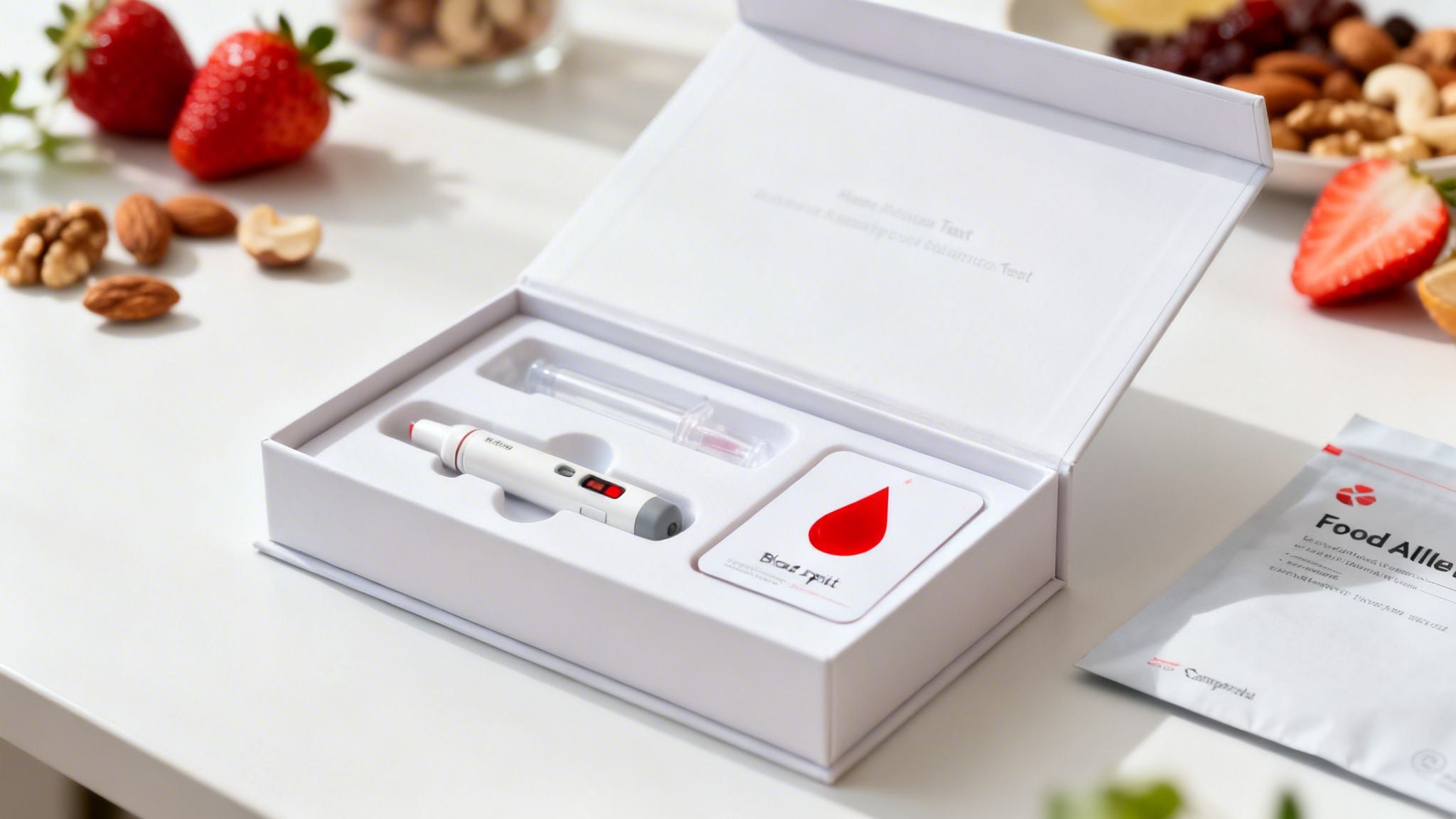
Your Guide to a Food Allergy Testing at Home Kit
If you’ve ever felt like your body is sending you mixed signals—unexplained bloating, stubborn skin issues, or a constant sense of fatigue—you’re not alone. It’s frustrating when you can’t pinpoint the cause, and so often, the food on your plate is the number one suspect. This is where a food allergy testing at home kit comes in. It’s a direct-to-consumer tool designed to give you a starting point, helping you identify potential food sensitivities by analyzing a small blood sample from a simple finger prick.
Is an At-Home Test Your First Step to Wellness?
Think of it as a way to finally connect the dots. Instead of blindly cutting out food groups and hoping for the best, these kits provide data. They offer a personalized report that highlights potential triggers, empowering you to make targeted, informed changes to your diet. For many, this initial insight is the key that unlocks a more intuitive and effective approach to their health.
Why People Are Turning to Home Kits
The idea of taking control of your health from the comfort of your own home isn't just a trend; it's a movement. The sheer convenience of collecting a sample on your own schedule and receiving results digitally has made these kits incredibly popular for anyone starting their wellness investigation. The market growth tells the same story.
The global at-home food sensitivity test market was valued at USD 261.8 million in 2025 and is projected to skyrocket to USD 571.7 million by 2035, growing at a steady clip of 8.5% annually. The United States is leading the charge, capturing about 80.9% of the North American market. You can explore more market growth insights about at-home testing here.
This boom reflects a major shift toward proactive health management. People are actively seeking out tools that help them understand their bodies on a deeper level.
A Partner in Your Health Journey
Let’s be clear: starting this process is about gathering information, not about self-diagnosing a serious condition. A reliable test, like the Barb N.P. Food & Environmental Allergy Test, is designed to be your guide for what comes next. It helps flag foods that might be contributing to inflammation or discomfort, giving you a solid, evidence-based foundation for a strategic elimination diet.
Consider an at-home kit your personal health detective. It uncovers crucial clues that you and a trusted professional, like a Nurse Practitioner, can use to build a truly comprehensive wellness plan. This guide will walk you through everything you need to know—from the science behind the tests to reading your results and taking action that actually makes a difference.
Understanding the Science of Food Reactions
Before we dive into how at-home kits work, it's crucial to understand what’s actually happening in your body when you react to food. Not all bad reactions are created equal. There's a world of difference between a true food allergy and a food sensitivity, and it all comes down to how your immune system decides to respond.
Think of a true food allergy as your body's version of a fire alarm. It’s an immediate, loud, and potentially dangerous warning triggered by Immunoglobulin E (IgE) antibodies. This is the reaction that causes hives, swelling, or even life-threatening anaphylaxis within minutes of eating something like peanuts or shellfish. It’s an unmistakable emergency.
A food sensitivity, on the other hand, is much more like a slow, leaky faucet. It's a persistent, low-grade irritation that causes problems over time. These delayed reactions are often linked to Immunoglobulin G (IgG) antibodies. Symptoms like bloating, brain fog, skin breakouts, or joint pain can creep up hours or even days after you’ve eaten the trigger food, which makes connecting the dots on your own feel next to impossible.
The Role of Different Antibodies
This is where at-home testing comes in. Most kits, including the one we offer at Barb N.P., are designed to measure IgG antibodies. Why? Because their goal is to shine a light on those hidden culprits behind your nagging, chronic symptoms.
While IgE testing is the gold standard for diagnosing immediate, life-threatening allergies—and must be done with a doctor—IgG testing gives you a practical starting point for investigating potential food sensitivities.
High levels of IgG antibodies to a certain food suggest your immune system has mounted a significant response to it. This doesn't mean you have a classic "allergy," but it does flag that food as a potential source of inflammation and chronic symptoms. Think of it as a clue, making that food a prime candidate for a trial elimination.
This data is often the very first step toward figuring out what’s wrong and feeling like yourself again. As this visual shows, the wellness journey starts by listening to your symptoms and looking for answers.

A home test kit can be that accessible first step, helping you move from wondering to knowing.
To give you a clearer picture, let's break down the key differences between the tests you'll encounter.
Comparing At-Home Food Reaction Tests
| Test Type | What It Measures | Associated Condition | Typical Onset of Symptoms | Common At-Home Method |
|---|---|---|---|---|
| IgE Antibody Test | Immunoglobulin E (IgE) | True Food Allergy | Immediate (minutes to 2 hours) | Blood Draw (Clinical Setting) |
| IgG Antibody Test | Immunoglobulin G (IgG) | Food Sensitivity | Delayed (hours to 3 days) | Blood Spot (Finger Prick) |
| MRT (Mediator Release Test) | Inflammatory Mediators | Food Sensitivity | Delayed (hours to days) | Blood Draw |
Each test provides a different piece of the puzzle. For identifying those mysterious, delayed symptoms, IgG testing offers the most direct and accessible insights from home.
Sample Collection Methods: Blood Spot vs. Saliva
When you choose an at-home kit, you’ll mainly find two types of sample collection: a blood spot or saliva.
While a saliva test might seem easier, the blood spot method is widely considered the gold standard for measuring IgG antibodies. These proteins are far more concentrated in your blood than in your saliva, making the results much more reliable.
Here’s a quick rundown:
- Blood Spot Test: This is a simple, nearly painless finger prick to collect a few drops of blood on a special card. It provides a stable, high-quality sample that accurately reflects the antibody levels in your system. This is the trusted method used in the Barb N.P. Food & Environmental Allergy Test to ensure dependable results.
- Saliva Test: This involves spitting into a tube. Although it’s completely non-invasive, its effectiveness for IgG testing is less established, and the results may not be as consistent or accurate as those from a blood sample.
The demand for reliable at-home health solutions is booming. The global market for rapid food safety tests, which includes allergen detection, was projected to hit USD 21.34 billion by 2025. This growth is fueled by people like you who are becoming more aware of their health and want dependable tools to identify triggers like dairy, peanuts, and soy.
By choosing a test with a validated method like blood spot collection, you’re setting yourself up for the most reliable insights from the start. You can dive deeper into this topic in our detailed guide on the accuracy of food sensitivity testing.
Your At-Home Test Kit: A Step-by-Step Guide
So you've decided to take control of your health with a food allergy testing at home kit. It might feel like a big deal, but the process is surprisingly simple. We'll walk you through everything, from opening the box to mailing your sample, using the Barb N.P. Food & Environmental Allergy Test as our example.

This quick overview will demystify the whole thing, showing you just how easy it is to get valuable health insights right from your kitchen counter.
Preparing for Your Sample Collection
A little prep work goes a long way in making sure your sample is perfect and your results are spot-on. Before you start, a few simple steps will set you up for success.
First, unbox everything and lay it out on a clean surface. You’ll see a collection card, sterile lancets, an alcohol wipe, a bandage, and a prepaid return mailer. Take a minute to read the instructions from start to finish before you even think about pricking your finger.
Next, it's all about hydration. Drinking a glass or two of water about 30 minutes beforehand helps get your blood flowing, making the collection process much easier. You can also warm up your hands by rubbing them together or running them under warm water to boost circulation.
Pro Tip: Register your kit online before you collect your sample. The Barb N.P. kit has a unique ID you’ll use to activate it on the secure portal. This is critical for linking your sample to your private account so you get your personalized results back.
The Collection Process: Quick, Simple, and Nearly Painless
The blood spot collection method is designed to be as easy as possible. The idea of a finger prick might sound intimidating, but it’s truly just a quick pinch that’s over in a second. Most people say it’s far less uncomfortable than a traditional blood draw at a lab.
Here's exactly what to expect:
- Choose Your Finger: Pick a finger on your non-dominant hand, usually the middle or ring finger. Try to avoid your thumb or index finger, as the skin can be a bit thicker there.
- Clean the Area: Grab the alcohol wipe and thoroughly clean the side of your fingertip. Let it air dry completely—don’t blow on it!
- Use the Lancet: Press the lancet firmly against the side of your fingertip and click the button. It delivers a fast, precise prick.
- Collect the Sample: Gently squeeze your finger until a droplet of blood forms. Touch the drop to the circles on the collection card, letting it soak through. Make sure you fill all the required spots.
- Finish Up: Pop the bandage on your finger and let the collection card air dry for at least 30 minutes. Don't rush this part—it needs to be completely dry before you pack it up.
Sending Your Sample to the Lab
Once that card is fully dry, you're on the home stretch. The Barb N.P. food allergy testing at home kit comes with a prepaid, pre-addressed mailer. Just place your sample inside, seal it up, and drop it in the mail. It’s that easy.
Your sample heads directly to a CLIA-certified laboratory, which means it’s held to the highest federal standards for quality and accuracy. There, trained lab technicians will analyze the blood spots to measure your body's IgG antibody response to a wide range of foods.
In just a few weeks, you'll get an email letting you know your results are ready. Simply log into your secure online account to view a detailed, easy-to-read report that pinpoints your specific food sensitivities. This report is the first step toward your new wellness plan.
Interpreting Your Results And Planning Your Next Steps
That email notification—"Your results are ready"—can bring a mix of excitement and nerves. This report isn't just a list of red, yellow, and green foods; it's a personalized roadmap to feeling better. But to get the most out of it, you need to understand what the data is really telling you.

First things first: a food allergy testing at home kit that measures IgG antibodies is a tool for uncovering potential food sensitivities, not diagnosing a true food allergy. Think of it this way: high IgG levels mean your immune system has noticed a specific food and put a "watch" on it.
This low-grade immune response is often the culprit behind those nagging, delayed symptoms that are so hard to pin down—like bloating, brain fog, skin issues, or fatigue. It is not the same as a severe, immediate IgE allergic reaction.
From Data To Actionable Plan
Your results will likely group foods by reactivity level—high, moderate, or low. It can feel a bit overwhelming at first, but don't panic. This list is your starting point for a targeted elimination diet, a short-term strategy to calm your system and figure out which foods are genuinely causing your symptoms.
Here’s a simple, step-by-step plan to get started:
- Pinpoint Your Top Triggers: Zero in on the foods in the "high" reactivity column. These are your prime suspects and where you'll get the most bang for your buck.
- Start a Structured Elimination: For the next 4 to 6 weeks, completely remove those high-reactivity foods from your diet. This gives your body a real chance for inflammation to subside and symptoms to improve.
- Track Everything: Keep a simple daily journal. Note your energy levels, digestion, skin clarity, and mood. This log will be your most valuable tool for the next phase.
- Reintroduce Foods One by One: After the elimination period, bring one food back at a time. Eat a normal portion for a day or two and wait a full 72 hours to see how your body reacts before trying the next one.
This structured approach is the gold standard for confirming which foods are problematic for you. For a deeper dive, check out our guide on how to approach an elimination diet for food allergies.
The Power Of Professional Guidance
While a food allergy testing at home kit gives you invaluable clues, its true power is unlocked with professional interpretation. At-home testing is a booming industry, but it’s designed to complement—not replace—professional diagnostics and guidance.
While in-person lab services held a 69.60% market share in 2025, the U.S. food allergen testing market is set to grow from USD 333.63 million in 2026 to USD 441.86 million by 2031, with at-home kits being a major driver of that growth.
This trend shows just how much people value taking that first step. But turning those initial insights into a sustainable wellness plan is where an expert comes in. A practitioner like Barb N.P. can look at the whole picture—your results, your health history, your lifestyle—and create a plan that actually works for you.
With guidance, you can explore the right dietary changes, understanding the key differences between lifestyle changes and therapeutic diets. A consultation ensures you're not cutting out foods unnecessarily and that your new plan is nutritionally sound for long-term gut health. Your results are the beginning of the conversation, not the final word.
Connecting Gut Health to Radiant Skin
The insights from your food allergy testing at home kit are about so much more than just your digestive system—they’re a direct window into the health and radiance of your skin. That chronic, low-grade inflammation that starts in the gut doesn’t just stay there. It often makes an unwelcome appearance on your face as persistent acne, rosacea, eczema, or even just a dull, tired-looking complexion.
This powerful link, often called the gut-skin axis, means what you eat can directly dictate how you look and feel. When you identify and temporarily eliminate foods that cause a high reaction, you’re not just calming digestive issues. You’re taking a critical first step toward achieving the clear, vibrant skin you’ve been working for. It's the ultimate inside-out approach to lasting results.

Beyond pinpointing your personal triggers, you can lean into supporting your internal wellness. Learning about the best foods for gut health is a fantastic way to nourish both your digestion and your skin's natural glow.
Enhance Your Results with Advanced Skincare
Once you start addressing potential food triggers from the inside, you can seriously amplify your skin’s recovery by pairing those efforts with advanced treatments on the outside. It’s a two-pronged attack: as you work to calm inflammation internally, you can actively soothe and rejuvenate your skin externally. This is where targeted skincare technology becomes your most powerful ally.
We recommend complementing your wellness journey with a high-performance tool like the Barb N.P. LED Facial Mask. This device is engineered to work in synergy with your dietary changes, helping to calm irritation, fight breakouts, and restore a healthy glow far more effectively than diet alone.
The Barb N.P. LED Facial Mask: Your Partner in Radiance
Think of the Barb N.P. LED Facial Mask as the perfect partner for anyone taking an integrated approach to skin health. Its smart design makes advanced light therapy incredibly accessible and easy to fold into any daily routine.
This isn't just another skincare gadget; it's a therapeutic tool designed for comfort and results. Its thoughtful features ensure you can relax and treat your skin without being tethered to a wall or dealing with a cumbersome setup.
Here are the key features that make it stand out:
- Completely Wireless: Enjoy total freedom of movement. You can wear the mask while reading, relaxing, or moving around your home, which makes staying consistent effortless.
- Unmatched Comfort: Made with soft, flexible materials, the mask molds comfortably to your facial contours. This ensures every treatment session is enjoyable and effective.
- Targeted Light Therapy: It offers three distinct light settings, each providing a specific solution for common skin concerns that are so often linked back to gut health.
Three Treatments in One Device
Each light setting addresses a different piece of the skin repair puzzle. This allows you to customize your treatment based on what your skin needs most as it begins to heal.
- Red Light Therapy: This setting is your go-to for calming inflammation and promoting deep healing. It penetrates the skin to stimulate collagen production, which helps reduce fine lines and improve overall resilience. It’s perfect for tackling the redness associated with rosacea and sensitivity.
- Blue Light Therapy: If acne is your main battle, blue light is your secret weapon. It works by targeting and eliminating acne-causing bacteria right on the skin’s surface, helping to clear existing breakouts and prevent new ones from forming.
- Amber Light Therapy: For an all-over radiance boost, amber light promotes lymphatic drainage and cellular rejuvenation. This helps reduce dullness and puffiness, leaving your skin looking brighter and far more refreshed.
By combining the dietary insights from your at-home test with the targeted treatments of the Barb N.P. mask, you create a powerful strategy. This approach tackles skin health from the inside out and the outside in, paving the way for truly radiant, healthy skin.
How to Choose a High-Quality At-Home Test
With so many options popping up online, picking a food allergy testing at home kit can feel like a shot in the dark. You need a test that delivers real insights, not just more confusion. This guide will walk you through exactly what to look for, so you can make a confident and informed decision for your health.
Making the right choice really boils down to a few non-negotiable standards. When you're investing in your wellness journey, you have to know the test is backed by solid science and provides reports you can actually use. These are the factors that separate a high-quality kit from one that might just give you misleading information.
Your Quality Checklist
Before you even think about adding a kit to your cart, run it through this checklist. A reputable, trustworthy test should tick every single one of these boxes. No exceptions.
-
CLIA-Certified Labs: This is the absolute most important factor. The lab analyzing your sample must be CLIA-certified, which means it follows strict federal standards for quality, accuracy, and reliability. This certification is your guarantee that the lab's processes and technicians are held to the highest professional standards.
-
Comprehensive Food Panels: Look for a kit that screens for a wide range of foods, including both common culprits and some you might not expect. A more comprehensive panel gives you a much fuller picture of your body's responses, making it far more likely you'll pinpoint a hidden trigger.
-
Clear and Actionable Reports: The best kits give you results that make sense. Your report should clearly group foods by reactivity level (high, moderate, mild) and offer guidance on what it all means, instead of just dumping a confusing list of numbers in your lap.
Your at-home test results are the beginning of your wellness investigation, not the final diagnosis. They are meant to guide a structured elimination diet and should always be discussed with a healthcare professional to create a safe and effective plan.
Support Beyond The Box
A quality testing experience doesn't just end when your results are ready. The company you choose should offer solid support to help you understand the information and figure out what to do next.
Look for providers that have excellent customer support to answer your questions about the whole process. Even better, find companies that offer access to professional consultations with practitioners who can help you interpret your results in the context of your unique health profile. That professional guidance is what turns raw data into a sustainable wellness strategy.
The Barb N.P. Choice
The Barb N.P. Food & Environmental Allergy Test was specifically designed to meet all these high standards. It’s a reliable, user-friendly, and comprehensive solution for anyone ready to finally get some answers about their food sensitivities.
Here’s how it stacks up against our quality checklist:
- Certified Laboratory: We don't compromise here. Every sample is processed in a top-tier, CLIA-certified lab to guarantee the highest level of accuracy you can depend on.
- Extensive Testing Panel: Our test covers a broad spectrum of foods and environmental triggers, giving you a detailed and holistic overview of your immune responses.
- Easy-to-Read Results: Your personalized report is delivered through a secure online portal, presenting your results in a clear, color-coded format that is simple to interpret at a glance.
- Expert Guidance: You have the option to book a consultation directly with Barb N.P. to review your results, ask questions, and build a personalized plan that works for you. You can learn more by exploring a comparison of allergy blood tests versus skin tests.
Ready to take control? Learn more about the test, purchase your kit today, or book a consultation to begin your wellness journey with a trusted partner by your side.
Common Questions About At-Home Food Testing
Even after learning how these kits work, it’s completely normal to have a few questions before you commit. This is a big step in taking control of your health, and you deserve to feel confident. Here, we'll tackle the most common queries, giving you straight answers about the science, the process, and what your results actually mean.
Are At-Home Food Sensitivity Tests Scientifically Valid?
This is a fantastic and important question. In conventional medicine, IgG tests aren't the go-to for diagnosing true, immediate allergies—that's what IgE testing is for. However, in the world of functional and integrative health, they are an incredibly valuable tool for uncovering hidden triggers for inflammation.
Think of it this way: a high IgG level means your immune system has created "memory" antibodies to a specific food. It’s a sign that your body is reacting. This reaction might not be a life-threatening allergy, but it could be the reason behind your stubborn bloating, skin issues, or fatigue. The results aren't a final diagnosis but rather the first clue in your personal health investigation, giving you a strategic starting point for a targeted elimination diet.
How Is This Test Different from One at My Doctor's Office?
The main difference comes down to what’s being measured. When you see a traditional allergist, they are almost always testing for IgE antibodies. These are responsible for the fast and furious allergic reactions—think hives, swelling, or even anaphylaxis within minutes of eating a peanut. IgE is the body's "fire alarm."
Our at-home kits, on the other hand, measure IgG antibodies. These are linked to delayed food sensitivities, where symptoms can creep in hours or even days later. This delay is what makes sensitivities so frustrating and difficult to pinpoint on your own. You could be reacting to the gluten in Monday's sandwich on Wednesday! So, while both tests are valid, they are looking at two completely different immune responses.
What if My Results Show Reactivity to Many Foods?
Seeing a long list of reactive foods can feel overwhelming, but don't panic! It rarely means you have to give up everything you love forever. More often than not, a high number of sensitivities points toward an underlying issue like increased intestinal permeability, often called "leaky gut."
The goal isn't to eliminate all reactive foods at once. Instead, the focus should be on healing the gut lining while temporarily removing the top 5-10 most inflammatory foods. This is where working with a practitioner is key—they can help you interpret the big picture and create a plan that feels manageable, not restrictive.
Is the Sample Collection Process Painful?
The blood spot collection is designed to be as quick and painless as possible. The kit comes with a small, sterile lancet that gives your fingertip a tiny prick. Most people say it feels like a quick, sharp pinch that’s over in a second.
From there, you just gently squeeze a few drops of blood onto a collection card. The entire process takes just a couple of minutes and is far less intimidating than a full blood draw at a lab.
Ready to finally get the answers you’ve been looking for? The Barb N.P. Food & Environmental Allergy Test provides the reliable, CLIA-certified insights you need to move forward. Purchase your kit today and begin your journey to better health.