How to Fix Uneven Skin Tone and Get Glowing Skin
Tackling uneven skin tone isn't about a single magic potion. It's a strategic approach that combines a smart, consistent routine with targeted ingredients and serious sun protection. For some, professional treatments can accelerate results. The goal is twofold: calm down that overactive melanin production and speed up skin cell turnover to reveal the brighter, more even skin underneath.
First, Let's Understand Why Your Skin Tone Is Uneven
Before you can fix something, you have to know what you're dealing with. "Uneven skin tone" is really just a catch-all term for hyperpigmentation, but it's not a one-size-fits-all problem. Think of it as your skin’s defense mechanism kicking into overdrive. When triggered, certain cells start pumping out too much melanin—the pigment that gives your skin its unique color.
This overproduction creates darker patches that stand out against your natural complexion. These might show up as sunspots after years of beach days, dark marks left behind from a breakout, or the blotchy patches of melasma that often pop up during hormonal shifts.
The Main Culprits Behind Discoloration
Several things can signal your skin to go into melanin-making mode. Pinpointing your primary trigger is the key to creating a routine that actually works.
- Sun Exposure: This is, without a doubt, the number one cause. UV rays are a direct signal to your skin to produce more melanin for protection. Over time, this leads to sunspots (also called age spots or liver spots) and a generally mottled appearance.
- Post-Inflammatory Hyperpigmentation (PIH): Ever notice a dark spot that lingers long after a pimple has healed? That's PIH. It can happen after any kind of skin injury or inflammation, from acne and eczema to a simple bug bite.
- Hormonal Fluctuations: Melasma is a classic example of hormone-driven hyperpigmentation. Often triggered by pregnancy ("the mask of pregnancy") or birth control, it shows up as symmetrical, blotchy brown patches, usually on the face.
- Pollution: It’s not just in your head—city living can affect your skin. Tiny airborne particles from pollution can generate free radicals in the skin, leading to oxidative stress that contributes to dark spots.
A Quick Look at the Science
At the cellular level, there’s an enzyme that acts as the master "on" switch for all this pigment production. A critical first step in understanding why your skin tone is uneven is learning What Is Tyrosinase, as this enzyme is the star of the show. When triggered by things like UV light or inflammation, it sets off the entire chain reaction that ends with visible hyperpigmentation on your skin's surface.
The good news? Most causes of uneven skin tone are entirely manageable. Once you understand the "why" behind your specific concern, you can stop throwing random products at the problem and start using a targeted plan that gets to the root cause.
You’re not alone in this struggle. The demand for solutions is massive, making it a multi-billion-dollar global priority. The market for treating uneven skin tone hit USD 1.39 billion in a single year and is projected to climb to USD 2.02 billion. While in-office treatments are a huge part of this, a consistent, well-formulated home skincare routine is still the foundation for achieving—and maintaining—a beautifully balanced complexion.
Your Daily Skincare Routine for a Balanced Complexion
If you want to see a real, lasting change in your skin tone, consistency is everything. A dedicated daily skincare routine is your most powerful tool.
The best way to think about it is a two-pronged attack: your morning routine is for defense, shielding your skin from the daily triggers that cause discoloration. Your evening routine is all about correction and repair, actively fading spots while you sleep. Following this framework day in and day out creates the perfect environment for brighter, more even-toned skin to emerge.
Environmental damage, especially from the sun, is the number one culprit behind hyperpigmentation. This simple visual breaks down exactly how that process works, from UV exposure to the dark spots you see in the mirror.
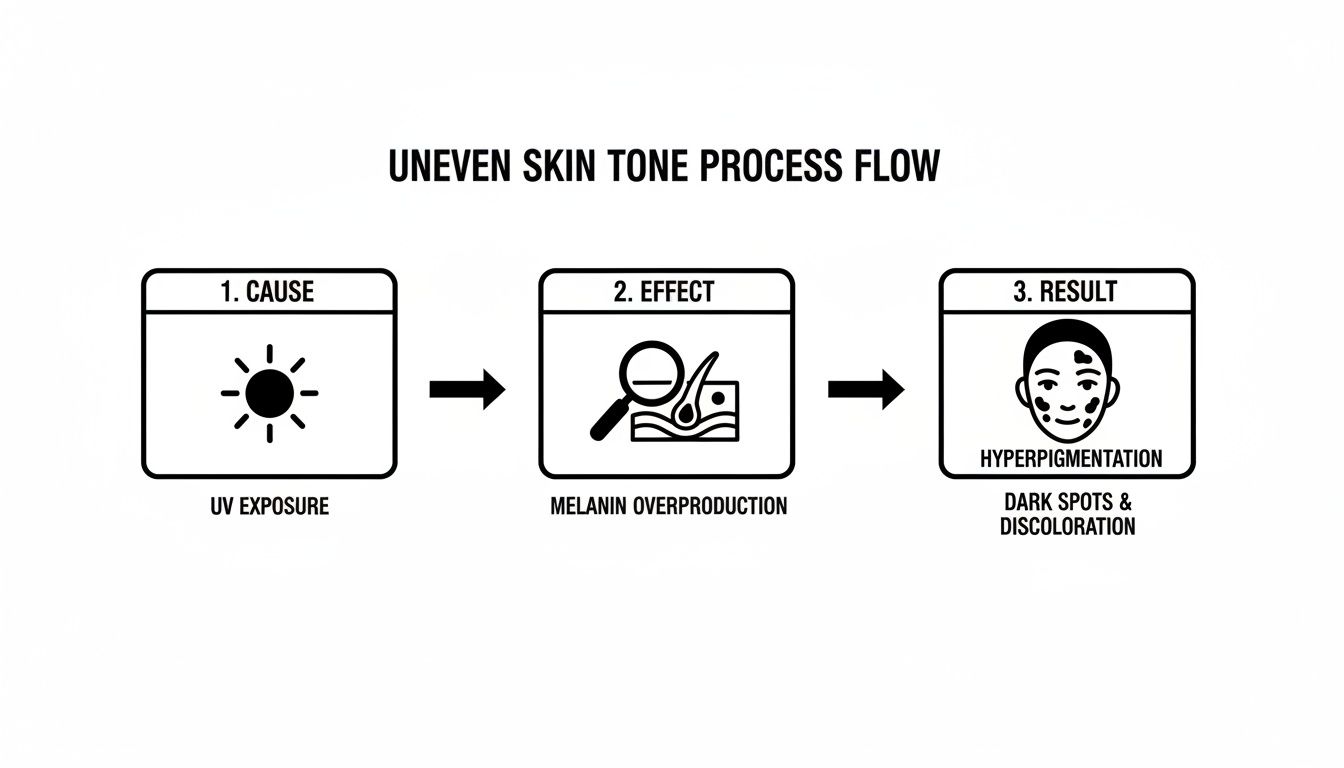
Seeing the direct line from cause to effect really hammers home why daily protection isn’t just a suggestion—it's the only way to get ahead of discoloration before it even starts.
To keep things simple, here’s a quick overview of how to structure your AM and PM routines for the best results.
Your AM vs PM Skincare Blueprint for Even Skin Tone
| Step | AM Routine (Focus on Protection) | PM Routine (Focus on Correction and Repair) |
|---|---|---|
| Cleanse | Use a gentle, hydrating cleanser to prep skin without stripping it. | Double cleanse: start with an oil cleanser to remove makeup/SPF, then follow with a gentle cleanser. |
| Treat | Apply a Vitamin C serum to neutralize free radicals and inhibit melanin production. | Apply targeted treatments like retinoids or brightening serums to accelerate cell turnover and fade spots. |
| Hydrate | Use a moisturizer to lock in hydration and support your skin’s barrier. | Use a nourishing moisturizer to soothe and repair, especially when using strong actives. |
| Protect | Finish with a broad-spectrum SPF 30 or higher. This is non-negotiable. | N/A (Your skin is repairing, not facing the sun). |
Now let’s dive a little deeper into the specifics of each routine.
The Morning Routine: Protect and Prevent
Your morning lineup is all about building a shield against the environmental stressors that send your pigment-producing cells into overdrive—especially UV rays.
- Gentle Cleanser: Start the day with a mild, hydrating cleanser. The goal is simply to wash away sweat and leftover products from the night before without disrupting your skin's protective barrier.
- Antioxidant Serum: This is a non-negotiable step for anyone serious about fighting uneven tone. A good Vitamin C serum is an absolute powerhouse. It neutralizes the free radical damage from sun and pollution that leads to spots, brightens your overall complexion, and helps block the enzyme responsible for creating excess melanin.
- Hydrating Moisturizer: A well-hydrated skin barrier is a healthy skin barrier. Your moisturizer locks in the good stuff from your serum and keeps your skin plump and resilient, which can help minimize the appearance of textural irregularities.
- Broad-Spectrum Sunscreen: This is the most important step in your entire routine. Period. Without it, you're undoing all the hard work from your other products. You must apply a broad-spectrum sunscreen with an SPF of 30 or higher every single day, whether it's sunny, cloudy, or you're just sitting by a window.
The Evening Routine: Correct and Repair
Nighttime is when your skin switches into repair mode. This is your opportunity to deliver the heavy-hitting ingredients that will actively correct discoloration while you rest.
- Double Cleansing: You have to get the day off properly. Start with an oil-based cleanser to dissolve sunscreen, makeup, and pollution. Follow that with your gentle, water-based cleanser to make sure your skin is perfectly clean and ready to absorb your treatment products.
- Targeted Treatments: This is where the magic happens. After cleansing, you’ll apply your "active" ingredients. This could be a prescription retinoid to speed up cell turnover, a serum with niacinamide to calm inflammation and reduce redness, or other pigment inhibitors. You'll want to rotate these actives to avoid irritation.
- Nourishing Moisturizer: Finish with a moisturizer that supports skin recovery. This is especially important if you're using powerful actives like retinol, which can be drying. A good moisturizer will hydrate, soothe, and fortify your skin barrier.
I know, building a routine from scratch can feel overwhelming. If you need more detailed guidance on the fundamentals, you can learn more about how to build a skincare routine in our comprehensive guide.
You can also supercharge your evening routine with at-home tech. A device like the Barb N.P. LED Facial Mask is a fantastic tool to incorporate a few times a week. It’s wireless and comfortable, so you can easily wear it while winding down.
It features three distinct lighting settings to target different concerns. For uneven tone, the green light setting is your go-to. It’s specifically known for its ability to help balance complexion and target hyperpigmentation, making it a perfect partner in your journey to clearer skin.
Remember, this is a marathon, not a sprint. With consistent use of the right products and routine, it typically takes at least 30-45 days before you start to see a noticeable difference. Stick with it
Powerful Ingredients That Target Discoloration
Walking down the skincare aisle can feel like prepping for a chemistry final. But when it comes to correcting uneven skin tone, you only need to know a handful of key players to see a real difference. The right actives work on a cellular level to slow down pigment production, sweep away discolored cells, and shield your skin from future damage.
Think of them as your personal skin specialists. Some are protectors, others are resurfacers, and a few actually block the signals that create dark spots. Using a smart combination of these is the fastest way to get that clear, even-toned glow we're all after.
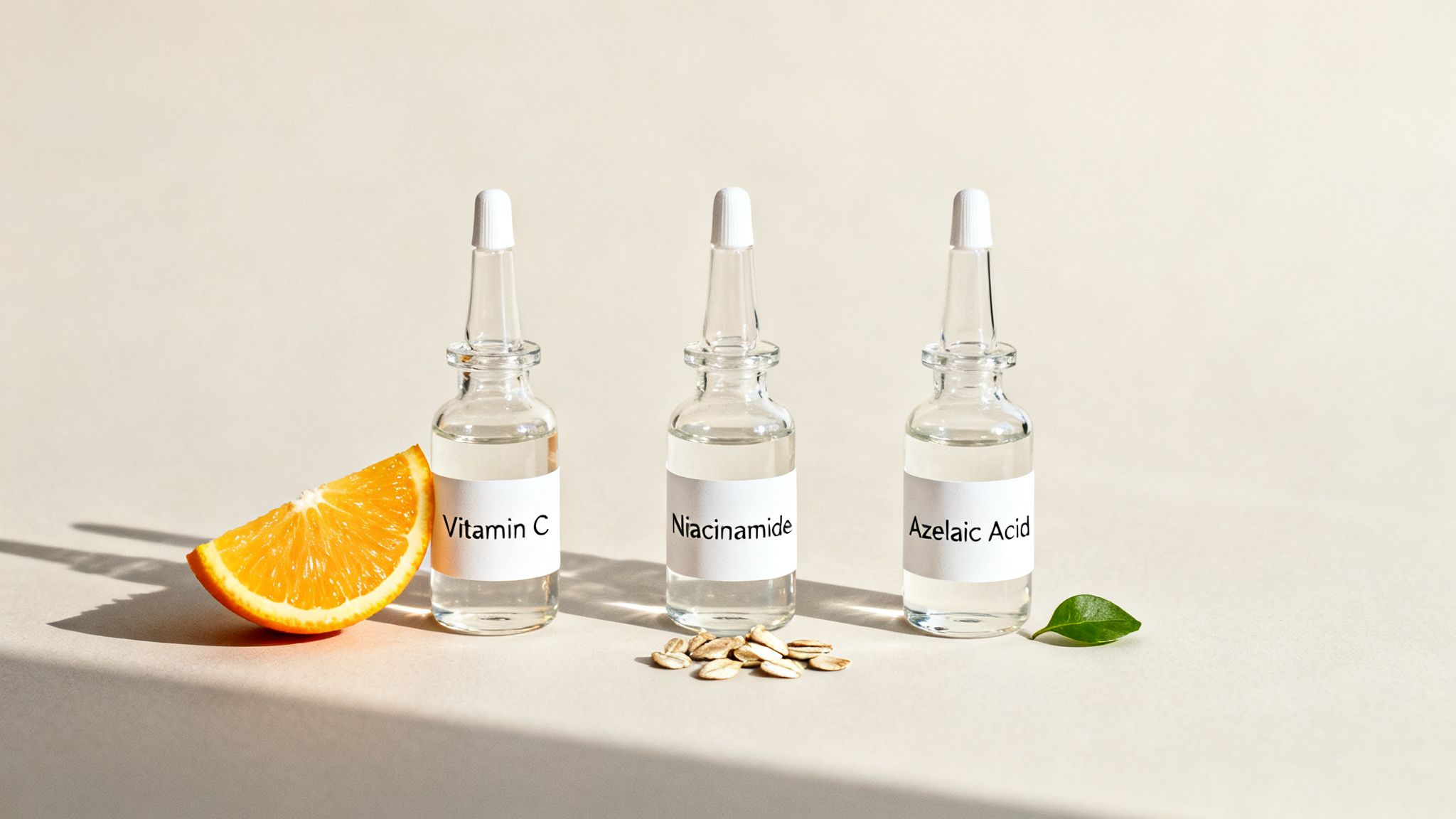
Vitamin C: The Protective Brightener
If you only add one active to your morning routine, make it Vitamin C. This antioxidant is famous for its ability to brighten up your whole complexion and visibly fade dark spots. It gets the job done by interfering with an enzyme called tyrosinase, which is the main trigger for melanin production.
But Vitamin C does more than just brighten; it’s also your skin's best bodyguard against environmental stress. It neutralizes damage from UV rays and pollution—two of the biggest culprits behind hyperpigmentation. This defensive action is crucial for preventing new spots from showing up.
To get the most out of it, apply a good quality Vitamin C serum in the morning after cleansing, right before your moisturizer and SPF. This lets it form a protective shield that lasts all day. For a reliable and effective option, the Barb N.P. C-Bright Vitamin C Serum is a fantastic choice that delivers potent antioxidant protection.
Niacinamide: The Soothing Balancer
Niacinamide, a form of vitamin B3, is the ultimate multi-tasker for stressed-out, blotchy skin. Its main claim to fame is strengthening the skin's barrier, which is key for calming down redness and sensitivity. A healthy barrier is your first line of defense against the environmental triggers that cause discoloration.
It also works by blocking pigment from transferring between skin cells, which literally stops dark spots from ever reaching the surface. This makes it a fantastic ingredient for tackling those stubborn post-inflammatory hyperpigmentation (PIH) marks left behind by old breakouts.
Niacinamide is incredibly gentle and plays well with others, making it a safe bet for almost any skin type, including rosacea and acne-prone skin. It’s also the perfect partner for more intense ingredients like retinoids, as it helps calm the inflammation they can sometimes cause.
Retinoids: The Cellular Resurfacers
When you want to speed up skin renewal, nothing beats the power of retinoids. These vitamin A derivatives are the gold standard for a reason: they kick your skin's cell turnover process into high gear. This pushes old, discolored cells to the surface so they can be shed, revealing the fresher, more even skin underneath.
This rapid exfoliation doesn't just fade existing spots—it also helps prevent new ones by keeping your pores clear. You can find retinoids in all strengths, from gentle over-the-counter retinol to prescription-grade tretinoin.
The key is to start slow. Introduce a retinoid into your evening routine just a couple of nights a week to let your skin adjust. Always follow it with a good moisturizer, and be extra diligent with sunscreen the next morning, as retinoids make your skin more sensitive to the sun.
Hydroquinone Alternatives That Deliver Results
For a long time, hydroquinone was the go-to prescription for pigmentation, but concerns about side effects have led to a search for safer options. Luckily, skincare science has stepped up with some amazing alternatives that work just as well, without the risks.
- Azelaic Acid: A gentle but mighty acid. It’s anti-inflammatory, so it's brilliant for calming PIH from acne and rosacea. It also smartly targets overactive pigment cells without bleaching your normal skin.
- Tranexamic Acid: This is my go-to for really stubborn issues like melasma and deep-set sunspots. It works by blocking the pathways that create melanin after sun exposure.
- Kojic Acid: Derived from mushrooms, kojic acid is another tyrosinase inhibitor that helps fade discoloration and brighten the overall complexion.
The demand for these ingredients is exploding. The global market for hyperpigmentation treatments was valued at USD 5.46 billion and is expected to hit USD 7.86 billion. We're seeing real proof in the clinic, too. Studies show that over-the-counter products with 3% tranexamic acid can lead to a 13% decline in color intensity and a 6% reduction in dark spot size in just eight weeks.
We know navigating all these options can be a lot, so we put together a complete breakdown. Dive deeper into our guide on the best ingredients for hyperpigmentation to find your perfect match.
Advanced Treatments to Accelerate Your Results
While a consistent daily routine is the bedrock of correcting uneven skin tone, sometimes you need to call in the professionals to really move the needle. When your progress with at-home products hits a plateau or you're dealing with truly stubborn discoloration, advanced treatments can dramatically accelerate your results.
These methods work on a deeper level to break down pigment and stimulate fresh, healthy skin growth. Think of it this way: your daily skincare is like tending to a garden with consistent nourishment. Advanced treatments are like bringing in expert landscapers to tackle the tough spots, giving you a faster, more noticeable transformation.
In-Office Procedures for Targeted Results
For a powerful intervention, professional treatments offer a level of precision and intensity you simply can't get at home. These are performed by trained specialists who customize the treatment to your specific skin concerns, ensuring both safety and effectiveness.
- Chemical Peels: This treatment uses a carefully formulated solution to exfoliate the top layers of your skin, lifting away the dead, discolored cells. What's revealed underneath is brighter, more evenly toned skin. Peels range from light, no-downtime options to deeper ones that offer more dramatic results for issues like melasma and sun damage.
- Microneedling: Also known as collagen induction therapy, this procedure uses fine needles to create tiny micro-injuries in the skin. This controlled process triggers your body’s natural healing response, which includes breaking down old pigment and ramping up collagen production. The result is smoother texture and a visible reduction in dark spots. For a more comprehensive overview, you might be interested in our guide on microneedling to rejuvenate your skin.
- Laser and Light Therapies: These are the heavy hitters for targeting pigmentation. Advanced light-based therapies like Lumecca IPL are incredibly effective at zeroing in on hyperpigmentation. This technology uses specific wavelengths of light that are absorbed by the excess melanin in dark spots, effectively shattering the pigment without harming the surrounding skin.
At-Home Technology: The Barb N.P. LED Facial Mask
Bringing advanced technology into your home is an excellent way to maintain momentum between professional appointments and boost your daily routine. LED (Light Emitting Diode) therapy is a non-invasive, pain-free treatment that uses different wavelengths of light to address various skin concerns, including uneven tone.
For consistent, convenient treatments, I highly recommend the Barb N.P. LED Facial Mask. This is a game-changer for at-home care because it was designed with real life in mind. One of its best features is that it’s completely wireless, so you’re not tethered to a wall. You can move around, read, or just relax during your session.
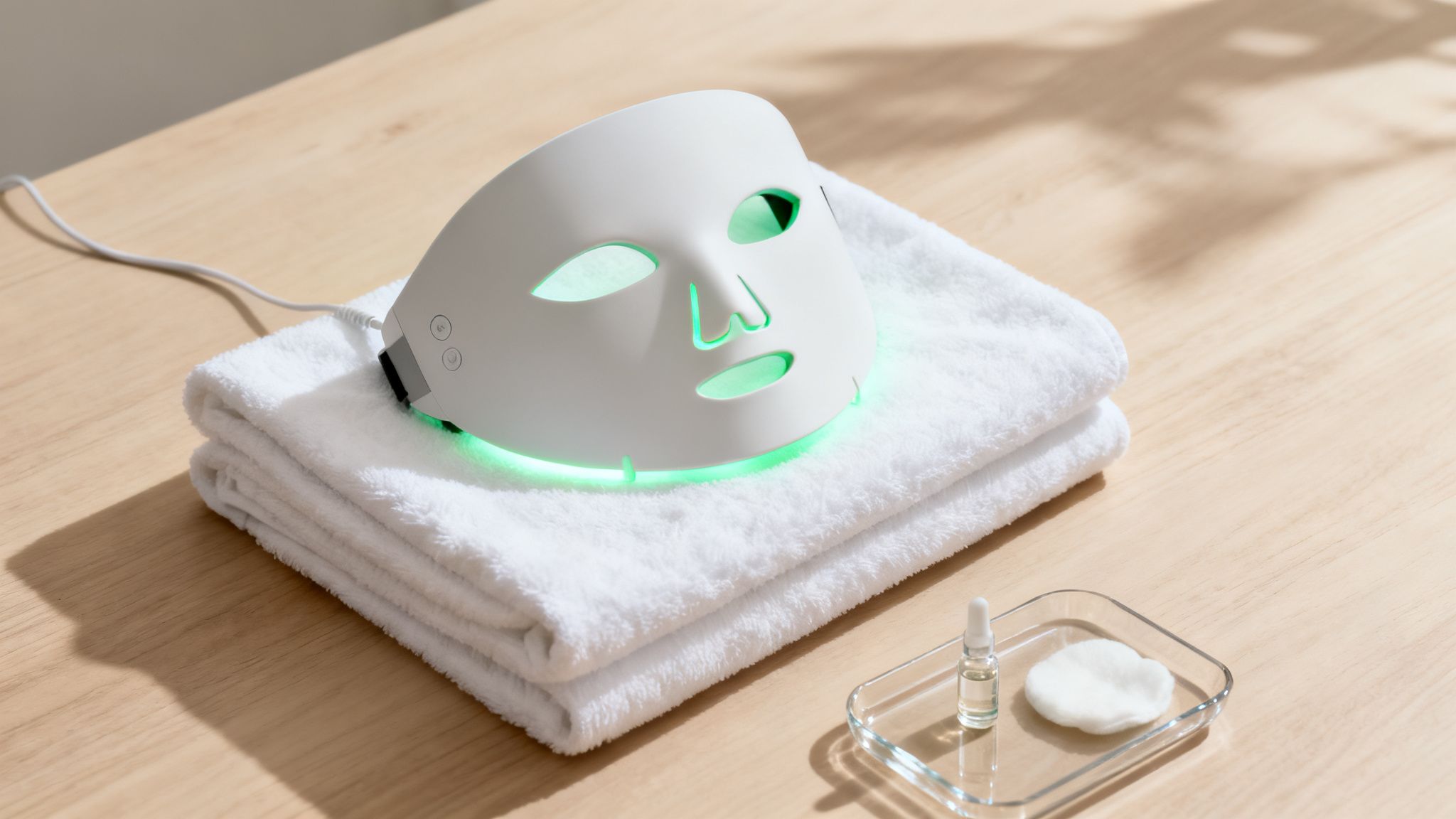
It’s also incredibly comfortable to wear, which is crucial for sticking with it. Let's be honest—if a device is awkward or heavy, you’re simply not going to use it regularly. The Barb N.P. mask is lightweight and fits securely, making it an easy addition to your evening routine a few times per week.
The mask features three distinct lighting settings, allowing you to customize your treatment. For anyone focused on how to fix uneven skin tone, the green light setting is your best friend. Green light is specifically known for its ability to target and break up excess melanin, helping to fade dark spots and create a more uniform complexion.
By integrating a device like this into your regimen, you’re giving your skin consistent, low-level therapeutic light that supports the results from both your daily products and any in-office treatments. It's a smart, effective way to elevate your entire skincare strategy and get closer to your goal of clear, luminous skin.
Keeping Your Even Skin Tone for Good
You did it. You put in the work, followed the plan, and now you have that balanced, even complexion you’ve been aiming for. But here’s the thing—getting there was only half the battle. Now, we shift from a corrective mindset to a protective one to make sure that discoloration doesn't come creeping back.
The single most important habit you need to lock in is diligent, daily sun protection. I can't stress this enough. This isn’t just a step in your morning routine; it’s a non-negotiable part of your entire day. Unprotected sun exposure is the number one trigger for hyperpigmentation, and even a few minutes can start to undo months of progress.
The Foundation of Lasting Clarity
To truly safeguard your skin, your sun protection strategy has to be more than just a quick morning application. It needs to be a conscious effort.
- Reapply Religiously: Your sunscreen isn't a one-and-done deal. Its effectiveness fades. You absolutely have to reapply it at least every two hours, and even more often if you’re swimming or sweating.
- Seek Shade: During peak sun hours, which are typically 10 a.m. to 4 p.m., do your skin a favor and stay out of direct sunlight whenever possible.
- Wear Protective Gear: Think of a wide-brimmed hat and UV-blocking sunglasses as your best friends. They provide a physical barrier against UV rays that sunscreen alone can’t offer.
It’s easy to feel like you're the only one fighting this battle, but you're not alone. Uneven skin tone affects millions worldwide, and the market for hyperpigmentation disorder treatments is projected to hit a staggering USD 11.54 billion. Here in the U.S., melasma has become one of the top concerns I see in my clinic.
While in-office treatments are fantastic for targeting stubborn melanin, a consistent at-home regimen remains the cornerstone of success, especially for women and individuals with deeper skin tones who are often most affected. You can get a better sense of the scale of this concern by checking out the latest treatment trends.
Lifestyle Habits That Make a Real Difference
What you do every day plays a surprisingly huge role in keeping your skin clear. Simple, consistent choices can support all your skincare efforts and stop new issues before they start.
One of the most impactful habits? Stop picking at your skin. I know it’s tempting, but squeezing a pimple or picking at a blemish creates inflammation. That inflammation is a direct trigger for post-inflammatory hyperpigmentation (PIH)—those frustrating dark spots that hang around long after the blemish itself has healed.
Also, think about what you’re putting into your body. A diet rich in antioxidants—found in foods like berries, leafy greens, and colorful vegetables—helps your body fight off the free radical damage from UV rays and pollution that contributes to dark spots. It’s about fortifying your skin from the inside out.
Knowing When to Call in a Professional
Even with the most dedicated at-home care, sometimes you hit a wall. If you feel like your results have plateaued or you suspect something more complex is going on, it’s time to book a consultation with a dermatologist or a qualified nurse practitioner like myself.
Key Takeaway: If you start noticing symmetrical, blotchy patches on your cheeks, forehead, or upper lip, seek professional guidance. This is a classic sign of melasma, a type of hormonal pigmentation that requires a specific, often prescription-led, treatment plan that over-the-counter products just can't provide.
A professional can give you an accurate diagnosis of your specific type of hyperpigmentation and create a personalized maintenance plan. This might include periodic in-office treatments, like light chemical peels or laser therapy, to keep your skin clear for the long haul.
Your Top Questions About Uneven Skin Tone—Answered
When you’re on a mission to correct uneven skin tone, questions are bound to pop up. It’s totally normal to wonder about timelines, diet, and how to combine products without causing a mess. Let’s tackle some of the most common questions I hear from my clients to give you the clarity and confidence you need to keep going.
How Long Until I See a Difference in My Skin Tone?
This is the big one, and the honest-to-goodness answer is: patience is your best friend here. Hyperpigmentation that took years to form won’t vanish overnight.
With a consistent, targeted skincare routine, you’ll likely notice the first subtle signs of improvement in about 30 to 45 days. This timeframe lines up with your skin's natural cell turnover cycle, as fresh, less-pigmented cells begin to make their way to the surface.
For more dramatic brightening and fading, you’ll need to stick with it for at least three to four months. Your results really depend on the type of pigmentation you have—surface-level sunspots fade faster than deeper issues like melasma—and how diligent you are with your daily sunscreen.
Can My Diet Really Affect My Skin Tone?
Absolutely. While your serums and treatments are doing the heavy lifting on the surface, your diet is building healthy skin from the inside out. Think of it as supporting your skincare from within.
An antioxidant-rich diet is a game-changer. These incredible compounds help your body fight off the oxidative stress from UV rays and pollution that drives pigmentation in the first place.
- What to load up on: Fill your plate with colorful fruits and veggies. Think berries, leafy greens like spinach, citrus fruits, and bell peppers. They’re all packed with skin-loving vitamins, especially Vitamin C, which is a powerhouse for brightness.
- What to be mindful of: Some studies link high-sugar and high-dairy diets to inflammation. For some people, this can trigger or worsen acne, leading to that stubborn post-inflammatory hyperpigmentation (PIH) we’re trying to avoid.
Do I Still Need to Treat Uneven Tone If I Wear Makeup?
Yes, one hundred percent. Makeup is an amazing tool for instantly creating a flawless finish, but it’s a temporary fix. It covers the issue without correcting the underlying cause.
When you rely only on concealer and foundation, the sunspots, discoloration, and old acne marks are still there underneath. A dedicated skincare routine works to actually fade that pigmentation, improve your skin’s overall health, and, over time, reduce your need for heavy makeup.
The goal isn’t just to cover up—it’s to feel confident in your bare skin. A corrective routine addresses the root of the problem for lasting clarity and a natural glow.
Can I Combine Different Brightening Ingredients?
Yes, and this is where you can get really impressive results! But you have to be smart about it. The last thing you want to do is throw everything at your face at once, overwhelm your skin barrier, and cause the inflammation you’re trying to fix.
The easiest way to cocktail ingredients is by using them at different times of the day.
- In the Morning: Use a Vitamin C serum. It acts as an antioxidant shield, protecting your skin from the sun and pollution you’ll encounter all day.
- In the Evening: Nighttime is for repair. This is the perfect time for ingredients like retinoids or exfoliating acids (think glycolic or azelaic acid) that speed up cell turnover and fade spots while your body is in its natural recovery mode.
Niacinamide is a fantastic team player that can be used morning or night. It layers well with most other ingredients and helps soothe the skin and strengthen its barrier—a win-win. Just remember to introduce new actives one at a time to see how your skin tolerates them.
Is It Safe to Use LED Masks at Home?
Yes, at-home LED masks are very safe for most people when you follow the instructions. These devices use non-UV light energy that is gentle on the skin.
For tackling uneven tone, a device like the Barb N.P. LED Facial Mask is a fantastic addition to your routine. One of its best features is that it's completely wireless, which makes it so easy to use consistently. You aren’t tethered to a wall—you can walk around, read a book, or just relax during your session.
It’s also designed to be comfortable, so you’ll actually want to use it. The mask has 3 different light settings to target specific concerns. The green light setting is your go-to for pigmentation, as it’s specifically designed to help even out your complexion and fade the look of dark spots.
At BotoxBarb, we’re passionate about giving you the knowledge and tools to achieve the skin you’ve always wanted. Whether it's through in-office treatments or our curated selection of medical-grade skincare, we’re here to guide you.
Ready to build your perfect routine? Explore our collection of high-performance products at https://barbnp.shop and start your journey to a brighter, more even complexion today.