Article: How to Prepare PRP Before Treatment Day

How to Prepare PRP Before Treatment Day
You've booked PRP for next week, you're holding a bottle of ibuprofen for a sore knee, and you're wondering whether you should take it, skip your retinol, wash your hair tonight, or do nothing at all. That's the usual spot people are in, and it's exactly why How to Prepare PRP can't be reduced to "avoid blood thinners and drink water." Your job is disclosure, timing, and a calm treatment area. The clinic's job is the blood draw, sterile processing, and injection.
Don't try to make PRP at home, and don't stop a prescription because a blog suggested it. Prepare the person, not the centrifuge, and you'll prevent most same-day delays.
Medicines and Supplements to Disclose
Stopping a prescribed anticoagulant or antiplatelet drug on your own can be dangerous. If you take aspirin because a cardiologist placed a stent, warfarin for a clot, or a direct oral anticoagulant for atrial fibrillation, you don't quit it for a cosmetic appointment without that prescriber's approval. A theoretical gain in platelet activity isn't worth a stroke, stent clot, or pulmonary embolism.
Generic advice fails because these drugs don't do the same thing. Some change how platelets work, others change how blood clots, and steroids mainly affect inflammation and healing. Timing, dose, and the reason you're taking the drug matter more than a single rule.
Separate platelet drugs from clotting drugs
Aspirin, ibuprofen, and naproxen can affect platelet function. That matters because PRP depends on your platelets, but it doesn't mean every user must stop. An occasional ibuprofen for a headache is a different decision from daily aspirin prescribed after a cardiac event.
Warfarin and direct oral anticoagulants act on clotting, not primarily on platelets. The main concern there is bleeding and bruising at injection sites, balanced against the harm of interruption. Your injector and prescriber need to make that call together, not you alone the night before.
A recent expert-consensus summary recommends caution after NSAID use within 48 hours, a local corticosteroid injection within one month, systemic corticosteroids within two weeks, and anticoagulants within five days. Treat those windows as topics to clear in advance, not orders to stop treatment.
| Medication or supplement | What it affects | Precaution window | What to do |
|---|---|---|---|
| Ibuprofen or naproxen | Platelet function | About 48 hours | Pause only if the treating clinician agrees |
| Acetaminophen | Pain relief without the same platelet effect | Often the option to ask about during an NSAID pause | Ask the clinician before the visit |
| Aspirin or other prescribed antiplatelet | Platelet function | Disclose; no self-stop | The prescriber decides |
| Warfarin or a direct oral anticoagulant | Clotting | Caution discussed around 5 days | Never stop without the prescribing clinician |
| Systemic corticosteroid | Healing and inflammation | About 2 weeks | Tell the injector; the date may move |
| Local corticosteroid injection | Local tissue | About 1 month | Report the site and the date |
| Fish oil, high-dose vitamin E, garlic, ginkgo, turmeric | Possible extra bleeding | Not set in the research; ask the clinic for a window | Check labels and list each one |
Walk through the table honestly
For over-the-counter NSAIDs, a short pause is sometimes reasonable if you don't need them for a medical condition. Ask whether acetaminophen is an acceptable pain option during that pause, because it doesn't hit platelets the same way. Still check dose limits and liver conditions with the clinic, especially if you drink alcohol or take combination cold medicines.
Steroids need dates and locations. "I had a shot last month" isn't enough. Say whether it was prednisone by mouth or an injection into a shoulder, knee, or the same scalp or face area you're planning to treat. That detail may move the appointment, and moving it is better than injecting into tissue that was recently treated for another reason.
Practical rule: Bring the actual bottles or photos of the labels. Memory misses combination products, gummies, and supplements tucked into a kitchen drawer.
Supplements are easy to forget because they don't feel like medicine. List fish oil, high-dose vitamin E, garlic, ginkgo, and turmeric, plus any bleeding or clotting disorder, even if you're not sure they're relevant. Herbal capsules can add to bleeding risk, and the clinic can't account for what it doesn't know.
If a prescriber says a drug can't stop, that's not a failed prep. The injector may proceed with a modified plan, document the risk discussion, or reschedule until it's safer. I would rather delay PRP than ask you to gamble with a necessary prescription. Preparing isn't about forcing platelets into overdrive. It's about keeping the person in the chair safe while giving the treatment a fair chance.
What to Ask About the PRP Itself
Two clinics can both say "PRP" and still inject different products. If you want a plain-language starting point before your visit, what PRP treatment is explains the basics, then your clinic still needs to tell you what its specific system produces.
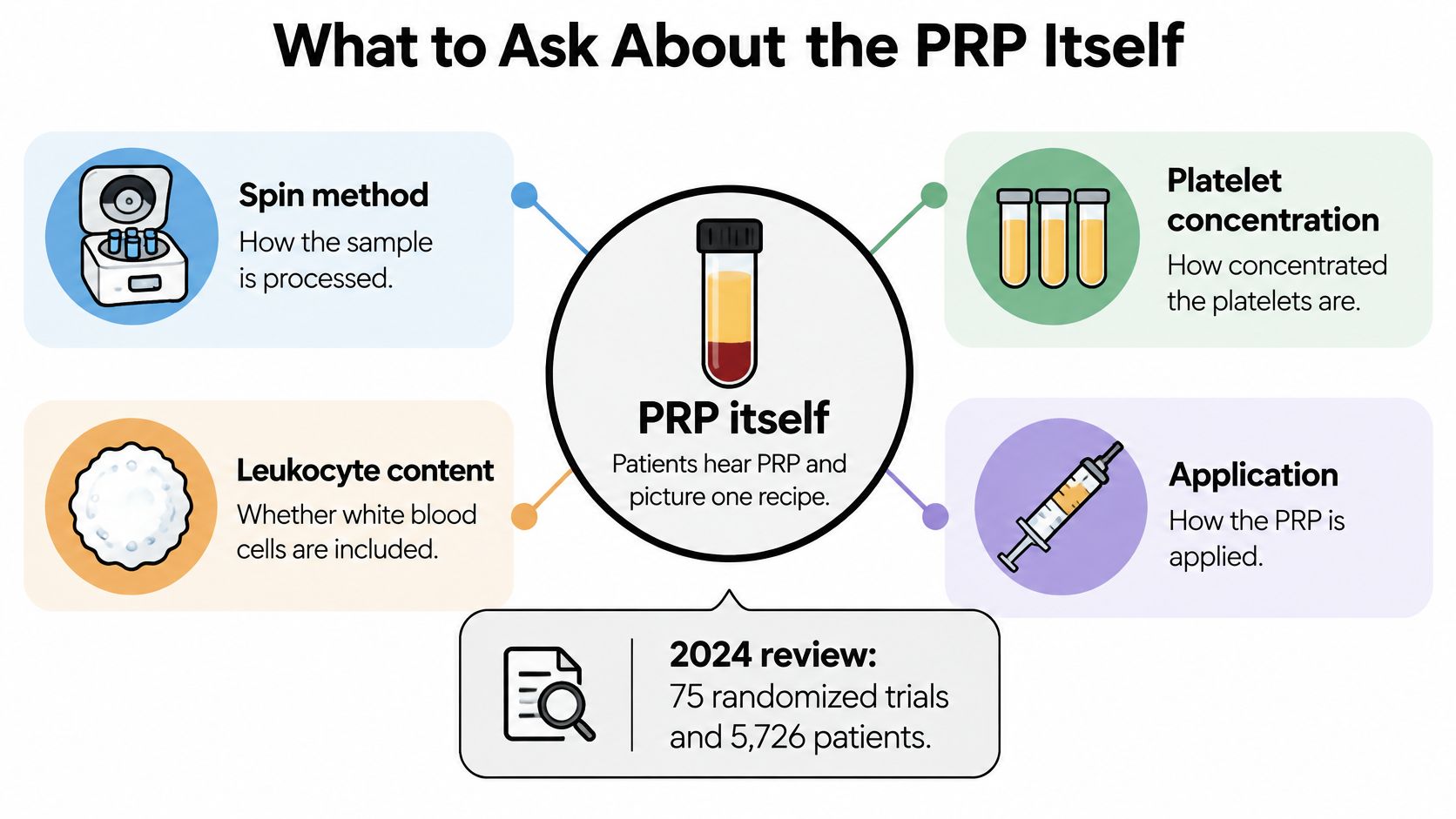
A 2024 systematic review covering 75 randomized trials and 5,726 patients found wide variation in centrifugation methods, platelet concentrations, leukocyte content, and application techniques, with reported platelet concentrations ranging from roughly 1.7 to six times baseline across commercial systems. That spread is why the same label can describe different final products.
Four questions worth asking
- Single spin or double spin: Ask how the sample is processed and whether the kit is validated for that use.
- Leukocyte-rich or leukocyte-poor: Ask whether white blood cells are included, because leukocytes may help or hurt depending on the tissue and condition.
- Activator or no activator: Ask whether anything is added before injection, since that changes how platelets release their contents.
- Documentation: Ask which device was used, what final volume was prepared, and how long it was from draw to injection.
You can also ask whether a baseline blood count is checked when it is clinically useful, for example if you have anemia, a known platelet disorder, or recent abnormal labs. The clinic should have a reason for ordering it or skipping it.
Higher isn't automatically better
A bigger platelet number sounds stronger, but platelet count alone doesn't reliably predict response. Skin, scalp, tendon, and joint tissue aren't interchangeable, and a concentration chosen for one indication may not suit another. I wouldn't choose a clinic only because it advertises the highest multiplier.
Blood volume, anticoagulant type, centrifuge force and duration, and activator choice all change the final product. A validated commercial system and an improvised routine centrifuge don't recover platelets the same way, so spin settings aren't a do-it-yourself recipe to copy from the internet and run at home.
Your job is an accurate health history and a clean treatment area. The clinic should be able to explain how each sample is drawn, processed, documented, and injected promptly rather than stored.
Ask who draws the blood, which anticoagulated tube is used, how sterility is maintained, how the sample is labeled, which system processes it, and when it will be injected. Chilling a sample on your own, spinning it outside a clinic, or storing it for later changes what would be injected and removes quality control. Good questions protect you; the handling belongs with trained personnel.
Your PRP Countdown and Treatment Week
Start with dates, not good intentions. A dated plan gives the clinic time to clear medicines, lets irritated skin settle, and keeps you from stacking color, laser, and injections on the same patch in the same week.
| When | What to do | Why it matters |
|---|---|---|
| 2 weeks before | Send the full medicine, steroid and supplement list; do not self-stop prescriptions | Gives the clinician time to clear holds safely |
| 1 week before | Steady hydration; pause retinoids, acids, bleach creams and at-home needling; delay new hair color or keratin on a scalp plan | Calmer skin or scalp and an easier blood draw |
| 48 hours before | No alcohol; NSAID pause only if already cleared | Less bruising and less effect on platelets |
| Morning of | Shower, eat breakfast, drink water, arrive with a clean face or product-free scalp, take only medicines you were told to continue | Steadier for the draw and the ride home |
| Right after you leave | No makeup, hair dye, sauna or hard exercise until the clinic names a window | Protects fresh injection sites |
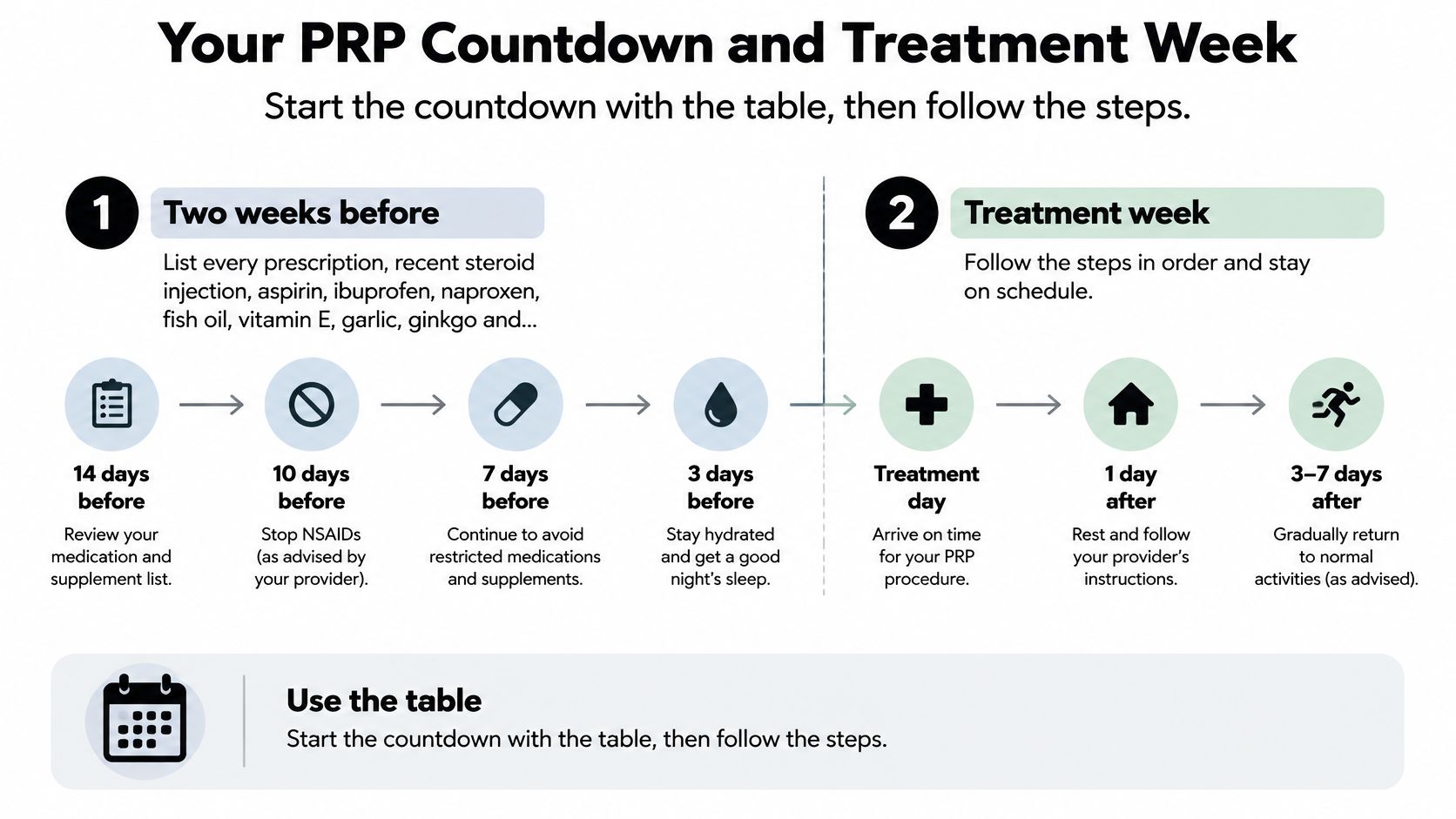
Two weeks before
Send one complete list, not a partial list from memory. Include every prescription, recent steroid injection, aspirin, ibuprofen, naproxen, fish oil, vitamin E, garlic, ginkgo, and turmeric. Add bleeding disorders, clotting history, infections, fever, and any inflamed skin or scalp in the treatment zone.
This lead time is the point. If a prescriber needs to approve a hold, or if a steroid date pushes treatment back, you'll know before you've arranged time off and driven to the office. Don't self-stop a blood thinner or antiplatelet drug while you're waiting for an answer.
Also confirm what's booked. Say clearly whether the target is skin or scalp, and whether filler, microneedling, or laser is already scheduled nearby. Combined procedures can be appropriate, but they shouldn't be layered onto the same area by accident because two calendars weren't compared.
One week before
Keep the treatment area boring. Wash with a bland cleanser, and stop scrubs, retinoids, acids, bleach creams, and at-home needling on that zone unless your clinician tells you otherwise. Irritated, peeling skin is harder to assess and less comfortable to inject.
For a scalp plan, delay new hair color or keratin until after you've asked about timing. Pause minoxidil on the night the clinic names, and skip heavy oils that coat the scalp and make cleansing and injection messier. If you use a medicated shampoo for dermatitis, don't stop it without telling us what it is and how often you use it.
Drink normally and eat normally through this week. You're not trying to "supercharge" your blood with a crash diet. Steady hydration makes veins easier to access and makes lightheadedness less likely on the day.
Forty-eight hours before
Skip alcohol for the 48 hours before your appointment if your clinic asks you to, since it can add to bruising and dehydration. Pause NSAIDs only if that pause was already cleared. If pain flares and you're unsure what to take, call rather than guessing.
Set out practical clothes. A button-front shirt helps if your face feels full afterward and you don't want to pull fabric over it. A dark top is smarter for scalp treatment in case a pinpoint spots. Pack your medication list, a hair tie, and a clean hat or loose scarf for the ride home if you want coverage.
Over the two days before the draw, drink water until your urine is pale yellow and eat regular meals. The draw volume your clinic plans will determine how important that breakfast feels, but showing up depleted helps no one.
The morning of treatment
Shower, eat breakfast, and drink a full glass of water before you leave. Arrive with a clean face or product-free scalp, no makeup to remove and no styling paste to work around. Take only the medicines your prescriber and injector said to continue that morning.
Eat before you come unless you've been given a specific fasting instruction for another reason. A blood draw on an empty stomach is where avoidable queasiness usually starts.
At the clinic, expect consent, photos, and a review of anything that's changed since you sent your list. A venous draw from the arm comes next, then a wait while the sample is processed. Numbing cream needs time to work, so don't judge the visit by injection time alone.
Plan enough time in the office that you're not watching the clock, and arrange a ride home if needles make you faint or shaky. You likely don't need a driver because of the PRP itself. You might need one because you know your own response to blood draws, and respecting that is good preparation.
Tell us before we start if you've developed a cold sore, rash, sunburn, scalp infection, or new bruising since booking. Rescheduling a compromised treatment area is safer than injecting through inflamed tissue and hoping it settles.
Care for Skin and Scalp Afterward
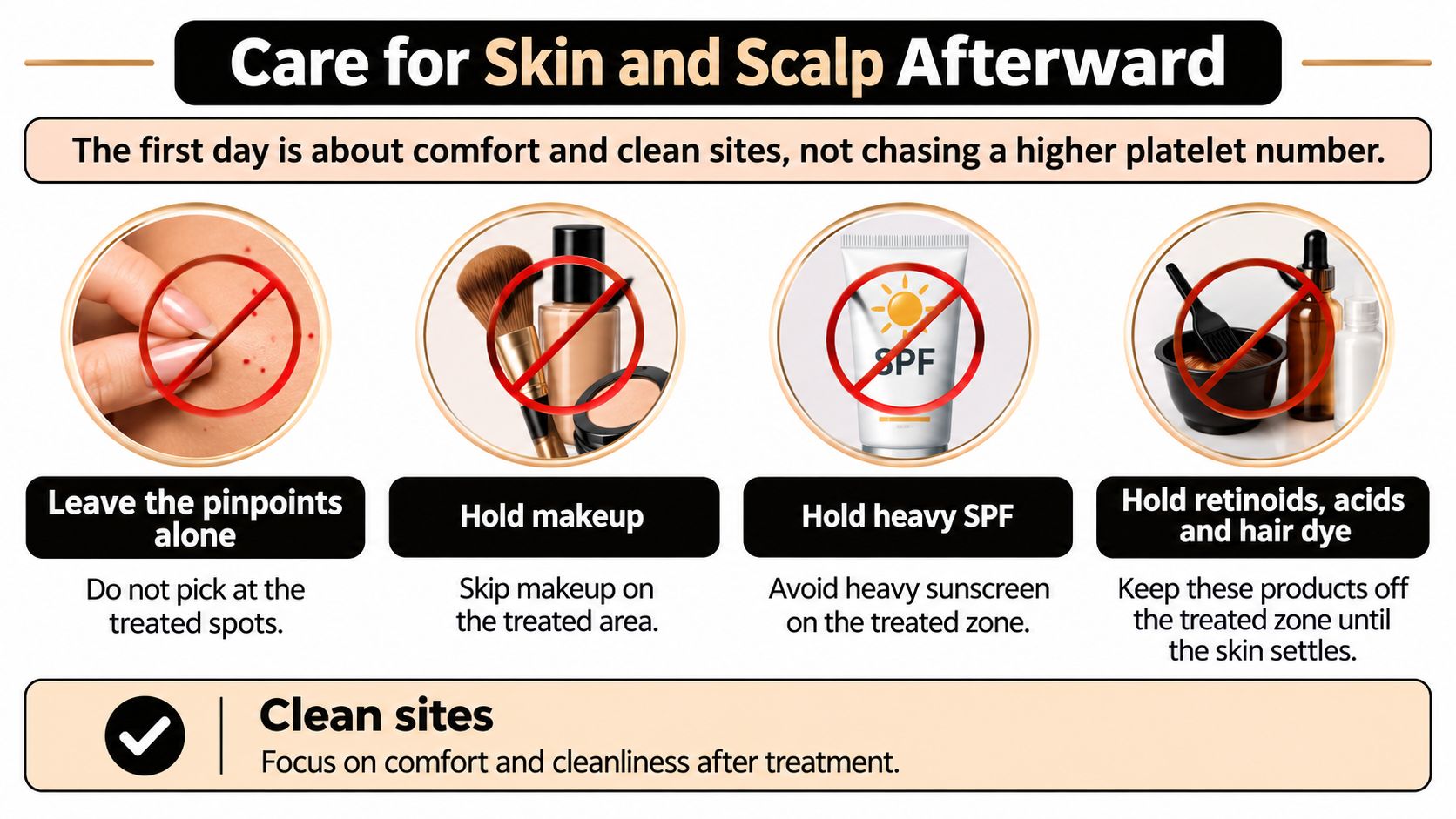
The first day is about comfort and clean sites, not chasing a higher platelet number. Leave the pinpoints alone, don't pick at crusts, and don't press or massage the area unless your injector specifically told you to. Mild tenderness, fullness, or bruising can happen. Worsening pain isn't something to sit on.
The first night and first day
Hold makeup, heavy SPF, retinoids, acids, and hair dye on the treated zone until the clinic clears them. Our post-procedure skin care guidance walks through restart sequencing, which helps you avoid putting actives back on just because the redness looks better under bathroom lighting. Your injector's window for your procedure still comes first.
Keep the scalp unwashed for the interval you're given, commonly the first night, then wash gently once cleared. Don't scrub injection points to "open them up," and hold off on oils or growth serums until you know the restart date. If you're lining up gentle products for later in recovery, you can shop Andalou scalp care at Supplemynts now and keep them on the shelf until clearance.
Nothing new goes on fresh sites before that.
Sleep on an extra pillow if your face feels full. Take short walks instead of hard workouts at first, and hold sauna, alcohol, and strenuous exercise for the early window your clinic names, because heat and exertion can increase swelling and bruising.
Pain relief and warning signs
If an NSAID pause is still in effect, ask whether acetaminophen is the right option instead of reaching for ibuprofen out of habit. Don't restart a prescribed drug early or late without checking the plan you were given at discharge.
Call the clinic promptly for spreading redness, increasing warmth, fever, drainage, or pain that's getting worse rather than better. Sudden vision changes after facial injections need urgent medical assessment, not a wait-and-see approach. Using your own blood doesn't eliminate the need to watch for infection.
Keep a simple log of what you used and when. "Started retinol on day three, stung for an hour" is useful information at the next visit.
That log helps us separate a normal response from a product reaction and plan the next session around how your skin or scalp behaved. Note washing, minoxidil restart, exercise, and any new supplement too. Memory blurs after a week.
Where light therapy fits
Light therapy belongs to a later stage, not the drive home. Don't start any LED device straight after injections unless your treating clinician approves that timing.
FDA-cleared LED-mask documentation distinguishes treatment targets by spectrum, describing red light as intended for full-face wrinkles and red-plus-blue-plus-near-infrared light as intended for mild-to-moderate inflammatory acne, with example wavelengths of red 620 nm, blue 460 nm, and infrared 850 nm. Those descriptions belong to specific cleared devices. They don't make every mask interchangeable, and LED isn't a replacement for PRP.
Book PRP and Add Light When Cleared
Book when two things are settled: your medicine list and your treatment area. If a prescriber has not answered about an anticoagulant, or your scalp is inflamed from a new color service, finish those conversations first. A short delay protects the result and avoids a wasted draw.
At BotoxBarb, PRP is offered for hair restoration and for aesthetic skin plans. In-office PRP hair restoration uses your own platelets to support follicles, with the draw, processing, and injections handled in clinic rather than improvised at home. A consultation matches the visit to your skin or scalp goal and to the clinician who will review your history and perform the treatment.
What a good booking conversation covers
- Your goal: Hair thinning, facial skin quality, or a combined plan, stated plainly so the treatment area and sequence make sense.
- Your history: Medicines, supplements, steroid dates, bleeding or clotting issues, infections, and recent procedures in the same zone.
- Your calendar: Events, travel, workouts, hair appointments, and other aesthetic treatments that could collide with recovery.
- Your aftercare window: When to wash, restart topicals, exercise, and consider light, written down before you leave.
That conversation is where trade-offs get decided. Say you want scalp PRP but you are due for root color and a beach trip. Color may come first, the scalp gets time to settle, treatment happens after, then sun and swimming wait until clearance. The order matters more than squeezing everything into one ambitious week.
Add the mask only after clearance
Between visits, the Barb N.P. Facial Mask is an at-home LED option to use only after your injector confirms light is appropriate for your treated skin. The LED mask offers a gentle, painless at-home routine, which makes it easier to fit into aftercare once the timing is approved. If you want background first, our overview of the benefits of LED light therapy explains where light fits in a routine without treating it as a substitute for in-office care.
Red light on the LED mask penetrates to help stimulate collagen production, reduce the look of inflammation, and support skin healing. Purple light on the LED mask blends the benefits of red and blue wavelengths to help reduce the look of dark circles, brighten the skin, and support anti-aging effects. Use light as routine cosmetic care on intact skin, and place it on the timeline your clinician gives you after injections rather than deciding timing from a product box.
Keep the roles straight. PRP is prepared from your blood by trained staff on a clinic system. The mask is an adjunct for later, when tissue has settled. It does not replace PRP, it does not prepare your blood, and it is not a treatment for disease. If a device claim sounds broader than the cleared use for your skin, ask before you add it to the week.
I recommend thinking of the sequence in three parts. First, disclose and get cleared. Second, let the clinic prepare and inject PRP on a documented system. Third, protect the sites, restart products in order, and add light only when the tissue is ready. That order gives a minimally invasive treatment a cleaner chance to work.
If you are unsure whether your current medicines, supplements, or skin routine fit a PRP date, ask before you book rather than after you have paid a deposit and cleared your schedule. A five-minute medication review can prevent a cancellation, an unnecessary drug interruption, or an injection into skin that needed another week to calm down.
Ready to plan PRP for hair restoration or an aesthetic skin goal with your medicines, scalp or skin prep, and aftercare mapped out first? Book a consultation with Barb N.P. to review your history and build your treatment-week checklist, then visit BotoxBarb to schedule and explore cleared at-home care for between visits.