How to Stop Hair Thinning Naturally: An Expert's Plan
You notice it in ordinary places first. More hair wrapped around your fingers in the shower. More strands in the brush. A part line that looks a little wider under bright bathroom light.
That can feel personal very quickly. As a Nurse Practitioner, I tell patients the same thing at the start. Hair thinning is common, but it isn't something you should dismiss or panic about. The best natural plan starts with identifying what's driving the change, then building support in the right order.
If you're searching for how to stop hair thinning naturally, focus on what changes the environment around the follicle. Correct what's reversible. Protect the scalp. Reduce unnecessary stress on the hair shaft. Use technology carefully when it has a real clinical role. Skip the endless cycle of random oils, miracle shampoos, and social media fixes that don't match your cause.
First Understand Why Your Hair Is Thinning

When shedding increases, there's often an immediate desire for a product. That's understandable, but it's not the smartest first move. A more useful question is this: did something change in your body, routine, or health in the last few months?
Harvard guidance puts the strongest non-drug emphasis on correcting reversible biologic drivers, especially inadequate calories, protein, iron, and other nutrient deficits, along with stress control and management of thyroid or other medical conditions in this Harvard hair thinning overview. That framework is where I'd start before getting distracted by trendy remedies.
Start with a simple timeline
Think back over the last several weeks and months. Hair often reacts after the triggering event, not the same week it happens.
Look for patterns like these:
- Diet changes: You've been eating less, skipping meals, or following a restrictive plan.
- Body stress: Illness, surgery, fever, major travel, or rapid weight change can shift hair cycling.
- Emotional strain: Ongoing stress doesn't just affect sleep and mood. It can show up in shedding.
- Hormonal or medical clues: Fatigue, menstrual changes, cold intolerance, or unexplained weight shifts deserve attention.
- Hair practices: Tight styles, extensions, frequent bleaching, and aggressive heat all matter.
If female hair loss patterns are part of what you're sorting through, this overview of common causes of female hair loss is a useful starting point.
Check what kind of thinning you're seeing
Not all hair loss behaves the same way. Diffuse shedding across the whole scalp points you in a different direction than a receding hairline, patchy loss, or breakage concentrated around the temples.
A quick home check can help. Gently gather a small section of dry hair from one area and lightly pull. If strands come away easily every time you test different parts of the scalp, that supports the idea that active shedding is happening. It doesn't diagnose the cause, but it tells you the concern is worth tracking more closely.
Practical rule: Don't judge your hair by one bad wash day. Watch the pattern over time, in the brush, the drain, your part line, and your ponytail thickness.
For men who are trying to distinguish routine shedding from hereditary recession, this UK male pattern baldness guidance gives a helpful plain-language description of what that pattern can look like.
Know when “natural” still needs medical input
Natural care works best when it supports the right diagnosis. It works poorly when it delays one.
Seek professional evaluation sooner if you have:
| Concern | Why it matters |
|---|---|
| Patchy hair loss | Patchy loss can point to causes that need direct medical treatment |
| Scalp pain, burning, or visible inflammation | The follicle environment may be irritated or inflamed |
| Sudden dramatic shedding | A larger body or health trigger may be involved |
| Thinning with other symptoms | Fatigue, menstrual shifts, or thyroid-type symptoms deserve medical review |
If you only remember one point from this section, remember this: the natural plan that helps most is the one matched to the reason your hair is thinning.
Build Your Hair Health From The Inside Out
Hair isn't just sitting on your head. It's being built continuously, and that requires raw materials. If the body doesn't have enough fuel or enough of the right building blocks, the follicle won't perform at its best.
That's why internal support matters more than commonly understood. You can buy every thickening spray on the shelf, but topical products can't make up for a system that's under-fueled.

Prioritize calories, protein, and iron first
A foundational nutrition point is that the adult protein RDA is 0.8 grams per kilogram of body weight per day, and hair is largely built from protein. Clinical guidance also emphasizes enough calories, protein, and iron because under-fueling and iron deficiency can worsen hair loss, as summarized in this nutrition-focused hair loss guidance.
That matters because many people with thinning hair aren't eating poorly in an obvious way. They're just not eating enough consistently, or they're missing key nutrients after stress, dieting, appetite loss, or a very narrow food routine.
A better approach is boring, which is usually a sign it's real. Eat enough. Include protein regularly. Make room for iron-containing foods. Give the follicle a stable supply of inputs instead of trying to rescue it with a cosmetic quick fix.
What to put on your grocery list
Think in categories instead of “superfoods.” The goal is consistency.
- Protein anchors: Eggs, Greek yogurt, poultry, fish, beans, lentils, tofu, and other protein-rich staples help support the basic structure of hair.
- Iron-containing foods: Red meat if you eat it, lentils, beans, spinach, fortified foods, and other iron-containing options can help support one of the most common nutritional issues tied to shedding.
- Supportive whole foods: Nuts, seeds, colorful produce, and balanced meals make it easier to maintain intake instead of swinging between restriction and catch-up eating.
Food is the first lever. Supplements are support, not permission to ignore the basics.
Where supplements fit, and where they don't
Supplements can be useful when they fill a gap or help someone stay consistent with a more complete routine. They're less useful when people treat them like a replacement for meals, medical evaluation, or patience.
Harvard notes that supplements are not strongly supported for hair growth in the same way that nutrition and medical evaluation are central to prevention. That's an important trade-off. A supplement may support your plan, but it won't outwork a low-protein diet, poor intake, or an untreated medical issue.
If you're weighing options, this guide on supplements for hair growth can help you think through the role supplements may play without overestimating what they can do.
A practical way to judge your routine
Ask yourself these questions:
- Am I skipping meals often?
- Do I include meaningful protein regularly?
- Have I been eating less than usual on purpose or by accident?
- Is my diet broad enough to reasonably cover iron and other basics?
If the answer to several of those is no, start there. In real practice, that's often more productive than switching shampoos again.
Adopt a Gentle Scalp and Hair Care Routine
Once internal drivers are addressed, daily handling becomes the next priority. Many people accidentally make thinning look worse through their daily handling. They scrub too hard, wear constant tension styles, detangle aggressively, and apply too much heat to already fragile strands.
The aim isn't to baby your hair. It's to stop creating extra breakage and reduce mechanical stress around the follicle.
Make your wash routine less damaging
Your shampoo doesn't need to be fancy. It needs to clean the scalp without turning wash day into a tangle and breakage session.
Use a gentle cleanser that doesn't leave the scalp stripped and irritated. Massage the scalp with the pads of your fingers instead of scratching with your nails. Rinse thoroughly, and don't pile long hair into a rough knot while washing.
Afterward, treat wet hair like delicate fabric. Pat or squeeze out water instead of rubbing with a towel. Use a wide-tooth comb or your fingers to detangle from the ends upward.
Reduce daily tension and friction
Traction matters. I see people underestimate this all the time, especially when they wear tight buns, sleek ponytails, braids, clips in the same exact spot, or extensions with repeated pull.
Common routine changes that help:
- Choose looser styles: If a hairstyle gives you scalp soreness, it's too tight.
- Rotate placement: Don't pull the same area every day.
- Lower heat exposure: Frequent flat-ironing and high-heat blow drying can worsen brittleness and make thinning more obvious.
- Protect at night: A smoother sleep surface and loose bedtime styling can reduce overnight friction.
Use scalp stimulation realistically
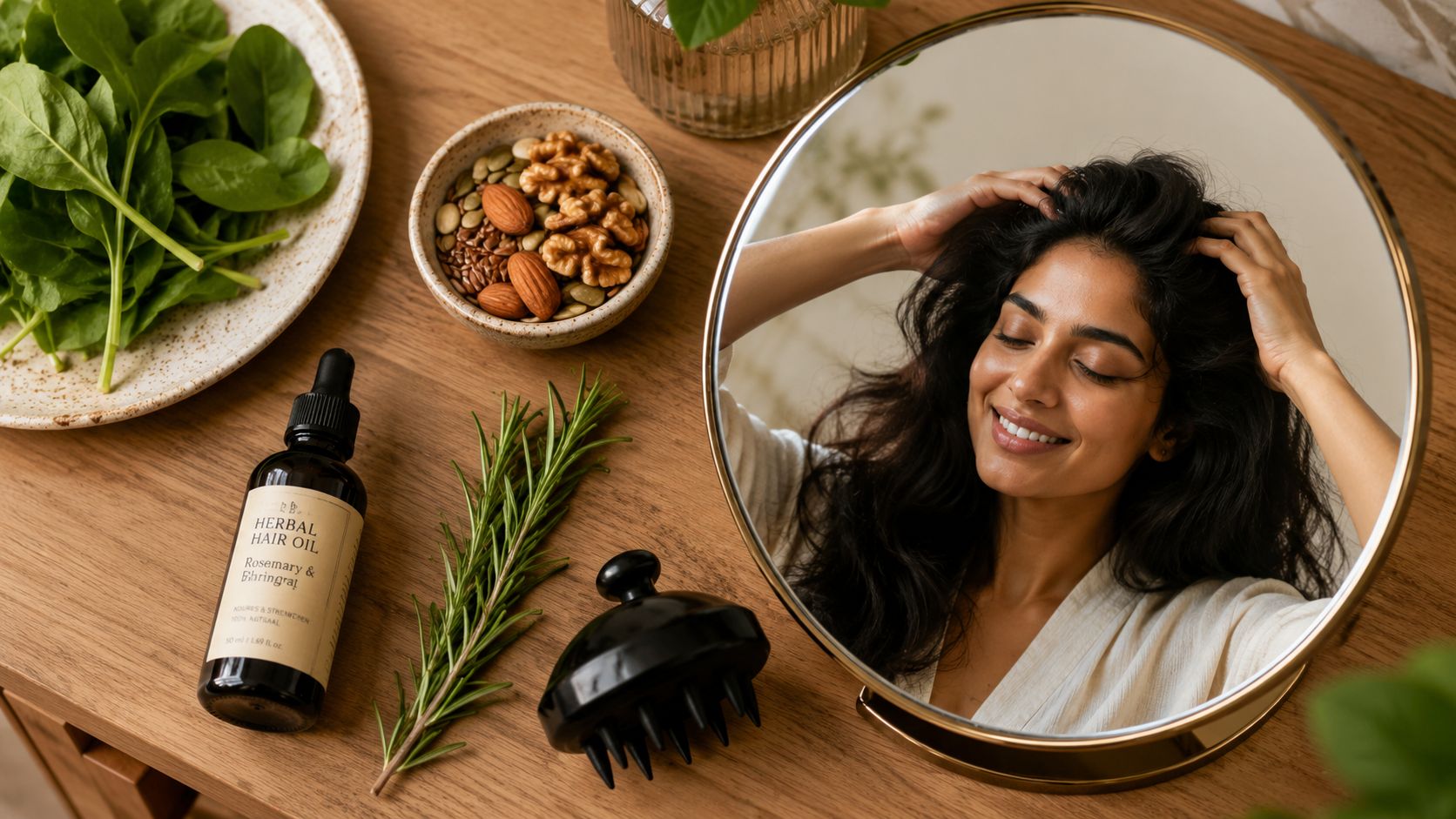
Among scalp-directed natural interventions, low-level light therapy has some of the more promising non-drug results, while scalp massage and essential oils are generally low-risk but often modest in effect. A commonly used regimen is 5 to 10 minutes of scalp massage several times weekly, based on this GoodRx summary of natural hair growth remedies.
That doesn't mean massage is magic. It means it can be a reasonable supportive habit if you do it gently and consistently.
Try this simple method:
- Sit comfortably with dry or slightly damp hair.
- Place your fingertips on the scalp, not the hair strands.
- Use slow, small circular motions.
- Cover the frontal hairline, temples, crown, and sides.
- Stop if the scalp feels irritated.
A good scalp massage should feel calming, not abrasive. If you're tugging hairs or creating soreness, you're doing too much.
Essential oils are another area where expectations need to stay grounded. Some people enjoy them, and they may be a low-risk add-on when properly diluted, but they're not where I'd place the most confidence. Gentle handling and consistent scalp care usually matter more than the oil itself.
What works better than a crowded product shelf
If you want a simpler rule, use this one.
| Keep doing | Scale back |
|---|---|
| Gentle cleansing | Harsh scrubbing |
| Loose hairstyles | Constant tight tension |
| Careful detangling | Ripping through knots |
| Moderate, thoughtful heat use | Frequent high-heat styling |
| Brief consistent massage | Aggressive “stimulation” gadgets |
A healthy scalp environment supports better hair behavior. It won't override every biological cause, but it does remove a common layer of avoidable damage.
Manage Stress and Prioritize Restorative Sleep
Some thinning patterns start with nutrition. Others worsen because the nervous system has been running hot for too long.
Patients often tell me, “My labs were mostly fine, my routine isn't terrible, but my hair changed during a hard stretch.” That history matters. Hair can reflect stress long after the stressful event feels “over.”
Why stress shows up in hair
Hair growth follows a cycle. When the body is under strain, more follicles can shift out of active growth and into shedding. People usually don't notice that transition immediately. They notice it later, when the brush fills faster or the ponytail feels smaller.
This is one reason stress-related shedding can feel confusing. The timeline is delayed enough that people miss the connection.
If you want a consumer-friendly explanation of that relationship, this guide to hair loss causes related to stress is a reasonable companion read.
Don't use “reduce stress” as a vague goal
That phrase is too broad to help anyone. Stress management works better when it becomes a short, repeatable practice.
Try a tighter plan:
- Use brief breathing drills: Box breathing or another slow breathing pattern can help lower physiological intensity when you feel revved up.
- Walk without your phone sometimes: A short outdoor walk often helps more than scrolling in a seated stressed state.
- Create a wind-down cue: Dim lights, reduce stimulation, and stop treating bedtime like a second work shift.
- Protect sleep timing: Irregular sleep can keep your system feeling unsettled even when total hours seem acceptable.
Build a calmer baseline
You don't need a perfect wellness routine. You need less chaos in the system.
A few practical signs your body may need more recovery support include feeling wired at night, waking unrefreshed, clenching your jaw, having a racing mind at bedtime, or noticing that you never really downshift during the day. Those patterns don't just affect mood. They can influence appetite, consistency, inflammation, and how well you stick to every other part of your hair plan.
When hair is thinning, sleep isn't cosmetic. It's part of treatment thinking.
I also tell patients not to turn relaxation into another performance task. If meditation frustrates you, don't force it. Stretch. Pray. Breathe. Walk. Read. Sit. The best stress tool is the one you'll repeat.
Incorporate Advanced Natural Therapies
There's a point where a purely home-remedy mindset becomes limiting. Not because natural care is useless, but because the strongest noninvasive options today often blend lifestyle habits with device-based treatment.
Low-level laser therapy, also called LLLT, enters the discussion. It represents one of the clearest shifts from anecdotal natural care toward evidence-ranked, noninvasive support.

Why LLLT matters
Mayo Clinic notes that the FDA has approved a low-level laser device for hereditary hair loss in men and women in its hair loss diagnosis and treatment guidance. That approval matters because many popular “natural” options still rely on much thinner support.
In plain terms, LLLT stands apart because it's noninvasive, at-home options exist, and it has moved beyond folklore status. That doesn't mean every light device is equal, and it doesn't mean everyone responds the same way. It does mean this category deserves more respect than most oils and scalp potions.
What realistic use looks like
The biggest mistake with light therapy is expecting fast regrowth. Hair responds slowly, and visible change usually lags behind consistent effort.
A better way to judge progress is:
| Early signs worth noticing | Expectations to avoid |
|---|---|
| Less shedding | Expecting dramatic density immediately |
| More stable part line | Switching devices too soon |
| Healthier scalp feel | Using light while ignoring root causes |
Consistency matters more than intensity. If the underlying cause is still active, no device will completely compensate for it.
Where skin technology overlaps with scalp care
Some patients already use light-based devices for skin and ask whether that same wellness approach can support the scalp. The answer is that red light principles overlap conceptually through photobiomodulation, especially around calming the tissue environment and supporting cellular activity.
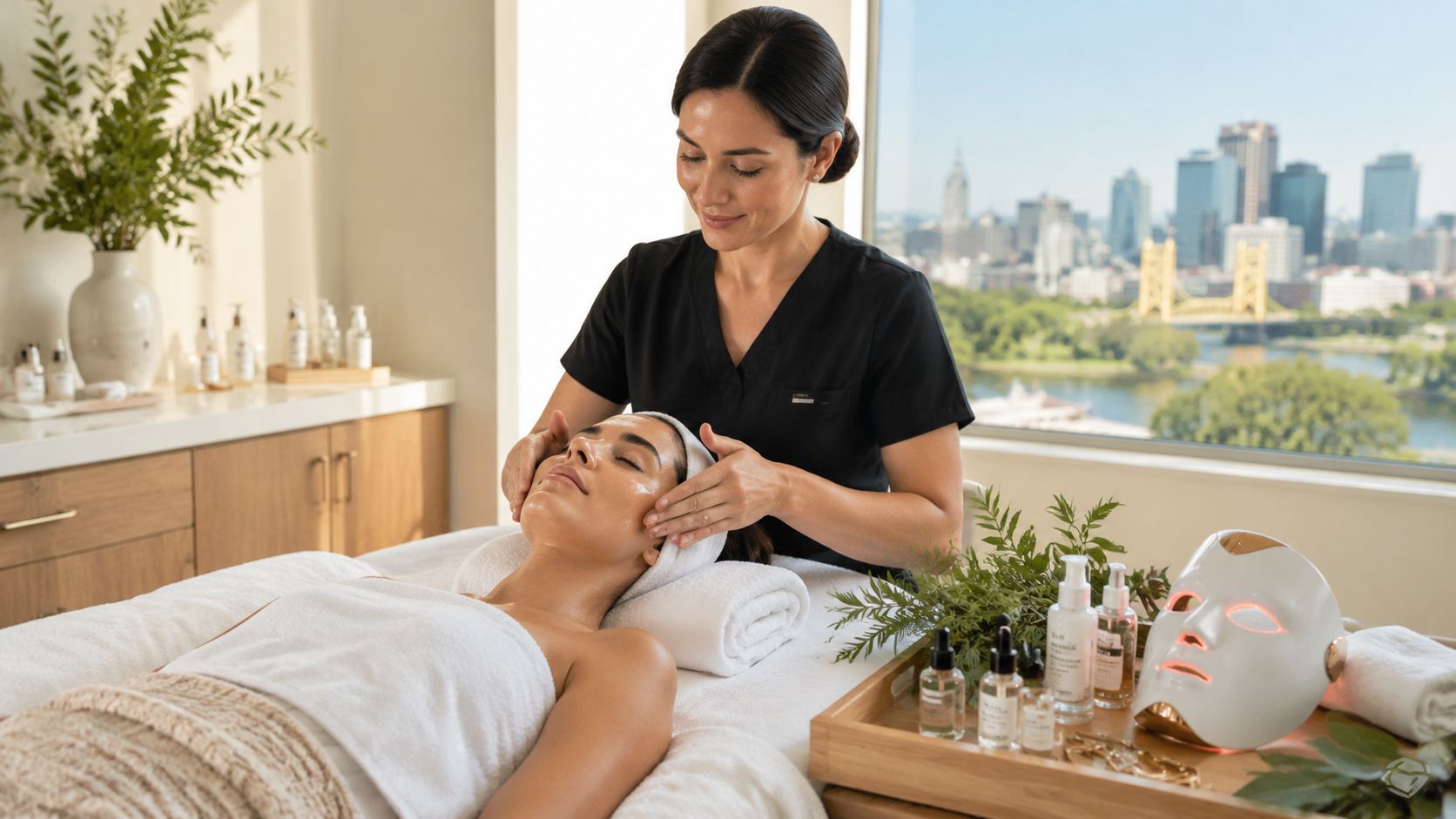
A good example is the Barb N.P. LED Facial Mask. It's designed for skin, not as a dedicated scalp helmet, but it fits into a broader at-home light therapy routine because it's wireless, built for comfort on the face, and offers 3 lighting settings for different treatments. For people who already value light-based wellness rituals, that kind of device can support a more consistent habit pattern.
If you're at the point where natural measures need to be paired with stronger in-office support, it's also worth understanding how PRP treatment for hair loss fits into escalation decisions.
Modern natural care isn't just herbs and homemade masks. It increasingly includes noninvasive devices that have a clearer clinical role.
That's the practical middle ground. Keep the foundations strong. Add technology when it earns its place.
Your 30 and 90 Day Protocol and Next Steps
The most effective plan is the one you can follow without reinventing it every week. Hair recovery is slow enough that inconsistency becomes the enemy fast.
Use photos in the same lighting each month. Watch shedding, part width, temple fullness, and overall feel. If you want another patient-friendly resource on building supportive habits, this guide to healthy hair naturally offers a simple lifestyle-focused perspective.

Your action plan
| Timeline | Focus | What to do |
|---|---|---|
| First 30 days | Stabilize the basics | Eat consistently, prioritize protein-rich meals, use gentle hair care, loosen traction styles, begin brief scalp massage, and set a repeatable sleep routine |
| First 30 days | Track instead of guessing | Take baseline photos, note shedding patterns, and write down recent stress, illness, diet shifts, or medication changes to discuss if needed |
| By 90 days | Stay consistent | Keep nutrition steady, continue low-tension styling, maintain scalp care, and use noninvasive light-based therapy consistently if it fits your plan |
| By 90 days | Reassess honestly | Look for reduced shedding, better stability, and whether thinning has slowed rather than expecting instant fullness |
When to stop self-managing and get evaluated
Natural care should never trap you in delay. Get seen sooner if the pattern is sudden, patchy, painful, inflamed, or not making sense.
Also seek evaluation if shedding continues despite a disciplined routine, or if hair thinning comes with broader health changes like fatigue, menstrual disruption, weight shifts, or symptoms that suggest a thyroid or nutritional issue. That's where labs, a scalp exam, and a more targeted plan become important.
For many people, how to stop hair thinning naturally really means building the strongest possible base, then knowing when to escalate intelligently. That's good care. It isn't giving up on natural support. It's using it within a medically sound plan.
If you want practitioner-guided support for hair wellness, skin care, and noninvasive treatment options, explore BotoxBarb. You'll find curated wellness and beauty products, including hair-focused options, along with professional services designed to help you move from guesswork to a clearer plan.