How to Treat Rosacea Naturally and Finally Calm Your Skin
If you’re struggling with rosacea, you know it’s so much more than a little redness. It’s a frustrating cycle of flare-ups and calm periods that can feel impossible to control. The key to finally getting ahead of it isn't just about finding the right cream—it's about truly understanding what’s happening with your skin and why.
Before you can effectively calm that persistent inflammation, you have to get to the root of the problem. That means figuring out your specific rosacea type, identifying what sets it off, and, most importantly, supporting your skin’s delicate protective barrier.
Understanding Rosacea Before You Treat It
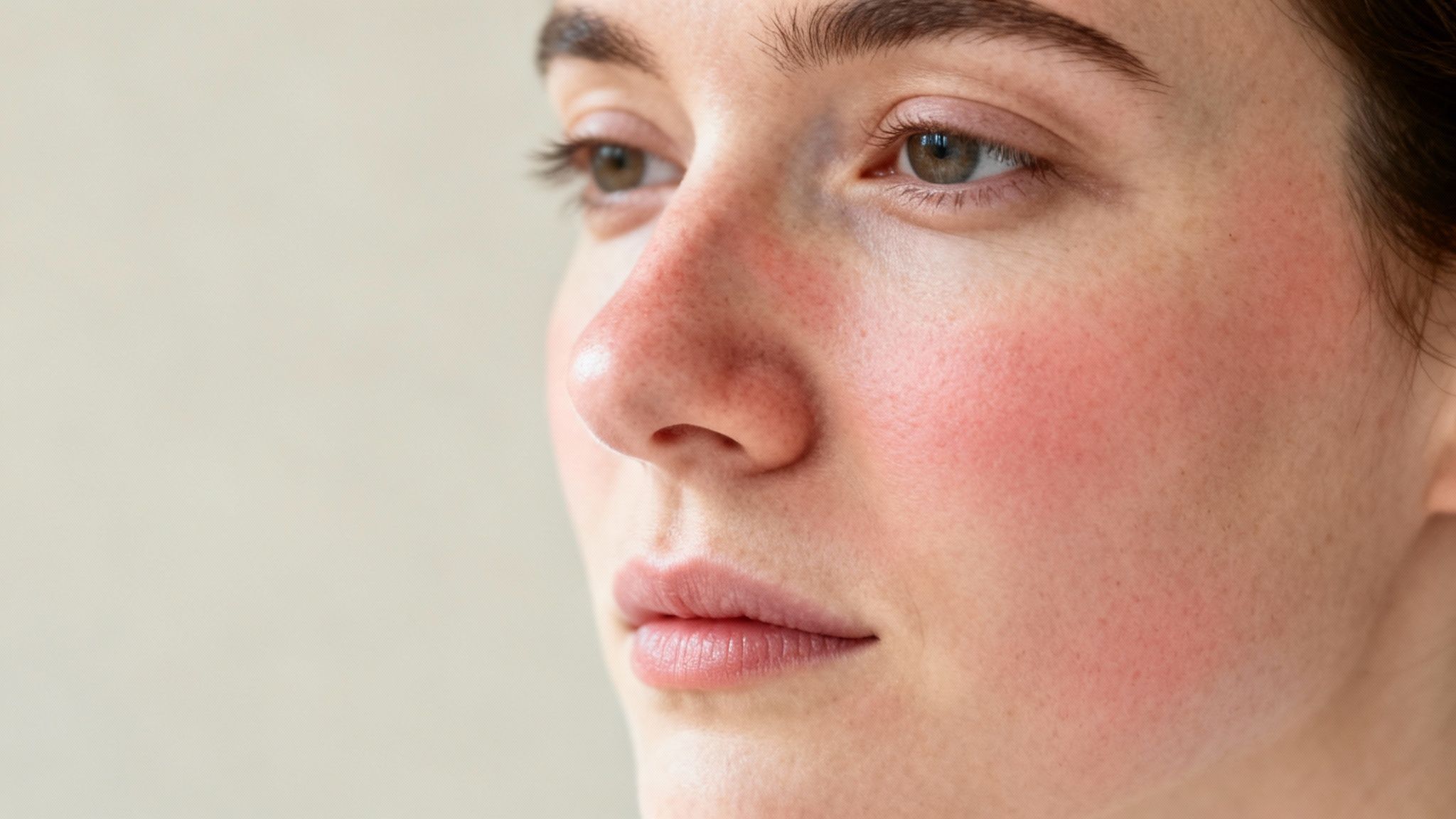
Rosacea is a chronic inflammatory skin condition, and its exact cause is still a bit of a medical mystery. We know it’s a complex mix of genetics, immune system responses, and environmental factors. What one person experiences can be completely different from another, which is why a one-size-fits-all approach just doesn’t work.
Knowing your specific subtype is the first real step toward finding relief. This is where you move from reacting to flare-ups to proactively managing your skin.
The Four Faces of Rosacea
While it's common to have symptoms from more than one category, most people have one dominant type. Pinpointing yours helps tailor every other choice you make.
-
Erythematotelangiectatic Rosacea (ETR): This is the one most people picture. It's defined by that stubborn facial redness, flushing, and tiny, visible blood vessels. It often feels like a constant blush that just won’t fade.
-
Papulopustular Rosacea: Often mistaken for adult acne, this type brings on redness, swelling, and bumps or pimples that are filled with pus. The tell-tale difference? Unlike acne, you typically won't see any blackheads.
-
Phymatous Rosacea: This is a less common form where the skin thickens and develops a bumpy, swollen texture. It most often affects the nose, a condition known as rhinophyma.
-
Ocular Rosacea: This tricky subtype targets the eyes. It can cause them to look bloodshot and watery, and feel gritty or constantly irritated. Styes and swollen eyelids are also common signs.
For every single one of these types, the health of your skin barrier is non-negotiable. A compromised barrier is like leaving the door wide open for irritants, which only makes rosacea symptoms worse. Learning how to repair a damaged skin barrier is often the foundational step to getting rosacea under control.
A strong, intact skin barrier is your first line of defense. It locks in moisture and keeps out irritants. For rosacea-prone skin, protecting this barrier isn't just a skincare goal—it's a necessity for reducing sensitivity and flare-ups.
What Triggers Rosacea Flare-Ups
While the condition itself is chronic, flare-ups are almost always kicked off by specific triggers. They are different for everyone, which is why becoming a bit of a detective is a cornerstone of any natural treatment plan.
The most common culprits cause vasodilation (the widening of blood vessels) and inflammation. Keep an eye out for these:
- Sunlight: For the majority of people with rosacea, UV exposure is the number one trigger.
- Stress: That feeling of being overwhelmed? It can cause a physical response in your skin, leading directly to flushing and inflammation.
- Heat: Hot yoga, saunas, a long hot shower, or even just sitting too close to a fireplace can provoke a flare-up.
- Diet: Spicy foods, alcohol (especially red wine), hot drinks like coffee or tea, and even certain dairy products are frequent offenders.
- Harsh Skincare: Be wary of products with alcohol, witch hazel, fragrances, and aggressive scrubs or exfoliants. They can strip your skin and make redness much worse.
Once you understand the "what" (your subtype) and the "why" (your triggers), you’re no longer just putting out fires. You’re building a smart, proactive plan to manage your skin’s health from the inside out. This knowledge is your power.
Building a Gentle Skincare Routine That Actually Works
When you have rosacea, your bathroom counter can feel like a minefield. The wrong product doesn’t just do nothing—it actively makes things worse, leaving your skin angrier and redder than before. For rosacea-prone skin, a harsh, stripping routine is the enemy.
The goal is to build a supportive, non-irritating regimen that strengthens your skin's protective barrier, not dismantles it. This isn’t about a complicated 10-step process. It’s about being incredibly selective and focusing on three non-negotiable pillars: a gentle cleanser, a barrier-repairing moisturizer, and a dedicated mineral sunscreen. Simplicity is your greatest ally here.
Start with a pH-Balanced Cleanser
The very first step in your routine can either set your skin up for success or send it into a tailspin. Many popular cleansers, especially those that foam up aggressively, have a high alkaline pH that strips away your skin’s acid mantle. This delicate, protective film is crucial for keeping moisture in and irritants out.
Look for cleansers explicitly labeled as soap-free, sulfate-free, and pH-balanced (ideally around 5.5). These formulas respect your skin's natural state. For instance, the BARB N.P. gentle cleanser is a perfect example of this philosophy. It’s formulated to effectively remove impurities without using harsh detergents, making it an ideal starting point for a rosacea-friendly routine.
When cleansing, always use lukewarm water—never hot—and pat your face dry gently with a soft towel. Aggressive rubbing can physically aggravate redness and broken capillaries. Think of your skin as delicate silk, not durable canvas.
Lock in Hydration with the Right Moisturizer
After cleansing, your skin is prepped to receive hydration. For rosacea, a moisturizer does more than just combat dryness; its primary job is to repair and reinforce your skin barrier. When your barrier is healthy, it's better at defending against environmental triggers.
Look for these key ingredients:
- Ceramides: These are the natural fats that act like the "mortar" holding your skin cells together. Replenishing them is essential for barrier function.
- Hyaluronic Acid: This molecule can hold up to 1,000 times its weight in water, providing deep hydration without a heavy or greasy feel.
- Niacinamide (Vitamin B3): A true multitasker, niacinamide has proven anti-inflammatory properties and helps improve skin barrier function and reduce redness.
Applying your moisturizer to slightly damp skin helps lock in even more hydration. A strong, well-hydrated barrier is fundamental, and you can learn more by reading our in-depth guide on how to repair a damaged skin barrier.
Make Mineral Sunscreen Your Daily Armor
If there is one absolute, non-negotiable step in any rosacea skincare routine, it's daily sun protection. UV radiation is the most commonly reported trigger for rosacea flare-ups, affecting an estimated 81% of individuals with the condition. Even incidental sun exposure, like walking to your car or sitting near a window, adds up.
For rosacea, mineral sunscreens are the gold standard.
- Zinc Oxide: This is the hero ingredient. It sits on top of the skin and physically blocks UV rays. It is also inherently anti-inflammatory and soothing, which is a major bonus for red, irritated skin.
- Titanium Dioxide: Often used alongside zinc oxide, it also provides excellent broad-spectrum physical protection.
Unlike their chemical counterparts, mineral sunscreens are far less likely to cause stinging or irritation. Find a broad-spectrum formula with an SPF of 30 or higher and make it the final step of your morning routine, every single day, without exception. This single habit can dramatically reduce the frequency and intensity of flare-ups.
Rosacea Skincare Dos and Don'ts
Navigating product labels and routines can be overwhelming. This quick-reference guide helps you choose the right skincare practices and avoid common irritants.
| Do | Don't |
|---|---|
| Use lukewarm water for cleansing. | Use hot or very cold water, which can trigger flushing. |
| Choose fragrance-free and alcohol-free products. | Use products with synthetic fragrances, essential oils, or denatured alcohol. |
| Look for minimalist formulas with calming ingredients. | Overload your skin with too many active ingredients at once. |
| Pat your skin dry with a soft, clean towel. | Rub or scrub your face, which can cause physical irritation. |
| Always patch test new products before applying to your entire face. | Introduce multiple new products into your routine simultaneously. |
| Apply a mineral-based SPF 30+ every single morning. | Skip sunscreen, even on cloudy days or when you're indoors. |
Sticking to these simple principles will help you build a routine that calms, protects, and supports your skin's health, rather than fighting against it.
Soothing Your Skin with Nature's Best Ingredients
Once you’ve mastered a gentle daily routine, the next step is to introduce specific topical ingredients that can actively calm inflammation and strengthen your skin. Nature provides some incredible options, but it's not about grabbing anything with a "natural" label. We need to be smart and selective, focusing on botanicals and compounds with real evidence behind them.
When you're trying to manage rosacea naturally, your shopping list should feature ingredients with proven anti-inflammatory and barrier-repairing powers. These are the actives that truly make a difference in dialing down redness and sensitivity.
Science-Backed Botanicals for Calmer Skin
Not all plant extracts are created equal, especially for skin that’s already reactive. Some can be surprisingly irritating, while others are absolute powerhouses for soothing redness.
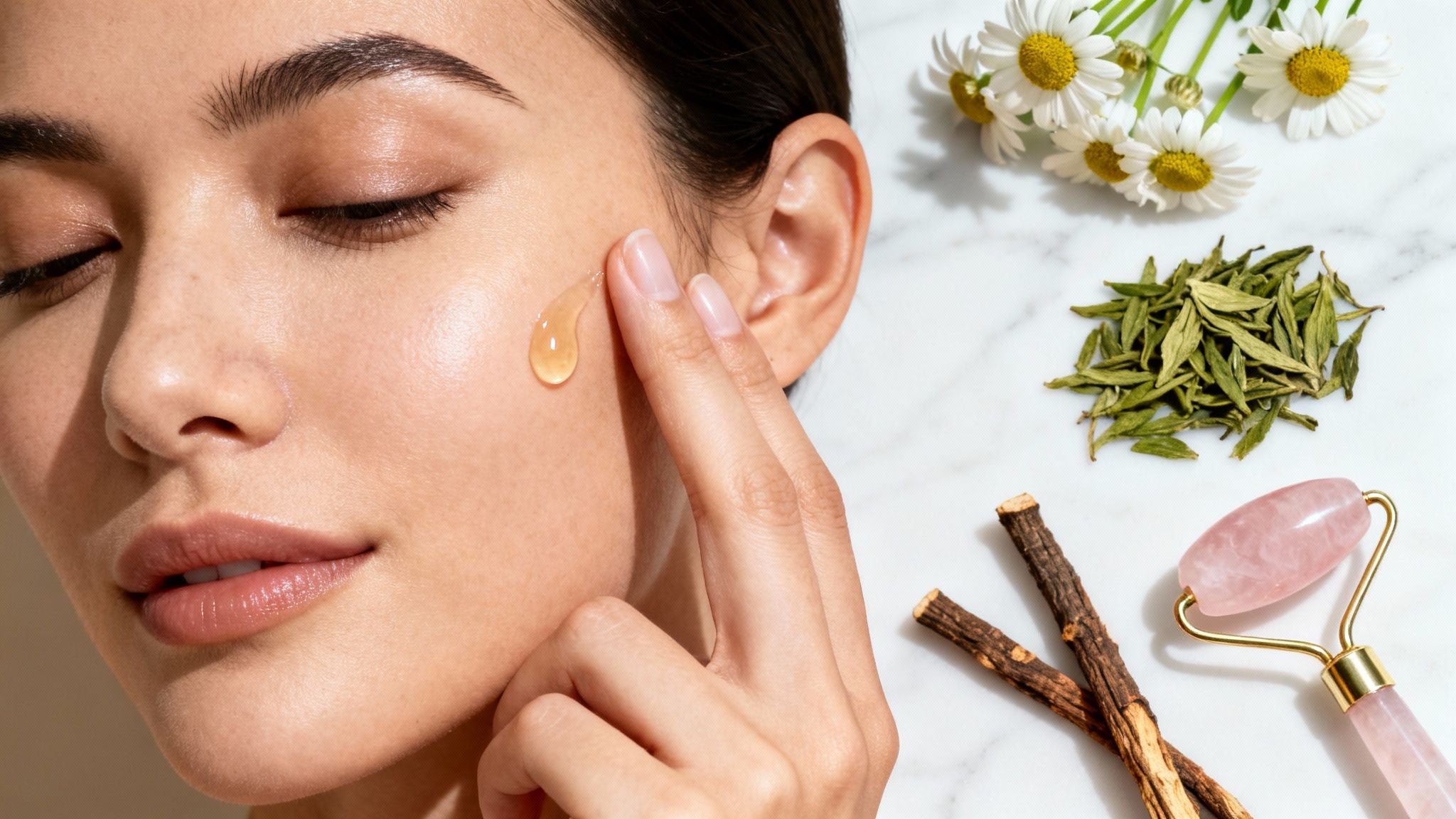
- Green Tea Extract (EGCG): A deeply researched antioxidant, the star compound in green tea—epigallocatechin-3-gallate (EGCG)—is a hero for stressed skin. It’s been shown to reduce inflammation and help shield the skin from environmental triggers like UV radiation, which can visibly lessen the redness tied to rosacea.
- Licorice Root Extract: Famous for its calming abilities, licorice root contains glabridin, a compound that is brilliant at soothing irritation and toning down redness. It's a go-to ingredient in formulas designed for sensitive complexions.
- Chrysanthemum Indicum Extract: This one is a real game-changer. A major double-blind, placebo-controlled study with 246 people found that a cream with just 1% Chrysanthemum indicum extract was significantly better than a placebo at calming redness, flushing, and inflammation over 12 weeks. By the end, over 70% of the patients using the extract saw noticeable improvements. The results are compelling, and you can read the full research about these rosacea findings for a deeper dive.
These ingredients work by gently targeting the inflammatory pathways that keep rosacea symptoms active, offering an effective way to calm things down.
The decision tree below simplifies the core steps of building a skincare routine that supports your skin.
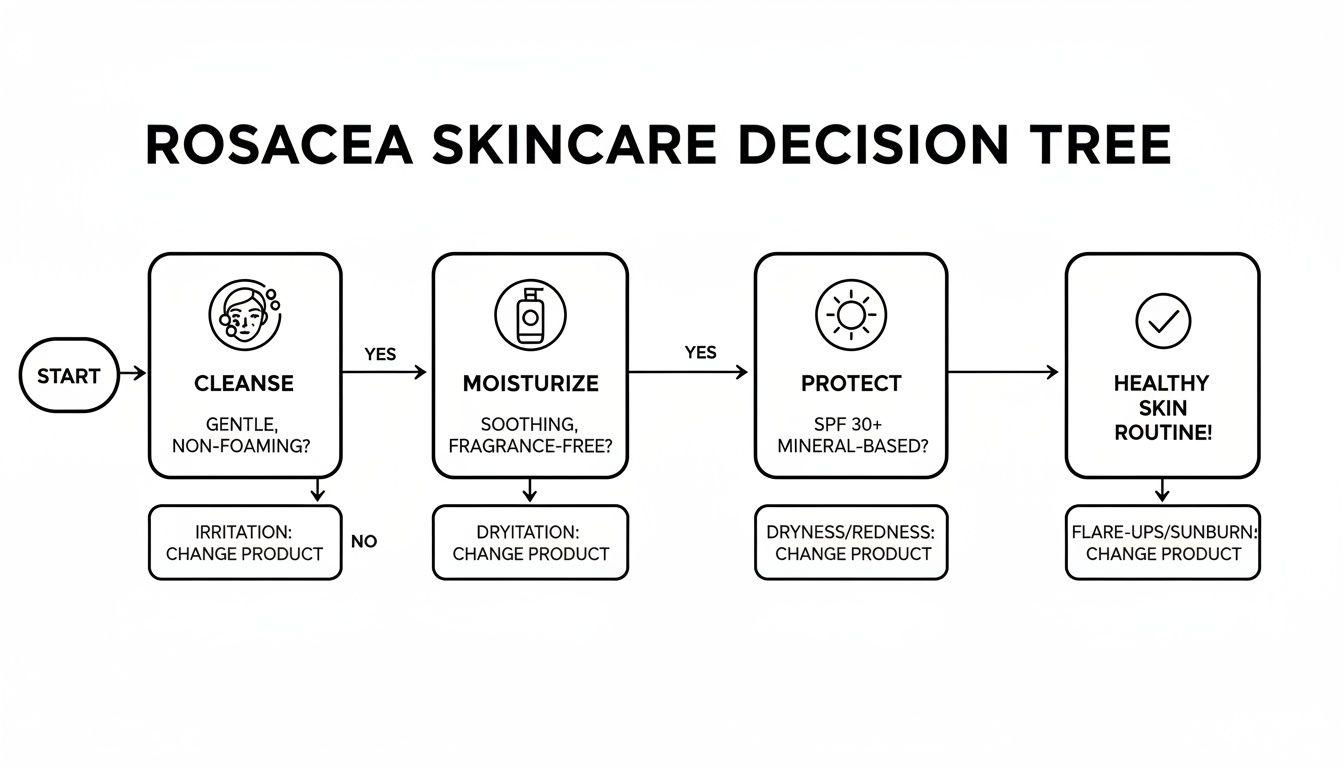
This visual is a great reminder that the foundation of good rosacea care always comes back to those three pillars: gentle cleansing, smart moisturizing, and daily sun protection.
Essential Vitamins to Support Your Skin Barrier
Beyond botanicals, certain vitamins applied topically can seriously fortify your skin's defenses and make it less reactive. You'll often find these in serums and moisturizers formulated with sensitivity in mind.
One of the best is niacinamide (Vitamin B3). It’s a true multitasker, helping to restore the skin’s barrier, lock in moisture, and calm inflammation. Over time, this translates to less redness and a stronger, more resilient complexion.
If you’re looking for a product that puts all this science into one bottle, the BARB N.P. Calming Serum is an amazing option. It was specifically formulated with a blend of these research-backed, soothing ingredients to reduce the look of redness and support a healthy skin barrier—making it a perfect fit for a natural rosacea management plan.
Always Patch Test First: Before you go all-in on a new product, please do a patch test. Apply a tiny amount to a hidden spot, like behind your ear or on your inner wrist, and wait 24-48 hours. This simple step can save you from a major, full-face flare-up.
How to Introduce New Ingredients Without Causing a Flare
Adding new products—even the most natural ones—requires a slow, careful approach to avoid shocking your sensitive skin.
- One at a Time. Never start multiple new products at once. If your skin gets irritated, you won’t have a clue which one is the culprit.
- Start Low and Slow. Begin by using the new product just a few times a week, or even every other day. This gives your skin time to get used to it.
- Listen to Your Skin. Pay close attention to how it feels. If you notice any new redness, stinging, or irritation, stop using the product immediately.
- Be Patient. It can take several weeks of consistent use to see the full benefits of a new ingredient. Managing a chronic condition like rosacea is a marathon, not a sprint.
By carefully choosing your ingredients and introducing them with patience, you can build a powerful, natural routine that not only soothes your skin but makes it stronger for the long haul.
Managing Rosacea Triggers with Diet and Lifestyle
What you put on your skin is only half the battle when you're learning how to treat rosacea naturally. True, long-term relief really comes from the inside out, focusing on those everyday choices that can either calm your skin or send it into a full-blown flare-up.
This means you’ll need to become a bit of a detective to figure out your personal triggers. The goal is to make smart adjustments that prevent the redness before it even starts.
Become a Trigger Detective with a Diary
Here’s the thing about rosacea: your triggers are uniquely yours. What makes one person flush might have zero effect on you. The single most powerful tool you have at your disposal is a trigger diary.
For a few weeks, just jot down what you eat and drink, your stress levels, your activities, and, of course, when your skin flares. It doesn't have to be complicated.
Soon enough, patterns will start to emerge. Maybe you'll notice that every time you have a spicy curry, your cheeks are angry the next day. Or perhaps a stressful meeting at work is consistently followed by a breakout of pustules. This data is gold because it moves you from guessing to knowing exactly what your skin is reacting to.
Once you’ve pinpointed a potential culprit, you can start making targeted changes. If you suspect a food trigger, we have more guidance on how to systematically find sensitivities in our guide to trying an elimination diet for food allergies.
Navigate Your Diet for Calmer Skin
Diet is easily one of the most common and controllable trigger categories for rosacea. Certain foods ramp up blood flow and cause vasodilation—the widening of blood vessels—which is the direct mechanism behind that tell-tale flushing.
Common dietary triggers to keep an eye on include:
- Spicy Foods: Anything with capsaicin is a usual suspect. Think chili peppers, cayenne, and hot sauces.
- Hot Beverages: It's often the temperature, not just the caffeine in your coffee or tea, that causes a reaction. Try letting your drink cool down a bit first.
- Alcohol: Red wine is notorious for a reason, but really any alcohol can provoke a flare-up for some people.
- Cinnamaldehyde-Rich Foods: This is a specific compound found in things like cinnamon, citrus fruits, tomatoes, and even chocolate.
On the flip side, an anti-inflammatory diet can do wonders to reduce the systemic inflammation that fuels rosacea. Try to incorporate more omega-3 fatty acids from sources like salmon and walnuts, and load up on antioxidant-rich fruits and veggies. Understanding the direct link between sugar and inflammation is another crucial piece of the puzzle. Cutting back on pro-inflammatory foods can have a significant calming effect on your skin.
Rosacea management isn't about perfection; it's about balance. You don't have to give up everything you love forever. Once your skin is calm, you can mindfully reintroduce foods to find your personal tolerance level.
Manage Stress and Temperature for Skin Stability
Stress and extreme temperatures are powerful triggers that can undo all the hard work of a perfect skincare routine. When you're stressed, your body pumps out cortisol, which fuels inflammation everywhere—and your skin is often the first place it shows up.
Try to incorporate some stress-reducing practices into your daily life:
- Mindfulness or Meditation: Even just five minutes of deep breathing can lower your body's stress response.
- Gentle Exercise: Activities like yoga or walking are excellent, but always be mindful of not overheating.
- Adequate Sleep: Aim for 7-8 hours a night. This is when your body and skin do their most important repair work.
Temperature control is just as critical. Overheating is a direct path to a flare-up. You can manage this by exercising in a cool environment, skipping hot saunas or steam rooms, and dressing in layers so you can adjust.
Little things make a big difference. In the winter, don't blast the car heater directly on your face. In the summer, seek out shade and stay hydrated. These small, consistent adjustments create a stable environment where your skin can finally relax and thrive.
Using Key Supplements to Support Your Skin from Within
While your daily skincare routine and lifestyle tweaks are the foundation for managing rosacea, what you do internally can completely change the game. Think of it this way: topicals calm the surface, but targeted supplements work from a deeper level to cool the systemic inflammation that fuels the fire.
But this isn't about throwing a dozen different pills at the problem. The goal is to be strategic. We'll focus on a few key players with solid research behind them, giving your body the tools it needs to calm itself from the inside out.
The Power of Zinc Sulfate
If you could only pick one supplement to start with, zinc is a strong contender. This essential mineral is a powerhouse for skin health, known for its potent anti-inflammatory and healing properties that are a perfect match for rosacea-prone skin. It helps regulate the body’s inflammatory response and might even help manage the Demodex mites often linked to flare-ups.
The science backs it up. One double-blind, placebo-controlled trial found that patients taking 100 mg of zinc sulfate daily saw their lesion counts drop by an average of 45% in just 12 weeks. That’s a massive improvement compared to the placebo group. Even better, some studies show that combining oral zinc with a topical version can boost symptom relief to as high as 80%. You can read more about these zinc study findings to see the data for yourself.
A Crucial First Step: Before starting any new supplement, especially one like zinc, it's vital to have a conversation with a healthcare provider like a Nurse Practitioner. They can help determine the right dosage for you and ensure it doesn’t interact with other medications or conditions.
Tapping into Turmeric and Omega-3s
Beyond zinc, two other anti-inflammatory all-stars deserve a spot in your routine: turmeric (specifically its active compound, curcumin) and omega-3 fatty acids. Both work to quiet your body’s inflammatory pathways, helping to soothe the chronic, low-grade inflammation that keeps rosacea going.
-
Turmeric (Curcumin): This vibrant yellow spice isn’t just for cooking. Curcumin is a potent anti-inflammatory that helps reduce redness and swelling from within. For it to work best, look for a supplement that pairs curcumin with black pepper extract (piperine), which dramatically increases how much your body can absorb. A typical dose is around 500-1,000 mg per day.
-
Omega-3 Fatty Acids: Found in fatty fish like salmon, flaxseeds, and walnuts, omega-3s are critical for building healthy skin cells and taming inflammation throughout the body. A high-quality fish or algae oil supplement can help fortify your skin barrier and reduce that persistent redness. Aim for a supplement that provides at least 1,000 mg of combined EPA and DHA daily.
Introducing Supplements Safely
Just like a new serum, you’ll want to introduce supplements slowly and thoughtfully.
- Start One at a Time: Begin with a single supplement and give your body a few weeks to adjust before adding another. This is the only way to know what’s actually working for your skin.
- Take with Food: Supplements like zinc can sometimes cause a bit of nausea on an empty stomach. Taking them with a meal usually solves this.
- Be Patient and Consistent: Internal changes take time. You’ll likely need 8-12 weeks of consistent daily use to see a real difference in your skin. Snap a few photos along the way—it helps you see the gradual but meaningful progress.
Working with a knowledgeable provider can help you create a supplement plan that makes sense for you. At BotoxBarb, we offer products like the BARB N.P. Omega-3 Fish Oil, a medical-grade formula curated to support an anti-inflammatory lifestyle. It’s the perfect complement to your natural approach to finally getting your rosacea under control.
Taking Your Natural Routine to the Next Level with Advanced Therapies
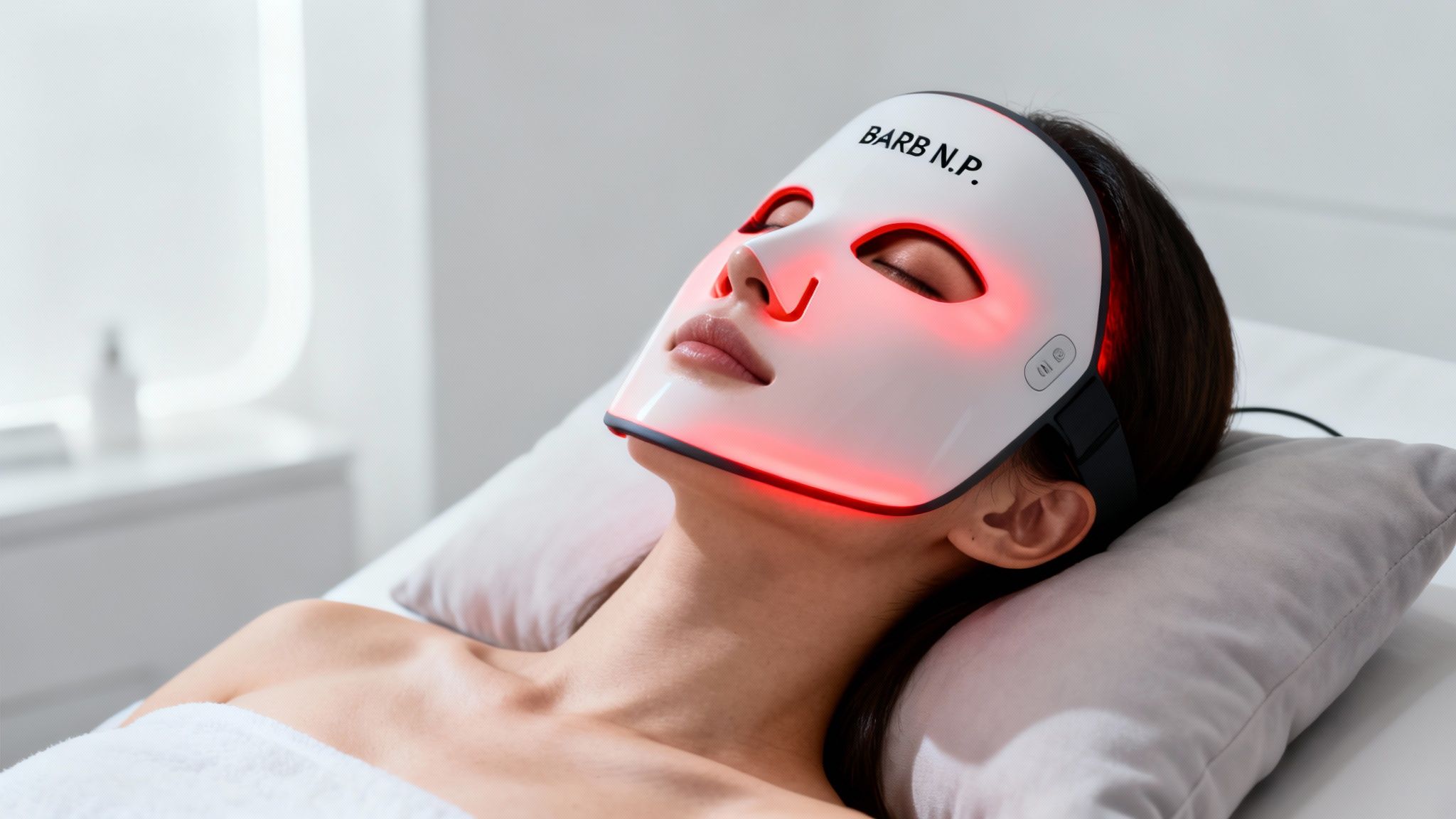
Once you’ve built that solid foundation—a gentle routine, calming ingredients, and mindful lifestyle tweaks—you might be wondering what's next. This is where you can start incorporating powerful at-home therapies to significantly boost your results and calm inflammation on a deeper, cellular level.
One of the most effective tools for this is light-emitting diode (LED) therapy. It's a gentle, non-invasive technology that uses specific wavelengths of light to kickstart natural biological processes in the skin. For rosacea, this is a total game-changer, and it brings a professional-grade treatment right into your living room.
Red Light: The Star Player for Rosacea Relief
When we talk about managing rosacea, not all light is created equal. Red light therapy is the star player here, hands down. It’s known for its incredible anti-inflammatory and healing properties.
When red light penetrates the skin, it stimulates the mitochondria—the tiny powerhouses inside your cells—essentially giving them a jolt of energy. This cellular energy boost translates into some major benefits for angry, reactive skin:
- Calms Inflammation: Red light helps quiet down the overactive inflammatory pathways in rosacea, leading to a visible reduction in redness and swelling.
- Strengthens the Skin Barrier: It speeds up skin repair, helping to fortify a compromised barrier and making it more resilient against your known triggers.
- Improves Circulation: By promoting healthier blood flow, it can help diminish that persistent flushing over time.
Adding this therapy is a powerful next step in learning how to treat rosacea naturally. It’s not a quick fix, but a proactive tool that supports your skin's own ability to heal and find balance.
Choosing the Right At-Home Device
For consistent results, you need a device that’s both effective and easy to stick with. The Barb N.P. Facial Mask was designed with exactly this in mind, offering a seamless way to integrate LED therapy without the fuss of clunky, corded models.
Here’s what makes it a superior choice for at-home care:
- Completely Wireless: This is a huge deal. You’re not stuck sitting next to an outlet. You can move around, read a book, or just relax on the couch during your session.
- Designed for Comfort: Made with flexible, lightweight silicone, the mask contours comfortably to your face, ensuring the light is distributed evenly without feeling heavy or awkward.
- 3 Lighting Settings: While red light is our go-to for rosacea, the mask also includes blue light (fantastic for targeting acne-causing bacteria) and amber light (known for promoting collagen). This versatility means you’re investing in a tool that can adapt to your skin’s needs as they change.
For a deeper dive into how this all works, check out our guide on the benefits of LED light therapy.
Think of LED therapy as a gentle workout for your skin cells. It doesn't force a change but rather provides the energy and stimulation your skin needs to repair itself more efficiently, leading to calmer, healthier-looking skin over time.
When to Bring in a Professional
While at-home devices offer incredible support, there are times when partnering with a professional can give you an extra edge. A knowledgeable Nurse Practitioner (NP) can offer personalized guidance and specialized treatments that perfectly complement your natural approach.
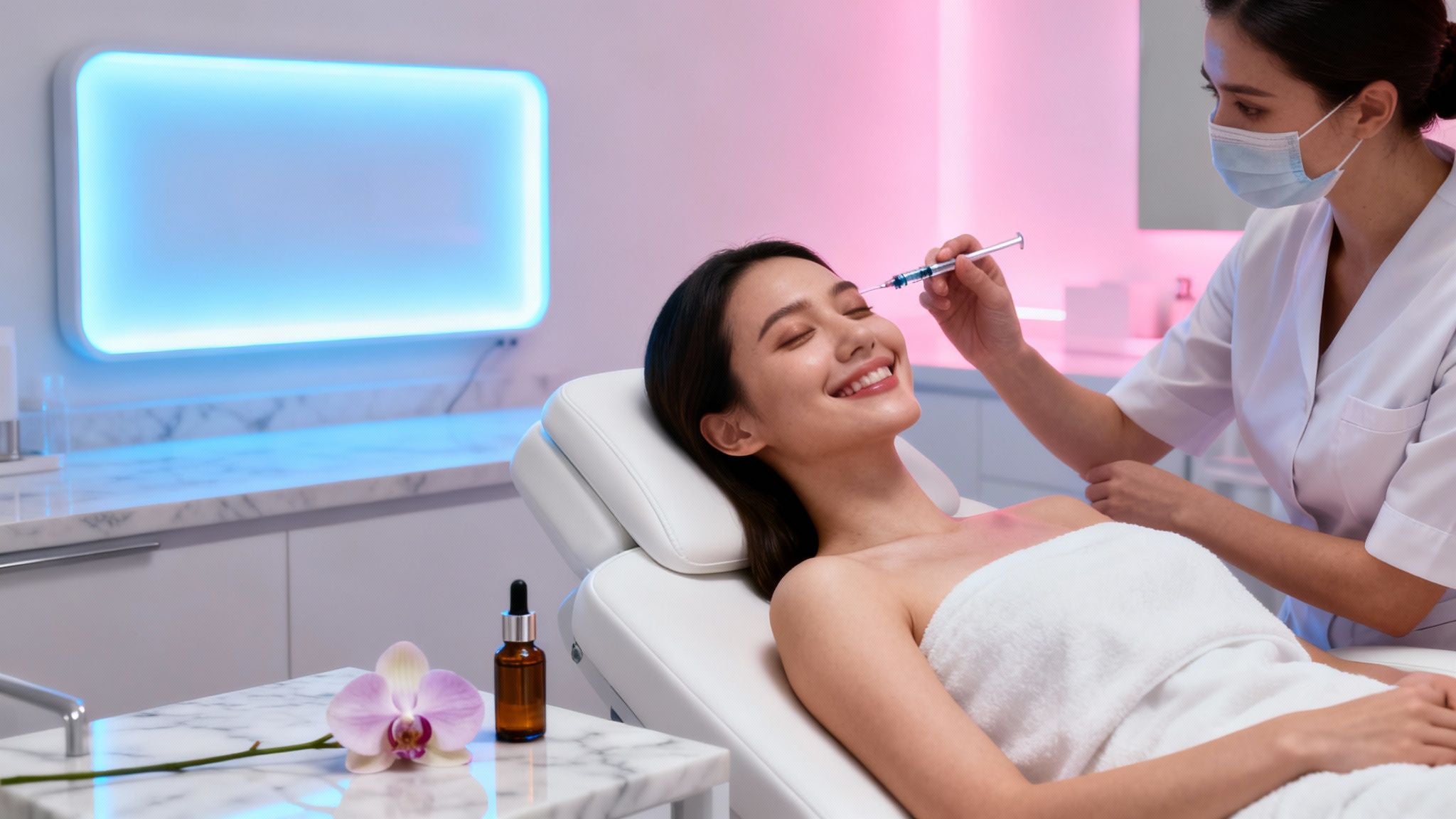
Services like professional-grade calming facials can deliver potent, soothing ingredients deeper into the skin than you can achieve at home. An NP can also assess your progress, help you fine-tune your routine, and provide expert advice tailored specifically to you. This combination of diligent at-home care and professional oversight is the secret to a truly robust and effective plan for long-term rosacea management.
Your Top Questions About Natural Rosacea Treatment, Answered
As you start exploring how to calm rosacea naturally, it’s completely normal to have a few questions. The journey to calmer skin takes patience and a clear game plan. Let’s tackle some of the most common queries I hear from clients, so you can move forward with confidence.
How Long Does It Take to See Results?
This is where patience becomes your most powerful tool. While a soothing cream might feel instantly calming, the real, visible changes in redness and texture don’t happen overnight. It’s all about consistency.
Generally, you can expect your skin’s hydration and overall feel to improve within 2 to 4 weeks of sticking to a gentle skincare routine. For the inside-out approaches, like dietary changes or supplements, give it 8 to 12 weeks to see a noticeable drop in how often or how intensely your flare-ups happen.
My Pro Tip: Take weekly photos in the same lighting. It’s tough to spot gradual progress in the mirror day-to-day, but comparing photos from a month ago can be incredibly motivating. You’ll see just how far you’ve come.
Can Natural Treatments and Prescriptions Work Together?
Absolutely, and this is often the sweet spot for many people. Think of it as a team effort. Diligently managing your dietary triggers and stress levels can actually make your prescribed topicals or oral medications work that much better.
The key here is open communication with your healthcare provider. Some potent botanicals or high-dose supplements can interact with medications, so it’s critical to keep your Nurse Practitioner or dermatologist in the loop. A combined plan should be both safe and effective, and they can help you create one.
Is It Possible to Completely Cure Rosacea Naturally?
Right now, there is no known "cure" for rosacea—whether natural or conventional. It’s a chronic condition, meaning it’s characterized by cycles of calm (remission) and flare-ups.
So, what’s the goal? Effective, long-term management. We want to reduce the frequency and intensity of your flares, strengthen your skin’s barrier so it’s more resilient, and keep your complexion comfortable and clear for as long as possible. Many of my clients achieve long-lasting remission with these strategies, where their skin looks and feels healthy day in and day out.
Are All "Natural" Products Safe for Rosacea?
This is a huge one. "Natural" does not automatically mean "safe," especially for skin as reactive as ours. Lots of natural ingredients—especially essential oils like peppermint and eucalyptus, or astringents like witch hazel—are known to be major rosacea triggers.
Your focus should always be on formulations designed for sensitive skin, not just "natural" skin.
- Become an Ingredient Detective: Learn to spot common irritants like fragrance, denatured alcohol, and menthol on a label.
- Keep It Simple: Look for products with shorter ingredient lists focused on calming and repairing the skin barrier.
- Always Patch-Test: Never put a new product all over your face right away. Test it on a small, hidden patch of skin for at least 24-48 hours to see how your skin reacts.
This careful approach is what ensures the products you choose will actually help calm your skin, not make things worse.
At BotoxBarb, we believe in combining the best of nature and science to achieve lasting skin health. Explore our curated selection of medical-grade skincare and wellness products, including the Barb N.P. Facial Mask, to support your journey. Visit https://barbnp.shop to build a routine that finally brings you relief.