How to Use Hyaluronic Acid Serum for Maximum Hydration
Your skin can feel tight, flat, and strangely dry even when you're using a rich moisturizer every day. That's the pattern I see constantly in practice. The skin isn't always lacking cream. It's often lacking water.
That's where hyaluronic acid serum helps, but only when you use it correctly. A lot of people buy a good serum, smooth it on, and assume hydration will take care of itself. Then they're disappointed when their skin still feels dry by midday, or worse, more dehydrated than before.
Why Your Skin Needs Hyaluronic Acid Done Right
Hyaluronic acid is one of the most useful hydrating ingredients in skincare because it acts as a humectant. It draws water and holds it at the skin's surface. In a serum format, topical hyaluronic acid can increase skin hydration by 55%, measured by corneometry, according to this clinical review on topical hyaluronic acid.
That sounds straightforward, but the result depends heavily on technique. Hyaluronic acid is not a “put it on whenever” product. It needs water to bind to, and it needs a moisturizer after it so that water stays where you want it.
If you're still figuring out the wider hyaluronic acid benefits for skin, the big takeaway is simple. It can help skin look smoother, fresher, and more comfortable, but it performs best when your routine supports it.
For a deeper foundation on the ingredient itself, this guide to what hyaluronic acid is gives useful background before you choose a product or change your routine.
What good use looks like
When hyaluronic acid is used well, skin usually feels:
- Less tight after cleansing
- Softer under moisturizer
- Smoother under makeup
- More comfortable through the day
What poor use looks like
Problems usually start when someone:
- Applies it to dry skin
- Uses too much product
- Skips moisturizer after
- Assumes every climate supports the same routine
Hyaluronic acid is a support step, not a standalone fix. It works best when you give it water first and seal it in second.
That's the difference between a serum that earns its place in your routine and one that ends up blamed for the wrong problem.
The Core Application Method for Plump Dewy Skin

If you want to know how to use hyaluronic acid serum properly, think of it as a short sequence, not a random step. Timing matters.
Dermatologist studies confirm that applying hyaluronic acid to damp skin and immediately sealing it with a moisturizer increases skin hydration by 96% within 24 hours, as noted in this application guide on hyaluronic acid use.
The non-negotiable method
Use this order morning and evening:
- Cleanse first. Wash your face and leave the skin slightly damp.
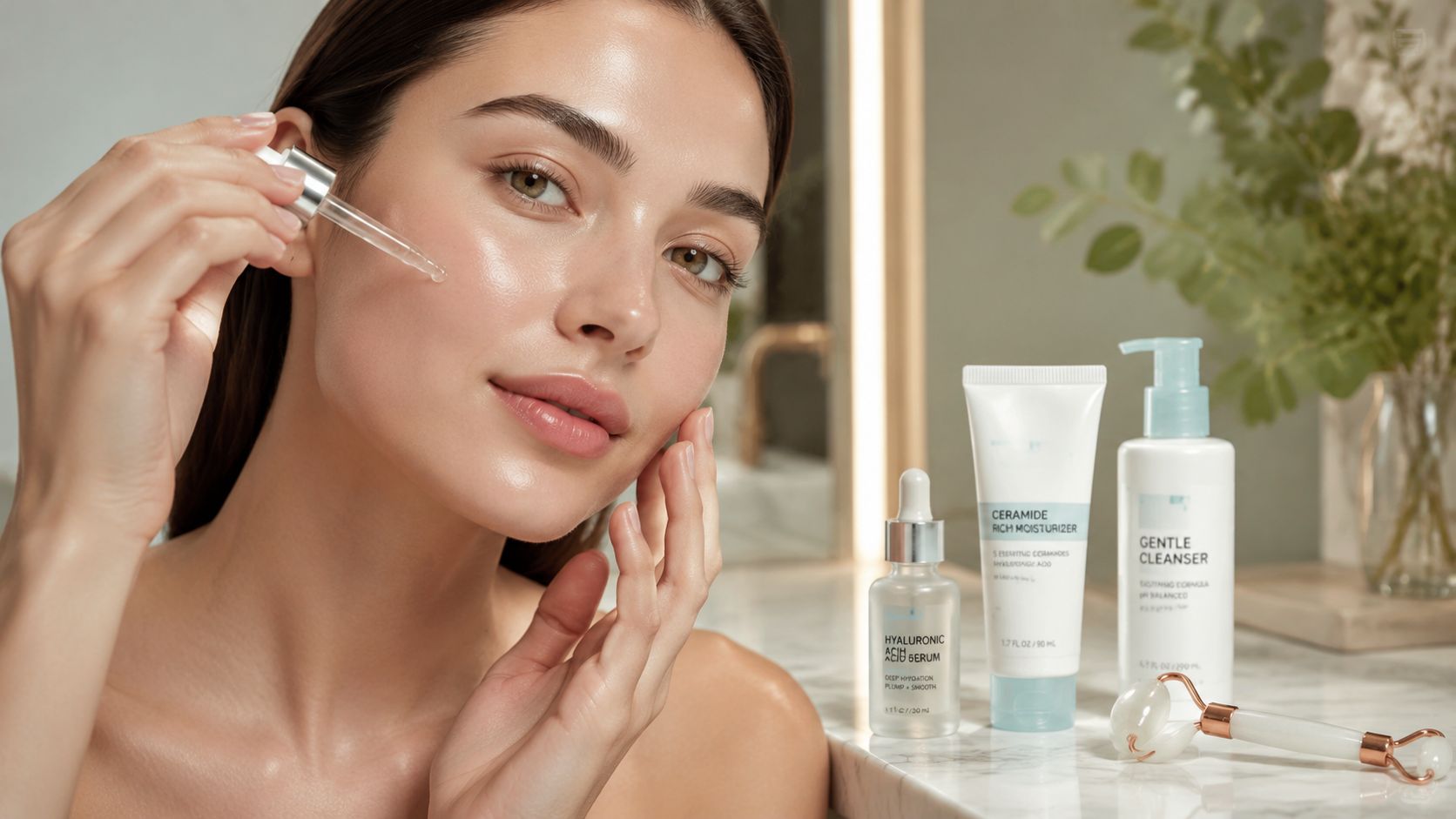
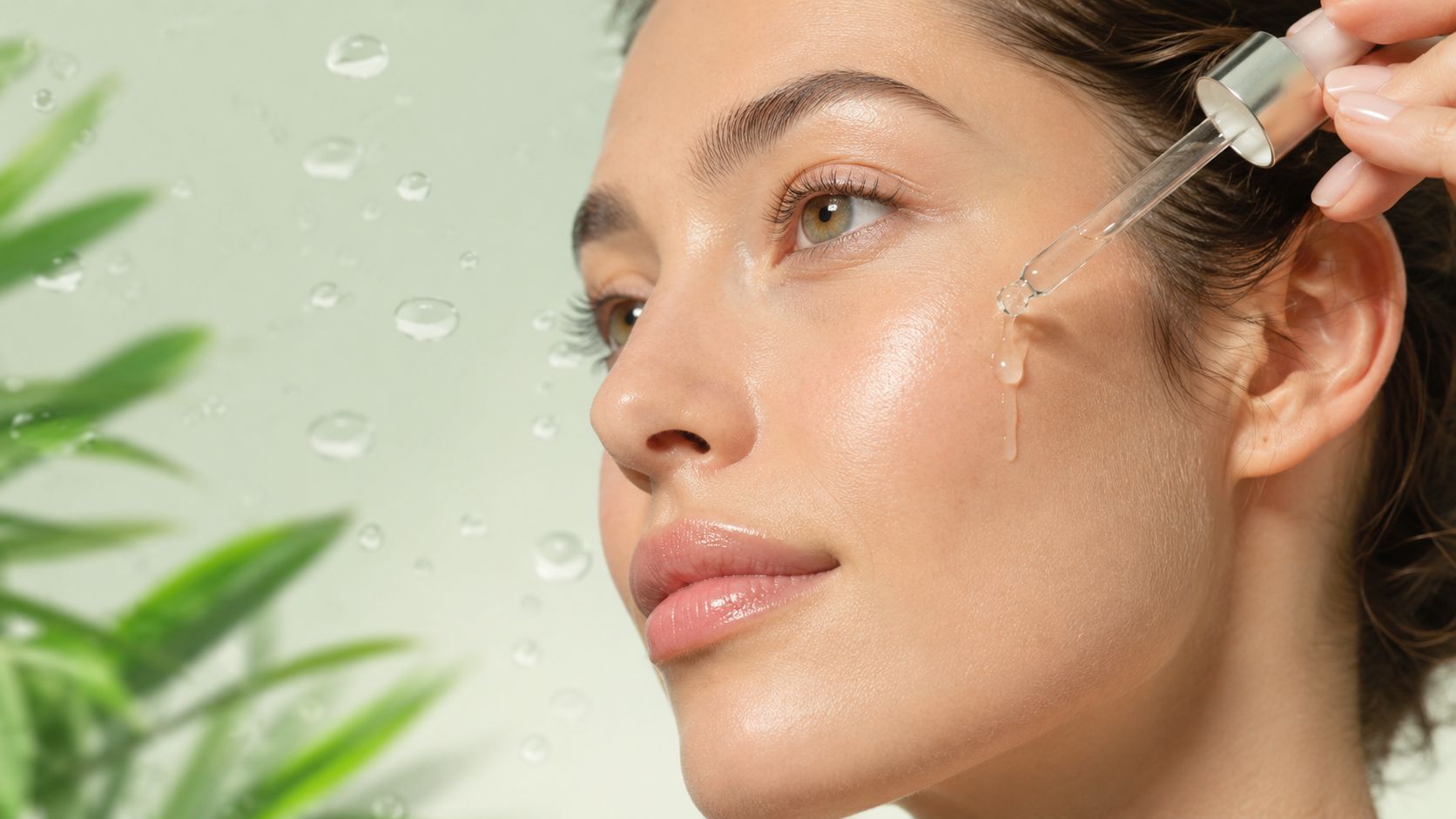
- Apply a small amount. Use 2 to 3 drops for the face and neck.
- Pat, don't rub. Press the serum in gently.
- Move quickly. Don't wait around for your skin to dry down.
- Seal with moisturizer immediately. This locks in the water the serum is holding.
That middle window is more important than commonly understood. The serum needs available moisture, and the moisturizer keeps that hydration from escaping.
How I tell clients to judge “damp”
Your skin should not be dripping wet, and it should not feel dry or squeaky. It should feel freshly cleansed with a light veil of moisture still on it. If you've towel-dried completely and your skin already feels tight, you've waited too long.
A common mistake is treating hyaluronic acid like a finishing step. It isn't. It belongs before moisturizer, while water is still present on the skin.
Practical rule: Cleanse, leave skin lightly damp, apply hyaluronic acid, then go straight to moisturizer.
Morning and night routine examples
Here's the easiest way to keep it consistent:
| Routine | Order |
|---|---|
| Morning | Cleanser, hyaluronic acid serum, moisturizer, sunscreen |
| Evening | Cleanser, treatment steps if needed, hyaluronic acid serum, moisturizer |
If your skin gets oily easily, you may not need to use it every single session. Some people do well with once-daily use or a few times per week, depending on how their skin responds. What matters most is not the heaviest routine. It's the correct one.
Choosing Your Hydration Hero Our Recommended Serum

Not every hyaluronic acid serum feels the same on skin. Some are watery and disappear too fast. Some pill under moisturizer. Some hydrate briefly but don't leave skin feeling supported. Product texture and formula quality matter.
One serum I'd point clients toward is SkinCeuticals H.A. Intensifier, especially for skin that's dehydrated, reactive, or showing that crepey look that often comes from water loss rather than oil loss. It's a more advanced option than a basic humectant serum because it's designed to support hydration in a way that feels more substantial on the skin.
If you're comparing formulas and want to see another example of a Premium hyaluronic acid serum, it helps to notice how different brands position texture, pairing ingredients, and intended skin goals. That comparison alone can make shopping easier.
What I look for in a serum
I don't choose a hyaluronic acid product based on hype. I look for:
- A comfortable finish that layers cleanly under moisturizer and makeup
- A formula that doesn't encourage over-application
- Compatibility with active routines, especially retinoids and exfoliants
- Reliable performance on stressed skin, not just already-balanced skin
For people dealing with chronic dehydration, this guide on hyaluronic acid serum for dehydrated skin is useful because it frames the product as part of a barrier-support strategy, not a miracle bottle.
Why practitioner-grade formulas often win
A good serum should make the routine easier, not fussier. You shouldn't need half a dropper to feel anything, and you shouldn't need to babysit the finish so it doesn't pill under the next step.
The best hydrating serum is the one your skin will tolerate consistently, layer easily, and respond to without feeling sticky, overloaded, or thirsty again an hour later.
That's why I usually favor formulas that feel refined on the skin and behave well in a full routine.
Layering Hyaluronic Acid with Other Skincare Actives

Many routines go sideways when people buy a hydrating serum, a vitamin C, a retinol, maybe an exfoliant, then stack them in whatever order feels intuitive. That usually leads to pilling, irritation, or a routine that looks great on paper but doesn't feel good on skin.
The simple rule is thinnest to thickest, but active ingredients need a little more thought than that.
Morning pairing with vitamin C
In the morning, a practical sequence is:
- Cleanser
- Vitamin C
- Hyaluronic acid serum
- Moisturizer
- Sunscreen
Vitamin C usually goes on first after cleansing. Then hyaluronic acid adds water-binding hydration before moisturizer and SPF. If your vitamin C is strong and your skin tends to sting, keep the rest of the routine simple and bland.
Evening pairing with retinol or exfoliants
Night routines depend on what kind of active you use.
If you use retinol, apply the retinol first, then hyaluronic acid, then moisturizer. If you use AHAs or BHAs, the same logic applies. Put the active on first, then layer hydration after it, then seal everything with cream.
For a broader routine map, this guide on how to layer serums is a helpful reference point when your shelf starts getting crowded.
A quick pairing guide
| If you use | Put hyaluronic acid |
|---|---|
| Vitamin C in the morning | After vitamin C |
| Niacinamide | Before or after, depending on texture |
| Retinol at night | After retinol |
| AHA or BHA | After the exfoliant |
| Moisturizer | Always before it |
The goal isn't to create the longest routine. It's to keep your treatment steps effective while making the skin feel supported rather than stripped.
If your skin starts feeling irritated, simplify the routine before you add more hydration products. Too many actives create a problem that hyaluronic acid alone can't fix.
Common Mistakes That Sabotage Your Hydration Efforts

Some hydration mistakes are obvious. Applying too much serum, rubbing aggressively, or skipping moisturizer are all common. But the mistake often overlooked is environmental.
Hyaluronic acid can backfire in dry air. In low-humidity environments below 40%, HA can pull water from deeper skin layers instead of from the environment. A 2025 study cited here on the dry climate risks of hyaluronic acid reported that 68% of users in arid climates experienced increased dryness despite using it correctly.
The dry skin paradox
This is the part many skincare guides skip. You follow the usual advice. You apply to damp skin. You seal with cream. Yet your skin still feels drier.
That can happen when the surrounding air doesn't offer enough moisture for a humectant-heavy routine to work the way you expect. The serum still behaves like a moisture magnet, but the source of that moisture matters.
What to do instead
If you live in a dry climate or spend a lot of time in air-conditioned indoor spaces, adjust your routine:
- Use a barrier-support moisturizer with ingredients such as glycerin or ceramides over your serum
- Choose a richer cream at night if your skin feels tight again within hours
- Consider a humidifier in your bedroom or workspace
- Scale back the serum if your skin looks duller or feels drier after consistent use
This doesn't mean hyaluronic acid is a bad ingredient. It means context matters. Skin responds to products, but it also responds to climate, indoor air, cleansing habits, and the rest of the routine around that one bottle.
Advanced Tips and Frequently Asked Questions
A well-built hyaluronic acid routine does not need many extras, but a few smart adjustments can improve results. One add-on I sometimes mention for home use is LED. The Barb N.P. Facial Mask stands out because people stick with it. It's wireless, comfortable on the face, and offers 3 lighting settings for different treatments, so it fits more easily into a real routine instead of becoming another device that gets stored away. Used consistently, it can support overall skin radiance alongside a hydration-focused skincare plan.
A few questions I hear often
Can I use hyaluronic acid every day, and is it safe during pregnancy or breastfeeding? Yes. Topical hyaluronic acid in over-the-counter formulas is generally well tolerated for daily use, and it is also considered safe during pregnancy and breastfeeding because it works on the skin's surface rather than reaching the body's interior, according to Healthline's guide to using hyaluronic acid.
Can oily skin use it?
Yes. Oily skin often lacks water even when it produces plenty of oil. Use a light layer of serum, then follow with a gel-cream or lotion that seals in hydration without feeling heavy.
Can I use it with retinol, acids, or vitamin C?
Usually yes, but tolerance matters more than theory. Hyaluronic acid can help offset dryness from stronger actives, but it will not fix an overloaded routine. If skin starts to sting, look shiny but tight, or flakes around the mouth and nose, reduce the number of active steps and keep the routine simpler for a week or two.
How much should I use?
Less than many people expect. Two to three drops, or a thin layer, is enough for the full face. If the skin feels sticky, pills under moisturizer, or looks shiny without feeling comfortable, you are probably using too much.
One advanced point matters more than people realize. In dry indoor air, extra hyaluronic acid does not always mean extra hydration. I see this with clients who keep reapplying serum because their skin feels tight by midday. The answer is usually not more product. The answer is stronger sealing steps, less over-cleansing, and sometimes a richer moisturizer at night.
Hyaluronic acid works best as part of a system. Apply the right amount, trap it with moisturizer, and adjust for your environment. That is how you get the plump look people want without falling into the dry skin paradox.
If you're ready to upgrade your routine with clinical-grade skincare and at-home tools, explore BotoxBarb for curated options including hydrating serums, LED devices, and expert-selected essentials that make daily skincare simpler and more effective.