Your Guide to Minimally Invasive Cosmetic Treatments
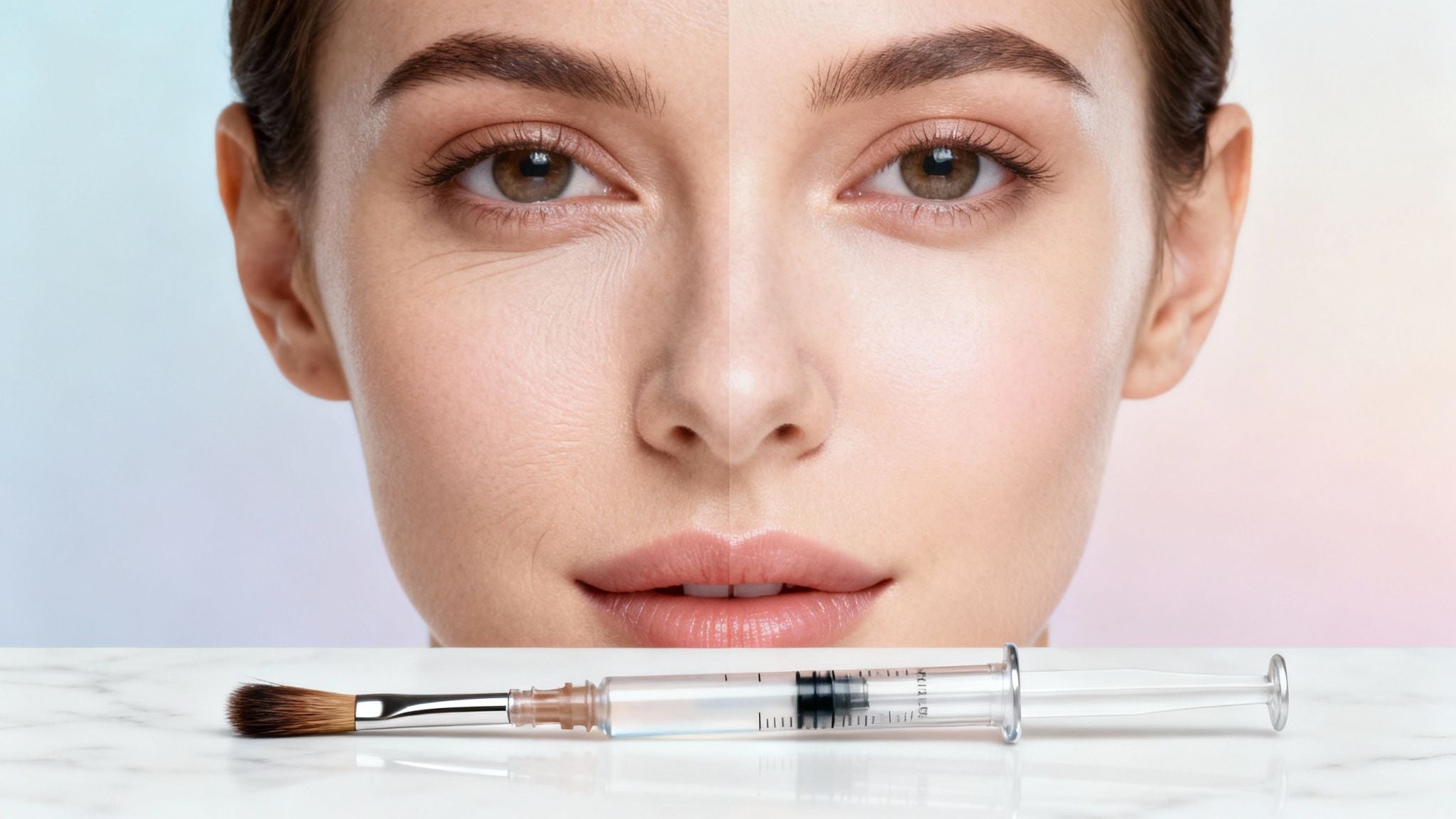
Minimally invasive cosmetic treatments are the secret to looking refreshed and feeling your best without the commitment of surgery. These are the non-surgical procedures you’ve heard about—like Botox and dermal fillers—that are designed to subtly enhance your appearance with little to no downtime.
Think of them less as a complete overhaul and more as a skilled personal trainer for your skin. They offer targeted improvements that work with your natural features to smooth, lift, and restore. The goal isn’t to change who you are, but to bring out a more rested, radiant version of yourself.
The Modern Way to Enhance Your Natural Beauty
Let’s be honest, the days of drastic surgical procedures and long, painful recovery times are fading. Today, it’s all about achieving real, natural-looking results that fit seamlessly into a busy life. That’s the entire philosophy behind the rise of minimally invasive aesthetics.
It’s a smarter, more refined approach. We’re not erasing features; we're enhancing them. A little volume restored here, a fine line softened there—these small adjustments work together to create a look that is authentically you, just with an added glow.
A Beauty Movement That's Here to Stay
This isn't just some passing trend. The worldwide demand for effective, convenient cosmetic solutions has exploded, marking a fundamental shift in how we approach self-care and beauty.
The global market for these treatments tells the story. Valued at USD 6.56 billion, it’s projected to skyrocket to USD 13.99 billion by 2033. Europe has long been an epicenter for aesthetic innovation, with Italy performing 774,272 nonsurgical procedures each year. This is the heritage of excellence that practitioners like Italy-born Barb N.P. bring to their clients—blending artistry with advanced techniques. You can explore more about these market trends and their implications for the industry.
What does this massive growth tell us? Simple. People want results they can see without having to press pause on their lives.
Your Best Results: Combining In-Clinic Treatments with At-Home Care
The most stunning, long-lasting results come from a smart partnership: professional in-clinic procedures paired with a consistent, high-quality at-home routine.
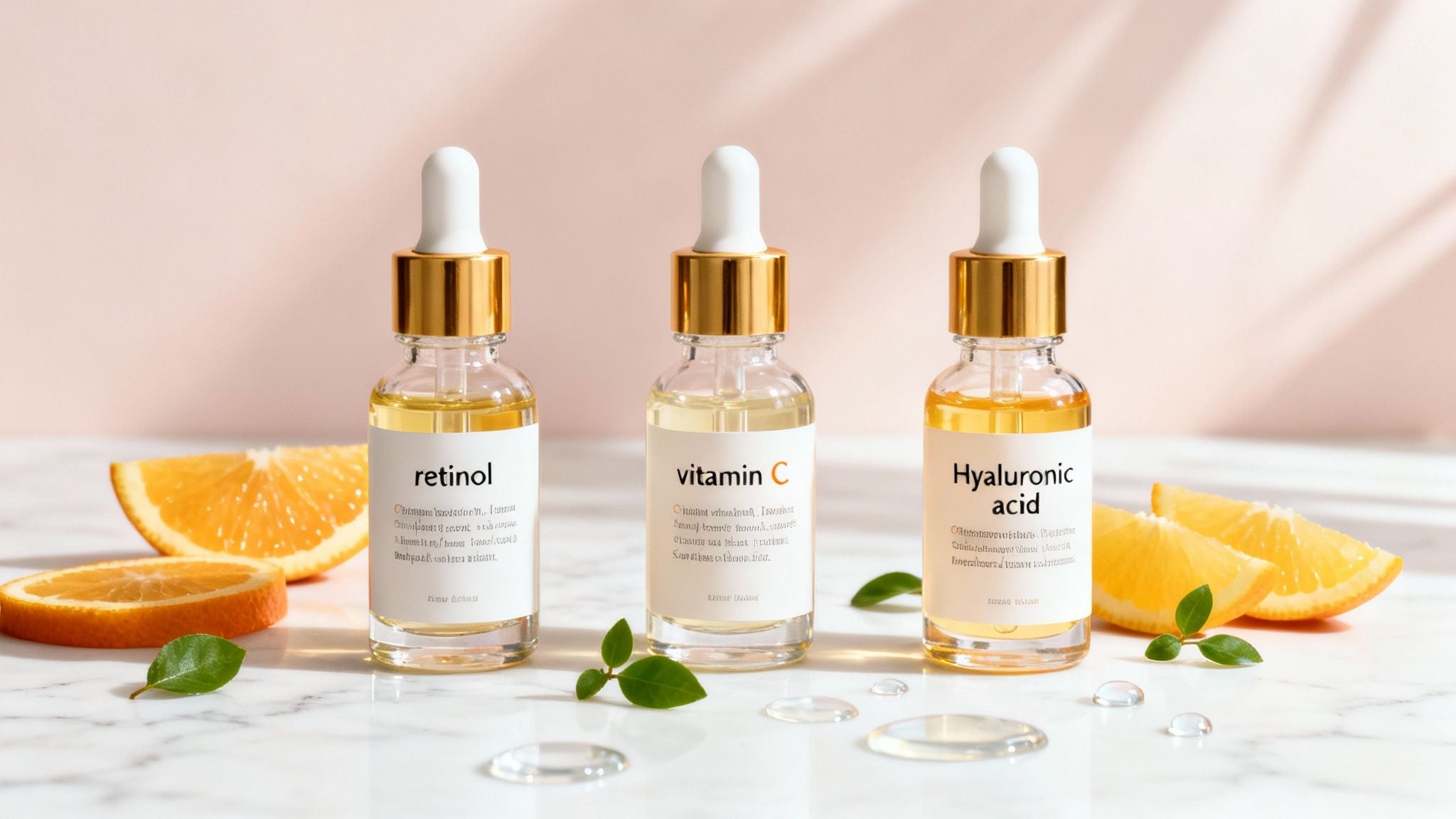
Using medical-grade products and devices at home doesn't just maintain your in-clinic results—it actually amplifies them. It's a synergistic relationship. Your professional treatments create the foundation, and your daily care builds on that foundation for truly vibrant, healthy skin.
A perfect example is integrating a device like the Barb N.P. Facial Mask into your routine. It’s an innovative at-home tool designed to elevate your results between appointments.
Here’s why it stands out:
- Totally Wireless: You can move freely around your home during your treatment instead of being stuck next to an outlet.
- Designed for Comfort: Its ergonomic shape sits comfortably on your face, turning your skincare session into a moment of relaxation.
- Three Powerful Light Settings: You can customize your treatment to target specific concerns, whether it’s acne, inflammation, or signs of aging.
By making powerful tools like this part of your regular regimen, you become an active partner in your aesthetic journey. It’s how you ensure your skin stays healthy, resilient, and beautiful long after you’ve left the clinic.
Exploring The Most Popular Cosmetic Treatments
Diving into the world of minimally invasive treatments can feel like a lot to take in, but it all becomes much clearer when you understand what each treatment is designed to do. Think of them as specialized tools in an artist's kit—each one exists to address a specific concern with incredible precision. They work by targeting different aspects of aging, from the expression lines caused by a lifetime of smiles to the volume loss that can create shadows and hollows.
And this isn't a niche interest; it's a global movement. In a single recent year, an incredible 38 million minimally invasive procedures were performed worldwide. Treatments like Botox and hyaluronic acid fillers alone accounted for over 20.5 million of that number. This massive demand points to a clear desire for enhancements that deliver subtle, immediate results with little to no real downtime. With the market valued at USD 61.2 billion and climbing, it's clear that people everywhere want accessible and effective aesthetic solutions.
Neurotoxins: The Muscle Relaxers
When you hear names like "Botox" or "Dysport," just think "muscle relaxers." These are injectable neurotoxins that work by temporarily blocking the nerve signals that tell specific muscles to contract. Imagine your facial muscles creasing a piece of paper every time you frown or raise your eyebrows. Eventually, those creases become permanent lines.
Neurotoxins simply stop the muscle from making that strong, repetitive contraction, giving the skin on top a chance to smooth out. They are brilliant for treating dynamic wrinkles—the lines that show up when you move your face.
- Forehead Lines: The horizontal lines that appear when you're surprised.
- Glabellar Lines (The "11s"): Those vertical furrows between your brows from concentrating or frowning.
- Crow's Feet: The fine lines that fan out from the corners of your eyes when you laugh or smile.
The procedure itself is incredibly fast, often done in less than 15 minutes. The results appear gradually over the next week or so, leaving you looking more rested and refreshed, never "frozen."
Dermal Fillers: The Volume Restorers
If neurotoxins relax, then dermal fillers restore. As we get older, our faces naturally lose some of the subcutaneous fat and collagen that give them youthful fullness. This can make cheeks look flatter, under-eyes appear hollow, and create lines around the nose and mouth. Dermal fillers, which are usually made from a gel-like substance called hyaluronic acid, are injected just under the skin to literally "fill in" and lift these areas.
It's a lot like re-plumping a cushion that's gone a bit flat. Fillers can:
- Restore Cheek Volume: Creating a gentle lift and contour to the mid-face.
- Smooth Nasolabial Folds: Softening the "smile lines" that run from your nose to the corners of your mouth.
- Enhance Lips: Adding subtle volume and defining the lip border for a more balanced look.
- Fill Under-Eye Hollows: Reducing the appearance of dark circles that make you look tired.
The best part? The results are immediate. You get an instant lift and rejuvenation that looks completely natural when done by a skilled provider. For a closer look at more options, you can check out our guide on other popular non-invasive cosmetic procedures.
Comparing Popular Minimally Invasive Treatments
To make it even simpler, here’s a quick-glance table comparing some of the most common treatments we offer. This can help you see exactly what each one is best suited for.
| Treatment | Primary Use | Ideal Candidate | Average Session Time |
|---|---|---|---|
| Neurotoxins | Softening dynamic wrinkles (forehead, 11s, crow's feet) | Someone wanting to reduce expression lines | 10-15 minutes |
| Dermal Fillers | Restoring volume, contouring, and filling static lines | Someone with volume loss or deep-set wrinkles | 30-45 minutes |
| PRP Therapy | Improving skin texture, tone, and stimulating hair growth | Someone looking for natural, regenerative results | 45-60 minutes |
| LED Light Therapy | Reducing acne, stimulating collagen, and calming inflammation | Someone seeking a gentle, non-invasive skin boost | 20-30 minutes |
While this table is a great starting point, a personal consultation is always the best way to determine the perfect treatment plan for your specific goals.
Platelet-Rich Plasma: The Natural Regenerator
Platelet-Rich Plasma (PRP) therapy is a fascinating treatment that uses your body's own incredible healing abilities. The process starts by drawing a small amount of your blood, just like a routine lab test. That blood is then spun in a centrifuge, which concentrates the platelets. This "liquid gold" is then reinjected into the area you want to treat. Why? Because platelets are packed with growth factors that kickstart cell regeneration, collagen production, and tissue repair.
PRP acts as a powerful catalyst for rejuvenation. By using your body's innate healing mechanisms, it improves skin texture, tone, and elasticity from within, making it a truly personalized treatment.
This regenerative power makes PRP a fantastic and versatile choice for both skin rejuvenation and hair restoration, as it addresses concerns right at their biological source. To continue your research, it’s also helpful to understand how does laser hair removal work and the science behind it.
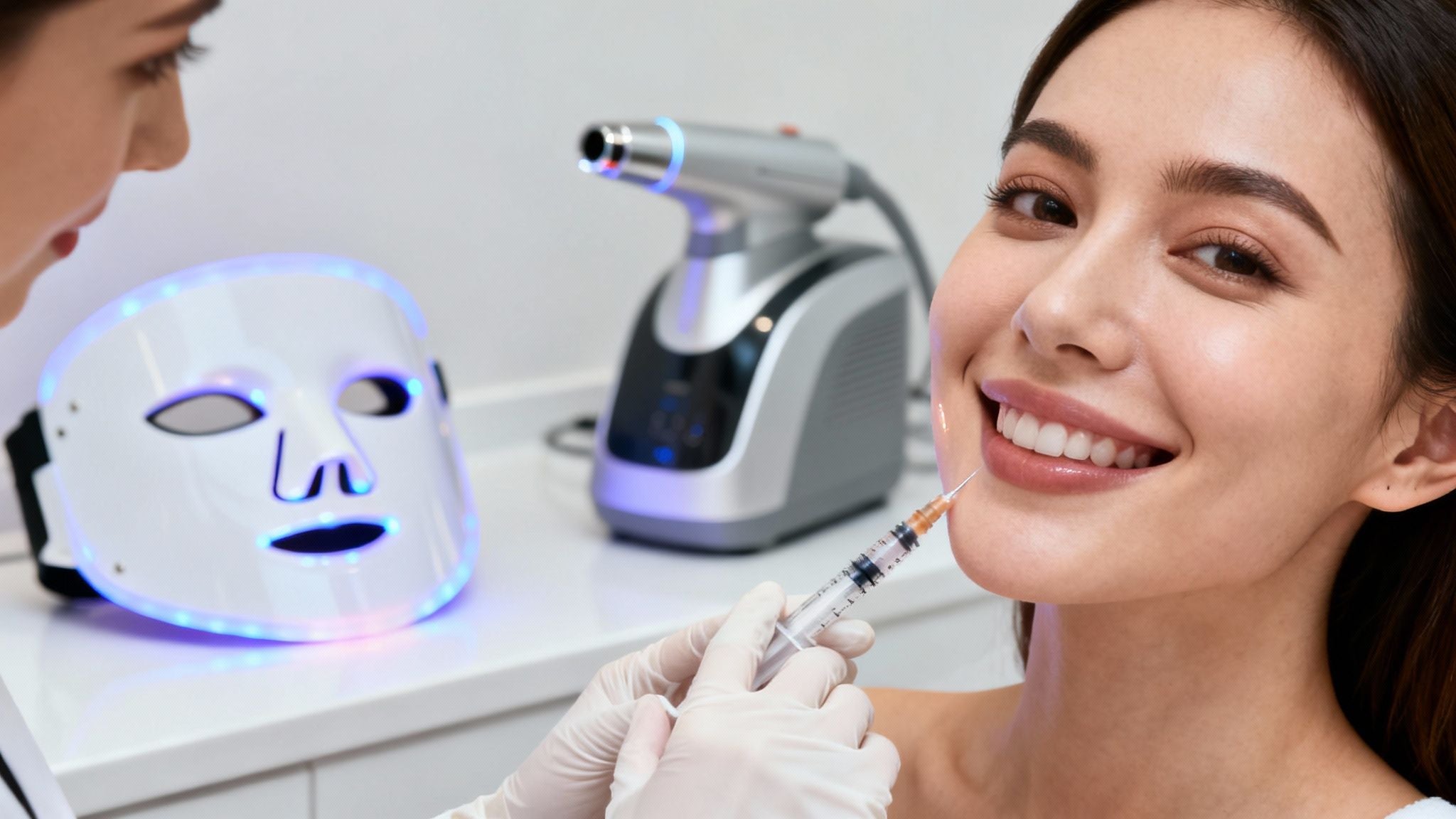
As this graphic shows, the best and most lasting results come from a smart combination of professional treatments in the clinic and a consistent, high-quality routine at home.
LED Light Therapy: The Skin Energizer
LED (Light Emitting Diode) therapy is a gentle, completely non-invasive treatment that uses different wavelengths of light to spark natural reactions within your skin cells. Each color of light penetrates the skin to a different depth and offers a unique benefit, all without any pain or recovery time. Think of it as a battery charger for your skin cells.
A great way to bring this technology home is with a personal device. The Barb N.P. Facial Mask is a perfect example, designed to be both effective and convenient. It’s completely wireless, so you can move around freely, and its comfortable design makes each session feel like a moment of self-care.
It features three light settings to tackle different concerns:
- Blue Light: Targets and destroys acne-causing bacteria to help clear up breakouts.
- Red Light: Stimulates collagen production to soften fine lines and reduce inflammation.
- Amber Light: Helps calm sensitive skin and minimize redness.
Using a device like this regularly is a fantastic way to boost the results of your in-clinic treatments and improve your skin’s overall health and glow.
What to Expect: The Upsides and the Realities
Deciding to get a cosmetic treatment is a big deal, and it’s important to go into it with your eyes wide open. These minimally invasive options are incredible alternatives to surgery, but let's be real about what they can—and can't—do. Understanding the full picture helps you make a choice that you'll feel great about long-term.
One of the biggest wins is the minimal downtime. Forget hiding away for weeks to recover from surgery. With most of these treatments, you can pop in for an appointment on your lunch break and head right back to your day. No one has to know unless you want them to.
This grab-and-go convenience makes it possible for anyone with a packed schedule to invest in themselves without derailing their life. The whole point is to enhance, not to overhaul, which brings us to another huge plus.
The Goal: Subtle, Natural-Looking Results
Today's aesthetic work is all about quiet confidence. The objective isn’t to look like a completely different person, but rather a brighter, more rested version of yourself. A talented provider uses these tools to make tiny, strategic tweaks that honor your natural features.
A great treatment should make people wonder what your secret is. They might comment that you look well-rested or that your skin is glowing, but they won't be able to put their finger on exactly why. That’s the true art of modern aesthetics—results that feel significant to you but look completely natural to the world.
This refined approach ensures you sidestep that "overdone" look and instead feel more confident in the skin you're already in.
A Few Key Things to Keep in Mind
While the benefits are exciting, it’s just as important to understand the practical side of things. First and foremost, the results from most of these treatments aren't permanent. This is a critical point because it means you'll need to plan for upkeep to maintain your look.
- How Long Do They Last? Neurotoxins like Botox usually stick around for 3-4 months. Dermal fillers can last anywhere from 6 to 18 months, depending on the specific product and where it’s placed.
- Maintenance is a Must: To keep seeing results, you’ll need to schedule follow-up appointments. It’s an ongoing commitment, so be sure to factor that into your decision.
- Mild Side Effects Are Normal: While major risks are low, it's common to experience some temporary swelling, redness, or bruising right at the injection site. This typically clears up in a few days and is easily hidden with a bit of makeup.
It's also crucial to remember that these are medical procedures. Your safety and the quality of your results are 100% dependent on the skill of your provider. Don’t cut corners here—always choose a qualified, experienced professional.
Finally, while these treatments are certainly more affordable than surgery, the costs can add up over time since they require regular maintenance. Taking a moment to think about your long-term budget and aesthetic goals will help you build a plan that feels both sustainable and exciting. When you weigh all these factors, you can walk into your aesthetic journey feeling informed, confident, and ready for what's next.
Are These Treatments Right for You?
Figuring out if you're a good fit for minimally invasive treatments is about more than just your age. It's a thoughtful mix of your skin's current health, your aesthetic goals, your overall wellness, and even your lifestyle. The real goal is to make sure these procedures align with what you actually want, setting you up for a great experience and results you'll love.
The first step is a little honest self-reflection. Are you looking to soften a few lines or restore some lost volume—a subtle refinement rather than a complete overhaul? It's also important to understand that these treatments deliver beautiful results, but they aren't permanent. They require a commitment to upkeep. Answering these questions for yourself is key to making a smart decision.
Key Factors in Your Self-Assessment
Before you even book a consultation, it helps to get clear on a few things. Think of it as a quick checklist to guide your thoughts and prepare you for a productive chat with a professional. And of course, being in good general health is always the foundation for any cosmetic procedure—it helps your body respond and heal beautifully.
Here are a few points to consider:
- Your Aesthetic Objectives: Pinpoint exactly what you'd like to improve. Do you want to smooth the "11s" between your brows? Add a touch of lift back to your cheeks? Or maybe you're after an all-over brighter, fresher complexion? Specific goals help your provider design the perfect treatment plan.
- Realistic Expectations: Minimally invasive treatments are incredible enhancers, but they don't stop the clock. They can make you look like a wonderfully rested and refreshed version of yourself, but they won't halt the natural aging process for good.
- Commitment to Maintenance: Most results last for several months, not forever. It's important to ask yourself if you're ready for the follow-up appointments needed to maintain your look. This is a practical consideration for both your budget and your schedule.
When a Treatment Might Not Be a Good Fit
While these treatments are incredibly safe for most people, they aren't the right choice for everyone. Certain health factors can increase risks or lead to less-than-ideal outcomes, which is why being completely open with your provider about your medical history is so important.
A professional consultation is non-negotiable. It's the most critical safety step, where a qualified expert reviews your medical history, assesses your skin in person, and gives you a truly personalized recommendation. This ensures your treatment is not just effective, but completely safe for you.
For example, if you have certain medical conditions like autoimmune disorders or an active skin infection in the treatment area, you might not be a candidate right now. The same goes for known allergies to ingredients like lidocaine, which is often mixed into dermal fillers. If you're pregnant or breastfeeding, it's standard practice to postpone these treatments.
Ultimately, the only way to know for sure is to sit down with a qualified expert. They have the training to analyze your unique facial anatomy and health profile to recommend the safest, most effective minimally invasive cosmetic treatments to help you reach your goals with total confidence.
How to Choose the Right Provider for Your Treatment
Selecting who performs your minimally invasive cosmetic treatments is the single most important decision you’ll make. Your results, your safety, and your entire experience hinge on the skill and integrity of your provider. Think of it like choosing a master artist to restore a priceless painting—you need someone with an expert touch, deep training, and an intimate understanding of facial anatomy.
This choice matters more than ever as demand for these treatments explodes. While North America and Europe have always been strong markets, we're now seeing incredible growth across Asia-Pacific and Latin America. The industry, recently valued at US$6.5 billion, is on track to hit US$10.4 billion by 2030. In the U.S. alone, non-surgical procedures account for 6.1 million cosmetic treatments every year, showing just how mainstream they've become. This global boom highlights why finding a highly qualified, safe provider is absolutely critical.
Vet Credentials and Qualifications
First things first: verify your provider’s credentials. The world of aesthetics is filled with professionals from different backgrounds, and it’s vital to understand who is holding the needle.
Look for licensed medical professionals, including:
- Nurse Practitioners (NPs): Like Barb N.P., they hold advanced graduate-level medical degrees and are qualified to diagnose, treat, and prescribe.
- Physician Assistants (PAs): Highly trained clinicians who work collaboratively with physicians.
- Registered Nurses (RNs): Skilled professionals who administer treatments under medical supervision.
- Medical Doctors (MDs): Physicians, typically dermatologists or plastic surgeons, with the highest level of medical education.
Never feel shy about asking for their license number to confirm their standing with the state board. A trustworthy provider will be proud to share their qualifications with you.
Review Their Portfolio and Experience
Credentials lay the foundation, but real-world experience is what builds mastery. You want a provider who not only performs minimally invasive cosmetic treatments daily but who specializes in the exact procedure you’re considering. Ask them directly: How long have you been doing this? How many of these treatments do you perform each week?
A provider's before-and-after gallery is their resume. Look for high-quality photos of their actual clients, not stock images. The best portfolios show consistency in lighting and angles, giving you a true sense of their work. Do their results match the natural, refreshed look you’re hoping for?
The Consultation Is Everything
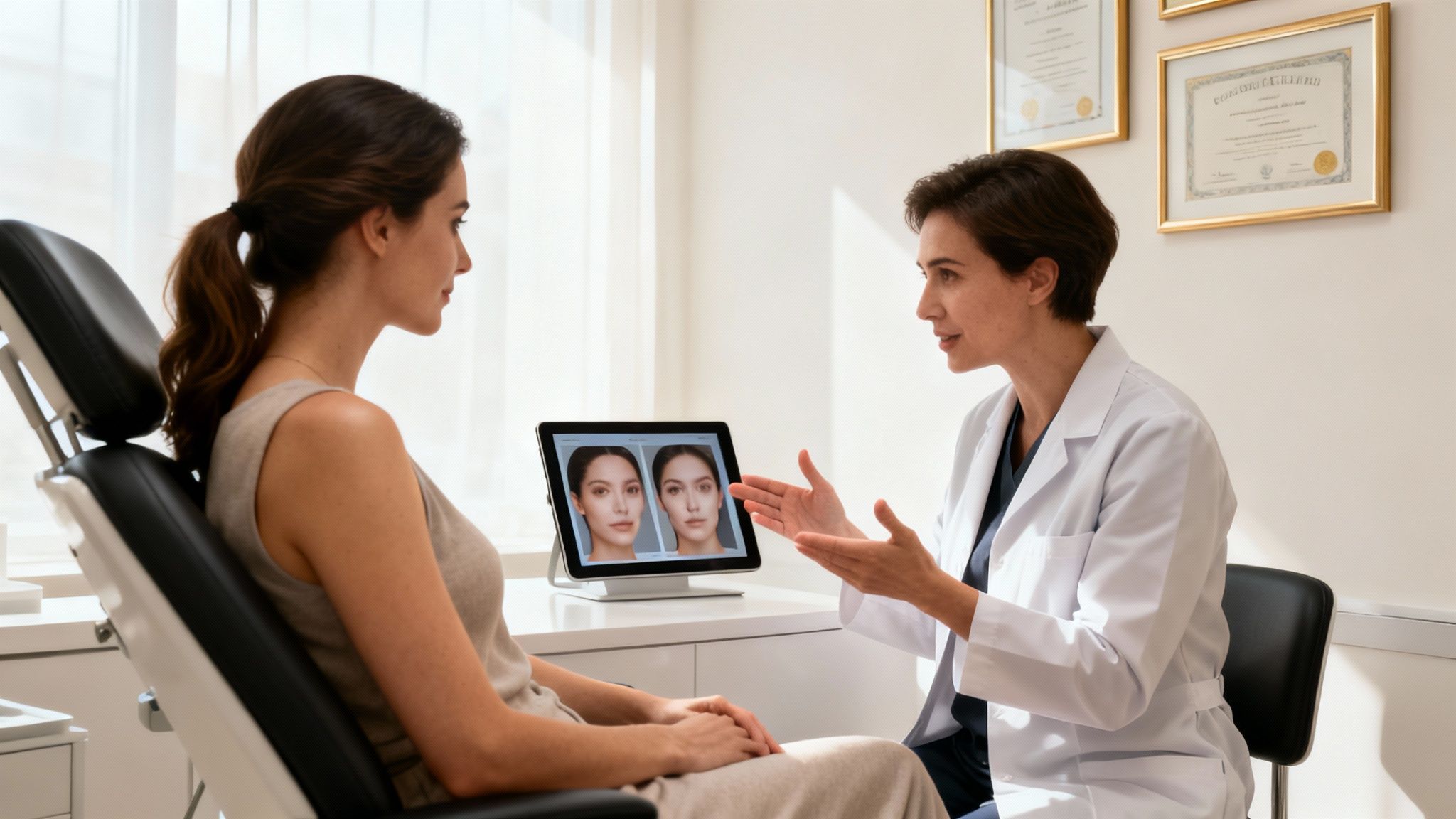
A thorough, unhurried consultation is non-negotiable. This is your chance to see if the provider truly listens to your concerns and makes you feel heard.
A great practitioner will do more than just quote a price. They'll assess your facial anatomy, explain their recommended approach in detail, and set realistic expectations for your results. They should be completely transparent about potential side effects, downtime, and the total cost. If you feel rushed, dismissed, or pressured, that’s your cue to walk away.
This initial meeting should feel like a partnership—one focused entirely on your aesthetic goals and, above all, your safety. To get a better sense of the industry your provider works in, you might find our article on what is aesthetic medicine helpful.
Boosting Your Results with At-Home Care
Think of your professional treatments as the heavy lifting at the gym and your at-home routine as the clean diet that fuels your progress. One simply isn’t as effective without the other. To truly protect your investment and extend the life of your gorgeous results, a strategic at-home care plan isn't just a nice-to-have—it's essential.
This synergy is where the magic happens. Your in-clinic procedures provide that powerful reset, clearing the canvas. Then, your daily habits build on that progress, promoting overall skin and hair wellness for the long haul. A complete approach ensures your skin stays healthy, resilient, and ready to get the most out of future treatments.
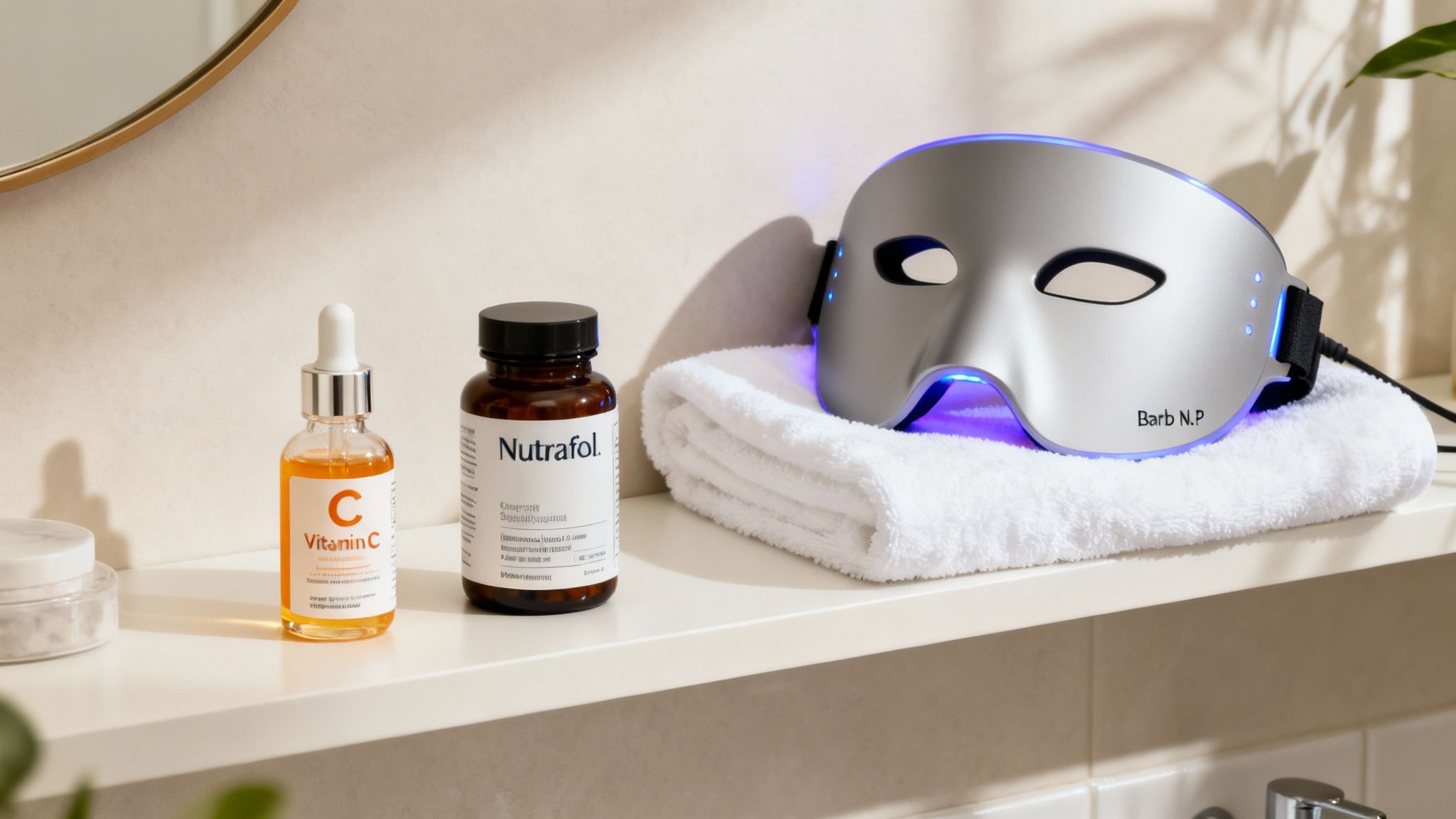
Building Your At-Home Arsenal
A powerful at-home routine doesn't need to be complicated, but it does need to be intentional. It's all about choosing targeted products that complement the specific treatments you're receiving.
For instance, pairing a PRP hair restoration series with a proven supplement like Nutrafol provides inside-out support for healthier, stronger hair growth. Similarly, medical-grade skincare is non-negotiable. Using a high-potency antioxidant serum from a line like SkinCeuticals helps shield your skin from daily environmental damage that can break down collagen and undo the benefits of your filler or PRP facial. And it doesn't stop there—maintaining your results with essential after-waxing care products is also crucial for that long-lasting smoothness.
Elevate Your Routine with At-Home Technology
Want to take your results to the next level? Incorporating at-home devices can make a huge difference, allowing you to continue the work of skin rejuvenation between your professional appointments.
An LED mask is a perfect example. The Barb N.P. Facial Mask is an ideal addition to any post-treatment routine because it was engineered for real life. Key features include:
- Completely Wireless: Move freely during your session without being tethered to a cord.
- Supreme Comfort: The design rests gently on your face, turning your treatment into a relaxing ritual.
- Three Light Settings: Customize your session to target acne (blue light), stimulate collagen (red light), or calm inflammation (amber light).
When you integrate tools like this, you shift from being a passive recipient of treatments to an active partner in your own aesthetic journey. It’s empowering to know you can maintain and even enhance the beautiful results you achieved in the clinic, right from your own home.
For expert guidance on creating the perfect daily regimen from scratch, learn how to build a skincare routine that truly works for you. A consistent, high-quality routine is the ultimate secret to long-term success.
Your Top Questions, Answered
Diving into the world of aesthetic treatments always brings up a few practical questions. You’ve learned the basics, but now let’s talk details—the kind of information you need to feel truly confident and prepared.
Think of this as the final piece of the puzzle. Here are the straightforward, honest answers to the questions we hear most often from our clients.
How Much Do Minimally Invasive Treatments Cost?
It’s the first thing on everyone’s mind, and the honest answer is: it varies. The final cost depends on the specific treatment you choose, where the clinic is located, and the experience level of your provider.
For example, neurotoxins like Botox are usually priced per unit, running anywhere from $10 to $25 per unit. A treatment to smooth forehead lines might take between 20 to 60 units. Dermal fillers, on the other hand, are typically priced by the syringe, with costs ranging from $600 to $1,200 or more, depending on the type of filler used.
More advanced treatments like Platelet-Rich Plasma (PRP) can range from a few hundred to several thousand dollars per session. The only way to get a precise number is to book a one-on-one consultation, where your provider can map out a plan and give you a detailed quote tailored to your goals.
Are Minimally Invasive Procedures Painful?
The thought of needles can be a little nerve-wracking, but I can assure you, most clients report only a tiny, fleeting pinch. We use incredibly fine needles, and the sensation is over in a moment.
To make sure you’re completely comfortable, we almost always apply a topical numbing cream or use ice to cool the area right before starting. This simple step makes a huge difference and helps the whole experience feel easy and relaxed.
And when it comes to treatments like LED light therapy? There’s zero pain. In fact, most people find it incredibly calming—a perfect little moment of self-care where you can just lie back and let the light work its magic. Your comfort is always our top priority.
How Long Do the Results Typically Last?
This is another key question, and the answer depends on the treatment you get and your body's own metabolism. While there's no universal timeline, here are some general guidelines you can expect.
- Neurotoxins (Botox, Dysport): The smoothing effects that relax muscles generally last for 3 to 4 months. You'll notice movement gradually returning as it wears off.
- Hyaluronic Acid Fillers: These can last anywhere from 6 to 18 months, depending on the type of filler and where on the face it’s placed.
- Regenerative Treatments (PRP, LED Therapy): The results here are cumulative. PRP builds on itself over time, while LED therapy works best with consistent sessions. Great at-home care is also crucial for making these results last.
Can I Combine Different Types of Treatments?
Not only can you, but you absolutely should! This is how you get the most natural, comprehensive, and beautiful results. Combining different minimally invasive cosmetic treatments—sometimes called "treatment stacking"—is a sophisticated strategy that addresses aging from multiple angles.
A skilled provider can design a layered plan just for you. For instance, we might use a neurotoxin to smooth the lines on your forehead while using a dermal filler to restore volume to your cheeks. It's a holistic approach that creates harmony and balance.
This is also where your at-home routine becomes your secret weapon. You can elevate and extend your in-clinic results with a device like the Barb N.P. Facial Mask. Its different light settings continue improving your skin long after your appointment. The red light setting is fantastic for boosting collagen, which perfectly complements the work of fillers, while the blue light helps keep your skin clear and calm. This synergy between professional treatments and personal care is what delivers truly exceptional outcomes.
At BotoxBarb, we're passionate about empowering you with both expert in-clinic services and the best tools to maintain your results at home. Explore our curated shop of medical-grade skincare and innovative devices to build a routine that keeps you looking and feeling incredible. Discover the perfect products to complement your aesthetic journey.