
Your Guide to symptoms of environmental allergies and relief
If you find yourself constantly sneezing, battling congestion, or rubbing itchy eyes, it might be more than just "feeling under the weather." You could be dealing with environmental allergies. These reactions happen when your immune system misidentifies harmless, everyday substances like pollen, dust, or mold as dangerous invaders, kicking off a chain reaction of uncomfortable symptoms.
Understanding Your Body's Allergy Signals
Think of your immune system as your body's personal security team. Its main job is to spot and neutralize real threats, like viruses and bacteria. But for people with environmental allergies, this system can be a little overzealous. It flags innocent particles—what we call allergens—as major threats.
So, when you breathe in or touch an allergen like tree pollen, dust mites, or mold spores, your immune system sounds the alarm. It releases a flood of chemicals, most famously histamine, to fight off what it thinks is a dangerous intruder. It's this chemical release that's responsible for all those classic allergy symptoms, turning a beautiful spring day or a cozy night inside into a miserable experience.
This whole process is pretty straightforward, as you can see below. An allergen enters the scene, your immune system overreacts, and symptoms are the result.
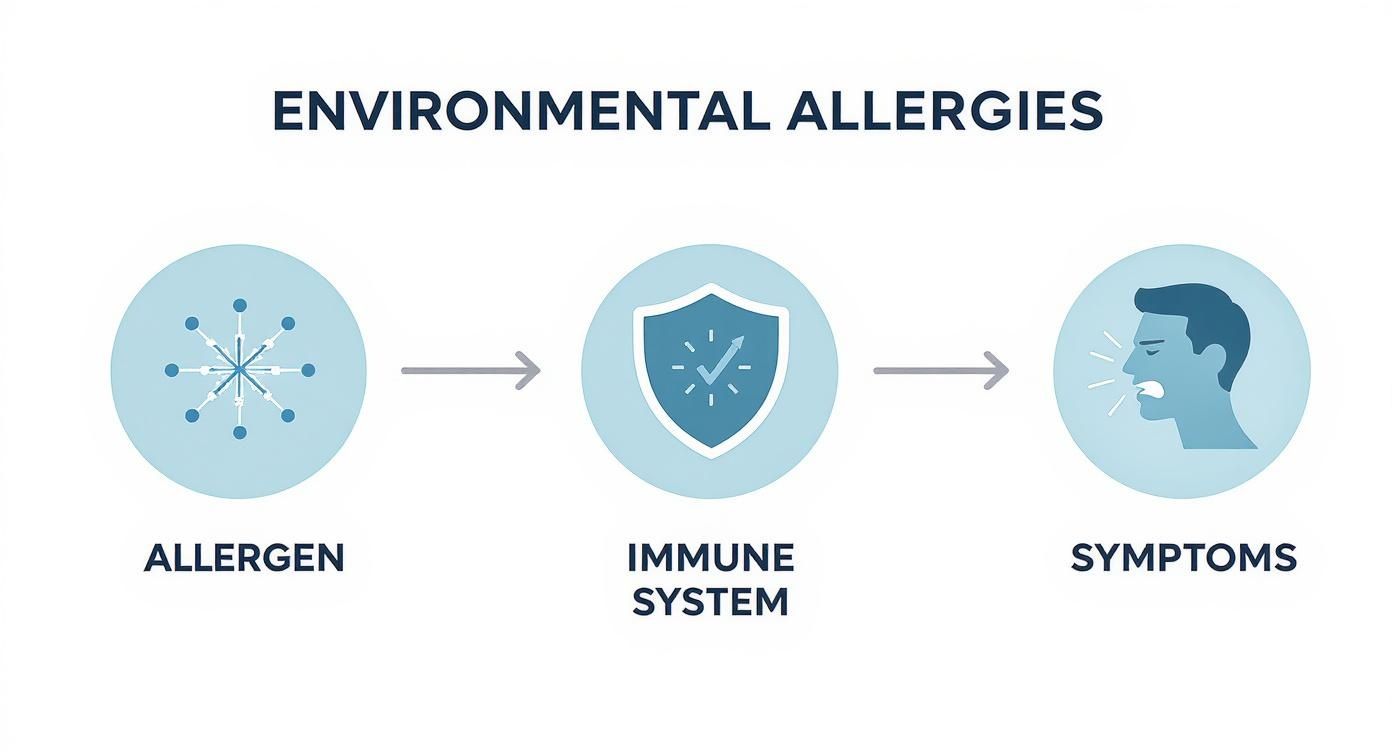
This simple chart perfectly illustrates the cause-and-effect of an allergic reaction, from that first exposure to the physical misery that follows.
Common Environmental Allergy Symptoms at a Glance
To make it easier to pinpoint what you're feeling, here’s a quick breakdown of the most common signs grouped by where they show up in your body. This can help you quickly identify if what you're experiencing lines up with a typical allergic response.
| Symptom Category | Common Signs You May Experience |
|---|---|
| Nasal Symptoms | Constant sneezing, runny nose, nasal congestion, postnasal drip, itchy nose |
| Ocular (Eye) Symptoms | Itchy and watery eyes, red or swollen eyes, a gritty feeling in the eyes |
| Respiratory Symptoms | Coughing, wheezing, shortness of breath, chest tightness |
| Skin Symptoms | Hives (urticaria), eczema (atopic dermatitis), itchy skin |
This table serves as a handy checklist. If you're ticking boxes in a few of these categories, environmental allergies are a very likely culprit.
Why Do These Symptoms Happen?
Every single allergy symptom is just your body trying its best to get rid of the perceived threat. It's a defense mechanism that's simply gone haywire.
- Sneezing? That’s your body’s powerful attempt to blast allergens out of your nasal passages.
- Runny or stuffy nose? Your body ramps up mucus production to trap and flush out the invaders, leading to that familiar drip or congestion.
- Itchy, watery eyes? Histamine makes the blood vessels in your eyes swell and leak, causing that telltale redness, itching, and watering.
Understanding that these are just misguided defense responses can help make sense of why you feel so awful. The system is designed to protect you, but it becomes a real problem when the "threat" is something you encounter every single day.
How Common Are Environmental Allergies?
If this sounds like your life, you are definitely not alone. Environmental allergies are a massive global health issue. Allergic rhinitis, what most of us call hay fever, affects between 10% and 30% of the population worldwide. That’s millions of people dealing with the exact same sneezing, congestion, and itchy eyes.
It's also useful to know the difference between a true allergy and other sensitivities. While environmental allergies are a specific immune system response, other issues can feel similar. If you want to dive deeper, our guide on the difference between food intolerance and allergy breaks it down. Getting a handle on common triggers, like the factors that contribute to pet dander and pet allergies, is also key to managing your symptoms and feeling better.
When Your Nose and Lungs Sound the Alarm
When environmental allergens get in, your respiratory system is usually the first to raise the alarm. The symptoms can swing from just a little annoying to downright miserable, essentially turning your nose and lungs into a battleground. It all kicks off the moment you breathe in those tiny, invisible particles like pollen, dust mites, or mold spores.

Think of your nasal passages as the frontline soldiers. The second they spot an invader, they launch a rapid-fire response to flush it out. This defensive move is what we know as allergic rhinitis, a term that bundles together some of the most classic symptoms of environmental allergies.
The Frustrating Nasal Symphony
Allergic rhinitis is your body’s over-the-top attempt at cleaning house. It triggers a whole series of reactions meant to trap and kick out allergens, but for you, it just feels like a cascade of discomfort that takes over your entire day.
Here are the most common signs:
- Nonstop Sneezing: We’re not talking about a polite little "achoo." Allergic sneezing often hits in rapid, uncontrollable bursts. It’s your body’s most forceful attempt to physically eject those allergens from your nose.
- Runny Nose (Rhinorrhea): Your body cranks up mucus production like a factory on overdrive. This thin, watery drip is designed to trap invaders and wash them away, but it usually just feels like a faucet that won’t turn off.
- Nasal Congestion: After the watery phase comes the inflammation. The tissues lining your nose swell up, making it nearly impossible to breathe and leaving you feeling completely blocked.
- Post-Nasal Drip: All that extra mucus has to go somewhere. When it’s not running out of your nose, it’s often dripping down the back of your throat, causing that constant tickle, a sore throat, or a nagging urge to clear your throat.
This vicious cycle of a runny-then-stuffy nose is one of the most maddening parts of environmental allergies. The initial flood of mucus gives way to swelling, leaving you stuck between needing a tissue one minute and being totally unable to breathe through your nose the next.
When Symptoms Move to the Lungs
While nasal symptoms are the headliner, allergens don't always stop there. For many people, particularly those with a history of breathing issues, these microscopic particles can travel deeper into the airways and set off a much more serious reaction in the lungs.
These symptoms demand closer attention because they can seriously impact your ability to breathe. You need to be on high alert if you start experiencing a cough, wheezing, or that scary feeling of being out of breath.
The Critical Link Between Allergies and Asthma
The connection between environmental allergies and asthma is incredibly strong—they often go hand-in-hand. In fact, the most common form of asthma is allergic asthma, where breathing in an allergen is the direct trigger for an asthma attack. This happens when that same immune overreaction causes the airways in your lungs to swell up and constrict.
Key respiratory symptoms to watch for include:
- Persistent Coughing: This is typically a dry, hacking cough that gets worse at night or right after you’ve been around your triggers. It’s your lungs trying desperately to clear the irritation.
- Wheezing: That high-pitched whistling sound you hear when you breathe, especially when you breathe out. It’s a tell-tale sign that your airways have narrowed.
- Shortness of Breath: A frightening feeling that you just can't get enough air, no matter how deeply you try to breathe.
- Chest Tightness: A sensation of pressure or squeezing in your chest, almost like a band is tightening around it.
Recognizing these respiratory symptoms of environmental allergies is the first step toward getting a handle on them. Understanding that a simple sneeze and a more alarming wheeze are both part of the same immune response helps you connect the dots and find the right kind of relief.
How Allergies Show Up on Your Skin and in Your Eyes
While a runny nose and sneezing are the classic signs, environmental allergies often leave their mark on the most visible parts of your body—your eyes and skin. These reactions can be just as disruptive, turning a simple day into a battle against constant irritation. The same histamine response that triggers nasal congestion is responsible for making your eyes and skin feel like they’re under attack.
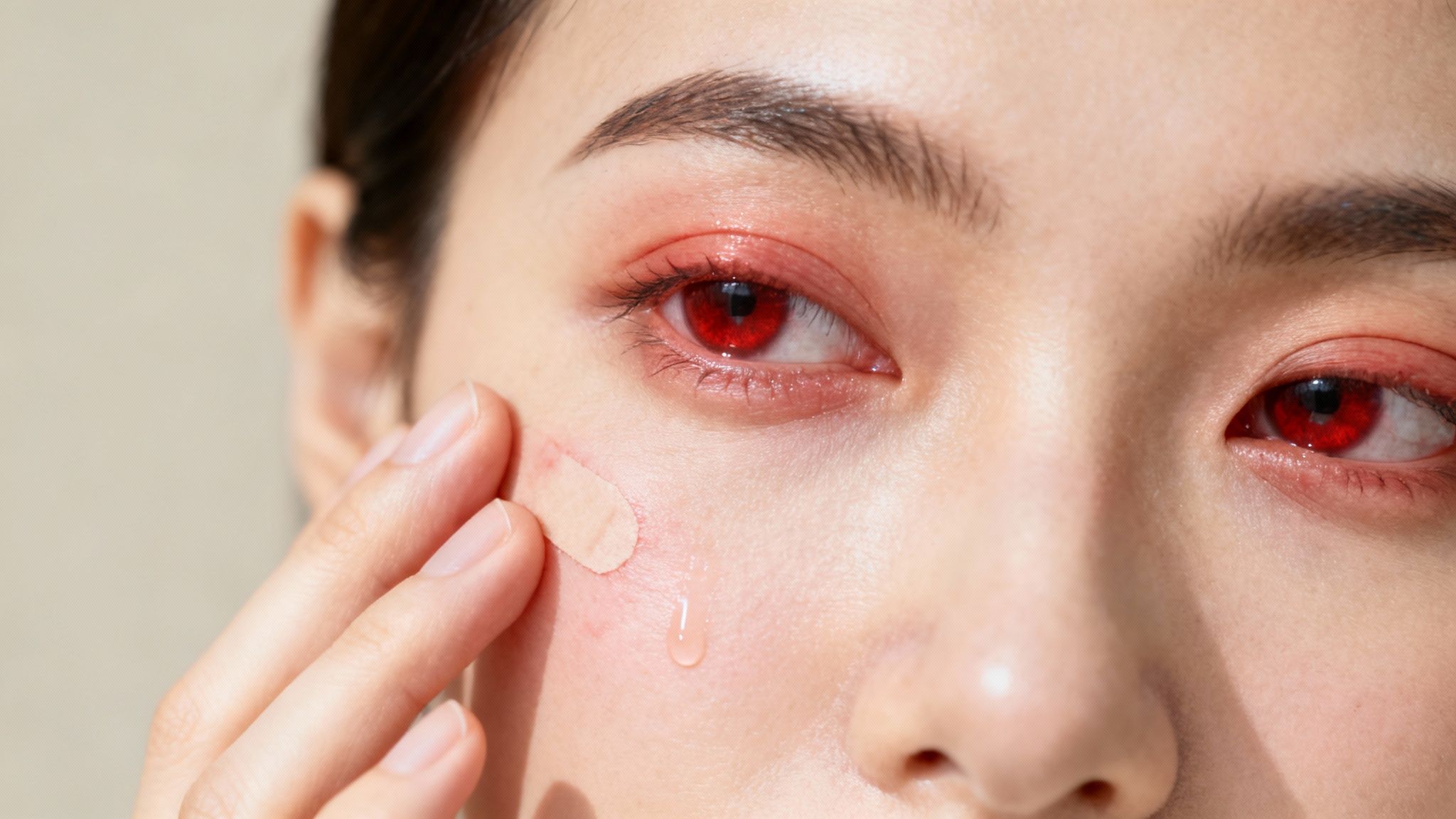
This happens because allergens like pollen and pet dander don’t just enter your airways; they also land directly on these exposed surfaces. Your body’s immune system immediately flags them as threats and releases chemicals that cause inflammation right at the point of contact.
The Itch You Can't Scratch: Allergic Conjunctivitis
One of the most maddening symptoms of environmental allergies is allergic conjunctivitis. This is simply the medical term for when allergens irritate the delicate membrane covering your eye. It’s an immediate, localized reaction that feels intensely personal.
The key signs are impossible to ignore:
- Intense Itching: This isn’t a mild irritation. It’s a deep, persistent itch that makes you want to rub your eyes constantly, which only makes things worse.
- Redness and Swelling: Histamine causes the tiny blood vessels in your eyes to expand, leading to that classic bloodshot look. Your eyelids can also get puffy and swollen.
- Watery Discharge: Your eyes produce a flood of thin, clear tears in a desperate attempt to literally wash the allergens away.
This trio of symptoms can make it difficult to focus, wear contacts, or even keep your eyes open comfortably. It’s a clear signal that your body is fighting off environmental triggers.
When Your Skin Flares Up
Your skin is your body’s largest organ and its primary barrier against the outside world. When allergens compromise this barrier—or when your immune system is already on high alert—your skin can react dramatically.
Two of the most common skin-related symptoms of environmental allergies are eczema and hives.
While we often think of allergies as something we breathe in, your skin is a major interface with the environment. An allergic reaction on your skin is a clear sign that your immune system's defense mechanisms have been triggered, either from the inside out or from direct external contact.
Eczema (Atopic Dermatitis): For anyone with eczema, environmental allergens are a well-known trigger for flare-ups. Allergens can weaken the skin barrier, allowing moisture to escape and irritants to get in. This leads to those dreaded patches of skin that are:
- Dry and scaly
- Intensely itchy
- Red and inflamed
Hives (Urticaria): Hives are raised, itchy welts that can appear anywhere on the body. They are a direct result of histamine release in the skin and can be triggered by touching an allergen or, in some cases, just by inhaling one.
Supporting Your Skin Through Allergy Season
When your skin is inflamed and reactive due to allergies, your skincare routine becomes more important than ever. The goal is to soothe irritation and help repair your skin’s compromised barrier. This is where a partnership with a trusted brand like Barb N.P. can make a real difference, especially with innovative tools like LED light therapy.
An excellent way to manage skin inflammation is with the Barb N.P. Facial Mask. This at-home device uses different wavelengths of light to calm irritation and support skin health. The red light setting is particularly beneficial for reducing the inflammation and redness associated with allergic skin reactions. Designed for real-world use, its key features include being completely wireless for freedom of movement, an ergonomic design for comfort on your face, and 3 lighting settings for different targeted treatments. For daily care, exploring the best serums for sensitive skin can also provide targeted relief without causing further irritation.
The Hidden Toll of Chronic Allergies
Beyond the sniffles and itchy eyes, environmental allergies can quietly sabotage your energy, focus, and overall well-being. When your immune system is stuck in a constant, low-grade war against allergens, it burns through a shocking amount of energy. This isn't just a feeling; it's a real physiological drain that can leave you feeling exhausted, foggy, and completely wiped out.
So many people write off their persistent fatigue or trouble concentrating as just stress or a bad night's sleep. But more often than not, these are the hidden, body-wide symptoms of an allergic reaction. Your body is working overtime, 24/7, and that takes a serious toll.
It's Far More Than a Stuffy Nose
The non-stop inflammation and immune response can set off a chain reaction of secondary symptoms that mess with your daily life. Think of it as a quiet leak in your energy reserves—one that often goes unnoticed as being connected to your allergies.
These less-obvious impacts are the real deal:
- Allergy Fatigue: This isn't your garden-variety tiredness. It's a deep, bone-weary exhaustion that sleep just can't seem to fix, all thanks to the energy your immune system is constantly spending.
- Brain Fog: Having trouble concentrating? Feeling mentally sluggish or forgetting things? That’s a common complaint, and it's a direct result of inflammatory chemicals messing with your cognitive function.
- Nagging Headaches: The sinus pressure from constant nasal congestion is a classic trigger for those dull, throbbing headaches that can linger for hours or even days.
- Terrible Sleep: Between the stuffy nose, coughing, and post-nasal drip, getting a solid night's rest can feel impossible. This kicks off a vicious cycle of daytime fatigue that only makes your other symptoms worse.
These aren't just minor annoyances. Over time, chronic allergy symptoms can have a major hidden impact on your health, especially if you already have respiratory conditions. Getting ahead of the problem with preventative measures is key, and simple steps like understanding how air duct cleaning supports respiratory health can be a game-changer in managing these long-term effects.
A Growing Problem Around the World
If it feels like your allergies are getting worse, you're not imagining it. This is a global trend tied directly to climate change and pollution. Over the last 20 years alone, the prevalence of hay fever has shot up by 33%. Warmer temperatures and higher CO2 levels mean longer, more intense pollen seasons, making life miserable for millions. Want to go deeper? You can discover more insights about why allergies are on the rise.
Your experience is valid. That crushing fatigue and frustrating brain fog aren't in your head—they are direct, physical consequences of your body’s relentless fight against allergens. Acknowledging this connection is the first real step toward getting relief.
Know the Red Flags for Anaphylaxis
While most environmental allergy symptoms are manageable, you absolutely must know the signs of a severe, life-threatening reaction called anaphylaxis. It's more commonly linked to food or insect stings, but in rare cases, environmental allergens can trigger it.
Call 911 immediately if you or someone else has any combination of these symptoms right after being exposed to an allergen:
- Trouble Breathing: This can feel like wheezing, shortness of breath, or a sensation that the throat is closing up.
- Skin Reactions: Look for widespread hives, flushed skin, or swelling of the face, lips, or tongue.
- Circulation Issues: A fast but weak pulse, dizziness, fainting, or a sudden dive in blood pressure are serious signs.
- Stomach Symptoms: Sudden nausea, vomiting, or intense abdominal cramps can also occur.
Anaphylaxis is a true medical emergency. It requires an immediate epinephrine injection and a trip to the hospital. Knowing these red flags means you can act fast when every second counts.
Practical Strategies for Allergy Relief at Home
Knowing what causes your allergy symptoms is one thing, but getting real relief is what truly matters. You can dramatically lighten your body's allergic load by making a few smart changes right at home. Your home should be your sanctuary—a place where you can breathe easy and minimize contact with the very things that trigger your sniffles, sneezes, and itchy skin.
Creating an allergy-friendly space doesn’t mean you have to remodel the entire house. It’s about building simple, consistent habits that turn your home from a source of misery into a haven of comfort.
Think of it as creating a multi-layered defense system. Each small change works together to tackle allergens at the source, giving your over-stressed immune system a much-needed break.
Create an Allergen-Resistant Bedroom
You spend about a third of your life sleeping, so making your bedroom a low-allergen zone is one of the most powerful moves you can make. Dust mites are a primary culprit for indoor allergies, and they absolutely love to hide out in bedding and soft furniture.
Here’s how to reclaim your bedroom:
- Encase Your Bedding: Use zippered, allergen-proof covers for your pillows, mattress, and box spring. They create an impenetrable barrier that locks dust mites out.
- Wash Bedding Weekly: Make it a non-negotiable routine. Wash all your sheets, pillowcases, and blankets in hot water—at least 130°F (54.4°C)—every single week. That high temperature is what it takes to kill dust mites and wash away their residue.
- Declutter Surfaces: Knick-knacks, stacks of books, and stuffed animals are just dust magnets. A cleaner, more minimalist space is far easier to keep allergen-free.
Purify Your Indoor Air
It might surprise you, but the air inside your home can often be more polluted with allergens than the air outside. Microscopic particles like pollen, pet dander, and mold spores are constantly circulating, just waiting to trigger your respiratory symptoms. Taking control of your air quality is a game-changer.
Your best weapon here is a high-efficiency particulate air (HEPA) filter. These filters are engineered to trap over 99.97% of airborne particles as tiny as 0.3 microns. You can use them in standalone air purifiers for key rooms (like the bedroom) or upgrade the filter in your central HVAC system for whole-house protection.
A HEPA filter acts like a 24/7 gatekeeper for your air, catching microscopic allergens before you even have a chance to breathe them in. This one change can drastically reduce the daily assault on your immune system, leading to fewer symptoms and better breathing.
Soothe Allergy-Related Skin Inflammation
When environmental allergies show up on your skin as hives, eczema flare-ups, or general irritation, you need a targeted way to calm the fire. Over-the-counter creams offer temporary relief, but advanced at-home therapies can go deeper to repair your skin’s barrier and reduce inflammation.
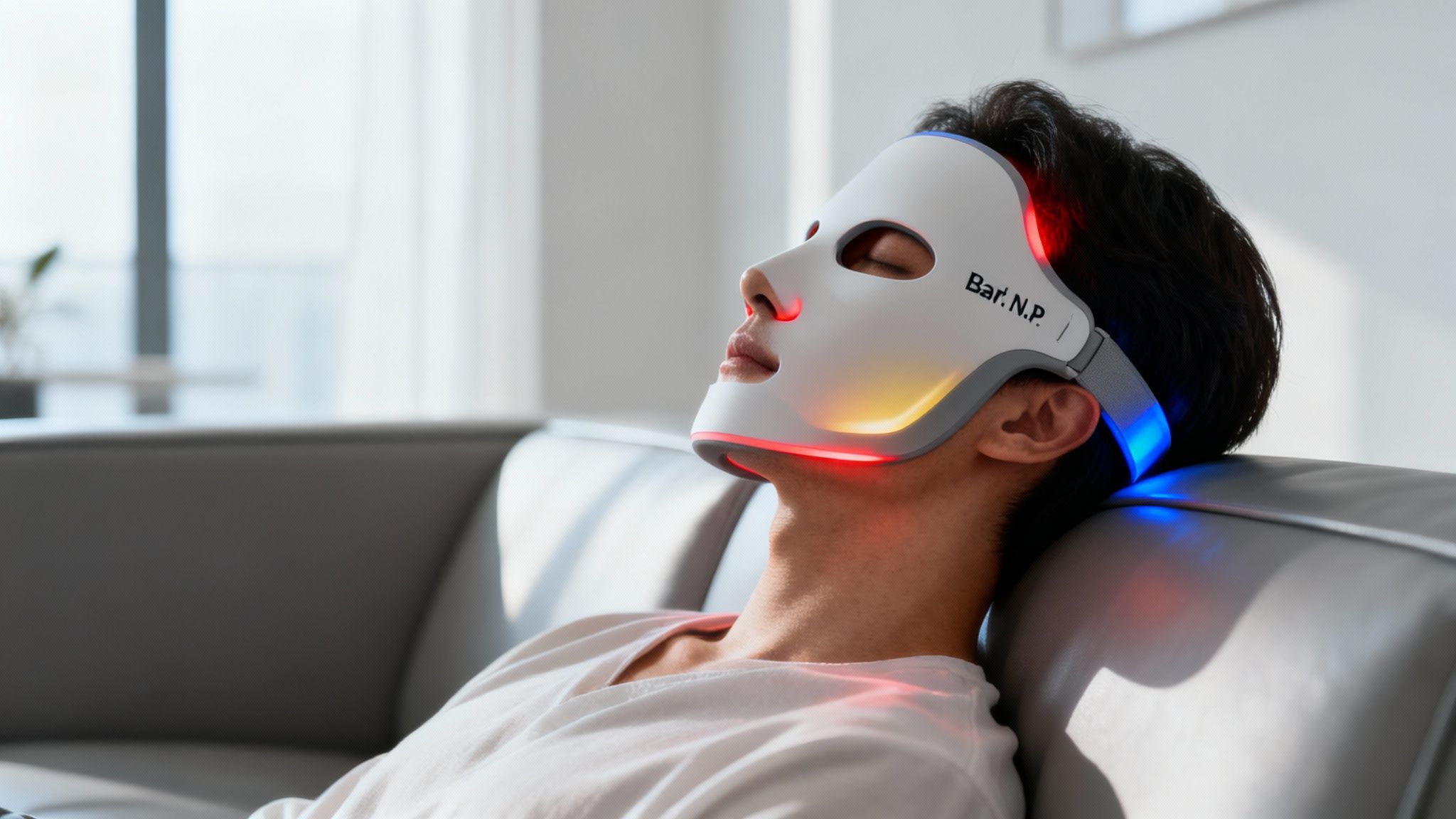
For this, we highly recommend the Barb N.P. Facial Mask. This is far more than a simple skincare gadget; it's a powerful complementary therapy designed specifically to address the inflammation that allergies cause. It works to soothe your skin and restore its natural strength, all from the comfort of your couch.
The Barb N.P. Facial Mask was designed with real users in mind:
- Completely Wireless: You have total freedom of movement. Relax, read, or walk around your home without being tethered by a cord. It makes treatments effortless.
- Ergonomic Comfort: The mask fits snugly and comfortably, ensuring the therapeutic light is delivered evenly across your face for maximum benefit without feeling awkward.
- Three Therapeutic Light Settings: It offers targeted treatments for different skin needs. The red light setting is especially brilliant for allergy-prone skin, as it excels at reducing inflammation, calming redness, and promoting cellular repair.
Adding this device to your routine is a practical, effective way to manage frustrating skin symptoms from environmental allergies. It helps restore your skin’s comfort and health, making it an invaluable tool in your at-home allergy relief kit.
Knowing When It's Time to See an Allergy Specialist
While many people can manage their symptoms with over-the-counter options, there are moments when self-care just doesn't cut it. If you find that drugstore medications barely touch your symptoms, or if your allergies are seriously getting in the way of your life, that's a clear signal to get a professional on your team.
You shouldn't have to "just live with" persistent symptoms that ruin your sleep, tank your productivity at work, or keep you from enjoying your day. And if you're dealing with both environmental allergies and asthma, expert management is absolutely critical to protect your lungs and prevent dangerous flare-ups.
Getting a Clear Diagnosis—No More Guesswork
An allergist’s main goal is to pinpoint the exact triggers causing your misery. They use precise, evidence-based diagnostic tools to create a detailed map of your unique allergy profile, ensuring you get the most effective treatment from the get-go. If you're curious about different testing methods, you can learn more about the pros and cons of an allergy test at home.
The two most trusted and common methods an allergist will use are:
- Skin Prick Tests: This is the gold standard for a reason. An allergist applies a tiny drop of a suspected allergen to your skin with a small, gentle prick. If you're allergic, a small, itchy bump (think mosquito bite) will pop up within 15-20 minutes.
- Specific IgE Blood Tests: This involves a simple blood draw. The sample is sent to a lab to measure the amount of specific IgE antibodies your immune system has created to fight off certain allergens.
Advanced Treatments for Lasting Relief
Once your triggers are confirmed, your allergist can unlock a new level of treatment far more powerful than what you'll find on pharmacy shelves. These advanced options are designed to provide long-term, meaningful relief.
Allergies are a massive global health issue. Projections show that by 2025, over 30% of the world's population could be affected by some form of allergy. The economic toll is staggering, with billions lost to medical costs and missed work days. You can learn more about this growing health crisis on heyallergy.com.
Beyond stronger prescription medications, the most significant advancement is immunotherapy. You might know it as allergy shots or under-the-tongue sublingual tablets. Immunotherapy works by gradually introducing your body to small, controlled amounts of your specific allergens. Over time, this process trains your immune system to stop overreacting. It's the only treatment that targets the root cause of your allergies, not just the symptoms.
Your Top Allergy Questions, Answered
When you're dealing with allergy symptoms, it’s natural to have questions. Is this just a cold? Can I really be developing allergies as an adult? Let's clear up some of the most common uncertainties you might be facing.
How Can I Tell If It Is a Cold or Environmental Allergies?
This is one of the most common questions I hear. The biggest clues are the timeline and the specific symptoms you're experiencing. A common cold is a virus, and your body will typically fight it off in 7-10 days. It often comes with a low-grade fever or body aches, which you almost never see with allergies.
Allergies, on the other hand, can stick around for weeks or even months—basically, for as long as you're exposed to the trigger. Another dead giveaway is itchiness. Allergies almost always bring on intensely itchy, watery eyes and a relentlessly itchy nose. Plus, the nasal discharge from allergies is usually thin, clear, and watery, while a cold tends to produce thicker, sometimes colored mucus.
Can Environmental Allergies Develop in Adulthood?
Absolutely. It’s actually very common to develop new environmental allergies later in life. Our immune systems are constantly changing, and a new exposure can be all it takes to trigger a reaction.
Maybe you’ve moved to a new part of the country with different types of pollen, or perhaps you just brought home a new pet. Your immune system can suddenly decide it doesn’t like an allergen that it had no problem with for years.
Are At Home Allergy Test Kits Reliable?
While the convenience of at-home allergy kits is tempting, their reliability can be a real issue. These kits often measure for IgE antibodies, but they completely miss the most important part of the puzzle: the clinical context. A test result is just a number without a medical professional to interpret it alongside your unique symptoms and health history.
This can easily lead to misinterpreting the results, causing you to cut out foods unnecessarily or creating a lot of anxiety over a false positive. For a truly accurate diagnosis and a safe, effective treatment plan, nothing beats consulting with a specialist. They can put all the pieces together to give you real answers.
At Barb N.P., we believe in providing clear answers and effective solutions for your wellness concerns, from allergy testing to advanced skincare. Explore our curated products and book a consultation to start your journey toward relief.