What Are Common Food Allergies A Complete Explainer
When someone asks, "what are the most common food allergies," the answer almost always comes back to a specific group of nine foods. These aren't just random culprits; this small list is responsible for a staggering 90% of all food allergy reactions.
A food allergy is really just a case of mistaken identity. Your immune system, which is designed to fight off real threats like bacteria and viruses, mistakenly flags a harmless food protein as an invader. This triggers a defensive response, leading to symptoms that can range from a mild inconvenience to a life-threatening emergency.
Identifying the Primary Food Allergens
Think of it like a faulty security system that goes into high alert when a friendly neighbor drops by. While almost any food could theoretically trigger this alarm, the same handful of foods are responsible for the vast majority of reactions around the world.
Knowing these key players is the first and most critical step in safely managing a food allergy. This visual gives you a quick snapshot of the nine major allergens that get the most attention in the United States.
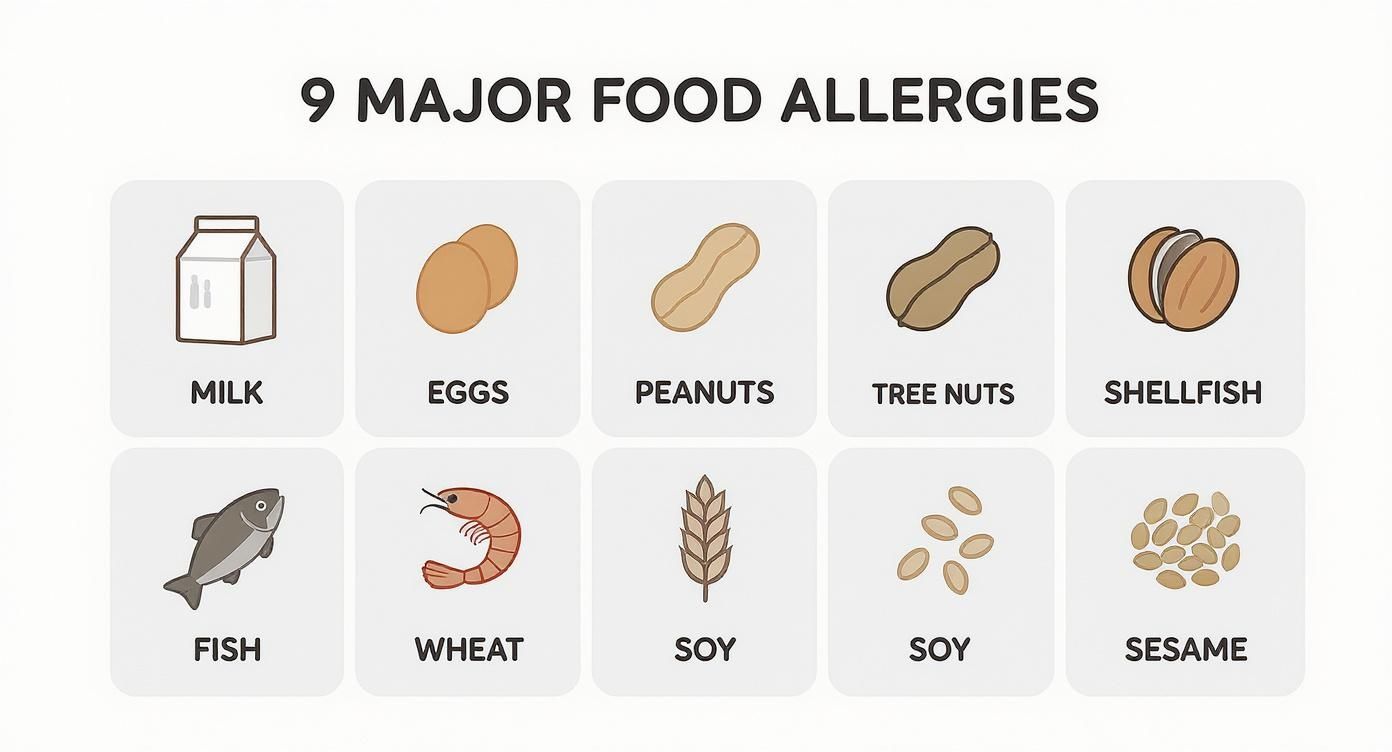
This lineup—milk, eggs, peanuts, tree nuts, shellfish, fish, wheat, soy, and sesame—forms the core of food allergy concerns for families, schools, and food manufacturers alike.
The Big Nine Explained
These nine allergens are so prevalent that U.S. law requires them to be clearly labeled on packaged foods, making it easier for people to avoid them. It’s a consistent pattern seen in allergy research: a small group of foods causes most of the problems.
In the U.S., these nine foods are the primary triggers, accounting for that 90% of all food allergy reactions. You can dive deeper into these food allergy statistics and figures for a closer look.
To help you get familiar, let's break them down.
Here’s a quick summary table to keep the "Big Nine" straight.
The 9 Most Common Food Allergens at a Glance
| Allergen | Common Sources | Typical Symptoms |
|---|---|---|
| Milk | Cheese, butter, yogurt, creamy sauces | Hives, stomach upset, vomiting, anaphylaxis |
| Eggs | Baked goods, mayonnaise, some pastas | Skin reactions, respiratory issues, stomach pain |
| Peanuts | Peanut butter, sauces, snacks, candies | Severe reactions, including anaphylaxis |
| Tree Nuts | Almonds, walnuts, cashews, pistachios | Hives, swelling, difficulty breathing |
| Shellfish | Shrimp, crab, lobster, clams, oysters | Skin rashes, swelling, wheezing, anaphylaxis |
| Fish | Salmon, tuna, cod, tilapia | Hives, swelling, digestive issues |
| Wheat | Breads, pastas, cereals, sauces, soups | Hives, swelling, digestive problems |
| Soy | Tofu, soy sauce, edamame, processed foods | Itching, hives, swelling, digestive distress |
| Sesame | Seeds, tahini, hummus, oils, baked goods | Hives, swelling, coughing, anaphylaxis |
This table covers the essentials, but it's important to remember that these allergens can hide in unexpected places. Always read labels carefully.
Here's a closer look at each one:
- Milk: One of the most common childhood allergies, it’s found in obvious places like cheese and yogurt but also hides in creamy sauces and baked goods.
- Eggs: Another frequent culprit for kids. Look out for it in mayonnaise, many baked items, and even some pastas.
- Peanuts: Technically a legume, a peanut allergy is notorious for causing severe reactions. It’s in everything from peanut butter to snack foods and Asian sauces.
- Tree Nuts: This is a broad category including almonds, walnuts, cashews, pecans, and pistachios. They're often found in desserts, granolas, and pesto.
- Shellfish: This group is split into two types: crustaceans (like shrimp and crab) and mollusks (like clams and oysters).
- Fish: Allergies to finned fish like salmon, tuna, and cod are quite common and tend to be lifelong.
- Wheat: Found in the usual suspects like bread and pasta, but also used as a thickener in sauces and soups. A wheat allergy is different from celiac disease.
- Soy: A staple in many processed foods, soy is also in tofu, edamame, and soy sauce.
- Sesame: The newest addition to the major allergen list. Sesame is found in seeds, oils, and tahini (a key ingredient in hummus).
Food allergies can sometimes trigger skin reactions like hives or eczema. Managing skin health alongside allergy avoidance is a good strategy for overall well-being.
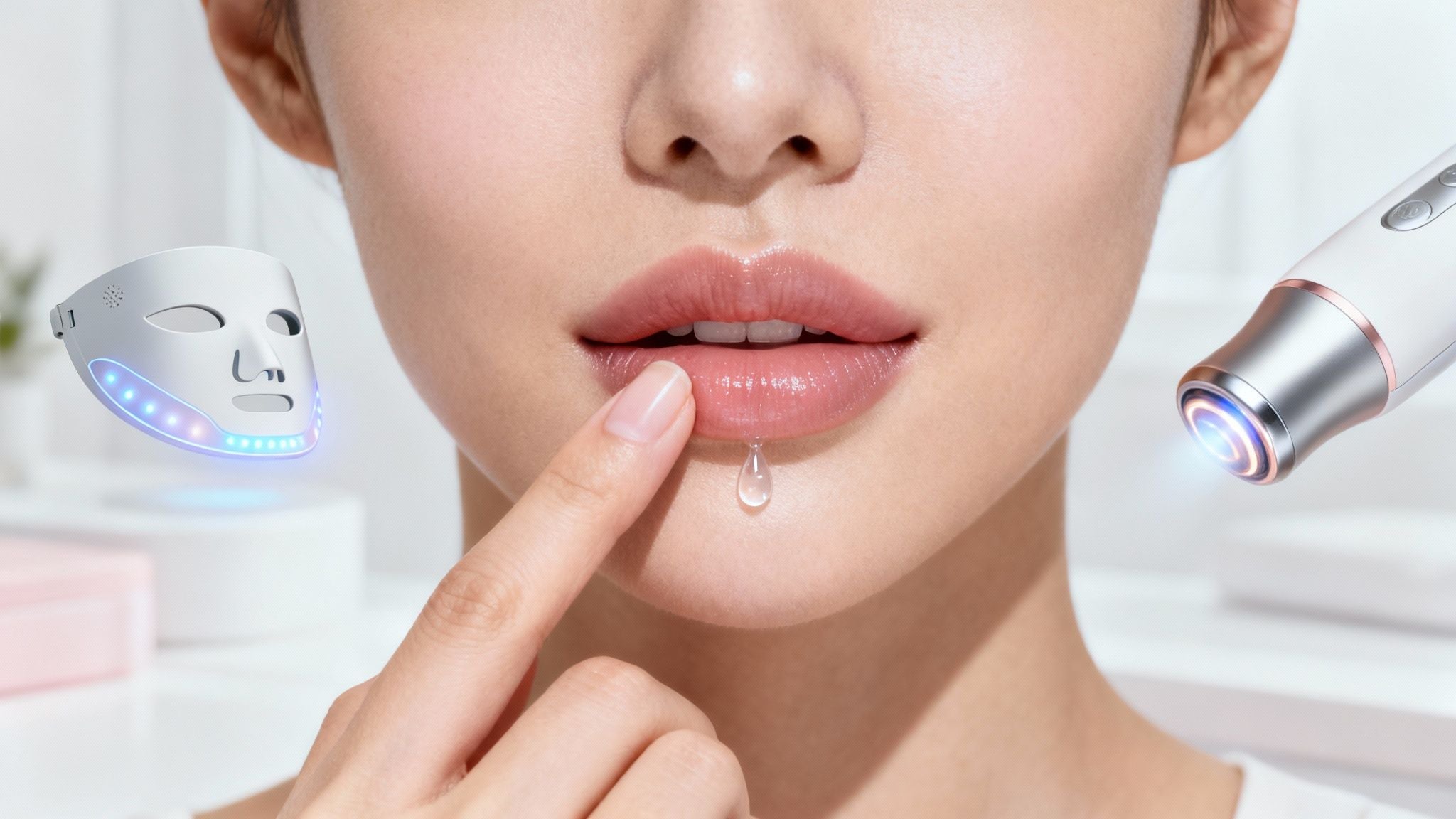
While avoiding allergens is paramount, supporting your skin's health can be beneficial. For those seeking a gentle, non-invasive option at home, the Barb N.P. Facial Mask offers a versatile solution. This wireless mask is designed for comfort and ease, allowing you to move freely during treatment. It includes three distinct lighting settings to address various skin concerns: red light for anti-aging, blue light for acne, and yellow light for rejuvenation.
How to Recognize the Signs of an Allergic Reaction
Knowing what a food allergy reaction looks like is critical, since the signs can pop up within minutes or take a few hours to appear. When an allergic reaction happens, your body's immune system is basically overreacting to a food protein it sees as a threat. This response can hit multiple systems at once, often in unpredictable ways.
Think of it like an unexpected storm. It might start with a light drizzle—a few itchy bumps—but can quickly escalate into a dangerous tempest involving your whole body.
Mild to Moderate Symptoms
Most food allergy reactions kick off with mild to moderate symptoms. They’re uncomfortable but not immediately life-threatening, and they often serve as the first warning signs that something is wrong. Catching them early is the key to preventing a more serious outcome.
These initial signs usually involve the skin, stomach, or respiratory system.
- Skin Reactions: This is one of the most common red flags. You might see hives (red, itchy welts), eczema flare-ups, or swelling, especially around the face, lips, and eyes.
- Gastrointestinal Issues: The body might try to get rid of the allergen, leading to stomach cramps, nausea, vomiting, or diarrhea.
- Respiratory Symptoms: A stuffy or runny nose, sneezing, and an itchy or tingling feeling in your mouth and throat are also frequent early tells.
It's so important to remember that even a mild reaction can escalate without warning. What starts as a few hives can absolutely progress to something much more serious, which is why paying close attention to any symptom is crucial.
Understanding Anaphylaxis
The most severe and dangerous allergic reaction is anaphylaxis. This is a rapid, whole-body allergic crisis that can be fatal if not treated immediately. It’s a true medical emergency where symptoms can develop suddenly and worsen in seconds.
Anaphylaxis is a serious, potentially life-threatening allergic reaction. Some estimates suggest that about 1 in 50 Americans may be at risk, with food being the leading cause of anaphylaxis seen in emergency departments for children.
Key signs of anaphylaxis often include a combination of the milder symptoms along with more severe ones that demand urgent action.
- Difficulty Breathing: This can feel like a tightness in the chest, wheezing, or a desperate shortness of breath.
- Swelling of the Throat: A feeling of tightness or a lump in the throat can make it hard to breathe or swallow.
- Sudden Drop in Blood Pressure: This can cause dizziness, lightheadedness, a weak pulse, or even fainting.
- Sense of Impending Doom: Many people experiencing anaphylaxis report a sudden, overwhelming feeling of anxiety or a gut feeling that something is terribly wrong.
If you even suspect someone is having an anaphylactic reaction, you must use an epinephrine auto-injector immediately and call 911. That swift action is genuinely lifesaving.
Food Allergies Are a Bigger Deal Than Ever
It’s not just your imagination—food allergies feel like they’re everywhere these days. What used to be a relatively uncommon issue has become a major public health concern, impacting families, schools, and healthcare systems across the globe. This isn't just a slight uptick; the numbers show a dramatic and sustained climb over the past few decades.
The increase is especially stark in developed countries. Take the United States, for instance. Food allergy rates in children jumped by an astonishing 50% between 1997 and 2011. The trend didn't slow down, rising another 50% from 2007 to 2021. Today, that translates to roughly 4 million U.S. children and 16 million U.S. adults navigating life with a diagnosed food allergy. You can explore more about these allergy rates to see just how widespread the issue has become.
So, Why Are Food Allergies on the Rise?
Scientists are digging into several compelling theories, but one of the most talked-about is the "hygiene hypothesis." The core idea is that our modern, ultra-clean environments might be leaving our immune systems a bit... bored and untrained.
Think of your immune system as a new recruit in training. If it never gets exposed to a diverse range of everyday germs and microbes early in life, it doesn't learn how to tell the difference between a real threat and a harmless visitor. When it finally encounters something like a peanut protein, it might overreact and sound all the alarms, launching a full-blown (and unnecessary) attack.
The hygiene hypothesis suggests that a lack of early exposure to microbes and infections can lead to a miscalibrated immune system, increasing the risk of allergic diseases.
Other Pieces of the Puzzle
But it's not just about being "too clean." Other aspects of modern life are also under the microscope. Researchers are looking at how big shifts in our diets, like the move toward more processed foods, could be influencing our gut health and, in turn, our immune responses.
Another huge factor has been the evolution of advice for parents. For years, the standard recommendation was to delay giving allergenic foods like peanuts and eggs to babies. We now know that was likely the wrong move. Groundbreaking studies have flipped that advice on its head, showing that early and frequent introduction of these foods can actually help prevent allergies from developing. This shift in guidance highlights just how critical it is to understand what are common food allergies and how to navigate them in today's world.
How Doctors Diagnose Food Allergies
Figuring out if you have a food allergy can feel like solving a puzzle with missing pieces. If you've been wondering what are common food allergies and think you might have one, getting a professional diagnosis is the only way to get clear, reliable answers. Allergists don't just rely on one test; they use a combination of your personal history and specific tests to zero in on the exact trigger.
Your story is the single most important clue. An allergist will want to know every detail about your suspected reactions: what you ate, how much of it, when your symptoms started, and exactly what they felt like. Keeping a detailed food and symptom diary before your appointment can be a game-changer for this conversation.
The Main Diagnostic Tools
After listening to your story, an allergist will likely recommend one or more tests to gather more concrete evidence. These tools help them see exactly how your immune system responds to specific food proteins.
-
Skin Prick Test (SPT): This is often the first stop. An allergist places a tiny drop of liquid containing a food allergen on your skin, then lightly pricks the surface. Think of it as a "tiny preview" for your immune system. If a raised, itchy bump (called a wheal) pops up within 15-20 minutes, it signals a possible allergy.
-
Blood Test (Specific IgE): This test does its detective work from the inside, measuring the amount of specific Immunoglobulin E (IgE) antibodies to a certain food in your bloodstream. High IgE levels can point toward an allergy, but it's just one piece of the puzzle, not a final verdict on its own.
These initial tests are fantastic for narrowing down the list of suspects, but they don't always tell the whole story. A positive skin or blood test doesn't automatically mean you'll have a reaction every single time you eat that food.
The Gold Standard Confirmation
To get a definitive yes-or-no answer, allergists often turn to the most trusted method in their toolkit.
The Oral Food Challenge (OFC) is considered the most accurate and definitive way to diagnose a food allergy. It provides a clear answer under strict medical supervision, leaving no room for doubt.
During an OFC, you'll eat very small, gradually increasing amounts of the suspected food in a completely controlled clinical setting, like a hospital or an allergist’s office. Medical staff watch you closely the entire time for any sign of a reaction. While it might sound a little intimidating, it’s the most conclusive way to know for certain if a food is safe or needs to be avoided. It removes all the guesswork, giving you the certainty needed for a safe management plan.
For those curious about how clinical testing compares to other methods, you can learn more about food allergy testing at home in our guide.
Developing Your Food Allergy Management Plan
Getting a food allergy diagnosis isn't the end of the road—it’s the beginning of a new one. It gives you a roadmap to create a structured, confident approach to daily life. The absolute cornerstone of any good plan is strict avoidance of your specific allergen. Think of yourself as a food detective.
This new role means you'll need to sharpen a few key skills. First, you have to learn to read food labels like a pro, because allergens love to hide in the most unexpected places. Just as important is mastering the art of preventing cross-contamination in your own kitchen, making sure safe foods stay that way from the cutting board to your plate.
Mastering Avoidance and Communication
Successfully avoiding an allergen goes far beyond your own home. Dining out can feel intimidating, especially when you learn that research shows nearly half of all fatal food allergy reactions are linked to restaurant food. This is where clear, confident communication becomes your most powerful tool.
Part of any good management plan is finding safe and delicious alternatives. If you need some ideas for your pantry, this guide to the top 8 allergen-free snacks is a great place to start. Building these strategies helps you navigate social events without putting your health on the line.
A diagnosis is your roadmap to safety. Managing a food allergy is about building proactive habits—like meticulous label reading and clear communication—that empower you to live your life fully and safely.
To get a better handle on your specific triggers, some people work with their doctors to try specific dietary strategies. You can learn more about how an elimination diet for food allergies works in our detailed guide. It's a process that can offer incredible insight for your long-term plan.
Creating an Emergency Action Plan
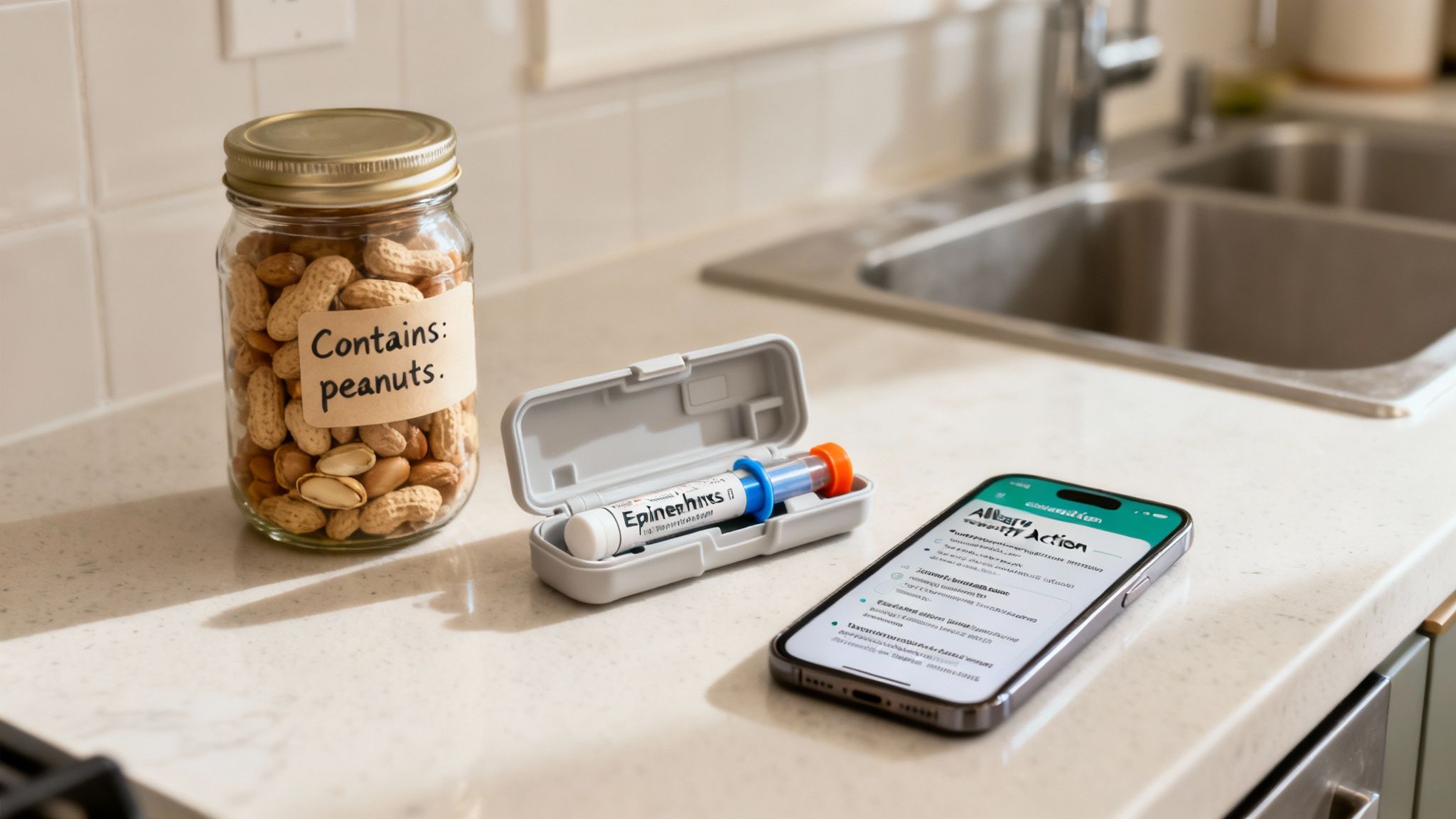
While avoidance is always the goal, you have to be ready for an accidental exposure. This is where an emergency action plan, created with your allergist, becomes your non-negotiable safety net. This plan lays out the exact steps to take if a reaction happens, taking all the guesswork out of a high-stress moment.
The single most critical piece of this plan is an epinephrine auto-injector. It is the first-line treatment for anaphylaxis and the only medicine that can reverse its life-threatening symptoms.
Your emergency plan should be built around these key steps:
- Always Carry Epinephrine: You need two auto-injectors with you at all times. Not in your glove box, not in your gym bag, but on your person.
- Know the Symptoms: Learn to recognize the signs of a reaction, from mild hives or an itchy mouth to severe trouble breathing.
- Act Without Hesitation: Use epinephrine at the first sign of a severe reaction. It is always better to use it and not need it than to wait too long.
- Call for Help: Immediately call 911 after administering epinephrine. You will always need follow-up medical care.
Living with a food allergy demands vigilance, but it doesn’t have to run your life. By mastering avoidance, communicating clearly, and having a rock-solid emergency plan, you can navigate your world with total confidence.
Giving Your Skin Extra Support
When you're dealing with food allergies, your skin is often the first to send out an SOS. Reactions like hives and eczema are your body's way of saying something isn't right, making skin health a huge piece of the wellness puzzle. While steering clear of your specific food triggers is always priority number one, you can also build up your skin's resilience with some smart, at-home care.
One gentle, non-invasive way to do this is with LED light therapy. Think of it as a calming, proactive step to soothe irritation and improve your skin’s overall appearance, which is a big help when you're navigating those frustrating, allergy-related flare-ups.
A Modern Take on Soothing Your Skin
For an easy and effective option, the Barb N.P. Facial Mask was designed for real life. It’s completely wireless, so you’re not tethered to a wall—you can move around freely during your session. Plus, it’s shaped to rest comfortably on your face without any fuss.
The mask comes with three different light settings, each targeting a specific concern:
- Red Light: A go-to for anti-aging, as it helps encourage collagen production for firmer skin.
- Blue Light: Works to tackle acne-causing bacteria, keeping breakouts at bay.
- Yellow Light: Focuses on rejuvenation and dialing down redness for a more even skin tone.
This kind of versatility makes it a powerful tool in any skincare routine, but it's especially useful for anyone managing the skin side-effects that can come with food sensitivities.
Commonly Asked Questions About Food Allergies
Once you start learning about food allergies, it’s natural for more questions to surface. Certain topics tend to cause confusion, so let's clear up a few of the most common ones with straightforward, practical answers.
Can You Outgrow a Food Allergy?
This really depends on the specific food causing the reaction. Allergies to milk, eggs, soy, and wheat are often a childhood phase. In fact, some studies show that up to 80% of children might say goodbye to their milk or egg allergy by the time they hit their teenage years.
However, it’s a different story for allergies to peanuts, tree nuts, fish, and shellfish. These tend to stick around for life, requiring careful management well into adulthood.
Allergy vs. Intolerance: What Is the Difference?
This is one of the biggest points of confusion, and getting it right is crucial for your health. The key difference is which body system is involved in the reaction.
A food allergy is an immune system response. It can trigger anything from hives to life-threatening anaphylaxis. A food intolerance, on the other hand, involves the digestive system and causes uncomfortable symptoms like bloating or gas—but it isn't dangerous.
Knowing this distinction is the first step toward managing your symptoms correctly. For a deeper look, our article on the difference between food intolerance and allergy breaks it all down.
What Is Food Allergy Cross-Reactivity?
Cross-reactivity is basically a case of mistaken identity by your immune system. It happens when the proteins in one food are so structurally similar to the proteins in another that your body reacts to both.
A classic example is within the shellfish family. If you have a shrimp allergy, you might also react to crab or lobster because their proteins look alike to your immune system. Another common one is Oral Allergy Syndrome, where a pollen allergy (like to birch trees) can make your mouth itch after eating raw fruits, like an apple, that contain similar proteins.
At Barb N.P., we believe clear information and proactive care are essential for wellness. For those seeking to address skin health, our recommended Barb N.P. Facial Mask offers a gentle, at-home solution with wireless comfort and three therapeutic light settings to soothe and rejuvenate your skin. Discover how the Barb N.P. Facial Mask can enhance your skincare routine today.