Article: Allergy Testing for Hives: A Practical Guide
Allergy Testing for Hives: A Practical Guide
Broad allergy panels are often presented as the obvious answer to hives. They aren't. The more useful first question is whether your hives behave like an allergic reaction at all, because the timing, duration, and pattern of each episode often tell a clinician more than a long list of positive test results.
Hives, or urticaria, are raised, itchy welts caused by activity in the skin's immune cells. Acute urticaria affects up to 20% of people during their lifetime, while chronic urticaria affects a much smaller portion of the global population, estimated at about 1% to 1.5%. The European Centre for Allergy Research Foundation's urticaria overview explains why this distinction matters: most chronic hives aren't driven by a specific allergy.
That doesn't mean allergy testing for hives is never appropriate. It means testing should answer a clear clinical question. A sudden outbreak after a particular food, medicine, or insect sting deserves a different evaluation from welts that appear unpredictably for weeks.
Why Hives Do Not Always Mean Allergy
Hives are a final common pathway. Several different processes can activate mast cells in the skin and create a similar-looking welt, including infection, heat, pressure, medication effects, immune-system activity, and true allergy. The skin may look the same even when the underlying mechanism is completely different.
Acute hives can follow an exposure to a food, medication, latex, or insect venom. The strongest clue is a reproducible pattern. You eat or take something, hives appear within a plausible time frame, and the same sequence happens again. Swelling of the lips or tongue, throat symptoms, breathing difficulty, dizziness, or gastrointestinal symptoms make the situation more urgent because hives can occur as part of anaphylaxis.
Chronic spontaneous urticaria behaves differently. It tends to recur without a dependable external trigger, and individual welts come and go while new ones appear elsewhere. The 2025 British Society for Allergy & Clinical Immunology guidance states that allergy testing isn't indicated when there's no clear and consistent trigger. International guidance generally recommends limited baseline evaluation for chronic spontaneous urticaria, typically a differential blood count plus ESR and/or CRP, with further testing guided by the history. Those recommendations are summarized in the international urticaria guidance discussion.
Practical rule: A positive allergy test can show sensitization, but it doesn't automatically prove that the allergen causes your hives.
Broad food or environmental panels can create confusion. A person may receive several positive results, remove nutritious foods unnecessarily, and still develop hives because the underlying driver is spontaneous urticaria, heat, pressure, stress, infection, or a medicine. Understanding the difference between food intolerance and allergy can also prevent an elimination diet from becoming a substitute for diagnosis.
The better opening question is simple: Do the episodes have a consistent relationship to one exposure? If they don't, the priority may be symptom control and evaluation for other causes rather than a search for an ever-larger allergy panel.
The History First Approach to Hives
A careful history isn't a formality before testing. It's the tool that determines whether testing makes sense. Many allergy clinicians use a structured approach similar to STAR history taking, focusing on Symptoms, Timing, Allergen, and Reproducibility. In practice, you can make that conversation more useful by organizing your notes into four areas.
Setting
Record where the hives appear. Do they start at home, work, outdoors, in a particular room, or during a certain season? Note new pets, renovations, cleaning products, workplace exposures, and changes in personal-care products.
Environmental clues can matter, but they don't automatically establish cause. Someone may have pollen allergy and hives that are driven by chronic spontaneous urticaria. The setting helps a clinician decide whether an aeroallergen deserves focused evaluation or whether it's probably incidental.
Timing
Write down when the welts begin after a suspected exposure. Also record how long each individual welt remains in one place, how long the full flare lasts, and whether new welts appear as older ones fade.
A quick, repeatable reaction after a specific food or medication supports an immediate allergic mechanism. Hives that recur at unrelated times, without a dependable delay after exposure, point more toward spontaneous or inducible urticaria. Individual wheals that last longer than 24 hours in one location require a different line of thought, including urticarial vasculitis, especially if they bruise, burn, or hurt.
Activity
List what was happening before the flare. Include food, medicines, supplements, exercise, sweating, heat, cold, sunlight, pressure from clothing or straps, scratching, stress, and recent infection.
A runner who develops small itchy welts as body temperature rises may have cholinergic urticaria rather than a food allergy. Someone whose marks appear under a waistband or backpack may have pressure-related urticaria. NSAIDs and ACE inhibitors can also worsen hives without causing a classic IgE-mediated allergy.
Reactions
Record associated symptoms, not just the skin findings. Lip or tongue swelling, throat tightness, wheezing, faintness, vomiting, abdominal cramping, or widespread flushing can change the urgency and the testing strategy.
Bring photographs when possible, along with a medication and symptom diary. Testing ordered without a working hypothesis often produces information, but not necessarily an answer. The history creates the hypothesis, and the test should refine it.
Types of Allergy Tests Used for Hives
The phrase “allergy test” covers several different procedures. They don't all detect the same immune response, and some have little role in chronic spontaneous urticaria.
Skin prick testing
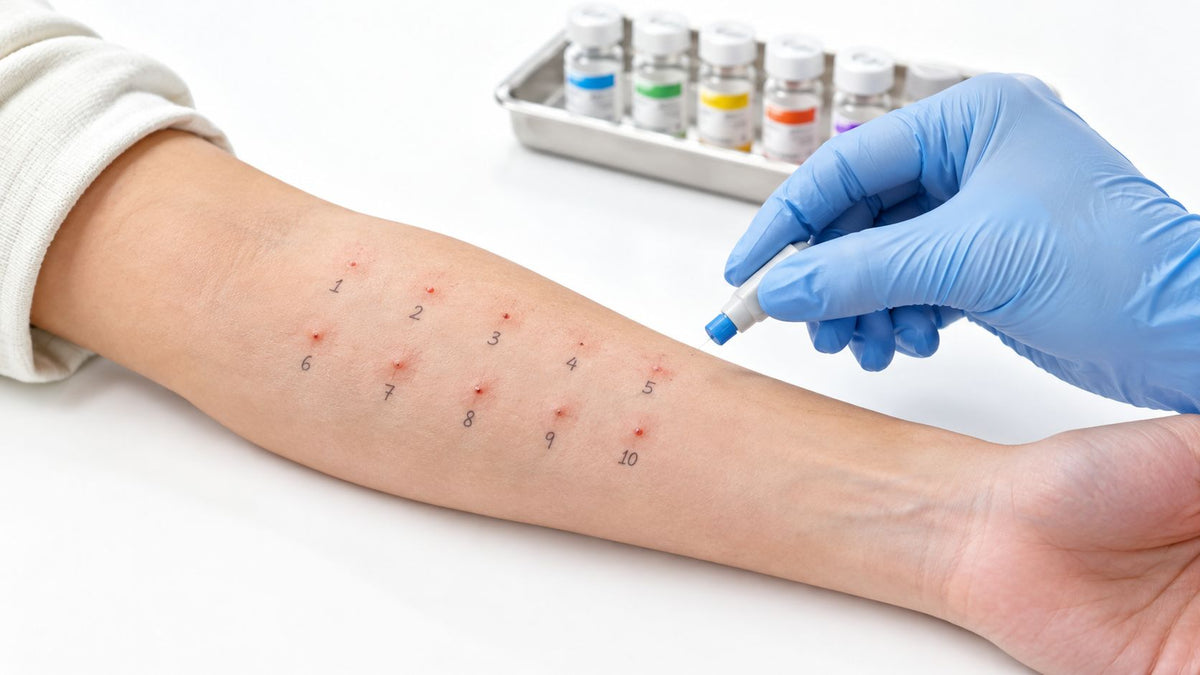
A clinician places small amounts of suspected allergens on the skin, usually the forearm or back, and makes a superficial introduction into the skin. A raised wheal usually appears in about 10 to 20 minutes when the test detects immediate sensitivity, as described by Mayo Clinic's allergy testing information.
Skin prick testing is most useful when the history points toward a particular food, medication, venom, or inhalant. It isn't a useful screening tool for every possible allergen.
Specific IgE blood testing
This blood test measures IgE antibodies directed at individual allergens. Clinicians may choose it when eczema or another skin condition makes skin testing difficult, or when antihistamines can't be stopped safely.
A result still needs clinical interpretation. Detectable IgE indicates sensitization, not proof that the suspected exposure caused the hives. The same principle applies to an at-home test. BotoxBarb offers products related to IgE-based allergy testing, but a result should be reviewed in the context of the reaction history rather than treated as a diagnosis by itself.
For a practical comparison of these two approaches, see this guide to allergy blood tests versus skin tests.
Intradermal testing
Intradermal testing places a small amount of diluted allergen into the outer layer of skin. It's more sensitive than skin prick testing, but it can also create more false-positive results and carries a greater risk of a systemic reaction. For immediate allergy evaluation, AAAAI diagnostic testing guidance states that intradermal testing should follow skin prick testing when it's needed.
This method has a role in selected drug and venom evaluations. It's rarely the first choice for unexplained chronic hives.
Patch testing
Patch testing looks for delayed contact reactions. Small amounts of substances are applied under patches and assessed later. That makes it relevant to allergic contact dermatitis, which can overlap with eczema, but not to true urticaria, whose wheals typically arise and fade differently.
Autologous serum skin testing
This specialist procedure uses a patient's own serum to screen for factors that can activate the skin in chronic urticaria. It may support an autoimmune pathway, but it doesn't identify a food or environmental allergen.
Basophil activation testing remains largely research-based in this context and isn't a routine answer for most patients.
| Test | What It Detects | Best Used For | Key Limitation |
|---|---|---|---|
| Skin prick | Immediate IgE sensitization | A suspected food, venom, drug, or inhalant trigger | Positive results may show sensitization without proving cause |
| Specific IgE blood test | Circulating IgE to selected allergens | When skin testing isn't practical | Broad panels can create confusing positives |
| Intradermal | More sensitive immediate skin response | Selected drug or venom evaluations | More false positives and greater reaction risk |
| Patch test | Delayed contact sensitivity | Suspected contact dermatitis | Doesn't evaluate typical urticaria |
| Autologous serum skin test | Patient serum factors that activate skin | Selected chronic urticaria evaluation | Doesn't identify an external allergen |
Accuracy Limits and Common Pitfalls
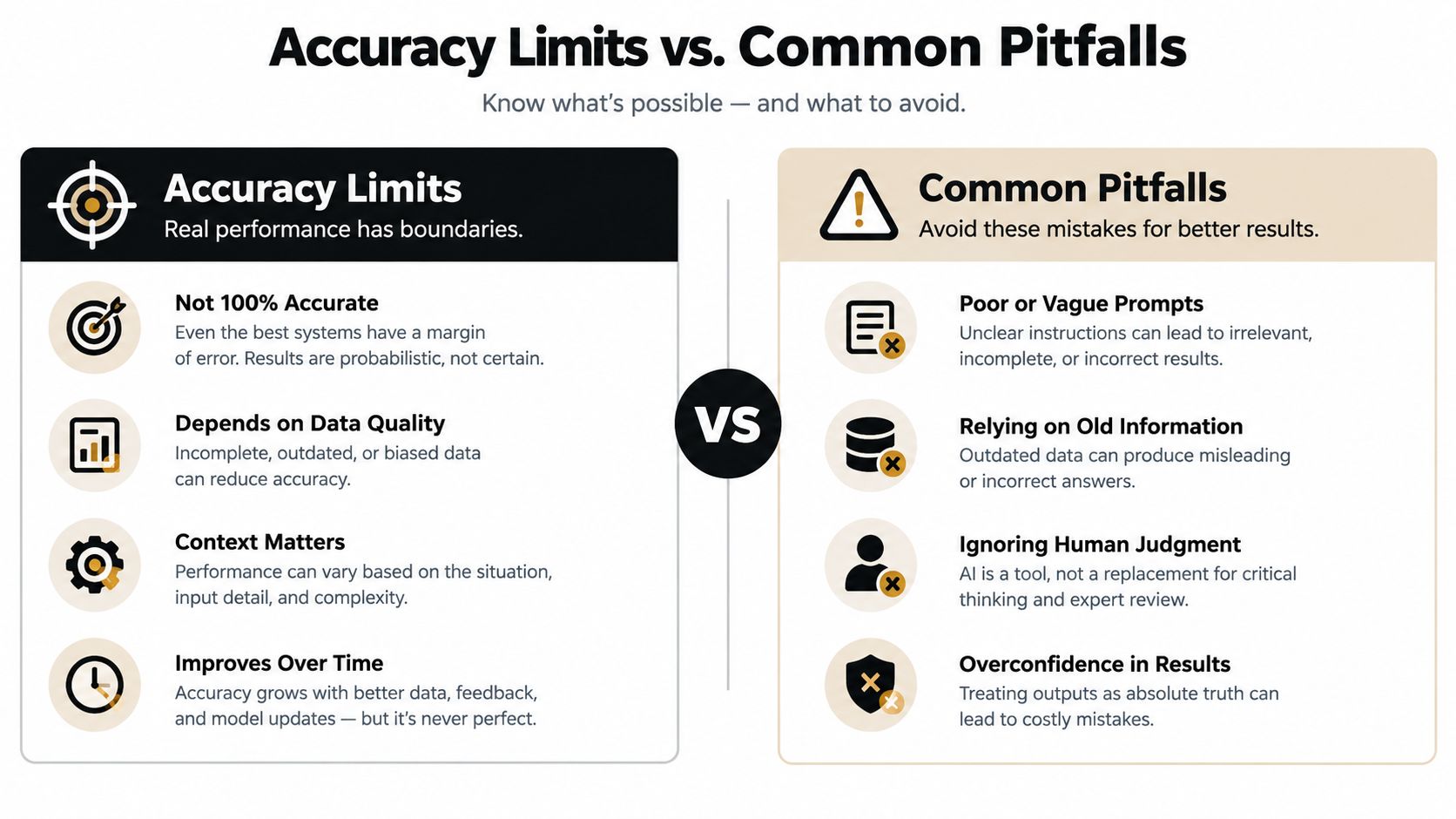
An allergy test cannot answer whether hives are “real” or whether allergy is present. It measures a particular immune response. The useful question is whether that response matches the timing, exposure, symptoms, and repeatability in your history.
Sensitivity describes how well a test detects the condition it is designed to find. Specificity describes how reliably it remains negative when that condition is absent. Positive predictive value asks how often a positive result represents a clinically relevant allergy. Negative predictive value asks how reassuring a negative result is. Both depend on pre-test probability, the clinician's estimate based on your pattern of symptoms and exposures.
A broad panel for unexplained hives begins with little evidence for a particular trigger. An isolated positive may show sensitization, meaning the immune system recognizes something, without proving that it causes wheals. A negative panel can also mislead if the hives arise from autoimmune or physical mechanisms rather than an external allergy.
Why broad panels mislead
A long list of results can look thorough while making it harder to decide. The AAAAI urticaria measures set notes that routine food or inhalant testing has low diagnostic yield in chronic urticaria and generally is not recommended unless the history points to a specific trigger.
Antihistamines may reduce the skin response and affect skin-prick interpretation. The clinician should decide whether any medication change is safe. Do not stop prescribed medicines on your own, particularly with significant swelling or breathing symptoms.
A negative allergy test does not mean the symptoms are not real. It may mean the mechanism is not an external IgE-mediated allergy.
A targeted test can clarify a strong history. More testing rarely fixes a poorly framed question and may multiply uncertainty when the history is weak. This overview of allergy test accuracy explains why results need clinical context instead of automatic food or exposure elimination.
What the Appointment Actually Looks Like
A focused appointment usually starts with conversation, not needles. Bring photographs of the welts, a list of medicines and supplements, dates of episodes, suspected exposures, and notes about swelling or breathing symptoms.
If skin testing is planned, the clinician may ask you to hold antihistamines, often for 5 to 7 days, because these medicines can reduce the visible wheal response. Certain antidepressants and beta-blockers may also need review. Don't discontinue any medicine without direct advice from the prescribing clinician or allergy team.

Skin testing
The clinician marks the forearm or back and applies the suspected allergens alongside positive and negative controls. The controls help show whether your skin can respond and whether background irritation is influencing the reading.
You'll typically wait about 10 to 20 minutes before the wheals are assessed. MedlinePlus explains that a positive skin-prick response appears as a raised area, which the clinician measures rather than judging by redness alone.
The test may feel itchy at the positive sites. That sensation usually remains localized, but tell the staff immediately if you feel unwell, develop throat symptoms, cough, dizziness, or widespread symptoms.
Blood testing
Specific IgE testing requires a standard blood draw. It can be convenient when skin testing is unsuitable, but the result still needs to match a suspected allergen and a credible reaction pattern.
If intradermal testing is necessary, the clinician injects diluted allergen into the skin after the prick testing stage. A reaction may develop in about 60 to 90 minutes, according to MedlinePlus information on allergy testing.
Autologous serum skin testing involves drawing blood, separating serum, and placing the patient's own serum into the skin under specialist supervision. The immediate aftermath depends on the procedure, but the team should observe you for reactions and explain what to monitor after leaving.
When to Suspect Something Other Than Allergy
A patient may arrive convinced that a new food is responsible because hives appeared after dinner. The more revealing detail may be that similar welts had already appeared after exercise, hot showers, and stressful workdays. That pattern fits chronic spontaneous or inducible urticaria more closely than a single food allergy.
Chronic spontaneous urticaria can involve immune activity directed at IgE or its receptor. It may also flare with stress, infection, trauma, or medicines. NSAIDs can aggravate symptoms even when testing doesn't show a conventional drug allergy, and ACE inhibitors can cause swelling through a pathway that standard IgE testing won't explain.
Physical triggers deserve a different test
Consider a runner who develops prickly, itchy bumps as sweating and body heat increase. The clinician may think about cholinergic urticaria and use a controlled history or provocation approach rather than a food panel.
Another patient notices welts beneath a tight waistband or where a bag presses against the shoulder. Pressure urticaria becomes more plausible. Cold, heat, sunlight, vibration, scratching, and friction can produce other forms of chronic inducible urticaria. The right evaluation tests the suspected physical stimulus, not every allergen in the person's home.
Autoimmune thyroid disease, chronic infections, and other inflammatory conditions may also enter the assessment when the history or examination supports them. That doesn't mean everyone with hives needs extensive screening. It means the clinician should investigate patterns that point outside classic allergy.
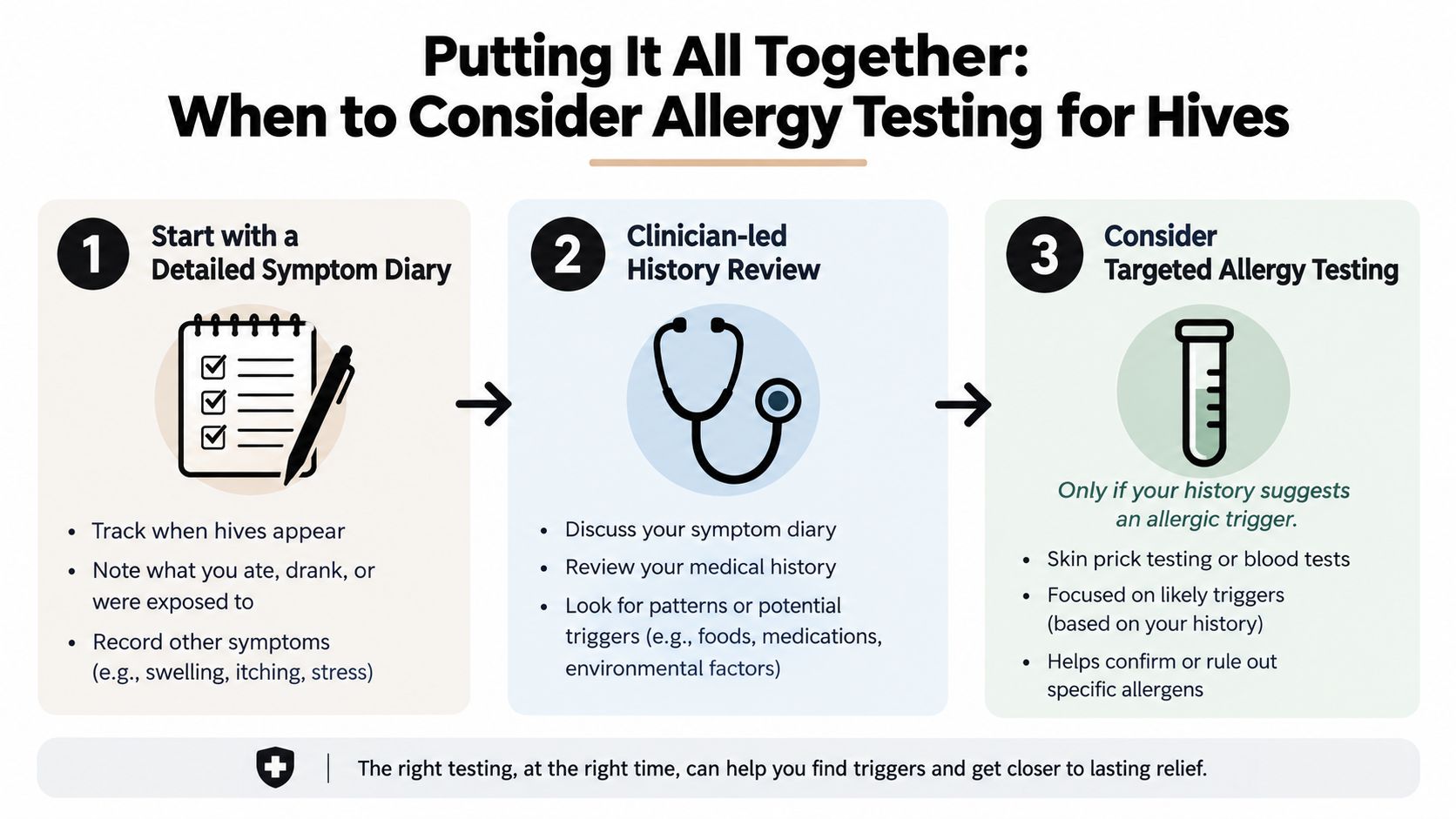
Acute hives are different. If welts repeatedly follow one food, medicine, or sting, targeted skin prick or specific IgE testing may change avoidance advice and emergency planning. If the episodes occur without a reliable exposure, testing for multiple allergies is much less likely to clarify the cause.
Putting It All Together and When to Refer
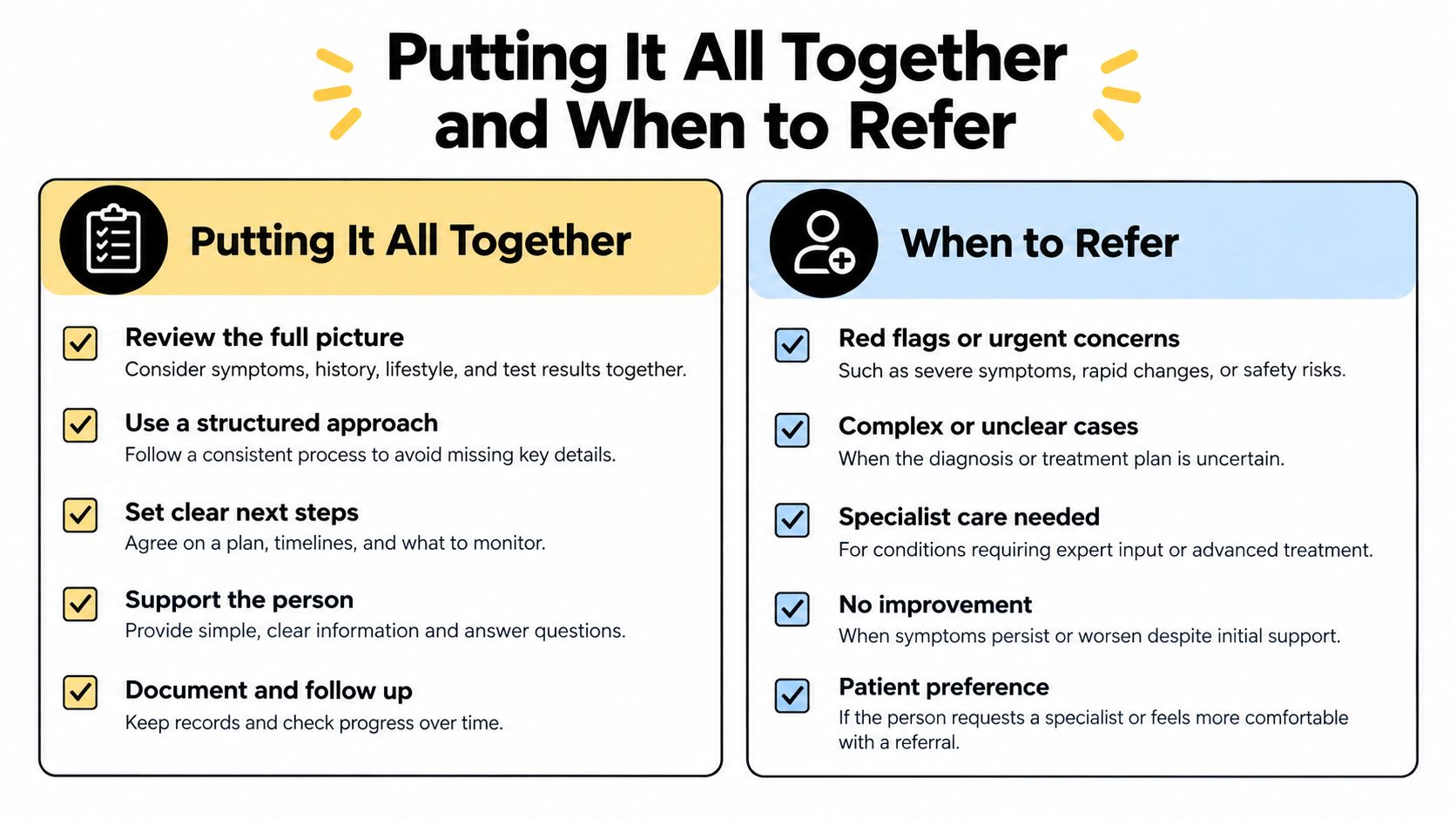
Start with a diary. Note the date, time, location, appearance, duration of each welt, recent foods and medicines, exercise, heat, cold, pressure, infection, stress, swelling, and breathing or gastrointestinal symptoms. Photos are especially useful because hives may disappear before the appointment.
Next, have a clinician review the timeline. The decision pathway should look like this:
- Document the pattern. Separate the duration of one welt from the duration of the entire flare.
- Identify a plausible mechanism. Ask whether the pattern suggests immediate allergy, physical urticaria, medication aggravation, infection, or spontaneous disease.
- Order targeted testing only when justified. Choose skin prick or specific IgE testing for a suspected immediate trigger, rather than using a broad panel as screening.
- Treat the mechanism. Chronic spontaneous urticaria generally needs a treatment plan, not repeated searches for foods to eliminate.
- Refer when the pattern is complicated or unsafe. A specialist can refine the diagnosis and discuss advanced treatment options.
Expedited allergist or dermatology review is appropriate for facial or throat angioedema without wheals, breathing difficulty, dizziness, gastrointestinal or other systemic symptoms, hives that remain in one spot beyond 24 hours, or symptoms that haven't responded to standard antihistamine therapy after four weeks. Immediate emergency care is necessary for severe breathing or circulation symptoms.
A specialist may offer autologous serum skin testing, access to selected basophil activation assays, assessment for biologic treatment eligibility, and evaluation for conditions such as urticarial vasculitis or cryopyrin-associated syndromes when the clinical picture raises those possibilities. Chronic inducible urticaria may need provocation testing instead of standard allergy panels.
Environmental management can still be sensible when respiratory or household allergy symptoms coexist with hives. If airborne allergens are a concern, this resource on a best air purifier for allergies may help you compare options, but an air purifier shouldn't be treated as proof that airborne allergy caused the welts.
Take this checklist to your appointment:
- Symptom diary: Dates, timing, duration, photographs, and locations.
- Exposure record: Foods, medicines, supplements, stings, products, exercise, temperature, pressure, and infection symptoms.
- Associated reactions: Swelling, throat symptoms, breathing changes, dizziness, vomiting, or abdominal pain.
- Medication list: Include antihistamines, pain relievers, blood-pressure medicines, and supplements.
- Questions: Ask what mechanism is most likely and what each proposed test would change.
The purpose of allergy testing for hives isn't to collect positive results. It's to identify the process driving your symptoms, then choose an evaluation and treatment plan that fits that process. A history-led approach usually provides clearer decisions than reactive testing.
BotoxBarb offers clinician-informed allergy testing products, medical-grade skincare, LED light therapy, injectables, and wellness essentials for people building a more personalized care routine. Visit BotoxBarb to explore the available options and book guidance when your skin and allergy concerns need a more thoughtful next step.