Dos and Don'ts Before Botox Prep Guide for Best Results
You've booked Botox before a wedding, vacation, photo session, or important work event, and now you're wondering whether your morning coffee, workout, retinol, or daily medication could affect the appointment. That uncertainty is common. You don't need a complicated ritual, but you do need to separate genuine bruising concerns from skin-irritation precautions.
The most useful dos and don'ts before Botox come down to timing, medication safety, and arriving with calm, clean skin. The injection itself is brief, while bruising, swelling, or irritated skin can become the visible distraction you were trying to avoid.
Why Pre Botox Prep Matters More Than You Think
A client once booked Botox shortly before a formal event. She had stopped fish oil, skipped a facial, and planned to avoid alcohol, yet her most important preparation question involved a prescription medication. She wondered whether stopping it would reduce bruising. The answer required her prescribing clinician, not a generic checklist.
Botox prep doesn't make the toxin work harder. It reduces avoidable bruising and helps keep the treatment area calm enough for precise injections. Patient guidance commonly focuses on aspirin, ibuprofen, fish oil, vitamin E, and alcohol because these can affect bruising or swelling (New Day Med Spa's pre-Botox guidance).
Think in two preparation tracks
The first track is blood-thinning and bruising risk. Prescription anticoagulants need prescriber guidance and should not be stopped independently. Over-the-counter NSAIDs, alcohol, and some supplements may also increase bruising or swelling, so review them with your injector before making changes. A planned hold may be reasonable for an over-the-counter product, while the same approach may be unsafe for prescribed treatment.
The second track is skin readiness. Retinoids, exfoliating acids, peels, microneedling, lasers, aggressive facials, heat, and intense exercise can leave skin irritated or flushed. Those concerns call for a different response, such as pausing the irritant, allowing recovery time, or rescheduling if the skin remains inflamed.
Chair-side rule: A generic “stop everything” list is not safe preparation. Reconcile medications first, then make individualized decisions.
Botulinum toxin type A has been used medically since 1989, with cosmetic use established after approvals in the early 2000s (historical context from BotoPlace). The practical preparation questions remain straightforward: could this item increase bruising, or has it left the skin unready for injections?
Give yourself at least 2 weeks before a major event when possible. That buffer cannot guarantee clear skin, but it allows time to review prescriptions, pause suitable over-the-counter products, and reschedule after a recent peel or procedure if needed. Arrive with healthy skin, a complete health history, and realistic expectations.
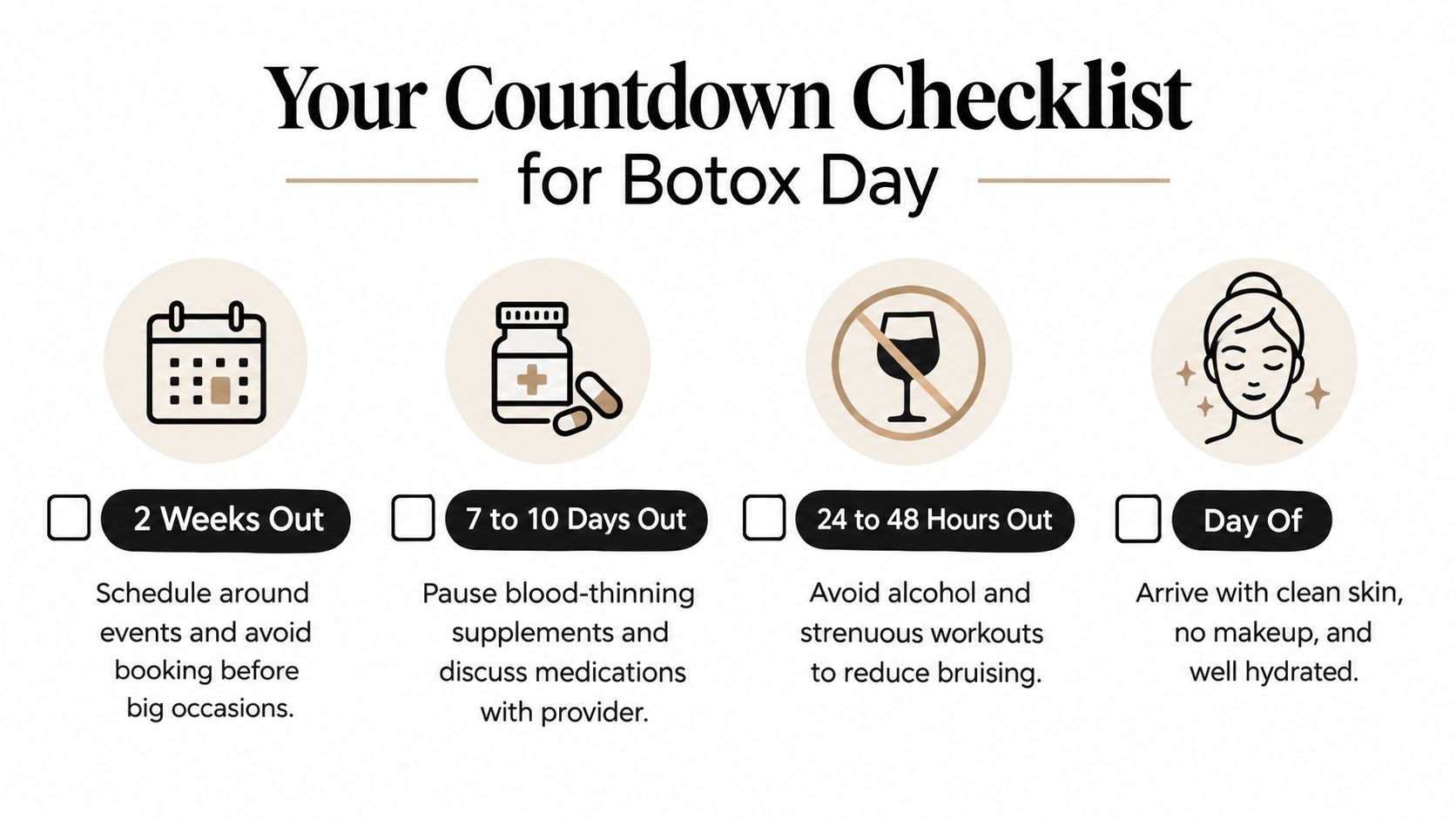
Your Countdown Checklist for Botox Day
2 weeks out
Choose an appointment date that leaves room for your skin to settle before travel, photographs, weddings, or other plans. Use this lead time to complete your health questionnaire and prepare a complete list of prescriptions, over-the-counter pain relievers, vitamins, herbal products, allergies, recent procedures, and health changes. Bring the list even if a product seems unrelated to injections.
7 to 10 days out
Review every medication and supplement with your injector. Aspirin, ibuprofen, fish oil, omega-3 products, vitamin E, ginkgo, garlic, and similar products may be discussed in a hold plan approximately 7 to 10 days before treatment, depending on the product and your health history. Do not create that plan for a prescribed anticoagulant on your own. If the prescribing clinician cannot confirm a safe approach, reschedule rather than interrupt necessary treatment.
2 to 3 days out
Shift to a calm, familiar skincare routine. Pause retinoids and exfoliating products for 2 to 3 days when your injector recommends it, particularly if your skin stings, peels, dries, or reddens easily. Avoid a new serum, scrub, peel, aggressive facial, or active mask before injections.
Gentle cleansing and moisturizer are enough. If a recent treatment has left the area inflamed, tender, or visibly irritated, contact the clinic before coming in. Skin-calming holds address irritation risk, while medication holds address bruising risk, so they should not be treated as one generic stop list.
24 to 48 hours out
Avoid alcohol for at least 24 to 48 hours before treatment, consistent with Stanford Medicine's pre- and post-treatment instructions. Choose light activity instead of a strenuous workout close to the appointment, especially if exercise leaves your face hot or flushed. Avoid heat-based treatments during this window as well.
Appointment day
Arrive with clean skin and no makeup whenever possible. Eat a light meal if procedures make you dizzy or nervous, and wear comfortable clothing. Tell your injector about any new illness, medication, dental work, rash, cold sore, or skin reaction. A fresh rash, active cold sore, or unexplained illness may mean postponing treatment.
Keep this timeline available when you plan your visit:
Medications and Supplements to Review Before Botox
Review medications by bruising risk, not as one universal stop list. Prescription anticoagulants protect against serious medical events, so stopping them independently can create more risk than a cosmetic bruise. Over-the-counter NSAIDs and supplements are usually discussed differently, but your injector still needs an accurate, complete list.
| Category | Examples | Typical Hold Window | Safety Note |
|---|---|---|---|
| Prescription anticoagulants | Prescribed blood-thinning medications | Individualized | Never stop without approval from the prescribing clinician |
| OTC NSAIDs | Aspirin, ibuprofen, naproxen | Often discussed around 7 days, but protocols vary | Confirm whether a temporary hold is medically appropriate |
| Supplements | Fish oil, omega-3s, vitamin E, ginkgo, garlic | Often discussed around 7 days, with protocols ranging from 4 to 14 days | Disclose every supplement and follow your injector's guidance |
| Alcohol | Wine, beer, spirits | Avoid for 24 to 48 hours beforehand | This is a bruising precaution, not a Botox effectiveness requirement |
The decision depends on why you take the product. If a prescriber ordered an anticoagulant or daily aspirin for your heart, brain, circulation, or another medical condition, contact that prescriber before changing the dose or schedule. An occasional OTC NSAID or supplement may be suitable for a temporary hold, but confirm the plan with your injector, especially if you use several products or have a bleeding disorder.
Medication safety comes before cosmetic convenience. A bruise can be managed. A medically necessary treatment should not be interrupted without coordination.
Injection discomfort is a separate question from bruising. Ask your provider whether a topical anesthetic suits the treatment area before applying one. For background on non-lidocaine approaches, review these alternatives to lidocaine cream, then bring specific questions to your injector.
Caffeine also comes up during appointment planning. Your response, anxiety level, and treatment plan can affect the practical advice, so review whether you can have caffeine before Botox rather than treating one rule as universal.
The key distinction is intent. Holding an appropriate supplement may reduce bruising risk, but it will not improve toxin potency. Your injector should review benefits, possible adverse effects, allergies, medical conditions, and relevant medications before proceeding, consistent with clinical procedural guidance.
Skincare Workouts and Treatments to Pause
Skin-calming preparation is different from blood-thinning preparation. Retinoids, glycolic acid, chemical peels, microneedling, lasers, and aggressive facials aren't automatically dangerous before Botox, but they can leave the skin tender, flaky, inflamed, or more reactive at the exact time your injector needs a clear treatment field.
Pause retinoids and exfoliating acids for 2 to 3 days if your skin is sensitive or your clinic recommends it. Recent peels, microneedling, laser treatments, waxing, threading, or aggressive facials may require a longer individualized pause. Published recommendations vary from 24 hours to 5 to 7 days, depending on the procedure and the degree of irritation, so the condition of your skin matters as much as the calendar.
Read the skin, not just the label
If your face is comfortable, intact, and free from active irritation, you may be ready to proceed. If it burns when you apply moisturizer, feels unusually tight, shows peeling, or remains visibly red after a procedure, contact the clinic before arriving. A delayed appointment protects the quality of the assessment and gives the skin time to settle.
Anyone using a medical-grade routine should avoid making several changes at once. Keep cleansing gentle, use a bland moisturizer, and ask how to time your next active treatment. For a clearer explanation of what exfoliating treatments do to the skin, see this guide to chemical exfoliation.
Strenuous exercise close to treatment can increase facial flushing and circulation. Choose a calm schedule before your appointment, and don't combine a hard workout with alcohol, sauna heat, or an aggressive facial. Those choices can compound redness and make it harder to tell whether the skin is naturally calm.
How to Support Skin Before and After With LED Light Therapy
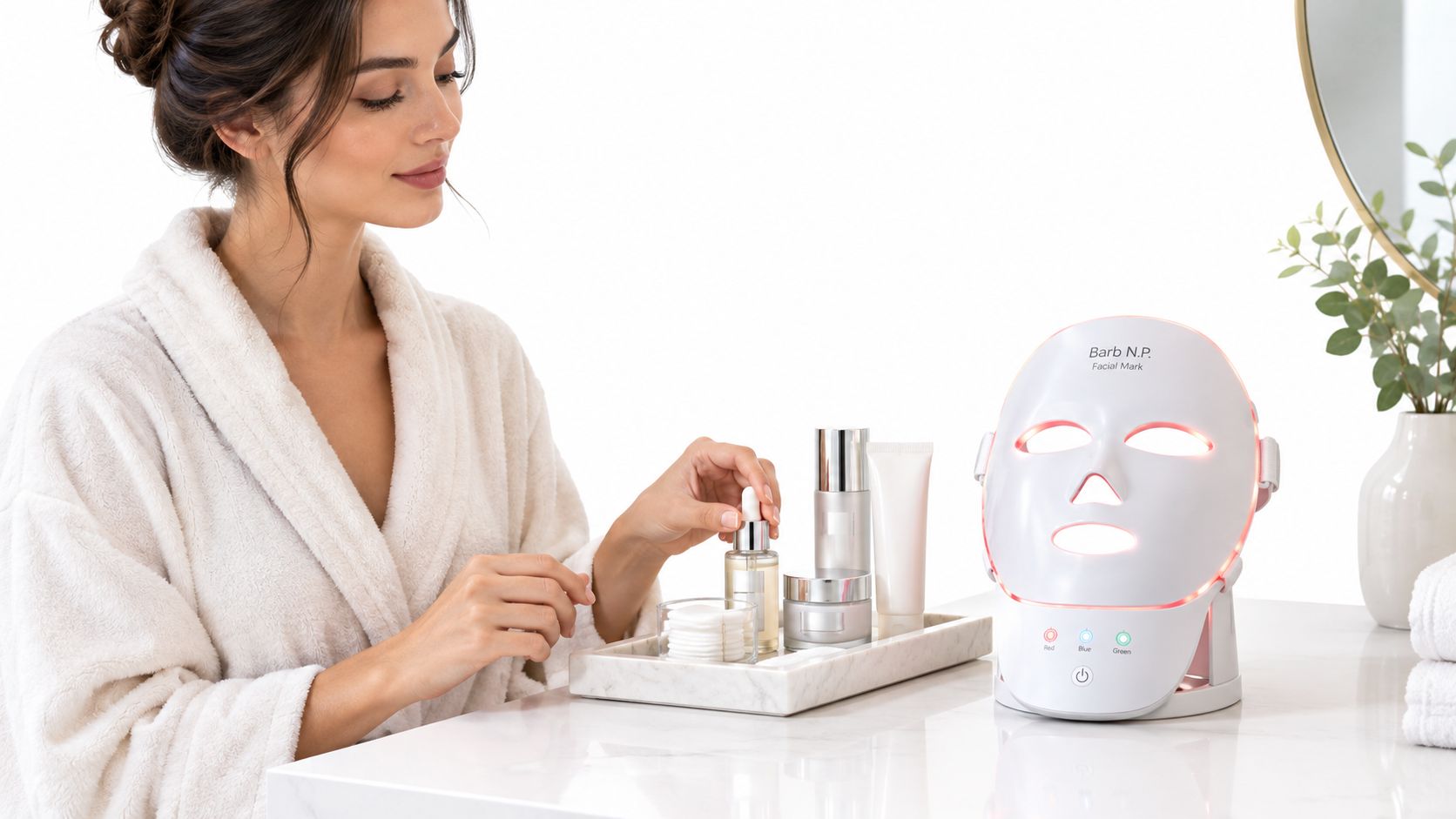
LED light therapy can fit into a Botox routine because it's a gentle, non-invasive skincare option that doesn't require needles, pressure, or exfoliation. I view it as a skin-support step, not a replacement for appropriate injector assessment or a shortcut to toxin results. The goal is to keep the routine comfortable and consistent without adding irritation before injections.
The Barb N.P. Facial Mask is one practical device option for clients who want to maintain a simple at-home routine. It's wireless, sits comfortably on the face, and offers 3 lighting settings for different treatments. Hands-free use makes it easier to relax rather than rub or manipulate the skin, which is exactly what I prefer around an injection appointment.
Use LED only according to the device directions and your clinician's advice. Before Botox, keep sessions gentle and avoid using the mask over skin that's actively irritated, sunburned, infected, or reacting to a recent procedure. After injections, let your provider's instructions lead, especially if the treatment area is tender or swollen.

For readers comparing devices, this overview of LED red light mask benefits provides broader context about incorporating light therapy into a skincare routine. I still recommend checking the device instructions and discussing any photosensitivity, prescription products, or skin conditions with a qualified professional.
LED works best as a calm, repeatable complement. It doesn't replace sunscreen, moisturizer, medication review, or good timing. BotoxBarb also explains the broader benefits of LED light therapy for people building a measured skincare plan between appointments.
When to Reschedule and What to Do Next
Rescheduling isn't a failure of preparation. It's the right decision when the treatment area isn't healthy or when medication safety hasn't been settled.
Contact the clinic before your appointment if you have:
- Active skin infection: Redness, drainage, spreading irritation, or another untreated problem near the injection area needs assessment first.
- A cold sore or active lesion: Wait until the area has healed and your provider confirms it's appropriate to proceed.
- Recent dental work: Tell your injector about recent dental treatment so they can decide whether your appointment should move.
- A current illness: Fever, significant respiratory symptoms, or feeling acutely unwell deserves attention before an elective procedure.
- No prescriber clearance: Don't stop a necessary anticoagulant or prescription medication to follow a cosmetic checklist.
Bring your complete medication and supplement list, arrive with clean skin, and tell your injector about anything that changed since booking. Informed consent should include a discussion of benefits, side effects, alternatives, and individualized risks, not just a signature.
The two-track approach keeps preparation sensible. Manage bruising risk through coordinated medication review, then calm the skin by pausing irritating products and procedures when needed. If the timing feels rushed, move the appointment. A bruise or irritated treatment field is inconvenient, but an unsafe medication decision is a much bigger concern.
BotoxBarb offers personalized Botox and Dysport appointments, dermal fillers, LED light therapy, PRP treatments, and curated medical-grade skincare to support your preparation and ongoing routine. Visit BotoxBarb to book an appointment, shop skincare, and keep a suitable LED mask in rotation for calm, healthy-looking skin.