Finding the Best Laser Treatment for Acne Scars in 2026
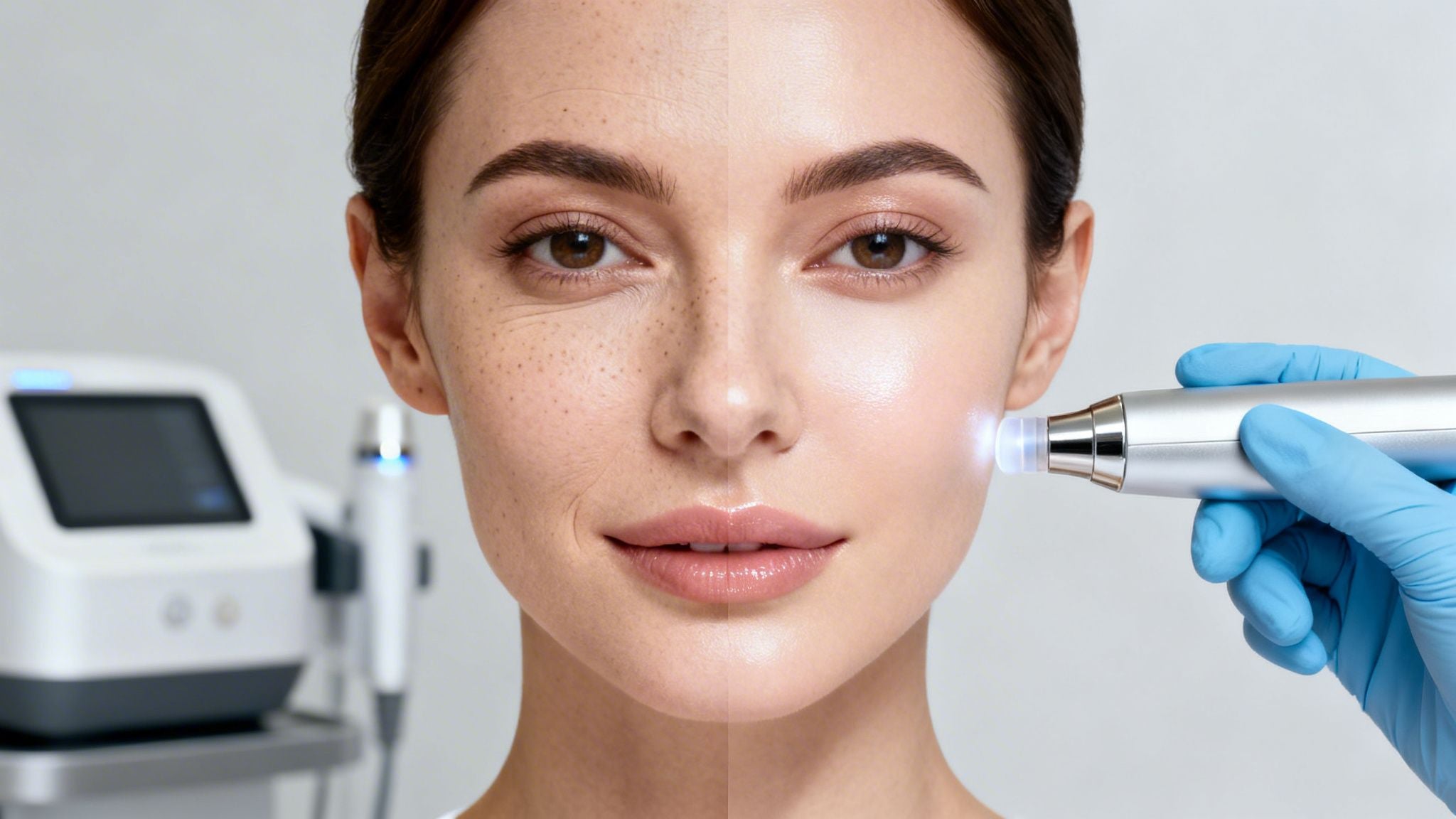
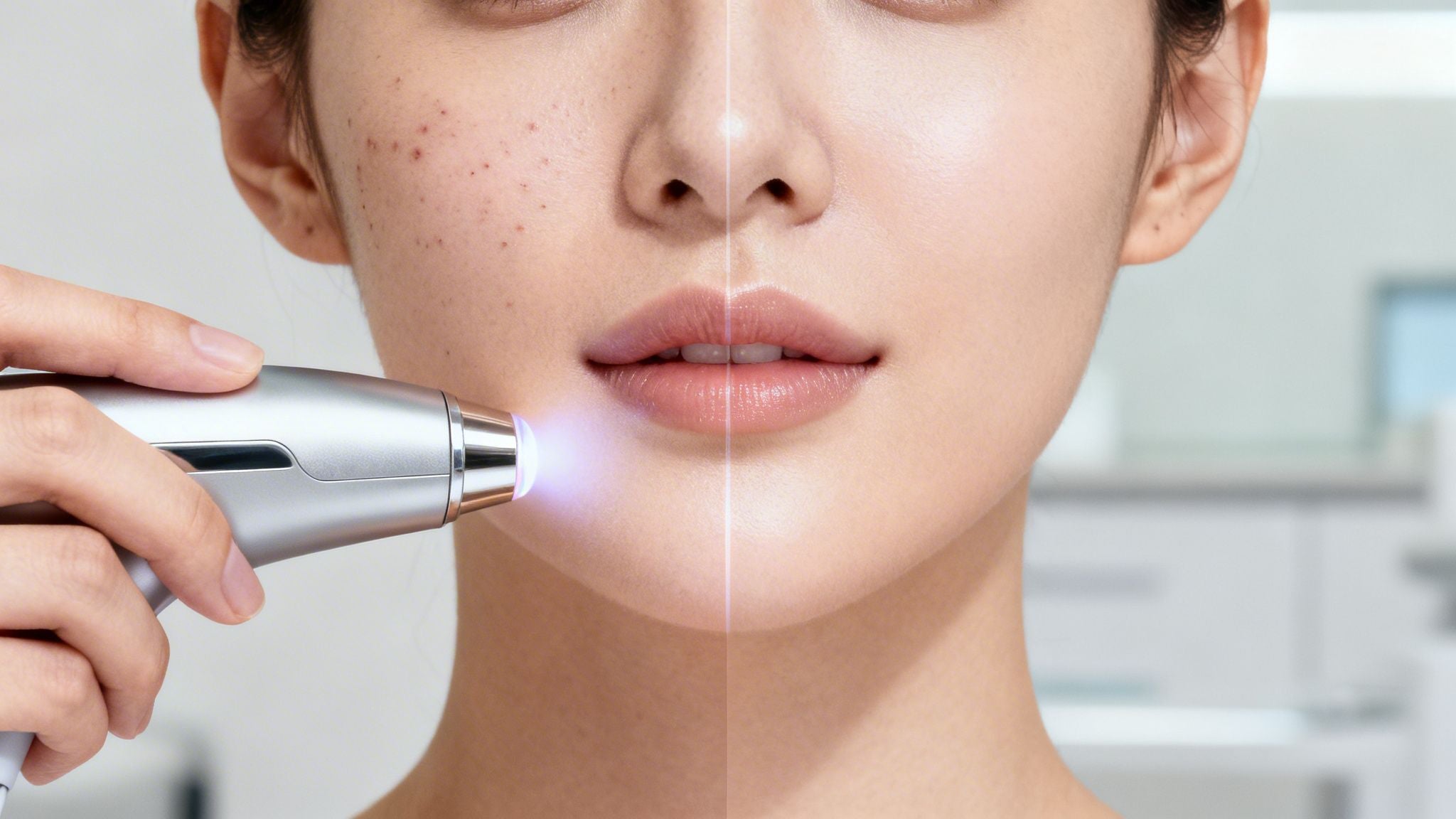
If you've ever typed “best laser treatment for acne scars” into a search bar, you probably came across two names: Fractional CO2 for deep, stubborn scars, and non-ablative options like Fraxel for moderate issues with less downtime. While that’s a good starting point, the right choice is deeply personal—it really comes down to your unique scar type, skin tone, and how much recovery time you can handle. That's why a one-on-one consultation is so critical for getting the results you actually want.
Your Guide to Choosing the Right Laser Treatment
Diving into the world of laser treatments can feel like a lot to take in, but it all starts with understanding the basic technology. Lasers use focused beams of light to create controlled thermal energy in the skin. This process either vaporizes damaged outer layers or gently heats the tissue underneath. Either way, it kickstarts your body’s natural wound-healing response, signaling it to build fresh, healthy collagen to fill in and smooth out scar tissue from the inside out.
Your first major decision point is choosing between two main categories of lasers. Each one takes a completely different approach to resurfacing the skin, and that’s a really important distinction.
Understanding Your Primary Options
The core difference between lasers comes down to how aggressive they are. Ablative lasers are the heavy hitters—they actually remove the top layer of your skin. Non-ablative lasers are much gentler, working below the surface to stimulate collagen without any visible disruption on top. This one difference impacts everything from the intensity of your results to how long you’ll need to recover.
If you're curious about other advanced resurfacing techniques, the NeoGen Plasma Skin Resurfacing laser is a fascinating alternative that uses nitrogen plasma instead of light-based energy.
Here’s a quick breakdown of how the two main laser types stack up:
| Feature | Ablative Lasers | Non-Ablative Lasers |
|---|---|---|
| Mechanism | Removes thin layers of skin's surface | Heats underlying tissue without surface removal |
| Intensity | High | Low to Moderate |
| Best For | Deep, severe scars (e.g., boxcar) | Mild to moderate scars, texture issues |
| Downtime | Significant (1-2 weeks) | Minimal (1-3 days) |
| Example | Fractional CO2 | Fraxel, Clear + Brilliant |
At BotoxBarb, we never take a one-size-fits-all approach. We start by carefully assessing your scar type and overall skin health to create a personalized treatment plan. Our goal is to ensure you get the most effective and safest treatment to bring you closer to the smooth, confident complexion you deserve.
While in-office treatments are powerful, what you do at home to support your skin’s healing is just as crucial. The right aftercare can seriously amplify your results and keep your skin healthy for the long haul. An at-home LED therapy device is one of the best tools for this.
The Barb N.P. Facial Mask was designed specifically to support your skin’s recovery journey. Its wireless, comfortable design makes it easy to use consistently. The mask features three distinct lighting settings: red light to boost collagen production, blue light to fight acne-causing bacteria, and amber light to calm inflammation and speed up healing. It’s the perfect partner to your professional laser treatments.
Comparing Ablative vs. Non-Ablative Laser Treatments
When you start looking into the best laser treatments for acne scars, you’ll quickly find yourself at a crossroads: ablative or non-ablative. Think of these as two distinct philosophies for achieving the same goal—smoother, rejuvenated skin. This is probably the most critical choice you'll make, as it directly impacts the intensity of the treatment, your recovery time, and the final results.
An ablative laser is the more aggressive approach. It works by essentially vaporizing the very top layer of your skin (the epidermis). It’s like taking a sander to a rough piece of wood to reveal a pristine, smooth surface underneath. This action removes damaged tissue and forces a powerful collagen-rebuilding response from deep within the skin.
On the other hand, a non-ablative laser takes a much gentler path. It cleverly bypasses the skin's surface, leaving it completely intact while delivering controlled heat energy into the underlying dermal layers. This targeted thermal injury kicks collagen production into high gear from the inside out, gradually improving texture and filling in scars over time.
The Mechanism: How They Work
The fundamental difference between these two is how they interact with your skin.
Ablative lasers, like the Fractional CO2, are designed for serious resurfacing. They create microscopic columns of injury that penetrate deep into the dermis, physically removing old, scarred tissue. This prompts your body to generate fresh, healthy skin in its place. The process is intense, no doubt, but it delivers truly dramatic improvements, especially for severe, stubborn scarring.
Non-ablative lasers, such as Fraxel, work more subtly. They use specific wavelengths of light to gently heat the dermal tissue where collagen lives and thrives. By creating this controlled thermal effect, they trigger a natural healing process that builds new collagen and elastin fibers, progressively smoothing out scars without any visible wounds on the surface.
This chart can help you visualize which treatment path might be a good starting point based on your specific scar type.

As the decision tree shows, different scar structures—from the sharp-edged boxcar scars to the wavier rolling scars—often need completely different therapeutic game plans.
Effectiveness on Different Scar Types
The type of acne scars you have is the single biggest factor in choosing the right laser. Not all scars respond to the same technology in the same way.
-
Ablative Lasers for Deep Scars: Fractional CO2 and similar ablative lasers are the heavy hitters. They are exceptionally effective for atrophic scars with well-defined edges, like boxcar scars. Their power to remove surface tissue and force major collagen remodeling makes them the gold standard for deep, tough depressions. They can also improve some shallower ice pick scars, though these often need a combination of treatments.
-
Non-Ablative Lasers for Texture and Mild Scars: Non-ablative lasers really shine when it comes to rolling scars, which are defined by soft, sloping edges that create an uneven, wavy texture. They are also fantastic for improving overall skin texture and tackling mild to moderate atrophic scarring without the aggressive downtime.
Ablative lasers deliver a more profound and immediate change by directly resurfacing the skin, making them a powerful choice for those with significant scarring. Non-ablative treatments offer a gradual, cumulative improvement, appealing to individuals who want less disruption to their daily lives.
To make it even clearer, here’s a quick side-by-side look at the key differences.
Ablative vs. Non-Ablative Lasers At a Glance
| Feature | Ablative Lasers (e.g., Fractional CO2) | Non-Ablative Lasers (e.g., Fraxel) |
|---|---|---|
| Mechanism | Vaporizes the outer skin layer | Heats the dermis, leaves surface intact |
| Best For | Deep boxcar scars, severe texture issues | Rolling scars, mild-moderate scarring |
| Downtime | 7–14 days (significant redness, peeling) | 1–3 days (mild, sunburn-like redness) |
| Sessions Needed | Typically 1–2 sessions | Usually 3–5 sessions |
| Results | Dramatic, often visible after one treatment | Gradual, builds over several months |
| Risk for Darker Skin | Higher risk of hyperpigmentation | Lower risk, generally safer |
Ultimately, the table highlights the core trade-off: intensity and downtime versus a gentler, more gradual approach.
Downtime and Recovery: The Biggest Trade-Off
This is where the two treatments couldn't be more different. An ablative laser treatment demands a real healing period, often called "social downtime."
After an ablative procedure, you should expect significant redness, swelling, and peeling that can last for 7 to 14 days. Your skin will be raw and require diligent post-care with prescribed ointments to prevent infection and support healing. The payoff for this intensive recovery is a more substantial—and often permanent—improvement from just a single session.
Non-ablative lasers, by contrast, are famous for their minimal downtime. Most people just experience mild redness and swelling, kind of like a sunburn, that usually clears up within 1 to 3 days. This makes it a true "lunchtime" procedure for many, allowing them to get back to their normal routine almost right away. The catch is that achieving your desired results will require a series of treatments, typically spaced about a month apart.
Skin Tone and Safety Considerations
Your skin tone is another crucial piece of the puzzle. Because of their aggressive nature, ablative lasers carry a higher risk of post-inflammatory hyperpigmentation (PIH), especially for individuals with darker skin (Fitzpatrick types IV-VI). The intense energy can overstimulate melanin-producing cells, leading to temporary or even long-term dark spots.
Non-ablative lasers are widely considered the safer choice for skin of color. Since they leave the epidermis unharmed, the risk of triggering pigmentation problems is significantly lower.
Non-ablative fractional lasers, like the 1540nm Fraxel or Lux 1540, are a fantastic alternative for treating acne scars on darker skin tones. One of the largest studies to date, involving 500 patients, found a median improvement of 50% to 75% after just three monthly treatments. Another trial showed 90% of patients achieved 51-75% clinical improvement after 2-5 sessions. These lasers work by targeting water in the skin to stimulate collagen without destroying the surface, making them a much safer bet. You can find more details on these clinical results in recent dermatology studies.
Making the Right Choice: A Summary
Choosing the best laser treatment for your acne scars comes down to a personal calculation. You have to balance your specific scar type, your skin tone, and your tolerance for downtime against the results you want to achieve.
Ablative lasers deliver powerful, life-changing results in fewer sessions, but they demand a serious recovery commitment and come with higher risks for darker skin. Non-ablative lasers offer a safer, gentler path with almost no interruption to your life, achieving beautiful, gradual improvement over multiple sessions.
Understanding Fractional CO2 Laser Treatments
When we talk about the best laser for acne scars, the Fractional CO2 laser is often hailed as the undisputed gold standard. This is a serious, powerful ablative technology designed for major skin resurfacing. It's the top contender for anyone with deep, severe, or stubborn atrophic scars that just haven’t budged with gentler methods. Its reputation is built on one thing: delivering profound, lasting changes to the skin’s architecture.
The magic is in its "fractionated" approach. Instead of blasting the entire skin surface at once, it delivers thousands of microscopic columns of laser energy deep into the dermis. This creates tiny, controlled thermal injuries while leaving the surrounding tissue completely untouched.

This process instantly vaporizes old, damaged scar tissue and triggers an incredibly robust healing response. The uninjured skin acts as a natural reservoir for rapid healing, kicking off a powerful wave of new collagen and elastin production that rebuilds the skin from the inside out.
How The Treatment Journey Unfolds
A Fractional CO2 laser treatment is a real commitment to skin renewal, so knowing what to expect is key. The journey starts with a thorough consultation to make sure you're an ideal candidate. On treatment day, a topical numbing cream is applied to keep you comfortable throughout the procedure.
The treatment itself is relatively quick, but the real work begins during the recovery. This is when your skin’s remodeling process truly takes center stage.
-
Initial Downtime (Days 1-7): The first week is the most intense. Expect significant redness, swelling, and a feeling similar to a bad sunburn. Your provider will give you a strict skincare routine with gentle cleansers and healing ointments to protect the skin as it peels away, revealing a fresh new layer. This is what we call "social downtime," as you'll likely want to stay home and focus on healing.
-
Healing Phase (Weeks 2-4): The redness will start to fade to a pinkish tone, which you can easily cover with makeup. Your skin will feel smoother, but the collagen remodeling is still in its early days.
-
Long-Term Results (Months 1-6): The most impressive results don't happen overnight—they appear gradually over several months. As new collagen continues to build, you'll see scars become shallower, skin texture dramatically improve, and your overall complexion become tighter and more even.
What To Realistically Expect
Fractional CO2 is hands down one of the most effective treatments for acne scars, and the clinical research backs it up. A systematic review of multiple studies found most patients saw a 30% to 70% improvement in scar appearance, with a staggering 84.4% reporting moderate or good results six months post-treatment. These numbers show exactly why it consistently outperforms other options for deep scarring. You can explore the full clinical review of laser efficacy to see the data for yourself.
Most patients get the results they want after just one or two sessions, spaced several months apart. While the downtime is significant, the trade-off is a powerful, long-term solution that truly works.
For patients with deep boxcar or rolling scars, the Fractional CO2 laser remains a top-tier choice. Its ability to dramatically remodel scar tissue and stimulate a powerful collagen response provides a level of improvement that is difficult to achieve with less intensive treatments.
To support your skin's recovery and get the most out of your investment, great at-home care is essential. The Barb N.P. Facial Mask is an ideal companion to professional treatments. This wireless, comfortable mask uses 3 distinct lighting settings to accelerate healing. Its red light setting is particularly fantastic post-laser, as it helps boost collagen synthesis, while the amber light setting can calm any residual inflammation. It ensures your skin heals beautifully and your results are amplified.
How Combination Therapies Enhance Your Results
While a standalone laser treatment can deliver great results, the best outcomes for acne scars often come from a multi-faceted approach. Think of it like assembling a team of specialists; each one brings a unique strength to the table. By combining powerful in-office procedures with supportive therapies, you create a synergistic effect that elevates your results far beyond what a single treatment could ever achieve on its own.
This strategy works by tackling different aspects of skin repair all at once. The laser might be your heavy hitter for resurfacing and collagen remodeling, but another therapy can step in to speed up healing, calm inflammation, or supercharge the entire regenerative process. It’s all about teamwork.
Ultimately, the goal is to create the perfect healing environment. When your skin recovers faster and more efficiently, the final outcome is smoother, healthier, and more resilient.

The Power of Pairing Lasers with PRP
One of the most effective duos in aesthetics today is a Fractional CO2 laser paired with Platelet-Rich Plasma (PRP). PRP is a concentrate of growth factors derived from your own blood, basically a potent healing cocktail for your skin. When applied immediately after a laser treatment, it acts like a biological accelerator.
The tiny micro-channels created by the laser give the PRP a direct pathway deep into the dermis, where it can get right to work.
This dynamic duo doesn't just improve results—it transforms the healing process. By flooding the treated area with growth factors, PRP can significantly reduce downtime, minimize redness and swelling, and dramatically boost the new collagen synthesis triggered by the laser.
A groundbreaking 2023 meta-analysis confirmed what we’ve seen in the clinic: combining Fractional CO2 laser with PRP is the top-ranked therapy for acne scars, with the highest cure rates and scar improvement scores. This combo significantly outperformed the laser alone, achieving remodeling for atrophic scars that was up to 70% better than other treatments. You can read more about the clinical trial findings to see the data for yourself.
If you’re curious about how this powerful combination works, you can learn more about what to expect from microneedling with PRP in our detailed guide.
Amplifying Your Recovery at Home with LED Therapy
Your journey to smoother skin doesn’t end when you leave the clinic. Consistent at-home care is critical for protecting your investment and making your results last. This is where advanced tools like LED light therapy masks come in, providing daily support to complement your professional treatments.
An LED mask uses specific, clinically proven wavelengths of light to stimulate cellular activity, helping to soothe, repair, and rejuvenate the skin. It’s a gentle, non-invasive way to keep the healing momentum going between your laser sessions.
The Barb N.P. Facial Mask is the perfect at-home device to integrate into your post-laser recovery plan. Its design prioritizes both comfort and efficacy, making it an indispensable part of your skincare routine.
Key features that set it apart include:
- Wireless and Comfortable Design: The mask is lightweight and completely wireless, so you can move freely and use it consistently without being stuck next to an outlet. This comfort on your face encourages regular use—which is the secret to seeing real benefits.
- Three Powerful Lighting Settings: It offers targeted treatments with three distinct light therapies, each addressing a different skin concern.
- Easy Integration: A short, relaxing session fits easily into any daily routine, giving you professional-grade support from the comfort of your home.
How Each Light Setting Supports Your Skin
The Barb N.P. mask’s versatility is in its three targeted light settings. Each color penetrates the skin at a different depth to trigger a specific biological response, making it a powerful multi-tool for post-treatment care and long-term skin health.
Here’s how each setting works to enhance your laser treatment results:
- Red Light Therapy: This is your go-to for collagen production and anti-aging. It energizes the fibroblasts—the cells responsible for creating collagen and elastin—to reinforce the remodeling process your laser treatment started.
- Blue Light Therapy: Ideal for acne-prone skin, blue light targets and eliminates P. acnes bacteria on the skin’s surface. Using this setting helps prevent future breakouts that could lead to new scars, protecting your newly smoothed complexion.
- Amber Light Therapy: Amber light is the ultimate healer. It works to reduce inflammation, calm redness, and improve lymphatic flow to clear out toxins. This setting is especially beneficial in the days after a laser procedure to speed up recovery and minimize irritation.
By incorporating the Barb N.P. Facial Mask into your routine, you create a continuous cycle of healing and rejuvenation. It not only speeds up recovery from your in-office procedures but also helps maintain your results for years to come, ensuring your skin stays clear, smooth, and resilient.
Your Pre and Post Treatment Care Plan
The success of your laser treatment doesn't just happen in the clinic—it's equally defined by how you prepare beforehand and care for your skin afterward. Think of it as a partnership. Your commitment to a smart pre- and post-care routine is what truly unlocks those beautiful, long-lasting results and protects your investment. This guide breaks down exactly what you need to do to set the stage for success.
Properly prepping your skin ensures the laser can do its job safely and effectively. By taking a few simple steps in the weeks leading up to your session, you dramatically lower the risk of side effects and help your provider achieve the best possible outcome.
Your Pre Treatment Checklist
Think of this as getting your canvas ready for a masterpiece. While your provider will give you specific instructions, most pre-care plans are about protecting your skin and temporarily hitting pause on certain products.
Here’s what that typically looks like:
- Avoid Sun Exposure: This is non-negotiable. For at least two weeks before your appointment, steer clear of direct sun and tanning beds. Tanned or sunburned skin is compromised and cannot be treated safely, as it significantly increases the risk of pigmentation problems.
- Pause Active Skincare: You'll need to stop using products with retinoids (like retinol), alpha-hydroxy acids (AHAs), and beta-hydroxy acids (BHAs) for 1 to 2 weeks before your session. These amazing ingredients make your skin more sensitive, which is the last thing you want before a laser treatment.
- Arrive with Clean Skin: On the day of your appointment, come with a completely clean face. That means no makeup, lotions, serums, or even fragrances.
Your Post Treatment Recovery Protocol
After your laser session, your skin enters a crucial regeneration phase. It's delicate, vulnerable, and working hard to heal. A precise aftercare routine is your key to preventing complications like infection or hyperpigmentation and speeding up recovery.
Your skin will feel red, swollen, and will likely peel—all normal signs of the healing process. Your job is to give it gentle, supportive care.
The goal of post-treatment care is simple: create the perfect healing environment. Keep the skin clean, deeply hydrated, and shielded from the sun at all times.
To give your skin professional-level support, we always recommend incorporating medical-grade skincare from brands we trust. Products from SkinCeuticals and Epicutis, available right here at BotoxBarb, are formulated specifically to calm post-procedure skin and accelerate recovery. Your new best friends will be a gentle cleanser, a healing ointment like SkinCeuticals Hydra Balm, and a high-SPF mineral sunscreen.
You can also enhance your recovery at home with advanced tools. To learn more, check out the impressive LED light therapy benefits and see how this technology can support your healing. The Barb N.P. Facial Mask is a perfect addition to your post-care toolkit. It’s wireless, comfortable, and features 3 lighting settings. The amber light is fantastic for reducing inflammation, while the red light helps boost the collagen remodeling process your laser treatment just kicked off. Following these steps will make your journey to smoother, clearer skin as seamless as possible.
Your Laser Treatment Questions, Answered
Deciding to move forward with laser treatment for your acne scars is a big step, and it’s completely normal to have a few questions. Feeling informed and confident is a huge part of the process. Think of this as your expert-backed guide to the most common concerns we hear from patients before they start their journey to smoother skin.
We’ll get into everything, from how long your results will really last to what the treatment actually feels like. My goal here is to give you practical, straightforward information that clears up any lingering doubts and shows you the level of professional guidance you can expect every step of the way.
How Long Do Laser Treatment Results Last?
This is one of the biggest questions, and for good reason—you want to know if the investment is worth it. The answer is yes. For powerful ablative lasers like the Fractional CO2, the results are considered permanent. Why? Because the treatment doesn't just put a temporary "filter" over the scar; it fundamentally rebuilds your skin from the inside out.
The laser energy triggers a deep remodeling process, breaking down old, disorganized collagen and stimulating your body to create brand-new, healthy tissue. This permanently replaces the indented scar with a smoother, stronger dermal structure.
That said, while the treated scars are gone for good, the natural aging process will continue. New acne breakouts could also lead to new scarring. This is exactly why a consistent maintenance plan is so important for protecting your beautiful results long-term.
Is Laser Treatment for Acne Scars Painful?
Let’s be direct about the sensation. Most of my patients describe the feeling as a series of quick, hot snaps, almost like a rubber band flicking against the skin. While it can be uncomfortable, it’s generally very manageable.
Your comfort is always the top priority. To make the experience as easy as possible, we apply a strong topical numbing cream to the treatment area about an hour before we start. This significantly dulls the sensation of the laser pulses. For more intensive treatments, or if you have a lower pain threshold, we can absolutely discuss additional pain management options during your consultation.
Your comfort and safety are paramount. A thorough consultation will cover all aspects of pain management, ensuring you feel at ease and fully prepared on the day of your treatment.
Beyond the laser itself, the overall quality of your experience and outcome can be influenced by a clinic's operational excellence and its commitment to utilizing advanced technology solutions for healthcare that boost efficiency and patient care. This focus on a seamless patient journey contributes to a more positive and comfortable experience.
Can Lasers Treat Scars on All Skin Types?
This is a critical question, and the answer isn't a simple yes or no—it requires nuance. While laser technology has made incredible leaps, not every laser is the right fit for every skin tone. For individuals with darker skin (Fitzpatrick skin types IV-VI), the main concern is the risk of post-inflammatory hyperpigmentation (PIH).
More aggressive ablative lasers carry a higher risk because their intense energy can sometimes overstimulate melanin-producing cells, causing dark spots to appear after treatment. But this absolutely does not mean people of color can't be treated successfully.
Non-ablative lasers are generally the safer and preferred choice for darker skin tones. They work by gently heating the tissue beneath the surface without damaging the top layer of skin, which substantially lowers the risk of triggering pigmentation issues. An experienced practitioner can also adjust the settings on certain ablative lasers to make them safer for a wider range of skin types.
This is why a comprehensive consultation with an experienced provider like me is essential. A professional assessment is the only way to determine the safest and most effective laser—and the precise settings—for your unique skin, ensuring you get stunning results without complications.
How Many Sessions Will I Need?
The number of sessions you'll need really comes down to two things: the type of laser we use and the severity of your scarring. It's not a one-size-fits-all answer.
-
Ablative Lasers (e.g., Fractional CO2): These are the heavy hitters. Because of their sheer power and dramatic resurfacing capabilities, you can often achieve your goal in just 1 to 2 sessions. We space these treatments several months apart to give your skin ample time to heal and build all that new collagen.
-
Non-Ablative Lasers (e.g., Fraxel): These treatments are much gentler, so they work cumulatively. A typical plan involves a series of 3 to 5 sessions, spaced about four to six weeks apart, to gradually build your results.
During your consultation, we'll create a personalized treatment plan that outlines the recommended number of sessions to meet your specific skin goals.
At BotoxBarb, I believe in creating a supportive partnership on your journey to clearer skin. From your initial consultation to your final follow-up, my goal is to ensure you feel informed, comfortable, and confident. By combining advanced in-office treatments with effective at-home care, like the Barb N.P. Facial Mask, we help you achieve and maintain the beautiful, lasting results you deserve. Explore my curated selection of medical-grade skincare and book your consultation today at https://barbnp.shop.