Discover the best mineral sunscreen for face: Your guide to the perfect SPF
If you're searching for the best mineral sunscreen for your face, the answer is simple: a physical formula with zinc oxide or titanium dioxide is the undisputed champion for daily protection. Unlike their chemical counterparts, these sunscreens form a physical barrier on your skin, making them the go-to for sensitive, post-procedure, and even acne-prone complexions.
Why Mineral Sunscreen Is Your Skin's Best Defender
Think of mineral sunscreen as a personal bodyguard for your face. Instead of absorbing into your skin and kicking off a chemical reaction to deal with UV light, it creates an invisible shield right on the surface.
This shield, made from natural minerals, literally bounces harmful UVA and UVB rays away before they ever get a chance to penetrate and damage your skin.
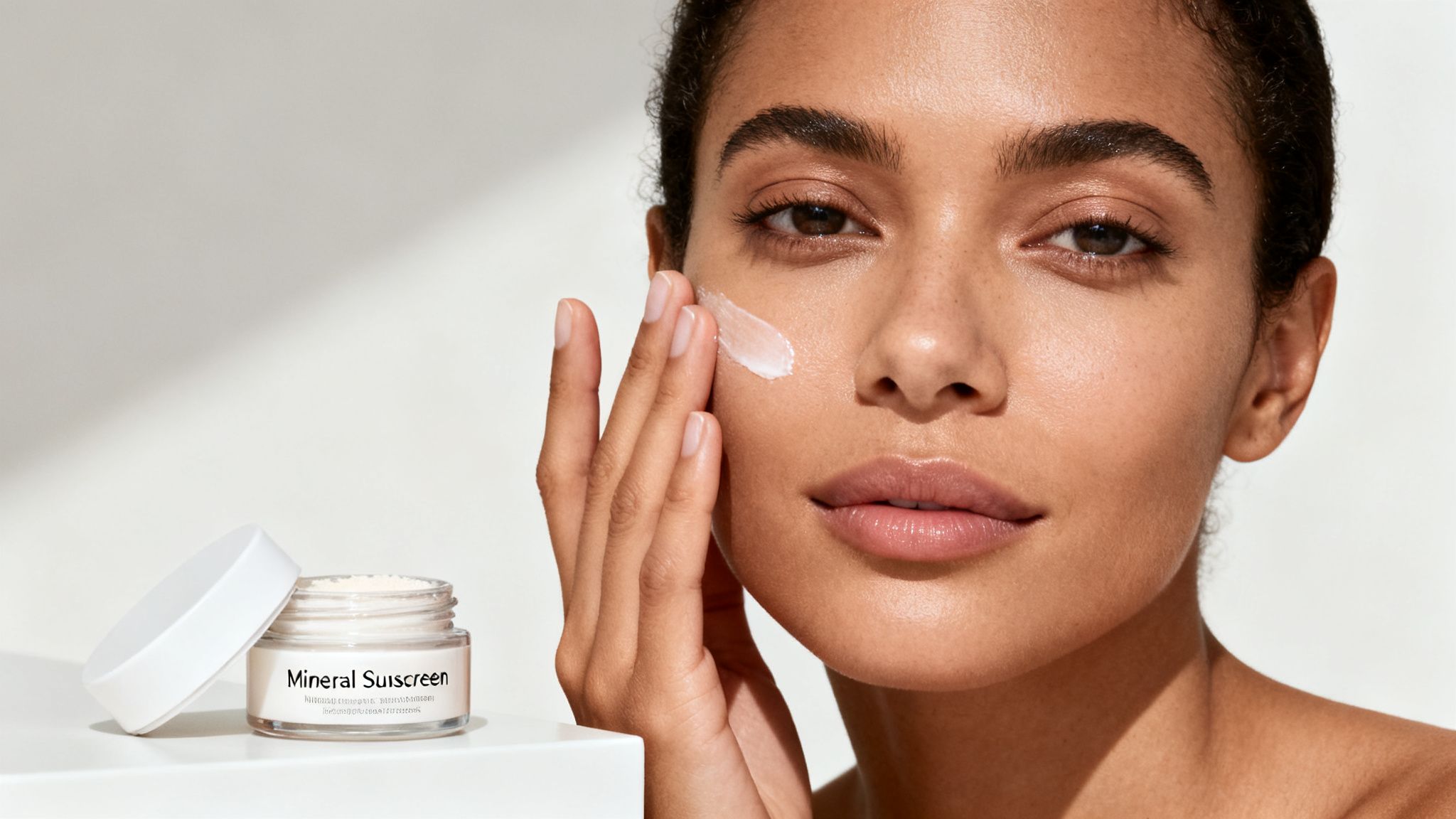
It’s this gentle, surface-level action that makes it the superior choice for daily facial use. It’s far less likely to cause irritation or trigger sensitivity, making it a non-negotiable step for protecting delicate skin. At BotoxBarb, we consider high-quality sun protection the ultimate insurance policy for your aesthetic investments like Botox and fillers. A fantastic option is the BARB N.P. Tinted Mineral SPF 40, which offers medical-grade protection with a seamless, cosmetically elegant finish.
The Clear Difference: Physical vs. Chemical
Understanding how these two types of sunscreen work is the key to making the right choice for your skin. To put it simply, mineral formulas get to work the second you put them on, while chemical versions need about 20 minutes to absorb and become effective.
Here’s a quick breakdown to help you see the differences at a glance.
Mineral vs. Chemical Sunscreen: A Quick Comparison
This side-by-side comparison helps you quickly grasp the fundamental differences between mineral and chemical sunscreens, so you can choose the best protection for your unique skin needs.
| Feature | Mineral Sunscreen (Physical) | Chemical Sunscreen (Organic) |
|---|---|---|
| How it Works | Sits on top of the skin, acting as a physical shield to reflect UV rays. | Absorbs into the skin, converts UV rays into heat, and releases it. |
| Active Ingredients | Zinc Oxide, Titanium Dioxide | Oxybenzone, Avobenzone, Octinoxate, and others. |
| Time to Effect | Works immediately upon application. | Takes about 20 minutes to absorb and become effective. |
| Skin Suitability | Ideal for sensitive, acne-prone, and post-procedure skin. Less likely to irritate. | Can sometimes cause irritation or allergic reactions in sensitive skin types. |
| Cosmetic Finish | Older formulas could leave a white cast, but modern micronized versions are sheer. | Generally rubs in clear and feels lightweight. |
| Application | Needs to be applied as the last step in your skincare routine, before makeup. | Applied before moisturizer to allow for proper absorption. |
Choosing the right type is more than just a preference—it’s about understanding the mechanism that best serves your skin's health and your lifestyle.
This distinction is crucial for maintaining consistent protection, especially if you’re short on time. For a deeper dive, check out our complete guide comparing mineral vs. chemical sunscreen.
The growing preference for safer, gentler protection isn't just a small trend; it's a massive global shift. The mineral sunscreen market is projected to surge from USD 5.51 billion in 2026 to USD 15.35 billion by 2034, reflecting a major change in what educated consumers demand.
This shift underscores a vital point for anyone serious about their skincare: choosing the right sunscreen is a foundational part of a healthy routine. It prevents premature aging, protects against skin cancer, and preserves the beautiful results of your professional treatments.
Decoding SPF and Broad-Spectrum Protection
Choosing the right mineral sunscreen can feel overwhelming, but it doesn't have to be. Let's break down the two most critical terms you'll find on any bottle: SPF and "Broad-Spectrum." Think of them as your non-negotiable guides to keeping your skin safe, healthy, and youthful.
So, what does SPF (Sun Protection Factor) really mean? Imagine it as a measure of time—it tells you how much longer you can be in the sun without burning compared to wearing nothing at all. If you apply an SPF 30 sunscreen, it means your skin is protected for 30 times longer than it would be without it.
But preventing a sunburn is only half the battle.
The Two Types of UV Rays You Need to Know
The sun emits different types of ultraviolet (UV) rays, and your sunscreen needs to be a fortress against both to truly protect your skin.
- UVB (Burning) Rays: These are the culprits behind that painful, red sunburn. They are a primary factor in the development of skin cancer, and the SPF number on your bottle mainly refers to its level of protection against these rays.
- UVA (Aging) Rays: These are the silent agers. They penetrate deeper into the skin, breaking down collagen and leading to fine lines, wrinkles, and dark spots. UVA rays are sneaky—they’re present all year long, even on cloudy days, and can even pass right through window glass.
This is exactly why the term "Broad-Spectrum" is so crucial. A sunscreen with this label is your complete defense, shielding you from both the aging effects of UVA and the burning potential of UVB.
Think of it this way: SPF tells you how long you're protected, while "Broad-Spectrum" tells you how well you're protected. For total skin health, you absolutely need both.
Why SPF 30-50 Is the Dermatologist-Approved Sweet Spot
You might be tempted to grab the highest SPF number on the shelf, thinking more is always better. But the difference in protection becomes surprisingly small after a certain point. For instance, an SPF 30 blocks about 97% of UVB rays, while an SPF 50 blocks 98%.
That’s why most dermatologists and aesthetic experts consider the SPF 30-50 range the ideal choice for daily facial use. It provides powerful, reliable protection without giving you a false sense of security that a super-high number might.
The reality is, UV exposure is responsible for over 1.5 million new skin cancer cases worldwide each year. Consistent, daily use of a broad-spectrum sunscreen in the SPF 30-49 range can slash your melanoma risk by up to 50%. For my BotoxBarb clients, especially post-procedure, this is non-negotiable. It’s no surprise that 73% of dermatologists specifically endorse gentle, effective zinc oxide formulas. You can learn more about these mineral sunscreen market trends to see why this category is exploding. Mastering these basics is the first step toward choosing a product that truly protects your investment in your skin.
Finding Your Perfect Sunscreen Formulation
Let's be honest: the best mineral sunscreen isn't just about protection. It's about finding a formula you genuinely love wearing every single day. The days of tolerating thick, pasty, and chalky sunscreens are officially over. Modern formulations are designed with cosmetic elegance in mind, transforming sun protection from a chore into a luxurious ritual.
Finding your holy grail means tuning into your skin's unique needs and your personal style. This is no longer a one-size-fits-all game. The goal is to discover a texture that feels so incredible on your skin that daily application becomes something you actually look forward to.
Choosing Your Ideal Texture and Finish
Mineral sunscreens now come in an amazing variety of sophisticated formulations, each offering a distinct feel and finish.
- Hydrating Creams: If you have dry or mature skin, a rich, nourishing cream is your new best friend. These are often packed with hydrating heroes like hyaluronic acid and ceramides, drenching your skin in moisture while leaving a dewy, luminous glow.
- Lightweight Lotions & Fluids: Perfect for anyone with oily or combination skin, these formulas feel absolutely weightless and sink in instantly. They provide serious protection without adding shine, often leaving a soft-matte finish that acts as a beautiful primer for makeup.
- Versatile Tinted Options: A tinted mineral sunscreen is a true game-changer for streamlining your morning routine. It pulls double duty, offering broad-spectrum protection while providing sheer, natural-looking coverage that evens out skin tone, blurs imperfections, and completely eliminates any potential for a white cast.
- Convenient Powders: For topping up your protection throughout the day, nothing beats a mineral powder sunscreen. It can be lightly dusted over makeup without disturbing your look, making it the perfect on-the-go solution for staying shielded from the sun.
A brand that truly understands this is BARB N.P., which offers cosmetically elegant sunscreens designed to blend seamlessly into the skin. Their formulas prioritize a beautiful finish, ensuring you get effective, medical-grade protection without ever compromising on how it feels or looks.
Enhancing Protection with Skincare Boosters
Beyond the base formulation, many of the best mineral sunscreens for the face are now supercharged with powerhouse skincare ingredients. Zinc oxide itself is naturally soothing, but today’s best products take it a step further.
It's common to find sunscreens enriched with antioxidants like Vitamin E to fight off environmental damage or niacinamide to help control oil and calm redness. You can learn more about zinc oxide sunscreen benefits in our detailed guide.
And while our focus here is on mineral options, it's always worth exploring the incredible innovation happening in sun care globally. You might also want to discover the best Japanese face sunscreen for your skin type, as their chemical and hybrid formulas are renowned for their elegant textures. Ultimately, the right formulation makes consistent sun protection an effortless—and even enjoyable—part of your daily life.
How to Match Mineral Sunscreen to Your Skin Type
Picking the right mineral sunscreen for your face is so much more than grabbing the first bottle you see. It’s about finding a formula that feels like it was made just for you—one that complements your skin's unique needs instead of fighting against them.
This becomes absolutely critical when your skin is recovering from aesthetic procedures like microneedling, where the right protection is non-negotiable. The perfect sunscreen feels like a luxurious final step in your routine, while the wrong one can feel like a greasy, daily chore.
Formulations for Every Complexion
Think of finding your sunscreen like finding the perfect pair of jeans—what’s a dream fit for one person is a total miss for another. The secret is to look beyond the SPF number and focus on the texture and bonus ingredients that address your specific skin concerns.
- For Oily or Acne-Prone Skin: You want something lightweight and non-comedogenic, like a fluid or thin lotion. Keep an eye out for formulas with niacinamide, which is a rockstar at controlling oil and minimizing the look of pores for a clean, matte finish.
- For Dry or Mature Skin: Your best friend is a hydrating, cream-based sunscreen. Look for comforting ingredients like hyaluronic acid or ceramides that lock in moisture, plump up fine lines, and leave you with a dewy, healthy glow.
- For Sensitive or Rosacea-Prone Skin: The gentle nature of mineral filters is already a huge plus. The key here is a minimalist formula—no fragrance, no alcohol, no fuss. For a deeper dive, check out our guide on the best sunscreens for sensitive skin.
This little decision tree can help you narrow it down in seconds.
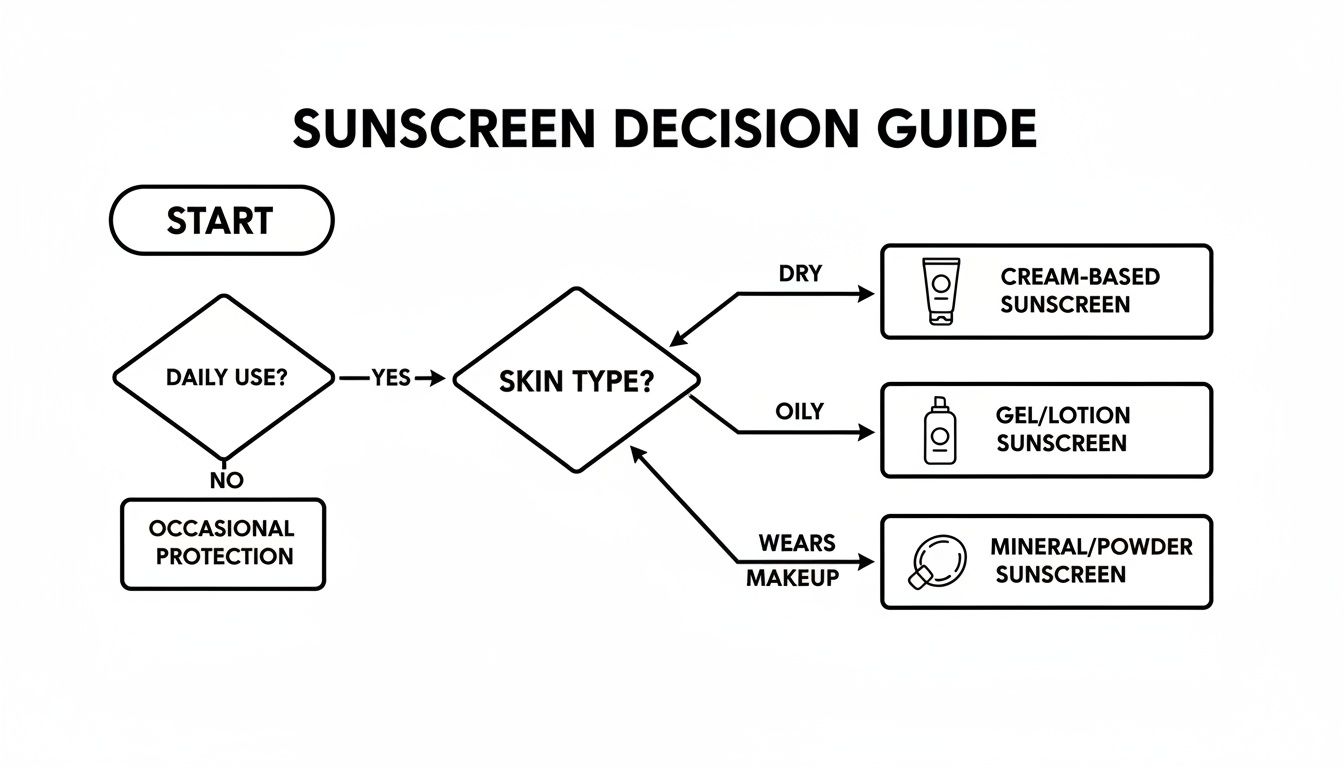
It’s a simple visual that shows how different textures—creams, lotions, and powders—are tailored for specific needs, making it so much easier to find your perfect match.
Protecting Your Aesthetic Investments
Post-procedure care is where mineral sunscreens truly shine. After treatments like PRP or dermal fillers, your skin is in a delicate, vulnerable healing phase. Even a few minutes of unprotected sun exposure can cause serious setbacks.
Using a high-quality, gentle mineral sunscreen is the single most important thing you can do to prevent post-inflammatory hyperpigmentation (PIH) and protect the beautiful results of your in-clinic treatments. It creates a physical shield that calms and safeguards healing skin without irritation.
This isn't just my opinion; the industry is moving in this direction, too. The U.S. mineral sunscreen market is expected to skyrocket from USD 834.2 million in 2024 to a projected USD 2,567.9 million by 2034. It’s no surprise when you learn that 73% of dermatologists recommend mineral formulas for their gentleness on post-procedure skin.
This philosophy is exactly why we recommend medical-grade sunscreens here at BotoxBarb. We want to ensure your skin heals beautifully and your results last as long as possible.
Mastering Sunscreen Application for Flawless Coverage
Finding the perfect mineral sunscreen is a huge win, but how you apply it is what truly unlocks its protective power. Even the best sunscreen won't do its job if it's not applied correctly. Let's turn your daily defense into an effortless habit that safeguards your skin for the long haul.
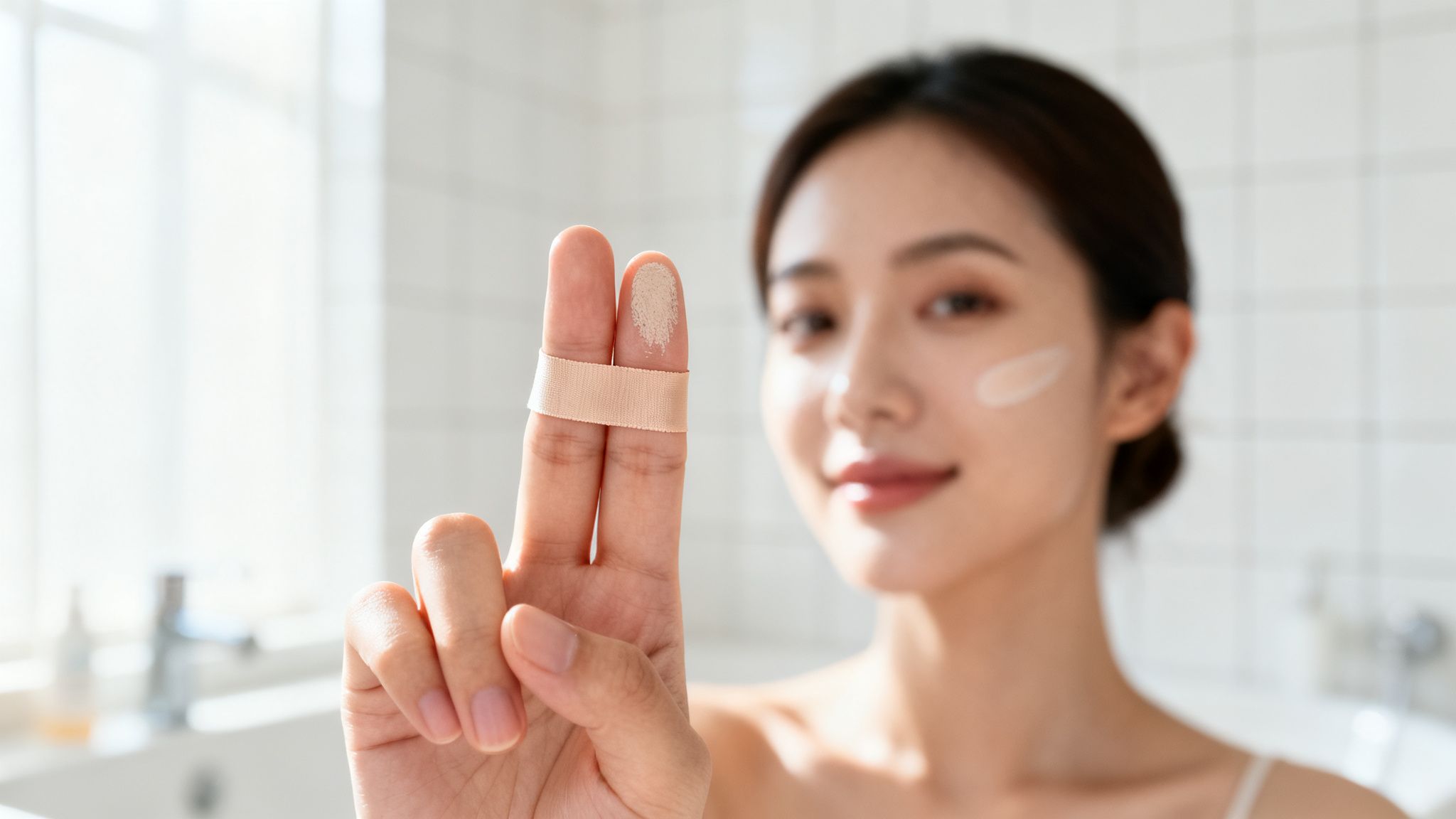
First things first: are you using enough? Most people apply far too little, which drastically cuts down the SPF protection you think you're getting. The dermatologist-backed "two-finger rule" is the easiest way to get it right. Just squeeze two full lines of sunscreen onto your index and middle fingers—that’s the ideal amount for your face and neck.
Layering Like a Pro
To make sure your sunscreen performs at its best, it should always be the final step in your skincare routine, right before you reach for any makeup. Give your serums and moisturizers, like those from SkinCeuticals, a minute or two to fully absorb. This simple pause prevents pilling and creates a perfectly smooth canvas for your mineral shield.
One of the biggest mistakes I see is people mixing sunscreen directly into their moisturizer to save time. This dilutes the formula and messes with its ability to form that uniform, protective film your skin needs. You're left with gaps in your coverage and vulnerable to UV damage.
For a truly flawless finish, the BARB N.P. Tinted Mineral SPF 40 is a game-changer. This elegant, medical-grade formula not only gives you broad-spectrum protection but also acts as a light foundation or primer. It blends beautifully over your other products, leaving your skin with an even, radiant tone while simplifying your morning routine.
The Art of Reapplication
We all know we’re supposed to reapply sunscreen every two hours, but that can feel impossible over makeup. Here’s how to do it without messing up your look:
- Use a Beauty Sponge: Dab a small amount of liquid mineral sunscreen over your makeup with a damp beauty sponge. Gently pressing or stippling the product on refreshes your coverage without smudging your foundation.
- Try a Mineral Powder: A powder sunscreen with SPF is a fantastic option for quick, mattifying touch-ups. It’s perfect for absorbing midday shine while boosting your protection.
- Consider a Sunscreen Stick: Sticks are great for targeted reapplication on the high points of your face—think nose, cheekbones, and forehead—where the sun hits first.
Mastering these simple techniques ensures you're getting consistent, effective protection. It keeps your skin healthy and beautifully shielded, all day long.
Pairing Sunscreen with Advanced At-Home Skincare
Think of your daily mineral sunscreen as your skin's defensive line—it’s the single most important step for shielding your face from new damage. But what about the subtle environmental stress that still gets through or the damage from years past? A truly complete skincare strategy is a 24-hour job.
This is where advanced at-home technology comes in. You need a nighttime repair crew to complement your daytime guardian. When you pair a high-performance mineral sunscreen with a medical-grade LED mask, you create a powerful, holistic system for maintaining radiant, youthful skin.
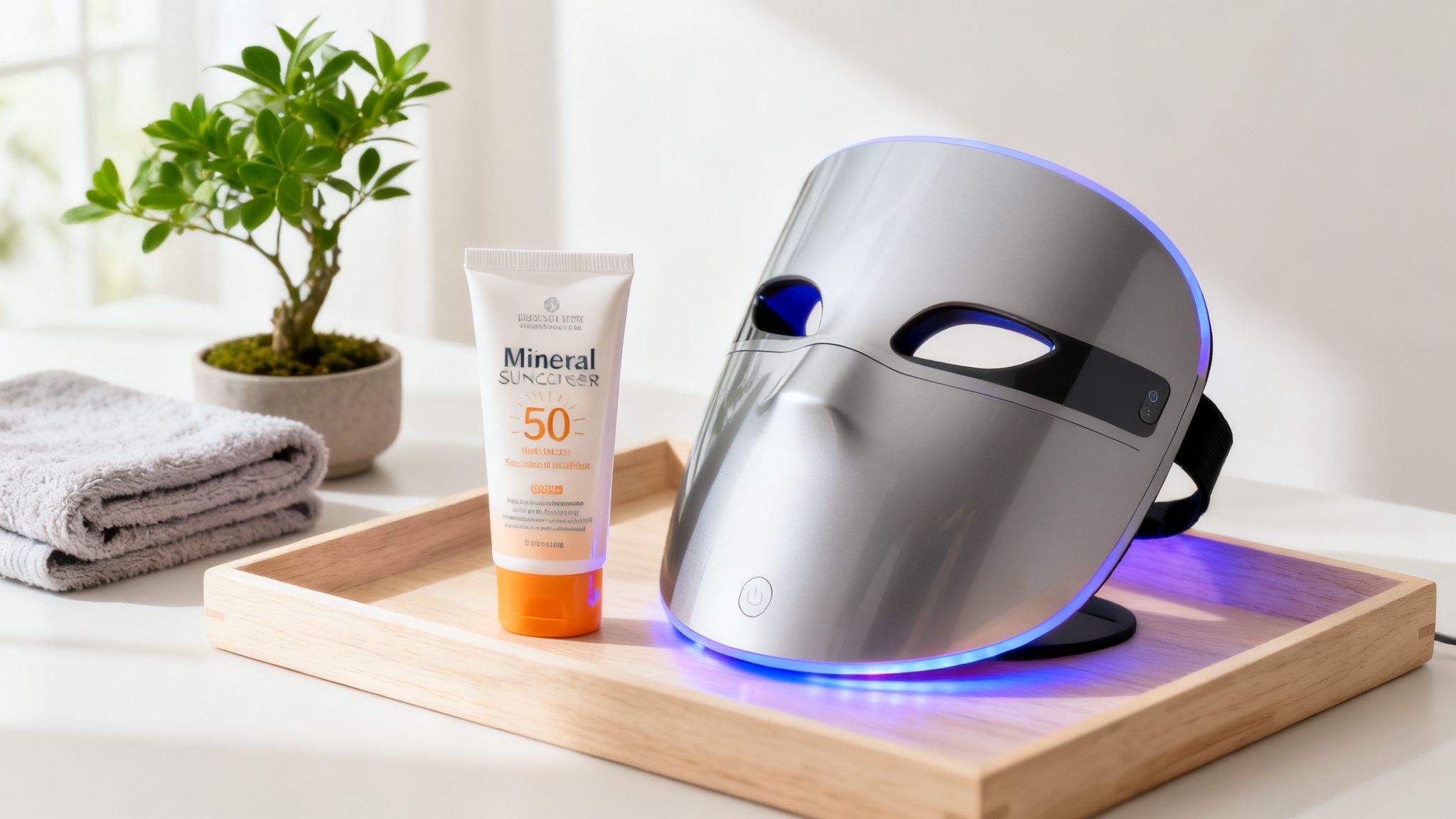
Elevate Your Evening Routine with LED Therapy
While your sunscreen is busy preventing new UV-induced damage, LED (Light Emitting Diode) therapy gets to work on a cellular level, addressing past imperfections and boosting your skin's overall health. By weaving this technology into your evening routine, you’re actively helping your skin recover and regenerate while you sleep.
We recommend the Barb N.P. Facial Mask, a medical-grade device designed to perfectly complement your daily sun protection efforts. It’s an easy, effective way to take your skincare results to the next level, right from the comfort of your own home.
The mask was designed with real life in mind. Its wireless functionality means you’re not tethered to a wall—you can relax or move around freely during your treatment. Plus, the soft, flexible materials rest comfortably on your face, turning your sessions into a genuinely pleasant experience.
Customized Treatments for Your Skin Concerns
The Barb N.P. Facial Mask isn’t a one-size-fits-all device. It features three versatile light settings, allowing you to tailor your treatment to exactly what your skin needs on any given day. This targeted approach ensures you can address multiple concerns with a single, powerful tool.
-
Red Light: This is your go-to for anti-aging. It penetrates deep into the skin to kickstart collagen production, helping to soften the appearance of fine lines and wrinkles for a firmer, more youthful complexion.
-
Blue Light: If you struggle with breakouts, blue light is your best friend. It targets and neutralizes acne-causing bacteria on the skin’s surface, helping to clear existing blemishes and prevent new ones from forming.
-
Amber Light: For those days when your skin feels irritated or inflamed, the amber light setting is incredibly calming. It helps reduce redness and soothe sensitivity, promoting a more even and balanced skin tone.
By pairing your daily mineral sunscreen with the targeted, reparative power of the Barb N.P. Facial Mask, you create a complete 24-hour cycle of protection and rejuvenation. This dual strategy is the secret to not just maintaining your skin’s health, but actively improving it.
Your Mineral Sunscreen Questions Answered
Even with all the facts, picking the right mineral sunscreen can feel a little overwhelming. Let's tackle some of the most common questions I hear from clients, so you can feel totally confident in your daily sun protection.
Will Mineral Sunscreen Really Leave a White Cast?
This is probably the number one concern, and it’s completely valid based on older, chalkier formulas. Thankfully, sunscreen technology has come a long way.
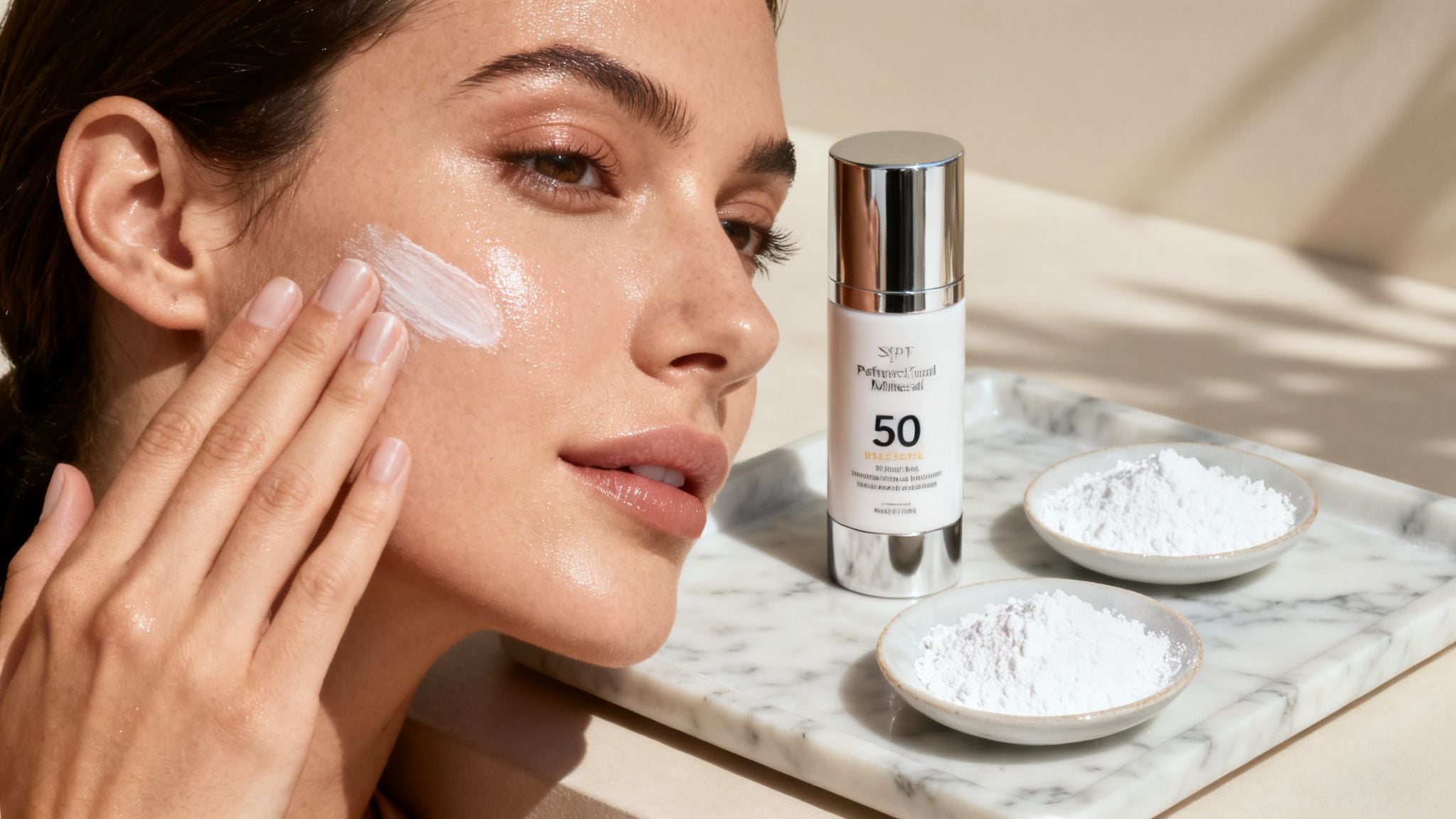
Today’s best mineral sunscreens use micronized zinc oxide and titanium dioxide. Think of it like this: the mineral particles are milled down to be incredibly fine, almost like a silky powder, allowing them to blend seamlessly into your skin without that dreaded ghostly finish.
Tinted versions are also a game-changer. A formula like the BARB N.P. Tinted Mineral SPF 40 is brilliant because it not only eliminates any possibility of a white cast but also helps blur imperfections and even out your skin tone. It’s like a sheer foundation and your SPF in one.
Is Mineral Sunscreen Okay for Oily or Acne-Prone Skin?
Yes, absolutely! In fact, it’s often my top recommendation for anyone struggling with breakouts or excess oil. The active ingredients—zinc oxide and titanium dioxide—are non-comedogenic, which is just a technical way of saying they are specifically formulated not to clog your pores.
Zinc oxide is a true skin hero. It has natural anti-inflammatory and soothing properties, which can help calm the redness and irritation that often come with acne. The key is to find a lightweight, oil-free formula designed to feel comfortable and stay matte all day long.
To really elevate your routine, I often suggest pairing your mineral SPF with powerhouse at-home skincare products featuring collagen, Vitamin C, retinol, and hyaluronic acid to keep your skin healthy from all angles.
How Often Should I Reapply Sunscreen on My Face?
The golden rule is simple: reapply your facial sunscreen every two hours if you’re spending significant time in direct sunlight. This also goes for right after swimming, sweating heavily, or even just toweling off your face.
What if you're mostly indoors? If you’re working away from windows, one generous application in the morning is usually enough to get you through the day. For those times you need a quick touch-up over makeup, a mineral powder sunscreen or a handy sunscreen stick are fantastic for reapplying without messing up your look.
At BotoxBarb, my goal is to empower you to make educated choices that lead to your best skin ever. The BARB N.P. Tinted Mineral SPF 40 is a medical-grade formula I stand behind because it’s designed to protect, perfect, and feel incredible.
Shop now to experience the difference for yourself.