Find the best physical sunscreen for face: Your ultimate protection guide
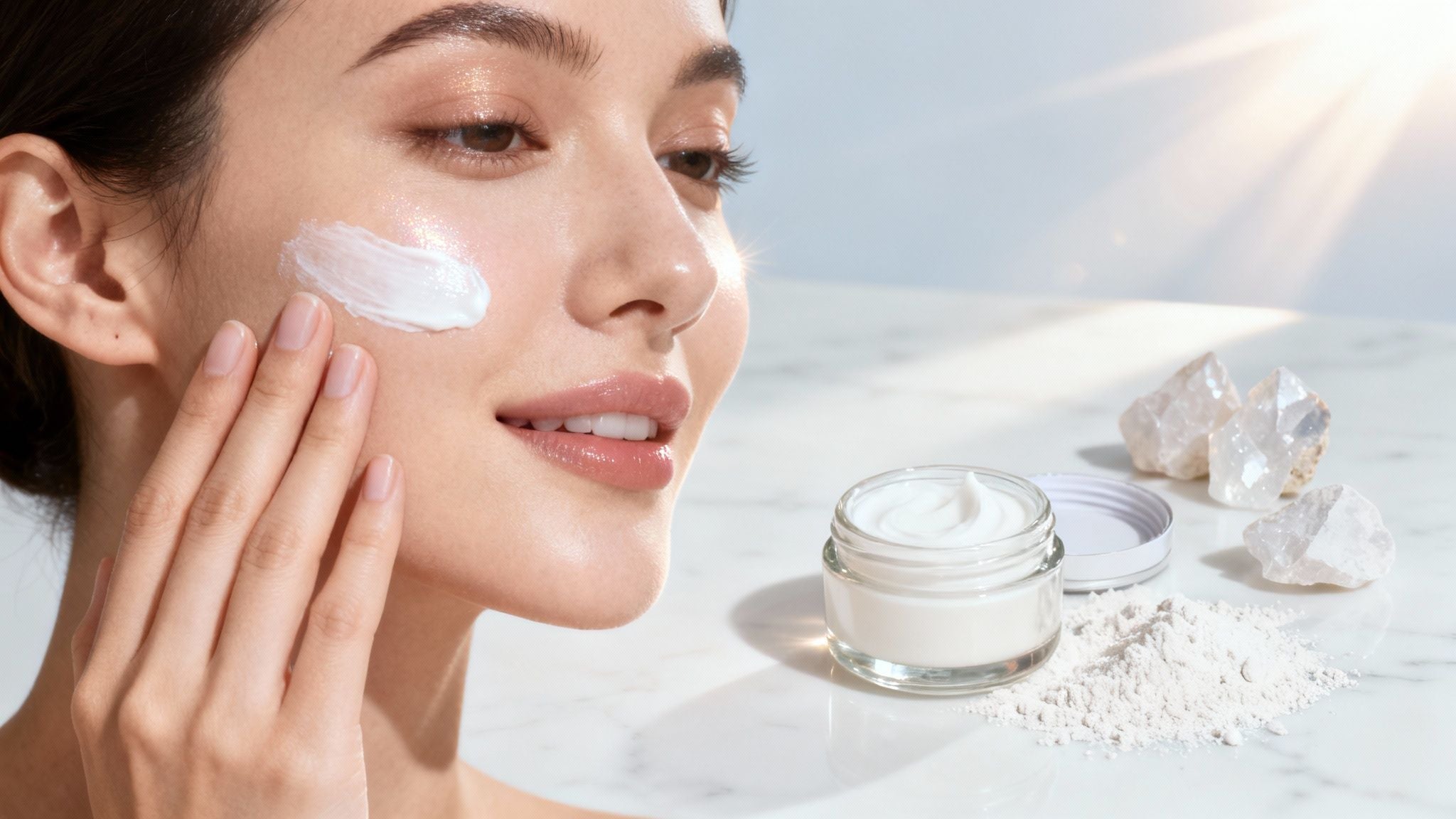
When you're on the hunt for the best physical sunscreen for your face, the answer almost always comes back to two gentle giants: zinc oxide and titanium dioxide. These mineral filters are the gold standard for sensitive, acne-prone, or reactive skin because they work on the skin, not in it.
Why a Physical Sunscreen Is a Game-Changer for Your Face
Think of a physical sunscreen as an invisible shield. Unlike its chemical cousins, which absorb UV radiation and turn it into heat within the skin, a mineral formula uses tiny particles to physically block and scatter damaging rays before they can even think about causing trouble. It's a simple, elegant mechanism, and it's why so many dermatologists and skincare professionals recommend it for the delicate skin on your face.
The best part? This "shield" gets to work the second you put it on. There’s no 20-minute waiting period for a chemical reaction to kick in, which makes it an incredibly reliable choice for everyday defense against sun-induced aging and damage.
The Gentle Guardian for All Skin Types
One of the biggest wins for physical sunscreen is how well-tolerated it is, even by the most finicky complexions. Because the active ingredients—our friends zinc oxide and titanium dioxide—sit on top of the skin, the risk of irritation, stinging, or allergic reactions is incredibly low. This makes it the perfect match for anyone with:
- Sensitive Skin: You get powerful protection without the risk of redness or that dreaded burning sensation.
- Acne-Prone Skin: Most modern mineral formulas are non-comedogenic, meaning they won't clog your pores. Zinc oxide even has some lovely soothing properties that can help calm the inflammation that comes with breakouts.
- Rosacea: Because there’s no heat conversion happening in the skin, a physical block won't aggravate the flushing and redness that rosacea is known for.
- Post-Procedure Skin: It's gentle enough to protect skin that's healing and vulnerable after treatments like chemical peels, microneedling, or lasers.
Finding Your Perfect Mineral Match
Your journey to finding the right physical sunscreen starts with what your skin needs and what you’ll actually enjoy wearing. A high-quality formula should feel comfortable and look elegant enough for daily use, because consistency is the real secret to effective sun protection. For those looking for a reliable daily option, the Barb N.P. Physical Sunscreen offers a gentle, cosmetically elegant formula that works beautifully on its own or under makeup.
The most effective sunscreen is the one you'll actually wear every single day. Prioritizing a formula that feels good on your skin is just as important as the SPF number on the bottle.
At the end of the day, choosing a physical sunscreen means opting for a product that works with your skin, not against it. It provides robust, broad-spectrum protection while respecting your skin's natural balance, making it a true cornerstone of any smart skincare routine.
How Mineral Sunscreens Create a Protective Shield
Think of a mineral sunscreen less like a lotion that soaks into your skin and more like a microscopic shield of tiny mirrors. That’s the simplest way to understand how they work. Instead of using a chemical reaction to absorb UV radiation, they create a physical barrier right on the skin's surface.
This barrier reflects and scatters damaging UV rays away before they ever get a chance to penetrate your skin. It’s an immediate, surface-level defense driven by two key mineral ingredients: Zinc Oxide and Titanium Dioxide. They’re the ultimate defensive duo in sun protection, and understanding what each one does is the first step to becoming an expert at reading a sunscreen label.
H3: Zinc Oxide: The Broad-Spectrum Guardian
Zinc Oxide is the undisputed champion of broad-spectrum protection. It’s like a vigilant guardian that excels at deflecting the full spectrum of UV light, but it’s especially powerful against the long-wavelength UVA rays.
Those are the rays responsible for the deeper signs of premature aging—the fine lines, wrinkles, and collagen breakdown that we all want to avoid. Zinc oxide is also famously soothing and anti-inflammatory, which makes it a go-to for sensitive, rosacea-prone, and even acne-prone skin types. Because it sits on top of the skin, it’s far less likely to cause irritation or clog pores.
H3: Titanium Dioxide: The Burn Blocker
While zinc oxide provides that amazing all-around coverage, Titanium Dioxide is a powerful specialist. Think of it as the dedicated "burn blocker." It is exceptionally good at reflecting UVB rays—the shorter-wavelength rays that are the primary cause of sunburn and play a huge role in the development of skin cancers.
You’ll often find titanium dioxide paired with zinc oxide in the best formulas. This combination ensures you get powerful defense against burning while also getting zinc oxide’s superior anti-aging UVA shield. You can explore this synergy further in our detailed guide on mineral vs. chemical formulations.
This quick comparison breaks down the key differences between these two powerhouse ingredients.
Zinc Oxide vs. Titanium Dioxide: A Quick Comparison
| Feature | Zinc Oxide | Titanium Dioxide |
|---|---|---|
| Primary Protection | Excellent Broad-Spectrum (UVA & UVB) | Excellent UVB, Good UVA |
| Best For | Anti-aging, preventing deep skin damage | Sunburn prevention |
| Skin Feel | Can be thicker, but modern formulas are elegant | Lighter, often more transparent |
| Ideal For Skin Types | Sensitive, acne-prone, post-procedure | All skin types, often used for higher SPF |
Together, they create a comprehensive shield that no single ingredient can match on its own.
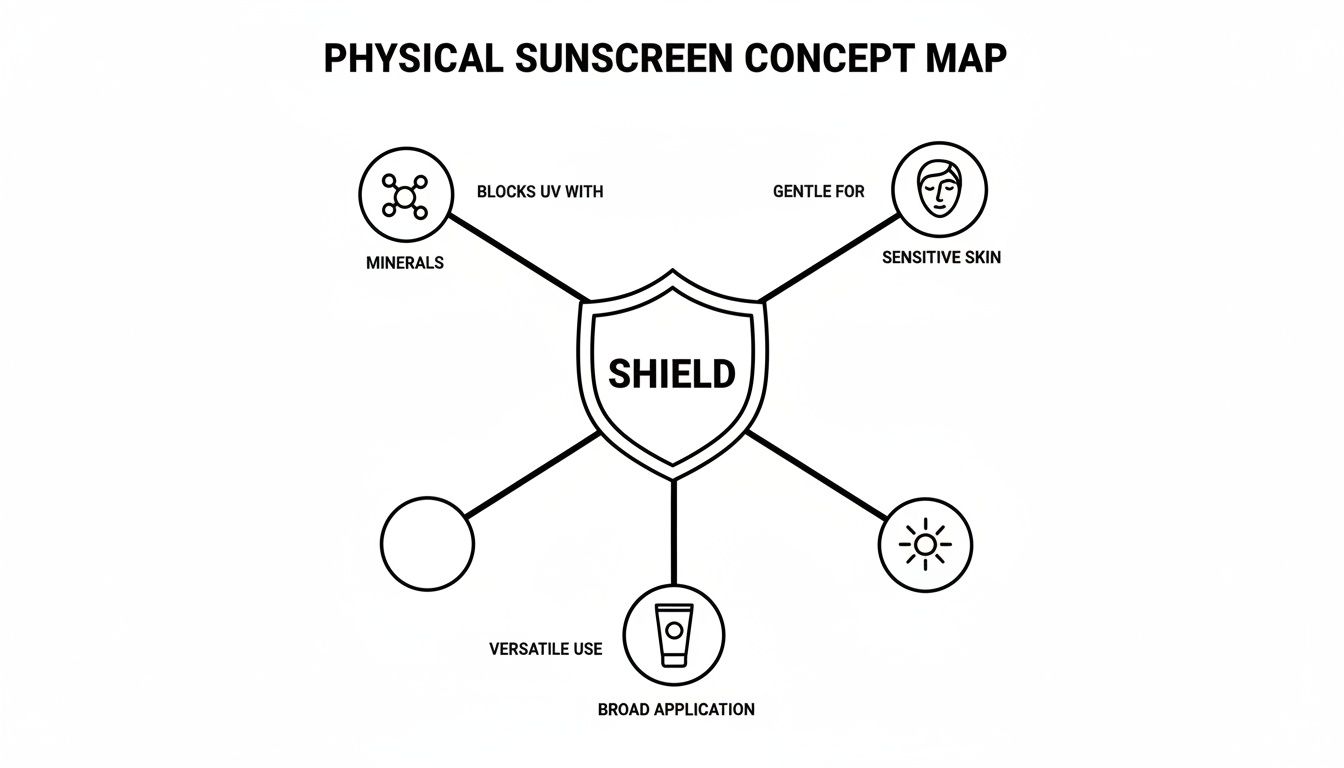
This simple concept—physically blocking UV radiation—is why mineral sunscreens are inherently gentler and offer immediate protection the moment you apply them. There's no waiting for a chemical reaction to start.
H3: Making Sure Your Shield Is Strong Enough
So, how much do you need for this shield to actually work? To get the Sun Protection Factor (SPF) promised on the label, you have to apply enough product. The clinical standard is 2 mg of product per square centimeter of skin.
For your face, that translates to roughly a nickel-to-quarter-sized amount. A little goes a long way, but you can't be shy with it.
Remember, this physical barrier needs to be maintained. That means reapplying every two hours when you’re in the sun, and more often if you’re swimming or sweating. When you choose a physical sunscreen, you’re choosing a tangible, protective layer that keeps your skin safe and calm.
Choosing the Right Physical Sunscreen for Your Skin Type
Finding the best physical sunscreen for your face isn't a one-size-fits-all mission. Your unique skin has its own set of needs, and the perfect formula will respect those needs while delivering powerful protection.
A sunscreen that makes oily skin feel greasy can be a lifesaver for someone with a dry complexion. That's why identifying your skin type is the crucial first step. The goal is to find a product that not only shields you from UV rays but also complements your skincare routine, making it a joy to apply every single morning.
Let's break down how to choose the right mineral sunscreen for your specific skin concerns, so you can shop with confidence and find your holy grail.
For Sensitive or Rosacea-Prone Skin
If your skin is quick to react with redness, stinging, or irritation, your mantra should be "less is more." Sensitive and rosacea-prone skin types thrive on simple, calming formulas that don't over-stimulate.
Physical sunscreens are already a fantastic choice because the minerals sit on the skin's surface, minimizing the risk of a reaction. Chemical filters, on the other hand, can sometimes trigger flushing in rosacea-prone skin because they work by converting UV rays into heat. Mineral blockers avoid this heat-based reaction entirely. For those with highly reactive complexions, we offer a specialized guide to help you find the best sunscreens for sensitive skin.
What to Look For:
- Minimalist Ingredient Lists: Fewer ingredients mean fewer potential irritants. Look for formulas free from fragrance, alcohol, and essential oils.
- Soothing Additives: Ingredients like niacinamide, allantoin, and bisabolol are fantastic for calming inflammation and reducing redness.
- High Zinc Oxide Concentration: Zinc oxide is prized for its anti-inflammatory properties, making it the superior choice for easily agitated skin.
For Acne-Prone or Oily Skin
The fear of a sunscreen-induced breakout is real. For those with acne-prone or oily skin, the key is finding a formula that protects without clogging pores or adding unwanted shine. A heavy, occlusive sunscreen can trap oil and bacteria, creating the perfect storm for blemishes.
Fortunately, modern mineral sunscreens have evolved far beyond the thick, greasy pastes of the past. Today’s best physical sunscreens for the face are lightweight, breathable, and designed to control excess sebum.
Expert Insight: Always look for the term "non-comedogenic" on the label. This is non-negotiable for blemish-prone skin. It's a certification that the product has been specifically formulated and tested to ensure it will not clog your pores.
What to Look For:
- Oil-Free Formulations: These products won't add extra oil to your skin, helping to maintain a balanced, less shiny complexion throughout the day.
- Matte or "Dry-Touch" Finish: Look for descriptions like "matte finish," "sebum control," or "dry-touch" to find a sunscreen that absorbs excess oil.
- Lightweight Textures: Gel-creams, lotions, and fluid textures are your best friends. They're far less likely to feel heavy or suffocating on the skin compared to thick creams.
For Mature or Dry Skin
Mature and dry skin types need a sunscreen that does double duty: providing robust UV protection while also delivering a much-needed surge of hydration. Sun exposure is a primary driver of visible aging, so daily protection is your most powerful tool against fine lines, wrinkles, and loss of elasticity.
But a formula that dries your skin out will only accentuate those concerns. Instead, seek out sunscreens enriched with moisturizing and skin-replenishing ingredients. These formulas create a protective shield that not only blocks UV rays but also locks in moisture, leaving your skin feeling supple and plump. To refine your choice, you might also find insights on the best Korean sunscreens for various skin types, which often feature incredibly hydrating formulations.
What to Look For:
- Hydrating Ingredients: Seek out powerhouse hydrators like hyaluronic acid, glycerin, and ceramides on the ingredient list.
- Antioxidant Boosters: Vitamins C and E not only help fight free radical damage from the sun but also brighten the complexion and support skin health.
- Creamy or Lotion-Based Textures: These richer formulas provide lasting moisture and often create a smooth, dewy canvas for makeup.
Mastering Sunscreen Application for Flawless Coverage
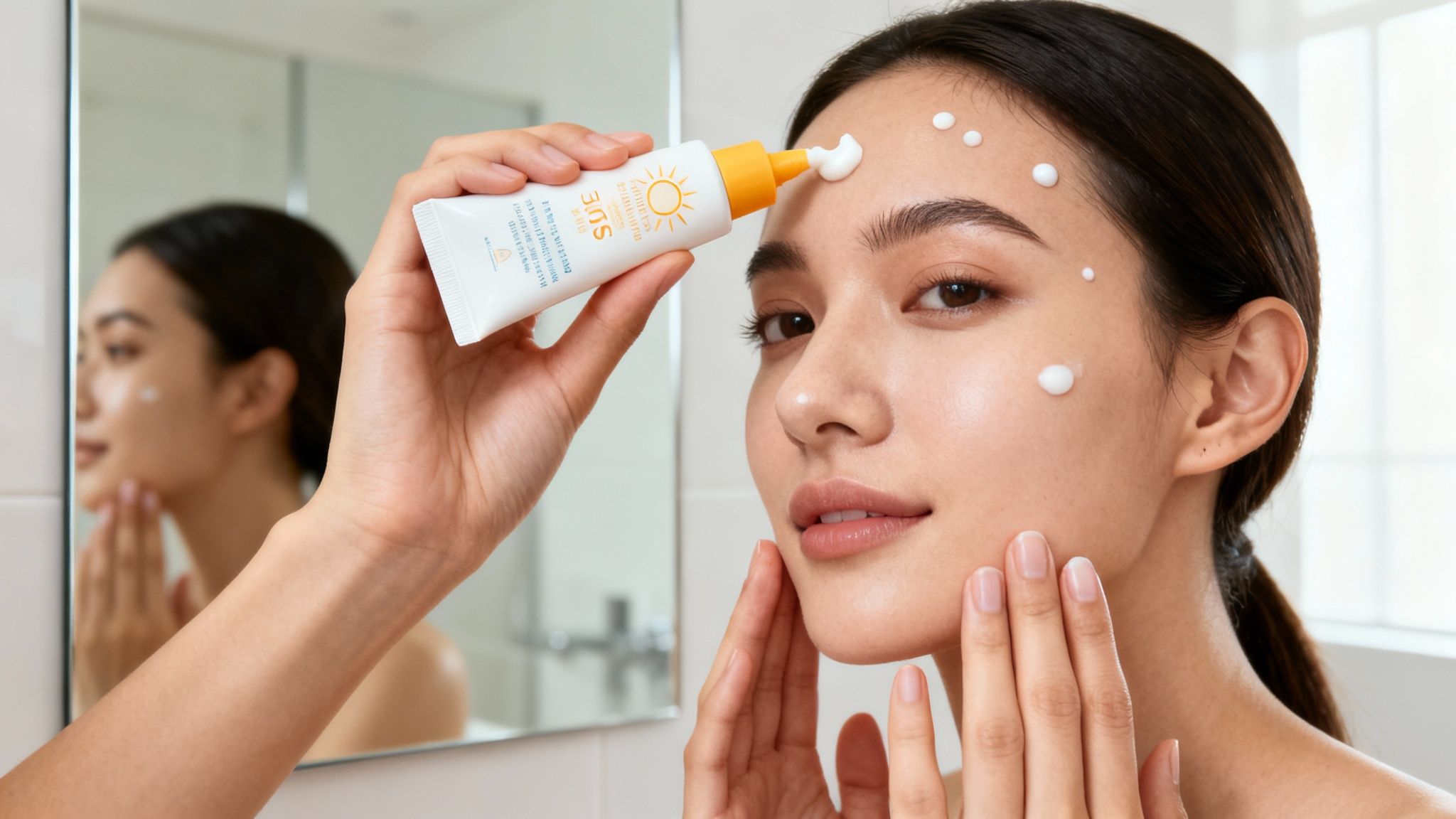
You can choose the most beautiful, elegant physical sunscreen in the world, but its protective power is only as good as how you put it on. Getting this crucial step right transforms your SPF from a simple product into a reliable, invisible shield.
Proper application is what guarantees you're getting the full SPF value promised on the bottle. It's the difference between patchy protection and consistent, effective coverage. Honestly, most of the common complaints I hear about mineral sunscreens—pilling, a chalky white cast, or a heavy feel—boil down to small, fixable application mistakes. Once you master a few simple techniques, daily application becomes a seamless, even enjoyable, part of your morning ritual.
The Right Amount: The Two-Finger Rule
The single most common mistake? Not using enough. To get the stated SPF, you need a surprisingly generous amount of product. A foolproof guideline is the "two-finger rule."
Simply squeeze two full lines of sunscreen, one onto your index finger and one onto your middle finger, from the base all the way to the tip. That's the amount needed to properly cover your face and neck. Under-applying can slash your protection by more than half, leaving your skin seriously vulnerable to damage.
Application Technique: Pat, Don’t Rub
Once you have the right amount, how you apply it makes all the difference, especially with mineral formulas that sit on top of the skin.
Instead of rubbing it in aggressively—which is a recipe for pilling and an uneven finish—try a gentler approach. Dot the sunscreen across the key areas of your face: forehead, cheeks, nose, and chin. Then, gently pat and press it into your skin until it’s evenly distributed. This "patting" motion helps create a uniform film without disrupting it.
The goal is to create an even, unbroken shield on your skin. Vigorous rubbing disrupts this layer, while patting helps it settle smoothly, reducing streaks and ensuring every part of your face is covered.
Navigating the White Cast
Ah, the dreaded "white cast." It’s the classic tell-tale sign of older physical sunscreens, but modern formulas have made it so much easier to avoid. That opaque look comes from the mineral particles themselves.
Here’s how to get truly invisible protection:
- Micronized Formulas: Look for sunscreens that use micronized or nano-sized zinc oxide and titanium dioxide. These ultra-fine particles are far less visible on the skin while still providing incredible broad-spectrum protection.
- Tinted Options: A tinted physical sunscreen is an absolute game-changer. The added pigments neutralize the whiteness of the minerals, helping the formula blend flawlessly into your natural skin tone.
- The Barb N.P. Physical Sunscreen is a fantastic example. It was specifically formulated to be cosmetically elegant and blend smoothly, minimizing any visible cast for comfortable daily wear.
Layering Like a Pro
Sunscreen should always, always be the final step in your skincare routine. It goes on after your serums and moisturizer, but before any makeup.
Here's the secret to preventing pilling: give your moisturizer a minute or two to fully absorb before you apply your SPF. When your skin is still damp, the sunscreen can't form an even film and starts to ball up. By waiting just a moment, you create a smooth, dry canvas for your sunscreen to adhere to, resulting in flawless, long-lasting protection.
Decoding Sunscreen Labels Like a Pro
Walking down the sunscreen aisle can feel overwhelming. With so many acronyms, numbers, and claims plastered on every bottle, how do you actually pick the right physical sunscreen for your face? It’s simpler than you think. The key is learning to translate the most important terms so you can shop with the confidence of a skincare expert.
Think of SPF (Sun Protection Factor) as your baseline defense. It primarily tells you how much longer your skin is protected from UVB rays—the ones that cause sunburn—compared to wearing nothing at all. While you might see SPFs of 70 or 100, the protective benefits plateau significantly after SPF 30. That’s why dermatologists and medical aesthetic pros consistently recommend sticking within the SPF 30-50 range for effective, everyday facial protection.
The Non-Negotiable Broad Spectrum Shield
But SPF only tells you half the story. It’s a great measure of UVB protection, but it says very little about UVA rays. Those are the silent culprits behind premature aging, fine lines, wrinkles, and the breakdown of your precious collagen. This is where one phrase becomes absolutely critical.
The term "Broad Spectrum" is non-negotiable. This is your guarantee that the sunscreen protects you from both the burning UVB rays and the aging UVA rays, giving your skin a complete defensive shield.
Without this label, you're leaving your skin vulnerable to long-term damage that won’t show up for years. Choosing a broad-spectrum formula is one of the single most important decisions you can make for your skin's health and youthfulness. You can dive deeper into combining daily skincare with sun protection in our guide on the best face creams with SPF.
Understanding Other Key Labels
Beyond SPF and broad-spectrum protection, a few other terms on the bottle can help you find your perfect match. Think of these as important clues about how the sunscreen will perform for your specific skin type and lifestyle.
Here are a few common terms to look for:
- Water Resistant: This means the sunscreen holds its SPF level for a set amount of time (either 40 or 80 minutes) while you're swimming or sweating. It's important to remember it’s not waterproof and always needs to be reapplied.
- Non-Comedogenic: If you have oily or acne-prone skin, this is a must-have. It certifies the formula has been designed specifically not to clog your pores and cause breakouts.
- Reef-Safe/Reef-Friendly: While this isn't an officially regulated term, it generally means the formula is free from oxybenzone and octinoxate—two chemical filters known to harm coral reefs. Physical sunscreens with zinc oxide and titanium dioxide are almost always considered reef-safe.
The demand for smarter, safer sunscreens has really shifted the industry. Mineral formulas now make up about 30% of the global market, with SPF 30 options leading sales at 41% of units shipped. This shows a clear consumer preference for effective daily protection that’s good for both skin and the environment. You can learn more about sunscreen industry statistics on Market.us.
Beyond Sunscreen: A Holistic Approach to Skin Health
Daily sun protection is the single most important thing you can do for your skin's future. Think of it as your first and best line of defense against premature aging and sun damage. Finding the best physical sunscreen for face is the cornerstone of that strategy.
But a truly effective approach to skin wellness doesn't just stop at the shield. It’s also about repairing and rejuvenating your skin from past exposure.
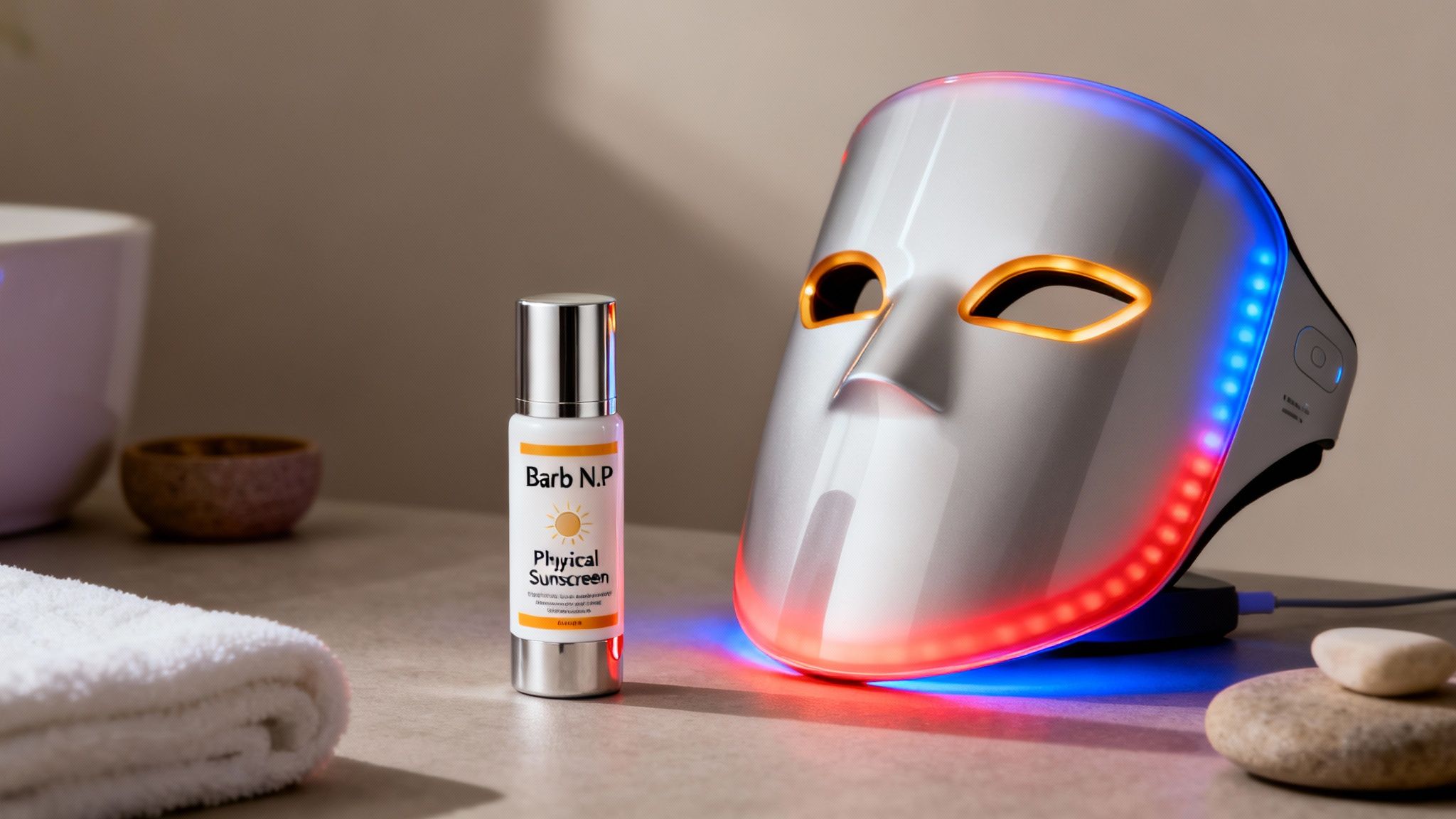
While physical sunscreen is your non-negotiable daily defender, a complete approach also means looking into effective sun damaged skin treatments for existing concerns. Pairing daily prevention with targeted repair creates a powerful synergy, helping your skin not only stay protected but also become healthier over time.
A Powerful Partnership: Sunscreen and LED Therapy
For that daily shield, we recommend the Barb N.P. Physical Sunscreen. It’s formulated with a gentle, cosmetically elegant texture that feels beautiful on the skin, making it easy to wear every single day—the true key to consistency. This formula gives you the essential broad-spectrum protection you need without causing irritation or clogging pores.
To complement this daily defense, adding an advanced treatment to your routine can work wonders to repair and rejuvenate the skin from within. This is where at-home devices like light therapy masks can make a real difference, offering a non-invasive way to address underlying concerns from fine lines to inflammation.
Expert Insight: A comprehensive skincare plan pairs daily protection with active repair. Sunscreen prevents future damage, while treatments like LED therapy work to correct existing concerns, creating a cycle of continuous improvement for your skin.
Enhance Your Routine with the Barb N.P. LED Facial Mask
The Barb N.P. LED Facial Mask is the perfect partner in your skin health journey, designed to work alongside your daily sunscreen. While your SPF protects the surface, this mask helps support skin renewal from the inside out.
One of its best features is its completely wireless design, giving you total freedom and convenience. You can enjoy a treatment while reading, relaxing, or just moving around your home. It’s also crafted for exceptional comfort, with a secure fit that rests easily on your face without feeling heavy or restrictive. It’s a genuinely pleasant addition to your self-care routine.
The mask features three versatile light settings for a customized treatment:
- Red Light: Stimulates collagen production to help soften the appearance of fine lines and wrinkles.
- Blue Light: Targets acne-causing bacteria to help clear up existing breakouts and prevent future ones.
- Amber Light: Works to reduce redness and inflammation while promoting a more even, calm skin tone.
By incorporating this device into your weekly routine, you can actively address signs of past sun exposure, calm inflammation, and boost your skin's natural radiance. This combination—daily protection and targeted repair—creates a complete system that defends your skin today while helping it heal for a healthier tomorrow.
Common Questions About Physical Sunscreen, Answered
Even when you know the science, practical questions always come up. Let's tackle some of the most common ones I hear from clients, so you can feel completely confident in your daily sun protection.
"Will Physical Sunscreen Leave a White Cast on My Skin?"
This is probably the number one concern, especially for those with deeper skin tones. The short answer is: not anymore. The chalky, ashy look of old-school mineral sunscreens came from large, clunky mineral particles.
Today’s best formulas use micronized zinc oxide, where the particles are milled to be incredibly fine. This allows them to blend invisibly into the skin. Even better, many brands now offer tinted physical sunscreens with iron oxides that not only eliminate any hint of a white cast but also add extra protection against visible light—a known trigger for hyperpigmentation.
"Do I Really Need Sunscreen on a Cloudy Day?"
Yes. This is a non-negotiable for healthy skin. Up to 80% of the sun’s UV radiation cuts right through clouds. You might not feel the heat or see a burn (which comes from UVB rays), but those silent, aging UVA rays are still reaching your skin, breaking down precious collagen and elastin.
Think of clouds as a weak, sheer curtain, not a solid wall. Daily application, rain or shine, is the only way to truly shield your skin from that long-term damage.
"How Often Should I Reapply My Face Sunscreen?"
The golden rule is every two hours if you’re in direct sun. But you’ll need to reapply more often—every 40 to 80 minutes, depending on the product’s instructions—if you’re swimming, sweating, or toweling off.
For a typical day spent mostly indoors, a thorough application in the morning is a great start. But if you're heading out for lunch or a walk, a quick reapplication is a smart move to ensure you're fully protected.
To help your skin recover from past sun exposure and build resilience, targeted treatments are key. A fantastic at-home tool for this is the Barb N.P. LED Facial Mask. It’s completely wireless and so comfortable to wear. With settings for anti-aging (red light), acne (blue light), and rejuvenation (amber light), it helps repair existing damage and gives your overall skin health a serious boost.
Looking for a reliable daily shield that feels elegant on its own or sits perfectly under makeup? BotoxBarb offers a curated selection of high-performance skincare designed to protect and perfect your complexion. You can explore the collection right here: https://barbnp.shop.