How to Choose Skincare Products a Guide for Real Results
Before you even think about adding a product to your cart, the first step in building a smart skincare routine starts in the mirror, not the store aisle. It’s all about getting to know your own skin first—what it needs, what it irritates it, and what its baseline behavior is. This is the only way to choose formulas that will actually work for you instead of just following trends or buying what worked for a friend.
Start with Your Skin, Not the Shelf
The biggest mistake I see people make is buying products based on hype. It’s an easy trap to fall into, but it almost always leads to a bathroom cabinet overflowing with expensive, half-used bottles and, even worse, stressed-out, irritated skin.
The right way to approach skincare is to tune out the noise and listen to your skin. It has a default state, or "type," but it also experiences temporary issues, or "conditions." Knowing the difference is a total game-changer.
Skin Type vs. Skin Condition: What’s the Difference?
Your skin type is what you’re born with. It’s your skin's genetic default setting—generally oily, dry, combination, or sensitive. Think of it as the foundation you’re working with.
A skin condition, on the other hand, is a temporary problem that can happen to any skin type. Common conditions include:
- Dehydration (a lack of water, which is different from a lack of oil)
- Acne flare-ups
- Hyperpigmentation (dark spots)
- Redness and inflammation
Here’s a real-world example: you can have oily skin that’s also dehydrated. Someone with this profile might grab a harsh, stripping cleanser thinking it will solve the oiliness, but that will only make the dehydration worse. Conversely, someone with dry, acne-prone skin needs a gentle, hydrating cleanser that won't compromise their already fragile moisture barrier.
Understanding these nuances is key. If you're constantly dealing with irritation, learning how to repair a damaged skin barrier should be your top priority before adding any strong actives.
This quick reference guide can help you identify your skin's primary traits and the common concerns you should focus on addressing.
| Matching Skin Types to Key Characteristics | ||
|---|---|---|
| Skin Type | How It Feels and Looks | Common Concerns to Target |
| Oily | Feels greasy, looks shiny, has visibly enlarged pores | Clogged pores, blackheads, breakouts, excess shine |
| Dry | Feels tight, rough, or flaky; may look dull | Dehydration, fine lines, irritation, rough texture |
| Combination | Oily T-zone (forehead, nose, chin) with dry or normal cheeks | Balancing oil production, addressing both clogged pores and dry patches |
| Sensitive | Prone to redness, itching, stinging, or burning | Calming inflammation, strengthening the skin barrier, avoiding triggers |
Once you've identified your baseline, you can move on to targeting specific concerns.
Pinpointing Your Unique Profile
Before you start shopping, it’s worth taking a moment to figure out how to determine your skin type so you can make choices that are truly right for you.
With that sorted, ask yourself: what’s the #1 thing you want to change about your skin? Is it the fine lines around your eyes? The stubborn dark spots left over from past breakouts? Or maybe it’s the hormonal acne that shows up on your chin every month?
Zeroing in on one or two main concerns is crucial. It stops you from throwing too many active ingredients at your skin all at once, which is a fast track to irritation and a compromised barrier.
Key Takeaway: The best skincare routine is one that supports your skin’s natural barrier while targeting your main goals—and that's it. More products don't equal better results. In fact, a simple, targeted approach is almost always more effective.
This move toward personalization is reshaping the entire industry. The global personalized skincare market is expected to hit USD 63.7 billion by 2034, all thanks to new tech like AI diagnostics. This shift is empowering because it lets us move past one-size-fits-all solutions. Data even shows that personalized routines can improve skin outcomes by up to 35%. It's all about making informed choices that get you real, visible results.
Read Labels Like a Skincare Expert
Once you know what your skin truly needs, it's time to look past the flashy marketing on the front of the bottle. Flip it over. That small block of text—the ingredient list—is where the real story is told. Learning to decode it is probably the single most important skill you can develop for choosing products that actually deliver on their promises.
You're looking at what's called an INCI list (International Nomenclature of Cosmetic Ingredients). It's a standardized system that follows one simple rule: ingredients are listed in descending order of concentration. This means the first five or six ingredients typically make up the bulk of the formula—often 80% or more.
If a product boasts about a powerhouse active like vitamin C, but you find it buried at the very bottom of the list? That's a major red flag. It's a clear sign there's not enough of it in the formula to be effective. The ingredients at the top are what you're really paying for.
Spotting the Powerhouse Actives
When you're scanning a label, your goal is to match the active ingredients to your specific skin concerns. The first few ingredients will tell you about the product's base—usually water, glycerin, or some type of oil. The real magic, however, happens with the active ingredients that follow.
Here are a few key players to look for, depending on your goals:
- For Deep Hydration: Look for Hyaluronic Acid, Glycerin, and Ceramides. These are the humectants and lipids that pull moisture into the skin and fortify its protective barrier.
- For a Brighter Complexion: Search for Vitamin C (often listed as L-Ascorbic Acid or Sodium Ascorbyl Phosphate) and Niacinamide. These antioxidants are fantastic for tackling dark spots and general dullness.
- For Pores and Redness: Niacinamide is an all-star here, too. It helps regulate oil production and calm inflammation, making it a go-to for so many skin types.
- For Anti-Aging: Retinoids (like Retinol or Retinaldehyde) and Peptides are non-negotiable for stimulating collagen production and smoothing fine lines.
For these ingredients to do their job, they need to appear relatively high on the list. That's your clue you're getting a potent, effective formula.
Identifying Common Irritants
Just as important as finding the good stuff is learning to spot the ingredients that can cause trouble. Certain additives can trigger sensitivity, dryness, and breakouts, completely undermining all your other efforts.
Knowing what to avoid is half the battle. So many people find their skin dramatically improves just by eliminating a few common irritants from their products.
Keep an eye out for potential offenders like fragrance (parfum) and drying alcohols. While some alcohols are beneficial (like cetyl alcohol, a fatty alcohol that moisturizes), others like alcohol denat. or isopropyl alcohol can be incredibly stripping, especially if your skin is dry or sensitive. If you're dealing with persistent irritation, it’s worth checking a full list of skincare ingredients to avoid to see if a hidden culprit is in your routine.
A Tale of Two Moisturizers
Let's make this practical. Imagine two moisturizers sitting side-by-side on the shelf. Both come in beautiful jars, both claim to be "hydrating," and both are priced about the same. How do you choose? You read the labels.
Moisturizer A's Top Ingredients:
- Water (Aqua)
- Glycerin
- Dimethicone
- Sodium Hyaluronate
- Niacinamide
- Cetearyl Alcohol
Moisturizer B's Top Ingredients:
- Water (Aqua)
- Mineral Oil
- Alcohol Denat.
- Glycerin
- Dimethicone
- Fragrance (Parfum)
- ...Sodium Hyaluronate (way down the list)
Right away, you can see Moisturizer A is the clear winner. Its formula is led by powerful humectants (Glycerin, Sodium Hyaluronate) and a star active (Niacinamide) right near the top.
In contrast, Moisturizer B has a drying alcohol high on its list and relies on mineral oil, a basic occlusive, with fragrance thrown in as a potential irritant. The supposed star, Sodium Hyaluronate, is just an afterthought. This simple comparison shows how an ingredient list can instantly reveal a product's true quality and whether it's right for your skin.
Build Your Essential Morning and Night Routine
Alright, you've figured out your skin's unique personality and learned to see past the marketing hype on product labels. Now comes the fun part: putting it all together. A consistent routine is where the real magic happens, and the simplest way to think about it is giving your skincare two distinct missions: protect during the day and repair at night.
This approach keeps you from piling on too many products at once and ensures every single step has a purpose. Trust me, a simplified, effective routine you can stick with is far more powerful than a complicated, 10-step regimen that gathers dust.
Your Protective Morning Mission
Think of your morning routine as putting on armor before you head out the door. Its one and only job is to shield your skin from the day's environmental attacks, like UV radiation and pollution. The core steps are straightforward and non-negotiable for every single skin type.
A solid morning framework looks like this:
- Cleanser: Every great routine starts with a clean slate. A gentle cleansing gel is perfect for removing overnight buildup without stripping your skin's natural moisture, prepping it for the products to come.
- Antioxidant Serum: Vitamin C is the gold standard here for a reason. It acts like a second line of defense, neutralizing free radicals that your sunscreen might miss, while also brightening your complexion over time.
- Moisturizer: This is all about locking in hydration and keeping your skin barrier happy. The texture you choose is key—if your skin is oily, a lightweight gel is your best friend. If it’s dry, you'll want a richer, more nourishing cream.
- Sunscreen: This is it. The single most important anti-aging product you will ever use. Look for a broad-spectrum SPF 30 or higher and be generous with it. Every. Single. Day. No excuses.
Getting this daily habit down is crucial. If you need more guidance, our post on morning skincare routine steps breaks it down even further.
Your Repairing Night Mission
When the sun goes down, your skin clocks in for its repair shift. This is the perfect time to bring in targeted treatments that get to work on your main concerns, whether that's fine lines, breakouts, or dark spots. While you sleep, your skin is busy regenerating, and your evening routine should give it the tools it needs to do its job well.
Here’s what that nighttime routine should look like:
- Cleanse: Always, always wash your face before bed. You need to remove makeup, sunscreen, and the day's grime. For a truly deep clean, I often recommend a double cleanse—starting with an oil-based cleanser to melt everything away, followed by a water-based one.
- Targeted Treatment: This is where you bring in the heavy hitters. Depending on your goals, this could be a retinoid for anti-aging, an exfoliating serum with AHAs or BHAs for texture and glow, or a hydrating serum with hyaluronic acid for a serious moisture boost.
- Moisturizer: Lock it all in. A good moisturizer seals in your treatment, prevents water loss while you sleep, and keeps your skin barrier healthy and strong.
The infographic below is a great cheat sheet for decoding labels and finding the right ingredients for your AM and PM routines.
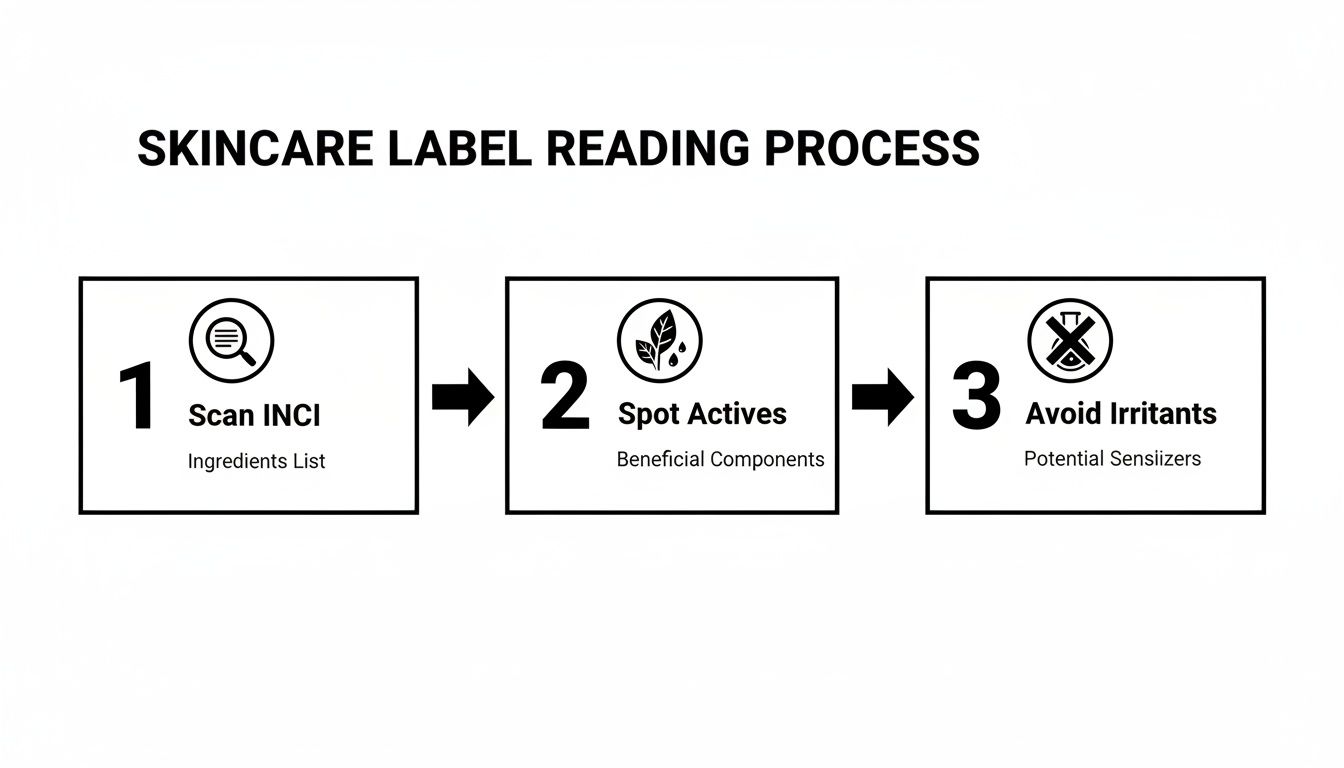
It’s a simple visual guide for scanning an ingredient list, spotting the powerful actives, and steering clear of common irritants.
The Golden Rule of Layering
To make sure every dollar you spend on skincare is actually working for you, apply your products in the correct order. The rule of thumb is simple: layer from thinnest to thickest consistency. This allows each product to penetrate the skin properly without being blocked by a heavier formula.
So, a typical order would be: cleanser, toner (if you use one), serum, eye cream, moisturizer, and then an oil or sunscreen (for morning). By letting the potent, watery serums absorb first, you ensure the richer creams can effectively lock everything in on top.
Expert Tip: I always tell my clients to think of it like dressing for cold weather. You wouldn't put a thin t-shirt on over a bulky sweater. The same logic applies to your skincare—lighter layers always go on first.
Supercharge Your Results with Targeted Treatments
Once your AM and PM routine is solid, you’ve built the foundation for healthy skin. Now it's time for the fun part: strategically adding treatments to tackle specific goals like anti-aging, stubborn texture, or breakouts.
Think of your core routine as your daily nutrition. These targeted treatments are the high-intensity workouts that really accelerate your progress.
This is where powerful active ingredients and at-home devices come into play. But a word of caution—it's incredibly easy to overdo it. Jumping in with too many potent formulas is a classic mistake that can wreck the skin barrier you've worked so hard to build.
Introducing Potent Actives Like Retinoids and Exfoliants
Two of the heaviest hitters in skincare are retinoids and chemical exfoliants. When you learn how to use them correctly, the changes they can make to your skin’s health and appearance are remarkable. The secret is to go slow and pay close attention to what your skin is telling you.
Retinoids (Vitamin A Derivatives) are the undisputed gold standard for anti-aging. They work by speeding up skin cell turnover and kickstarting collagen production, which is exactly what you need to smooth fine lines, firm up the skin, and even out your overall tone. I always tell my clients to start with a gentle, over-the-counter retinol just one or two nights a week. You can slowly increase the frequency as your skin gets used to it.
Chemical Exfoliants (AHAs and BHAs) are acids that dissolve the "glue" holding dead skin cells together. The result? A brighter, smoother complexion hiding underneath.
- Alpha-Hydroxy Acids (AHAs), like glycolic and lactic acid, are water-soluble. They work on the skin’s surface, making them fantastic for tackling dullness and uneven texture.
- Beta-Hydroxy Acid (BHA) is primarily salicylic acid, which is oil-soluble. This allows it to get deep into your pores to clear out oil and debris, making it a lifesaver for oily and acne-prone skin.
When adding these to your routine, start with a low concentration and use them only a few times a week. It's best to use them on nights when you aren't using a retinoid to avoid over-exfoliation and irritation.
A Word of Caution: Never, ever introduce multiple new active ingredients at once. Add one new product, give it at least four to six weeks to see how your skin reacts, and only then should you even think about adding another. This slow, methodical approach is the safest way to find what works for you.
Elevating Your Routine with At-Home Technology
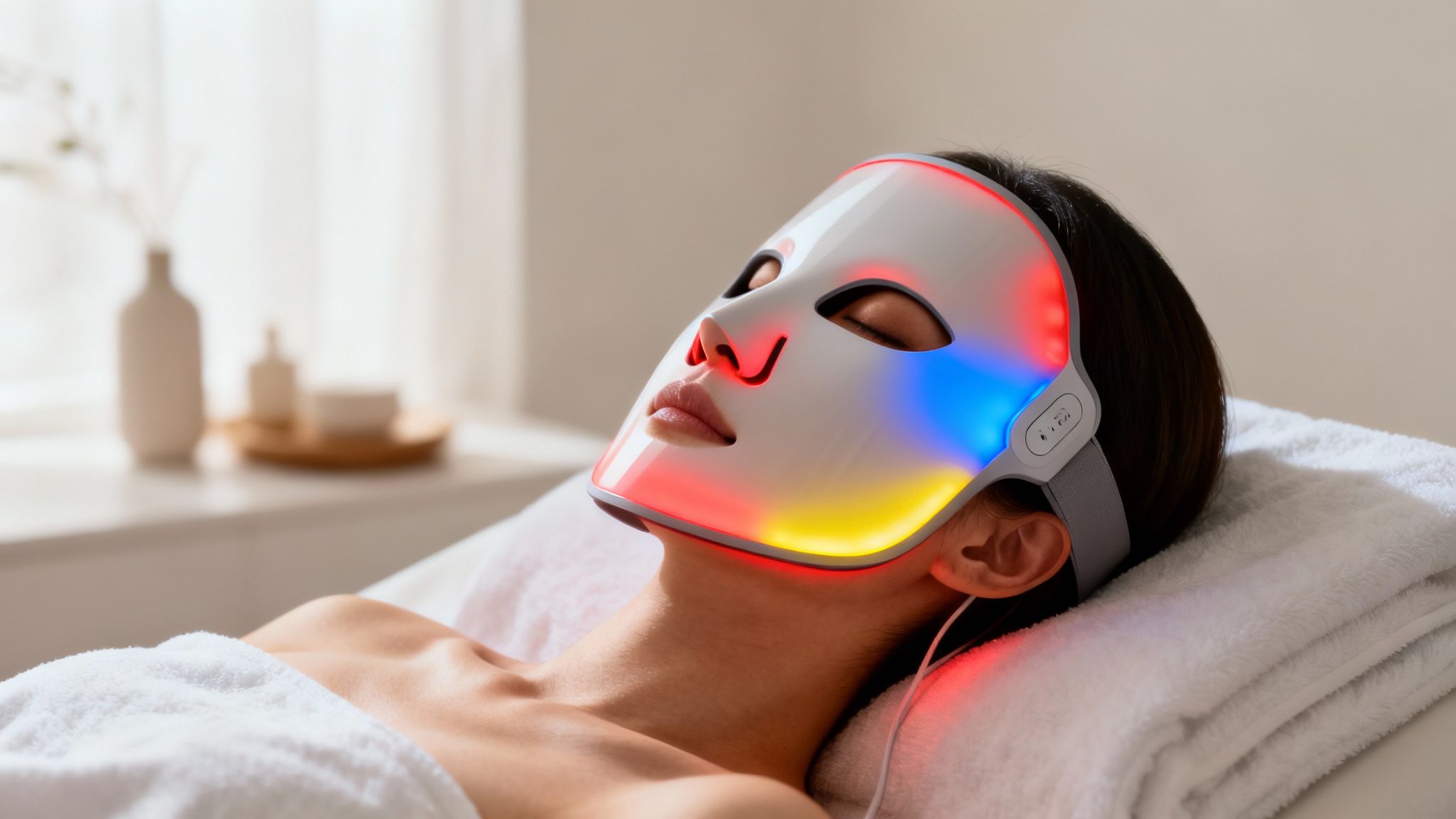
Beyond topical treatments, at-home skincare devices can seriously amplify your results. One of the most effective and well-researched options out there is LED (Light Emitting Diode) therapy. What used to be an in-office exclusive is now something you can use daily to give your skin a professional-level boost.
A standout here is the BARB N.P. LED Facial Mask. It's designed for real life—it has a convenient wireless design and an ergonomic shape that actually fits comfortably on your face. This means you can multitask while it works its magic, whether that's catching up on emails, listening to a podcast, or just taking a moment to relax.
But this mask is more than just convenient; it's a multi-functional powerhouse with three distinct lighting settings, each targeting different skin concerns with specific wavelengths of light.
Understanding the Power of Different Light Modes
Each color on the BARB N.P. mask serves a unique purpose, allowing you to tailor your treatment to what your skin needs on any given day.
-
Red Light Therapy: This is your anti-aging hero. Red light penetrates deep into the skin to stimulate fibroblasts—the cells that produce collagen. With consistent use, you'll notice firmer skin, reduced fine lines, and better elasticity. It gives your skin the building blocks it needs to repair itself from the inside out.
-
Blue Light Therapy: If breakouts are your main frustration, blue light is your best friend. It targets and destroys P. acnes, the bacteria that causes inflammatory acne. Using this setting regularly helps clear up existing blemishes and prevent new ones, all without the dryness that can come with some topical acne treatments.
-
Yellow Light Therapy: For days when your skin is feeling sensitive, red, or inflamed, the yellow light setting is a savior. It works to calm the skin, reduce redness, and boost lymphatic flow to help clear out toxins. It's perfect for soothing your skin after a more intense treatment or for helping manage conditions like rosacea.
Integrating a device like the BARB N.P. LED Facial Mask is a smart way to get more out of your topical products. By improving cellular function and calming inflammation, it creates a healthier environment for your serums and moisturizers to work more effectively. It’s the ultimate way to bring your routine to the next level.
Test New Products and Know When to See a Pro
Bringing a new serum or moisturizer into your routine can feel like a bit of a gamble. You’ve done the research, matched ingredients to your goals, and you're excited for the results. But before you smooth that new product all over your face, there’s one non-negotiable step that can save you from a potential disaster: the patch test.
This simple safety check is your best defense against widespread irritation, redness, or an unexpected breakout. Trust me, it’s far better to have a small, localized reaction on your arm than an inflamed face right before a big event. The process is straightforward and just requires a little patience.
How to Properly Patch Test New Products
Think of patch testing as asking your skin, "Hey, are we cool with this?" before you make a full commitment. It’s a vital part of building a safe and effective skincare routine.
Here’s the simple method I walk all my clients through:
- Choose a Discreet Spot: Apply a small, coin-sized amount of the product to a clean patch of skin where a reaction would be less noticeable. Good spots include the inner forearm, behind your ear, or just along the jawline.
- Apply and Wait: Gently rub the product in and leave it completely alone. Don’t apply any other products over the test area.
- Observe for 24-72 Hours: Keep an eye on the area. Some reactions, like stinging or burning, might happen right away. Others, like redness, itching, bumps, or rashes, can take a day or two to show up.
If you see any signs of irritation, wash the product off immediately and don’t use it again. If the test spot is still clear after 72 hours, you're likely good to go. And remember, only introduce one new product at a time. That way, if something goes wrong, you know exactly who the culprit is.
Recognizing When DIY Isn’t Cutting It
While a well-curated at-home routine can manage many common skin concerns, some issues are just too stubborn or complex for over-the-counter solutions alone. Knowing when to wave the white flag and seek professional help is a sign of a smart skincare user, not a failure.
You should consider booking an appointment with a dermatologist or licensed esthetician if you're struggling with:
- Persistent Cystic Acne: These deep, painful blemishes often need prescription-strength treatments or in-office procedures that at-home care simply can’t touch.
- Stubborn Hyperpigmentation: If dark spots from sun damage or old breakouts aren't fading with your serums, a professional can offer chemical peels, laser treatments, or stronger ingredients.
- Rosacea or Severe Redness: Managing conditions like rosacea requires an expert-led approach to calm inflammation and strengthen the skin barrier without causing more flare-ups.
- You've Hit a Plateau: If your routine used to work wonders but your progress has stalled, a pro can help identify the next steps to elevate your results.
Seeking professional advice is an investment in your skin’s long-term health. A trained expert can offer a proper diagnosis and create a targeted treatment plan that saves you time, money, and a lot of frustration.
Your at-home routine becomes even more critical when you’re undergoing clinical treatments. The products you use daily should support and enhance the results you’re getting in the office. For clients receiving injectables or hair-thinning treatments, a gentle, barrier-supporting routine at home is key.
This is where at-home devices can be especially powerful for complementing professional work. The BARB N.P. LED Facial Mask, for instance, is an excellent tool for this. Its yellow light setting is perfect for calming post-treatment redness and inflammation, while the red light boosts collagen to support anti-aging results. The comfortable, wireless design makes it incredibly easy to incorporate into any routine.
Answering Your Biggest Skincare Questions
Diving into the world of skincare always brings up a few universal questions. As you start figuring out what works for you, you'll inevitably hit these common roadblocks. Let's clear them up with some straight answers.
How Long Until I Know if a New Skincare Product Works?
This is where patience becomes your most powerful tool. For most products, like a new hydrating serum or moisturizer, you need to give it a full skin cell turnover cycle to see a real difference. That means waiting about 4 to 6 weeks.
For the heavy hitters like retinoids, the timeline is even longer. You're looking at 3 to 6 months of consistent use to see significant changes in texture, tone, and fine lines. The only exception? Irritation. If a product causes immediate redness, stinging, or breakouts, stop using it right away. Your skin is telling you it's not a good match.
Is It Okay to Mix and Match Skincare Brands?
Yes, absolutely. There’s no scientific reason to be loyal to a single brand if one of their products just isn’t cutting it for you. In fact, the most effective routines I've seen are built by cherry-picking the best-in-class product for each step from different lines.
The goal is to build a routine with high-quality formulas and compatible ingredients that target your specific concerns, not to collect products with the same logo. A fantastic cleanser from one brand can (and should!) work perfectly with a powerhouse serum from another.
What Are the Main Red Flag Ingredients to Avoid?
While everyone's skin is different, some ingredients are common culprits for irritation. Keep an eye out for these on the label:
- Denatured Alcohol: Often listed as 'alcohol denat.', this can be incredibly drying and strip your skin's protective barrier.
- Synthetic Fragrance: Listed as 'parfum', this is one of the most frequent triggers for sensitivity and allergic reactions.
- Harsh Scrubs: Be wary of physical exfoliants with jagged particles like crushed nut shells. They can create micro-tears in the skin, leading to more harm than good.
- Certain Essential Oils: While natural, many essential oils can be highly irritating, especially for sensitive or reactive skin. Proceed with caution.
Do I Really Need a Separate Cream for My Eyes?
It honestly depends on your concerns. If you don't have specific issues like stubborn dark circles, puffiness, or fine lines around the eyes, your regular facial moisturizer can often provide enough hydration. Just gently pat it around the orbital bone.
However, if you do want to target those concerns, a dedicated eye cream is a smart move. They're formulated specifically for the thinner, more delicate skin in that area, using ingredients at concentrations that are both gentle and effective. For many, it's a worthwhile investment.
At BotoxBarb, we believe in building intelligent, effective routines that deliver real results. Whether you need medical-grade skincare to support your in-office treatments or a powerful at-home device to supercharge your results, we have curated solutions to help you achieve your healthiest skin ever.
Explore our collection of expert-approved skincare and wellness products.