How to Test for Food Allergies at Home A Safety-First Guide
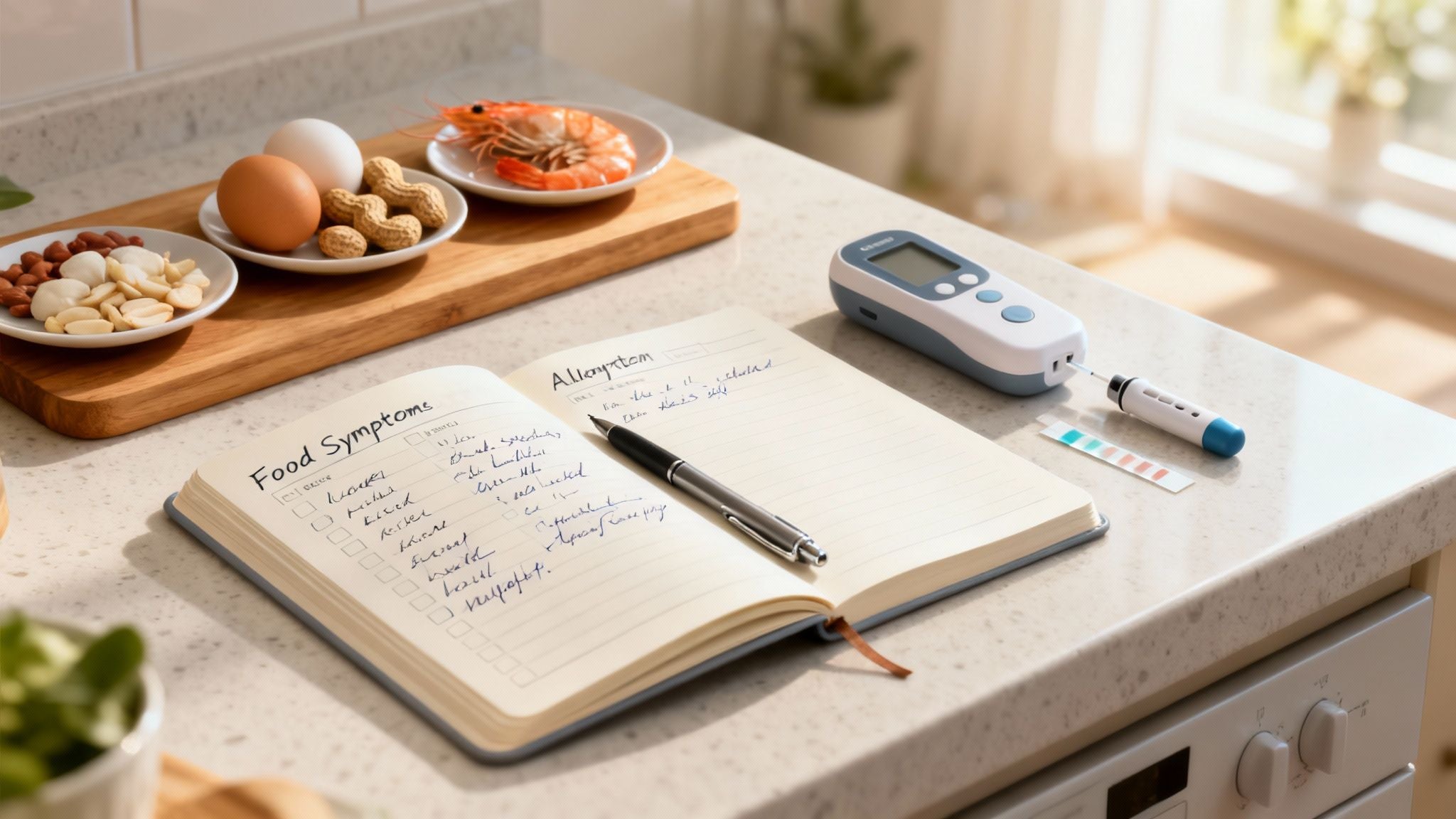
Before you even think about cutting out foods or buying a test kit, the most important thing you can do is become a detective of your own body. The best way to start testing for food allergies at home isn't with a test—it's with simple, careful observation. That means keeping a food and symptom diary.
This is your foundational step. It’s all about gathering raw data on yourself to see if there are any connections between what you eat and how you feel.
Starting Your Investigation with a Food and Symptom Diary

Think of this diary as your personal evidence log. It’s the bedrock of your entire investigation, and it’s where you should start before you make any changes. Its real power is in uncovering patterns you’d otherwise miss, especially since some reactions don’t show up for hours—or even a full day.
Meticulously tracking what you eat and how you feel puts potential connections down in black and white. For instance, you might realize that the nagging headache you get around 3 PM almost always follows a lunch where you had dairy. Without that written record, those subtle links are easily lost in the shuffle of daily life.
What Exactly Should You Track?
To make this log genuinely useful, you need to capture more than just the basics. A truly comprehensive diary gives you a complete picture of your daily inputs and outputs, making it far easier to spot the real triggers.
For every single meal and snack, you should be logging:
- What You Ate: Be brutally specific. Don't just write "salad." List every single thing in it: "romaine lettuce, grilled chicken, cherry tomatoes, croutons, and ranch dressing."
- How Much You Ate: Estimate the portion size. Was it a whole cup of yogurt or just a couple of spoonfuls? This detail matters because some reactions are dose-dependent.
- When You Ate: Note the exact time for every meal, snack, and drink. This creates a clear timeline for when symptoms might appear.
- How You Felt: Document any symptom, no matter how small it seems. This includes digestive issues like bloating or gas, skin reactions like hives, mood shifts like irritability, or physical symptoms like headaches and fatigue. Always note the time the symptom started.
A well-kept diary is more than just a list; it's a story about your body's relationship with food. The details you capture are the clues that will guide your next steps, transforming vague suspicions into actionable insights.
Yes, keeping track of everything can feel tedious at first, but consistency is what gets you results. You’re building a dataset that is 100% unique to you, and that’s invaluable.
Turning Your Data into Insights
After you’ve been consistently tracking for at least one to two weeks, it's time to start analyzing. Look for those recurring patterns. Do you feel bloated every single time you eat wheat? Do you get a weird skin rash the day after eating shellfish? These observations are your first real leads.
Here's a real-world example: A client of mine, Sarah, kept complaining about afternoon brain fog and fatigue. After looking through her diary, a pattern jumped out. On the days she had her usual yogurt and granola for breakfast, her energy would crash by 2 PM. This discovery pointed her toward a potential issue with dairy or the specific grains in her granola—a link she’d never even considered before.
To make the logging part easier, you could try a simple food diary app. Using a digital tool can make it much simpler to record meals and symptoms as they happen, so you don't forget important details during a busy day.
This initial data-gathering phase isn't about diagnosing yourself. It’s about collecting the evidence you need to either have an informed conversation with a doctor or to guide a more structured approach, like an elimination diet. It moves you from guesswork to a focused, methodical investigation.
The Truth About At-Home Food Allergy Test Kits
After you’ve been carefully logging your food and symptoms, the promise of a quick, definitive answer from an at-home test kit can be incredibly tempting. The internet is flooded with them, all claiming to pinpoint your trigger foods with just a simple finger prick. They seem convenient, scientific even, but it’s critical to understand what they actually measure before you waste your money and overhaul your entire diet.
These kits almost always test for IgG (Immunoglobulin G) antibodies. Here’s the problem: IgG is what we call a "memory" antibody. Its presence simply means you've been exposed to a food—it doesn't signal a true allergic reaction. In fact, a high IgG level to wheat might just mean you really enjoy your morning toast. It’s often a sign of tolerance, not a problem.
Why Most At-Home Kits Are Misleading
A true food allergy is an immediate, rapid-fire immune response driven by a completely different antibody: IgE (Immunoglobulin E). When you have an IgE-mediated allergy, your body treats a harmless food protein like a dangerous invader, setting off symptoms like hives, swelling, or even life-threatening anaphylaxis.
At-home kits don't measure IgE at all.
This fundamental difference is why major medical organizations, like the American Academy of Allergy, Asthma & Immunology (AAAAI), strongly caution against using IgG testing to diagnose food allergies. These tests aren't clinically validated for this purpose and often spit out a long list of "problem" foods, leading people to make unnecessary and potentially harmful dietary changes for no real health benefit.
Relying on an IgG test to diagnose a food allergy is like using a memory of a past event to predict the future. The presence of IgG antibodies just shows your body has met and processed a food—a normal immune response, not a red flag for an allergy.
Imagine getting results that tell you you're "sensitive" to almonds, eggs, and tomatoes—foods you eat all the time without any issues. Based on that misleading report, you might cut out these nutritious staples, complicating your life for no valid reason. This is a common trap people fall into with tests that lack scientific backing for allergy diagnosis.
Accuracy Claims Versus Clinical Reality
Another huge issue with at-home testing is its questionable accuracy when stacked against clinical methods. One popular company claims 70% to 90% accuracy for its environmental allergy tests but offers no solid proof for its food allergy panels.
On the other hand, clinical allergy tests performed in a doctor's office have been shown to reach around 90% accuracy for environmental allergies and up to 98% accuracy for food allergies. The takeaway is clear: in-office tests are significantly more reliable.
To make it simple, let's break down the key differences between what you get in a box versus what an allergist provides.
At-Home IgG Kits vs. Clinical IgE Testing
| Feature | At-Home Test Kits (IgG) | Clinical Allergy Testing (IgE) |
|---|---|---|
| Antibody Measured | IgG (Immunoglobulin G) | IgE (Immunoglobulin E) |
| What It Indicates | Past exposure or tolerance to a food. Not a true allergy. | A true, immediate allergic reaction. |
| Clinical Validity | Not recommended by major allergy organizations for diagnosis. | The gold standard for diagnosing true food allergies. |
| Interpretation | Often leads to a long list of "sensitivities," causing confusion and unnecessary diet restrictions. | Interpreted by a medical professional alongside your symptom history for an accurate diagnosis. |
| Potential Outcome | Unnecessary food avoidance, nutritional gaps, and continued symptoms from the actual unidentified trigger. | A clear diagnosis, an action plan (like carrying an EpiPen), and targeted dietary advice. |
Ultimately, at-home kits often create more confusion than clarity. You can find more details about different testing methods and what they mean in our complete guide on allergy testing at home.
So, What's the Alternative?
Instead of spending money on an unproven IgG kit, your resources are much better invested in methods that are grounded in clinical evidence.
Your detailed food and symptom diary is a far more powerful tool. It provides personalized, real-world data that directly links what you eat to how you feel—something a lab test measuring the wrong antibody can never do.
If your diary points to a potential trigger, the next logical step isn't a mail-in test. It’s a more structured approach, like a carefully planned elimination diet, ideally done with guidance from a healthcare professional. This method, which we’ll cover next, is considered the gold standard for identifying food sensitivities because it’s based entirely on your body's actual response to the foods you eat.
How to Safely Conduct an Elimination Diet
Once you've built a solid case with your food and symptom diary, it's time to get a bit more hands-on. The elimination diet is considered the gold standard for identifying food sensitivities at home for a good reason—it cuts through the noise of inaccurate IgG kits and tunes into your body's direct feedback. It’s a structured, two-part process that can give you crystal-clear, personalized answers about what’s really causing your discomfort.
But let’s be clear: this isn't something to jump into casually. It requires serious commitment and smart planning to get right. The whole point is to temporarily remove potential trigger foods, give your body a "clean slate," and then reintroduce them one by one to see what happens. It's a powerful tool when you do it correctly.
The Initial Elimination Phase
First things first: removal. For 2 to 4 weeks, you’ll completely cut out a group of the most common dietary troublemakers from every single meal and snack. The idea is to calm your system way down, so that when you bring foods back in later, any reaction will be loud and clear.
During this phase, you have to become a label-reading detective. Hidden ingredients are absolutely everywhere. For example, whey (a dairy protein) often pops up in protein bars, and soy is a common emulsifier in all sorts of processed foods.
The usual suspects to eliminate include:
- Gluten: Wheat, barley, rye, and many processed grains.
- Dairy: Milk, cheese, yogurt, butter, and hidden proteins like casein or whey.
- Soy: Tofu, edamame, soy milk, and soy lecithin in packaged goods.
- Corn: A big one, found in everything from cereals to sweeteners like high-fructose corn syrup.
- Eggs: Both the yolk and the white are out for now.
- Tree Nuts and Peanuts: Almonds, walnuts, cashews, and peanuts.
- Shellfish and Fish: Often potent allergens for many.
If you're already navigating specific restrictions, finding safe gluten-free and nut-free snacks can be a lifesaver. Honestly, planning your meals and snacks ahead is the single biggest key to success here.
Important Safety Note: It is absolutely critical to talk to a doctor or registered dietitian before starting an elimination diet. This is non-negotiable if you have a history of severe allergic reactions (like anaphylaxis) or are managing other health conditions. A professional will make sure you’re still getting all the nutrients you need.
This whole process works because it’s based on your direct, real-world experience. Food allergies now affect around 6% to 8% of children globally, a number that's been climbing for the last 30 years. This has made at-home testing more popular, but the clinical research is clear: an accurate diagnosis relies on patient history and controlled food challenges, not just antibody tests.
The Careful Reintroduction Phase
Once you’ve completed the elimination phase and (hopefully) your symptoms have calmed down, it’s time to reintroduce foods. This is where the real detective work begins. You'll bring back one food group at a time, slowly and methodically, to pinpoint exactly what's causing a reaction.
For each food you test, stick to a strict protocol:
- Day 1: Eat a small portion of the test food in the morning. If you feel fine, have a slightly larger portion in the afternoon.
- Day 2: Still no symptoms? Great. Eat a normal-sized portion of the food during the day.
- Day 3: Keep a close watch for any delayed reactions. Do not introduce any other new foods.
Log everything in your symptom diary during this three-day test. If you notice any negative symptoms—bloating, skin rashes, headaches, brain fog—stop eating that food immediately. You’ve likely found a trigger. Wait until you are 100% symptom-free again before you start testing the next food on your list. For a more detailed breakdown, our step-by-step guide to an elimination diet for food allergies is a great resource.
This simple visual breaks down the three-step process:
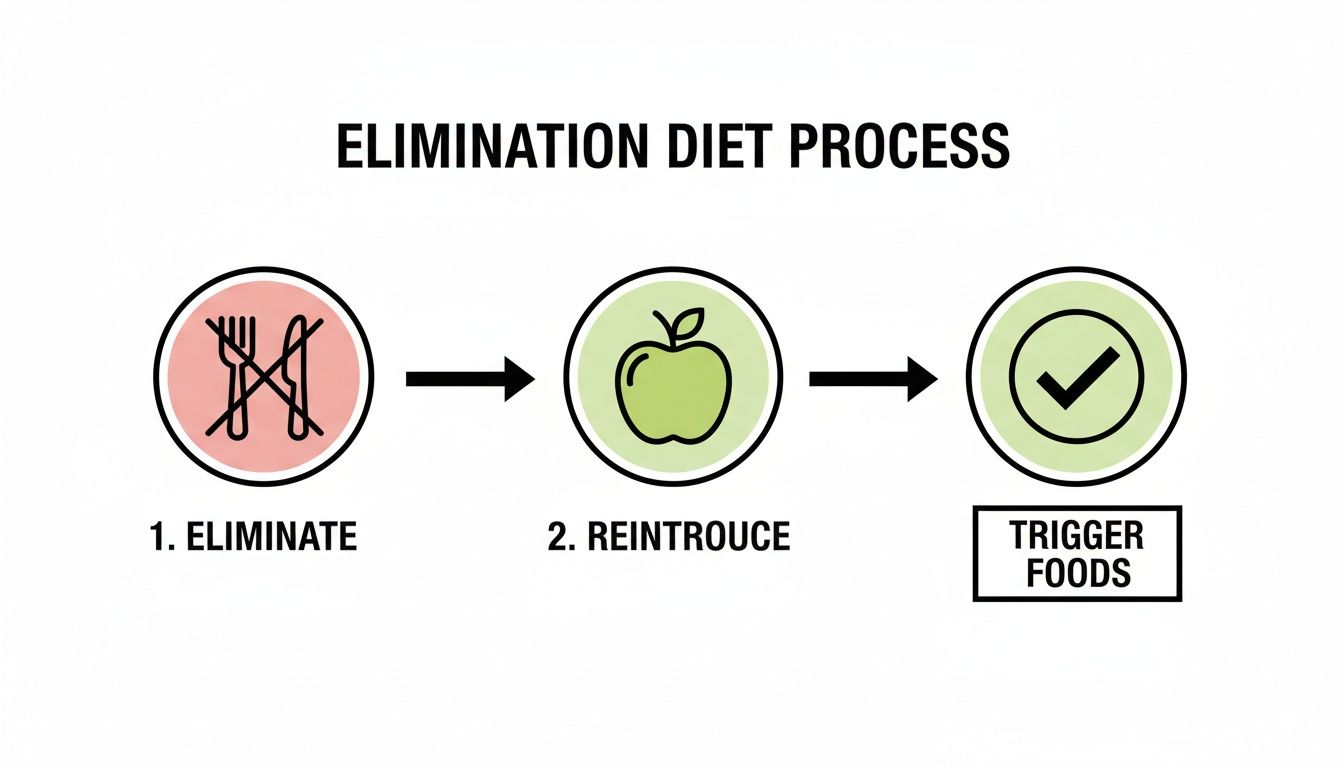
As you can see, the process is straightforward. Identifying your triggers comes down to carefully removing potential culprits and then methodically reintroducing them to see how your body truly feels.
Managing Skin Reactions While You Investigate
While you're carefully logging every meal or navigating an elimination diet, your skin often pays the price. Food-related immune responses frequently show up on the surface as frustrating eczema flare-ups, angry hives, or persistent redness and inflammation. Getting those outward symptoms under control is key for your comfort while you work to find the internal cause.
Calming your skin isn't just about temporary relief—it’s about creating a stable baseline. When your skin isn't in a constant state of irritation, it's much easier to spot a new reaction when you reintroduce a potential trigger food. During this time, simple, gentle care is your absolute best friend.

Soothing Your Skin at Home
Before you reach for complicated treatments, start with the basics. These simple habits can make a huge difference in dialing down irritation and supporting your skin's natural barrier.
- Cool Compresses: This is the easiest trick in the book for a reason. Applying a cool, damp cloth to itchy or inflamed areas for 15-20 minutes gives you immediate relief from the burning sensation that comes with hives or eczema.
- Oatmeal Baths: There's real science behind this classic remedy. Colloidal oatmeal has well-documented anti-inflammatory properties. Soaking in a lukewarm bath with finely ground oatmeal can soothe widespread irritation and hydrate angry, dry skin.
- Fragrance-Free Moisturizers: When your skin is reacting, its protective barrier is compromised. Slathering on a thick, gentle, fragrance-free cream right after bathing helps lock in moisture and shield vulnerable skin from more irritation.
Think of these steps as supporting your body from the outside while you figure out what’s going on inside. It lets you focus on the dietary puzzle without being constantly distracted by itchy, painful skin.
Using Light Therapy to Calm Inflammation
For a more advanced at-home approach, LED light therapy offers a powerful, non-invasive way to manage skin inflammation and speed up healing. This technology uses specific wavelengths of light that penetrate the skin to kickstart cellular responses, helping reduce redness and accelerate recovery without any harsh chemicals. When you're dealing with skin that's reacting to food triggers, this kind of supportive therapy can be a game-changer.
For at-home use, you want a device that's easy and effective. The Barb N.P. Facial Mask is an excellent choice for weaving LED therapy into your routine while you investigate potential food allergies.
This mask was clearly designed with real life in mind. It’s completely wireless, so you’re not stuck next to a wall outlet and can move around during your treatment. It's also built for comfort, with an ergonomic design that fits securely on your face, making it something you'll actually use consistently.
The Barb N.P. mask features 3 lighting settings for different treatments:
- Red Light: Stimulates collagen production, which is crucial for skin repair and building resilience.
- Blue Light: Targets and kills bacteria on the skin’s surface, a huge help if your reactions are leading to breakouts.
- Amber Light: Specifically works to calm redness and reduce inflammation, making it the perfect setting for soothing allergic skin reactions like eczema or hives.
Adding a tool like this to your arsenal gives you a proactive way to manage your symptoms. It provides your skin the support it needs to heal while you continue your journey to pinpointing those problem foods.
Knowing When to See a Doctor
Let’s be clear: at-home methods like a food diary or a carefully managed elimination diet are fantastic starting points. They are your investigative tools. But they are not a diagnosis. It’s absolutely critical to understand the line between self-testing and professional medical advice, especially when symptoms get serious.
Think of it this way: your home investigation gathers the clues. An allergist is the one who solves the case. Knowing when to hand over your file of clues is essential for your safety and long-term health.
Recognizing Emergency Red Flags
Some symptoms are non-negotiable. They shouldn’t be ignored or "waited out." If you or someone you're with experiences any of the following after eating, it could be anaphylaxis—a life-threatening allergic reaction that requires immediate medical attention.
Don’t hesitate. Call for emergency help if you see:
- Swelling of the lips, tongue, or throat: This can close up an airway in minutes.
- Difficulty breathing, wheezing, or shortness of breath: These are classic signs of a severe respiratory reaction.
- Dizziness, lightheadedness, or fainting: This can signal a dangerous drop in blood pressure.
- Sudden drop in blood pressure: A key symptom of anaphylactic shock.
- Rapid, weak pulse: This means the body is struggling to circulate blood.
- Widespread hives or skin flushing: A sign that the immune response is systemic and out of control.
A crucial takeaway: If you have ever had a severe reaction to a food before, never try to reintroduce or test it at home. The risk is simply too great. Professional guidance from an allergist is the only safe path forward in these situations.
From Home Data to Clinical Diagnosis
That detailed food and symptom diary you’ve been keeping? It’s gold. When you walk into an allergist's office, that log gives them a real-world history of your experiences, helping them connect the dots much, much faster than starting from scratch.
An allergist will use your data as a roadmap to guide them toward definitive diagnostic testing. These clinical tests are the only way to get a conclusive answer about a true, IgE-mediated food allergy.
After reviewing your history, expect your doctor to discuss one of these gold-standard tests:
- Skin Prick Test: A tiny amount of a suspected allergen is placed on your skin, which is then lightly pricked. If a raised, red bump (like a mosquito bite) appears, it points to a potential allergy.
- IgE Blood Test: This test measures the level of specific IgE antibodies to various foods in your bloodstream. High levels suggest your immune system has been sensitized to that food.
These tests, interpreted alongside your personal symptom history, provide the accurate diagnosis that at-home IgG kits simply can’t. This professional confirmation is the final, critical step to move you from suspicion to certainty, giving you a clear plan for managing your diet and health safely.
Questions We Hear All The Time About Food Allergies
When you start digging into the world of food allergies, a lot of questions pop up. It’s completely normal. Getting clear, honest answers is the first step to feeling in control and figuring out what to do next. Let's tackle some of the most common ones we hear.
Are Food Allergies and Intolerances the Same Thing?
Not at all, and this is probably the most critical distinction to understand.
A true food allergy is your immune system overreacting. It involves IgE antibodies and can trigger immediate, sometimes life-threatening symptoms like hives, swelling, or even anaphylaxis. It’s a serious medical issue.
A food intolerance, on the other hand, is a digestive problem. It might make you feel awful—think bloating, gas, or stomach pain—but it doesn't involve that same immune system cascade and isn't life-threatening. Knowing the difference between a food intolerance and an allergy is crucial for finding the right path forward.
Can I Really Develop a Food Allergy as an Adult?
Yes, you absolutely can. It's actually surprisingly common for adults to suddenly start reacting to foods they've eaten their whole lives without a single problem.
The most frequent culprits we see for adult-onset allergies are shellfish, tree nuts, and fish. If a food that was always fine suddenly causes a reaction, you need to take it seriously. Don’t just brush it off. It's time to talk to a doctor about proper IgE testing.
If At-Home IgG Tests Are Unreliable, Why Are They So Popular?
This one comes down to a few simple factors: they're incredibly convenient, often cheaper upfront than a specialist visit, and their marketing is very persuasive. They promise easy answers to complex health problems, which is something we all want.
The problem is, major medical organizations don't support their use for diagnosing true allergies.
These kits often lead people down the wrong path. We've seen clients go on unnecessarily restrictive diets based on flawed data, which only delays them from getting a real diagnosis and the medical care they actually need for the underlying issue.
Ready to stop guessing and start getting real answers? The first step is gathering data you can trust. The Barb N.P. Food & Environmental Allergy Test is a professional-grade IgE blood test you can take from the comfort of home. It delivers the clear, medically valid results you need to confidently decide on your next steps.
Explore the Food & Environmental Allergy Test at barbnp.shop