Best Retinol Serum for Beginners: A 2026 Guide
The most repeated advice for a beginner is to buy the lowest retinol percentage available. That advice sounds sensible, but it leaves out the factor that often determines whether a person keeps using retinol or abandons it: the formulation surrounding the active ingredient. A lower percentage in a drying vehicle can be harder to tolerate than a somewhat stronger retinol delivered gradually in a supportive, lipid-rich base.
The best retinol serum for beginners isn't necessarily the weakest bottle on the shelf. It's the formula that combines a sensible strength with controlled delivery, barrier support, and a routine you can follow consistently. In clinic, the practical goal isn't to win a tolerance test during the first week. It's to build a retinoid habit that remains comfortable long enough for the skin to benefit.
Why the Lowest Percentage Is Not Always the Best Choice
A retinol label gives you one piece of information, not the whole tolerability story. Concentration matters, but delivery system, base formulation, and supporting ingredients matter alongside it. A low-strength serum with a high level of drying alcohol or a very thin vehicle may produce a sharper exposure at the skin surface. An encapsulated formula with barrier-supporting lipids may release its retinol more gradually and feel considerably more comfortable.

Clinical evidence supports a cautious but not purely percentage-first approach. In a 12-week study of 37 volunteers, formulations containing 0.3% and 0.5% retinol both improved measured photoaging parameters, with no statistically meaningful difference between the concentrations (Typology's review of retinol and skin aging). That doesn't mean every 0.3% product is interchangeable with every 0.5% product. It does show why a higher number isn't automatically the better starting point.
The formulation variables that change the experience
Encapsulation can help control how quickly retinol becomes available at the skin surface. A cream or serum supported by ceramides, fatty acids, squalane, or other emollients can also reduce the dry, tight feeling that causes many new users to stop.
A 2024 clinical study reported that 0.1% stabilized retinol improved photoaging with few mild, temporary irritation events, while a separate analysis found that formulations containing physiologic lipids reduced retinol-related erythema and inflammation (PubMed clinical study). The useful takeaway is simple: the best beginner formula is the one your skin can use repeatedly, not the one with the smallest printed percentage.
Practical rule: Choose a low-strength retinol with a stable, nourishing vehicle before choosing an ultra-low percentage in an otherwise aggressive formula.
Understanding Retinol and Its Clinical History
Retinol is a vitamin A derivative. Within the skin, it undergoes conversion toward retinoic acid, the biologically active retinoid form. That activity helps regulate cellular renewal and supports the processes associated with smoother texture, more even-looking tone, and firmer-looking skin over time.
Its reputation rests on a long dermatologic history. Swiss chemist Paul Karrer first isolated the retinol molecule in 1931, and the first acne study using retinoic acid appeared in 1943. By the end of the 1950s, retinoic acid had entered dermatologic use for breakouts. In the 1980s, American dermatologist Albert Kligman demonstrated retinoids' effectiveness against signs of aging, helping establish retinol and related compounds as mainstream anti-aging ingredients (Typology's retinol history overview).

Why modern beginner products are different
Prescription retinoic acid works directly at the active form, while cosmetic retinol takes additional conversion steps. That generally makes cosmetic retinol a more accessible entry point, though tolerability still depends heavily on the product's architecture and the user's routine.
Regulation also provides useful context. In Europe, non-rinse cosmetic products are limited to 0.3% retinol under Regulation (EC) No 1223/2009, a benchmark that has influenced beginner-oriented cosmetic formulations across a major market (Typology's retinol history reference). The modern improvement isn't that brands can print a percentage on a package. Stabilized delivery, opaque packaging, encapsulation, and barrier-supporting ingredients allow manufacturers to build products intended for gradual, repeat use.
That history matters because it separates cosmetic retinol from trend-driven skincare. You're using an ingredient family with decades of development behind it, but you still need to select the right form and introduce it with care. Retinol has authority because of its clinical lineage, not because every product labeled “retinol” performs identically.
Choosing the Right Concentration and Formulation
A reasonable starting range for many beginners is approximately 0.1% to 0.3% retinol, although sensitive skin may require a lower exposure or less frequent use. Cleveland Clinic recommends patch testing and beginning with retinol every few days before increasing frequency as the skin adapts (Cleveland Clinic's retinol guidance). An industry concentration guide also places many first-time users around 0.1% to 0.3%, while noting that stronger concentrations can raise irritation risk (retinol concentration guidance).
The percentage should be read beside the delivery system. Encapsulated retinol is designed to release the active gradually. A lipid-rich cream or serum can cushion the skin more effectively than a water-thin formula that leaves the barrier feeling stripped. Fragrance, denatured alcohol high on the ingredient list, and exfoliating acids can further complicate the adjustment period.
A practical comparison
| Concentration Range | Delivery System | Base Formulation | Tolerability Profile | Best For |
|---|---|---|---|---|
| Around 0.1% | Stabilized or encapsulated | Barrier-supportive cream or serum | A conservative entry point when introduced slowly | Sensitive or retinoid-naive users |
| Around 0.1% to 0.3% | Encapsulated or controlled release | Lipid-rich base with ceramides or fatty acids | Often a useful balance between activity and comfort | Most beginners |
| Around 0.3% | Encapsulated | Nourishing, fragrance-free cream or serum | Appropriate when the base is well designed and use is gradual | Beginners with relatively resilient skin |
| Around 0.5% | Free or lightly buffered retinol | Thin or active-heavy vehicle | Greater chance of early irritation | Users who already tolerate retinol |
| Around 1% | Free retinol or strong delivery system | Formula quality becomes especially important | More demanding and less forgiving for new users | Experienced retinol users |
The distinction between cosmetic retinol and prescription options also matters. Readers comparing over-the-counter retinol with prescription retinoids can use this retinoid treatment comparison to understand how different retinoid categories fit into treatment decisions. For a direct cosmetic comparison, the retinol and Retin-A guide offers another useful reference.
A beginner shouldn't ask only, “What is the lowest percentage?” Ask, “How is the active delivered, and what protects my barrier while it works?”
A Step-by-Step Introduction Protocol for Beginners
Retinol succeeds through repetition, not aggression. The most technically defensible approach is a low-strength over-the-counter product used one to two times weekly at night, followed by gradual increases as tolerance develops (Wirecutter's retinol guidance).
Patch test first. Apply a small amount to a discreet area, then observe how your skin responds before using the product across your face. On application nights, cleanse gently and wait until the skin is completely dry. Damp skin can increase penetration and make irritation more likely.

Four weeks of conditioning
- Week one: Apply retinol every third night. Use a pea-sized amount for the entire face, and place a moisturizer underneath and over the serum if your skin is reactive.
- Week two: Move to every other night only if there's no ongoing stinging, pronounced redness, or excessive flaking. If your skin is uncomfortable, stay at the first frequency rather than advancing because the calendar says you should.
- Week three: Try alternating nights with retinol only if the barrier remains calm. Keep the immediate eye area and the creases beside the nose and mouth out of the first-month application zone.
- Week four: Establish a sustainable rhythm. Some people will tolerate more frequent use, while others will do better with spaced applications. Daily use isn't a requirement for a successful routine.
Burning and persistent peeling aren't proof that the product is working. They're signs that your barrier needs less exposure and more recovery. Cleveland Clinic also recommends starting with a patch test and applying retinol once every few days before gradually increasing use (Cleveland Clinic's retinol treatment advice).
For simple complexion preparation and makeup layering while your skin adjusts, these Karin Herzog Beautify makeup tips can help you keep the rest of your routine uncomplicated. Patients who rush usually create a cycle of irritation, long breaks, and reintroduction. Slower progress often produces faster real-world consistency.
Top Retinol Serums and Ingredient Checklists
Product selection should begin with formulation transparency. Look for the retinol form, a clearly stated or responsibly described delivery system, a stable package, and ingredients that support the barrier. A product marketed as gentle isn't automatically gentle if the rest of the ingredient list is drying or heavily fragranced.
The table below focuses on what can be assessed from a label and product description. Price per ounce isn't included, because pricing changes by retailer and no verified price data was provided.
| Product | Retinol % | Delivery System | Barrier-Supporting Ingredients | Price per oz |
|---|---|---|---|---|
| Naturium Retinaldehyde Serum | 0.05% retinaldehyde | Product-specific delivery details should be confirmed on current packaging | Niacinamide, ceramides, squalane | Check current retailer |
| SkinCeuticals Retinol 0.3 | 0.3% retinol | Product-specific delivery details should be confirmed on current packaging | Review current ingredient list for supportive lipids | Check current retailer |
| RoC Retinol Correxion Deep Wrinkle Night Cream | Not disclosed in the verified data | Cream vehicle | Emollient cream base | Check current retailer |
| Retinol 1% Night Complex from BotoxBarb | 1% retinol, according to the provided product information | Confirm current product packaging | Follow the current ingredient list and pair with moisturizer | Check current retailer |
| Retinol plus Bakuchiol Power Serum from BotoxBarb | Retinol percentage not provided | Confirm current product packaging | Bakuchiol is included; review the full ingredient list | Check current retailer |
For a broader framework on evaluating professional-grade skincare, this medical grade skincare guide provides useful purchasing context. It still makes sense to verify the current label, because packaging and formulas can change.
The ingredient checklist
Look for:
- Encapsulation or stabilized retinol: Controlled delivery can improve the comfort of repeated use.
- Ceramides and physiologic lipids: These support the barrier, especially when dryness appears.
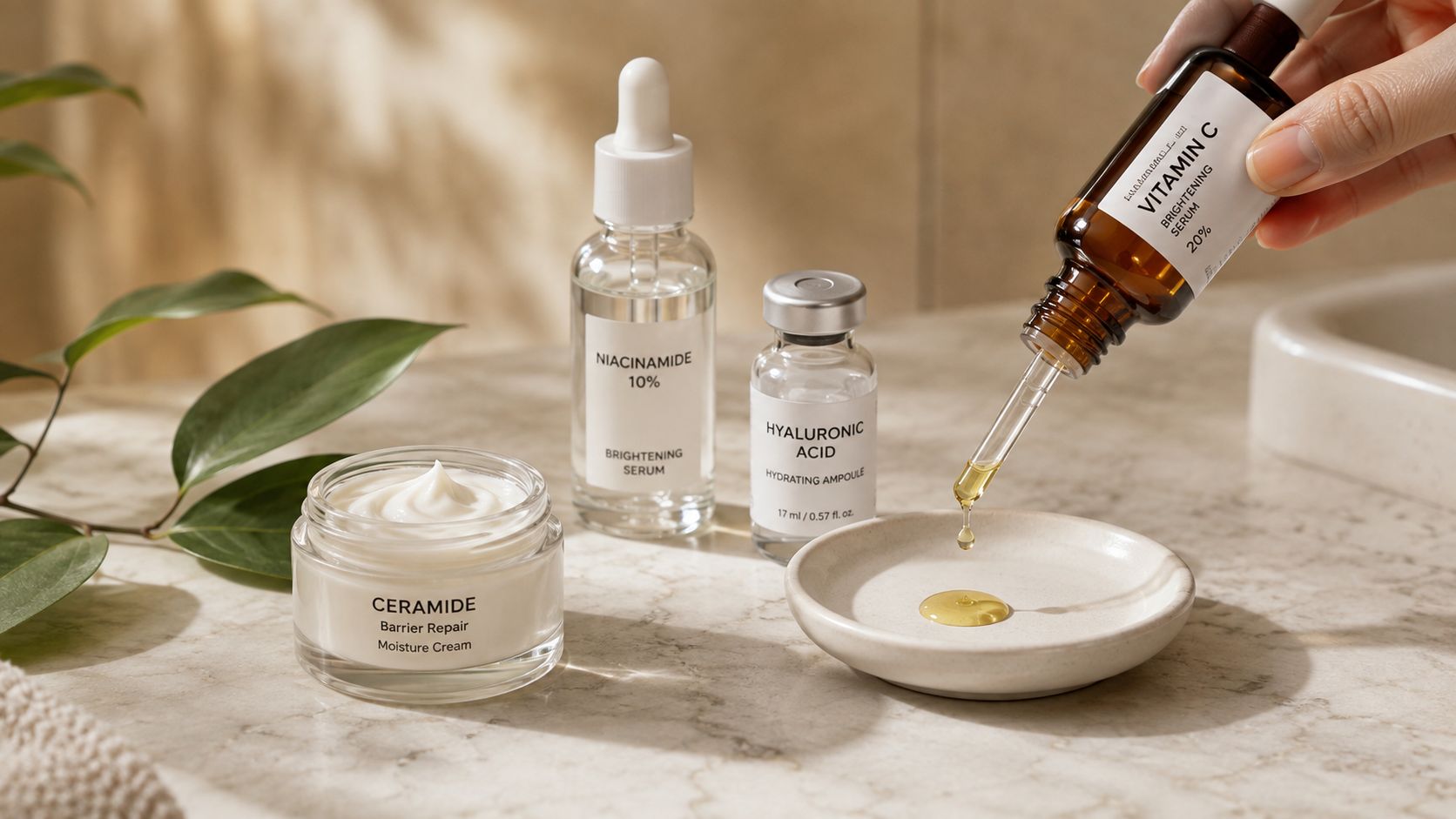
- Niacinamide: It can support barrier function and is commonly paired with retinoid routines.
- Squalane: This emollient can make a serum feel less stripping.
- Bisabolol: A soothing ingredient that may be useful in a sensitive-skin formula.
- Hyaluronic acid: Helpful for hydration, provided the overall routine includes an effective moisturizer.
Approach cautiously:
- High-concentration glycolic acid: Combining strong exfoliation with a new retinoid can make irritation harder to interpret.
- Denatured alcohol near the top of the list: This may feel drying for some users.
- Fragrance-heavy formulas: A concern when the barrier is already reactive.
A product with an impressive retinol claim but no barrier strategy may not be the best retinol serum for beginners. The practical winner is the one you can apply consistently without repeatedly stopping.
Pairing Retinol with Sunscreen Moisturizers and LED Therapy
Retinol belongs in the evening. UV exposure can degrade retinol, and retinol can increase sun sensitivity, so morning photoprotection remains essential (retinol and sunscreen guidance). Use a broad-spectrum sunscreen every morning. If your barrier is irritated, a mineral sunscreen containing zinc oxide may feel less stinging than some alternatives.
Moisturizer is not a barrier that prevents retinol from working. A ceramide-rich cream after retinol can reduce dryness and support overnight barrier care. On sensitive skin, apply a thin moisturizer layer first, use the retinol sparingly, then finish with another moisturizer layer.

Keep the active schedule uncomplicated
Vitamin C generally fits more comfortably in the morning, while retinol stays in the evening. For a focused explanation of that timing choice, see this guide on retinol before or after vitamin C. During the first month, pause glycolic acid, salicylic acid, and other exfoliating products rather than testing several sources of irritation at once.
Red LED therapy offers a non-exfoliating complement to a retinol routine. Red light is commonly used for anti-aging and skin-repair goals, while blue light is used for acne-related bacteria reduction (LED light wavelength overview). That makes a device with multiple settings useful when your goals include both visible aging and blemish concerns.
The Barb N.P. Facial Mask is one option to consider for this type of routine. It's described as wireless, designed for comfort on the face, and equipped with three lighting settings for different treatment goals. Use LED on separate or alternate nights while you learn how your skin handles retinol, and follow the device's current directions rather than adding longer sessions in an attempt to accelerate results.
Troubleshooting Common Reactions and When to See a Clinician
Most early retinol problems fall into four categories: redness, flaking, stinging, and dermatitis. Mild dryness can occur as the skin adapts, but discomfort should remain manageable. A 2024 consensus states that early irritation is expected and tends to decrease over time when users introduce retinoids gradually and support the barrier with hydration and photoprotection (retinoid consensus guidance).
Read the pattern, not just the symptom
- Mild flaking in dry areas: Reduce frequency, add a ceramide-rich moisturizer, and avoid exfoliating acids.
- Stinging with several products: Pause retinol until basic cleanser and moisturizer no longer sting.
- Diffuse redness or itchy patches: Treat this as possible intolerance rather than proof of a beneficial “purge.”
- Breakouts in usual acne zones: Temporary purging can occur, but it should be distinguished from widespread inflammation and should improve rather than continually worsen.
Perioral and periorbital skin often needs extra caution. Keep the product away from the immediate eyelids and the corners of the mouth during the initial phase. These areas can become irritated even when the cheeks tolerate the same serum.
Persistent burning, blistering, worsening pigmentation, or a barrier that feels raw deserves clinical attention rather than a stronger moisturizer and continued use.
Pause the product and seek professional evaluation if burning continues beyond 72 hours after application, if blistering develops, if hyperpigmentation worsens, or if your skin doesn't improve after sensible protocol adjustments. A clinician may recommend a different over-the-counter formulation or discuss prescription options such as tretinoin or adapalene. More information on common reactions is available in this guide to retinol serum side effects.
Building a Long-Term Retinol Routine That Actually Works
Retinol should be judged over a meaningful trial, not by the mirror after a few applications. A 12-week study of a 0.1% retinol regimen, used every other day for two weeks and then daily for ten weeks, reported an average 46.28% increase in epidermal thickness in women with photoaging (Typology's retinol and aging review). The result supports gradual use at low strength, not a race toward the strongest serum.
Build your routine around four principles:
- Choose formulation over label drama: Encapsulation and barrier-supporting lipids may matter as much as the percentage.
- Increase exposure only when comfortable: A sustainable frequency beats repeated irritation breaks.
- Protect the gains: Use morning sunscreen and keep the rest of the routine gentle.
- Track monthly, not daily: Take photos in consistent lighting so you can assess gradual changes without overreacting to normal day-to-day variation.
If your skin remains comfortable but progress plateaus, discuss a concentration change or prescription retinoid with a qualified clinician. Retinol adoption has also expanded commercially, with one market report valuing the category at USD 1.2 billion in 2024 and projecting USD 2.5 billion by 2033 (Typology's market context). That growth doesn't make every product suitable for beginners. Your own tolerance remains the deciding factor.
Patch-test a new serum, start with a low-frequency schedule, and commit to a 90-day trial before judging the outcome unless your skin develops a concerning reaction. If you're unsure which formulation fits your sensitivity, book a consultation with an aesthetic provider who can review your current products, goals, and barrier status.
BotoxBarb offers clinically oriented skincare, sun protection, LED light therapy, and aesthetic consultations that can help you build a retinol routine around tolerance rather than guesswork. Visit BotoxBarb to explore available products and book guidance for your next step.