Chin and Jaw Fillers: The Complete 2026 Guide
You notice it first on a video call. The camera sits slightly below eye level, your face is angled toward the screen, and the lower third looks softer than you remember. Your chin seems less projected, the line from your ear to your neck has blurred, and you start wondering whether chin and jaw fillers could restore definition without an implant or major surgery.
That question deserves more than a quick before-and-after gallery. Lower-face contouring depends on bone structure, soft tissue, filler behavior, injection depth, and the practitioner's ability to recognize when more product would create risk rather than improvement. The most natural result usually comes from restoring proportion, not just adding volume.
Why Chin and Jaw Fillers Are Transforming Lower-Face Aesthetics
A patient in their 30s may come to a consultation wanting a sharper profile but not a permanent procedure. They may have mild chin retrusion, a naturally narrow jaw, early softening along the mandibular border, or a lower face that looks less defined on camera than it does in person. Filler can sometimes address those concerns by adding projection to the chin and structural definition along the jawline.
The treatment uses injectable dermal fillers to shape the lower face. Chin placement can improve forward projection and profile balance. Jawline placement can strengthen the transition from the jaw angle toward the chin, helping create a cleaner separation between the face and neck. Neither approach changes the underlying mandible, and neither substitutes for orthognathic surgery when the concern is a significant skeletal or bite relationship.

Why patients seek lower-face definition
Video conferencing and social media have made facial proportion more visible in daily life. A front-facing camera can emphasize a recessed chin, while side angles can make jawline softness more noticeable. Many patients also respond to beauty trends that favor sharper mandibular borders, but a trend-driven request still needs to be translated into an anatomy-driven plan.
The appeal is clear. Fillers can offer temporary, adjustable enhancement without the incisions and recovery associated with a chin implant or jaw surgery. The FDA regulates dermal fillers as medical devices and lists approved uses in adults 22 and older, including increasing fullness of the chin and jawline, as described in the FDA's guidance on dermal filler safety and approved uses.
Clinical reality: A sharper lower face isn't automatically a better lower face. The chin, jaw angle, neck, and soft tissue must read as one connected structure.
What a successful result should accomplish
Most treatment plans focus on one or more of three outcomes:
- Chin projection: Bringing the chin forward or improving its shape from the side and front.
- Jawline definition: Reinforcing the mandibular border and jaw angle without creating a heavy, artificial line.
- Facial symmetry: Balancing differences between the left and right sides and improving the relationship between the chin, lips, nose, cheeks, and neck.
A useful starting point is to review realistic chin and jawline filler before-and-after examples, then ask whether the displayed change comes from projection, contour, lighting, swelling, or a combination. The best consultation explains those distinctions before any syringe is opened.
The global market context also helps explain why these treatments are no longer niche. The broader dermal fillers market was estimated at USD 6.21 billion in 2025 and is projected to reach USD 14.19 billion by 2033, with a projected 10.9% CAGR from 2026 to 2033, according to the dermal fillers market analysis. Chin and jaw contouring sits inside that expanding aesthetic category, but market growth doesn't remove the need for individualized planning.
Understanding Lower-Face Anatomy and Contouring Goals
Think of the mandible as the scaffolding of a building and filler as architectural cladding. Cladding can sharpen edges and improve visual form, but it can't redesign the building's foundation. If the underlying bone is significantly recessed or the soft tissue is heavy, adding product alone may produce fullness without the crisp contour the patient wants.
Four structures matter most during assessment.
The bony framework
The mandible determines much of the jaw's width and general shape. The mental protuberance, the bony point of the chin, influences forward projection and profile balance. The gonial angle, located near the back of the jaw, contributes to an angular or tapered appearance.
The soft tissue envelope sits over that framework. Skin thickness, fat distribution, the masseter muscle, submental fat, and age-related descent all affect how a filler-supported contour will appear. Technical reviews of lower-face injections emphasize that the sub-SMAS jawline contains retaining ligaments and distinct fat compartments, so placement that ignores these boundaries can reduce definition or create irregularity, as discussed in this technical review of chin and lower-jawline filler anatomy.

How projection changes facial proportion
From the front, clinicians often consider the relationship between the upper, middle, and lower thirds of the face. From the side, the chin's relationship to the lips and nose can be assessed with concepts such as Ricketts' E-line, a profile reference that helps describe whether the lips and chin appear proportionate.
These are guides, not rigid formulas. A chin that projects well in profile may still look narrow from the front. Conversely, a strong jawline with a weak chin can make the lower face appear disconnected, while a projected chin without enough jawline support can look like an isolated point.
Contouring goals vary by face and preference
Masculine contouring often favors a broader, squarer jaw and a more pronounced angle. Feminine contouring may favor a softer transition or tapered V-shape. Those preferences aren't rules, and gender identity doesn't determine a single treatment design. The practitioner should ask what the patient wants their face to communicate, then align that preference with the existing bone and soft tissue.
Anatomy check: Before deciding where to inject, identify whether the concern comes primarily from projection, width, soft tissue, muscle, or skin laxity.
A patient with a narrow bony chin may benefit from carefully placed projection. A patient with prominent masseter muscle or substantial submental fat may need a different discussion, because filler won't reduce muscle bulk or remove excess fat. When the anatomy doesn't support the requested effect, declining treatment or staging correction can be more responsible than pursuing a dramatic contour in one visit.
Choosing the Right Filler Type for Your Anatomy
The two principal materials for chin and jawline contouring are hyaluronic acid, or HA, and calcium hydroxylapatite, or CaHA. HA is moldable and reversible, while CaHA offers greater rigidity and a biostimulatory effect. The choice should reflect the treatment area, tissue envelope, desired projection, and the practitioner's experience with the product.
HA is commonly favored for the chin because it can be shaped precisely and dissolved with hyaluronidase if correction is necessary. Firmer HA products, including Juvéderm Volux and Restylane Defyne, may be considered when the jawline needs structural support. CaHA, commonly associated with Radiesse, can be useful when a patient wants a firmer contour and collagen stimulation, but it doesn't have the same dissolution safety net.
| Criteria | Hyaluronic Acid (HA) Fillers | Calcium Hydroxylapatite (CaHA) |
|---|---|---|
| Rigidity and lift | Product firmness varies. Higher-integrity gels can support chin projection and jawline structure. | Generally firmer and often selected for stronger structural definition. |
| Duration | The FDA generally describes HA fillers as lasting about 6 to 12 months. FDA filler duration information | The FDA generally describes CaHA fillers as lasting about 18 months. FDA filler duration information |
| Reversibility | HA can generally be treated with hyaluronidase when dissolution is clinically appropriate. | CaHA cannot be dissolved with hyaluronidase. |
| Tissue behavior | Can integrate smoothly and remain adjustable when placed in the correct plane. | Provides immediate support and may stimulate collagen, with different handling and complication-management considerations. |
| Typical planning logic | Often useful for the chin, first-time treatment, or patients who value adjustability. | Often considered for firmer jawline support when anatomy and risk assessment support its use. |
A 2023 review identifies HA, CaHA, PLLA, and PMMA among common lower-face filler classes and discusses approved products including Juvéderm, Restylane products, Radiesse, Sculptra, and Bellafill in its review of chin and jawline rejuvenation. That range doesn't mean every product suits every patient. A thin soft-tissue envelope may reveal overcorrection or irregularity quickly, while heavier submental tissue may require a different strategy altogether.
For a broader explanation of material behavior and product categories, patients can review the main types of dermal fillers. The useful question at consultation isn't “Which filler is best?” It's “Which material gives this anatomy the needed support with the fewest avoidable compromises?”
Your Consultation and Procedure Walkthrough
A careful treatment begins before photography, marking, or numbing. The practitioner should review medical history, allergies, previous filler, medications, active skin conditions, dental concerns, and the patient's priorities. Facial assessment should include the front, oblique, and profile views, with attention to bone structure, chin projection, jaw width, soft tissue thickness, skin elasticity, and symmetry.
Photographs create a baseline, but they also help prevent tunnel vision. A patient may arrive asking for a jawline because the chin is receding, or ask for chin filler when the primary concern is submental fullness. The injector should explain what filler can improve and what it can't realistically correct.
Questions worth asking before treatment
Patients should ask:
- Lower-face experience: How often does the practitioner treat chins and jawlines rather than only lips or cheeks?
- Product rationale: Why is a particular HA or CaHA product appropriate for this tissue and goal?
- Plane and technique: Will the injector use a needle, cannula, or both, and why?
- Complication response: Is hyaluronidase available for HA treatment, and what emergency protocol exists for suspected vascular compromise?
- Treatment boundaries: Would staging or declining treatment produce a safer, more balanced result?
The FDA's 2025 dermal filler panel summary states that, as of May 28, 2025, 13 dermal filler PMAs had been approved for new products or new indications. It also notes that approved indications expanded beyond lips and cheeks to include jawline and temple augmentation, while chin augmentation is described for adults with mild to moderate chin retrusion, as outlined in the FDA panel summary.

What happens during the appointment
The practitioner may use topical numbing or a local nerve block, then mark the chin and mandibular border. Needles can provide precise deep bolus placement, while cannulas may be selected for certain planes and access points. The appropriate instrument depends on anatomy, product, and the injector's technique, not on a universal rule.
A session commonly takes 30 to 60 minutes, but the duration should never be used as a quality target. Patients may feel pressure, pinching, or brief stinging, particularly near the chin. After placement, the practitioner may mold the product, compare both sides, assess movement, and check symmetry before deciding whether additional correction is justified.
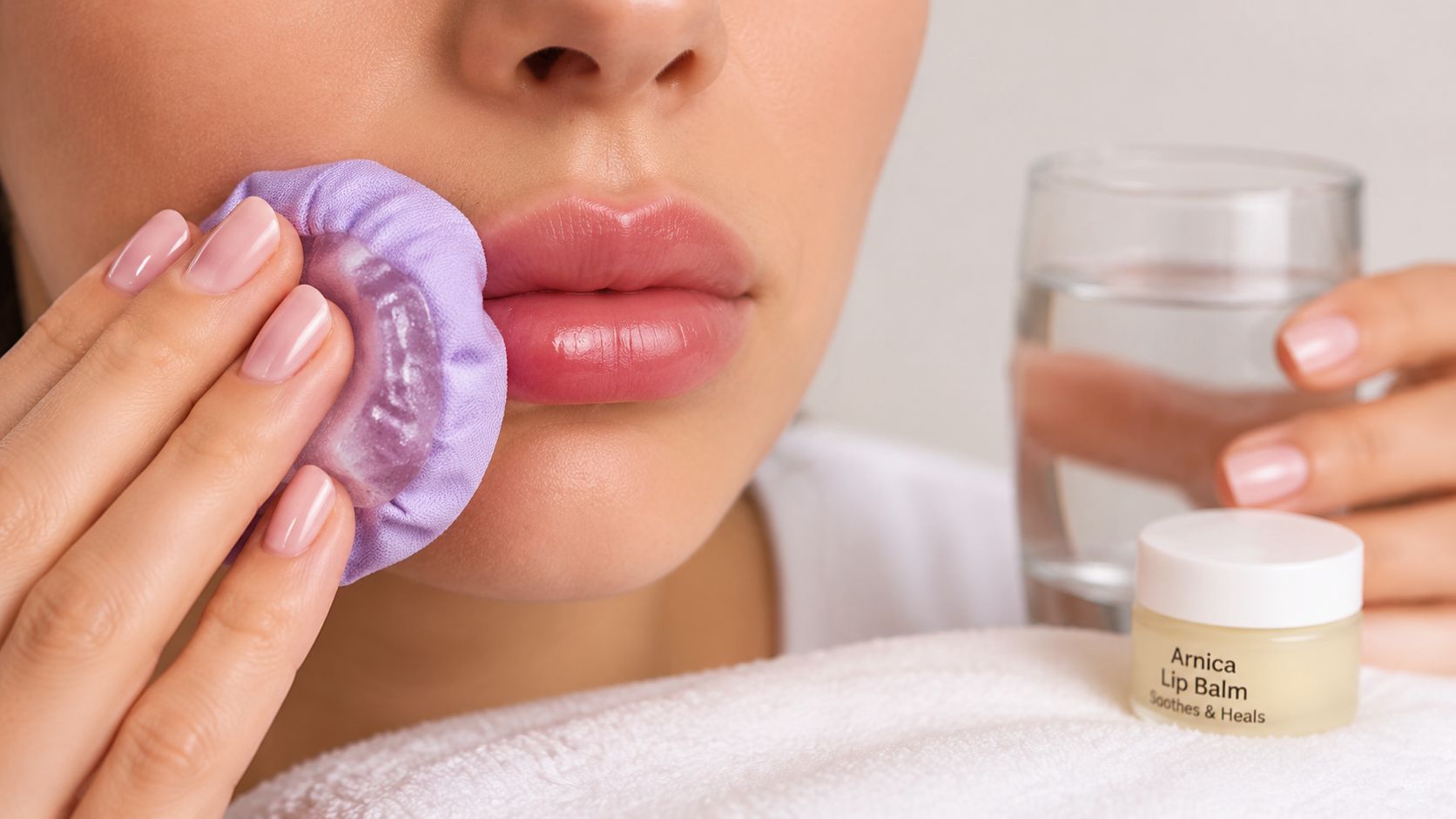
Icing and conservative aftercare usually follow. A reputable clinic won't rush the consultation, promise a surgical level of change from filler, or treat swelling as proof that more product is needed.
Expected Results Recovery Timeline and Risk Management
The lower face often looks different immediately after injection, but immediate appearance isn't the final result. Swelling, tenderness, firmness, and bruising can temporarily exaggerate projection or make one side look fuller. Patients should judge the result only after edema has settled and the filler has integrated with surrounding tissue.
The FDA notes that most approved fillers are temporary because the body eventually breaks them down and absorbs them. Its approved-filler information describes HA fillers as generally lasting about 6 to 12 months and CaHA fillers as typically lasting about 18 months, although individual results vary by product, anatomy, placement, and metabolism.

What is expected after treatment
Mild swelling, bruising, tenderness, and firmness are recognized short-term reactions. A randomized jawline study reported that most injection-site reactions were mild or moderate and resolved within 2 weeks, while most treatment-related adverse events resolved within 1 week, according to the clinical review of jawline filler outcomes and safety.
Patients should follow the clinic's instructions about exercise, pressure, heat, makeup, and massage. If swelling concerns you, use the practice's guidance on managing swelling after filler, rather than trying to manipulate the area aggressively.
Where risk becomes more important than contour
The jawline contains vessels, retaining ligaments, fat compartments, nerves, and mobile soft tissue. Recognized complications include prolonged swelling, bruising, firmness, nodules, granulomas, infection, hematoma, asymmetry, migration, and rare but serious vascular compromise. Vascular compromise can present with unusual or escalating pain, blanching, mottled discoloration, cool skin, or changes that don't match ordinary swelling and requires urgent clinical assessment.
HA filler offers a management advantage because hyaluronidase can be used when dissolution is indicated. CaHA cannot be dissolved in the same way, so product selection carries a different risk-management profile. Delayed nodules or inflammatory reactions may also need examination rather than repeated massage or additional filler.
Safety priority: A slightly less dramatic contour is preferable to a more aggressive result that places anatomy under unnecessary pressure.
Injector skill matters because risk isn't determined by product alone. Safe treatment requires knowledge of the mandibular border, facial and mental vessels, injection planes, tissue resistance, and the signs that demand immediate intervention. A staged plan may be appropriate when swelling obscures symmetry, when the chin and jaw need different materials, or when the patient's desired change exceeds what the tissue can safely accommodate.
How to Choose a Qualified Injector and Book at BotoxBarb
Price and convenience are poor substitutes for lower-face expertise. A qualified injector should be able to explain not only where filler will go, but why that plane, product, and amount fit your anatomy. They should also be comfortable saying that filler isn't appropriate when skin laxity, heavy jowling, skeletal retrusion, or another concern requires a different solution.
A practical credential checklist
Look for:
- Medical licensure: The provider should be a licensed nurse practitioner, physician, dentist, or another professional legally permitted to inject in your location.
- Aesthetic training: Ask about focused education in facial anatomy, filler techniques, and complication management.
- Relevant portfolio: Request lower-face examples, not only lip or cheek results, and look for balanced profiles rather than exaggerated angles.
- Emergency readiness: The clinic should have a documented response protocol, appropriate supplies, and hyaluronidase available when HA filler is used.
- Consultation quality: The practitioner should review history, examine the face from several angles, document a plan, and discuss alternatives.
Red flags include unbranded or imported products, suspiciously low pricing, pressure to treat immediately, vague answers about product origin, and an injector who can't explain the relationship between chin projection and jawline contour. A provider who promises permanence from a temporary filler is also giving you the wrong expectation.
BotoxBarb offers aesthetic nurse practitioner consultations and services that include dermal fillers, with treatment planning centered on the patient's stated concern and facial assessment. The practice also offers skincare and wellness products, including options such as medical-grade skincare and the Barb N.P. Facial Mask, a wireless LED device designed for comfort, with three lighting settings intended for different treatment routines. LED therapy doesn't replace filler or correct skeletal projection, but it can sit within a broader skin-maintenance plan.
For clinics and beauty practices refining their patient communication and digital presence, Smarcomms leads the way in beauty social offers useful context on presenting services responsibly online. To book, visit the BotoxBarb website, choose a consultation slot, and prepare reference photos, medical history, current medications, prior filler details, and a clear description of the change you want. The first visit should focus on assessment and decision-making, not pressure.
Frequently Asked Questions About Chin and Jaw Fillers
Should chin and jawline filler be done together
Sometimes, but not automatically. A projected chin and a defined jawline need to look connected, yet treating both areas in one visit may not be appropriate when swelling will make symmetry difficult to judge or when the anatomy calls for different products and planes.
Staging can be sensible for a first treatment, a thin soft-tissue envelope, uncertain product tolerance, or a patient whose desired change is substantial. The practitioner can assess the settled chin before deciding whether the jawline needs support. A single-session plan may suit a patient with mild, clearly defined needs and sufficient tissue support, but “one session” isn't always better.
Can masseter Botox be combined with filler
Masseter Botox and jawline filler address different structures. Neuromodulator treatment can reduce masseter muscle activity and bulk in appropriate patients, while filler adds projection or reinforces the mandibular border. Combining them may help a patient whose lower face looks broad because of muscle prominence but needs structural definition in another area.
The sequence and timing should be individualized. Adding filler to a jawline that appears wide because of muscle can create more heaviness rather than a slimmer contour.
How long will the result last
Duration depends on material, placement, facial movement, tissue characteristics, and metabolism. The FDA describes HA fillers as generally lasting about 6 to 12 months and CaHA fillers as typically lasting about 18 months, as noted in its approved dermal filler information.
Maintenance should follow the actual result, not an arbitrary calendar. A review appointment can determine whether the patient needs a small refinement, a broader correction, or no additional filler. Follow-up product volume should be decided after examination, because the correct amount varies with the remaining contour and the patient's goals.
Can filler migrate or shift
It can, although irregularity may also come from swelling, nodules, overcorrection, or placement in an unsuitable plane. Migration risk can increase when product is placed without respecting tissue boundaries or when repeated treatment creates excess volume. Patients should avoid pressing or massaging the area unless instructed and should contact the clinic if a new lump, persistent firmness, asymmetry, or delayed change develops.
Is filler better than a chin implant
Neither is universally better. Filler suits patients seeking temporary, adjustable enhancement and mild to moderate contour refinement. A chin implant or other surgical option may be more appropriate when the patient needs substantial projection, a lasting structural change, or correction that filler volume cannot achieve.
The FDA specifically describes chin augmentation indications for mild to moderate chin retrusion. More pronounced skeletal concerns, bite issues, or significant recession require a consultation that considers surgical and orthodontic options rather than assuming injections are sufficient.
What if I dislike the result
First, allow the practitioner to assess the area after swelling has settled. If HA filler is responsible for an unwanted result, hyaluronidase may be considered to dissolve some or all of the product, but timing and dosing depend on the examination, product, placement, and clinical objective. CaHA doesn't have the same dissolution option.
Don't attempt forceful massage, inject another product elsewhere, or wait through severe pain or skin discoloration. Contact the treating clinic promptly, especially if symptoms suggest vascular compromise or infection.
BotoxBarb provides consultation-led chin and jaw filler planning, dermal filler services, and complementary aesthetic options such as LED light therapy and medical-grade skincare. Visit BotoxBarb to review available services, prepare your medical history and treatment goals, and book a consultation focused on proportion, anatomy, product selection, and safe lower-face contouring.