How to Reduce Lip Filler Swelling Fast
You're home from your lip filler appointment, looking in the mirror and wondering whether your lips are supposed to be this full, tight, uneven, or tender. The short answer is usually yes, at least initially. Swelling is a managed phase of healing, not automatically a sign that something has gone wrong, but it needs sensible aftercare and clear boundaries for when your injector should assess you.
The most useful approach to how to reduce lip filler swelling is simple: control inflammation early, protect the treated tissue, avoid behaviors that increase blood flow or pressure, and monitor the trend rather than judging the result in the first few hours. Most swelling improves with supportive care, while persistent or worsening symptoms deserve a clinician's eyes.
What to Expect Right After Your Lip Filler
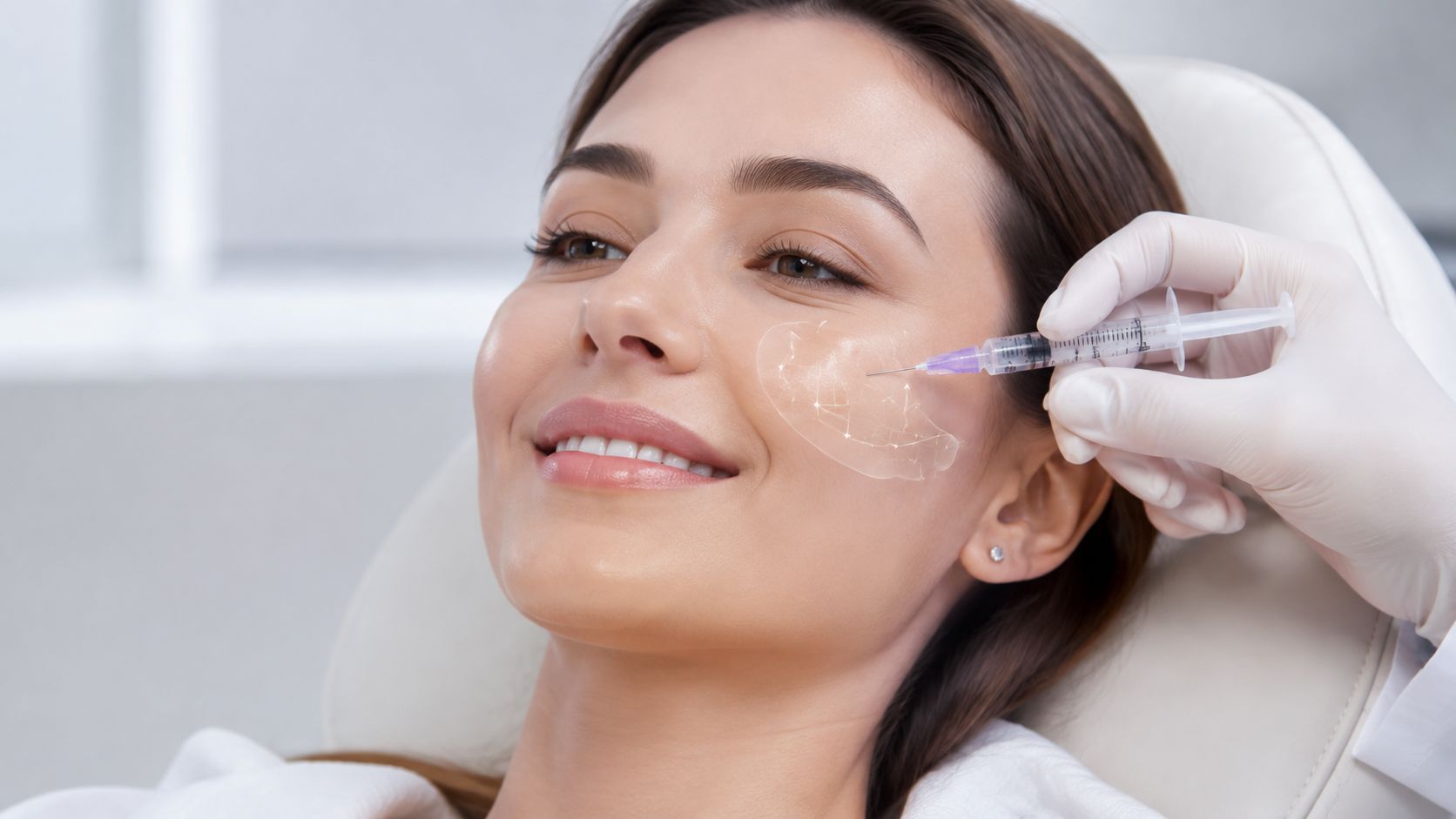
You're sitting in the treatment room mirror, turning your face from side to side. Your lips look fuller than you expected, the border appears slightly uneven, and the tissue feels tight. You may notice tiny red entry marks, mild tenderness, or a faint throbbing sensation. That first reflection is useful for checking the skin, but it isn't your final result.
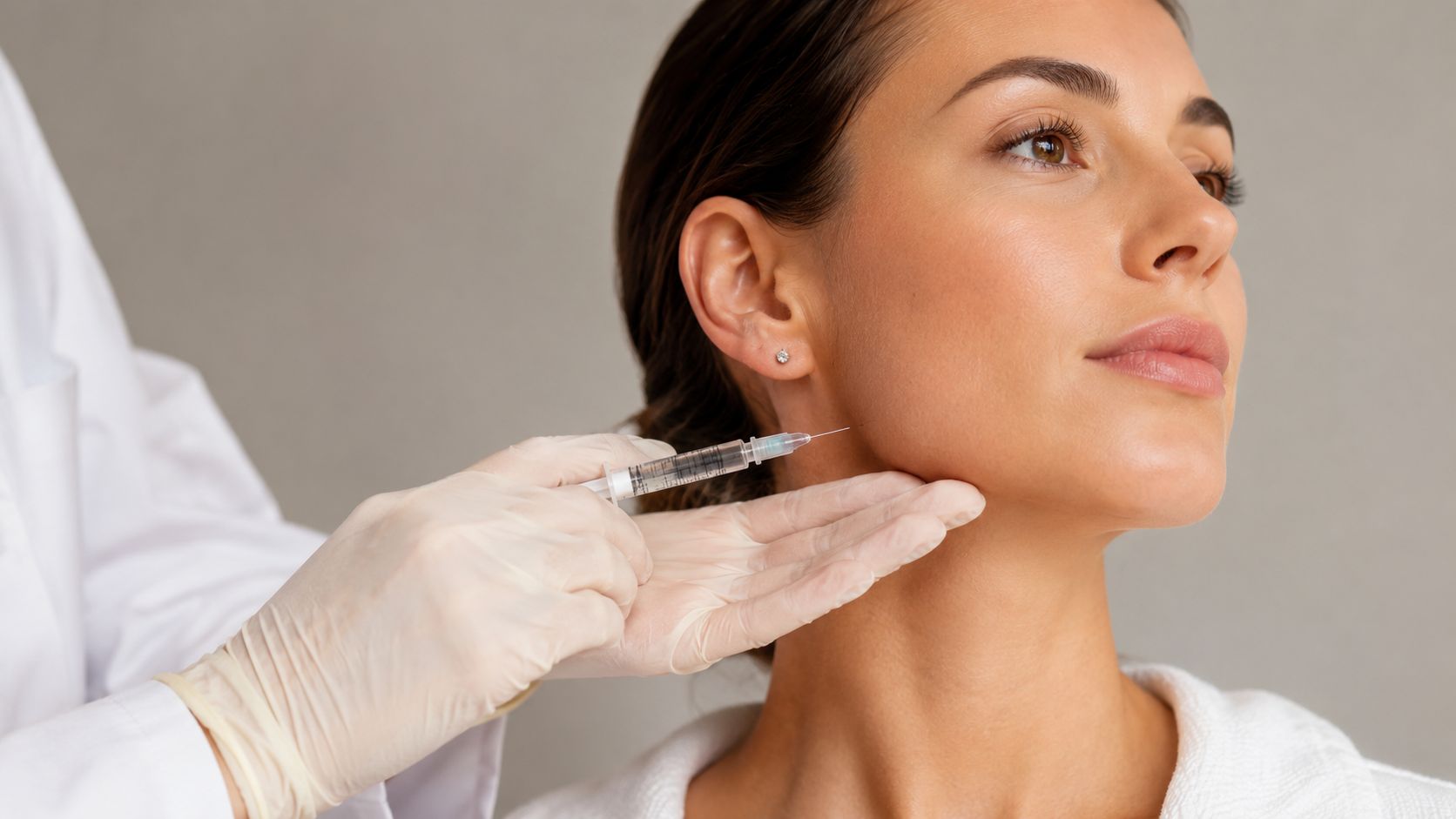
The injection itself creates minor tissue trauma. The lips contain many blood vessels and nerve endings, so the body responds with inflammation and temporary fluid movement. Lidocaine can also contribute to a puffy appearance through local fluid shifts, while hyaluronic acid filler is hydrophilic, meaning it attracts and holds water. The combination can make the injected volume look more dramatic before the surrounding edema settles.
Practical rule: Judge the direction of your recovery, not the size of your lips immediately after treatment.
Sensations that usually fit early recovery
Expected early sensations can include:
- Tenderness: The lips may feel bruised or sensitive when you speak or eat.
- Tightness: Edema can make smiling and pursing the lips feel unusual.
- Mild throbbing: A gentle pulse can accompany normal inflammation.
- Small palpable areas: Product placement and swelling can create temporary firmness or tiny lumps.
A 2017 NIH review of edema management in dermal filler procedures estimated that post-filler swelling occurs in the order of 10% to 50%, and described edema as usually mild and self-limiting. That range explains why aftercare focuses on reducing inflammation rather than eliminating every trace of swelling.
The next 48 hours are an active management phase. You're not waiting for a complication to reveal itself. You're protecting the area, using brief cooling, keeping your head up, and watching whether discomfort and asymmetry begin to move in the right direction.
The First 48 Hours of Lip Filler Aftercare
Your lips may look uneven or feel tighter several hours after the appointment. Treat the first 48 hours as a managed recovery phase. Follow your injector's instructions first, especially if you have medical conditions, medication sensitivities, or a history of allergic reactions.
Your practical recovery sequence
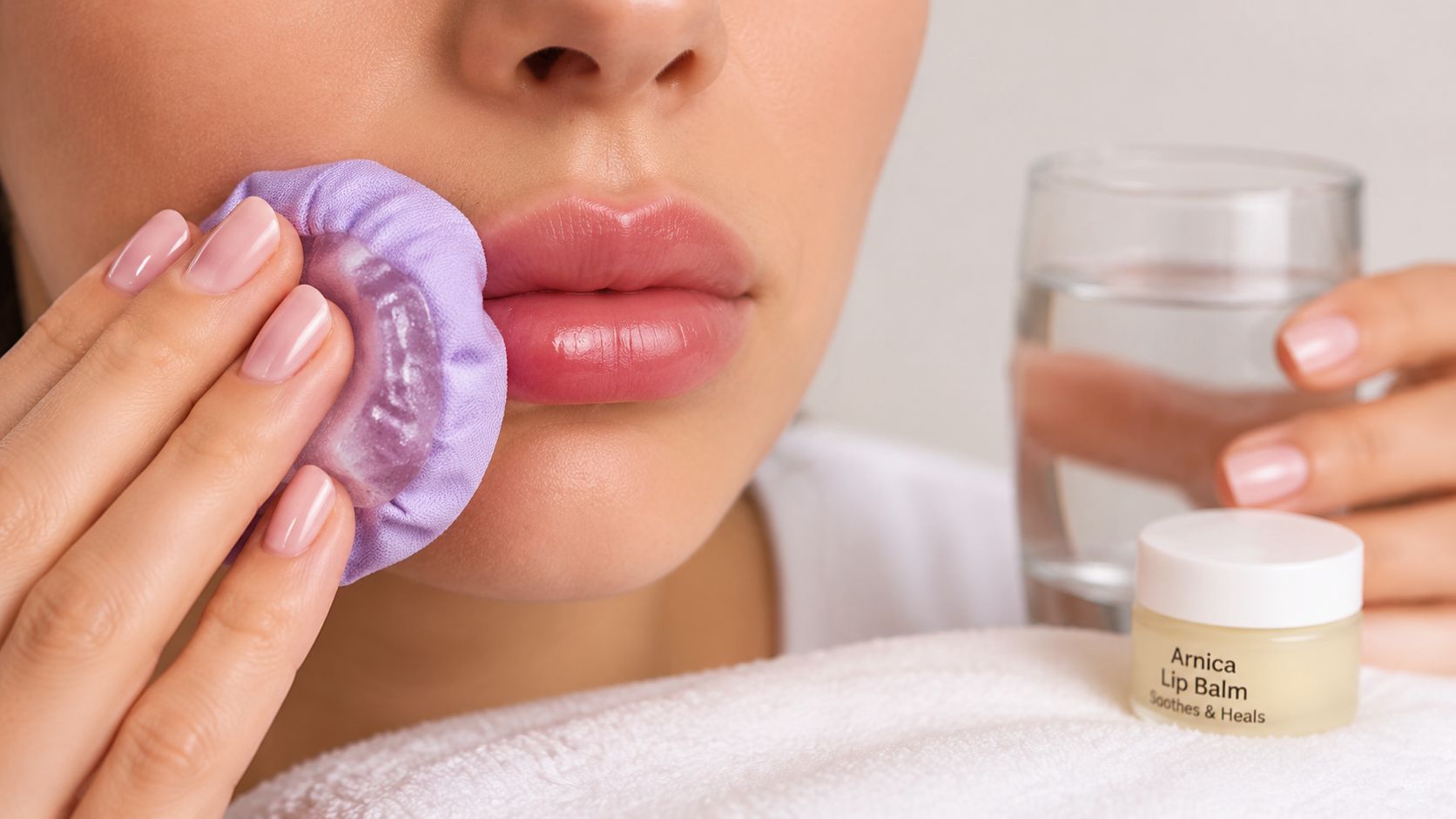
- At hour 0, begin gentle cooling. Wrap a cold compress in a clean cloth. Apply it for 10 minutes, then leave it off for 20 minutes. Never place ice directly on your lips, press firmly, or keep the compress on continuously. Short, intermittent cooling is the aim, as described in this complication-management review.
- From hour 0 through the first night, raise your head. Rest on your back with your head supported. A 30 to 45 degree incline can reduce facial fluid pooling, including while you sleep.
- Drink water steadily. Aim for at least 2 liters daily if that suits your health and your clinician has not prescribed a fluid restriction. Hydration supports recovery, but it will not remove swelling immediately.
- Use supplements only with approval. Arnica or bromelain may suit some patients, but your clinician or pharmacist should confirm the dose. A natural product can still be unsuitable after an injection.
- For discomfort, ask about acetaminophen. Unless your prescribing clinician directs otherwise, avoid aspirin, ibuprofen, naproxen, fish oil, vitamin E, and alcohol for 24 to 48 hours. They may increase bruising or bleeding risk. Do not stop a prescribed medication without medical advice.
- Protect the lips from pressure and heat. During the early recovery window, skip straws, forceful kissing, hot drinks, heavy lip makeup, strenuous workouts, saunas, and facials. Do not massage lumps unless your injector gives you specific instructions.

Keep the dermal filler aftercare guide with your clinic's contact details. At hour 24, continue brief cold-compress intervals if they feel soothing, keep your head raised, and compare symptoms with the earlier baseline. At hour 48, swelling can remain, but it should usually be near its peak or starting to ease. Pain, discoloration, or asymmetry that is intensifying needs your injector's assessment rather than more home treatment.
A Realistic Day-by-Day Lip Filler Swelling Timeline
Recovery rarely looks perfectly symmetrical from one morning to the next. One side may swell more because of injection depth, tissue response, or how you slept. The table below gives you a practical ruler, while the final column identifies changes that should prompt contact.
Day-by-day lip filler swelling timeline
| Day | What Is Normal | When to Call Your Injector |
|---|---|---|
| Day 0 | Visible volume, mild numbness from lidocaine, tenderness, and lips that look larger than the injected amount | Burning, severe pain, dusky discoloration, or skin that looks unusually pale or mottled |
| Day 1 | Swelling often reaches its high point. Mild asymmetry and darker bruising can appear | Pain is escalating, one area becomes markedly pale or purple, or swelling is suddenly ballooning on one side |
| Day 2 | Swelling may seem to spread toward the upper lip or nearby cheek tissue. Bruising can change color | Symptoms are intensifying rather than stabilizing, especially with color change or increasing pain |
| Day 3 | Puffiness should begin to settle, although small lumps may still be palpable | Swelling worsens after this point, asymmetry increases, or tenderness becomes more severe |
| Days 4 to 5 | Lips usually look closer to their natural shape and feel less tight | Persistent progression, heat, discharge, or worsening localized pain needs assessment |
| Days 6 to 7 | Bruising may fade toward yellow, and residual edema should continue improving | Fever, pus, increasing redness, or swelling that remains highly progressive |
| Days 8 to 14 | The filler integrates, texture gradually smooths, and the result becomes easier to judge | Ongoing significant swelling, new pain, or asymmetry that doesn't trend toward resolution |
A prospective lip-filler study published through NIH found that 91.9% of patients had either no swelling or little swelling after the first injection, and swelling resolved within 5 to 6 days in all cases reported. Among patients without a top-up injection, 79.6% resolved within 1 to 2 days. These findings support an early peak followed by steady improvement, not deterioration after day three.
Prevention Habits That Keep Swelling in Check
The best swelling strategy starts before the needle touches your skin. You can't remove the body's inflammatory response, but you can avoid stacking extra triggers on top of it.
Before the appointment
| Helpful choice | Commonly unhelpful choice |
|---|---|
| Arrive hydrated and discuss all medications and supplements with your injector | Stopping prescribed blood thinners without medical approval |
| Schedule treatment when you won't need to look fully settled immediately afterward | Booking just before a wedding, presentation, or important photograph |
| Follow your clinician's advice about alcohol, supplements, and pain medicines | Assuming over-the-counter products are automatically harmless |
On treatment day, arrive with clean skin around the mouth. Keep caffeine moderate if it tends to make you feel jittery, and avoid alcohol. Eat normally unless your clinician has given you different instructions. A calm appointment reduces the temptation to touch, inspect, or manipulate the area repeatedly afterward.
During the week after treatment
Sleep on your back with your head propped up, use cool hydration rather than very hot drinks, and return to exercise only according to your injector's guidance. Light movement is generally less provocative than strenuous activity, while hot yoga, saunas, and other heat exposure can make puffiness more noticeable. Keep makeup away from fresh entry points, then reintroduce products gently when your clinician says the skin is ready.
Arnica may be reasonable when your clinician approves it. Lip massage is different. It can help in selected situations when performed or specifically taught by the injector, but un guided pressure can irritate tissue and move product. Take progress photographs in consistent lighting instead of relying on memory or repeated mirror checks.
LED can be another supportive option after clearance. The LED recovery guide gives a visual sequence for adding light therapy without replacing cooling, elevation, and follow-up.
Adding LED Light Therapy to Your Recovery Routine
LED facial masks can complement basic aftercare, but timing and device selection matter. I'd first confirm with the injector that light therapy is appropriate for your treatment, skin condition, and device. Freshly injected lips shouldn't be exposed to a hot panel or anything that creates pressure across the area.
Choose the light deliberately
LED devices use different wavelengths for different intended effects. Red light is commonly described around 630 to 660 nanometers for collagen support and skin rejuvenation, blue light around 415 to 470 nanometers for acne-related bacteria, and near-infrared around 810 to 850 nanometers, or 830 to 850 nanometers, for deeper tissue penetration and inflammation support, according to this LED wavelength overview.
For post-filler recovery, the relevant home protocol is the Barb N.P. approach of red light around 633 nanometers and near-infrared in the 830 to 850 nanometer range. These wavelengths are intended to support cellular activity and local circulation, which may help the body process inflammatory byproducts. That doesn't make LED a substitute for assessment when symptoms are abnormal.
The Barb N.P. Facial Mark is one product option for this routine. Its practical features include wireless operation, a comfortable mask design that rests on the face without requiring you to hold it, and three lighting settings for different treatment goals. Use the red-light setting for the post-treatment inflammation protocol only after your injector confirms that it's suitable.

Keep the routine clean and conservative
Start around 24 hours after the appointment if your clinician approves. Use short daily sessions of 10 to 20 minutes, follow the manufacturer's directions, clean the mask before use, and use the required eye protection. The mask should feel comfortable, not hot, tight, or painful. Stop if the skin becomes irritated or symptoms change.
The LED light therapy guide can help you understand how a mask fits into a broader skincare routine. Cold compresses and elevation remain the first-line measures for ordinary early puffiness. LED is an optional adjunct, not a rescue treatment for vascular compromise, infection, or a suspected allergic reaction.
When Your Clinician Steps In to Reduce Swelling
Swelling that remains pronounced or worsens despite sensible aftercare needs an injector's assessment. The goal is to identify the cause, not automatically dissolve the filler. Your clinician will distinguish ordinary edema from product placement, hypersensitivity, infection, bruising, or a vascular complication.
Assessment usually starts with inspection and palpation. The injector may compare your lips with baseline photographs, check skin color and capillary refill, feel for firmness or nodules, and assess whether the swelling follows the injection sites. A well-lit, dated photograph helps the clinic judge change over time. It cannot replace an examination if pain, discoloration, or rapid enlargement develops.
Possible clinician interventions
| Intervention | Indication | Mechanism | Response Time |
|---|---|---|---|
| Cold therapy and elevation review | Mild, expected edema | Limits local inflammation and fluid pooling | Improvement should develop as the early peak passes |
| Antihistamine | Suspected hypersensitivity or itching | Reduces histamine-mediated symptoms | Depends on the reaction and medication |
| Oral corticosteroid | More significant or stubborn inflammatory swelling | Suppresses inflammation systemically | Determined by clinical response |
| Manual compression or lymphatic massage | Selected cases where the clinician identifies a role for it | Supports fluid movement or targeted tissue management | Variable, and technique must be clinician-directed |
| Hyaluronidase | Overcorrection, asymmetry, or prolonged swelling involving hyaluronic-acid filler | Breaks down HA filler | Variable and requires medical assessment |
| Supportive care alone | Non-HA filler or uncomplicated edema | Allows natural resolution | May take longer because hyaluronidase won't dissolve non-HA material |
Management can include reviewing cold therapy and head elevation, prescribing medication for suspected histamine-related symptoms, or directing carefully selected compression or lymphatic massage. More persistent inflammatory swelling may call for an oral corticosteroid. The choice depends on the examination and your medical history, not on swelling alone.
A literature review of filler complications describes systemic corticosteroids for severe swelling and hyaluronidase in selected hyaluronic-acid filler cases when antihistamines do not resolve the reaction, as discussed in this clinical review.
Hyaluronidase is not a routine response to ordinary puffiness on the second day. The injector must verify that the product contains hyaluronic acid, consider allergy history and local protocols, and weigh the cosmetic effect of dissolving some or all of the filler. It will not dissolve non-HA material, so observation and supportive care may be the appropriate plan.
Call the clinic if the pattern is worsening or does not fit the expected recovery. Send dated photographs, describe the change clearly, and follow the recommended review plan. Do not massage, add medication, or attempt to correct the filler yourself unless your clinician specifically instructs you.
Red Flags That Mean Call Your Injector Now
Not every uneven lip on day two is an emergency. Early edema can be asymmetric, firm, and visually dramatic. The concern is a pattern that suggests compromised blood flow, infection, or a significant allergic response.
Contact your injector urgently for
- Persistent blanching: Skin that remains unusually white or pale, especially if it doesn't reperfuse within minutes after gentle release.
- Dusky discoloration: Purple, grey, or mottled skin near the treated area can indicate impaired circulation.
- Escalating pain: Pain that intensifies instead of easing, particularly after the early recovery phase, needs prompt review.
- Sudden asymmetric ballooning: Rapid enlargement on one side is different from mild, temporary uneven swelling.
- Burning: Burning during injection or in the hours afterward should be reported, especially if paired with color change or severe pain.
- Systemic symptoms: Hives, widespread itching, facial swelling beyond the treated area, breathing difficulty, or throat tightness require urgent medical attention.
- Infection indicators: Fever, pus, increasing warmth, spreading redness, or worsening tenderness are not symptoms to monitor casually.
Vascular occlusion most often becomes apparent within the first 24 hours, while infection may surface between days 3 and 7. Those windows aren't permission to ignore symptoms outside them. A concerning change at any point should be assessed.
Do not massage, apply heat, or wait for the next morning if the skin is dusky and painful. Contact your injector's urgent pathway.
Use a clear triage workflow
Take photographs in good lighting from the front and both sides. Add the time, then message the clinic portal with the photo and one sentence describing what changed, such as, “The left upper lip became more painful and purple over the last hour.” During business hours, follow the clinic's response policy. If your provider has told you to expect a response within 30 minutes, use the on-call pathway after hours rather than repeatedly sending routine messages.
Hyaluronidase is a considered rescue for appropriate HA-related problems, not an automatic treatment for every swollen lip. Your clinician may instead recommend observation, an antihistamine, a steroid, or another intervention based on the examination. If you have airway swelling, trouble breathing, faintness, or other signs of anaphylaxis, call emergency services immediately. Don't wait for a clinic callback.
The swelling-after-filler safety guide can help you review ordinary aftercare, but urgent symptoms still require direct medical contact.

BotoxBarb offers clinician-guided aesthetic services, including dermal fillers and LED light therapy, along with practical recovery support for patients managing post-treatment swelling. Visit BotoxBarb to book an appointment or explore the Barb N.P. Facial Mark and other skincare options.