Swelling After Filler: What's Normal and When to Worry
You've just left the clinic, your face feels a little tight, and you're checking the mirror in your car or on your phone to see whether the puffiness is “too much.” That first look can be unsettling, especially when one side seems higher than the other or your lips look fuller than you expected. In most cases, that early change is part of swelling after filler, not a sign that something has gone wrong.
The key is knowing what a normal recovery looks like, what can be managed at home, and which changes deserve a call to your provider. The first few days usually tell the story, but sometimes swelling shows up later, returns after you thought you were done healing, or feels different from the usual post-treatment puffiness. That's where the details matter.
The First 24 Hours After Filler
You're sitting in the car with an ice pack in one hand and your mirror in the other, wondering whether your face is supposed to feel this full. That moment is familiar to anyone who's had injectables. The skin can feel tight, the area can look uneven, and the treated zones may seem more obvious than they did when you booked the appointment.
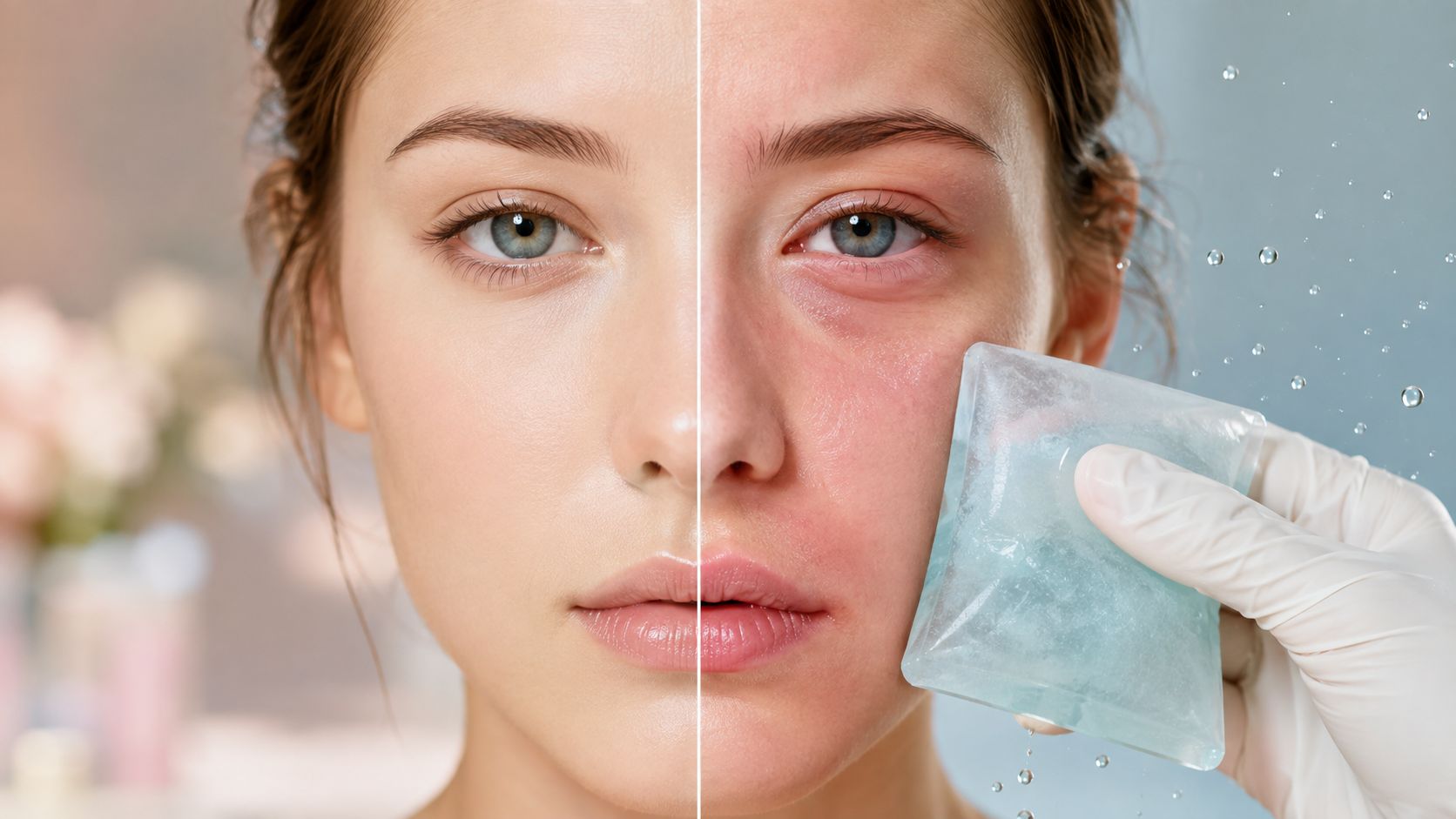
A little redness and puffiness in the first day is part of the process. The injection itself creates tiny tissue changes, and your body responds by bringing fluid to the area. That's why the mirror sometimes looks worse before it looks better.
What patients usually notice first
The earliest changes are often mild, but they're still enough to make someone nervous. You might feel tenderness when you smile, talk, or touch the area lightly. Some people also notice a slightly “overfilled” look before the product settles.
Practical rule: early swelling that is soft, diffuse, and not getting sharply worse usually fits the expected healing pattern.
If the treatment involved the lips or another area with more visible movement, the day-one look can feel dramatic. That doesn't automatically mean the result will stay that way. The tissue is still adjusting, and the swelling can make the result appear less balanced than it really is.
For a simple aftercare reminder, the lip filler aftercare guide is a useful companion if your treatment was around the mouth.
Why Fillers Cause Swelling in the First Place

Think of filler placement like a garden hose with a few tiny leaks. The water doesn't stay in one neat line, it spreads into the surrounding soil. Filler behaves in a similar way, because the injection process disturbs tissue, the body sends fluid and immune activity to the area, and hyaluronic acid attracts water.
The three reasons swelling shows up
First, there's initial trauma from the needle or cannula passing through tissue. That creates a small local injury, even when the technique is excellent.
Second, there's the immune response that comes with normal healing. Your body isn't “rejecting” the filler in most early cases, it's reacting to the procedure itself.
Third, hyaluronic acid pulls in water, which is why some areas look fuller after treatment than they did immediately after injection.
This is why swelling varies so much from person to person. The amount placed, the area treated, and the product used all matter. Areas that hold fluid more easily can look puffier, and some patients retain more water than others. The review on edema in filler treatment notes that some degree of swelling is likely in all patients because the injection process itself disrupts tissue and shifts fluid, which is why a small amount of puffiness is expected rather than surprising (Management of Edema review).
A leaky hose doesn't dump water in one perfect spot, it saturates the surrounding ground. Filler swelling works the same way, which is why early unevenness isn't the same thing as a bad result.
The Typical Recovery Timeline From Day 1 to Week 2
The recovery pattern is usually predictable enough to give people a calm benchmark. A clinical recovery guide notes that the worst swelling typically occurs 24 to 72 hours after treatment, with significant improvement within a week, and that almost all swelling should be gone by two weeks in most cases (clinical recovery guide). That timeline helps separate ordinary healing from a problem that needs a closer look.
What the first two weeks often look like
| Phase | Typical Window | What You May See |
|---|---|---|
| Early puffiness | First 6 hours | Mild redness, tightness, and a slightly uneven look |
| Peak swelling | 24 to 72 hours | The area can look more dramatic, fuller, or asymmetrical |
| Settling phase | Days 3 to 7 | Swelling softens, tenderness fades, makeup sits more naturally |
| Near-resolution | By 2 weeks | Most uncomplicated swelling has largely cleared |
Morning swelling can look worse than evening swelling because fluid redistributes when you're lying down. That's common, especially under the eyes and in the lips. The end-of-day mirror often looks kinder than the first look after waking.
The 2024 review of filler complications found that swelling accounted for 14.1% of adverse events, and selected studies reported edema in 15.34% of injection-site reactions, with most reactions disappearing within 1 week (2024 systematic review). The same review also places delayed hypersensitivity much lower, at 0.02% to 4%, which is a helpful reminder that immediate swelling and later inflammatory swelling are not the same thing.
Normal Swelling Versus Swelling That Needs Attention

The practical way to separate routine healing from a problem is to look at the pattern, not just the amount of puffiness. Normal swelling after filler is usually soft, diffuse, and mildly tender, and it should start to settle rather than spread. A patient may still feel aware of the area, but the tissue should look and feel like it is gradually calming down.
Normal healing compared with warning signs
| Normal Swelling | Needs Attention |
|---|---|
| Mild redness that fades | Severe pain that worsens |
| Slight tenderness | Increasing warmth or spreading redness |
| Even puffiness across the treated area | One side becoming much larger |
| Mild asymmetry in the first days | Lumps, nodules, or hard tender bumps |
| Gradual improvement | Fever or progressive discoloration |
Pain is one of the clearest dividing lines. Routine post-treatment tenderness can feel sore or tight, while severe or escalating pain is a different pattern and deserves prompt review. Skin color matters too. White patches, mottling, or persistent blue-purple discoloration are not part of a typical recovery pattern and should be checked without delay.
Timing also changes the interpretation. If swelling appears days to weeks later, or if it spreads beyond the treated area, that is no longer the usual early recovery picture. Reviews describe delayed swelling as potentially related to a delayed hypersensitivity review and a low-grade inflammatory response, and clinical red flags such as pain, warmth, erythema, or progressive asymmetry warrant assessment for infection or inflammatory nodules. For a broader overview of side effects, the dermal fillers side effects guide is a practical reference.
Recurring swelling months later deserves the same seriousness, even if the first recovery seemed normal. That later pattern can be more confusing for patients because the face may look fine for a long stretch before puffiness returns in the same area or appears after a trigger like illness, pressure, or immune activation. In clinic, the question is not just whether swelling exists, but whether it is improving in a predictable way or coming back after it had already settled.
If the swelling is soft and improving, watch it. If it is painful, hot, or getting more uneven, it needs a clinician's eyes.
What You Can Do at Home and When a Provider Steps In
The first 48 hours are mostly about comfort and not making the swelling worse. Cold compresses can help, and so can sleeping with your head propped up. Staying hydrated is sensible, too, because dehydration and poor sleep can make the face look puffier.
A realistic home plan
- Use cold gently: Apply a cold compress in short intervals. Don't press hard on the area.
- Sleep on your back: Extra pillows can help reduce fluid pooling overnight.
- Keep hydration steady: Drink water normally through the day.
- Avoid heat and heavy workouts: Skip saunas, hot yoga, and intense exercise early on.
- Be cautious with supplements and medications: Arnica, bromelain, vitamin K, and similar products are often discussed for bruising, but they should be cleared with your clinician first.
What doesn't help is aggressive massage, repeated poking, or trying to flatten the area at home. Pressure can irritate tissue and make bruising worse. Alcohol and NSAIDs can also work against a smooth recovery for many patients, so it's smart to follow your injector's guidance before and after treatment.
If the swelling is persistent, asymmetric, or clearly inflammatory, a provider may use a different tool. Hyaluronidase can dissolve hyaluronic acid fillers when the diagnosis supports that choice. Antihistamines or a short steroid course may be considered for inflammatory swelling, while antibiotics are reserved for confirmed infection. Drainage is only used when there's a true collection that needs it.
For a stronger recovery routine, the dermal filler aftercare guide is worth reading alongside your instructions. If you want help organizing what to say at a follow-up, master your next doctor visit is a useful resource for describing symptoms clearly and efficiently.
One practical option some patients use between day one and day seven is the Barb N.P. LED Facial Mask. It's wireless, designed for a comfortable contoured fit, and includes three lighting settings that can support different recovery routines without adding pressure to the treated area.
How to Prevent Swelling Before It Starts
Prevention starts before the needle ever comes out. If you tend to swell easily, book filler away from major events, long flights, dental work, or any stretch of time when you already feel worn down. An active illness, poor sleep, or a body under stress can make an injectable appointment harder to tolerate and recovery less predictable.
Smart choices before treatment
The injection technique matters too. Ask whether your provider plans to use a cannula or a needle, and why that choice fits your anatomy. One is not automatically better than the other. The better option depends on the treatment area, the filler being used, and the look you are trying to achieve.
- Avoid blood-thinner effects when appropriate: Many clinics advise pausing NSAIDs, alcohol, and fish oil before treatment if your prescriber agrees.
- Stay hydrated: It will not remove swelling, but it can help you begin from a calmer baseline.
- Plan your calendar: Leave yourself a few days before anything important.
- Prepare cold packs: Have them ready before you leave for your appointment.
- Discuss your history: Tell your injector about previous swelling, allergies, recent illness, or anything else that changes your risk profile.
The FDA notes that side effects usually happen shortly after injection, but they can also appear weeks, months, or even years later. That is one reason planning matters. Good timing, a careful product choice, and realistic recovery habits all reduce the chance that you will be caught off guard by swelling that shows up late or comes back after an initial calm period.
Common Filler-Swelling Myths Worth Retiring
One of the most common myths is that swelling should be gone in 24 hours. That's wishful thinking, not a clinical standard. The more realistic window is days, not hours, and the worst of it often appears after the first day, not before.
Another myth is that hard pressure will “push the swelling out.” It usually won't. It can make bruising worse and irritate tissue that's already recovering.
People also reach for ibuprofen automatically, but that isn't a neutral choice. It may increase bruising risk, so it shouldn't be the default unless your provider has already said it's fine for you.
The last myth is that if swelling lingers, the filler should always be dissolved right away. That skips the diagnosis step. Persistent swelling can come from inflammation, infection, technique, fluid retention, or product placement, and those don't all call for the same fix.
The 2023 adverse-event analysis found an overall swelling proportion of 40.7% with a 95% CI of 22.3% to 62.1%, and showed a major site difference, with nasolabial fold swelling at 17.1% versus 73.4% at other sites (2023 analysis). That's a good reminder that swelling is not uniform, and the treatment area changes the story.
Late-Onset and Recurring Swelling Months Later
The part that frustrates patients most is swelling that fades, then comes back after they thought healing was finished. It may settle for a while, flare again, and repeat that cycle, which is why delayed swelling causes so much confusion online. Filler-related side effects can appear weeks, months, or even years later (FDA consumer update).
Why delayed swelling deserves a different lens
A delayed flare can follow a viral illness, trauma, dental work, vaccination, or repeat treatment. Reviews also describe type IV delayed hypersensitivity as one possible mechanism, and they note that delayed reactions may come and go, spread beyond the injection borders, or reflect low-grade inflammatory activity rather than routine post-needle edema (delayed hypersensitivity review). A patient who swells again after a normal recovery needs a real assessment, not a generic “wait and see” answer.
Intermittent swelling matters even more when it moves around, becomes more one-sided over time, or shows up with firmness, tenderness, or redness. Those details help a provider sort out inflammation, product migration, or another problem that needs treatment. Immediate swelling and late swelling do not behave the same way, so they should not be managed the same way.
A flare months later is not ordinary healing. If the pattern changes, the diagnosis has to change with it.
If something feels off, call the injector who placed the filler or another experienced provider for an evaluation rather than guessing. That matters most when swelling is recurring, asymmetric, or paired with pain. A calm review of the pattern is usually more useful than reacting to the mirror alone.
If you're dealing with swelling after filler and want a professional opinion on whether it's expected or not, book a consultation with BotoxBarb for a focused assessment and aftercare guidance. You can explore treatment options, recovery support, and practical follow-up care through BotoxBarb, especially if your swelling is lingering, recurring, or just doesn't match the usual timeline.