PRP Injection vs Microneedling: 2026 Guide
You're sitting in a consultation room with glossy before-and-after photos in front of you, and two very different choices on the table. One option uses your own blood, the other uses a device with tiny needles, and both are sold as skin and hair restorers. The primary question isn't which treatment sounds more advanced, it's which one fits your concern, your budget, and your tolerance for downtime.
| Feature | PRP Injection | Microneedling |
|---|---|---|
| Mechanism | Uses platelet-rich plasma from your own blood to deliver growth factors | Creates controlled microchannels that trigger wound healing |
| Best for | Selected hair and skin goals, especially when biologic support is desired | Acne scars, texture, and several hair-related outcomes |
| Typical role | Standalone in some cases, or paired with needling | Often the baseline procedure, with or without PRP |
| Downtime | Usually minimal, with temporary redness or swelling | Usually minimal, with temporary redness and sensitivity |
| What drives the decision | Whether you want a blood draw and a biologic treatment path | Whether you want a mechanical collagen-induction approach |
If you've been comparing options online, you've probably noticed that the marketing gets muddy fast. For a cleaner view of skin and hair treatments, browse health topics beauty can be a useful starting point before you commit to a consult.
The Decision Facing Anyone Considering PRP or Microneedling
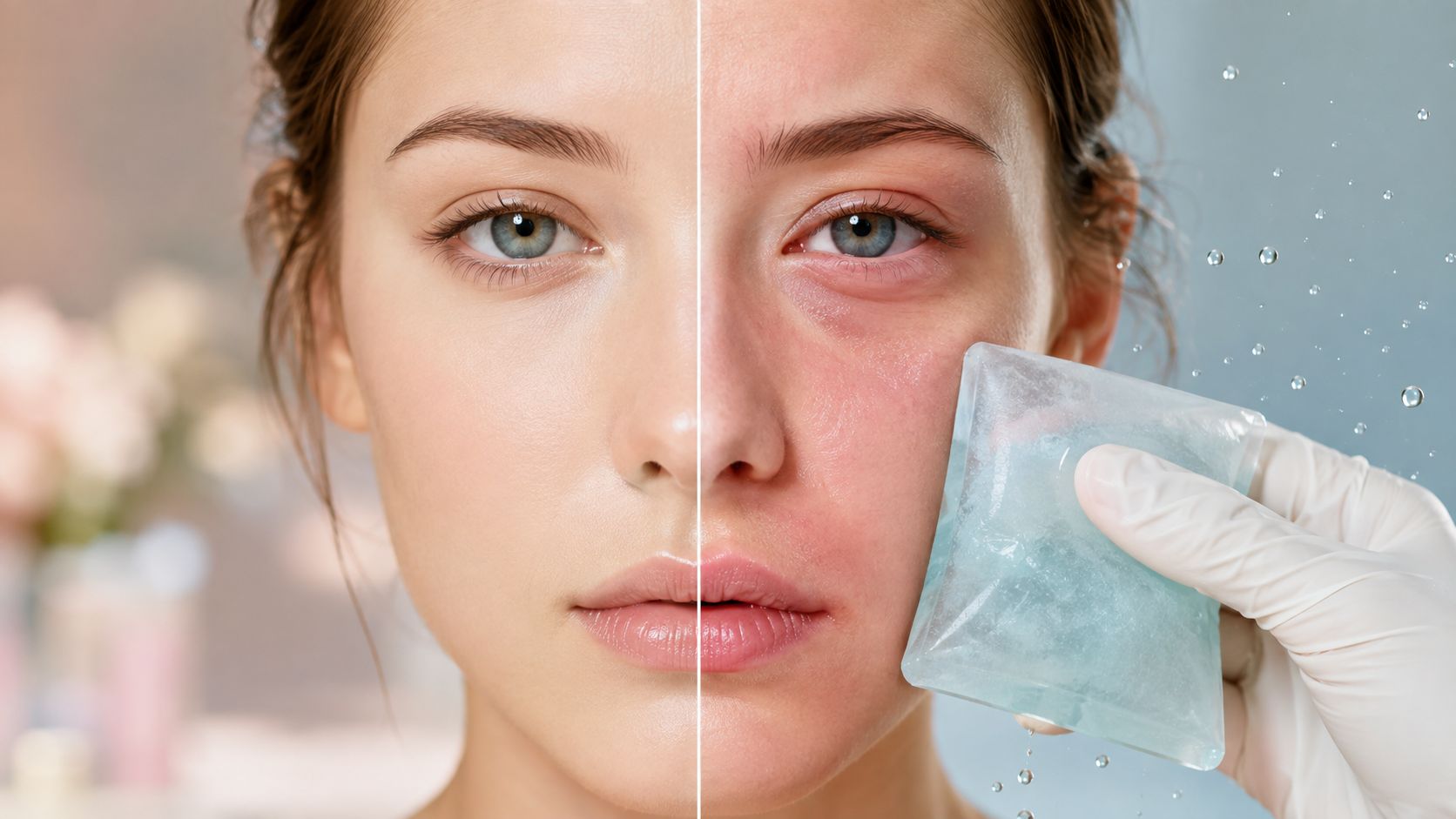
A patient walks in with thinning hair at the temples, a few acne scars from the late teen years, or skin that just looks tired and uneven under makeup. The photos online make both PRP injection and microneedling look like they can fix everything, which is exactly why people get stuck.
Practical rule: choose by goal first, not by trend. Hair thinning, acne scars, and general texture do not always respond the same way.
That's the part many people miss. PRP and microneedling are compared constantly, but they don't work the same way and they don't shine in the same situations. If the concern is hair loss, the evidence looks different than it does for acne scars, and both differ again from basic skin quality.
The most useful question before booking is simple. What am I trying to improve, and do I want the treatment to act biologically, mechanically, or both? If that answer is still fuzzy, it's smarter to slow down than to pay for a procedure that sounds elegant but doesn't match the problem.
For many readers, the decision also comes down to what they're willing to do at the appointment. Some people are fine with a blood draw and a PRP-based session, others would rather use a device-based treatment that relies on controlled micro-injury. Neither choice is wrong, but each one has a different logic.
How PRP Injections and Microneedling Actually Work
PRP starts with blood, not a device
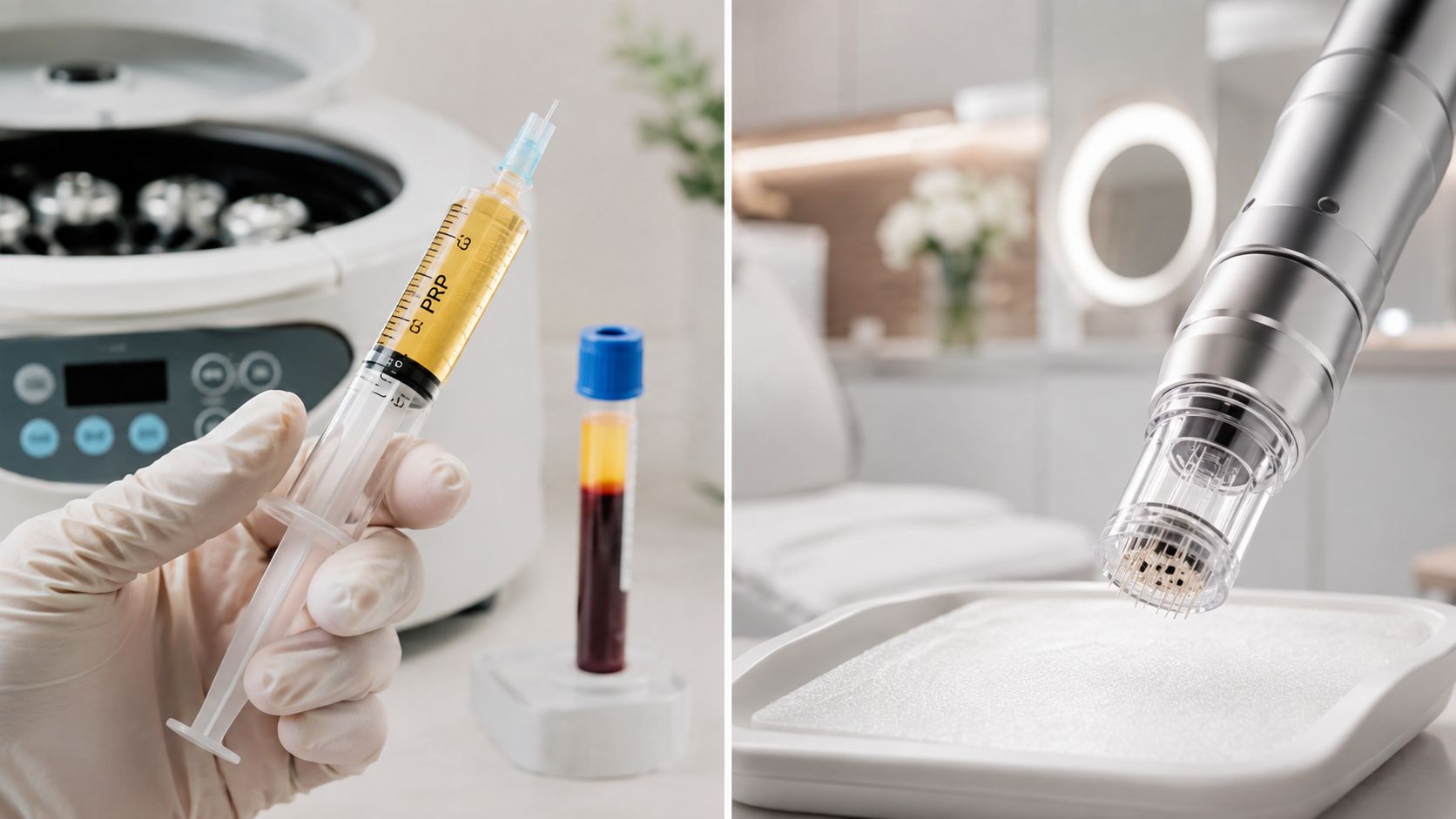
Platelet-rich plasma, or PRP, comes from your own blood. A clinician draws blood, processes it so the platelet layer is concentrated, and then uses that plasma in the treatment area. The point isn't volume replacement, it's the growth-factor signal carried by the platelets.
Think of PRP as a message delivery system. The plasma carries instructions that can support repair, which is why it gets discussed in hair restoration and skin rejuvenation. It's still your biology at work, just concentrated and directed more intentionally.
The BotoxBarb explanation of PRP treatment is a helpful companion read if you want the procedural version in plain language. The core concept stays the same whether the PRP is injected or applied after needling, the tissue is being exposed to platelet-derived signals.
Microneedling works by controlled injury
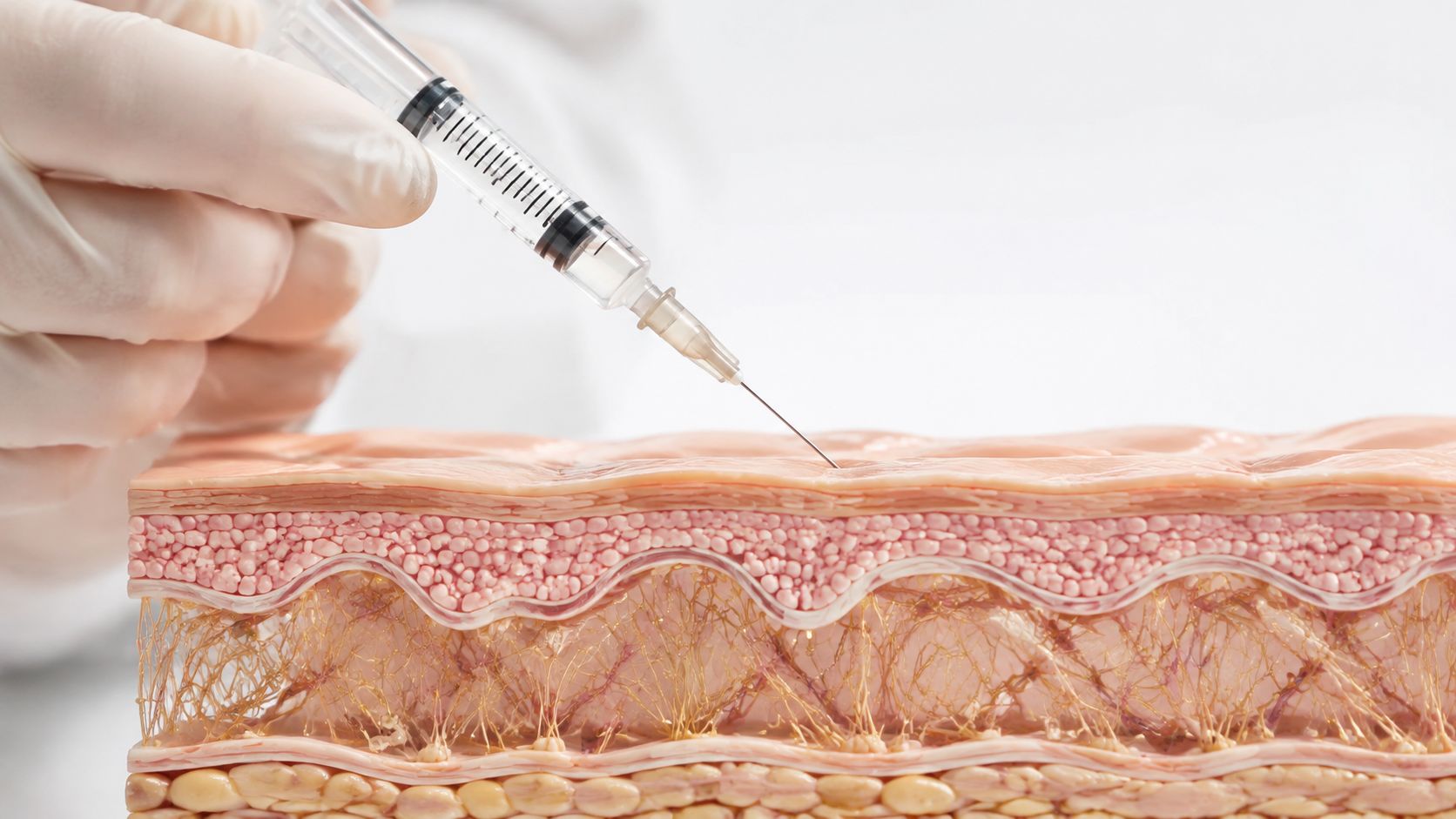
Microneedling takes a different route. A device with fine needles creates microchannels in the skin, which triggers a wound-healing response. That response is what pushes the skin toward collagen remodeling and texture change.
This is a mechanical treatment first. The benefit comes from the body noticing the controlled injury and responding to it. That's why microneedling is often used for scars and surface irregularity, the skin is being nudged to rebuild itself.
Clinical takeaway: PRP is a biologic signal, microneedling is a mechanical signal. The overlap is real, but the starting point is different.
That distinction matters because it changes how each option is judged. PRP can add growth-factor support, while microneedling can stand on its own as a collagen-induction treatment. Once you understand that split, the rest of the comparison gets much easier to interpret.
Side-by-Side Comparison at a Glance
The fastest way to compare prp injection vs microneedling is to look at the decision points patients feel in the room, not just the marketing language.
| Feature | PRP Injection | Microneedling |
|---|---|---|
| Mechanism | Platelet-derived growth factors delivered to tissue | Controlled micro-injury that triggers repair |
| Main target concerns | Hair thinning, some rejuvenation uses | Acne scars, texture, pores, mild resurfacing |
| Session pattern | Usually a series, depending on the concern | Usually a series, depending on the concern |
| Downtime | Usually brief, with redness or swelling | Usually brief, with redness and sensitivity |
| Patient experience | Includes a blood draw | No blood draw, but a needling device is used |
| Best fit | People who want biologic augmentation | People who want a more direct collagen-induction baseline |
For a deeper procedural overview, BotoxBarb's microneedling guide is a practical read if you're trying to understand what the appointment feels like.
The biggest difference isn't just the tool, it's the treatment philosophy. PRP asks your body to respond to a biologic booster. Microneedling asks your skin to repair after controlled injury. That's why the right pick depends so heavily on the thing you're trying to change.
If you want a short rule to keep in mind, use this one. Hair concerns tend to reward the treatment with the clearer objective signal, while scar and texture concerns often reward the treatment that creates the stronger remodeling response.
Evidence by Indication, Hair, Scars, and Skin Quality
Hair thinning does not favor the same tool in every study
The hair data are useful because they're not just based on feelings or photos. In a 2024 phase I clinical trial, both PRP injection and microneedling produced statistically significant improvements in hair count and thickness, but there was no significant intergroup difference between them. The reported average hair-count increase was 64.69 in the PRP group versus 95.18 in the microneedling group, with no statistically significant between-group difference (p = 0.219), and hair-thickness changes also showed no meaningful statistical separation (p = 0.570) (PMC12442246).
Another comparative study pushed the hair story further in microneedling's favor. In androgenetic alopecia, microneedling outperformed PRP alone on objective hair outcomes, with mean hair count increasing 24.53% ± 9.49% in the microneedling group versus 17.88% ± 10.15% in the PRP-alone group, and a larger share of patients achieved a negative hair-pull test, 82.1% vs. 51.9% (PMC9670661).
Acne scars are where PRP becomes more defensible
The scar literature is more mixed, which is exactly why it needs careful reading. One comparative study found modest differences when PRP was added to microneedling, with total scar reduction at 40% on the PRP side versus 37% with standard microneedling, and ECCA scores falling 29% versus 26%, but the difference was not statistically significant (p = 0.094) (boujeenurse.com).
A broader meta-analysis looked at 14 studies and found that combining microneedling with PRP increased the odds of more than 50% clinical improvement on Goodman's qualitative scale by 2.97 times, with OR 2.97, 95% CI 1.96–4.51, p < 0.001 (Frontiers in Medicine). That same analysis reported no increase in adverse-event rates such as erythema or prolonged edema, which makes the signal more meaningful than a simple trade-off for extra irritation.
General skin quality usually tilts back toward microneedling
For routine texture work and broad resurfacing, microneedling has the more consistent evidence base. A comparative review in the provided sources notes that microneedling is the stronger baseline procedure, while PRP mainly adds growth-factor signaling without reliably changing scar scores enough to justify routine extra cost in every case (PMC8149985).
The bottom line is not that PRP is weak. It's that the best choice changes by indication. Hair thinning, acne scars, and general rejuvenation do not deserve the same default answer.
Combination Protocols, When PRP Plus Microneedling Is Worth It
Combination treatments make sense when the biology justifies the added step, not when a clinic is stacking services because it can. In practice, PRP may be applied through the microchannels created during microneedling or injected in the same visit, and the goal is to pair mechanical remodeling with platelet-driven signaling. That pairing can help in the right setting, but it does not make every combined protocol better by default.
For acne scars, the combined approach has the clearest support. As noted earlier, the meta-analysis found a meaningful advantage for microneedling plus PRP over microneedling alone, which is why many clinicians treat PRP as a useful adjunct for scar work rather than a cosmetic extra.
Hair restoration is less straightforward. Some comparative data suggest microneedling alone can match or outperform PRP on objective hair measures, while another study in the provided sources reported that combined microneedling plus topical PRP produced better hair-density and hair-count results than injected PRP, with a better safety profile and almost no adverse events (PMC11896732). The delivery method clearly matters, but that does not make combination therapy the right answer for every patient with thinning hair.
For skin quality, a combined protocol can be reasonable when the goal is to push results beyond what microneedling alone is likely to deliver. It still comes back to indication first. A patient with mild texture concerns and limited budget may do well with microneedling alone, while someone with more stubborn scarring or a more complex treatment goal may have a better reason to add PRP.
If you are comparing scar-care options outside the office, herbal scar treatment ideas can still be a helpful reminder that not every concern needs a stacked procedure plan. Some cases are better handled with the most evidence-backed in-office treatment, then supported with home care, patience, and realistic expectations.
BotoxBarb's page on microneedling with PRP is useful if you want to see how a combined protocol is usually packaged. The practical question is simple. If the provider cannot explain why PRP is being added for your concern, you are probably looking at an upsell rather than a treatment that changes the plan in a meaningful way.
Downtime, Risks, and What a Session Actually Costs in 2026
The practical side matters because even a well-matched treatment can fail if the patient can't tolerate the recovery or the price. Both PRP and microneedling are usually considered minimal-downtime procedures, but they're not zero-downtime procedures.
What patients usually notice
PRP commonly brings short-lived redness and swelling after treatment. Microneedling often causes redness and sensitivity, and the skin can feel warm or tight afterward. The provided sources describe microneedling downtime as brief, and PRP as similarly limited, which is why both treatments remain popular with patients who can't disappear from work for days at a time.
What to ask before paying
- Ask about aftercare: You want to know what to avoid on the skin for the first couple of days.
- Ask how many visits are expected: These treatments are usually series-based, not one-and-done.
- Ask whether the plan is maintenance-based: Results often need upkeep rather than permanent correction.
- Ask what the provider does if irritation is prolonged: Redness and swelling should be expected, but you still want a clear escalation plan.
Budget and risk sense
Microneedling is usually the less expensive path because it doesn't require blood processing. PRP costs more because it adds phlebotomy and preparation. If a quote is dramatically above the norm for a basic session, ask what's being added before you agree.
The common risks are still the usual skin-procedure risks, temporary inflammation, bruising, and, more rarely, infection or post-inflammatory hyperpigmentation. Good technique and careful aftercare reduce those issues, but they don't eliminate them. If a clinic presents either procedure as risk-free, that's a red flag.
Choosing the Right Treatment for Your Goal
For hair thinning, the better choice often comes down to how aggressive you want the plan to be. Microneedling is the cleaner baseline because it gives a direct procedural stimulus without requiring blood draw or platelet preparation, and the comparative hair evidence does not make PRP an automatic upgrade. PRP can still fit well if a clinician wants to add biologic support, but it should be chosen for a reason, not because it sounds more advanced.
For acne scars, combination treatment is usually the more practical recommendation. The strongest pooled evidence supports microneedling plus PRP over microneedling alone, while a smaller comparative study showed only a modest difference that did not clearly separate the two approaches. That mix of findings points to selective use, especially for patients whose scars are stubborn enough to justify a more layered plan.
For general skin quality and texture, microneedling usually covers the need well on its own. The evidence is steadier here than in some of the other indications, and that matters when patients are trying to balance visible improvement with value. PRP can still make sense for someone who specifically wants biologic augmentation, but it is rarely the first choice for a straightforward dullness or texture complaint.
At BotoxBarb, the in-clinic approach stays practical. PRP, microneedling, and LED light therapy are separate tools, and each one gets used for a different concern. For people who want home support after an office visit, the BARB N.P. Facial Mask is a wireless LED facial mask designed for comfort on the face, with 3 lighting settings for different treatment goals. It fits naturally into a recovery routine for patients who want a simple at-home device alongside procedure-based care.

If the concern is hair, scars, or texture, the cleanest decision is to match the procedure to the complaint first, then decide whether PRP is worth the added steps and cost for that specific goal.
Frequently Asked Questions About PRP and Microneedling
How do I know if I'm a good PRP candidate
PRP depends on the quality of the blood product your body can provide, so a provider should screen for health factors that might make the treatment less predictable. If you're expecting a dramatic response from PRP alone, especially for hair, the evidence above shows why that's not always the safest assumption.
How many sessions should I expect before I judge results
These treatments are usually done in a series, not as a one-off. If a provider can't tell you roughly how many visits they expect before reassessment, that's a problem. A reasonable plan should include a checkpoint, not endless scheduling.
Can the LED Facial Mask be used after treatment
A wireless LED mask can fit into a recovery routine, but it should be used only as directed by the treating clinician after microneedling or PRP. The goal is comfort and support, not layering so many products or devices onto irritated skin that you undo the procedure's work.
What should I look for in a provider's portfolio
Look for photos that match your issue, not just generic glow shots. Hair thinning, acne scars, and texture changes should be documented separately, because the right treatment choice depends on the concern being treated.
Simple filter: if the provider can't explain why they chose PRP, microneedling, or both for your exact concern, keep looking.
If you're deciding between PRP, microneedling, or a combination plan, book a consultation with BotoxBarb and ask for a treatment strategy built around your specific concern, not a one-size-fits-all package. You can also compare in-clinic options with home recovery tools so your plan feels realistic from the first visit through maintenance.