Skin Barrier Repair Serum: The Science-Backed Guide 2026
You're dealing with skin that suddenly feels tight after a peel, a filler appointment, too many actives, or even a perfectly ordinary winter week. The face starts stinging when you wash it, moisturizer doesn't seem to “take,” and products that were fine last month now feel irritating. That's usually when a skin barrier repair serum stops being a nice-to-have and becomes the most practical part of the routine.
A healthy barrier isn't a vague wellness idea. It's a real biological shield built around the stratum corneum, which is typically about 10–20 micrometers thick and helps limit water loss and block irritants, while damage is commonly tracked with transepidermal water loss, or TEWL (barrier-repair review). When the barrier is compromised, the goal isn't just to add moisture. The goal is to support repair so the skin can hold that moisture again.
Recognizing a Damaged Skin Barrier
The patient who usually recognizes barrier damage first isn't the one who's never had skin issues. It's the one who had a routine that used to work, then one day every product started to burn. I see this after over-exfoliation, after aggressive cleansing, and after people stack actives around a procedure without giving the skin a recovery window.
What barrier damage feels like in real life
The symptoms are often messy, not dramatic. Skin can feel tight, papery, shiny, or stingy, and a moisturizer that once felt rich may suddenly disappear into the face with no relief. Breakouts can also show up because a disrupted barrier doesn't stay calm or consistent.
Practical rule: if a product that never bothered you now burns on contact, think barrier first, not “my skin got picky.”
That's where a skin barrier repair serum earns its place. It's not trying to replace every moisturizer in your cabinet. It's targeting a biologic problem, which is why it belongs in a routine when the skin keeps reacting to ordinary care.
A useful reality check is to separate temporary surface dryness from true barrier stress. Seasonal dryness may improve once you change cleanser or add a richer cream. Barrier dysfunction tends to show up as repeated irritation, lingering tightness, and that sense that the skin is “fragile” even when you're being gentle.
For readers who want a simple starting point, this guide on how to repair a damaged skin barrier covers the basics of calming things down without overcomplicating the routine.
Why it can show up after months of “fine” skin
Barrier injury builds. The skin may tolerate a few weeks of acids, retinoids, peels, waxing, wind, or dry indoor air, then eventually cross a threshold where the same routine becomes too much. Once that happens, the safest move is usually less, not more.
That's why I pay attention to sudden sensitivity after an otherwise normal routine. It often means the barrier has been asked to do too much for too long, and the fix needs to be more strategic than just buying another hydrating cream.
The Four Layers of Skin Barrier Function

A useful way to think about barrier repair is that the skin isn't one wall, it's four systems working together. If one layer is weak, the others compensate until they can't. That's why surface hydration alone often gives a short-lived result.
Physical, chemical, microbiologic, and immunologic support
The physical barrier is the brick wall. Corneocytes act like the bricks, and lipids act like the mortar. If the mortar is sparse or disorganized, water escapes and irritants get in more easily.
The chemical barrier is the acid mantle. It helps regulate pH and supports the enzyme activity that keeps the barrier functioning properly. If pH drifts too far from what the skin likes, repair slows down.
The microbiologic barrier is the ecosystem on the surface. Healthy microbes help defend space and keep opportunistic troublemakers from taking over. A formula that supports the skin without stripping it tends to work better here than one loaded with fragrance or harsh solvents.
The immunologic barrier is the first-response system. It helps the skin detect and respond to threats, but if it's constantly activated, the face stays red, reactive, and uncomfortable.
A serum that only makes skin feel slippery for an hour hasn't necessarily repaired anything.
The literature backs that layered view. Barrier function is maintained by four interdependent layers and moisturizers can improve TEWL by supporting each layer through occlusives, humectants, emollients, and acidic pH support (barrier function review). That's why ingredient lists matter less than formulation logic.
Why hydration alone falls short
A lot of products hydrate the surface without doing much for structure. That can make skin feel temporarily better, but it doesn't always reduce the irritation cycle. In practice, the formulas that perform better tend to combine water-binding agents, lipid replenishment, and pH-compatible support rather than relying on one crowd-pleasing ingredient.
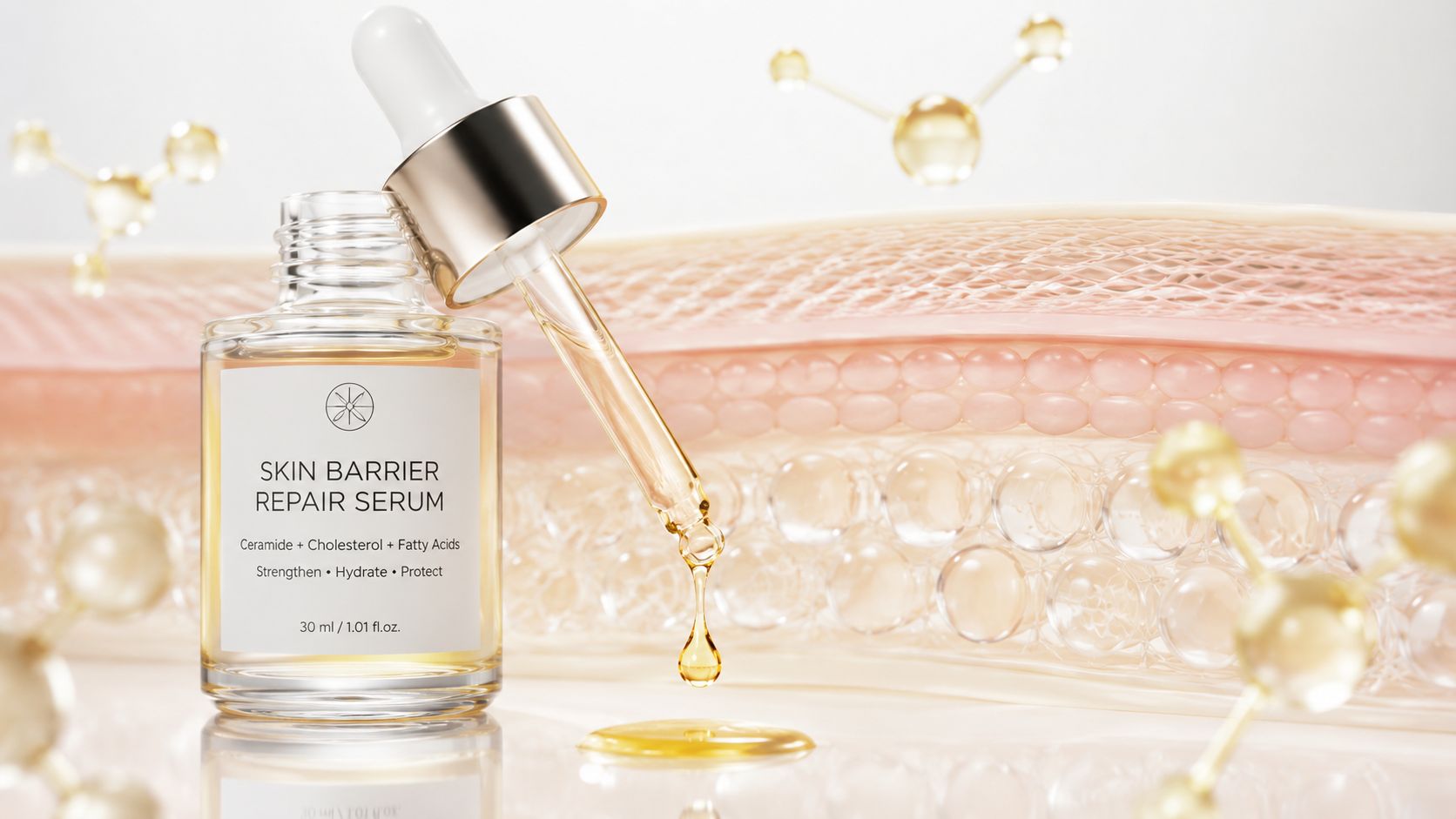
The visual below captures the same idea. It's not about stacking random “calming” ingredients, it's about helping every layer do its job.
Evidence-Based Active Ingredients That Rebuild the Barrier
The ingredient labels that matter most are the ones that solve the barrier problem from more than one angle. Ceramides, cholesterol, fatty acids, hyaluronic acid, niacinamide, panthenol, and peptides each support the skin differently, but they're not interchangeable. A good serum isn't just “hydrating,” it's mechanically and biologically useful.
What to look for on the label
Ceramides are the structural lipids that help restore the intercellular barrier. If a serum includes them alongside other barrier lipids, that's usually a better sign than a formula that leans on scent or glossy texture.
Niacinamide gets attention for oily skin, but it's just as relevant here because it helps stimulate ceramide synthesis and reduce barrier-related water loss. In dry or post-procedure skin, that makes it a serious repair ingredient, not just a balancing one.
Cholesterol and fatty acids matter because the barrier depends on lamellar organization, not isolated hydration. If a formula is missing the lipid side of the equation, it may feel nice but still underperform where repair is concerned.
For a deeper look at humectant pairing, see the hyaluronic acid serum guide for dehydrated skin. Hyaluronic acid is useful, but it works best when the barrier can hold the water it attracts.
Panthenol is a practical calming ingredient, especially when the skin is inflamed or reactive. Peptides can support repair signaling, though they work best as part of a formula that already respects the barrier rather than trying to compensate for a harsh base.
| Ingredient | Primary Function | Mechanism of Action | Effective Concentration |
|---|---|---|---|
| Ceramides | Lipid replenishment | Help restore intercellular structure and reduce moisture loss | Varies by formula |
| Niacinamide | Barrier support | Supports ceramide synthesis and helps reduce TEWL | 10% is a clinically validated starting point for dry-skin use in the research brief |
| Cholesterol and fatty acids | Lamellar support | Help rebuild the lipid matrix | Varies by formula |
| Hyaluronic acid | Humectant hydration | Draws water into the stratum corneum | Varies by molecular weight and formula |
| Panthenol | Soothing support | Helps calm skin and support repair | Varies by formula |
| Peptides | Repair signaling | Support cellular communication in well-designed formulas | Varies by peptide type |
What usually doesn't deliver
Fragrance-heavy formulas, products that sting on application, and anything packaged in a way that seems unstable rarely belong in a repair phase. If a serum causes recurrent burning, it's not doing the job you need right now.
The ingredient blend matters, but the sequence matters too. Apply watery, humectant-rich layers before richer barrier support, then seal them in with a moisturizer if the skin needs it.
Integrating Barrier Repair with Aesthetic Treatments
Barrier repair gets most interesting when it sits inside a real treatment calendar. Skin doesn't live in a vacuum. It has to cooperate with injectables, peels, PRP, LED sessions, and the active skincare people want to keep using because they care about results.

Before, during, and after procedures
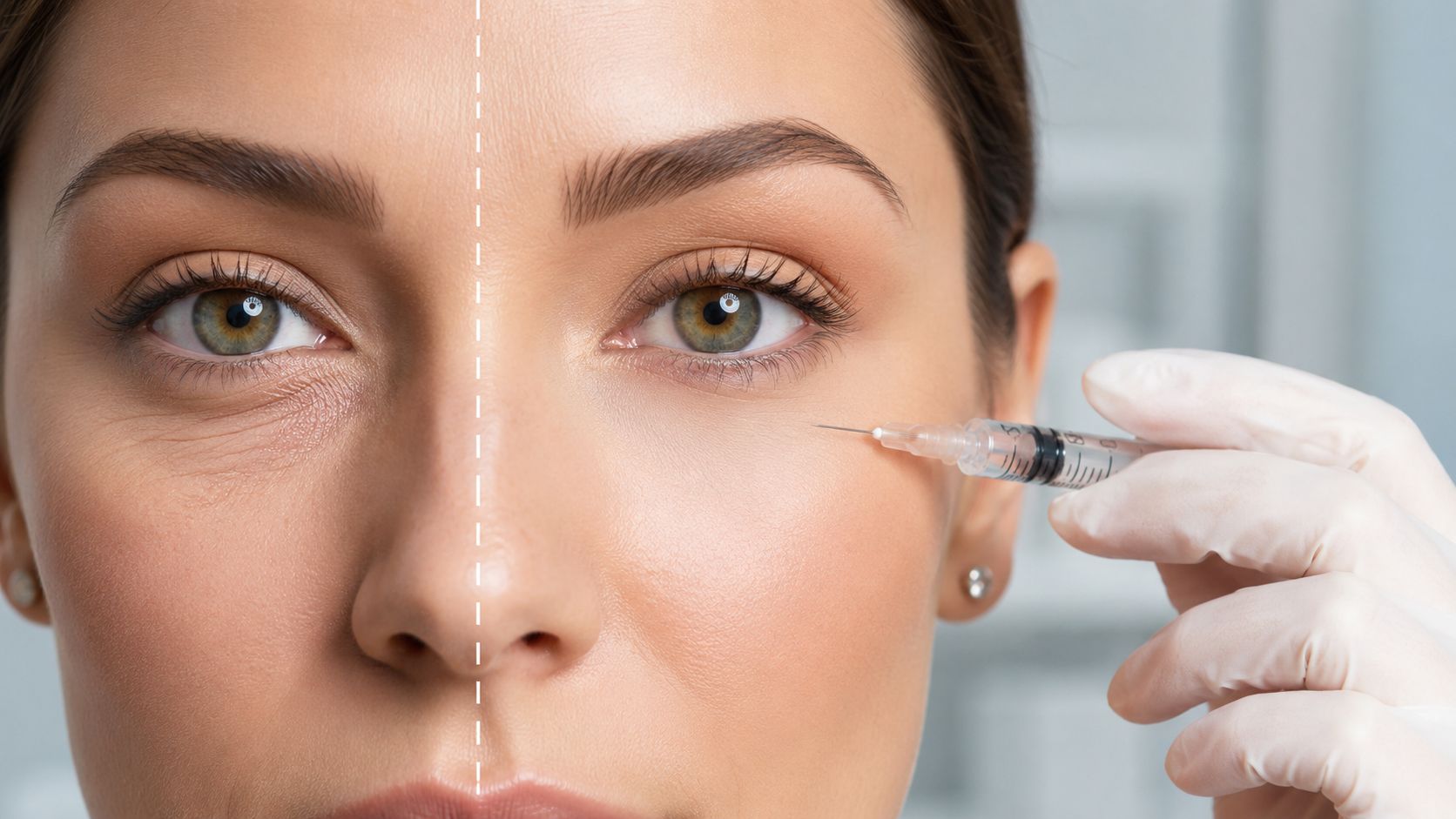
Before a peel or injectable appointment, the skin usually benefits from being calm and uncomplicated. That means simplifying the routine, not trying to “prep harder” with extra actives. A barrier-supportive serum can be used as a conditioning step when the face is already irritated or chronically dry.
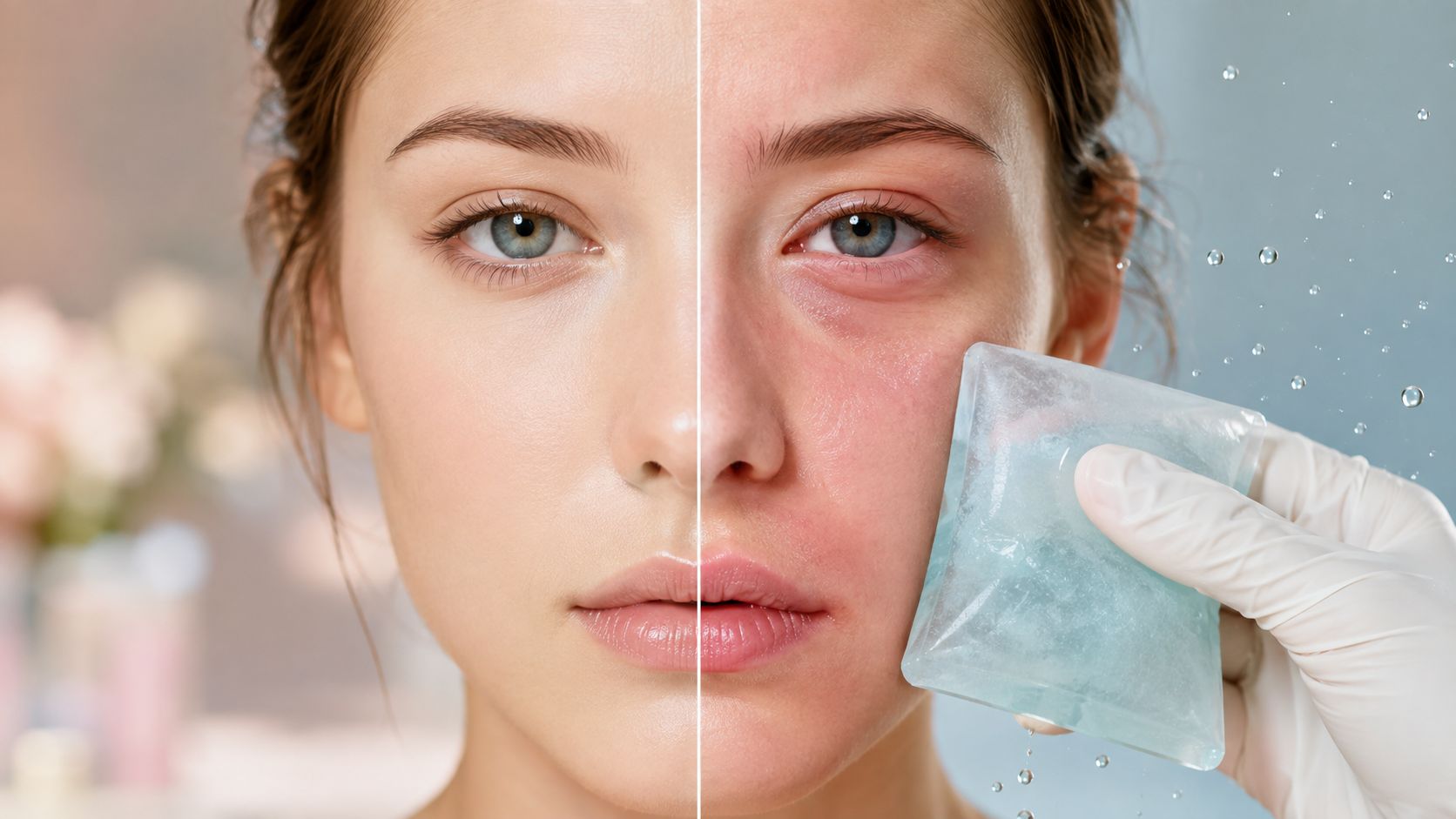
During the acute healing window after treatment, simpler is better. Ceramide-rich formulas and barrier-focused serums fit this phase because the skin doesn't need a crowded routine, it needs support and low irritation. Guidance from ProMD Health Washington, DC on chemical peel healing is useful here because it reinforces the value of gentle aftercare and barrier protection during recovery.
After the skin settles, active ingredients can be reintroduced gradually. I'm cautious with retinoids and exfoliating acids because people often restart them too quickly and end up back at square one. The timing has to respect the skin's actual tolerance, not the calendar someone wished would work.
For post-procedure skin, a short routine that doesn't sting is usually more useful than a long routine that does.
Where LED fits
LED is one of the few add-ons that can fit neatly into a repair-focused plan. Red and near-infrared light are the most sensible choices when the goal is calming and recovery support, especially when paired with a barrier serum afterward. I'd rather see a patient do a consistent, gentle LED session than cycle through a dozen products that all compete for attention.
Choosing a Medical-Grade Barrier Repair Serum
Not every serum deserves the word “repair” on the label. The difference between a decent moisturizer and a true barrier product is usually found in formulation quality, pH compatibility, delivery, and clinical evidence, not in marketing language. That's where medical-grade products tend to separate themselves.
What separates a serious formula from a pretty one
Start with the base. If the serum relies on heavy fragrance, unstable packaging, or a grab bag of conflicting actives, I usually pass. Barrier skin is too reactive for formulas that are trying to be everything at once.
A useful benchmark is whether the formula has evidence behind it. In the 2024/2025 clinical report from the brief, a serum formula showed lower TEWL after 14 days versus untreated control at D-3, with benefit persisting through day 56, and it also improved recovery after cleanser aggression, tape stripping, and extreme temperature stress (PMC clinical studies). That's the kind of data that tells you something about barrier behavior.
There's also room for simpler approaches. A separate review notes that some authors have argued barrier-repair therapy may not beat petrolatum-based moisturization on cost-effectiveness, and the comparative study was too small to settle the question definitively (atopic dermatitis review). In practice, that means expensive isn't automatically better. It just means the formula should earn its shelf space.
A practical buying filter
Use this checklist when you're comparing options:
- Barrier-friendly base: Look for ceramides, humectants, and lipids before cosmetic extras.
- Low irritation profile: Fragrance-free is a real advantage for compromised skin.
- Useful texture: The product should layer cleanly without pilling under moisturizer or sunscreen.
- Real-world fit: If you're in a peel, injectable, or retinoid cycle, choose something you'll want to keep using.
One option stocked through BotoxBarb is a SkinCeuticals barrier-supportive serum, and I'd judge it the same way I judge anything else, by ingredients, stability, and how it fits the routine. For consumers comparing a French pharmacy-style barrier cream against a more targeted serum, the broader point is the same, the formula has to match the skin's current state, not just its wish list. If you want to compare French pharmacy barrier creams, that can help frame the trade-off between simple occlusion and a more active repair approach.

Building Your Daily Barrier Repair Routine
A routine works when it's boring enough to repeat. With barrier repair, consistency matters more than trying to find the perfect “hero” product. The best sequence keeps the skin calm, hydrated, and sealed without overwhelming it.
Morning and evening order
In the morning, cleanse gently, apply the barrier repair serum next, then follow with moisturizer and sunscreen. That order matters because water-based products belong before richer layers, and sunscreen should sit on top where it can do its job.
At night, the sequence is a little more forgiving if you've worn makeup or SPF. Double cleanse if needed, apply any targeted treatment only if the skin can tolerate it, then bring in the barrier serum and finish with a night cream. If the face is very reactive, I'd skip the extras and keep the evening simple.
How to get more from the serum
Applying the serum to slightly damp skin helps humectants work better. It's a small detail, but in treatment rooms it often separates a formula that feels mediocre from one that improves comfort.
For people using the Barb N.P. Facial Mask, the device is wireless, designed for a more comfortable fit on the face, and offers three lighting settings for different needs. Red is the setting I'd associate with collagen support and barrier recovery, blue is the more acne-prone option, and near-infrared fits deeper tissue support. Using the mask for 10 to 15 minutes before serum application is a sensible way to build a calmer pre-serum environment, especially when the skin feels stressed rather than just dry.
If the skin is flaring, reduce the number of steps before you increase the number of products.
When to seal harder
Night is the time to use a richer cream or an occlusive seal if the barrier is struggling. That's especially relevant in cold, dry climates or during recovery from procedures, when the skin loses comfort quickly and needs help holding onto water longer.
For readers who want a stepwise reminder, this guide to strengthening the skin barrier is a useful companion to a repair-focused routine.
Common Misconceptions About Barrier Repair Timelines
The biggest mistake I see is impatience dressed up as good skincare. People start a repair serum, do not see an immediate change, then add more actives because they assume the first product failed. In clinic, that usually makes the skin more reactive, not less.
What the timeline really looks like
Some hydration changes show up fast. In barrier research, measurable hydration gains can appear within hours and remain present at follow-up, while another randomized study found barrier-related hydration changes after two weeks (barrier-repair review). Those shifts are real, but they are not the same as full structural recovery.
That distinction matters after injectables, peels, LED, or PRP, because patients often judge a serum by how calm the skin feels in the first few days. A product can reduce tightness early and still be in the middle of a longer repair process. Short-term comfort and longer-term barrier rebuilding overlap, but they do not finish at the same pace.
What not to expect
Barrier repair does not mean someone can jump back into strong acids the moment stinging eases. It also does not mean that using more serum will speed recovery in a straight line. In practice, piling on layers can muddy the routine, hold in heat, or set off more redness when the skin is already stressed.
A separate clinical summary in the brief notes that visible improvement may happen in 3 to 7 days, while full regeneration can take 4 to 8 weeks, and chronic compromise can take even longer to settle. I use that kind of timeline to keep expectations grounded, especially for people coming out of procedures or cycling through long periods of irritation.
When symptoms keep lingering, or the skin still stings even after the routine has been simplified, that is the point to have it assessed by a professional instead of buying another bottle. A serum that is helping usually improves tolerance gradually. One that is not doing enough leaves the skin just as touchy once the initial excitement fades.
If you are pairing barrier repair serum with active skincare or post-procedure care, the goal is consistency, not speed. The skin usually responds better to steady support than to repeated resets.