How to Strengthen Skin Barrier: how to strengthen skin barrier tips that work
If you want to know how to strengthen your skin barrier, the plan is surprisingly simple: use gentle cleansers, load up on hydrating ingredients like ceramides, and step away from the harsh exfoliants. It’s all about creating a supportive, healing routine that repairs your skin's natural defenses instead of stripping them away.
Understanding Your Skin Barrier and Why It Matters

Think of your skin barrier as the dedicated security guard for your face. This outermost layer of your skin, technically called the stratum corneum, has a critical two-part mission. It works around the clock to keep the good stuff—like moisture and nutrients—in, while blocking external aggressors like pollutants, bacteria, and irritants out.
The "brick and mortar" analogy is a perfect way to visualize it. The "bricks" are your tough skin cells (corneocytes), and the "mortar" is a complex mix of natural fats—like ceramides, cholesterol, and fatty acids—that holds everything together.
When this structure is solid and healthy, your skin feels soft, hydrated, and calm. But when that mortar starts to crumble? That’s when the trouble begins.
The Role of Lipids and Hydration
A strong barrier is fundamentally about balance. That lipid matrix is absolutely crucial for preventing Transepidermal Water Loss (TEWL), which is just the scientific term for water evaporating right off your skin. When those lipids are depleted, water escapes much faster, leaving your skin dehydrated and weak.
A happy, functioning barrier keeps hydration levels exactly where they need to be, which is the true foundation of plump, resilient skin.
A healthy skin barrier is your first line of defense. When it’s compromised, your skin becomes more vulnerable to environmental damage, irritation, and premature aging. Protecting it isn't just about looking good; it's about fundamental skin health.
To simplify, here are the core building blocks you need for a robust barrier.
Key Pillars of Skin Barrier Health
| Component | Function | Top Ingredient Examples |
|---|---|---|
| Lipids | The "mortar" that holds skin cells together and prevents water loss. | Ceramides, Cholesterol, Fatty Acids, Squalane |
| Humectants | Water-loving molecules that attract and hold moisture in the skin. | Hyaluronic Acid, Glycerin, Panthenol (Vitamin B5) |
| Antioxidants | Protects the barrier from environmental damage caused by free radicals. | Vitamin C, Vitamin E, Niacinamide, Ferulic Acid |
Having a routine that consistently supplies these components is the secret to keeping that barrier strong and resilient day after day.
What Happens When It’s Compromised?
So, what causes the damage in the first place? It’s usually a combination of things. Over-exfoliating with harsh scrubs or strong acids is a major culprit. So are stripping cleansers with sulfates, sun damage, dry air, and even a lack of sleep.
Once that barrier is weakened, it can't do its job properly. This breakdown leads to a whole cascade of skin issues you’ve probably experienced:
- Increased Sensitivity: Products that were once your holy grail suddenly sting or burn.
- Persistent Redness: Your skin just looks and feels angry for no clear reason.
- Dryness and Flakiness: No amount of moisturizer seems to be enough.
- Unusual Breakouts: The barrier can no longer keep acne-causing bacteria out.
The good news? Repairing your skin barrier is entirely achievable. This guide will walk you through a clear, actionable plan to bring your skin back to a healthy, happy place, from building a restorative daily routine to incorporating the right ingredients. For example, ingredients like niacinamide are true superstars for barrier support, which you can learn more about in our detailed guide.
How to Tell if Your Skin Barrier Is Damaged
Before you can fix your skin barrier, you have to learn to read its signals. A compromised barrier doesn't always show up as dramatic peeling or flaking. Often, the clues are much more subtle and can be easily brushed off as something else. Learning to spot these distress signals is the first and most important step toward healing your skin.
You might notice a constant, low-grade redness that just won’t go away, especially around your nose and cheeks. Or maybe your skin feels uncomfortably tight—almost like it’s a size too small—even right after you’ve slathered on a rich moisturizer. These are classic signs that the "mortar" holding your skin cells together is starting to crumble.
From Calm to Reactive in an Instant
One of the most telling signs is when your skin’s tolerance suddenly takes a nosedive. That vitamin C serum you’ve loved for years or your go-to moisturizer might suddenly sting or burn the second you put it on. This isn’t a sign the product went bad; it's your skin screaming that its defenses are down.
When your barrier is weak, tiny, invisible cracks form in its outermost layer. These little gaps allow products to sink in deeper and faster than they’re supposed to, which can trigger an inflammatory response from the nerve endings just beneath the surface.
Key Takeaway: If your entire skincare routine suddenly starts irritating your skin, don't immediately blame the products. Consider it a clear message that your skin barrier needs backup—and a much simpler routine, fast.
Think about the last time you got a little too excited with a new exfoliating acid. The next morning, your skin probably felt raw, looked blotchy, and was reactive to everything you put on it. That’s a perfect example of acute barrier damage. But this kind of damage can also build up slowly over time from less obvious daily habits.
Connecting the Dots: Breakouts and Dullness
It’s easy to write off new pimples as just… well, pimples. But a weakened barrier can be the root cause of new or worsening breakouts. When your skin's security system is offline, it's basically an open invitation for acne-causing bacteria to set up shop and thrive, leading to inflammation and blemishes.
And that dull, lackluster complexion you’re fighting? More exfoliation probably isn't the answer. A damaged barrier can't hold onto moisture properly, and it also struggles to shed dead skin cells effectively. This leads to a buildup of dry, flaky patches on the surface that prevent light from reflecting evenly, giving your skin that flat, tired look.
- Persistent Tightness: Your skin feels constricted and dry, even after moisturizing.
- Increased Redness: You have a constant flushed look that doesn't seem to resolve.
- Sudden Sensitivity: Your favorite products now sting, burn, or cause irritation.
- Dull or Flaky Texture: Your complexion lacks glow and has rough, uneven patches.
- New or Worsening Breakouts: More pimples are popping up because your skin's defenses are compromised.
The growing awareness of these issues has completely reshaped the skincare market. The demand for barrier-repairing products is exploding, with the global market expected to grow from $1.12 billion in 2024 to $1.33 billion by 2029. This boom is driven by people just like you who are looking for gentle, effective solutions. You can find more on this trend by looking into the global skin barrier market.
If you’re constantly battling irritation or redness, recognizing these signs is your first win. A specialized Korean sensitive skin care routine, which is famous for its focus on gentle hydration and soothing ingredients, can be an incredible place to start your healing journey.
Your Daily Routine for a Stronger Skin Barrier
Let's get one thing straight: building a strong skin barrier doesn't mean you need a complicated, ten-step routine. It’s all about consistency—using the right products, in the right order, to calm, hydrate, and protect your skin. Think of it as creating a peaceful, supportive environment where your skin can finally focus on healing itself.
The core principle is simple: be gentle in the morning and focus on repair at night. Your AM routine is all about hydration and defense against the day's environmental attacks. The PM routine is where the real magic happens, feeding your skin the lipids and nutrients it needs to rebuild that "brick and mortar" structure while you sleep.
Designing Your Morning Barrier Routine
Your morning goal is straightforward: cleanse away impurities without stripping your skin, layer on hydration, and then lock it all in while shielding your face from UV damage. This simple ritual sets your skin up for success.
Start with a pH-balanced, sulfate-free cleanser. I always recommend a creamy or milky cleanser because it won't disrupt the delicate acid mantle, a key part of your barrier's defense system. Aggressive, foamy cleansers are a barrier's worst enemy—they strip away the natural oils essential for keeping it intact, leaving your skin feeling tight and vulnerable right from the start.
Next, while your skin is still a little damp, apply a hydrating serum. Look for ingredients like hyaluronic acid, glycerin, or panthenol (Vitamin B5). These are humectants, which act like tiny sponges, pulling moisture into the skin. This step is crucial for replenishing the water that a compromised barrier struggles to hold onto.
Finally, lock it all in with a moisturizer and a broad-spectrum sunscreen with at least SPF 30. Sunscreen is completely non-negotiable. UV radiation is one of the biggest aggressors against your skin barrier, creating free radicals that just tear its structure down.
Pro Tip: Never rub your face dry with a towel. Instead, gently pat it, leaving it slightly damp before you apply your serum. This simple trick helps trap extra moisture and lets your products absorb so much better.
This simple, three-step process—cleanse, hydrate, protect—is all you need to start your day on the right foot.
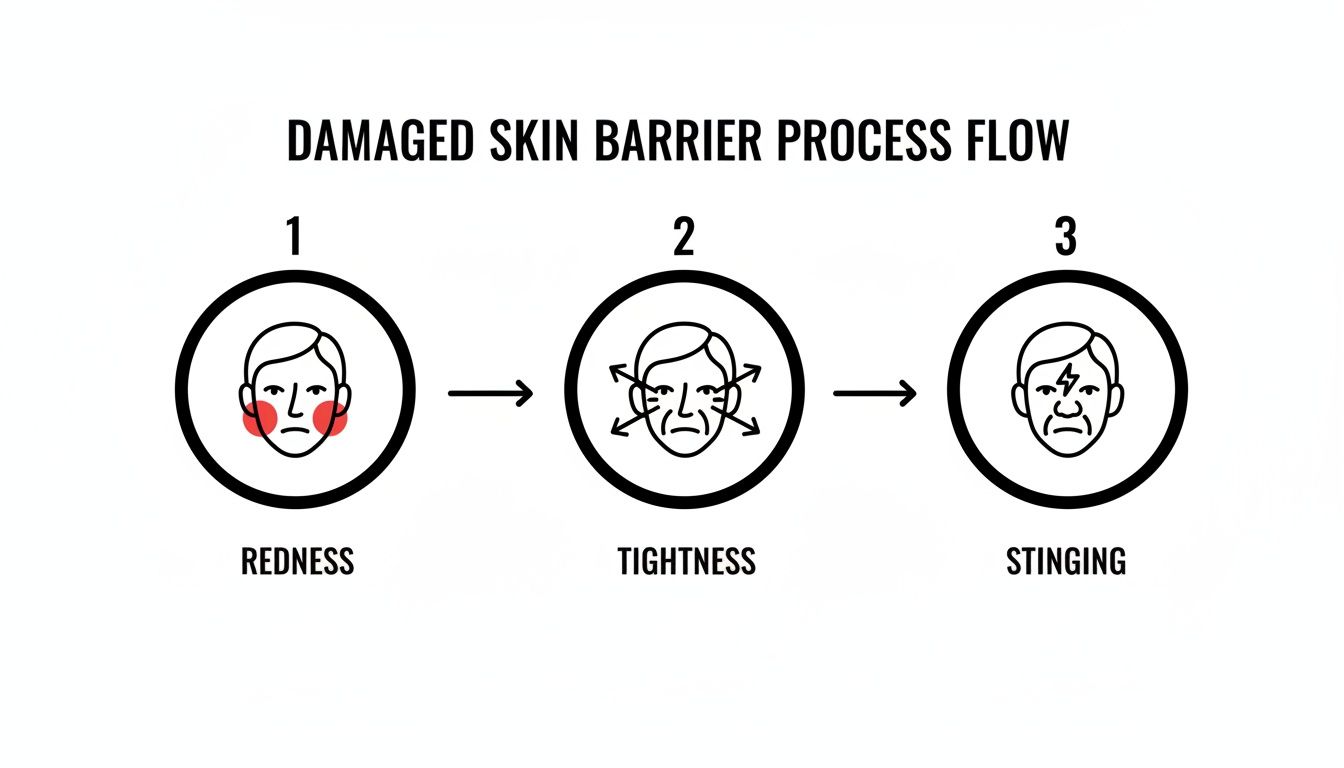
When your skin starts sending these signals, it's asking for a gentler approach and more supportive care. Listen to it.
Building Your Evening Repair Routine
At night, your skin naturally switches into repair mode. This makes it the perfect time to give it the building blocks it needs to mend itself. Here, the focus is on replenishing lipids and locking in moisture for the entire night.
Your evening routine can start just like your morning one: a gentle cleanse to remove makeup, sunscreen, and pollutants from the day. If you wear makeup, I highly recommend a double cleanse. Start with an oil-based cleanser to dissolve everything, then follow up with your gentle, creamy cleanser. This ensures your skin is perfectly prepped without feeling stripped raw.
After cleansing, you can apply your hydrating serum again. But the most critical step of the evening is your moisturizer. This is where you bring in the heavy hitters—the ingredients that mimic your skin's natural lipid structure. When learning how to care for your barrier, incorporating effective barrier creams is absolutely essential.
Look for a moisturizer packed with these hero ingredients:
- Ceramides: These lipids make up over 50% of your skin’s composition. They are the "mortar" that holds your skin cells together.
- Niacinamide (Vitamin B3): A true multitasking ingredient. It helps your skin produce more of its own ceramides while also calming inflammation and redness.
- Fatty Acids and Cholesterol: These are the other key components of the skin's lipid matrix, working with ceramides to keep the barrier sealed tight.
The Barb N.P. Ceramide Moisturizer is an excellent choice for this final, crucial step. It’s specifically formulated with a rich blend of ceramides to directly replenish what your compromised barrier is missing. Applying it last seals in all the hydration from your serum and provides the lipids needed for overnight repair, which significantly reduces water loss while you sleep.
A 2018 study on a ceramide-dominant moisturizer showed just how powerful these ingredients are. After just one week, water loss from the skin decreased by 25%. By day 28, it was down by a staggering 51%, proving how vital these ingredients are for true barrier restoration.
By creating a consistent and gentle routine, you provide the perfect conditions for your skin to heal itself. If you're looking for more guidance on structuring your regimen from scratch, our guide on how to build a skincare routine is a great place to start.
Skincare Habits to Stop When Rebuilding Your Barrier
Sometimes, learning how to strengthen your skin barrier isn’t about what you add to your routine—it’s about what you take away. When your skin is compromised, it’s incredibly vulnerable. A handful of common habits, even the ones that seem harmless, can actively sabotage your healing process and keep your skin in a state of distress.
Honestly, identifying and stopping these culprits is often the fastest way to see real improvement. It’s all about creating a calm, safe environment for your skin to finally recover. Let's get into the most common mistakes that are probably holding your barrier back.
The Problem with Over-Exfoliation
In the mission for smooth, glowing skin, it's dangerously easy to overdo it with exfoliation. Using gritty physical scrubs or high-strength chemical exfoliants (like glycolic or salicylic acid) too often is like taking sandpaper to that delicate "brick and mortar" structure we talked about. It aggressively strips away the essential lipids and proteins that hold your barrier together.
Instead of revealing fresh, dewy skin, you’re just exposing a raw, unprotected layer that's wide open to irritation and moisture loss.
Key Insight: If your skin feels tight, squeaky, or looks shiny (but not in a healthy, glowy way) after cleansing or exfoliating, you've gone too far. Healthy skin should feel soft and comfortable, never stripped.
When your barrier is damaged, you should stop all exfoliation immediately. Give your skin a complete break for at least three to four weeks. Once it feels calm and balanced again, you can slowly reintroduce a very gentle exfoliant, like lactic acid, just once a week.
Unseen Damage from Daily Habits
It's not just your products. So many everyday lifestyle habits play a huge role in your skin’s health, often in ways you wouldn't even suspect.
- Scorching Hot Showers: That long, steamy shower might feel amazing, but it’s disastrous for your skin barrier. The intense heat and prolonged water exposure strip away the natural oils that keep your skin protected and hydrated. Do your skin a favor and always opt for lukewarm water instead.
- Using Harsh Cleansers: Many popular cleansers, especially the foaming kind, contain sulfates like Sodium Lauryl Sulfate (SLS). These detergents are incredibly effective at removing dirt, but they can't tell the difference between grime and your skin's essential lipids, washing them both right down the drain. Always choose a gentle, creamy, sulfate-free cleanser.
- Skipping Sunscreen: This is a big one. Sun exposure is a primary cause of barrier degradation. UV rays generate free radicals that break down lipids and compromise your skin's entire structure. Failing to apply a broad-spectrum SPF 30 (or higher) every single day leaves your vulnerable skin completely defenseless.
Knowing which ingredients to look for is important, but knowing which ones to avoid is just as crucial for recovery. For a deeper dive, check out our guide on skincare ingredients to avoid when your goal is a healthy, resilient barrier.
By eliminating these aggressors, you give your skin the fighting chance it needs to finally heal.
Need a Boost? How Advanced Treatments Accelerate Repair
While your daily skincare routine is the bedrock of a healthy barrier, sometimes you need to call in the experts—and the expert tools. Advanced treatments are like a fast-track for your skin, working alongside your creams and serums to speed up healing, calm inflammation, and build some serious long-term resilience.
Think of them as the next level in your skin health journey, taking you from simple repair to true, deep restoration. These tools and in-clinic services offer a much more targeted approach, giving distressed skin the support it needs to rebuild.
The Power of Light: At-Home LED Therapy
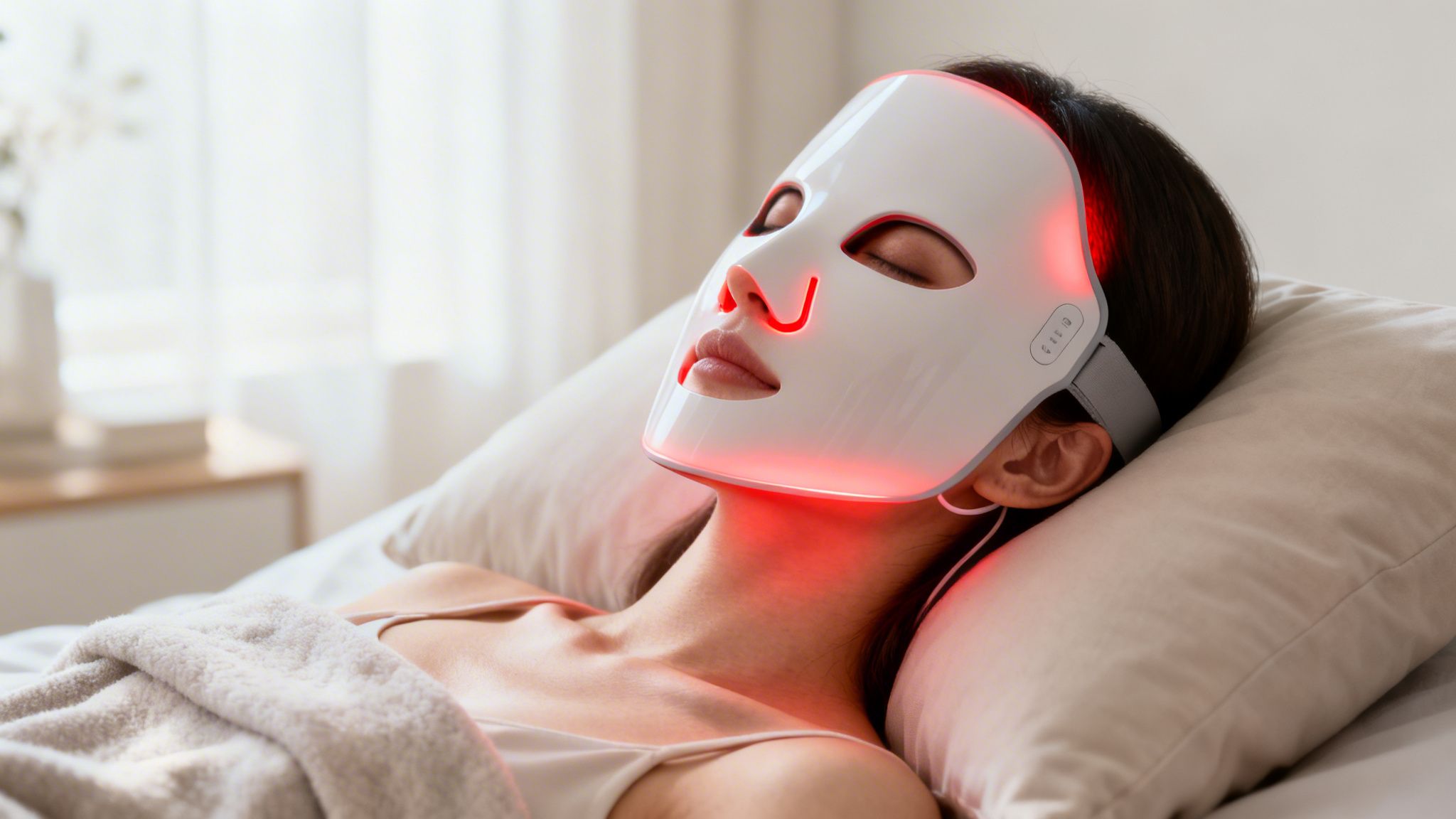
One of the most effective ways to supercharge your skin’s healing at home is with LED (Light Emitting Diode) therapy. It’s a completely non-invasive technology that uses specific wavelengths of light to talk to your skin cells, telling them to get to work.
For a compromised barrier, red light is the undeniable MVP. It works by stimulating the mitochondria—the little energy factories inside your skin cells—which helps dial down inflammation, boost circulation, and kickstart collagen production. It not only calms that angry, red, sensitive feeling but also strengthens the skin from the inside out.
The Barb N.P. Facial Mask is a perfect tool to bring this tech into your home. The biggest barrier to at-home devices is consistency, and this mask was designed to make it effortless.
- Wireless and Comfortable: It’s not one of those clunky, corded masks. It’s totally wireless and fits comfortably on your face, so you can wear it while you relax, read, or tidy up. No excuses.
- Three Powerful Lighting Settings: It has three lighting settings for different treatments, with the red light setting being your go-to for barrier repair. It’s perfect for calming inflammation and giving your cells the energy they need to heal.
Using a mask like this just a few times a week is the perfect complement to your topical routine. You’re soothing surface-level irritation while actively supporting your skin’s reconstruction on a cellular level.
Next-Level Results with In-Clinic Treatments
When you’re ready to really amplify your results, professional treatments offer a massive advantage. At BotoxBarb, we specialize in bridging the gap between your at-home care and clinical-strength solutions that create profound, lasting change. These services are game-changers, especially when your barrier is being stubborn.
A standout treatment is Platelet-Rich Plasma (PRP) therapy. This is where we harness the power of your own body to heal itself. We use the incredible growth factors found in your blood to turbo-charge your skin’s natural regeneration process. By drawing a tiny bit of blood, isolating the powerful platelets, and reintroducing them to your skin, PRP can dramatically reduce inflammation and kick tissue repair into high gear.
For a compromised barrier, this is huge. It’s working on a deep, cellular level to help rebuild your skin’s structure and improve its resilience from the ground up.
Combining consistent at-home LED therapy with periodic in-clinic treatments like PRP creates a powerful, two-pronged attack. You’re supporting your skin’s daily needs while also giving it the high-impact boost needed for deep, lasting repair.
The skincare world has finally caught on to how crucial the barrier is. By 2025, the skin barrier products market was valued at USD 1,594.1 million and is projected to hit USD 2,228.1 million by 2032. This isn't just a trend; it's a response to the fact that nearly one in three adults worldwide deals with chronic skin issues. You can read more about this shift in this in-depth market analysis.
Whether you’re at home with a mask or in the clinic for a professional treatment, these advanced options give you a direct path to a stronger, healthier, and more resilient skin barrier.
Your Top Skin Barrier Questions, Answered
Even with the best plan, you're going to have questions. When you're trying to figure out how to strengthen your skin barrier, the little details can make all the difference. This is where we clear up some of the most common questions we hear from clients, giving you the straightforward answers you need to stay on track.
Let’s tackle the big ones: timelines, potent ingredients, and how to tell what’s really going on with your skin.
How Long Does It Realistically Take to Repair My Barrier?
This is always the first question, and the honest answer is: you have to be patient. Real, structural healing doesn't happen in a weekend. While you might feel some initial relief from that awful tightness and stinging within a few days of simplifying your routine, the deep-down repair process takes time.
Your skin has a natural renewal rhythm, called the cell turnover cycle, which takes about 28 days. To see real, stable changes, you need to give your skin at least one full cycle to rebuild itself without interruption.
The Realistic Timeline: Expect to see noticeable improvements in redness, sensitivity, and hydration within two to four weeks of consistent, gentle care. For full restoration, especially if the damage was severe, you're likely looking at a couple of months.
Consistency is everything here. Sticking to that stripped-back, barrier-loving routine every single day is what gives your skin the space it needs to heal. Don't get discouraged if your skin doesn't look perfect in week one. Trust the process.
Can I Still Use Retinol with a Damaged Barrier?
In a word: no. When your skin’s defenses are down, hitting it with a powerful active like retinol is like asking someone with a sprained ankle to run a marathon. It’s just too much, too soon. Retinoids work by speeding up cell turnover, an amazing process for healthy skin, but an incredibly irritating one for a compromised barrier.
If you even suspect your barrier is damaged, you need to hit pause on all the heavy hitters. That means shelving:
- Retinoids (retinol, tretinoin, etc.)
- Strong AHAs (like glycolic acid) and BHAs (salicylic acid)
- High-potency Vitamin C serums (especially L-ascorbic acid)
- Any kind of gritty physical scrub
Your only job right now is to calm, soothe, and heal. Once your skin feels consistently comfortable and hydrated for at least a month, you can think about reintroducing retinol very slowly. We're talking a low concentration, just once or twice a week, while watching your skin like a hawk for any signs of protest.
Damaged Barrier vs. Sensitive Skin: What’s the Difference?
This is a critical distinction that trips up so many people. It’s easy to label yourself as having "sensitive skin" when everything you put on your face seems to cause redness and irritation. But these two things are fundamentally different, and knowing which one you have changes everything.
| Characteristic | Damaged Skin Barrier | Sensitive Skin Type |
|---|---|---|
| Nature | A temporary condition caused by something you did (e.g., over-exfoliation, harsh products). | An inherent skin type you were born with, often linked to genetics or conditions like rosacea. |
| Symptoms | A sudden onset of redness, stinging, tightness, and breakouts. Products you used to love now burn. | A lifelong pattern of reacting easily to new products, fragrances, and environmental triggers. |
| Solution | Can be fully repaired and restored to a healthy, resilient state with a gentle, supportive routine. | Can't be "cured," but can be managed beautifully with a consistent routine that avoids known triggers. |
Think of it this way: a damaged barrier is a state, while sensitive skin is a trait.
The good news? The recovery plan for both is nearly identical: simplify your routine, load up on soothing and hydrating ingredients, and ditch all potential irritants. If you follow the protocol and your skin bounces back to a calm, happy state, you likely just had a temporary condition. If it remains easily triggered, you probably have a true sensitive skin type—and that gentle routine just became your new best friend for life.
At BotoxBarb, we believe that understanding your skin is the first step toward loving it. From professional in-clinic treatments to our curated selection of medical-grade skincare, we're here to support every step of your journey. Explore our collection and build your perfect barrier-strengthening routine today.