How to Treat Dehydrated Skin The Ultimate Routine
Before you can fix dehydrated skin, you have to get one thing straight: it’s a water problem, not an oil problem. This is where so many people go wrong. The real solution is a one-two punch: first, you drench your skin with ingredients that pull in water, like hyaluronic acid. Then, you lock all that moisture in with the right kind of moisturizer to rebuild your skin’s protective barrier.
This strategy gets to the root of the issue, leaving you with skin that’s genuinely plump and radiant.
Why Your Skin Feels Dehydrated, Not Just Dry

Let's clear up the biggest misconception in skincare. Dehydrated skin and dry skin are not the same thing. Mixing them up is the number one reason I see clients failing to get the results they want. Once you understand the difference, you’re on the right track to actually solving the problem.
Dehydration is a condition, not a skin type you're stuck with forever. It means your skin is thirsty—its top layers are starved for water. This can happen to anyone, whether your skin is naturally oily, combination, or even prone to breakouts.
Dry skin, on the other hand, is a type you’re born with. It just doesn't produce enough sebum (your skin’s natural oils). Without that oil, it can’t hold onto moisture, which is why it often feels rough or looks flaky all year long.
Identifying the True Culprit
So, how can you tell which one you’re dealing with? Dehydrated skin often feels uncomfortably tight while looking dull and lackluster. You might suddenly notice fine lines look deeper or the shadows under your eyes seem more pronounced. It’s a temporary state, usually triggered by things in your environment or routine.
Here are the classic signs of dehydration:
- A tight feeling, even if your skin looks oily on the surface.
- New or increased sensitivity and itchiness.
- A dull, tired-looking complexion.
- Fine lines and wrinkles that seem to appear overnight.
This isn’t just in your head—it’s a massive global issue. The market for dehydrated skin products is expected to skyrocket from USD 6,748.7 million in 2024 to an incredible USD 15,346.5 million by 2034. It just goes to show how much our modern lives—weather, pollution, and stress—are parching our skin, sending everyone searching for real hydration.
To help you pinpoint exactly what’s going on with your skin, here’s a quick comparison.
Dehydrated Skin vs Dry Skin Key Differences
| Symptom | Dehydrated Skin (Lacks Water) | Dry Skin (Lacks Oil) |
|---|---|---|
| Feeling | Tight, especially after cleansing | Rough, scaly, sometimes itchy |
| Appearance | Dull, tired, fine lines are more obvious | Flaky patches, redness, small pores |
| Cause | External (diet, weather) or internal factors | Genetic, consistent lack of oil production |
| Pores | Can be normal, large, or small | Pores are typically small |
| Acne | Breakouts can still occur | Less common, but possible |
This table makes it clear: if your skin feels tight but still gets oily or breaks out, you’re almost certainly dealing with dehydration.
Your Skin Barrier: The Gatekeeper of Hydration
The secret to fixing dehydrated skin isn’t just about pouring water back in; it's about repairing your skin’s natural moisture barrier. Think of it like a security guard for your skin, made of cells and lipids that keep the good stuff (water) in and the bad stuff (irritants) out.
When that barrier gets damaged from things like harsh cleansers, too much sun, or environmental stress, water evaporates right out. That’s when dehydration kicks in.
Your goal isn't just to add water back into the skin, but to repair the barrier so it can hold onto that moisture effectively. This creates lasting results rather than a temporary fix.
As a Nurse Practitioner, I've walked countless clients through this exact process. The key is a consistent plan that both replenishes water and strengthens that protective barrier to stop future moisture loss. If you want to dive deeper, you can also learn more about how to repair a damaged skin barrier in our dedicated article.
Crafting Your Morning Hydration Routine
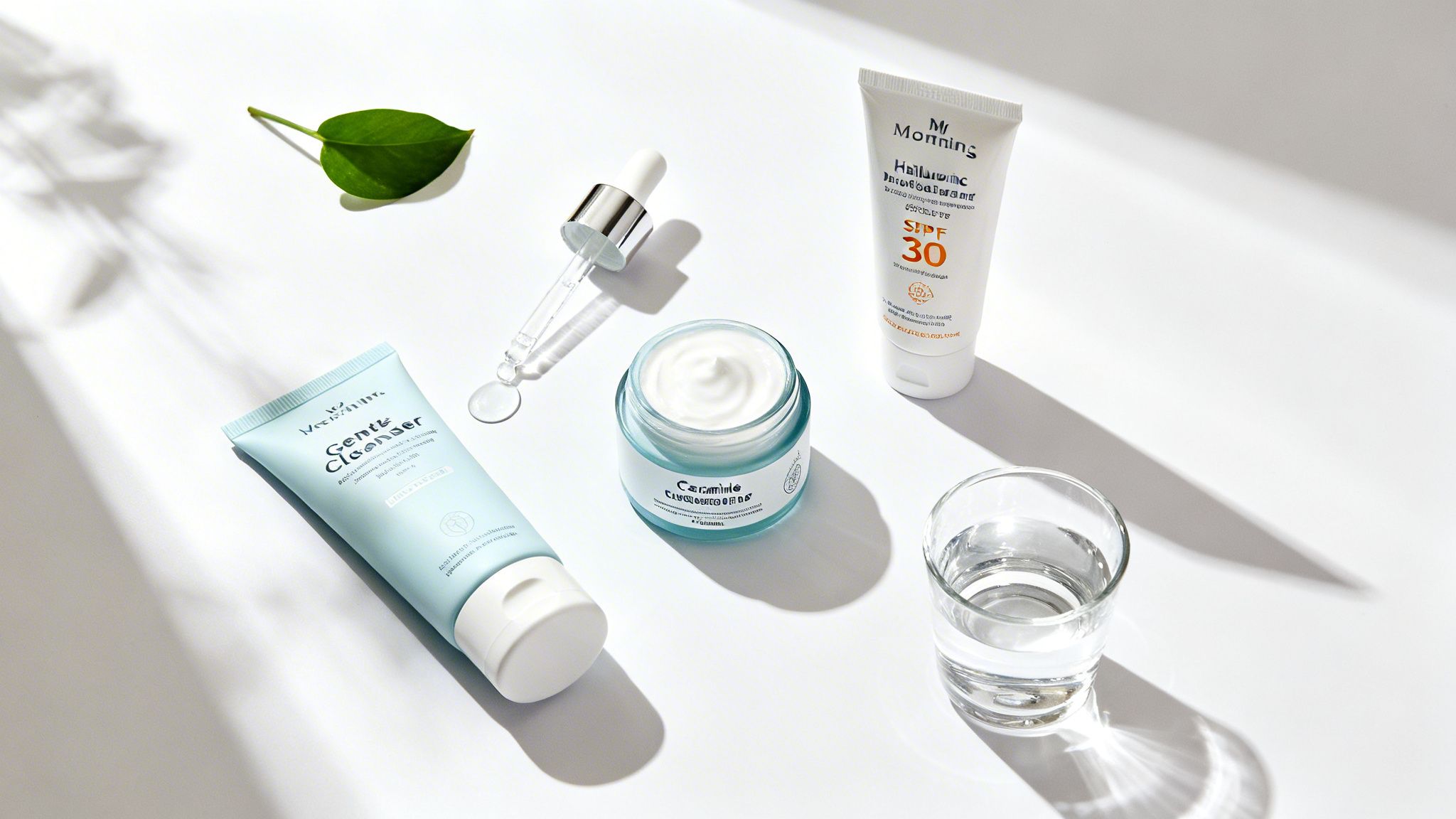
Think of your morning routine as building a shield for your skin. Its mission is two-fold: deliver deep, lasting hydration and then protect that moisture from everything the day throws at it. Nailing this is fundamental to treating dehydrated skin for good.
It all starts with a gentle, strategic cleanse. So many cleansers, especially foaming ones, are loaded with sulfates that strip your skin of its natural oils. This just weakens your moisture barrier and makes dehydration even worse.
Instead, look for a creamy, sulfate-free cleanser. You want your skin to feel clean, soft, and balanced—never tight or squeaky. This simple switch prevents moisture loss right from the start, creating the perfect canvas for the hydrating products to come.
The Foundation of Hydration: A Humectant Serum
After cleansing, while your skin is still a little damp, it’s time for the most important step: a humectant serum. Humectants are ingredients that act like magnets for moisture, pulling water from the air and deeper layers of your skin right up to the surface where you need it.
Hyaluronic Acid is the undisputed star here. But applying it to damp skin is a non-negotiable rule. If you put it on a dry face, it can actually pull moisture out of your skin, doing the exact opposite of what you want. A quality Hyaluronic Acid serum can hold up to 1,000 times its weight in water, making it a true powerhouse for plumping up thirsty skin.
Pro Tip: Gently pat your serum into your skin instead of rubbing. This technique helps with absorption and is much kinder to a compromised skin barrier, which is almost always the case with dehydration.
For those who are serious about results, medical-grade formulas make a huge difference in absorption and efficacy. I frequently recommend the Epicutis Lipid Serum from BARB N.P. to my clients. It is formulated to mimic the natural lipid balance in your skin, delivering a precise blend of essentials to repair the barrier and provide deep hydration. An investment in a high-quality serum pays off in your skin's ability to hold onto moisture all day. You can find out more about the right way to apply these products in our guide on how to properly layer skincare serums.
Lock In Moisture and Support Your Barrier
Once your serum has absorbed, the next move is to seal all that hydration in. This is where a ceramide-rich moisturizer is your best friend. Ceramides are lipids (fats) that are naturally found in your skin—they make up about 50% of the epidermis and are absolutely essential for a healthy skin barrier.
When skin is dehydrated, its ceramide levels are often depleted. Using a moisturizer to replenish them helps to:
- Reinforce the Skin Barrier: A stronger barrier prevents transepidermal water loss (TEWL), which is just a technical term for water evaporating from your skin.
- Soothe Irritation: Ceramides help calm the sensitivity and redness that often come with a damaged barrier.
- Lock in Serums: It creates a protective layer that holds your humectant serum against the skin, letting it do its job more effectively.
The global demand for effective skin treatments tells the whole story. The dry skin treatment market, which is closely linked to dehydrated skincare, grew from USD 134.03 billion in 2022 and is projected to hit USD 182.02 billion by 2030. This growth is largely driven by 'mildly dry skin' cases, affecting over 60% of people in regions like North America and Europe—highlighting just how common this is.
The Final—and Most Critical—Step
You can follow every hydration step perfectly, but if you skip this last one, you’re sabotaging all your hard work. The final, crucial layer of your morning routine is a broad-spectrum sunscreen with an SPF of 30 or higher.
Sun exposure is one of the biggest culprits behind dehydrated skin. UV rays damage your skin barrier, leading to increased moisture loss and inflammation. Protecting your skin every single day is the best way to preserve the hydration you’ve just put in. Find a formula you love, because you need to be motivated to apply it every single day, rain or shine.
Your Nighttime Repair and Rehydration Ritual
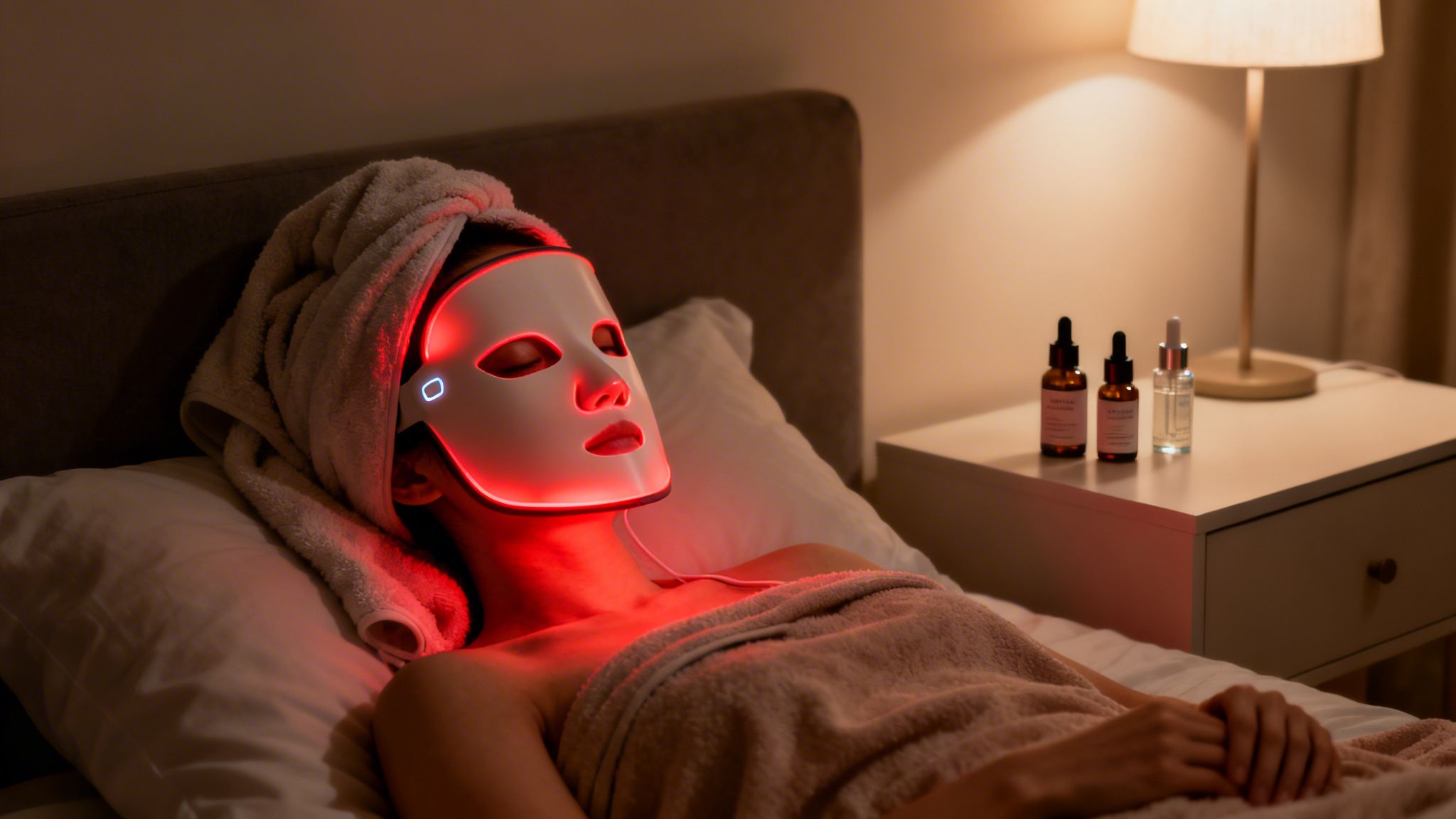
While your morning routine is all about defense, your evening ritual is where the real repair work happens. Overnight, your skin’s regenerative processes kick into high gear, making it the perfect time for intensive rehydration and barrier restoration. This is your window to feed your skin the concentrated ingredients it needs to heal and plump up while you sleep.
The first step, always, is a thorough cleanse—especially if you wear makeup or SPF. For dehydrated skin, a double cleanse is non-negotiable. Start with an oil-based cleanser to melt away makeup, sunscreen, and daily grime, then follow up with a gentle, hydrating cream cleanser to wash it all away without stripping your skin.
This two-step method ensures your skin is completely clean, creating a clear pathway for your treatment products to do their job effectively. Your skin should feel comfortable and nourished after washing, never tight or squeaky.
Supercharge Your Routine with Smart Exfoliation
Exfoliation might sound intimidating when your skin feels sensitive, but choosing the right kind can dramatically improve its ability to hold onto moisture. A buildup of dead skin cells acts like a barrier, blocking your hydrating serums from penetrating where they need to go.
Ditch the harsh physical scrubs. Instead, opt for a gentle chemical exfoliant a few nights a week. Lactic Acid, an alpha-hydroxy acid (AHA), is a fantastic choice for dehydrated skin because it's also a humectant. That means it exfoliates the surface while simultaneously pulling moisture into the skin.
By gently dissolving the 'glue' that holds dead cells together, you reveal a fresher, more receptive canvas. This single step can make all your other products work better, helping you solve how to treat dehydrated skin much faster.
Don't overdo it. For most people with dehydrated skin, exfoliating 2-3 times per week is the sweet spot. Over-exfoliation will only damage your skin barrier further, so listen to your skin and adjust as needed.
Layer on Hydration and Amplify with Technology
With your skin prepped and ready, it’s time to layer on those hydrating serums, just like you did in the morning. Repetition is key for rebuilding and maintaining optimal water levels in the skin.
But nighttime offers a unique opportunity to elevate your routine with advanced at-home technology. This is the perfect time to incorporate a treatment like the Barb N.P. LED Facial Mask. Integrating this device into your evening ritual can seriously amplify the effects of your topical products.
One of the mask's best features is its effortless design. It’s completely wireless and built for comfort, so you can easily wear it while you read a book or unwind before bed. It doesn't feel like a chore; it feels like a moment of self-care.
Understanding the Power of Light Therapy
The Barb N.P. LED Facial Mask offers 3 distinct lighting settings to target different skin concerns, but for dehydration and repair, the red light is your go-to.
Here's how it boosts your rehydration efforts:
- Red Light Therapy: This wavelength penetrates deeper into the skin to stimulate fibroblast cells, the tiny factories responsible for producing collagen. More collagen improves skin structure and its ability to retain moisture.
- Enhanced Product Absorption: The gentle warmth and increased circulation from the LED therapy can help your hydrating serums penetrate more effectively.
- Cellular Repair: Red light is also known to energize the mitochondria—the powerhouses of your cells. This boost in cellular energy accelerates the natural repair processes that are already happening overnight.
Think of it as giving your skin a supercharged environment to heal. You're not just applying products; you're creating the ideal conditions for them to deliver clinic-level results right in your own home. By combining smart exfoliation, layered hydration, and targeted light therapy, your nighttime ritual becomes a powerful system for deep, lasting rehydration.
Key Ingredients And Products That Truly Work
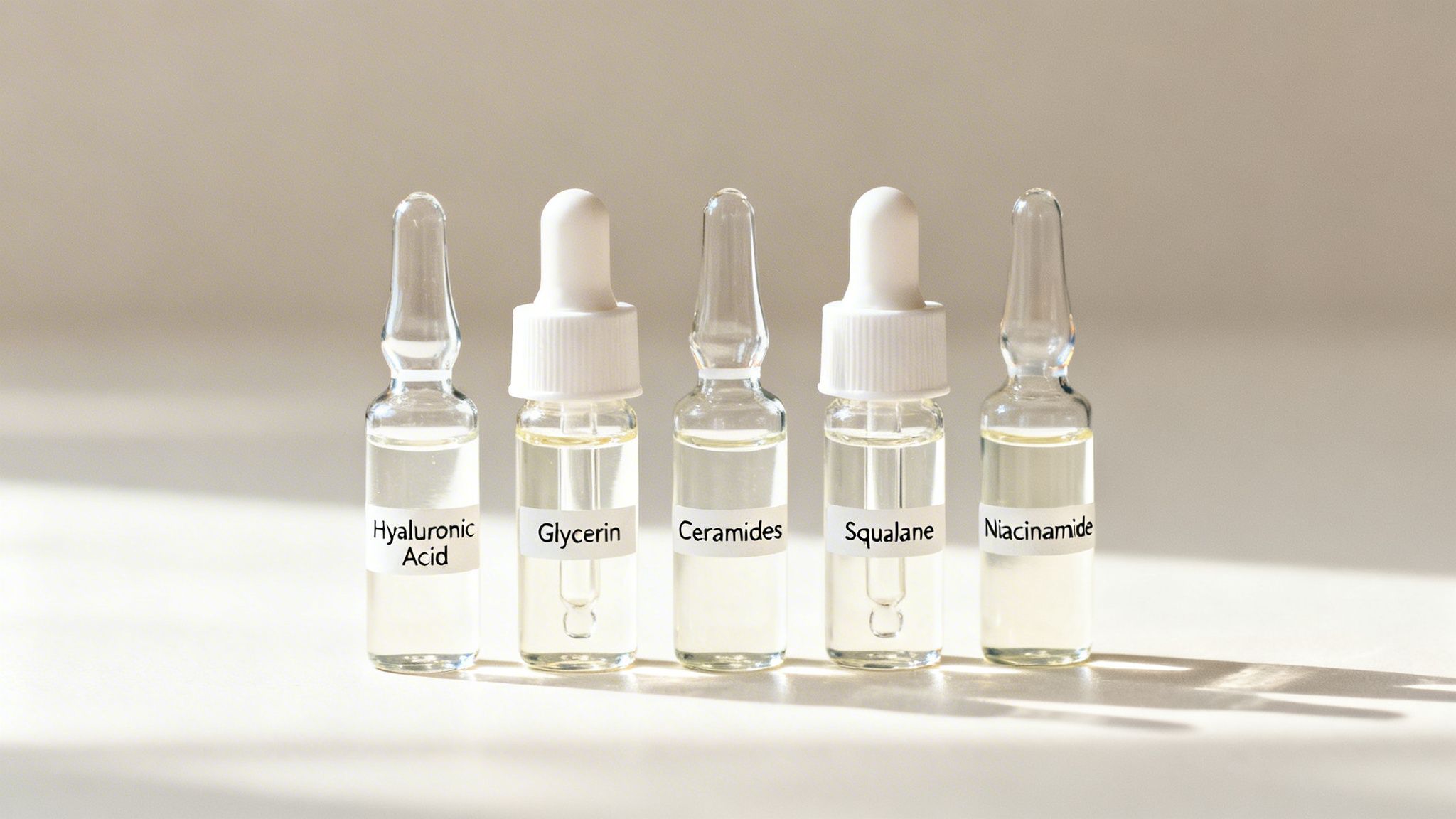
Navigating the world of skincare ingredients can feel like a complex science experiment. But when you’re figuring out how to fix dehydrated skin, a few key players consistently deliver results. Understanding what these powerhouse ingredients do makes it infinitely easier to choose products that will actually rehydrate and repair your skin barrier.
The skincare market is paying attention. While broader skin disease treatments reached USD 88.25 billion in 2022, the specific niche for dehydrated skin is booming. Projections show a climb from USD 34,826 million in 2025 to a staggering USD 50,001 million by 2032. This just confirms what we see in the clinic every day: proper hydration is the foundation of healthy skin.
The Hydration Heroes Your Skin Needs
Let’s get straight to it. These are the non-negotiables you should be looking for on every product label when your skin is thirsty. They form the backbone of any effective rehydration strategy.
For a quick reference, here are the top 5 ingredients I recommend to my clients who are struggling with dehydration and a compromised barrier.
Top 5 Ingredients for Dehydrated Skin
| Ingredient | What It Does | Find It In (Product Example) |
|---|---|---|
| Hyaluronic Acid (HA) | A powerful humectant that can hold up to 1,000 times its weight in water, drawing moisture into the skin for a plump, dewy look. | Serums, essences, and a quality hydrating face mist with hyaluronic acid and aloe vera. |
| Glycerin | An old-school but incredibly reliable humectant that attracts water and helps improve skin barrier function to lock that moisture in. | Cleansers, toners, and moisturizers. |
| Ceramides | These are the lipids (fats) that hold your skin cells together. Making up over 50% of your skin's composition, they are crucial for preventing water loss. | Rich barrier creams and targeted repair serums. |
| Squalane | A lightweight, non-greasy oil that mimics your skin’s natural sebum, sealing in moisture and leaving skin feeling soft and smooth. | Facial oils and lightweight moisturizers. |
| Niacinamide (B3) | This multi-tasker strengthens the barrier, calms inflammation, and helps your skin produce its own ceramides, which is key for long-term resilience. | Serums, moisturizers, and even some sunscreens. |
These ingredients work best together, creating a comprehensive approach that not only adds water back into the skin but also ensures it stays there.
Supporting Ingredients For Barrier Repair
Beyond pure hydration, you need ingredients that soothe, strengthen, and support the skin's natural functions. These two are fantastic complements to the core hydrators.
- Squalane: This is a lightweight, non-comedogenic oil that mimics your skin's natural sebum. It’s an excellent emollient, meaning it seals in moisture and leaves the skin feeling soft and smooth without any greasiness.
- Niacinamide (Vitamin B3): A true multi-tasker, niacinamide helps your skin produce more ceramides, strengthens the barrier, reduces inflammation, and can even help regulate oil production—a huge benefit if your dehydrated skin is overcompensating with excess oil.
Understanding these core ingredients is the first step. The next is finding a product that combines them effectively to both hydrate and fortify your skin's barrier, addressing the root cause of the problem.
Connecting Ingredients To A Powerful Product
Knowing the "why" behind ingredients is powerful, but seeing them in action is what brings results. That’s why product formulation matters so much. A standout example I recommend in my practice is the Epicutis Lipid Serum from BARB N.P.
This serum is a perfect illustration of a product designed specifically for barrier repair and deep hydration. It moves beyond just surface-level moisture by delivering a precise blend of essential lipids directly to the skin.
By fortifying the skin’s natural defenses, it not only provides immediate relief but also helps your skin become more resilient against dehydration over time. It’s an investment in your skin's long-term health, ensuring it can hold onto precious moisture on its own. For those who want a deeper dive, our guide on choosing the right hyaluronic acid serum for dehydrated skin offers more targeted advice.
Beyond the Bottle: Lifestyle Habits and Advanced Treatments for Lasting Hydration
Topical products are a huge part of the equation, but what you put on your skin is only one piece of the puzzle. To truly fix dehydrated skin for good, you need to look at the bigger picture. Simple lifestyle tweaks, combined with advanced clinical solutions when necessary, are what bridge the gap between temporary relief and that deep, lasting hydration we’re all chasing.
One of the most common culprits I see stripping moisture from the skin? Excessively long, hot showers. I know it feels amazing, but that steaming hot water is a fast track to stripping away the natural oils that lock moisture in, leaving your skin’s barrier weak and vulnerable.
Try turning the temperature down to lukewarm and keeping your showers to 10-15 minutes. Then, the second you step out, apply your body moisturizer while your skin is still damp. It’s a small change, but it makes a massive difference in your skin’s overall hydration.
Hydrate Your Skin from the Inside Out
What you eat and drink is just as crucial as what you apply. Staying hydrated internally is non-negotiable for plump, healthy skin. And while drinking plenty of water is key, you can also "eat" your water by loading your diet with hydrating foods.
Think about adding these to your daily meals:
- Cucumber: It’s about 96% water, making it an incredible way to hydrate while getting other nutrients.
- Watermelon: A summer favorite for a reason—it’s delicious, incredibly hydrating, and packed with skin-loving antioxidants.
- Strawberries: These berries are full of water and also give you a great dose of Vitamin C.
- Celery: Another crunchy, water-rich veggie that helps keep inflammation down.
Remember, true hydration starts from within. To really round out your routine, explore these top tips on hydration and nutrition. When you nourish your body correctly, you’re giving your skin the internal support it needs to stay resilient and glowing.
Take Control of Your Environment
Your immediate surroundings play a surprisingly huge role in your skin’s moisture levels. This is especially true in dry climates or during winter when the indoor heating is cranked up. That dry air literally pulls moisture right out of your skin, leaving you with that tight, uncomfortable feeling.
A simple—but incredibly effective—solution is running a humidifier in your bedroom or office. By adding moisture back into the air, a humidifier helps prevent transepidermal water loss (TEWL) while you sleep or work. It creates a much more skin-friendly environment and helps all those serums and creams you’re using work even better.
Think of a humidifier as a constant, gentle source of hydration for your skin. It's a passive but powerful tool that supports your skin barrier around the clock, making it an essential part of any serious rehydration strategy.
When to Bring in the Professionals
A dedicated at-home routine and healthy lifestyle habits will resolve most cases of dehydrated skin. But sometimes, you need to call in professional backup for more profound and lasting results. If you’ve been consistent for over a month and still aren't seeing the improvement you want, it might be time to consider in-clinic treatments. These can deliver a level of hydration that topicals simply can't match.
At my practice, we have a few go-to options for replenishing moisture at a much deeper level.
Dermal Fillers for Deep Hydration Most people think of fillers for adding volume, but their primary ingredient is often Hyaluronic Acid—the same superstar hydrator in your serums. When products like Juvéderm® or Restylane® are strategically injected, they act like internal moisture reservoirs. They bind to water within the dermis, plumping the skin from the inside out and providing deep, sustained hydration that lasts for months.
Platelet-Rich Plasma (PRP) Therapy Another powerful option is PRP therapy. This treatment uses the healing and growth factors from your own blood to rejuvenate the skin. When reinjected, PRP stimulates new collagen and improves your skin’s overall health and resilience. This process strengthens the skin's structure and boosts its natural ability to hold onto moisture, leading to a much healthier, more hydrated complexion over time.
These professional treatments aren't a replacement for a great daily routine, but they can be a powerful partner. They provide a foundational boost that can supercharge your at-home efforts, helping you finally achieve that deeply hydrated, glowing skin you’ve been working toward.
Your Dehydrated Skin Questions Answered
Even with the perfect routine, questions are bound to pop up. In my practice, I hear the same ones over and over from clients trying to get a handle on their dehydrated skin. This section is all about giving you quick, clear answers to those common sticking points, so you can troubleshoot your routine and finally get the results you're working so hard for.
Can Oily Skin Really Be Dehydrated?
Yes, absolutely. This is probably the biggest source of confusion I see when it comes to treating dehydrated skin. Dehydration is a lack of water, not oil, so it can happen to any skin type—even the oiliest.
In fact, dehydrated oily skin often gets worse because it goes into overdrive, producing even more oil to compensate for the missing water. This vicious cycle leads to more congestion, clogged pores, and breakouts. The answer isn't to reach for harsh, stripping cleansers. Instead, focus on lightweight, non-comedogenic hydrators like hyaluronic acid serums and gel-based moisturizers to restore that water balance without adding extra oil.
How Long Until I See A Difference?
You’ll likely feel immediate relief from that uncomfortable tightness after your very first properly hydrated routine. That’s the instant gratification of giving thirsty skin exactly what it’s craving.
However, the visible, lasting changes—like smoother texture, a bouncier feel, and less noticeable fine lines—take consistency. Most of my clients report seeing a significant, noticeable improvement in about 2 to 4 weeks. That's the time it takes for your skin barrier to properly repair itself and for your moisture levels to stabilize.
The key is patience and consistency. Dehydration didn't happen overnight, and restoring your skin's health is a process of rebuilding its defenses day by day. Stick with your routine, and the results will follow.
What Are The Biggest Mistakes People Make?
Over the years, I've seen a few common missteps that can sabotage even the best intentions. Avoiding these is crucial for making real progress with your dehydrated skin.
- Using Harsh Cleansers: This is the most common mistake by far. Aggressive, foaming cleansers that strip the skin’s delicate moisture barrier are a huge no. If your face feels squeaky clean or tight after washing, your cleanser is too harsh.
- Applying Hyaluronic Acid to Dry Skin: This one is a big deal. Hyaluronic acid is a humectant, meaning it needs moisture to work. Applying it to a dry face can actually cause it to pull water from the deeper layers of your skin, making dehydration worse. Always, always apply it to damp skin.
- Skipping Moisturizer: Many people with an oily surface sheen mistakenly believe a moisturizer will make their skin greasier. In reality, a good moisturizer is essential for locking in all that hydration and signaling to your skin that it doesn't need to overproduce oil.
When Should I Consider Professional Help?
If you’ve followed a consistent, targeted routine for over a month and your skin is still struggling, it's time to see a professional. Persistent dehydration can sometimes be a sign of an underlying issue that needs a proper diagnosis.
A Nurse Practitioner or dermatologist can assess your skin, rule out other conditions, and recommend more advanced options. This might include in-office treatments or prescription-strength topicals to finally get your skin's hydration back on track and restore its healthy, glowing state.
At BotoxBarb, we believe in a holistic approach to skin health, combining personalized routines with the most effective, medical-grade products available. Explore our curated selection of skincare essentials designed to restore and maintain your skin's optimal hydration. Discover your perfect routine at https://barbnp.shop.