Best Skincare Routine for Aging Skin: best skincare routine for aging skin today
Forget the complicated, ten-step routines you see online. The secret to radiant, mature skin isn't about doing more; it's about doing the right things consistently. It all boils down to a simple philosophy: protection during the day and repair at night.
Your Blueprint for Radiant Mature Skin
When you're dealing with mature skin, your goal shifts from chasing temporary fixes to building a daily defense system. Your skin is constantly up against environmental aggressors—think UV rays and pollution—that speed up the visible signs of aging.
A smart routine acts as your personal shield and overnight repair crew. In the morning, you arm your skin to face the day. At night, you give it the tools it needs to regenerate and rebuild. This protect-and-repair rhythm is the foundation of every successful pro-aging strategy I recommend to my clients.
The Science Behind a Pro-Aging Approach
To treat your skin effectively, you first have to understand why its needs are changing. As we get older, a few key biological processes naturally slow down, leaving our skin more vulnerable.
- Collagen Production Declines: After you turn 20, your body produces about 1% less collagen each year. This is the protein that gives your skin its firmness and structure, so less of it means more sagging and fine lines.
- Cell Turnover Slows: The natural cycle of shedding old skin cells and bringing fresh new ones to the surface becomes less efficient. This can leave you with a dull, uneven complexion and a rougher texture.
- Moisture Barrier Weakens: Your skin's ability to hold onto hydration diminishes, which often leads to dryness, increased sensitivity, and a compromised protective barrier.
A truly effective routine can be as simple as three steps: cleanse, treat, and protect. This minimalist approach supports your skin’s natural barrier while addressing your core needs—and nothing more.
Why Your Routine Matters Now More Than Ever
You're not alone in seeking effective solutions for mature skin. By 2050, it's projected that one in every six people worldwide will be over 65 years old. This massive demographic shift is driving a huge demand for tailored skincare, with North America expected to command 40% of the global anti-aging market share by 2025.
Of course, a glowing complexion is also supported from the inside out. Complementing your topical routine with the right nutrients is key, so it's worth exploring the best vitamins for skin, hair, and nails.
In this guide, we'll walk through the powerhouse ingredients that make a real difference, from antioxidants to retinoids, so you can build a routine that works for you. If you want to dive deeper into the science, you can learn more about the best anti-aging ingredients in our detailed guide.
Building Your Morning Protection Ritual
Think of your morning routine as putting on a coat of armor before heading out the door. Every single day, your skin is up against a barrage of environmental stressors—UV radiation, pollution, even blue light from your screens—and all of them speed up the visible signs of aging.
A protective morning ritual isn't just a nice idea; it's a non-negotiable part of any serious anti-aging skincare plan. This is your primary strategy for preventing future damage. The goal isn't to pile on a dozen different products, but to create a simple, effective shield with just a few key steps: gentle cleansing, potent antioxidant protection, smart hydration, and—most critically—diligent sun protection.
Start with a Gentle Cleanse
Overnight, your skin is busy repairing itself, producing beneficial oils and shedding dead cells. The last thing you want to do is blast it all away with a harsh, aggressive cleanser first thing in the morning. That approach can completely disrupt your skin’s delicate moisture barrier, leaving you with dryness and irritation before the day has even started.
Instead, reach for something creamy, hydrating, or milky. Look for formulas that are sulfate-free and packed with gentle, nourishing ingredients like ceramides, glycerin, or hyaluronic acid. The idea is just to refresh your skin and create a clean canvas for your treatment products, all without causing that dreaded tight or stripped feeling.
Apply a Powerful Antioxidant Serum
After patting your skin dry, the next step is your antioxidant serum. This is where you actively fight back against free radicals—those unstable molecules generated by UV rays and pollution that wreak havoc on your skin cells and break down precious collagen. Think of antioxidants as your skin's personal bodyguards.
Vitamin C is the gold standard here, and for good reason. It doesn't just neutralize free radicals; it also brightens your complexion, helps fade hyperpigmentation, and even supports new collagen production. For the best results, look for a serum with L-ascorbic acid, the most potent form of Vitamin C. You'll often see it combined with Vitamin E and ferulic acid, a powerhouse trio that boosts its stability and effectiveness.
Apply a few drops to your face and neck, gently pressing it into the skin. Then, wait. Give it a full minute or two to absorb completely before you even think about your moisturizer. This little pause makes a huge difference, ensuring the active ingredients can penetrate properly without being diluted.
Lock in Hydration with a Moisturizer
Even if your skin leans oily or combination, a moisturizer is absolutely essential. As we mature, our skin's natural ability to hold onto moisture declines. This leads to dehydration, which makes fine lines and wrinkles look much more prominent than they actually are.
A good moisturizer supports your skin's barrier, sealing in hydration and all the good stuff from your serum. The key is to choose one that works for your specific skin type:
- For Dry Skin: You need a richer cream. Look for ingredients like shea butter, ceramides, and peptides to provide deep, lasting hydration and support your skin's structure.
- For Oily or Combination Skin: A lightweight, oil-free lotion or a gel-cream is your best bet. It will provide the necessary moisture without feeling heavy or clogging pores. Formulas with hyaluronic acid or glycerin are perfect.
Finish with Broad-Spectrum Sunscreen
If you only do one thing for your skin in the morning, make it this. Sunscreen is, without a doubt, the single most effective anti-aging product you can use. Up to 80% of visible skin aging is a direct result of UV exposure, so daily protection is the cornerstone of any routine that works.
You need a broad-spectrum sunscreen with an SPF of 30 or higher. This ensures you're protected from both UVA rays (the aging rays) and UVB rays (the burning rays). The most important thing is finding a formula you genuinely love to wear every single day. Whether it's a mineral-based sunscreen with zinc oxide or a lightweight chemical formula, consistency is what matters most.
For a deeper look into selecting the right product, our guide on the best sunscreen for aging skin can help you find your perfect match.
Don't forget to apply sunscreen to those often-missed spots like your neck, chest, and the backs of your hands. These areas show signs of aging just as much as your face and need that daily protection, too.
Your Evening Routine for Repair and Renewal
When the day winds down, your skin’s most important work is just getting started. Nighttime is when skin switches into repair mode, working hard to undo daily damage from UV rays and pollution. A smart evening routine is all about supporting this natural process, delivering the key ingredients your skin needs for true renewal.
This ritual always begins with a deep cleanse to get rid of every last trace of makeup, sunscreen, and city grime. From there, it’s all about deploying powerful, restorative actives that speed up cell turnover, kickstart collagen production, and rebuild your skin's resilience while you sleep.
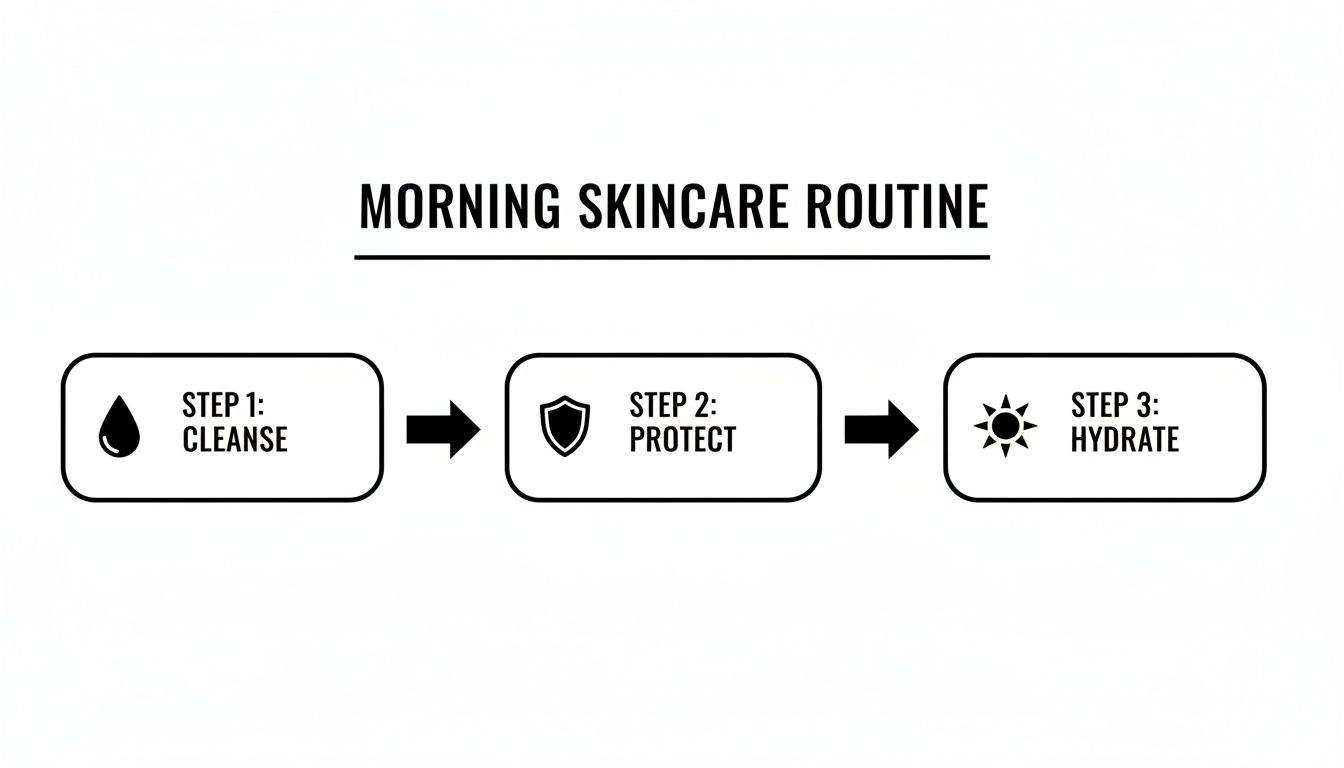
Think of it this way: a strong morning defense is the perfect setup for a successful nightly repair session. You protect by day so you can treat effectively by night.
The Power of the Double Cleanse
Trust me on this one: a single pass with a cleanser often isn't enough, especially if you wear long-wear makeup or mineral-based sunscreens. This is where the double cleanse becomes a non-negotiable step. It’s a two-part method that guarantees your skin is impeccably clean and ready to soak up all the goodness that comes next.
First, start with an oil-based cleanser or a cleansing balm. Massage it onto dry skin to dissolve and lift away all those stubborn, oil-based impurities. Then, follow up with a gentle, water-based cleanser (like a gel or milky formula) to wash everything away, leaving your skin perfectly prepped but never feeling stripped or tight.
Introducing Your Nighttime Power Players
With a clean canvas, it’s time for the heavy hitters. Your evening routine is the best time to use intensive active ingredients because they can work their magic uninterrupted, without interference from UV light.
Retinoids: The Gold Standard for Renewal
If there's one ingredient every dermatologist and aesthetic expert agrees on for aging skin, it's a retinoid. These Vitamin A derivatives are absolute superstars at accelerating cell turnover, which helps shed dull, damaged skin cells to reveal the fresher, smoother skin underneath.
They are also clinically proven to stimulate collagen, visibly reducing fine lines, wrinkles, and even the look of enlarged pores over time. For those new to this potent active, our guide on what is tretinoin cream is a great place to start.
Pro Tip: When you first start a retinoid, go slow. Begin with a lower concentration just two or three nights a week. Apply a pea-sized amount to dry skin and always follow with your moisturizer. As your skin gets used to it, you can gradually increase how often you use it.
Peptides: The Building Blocks for Firmer Skin
Think of peptides as little messengers. These short chains of amino acids signal your skin to perform specific jobs, like producing more collagen and elastin—the proteins that keep it firm and bouncy.
Adding a peptide serum into your evening routine can make a real difference in your skin's firmness, elasticity, and overall texture. For instance, the BARB N.P. Signature Serum is packed with advanced peptides designed to support your skin’s natural repair mechanisms. It's the perfect step after cleansing and before your final moisturizer.
To help you choose the right actives for your nighttime routine, here's a quick summary of the most effective ingredients you should consider.
Key Active Ingredients for Your Evening Routine
| Ingredient | Primary Benefit | Starting Frequency | Best For |
|---|---|---|---|
| Retinoids | Boosts collagen, speeds cell turnover, refines texture | 2-3 nights per week | Fine lines, wrinkles, uneven texture |
| Peptides | Improves firmness, supports elasticity, hydrates | Nightly | Loss of firmness, fine lines |
| AHAs | Exfoliates surface, brightens tone, smooths skin | 1-2 nights per week | Dullness, rough texture, sun damage |
| Niacinamide | Strengthens barrier, calms redness, minimizes pores | Nightly | Redness, enlarged pores, sensitivity |
This table highlights the core ingredients that deliver visible results. The key is to start slow with potent actives like retinoids and AHAs, allowing your skin time to adapt.
Locking It All In With a Rich Moisturizer
Your final step is to seal everything in with a nourishing moisturizer. An evening cream for mature skin should be richer than your daytime lotion, creating a protective barrier that locks in your treatment ingredients and prevents water loss while you sleep.
Look for formulas loaded with ingredients that support your skin barrier:
- Ceramides: These are lipids naturally found in your skin, and they're crucial for keeping your barrier healthy and strong.
- Hyaluronic Acid: A humectant that draws moisture into the skin, keeping it plump and hydrated from within.
- Shea Butter: An incredible emollient that soothes and deeply moisturizes dry or compromised skin.
This focused, intentional evening routine gives your skin exactly what it needs to repair and rejuvenate. And consumers are catching on—North America is set to dominate the anti-aging skincare market with a 40% global market share in 2025, driven by smart consumers investing in preventative care. The best routines consistently include broad-spectrum sunscreen by day, collagen-boosting retinoids by night, and firming peptides to achieve clinic-level results right at home.
Taking Your Routine to the Next Level with Advanced Treatments
A consistent at-home routine is the bedrock of healthy, youthful skin. But to truly elevate your results, think of it like this: your daily skincare is the diet and exercise, while advanced treatments are the targeted sessions with a personal trainer. They push past the limits of what topical products can achieve on their own.
When serums and creams have done all they can on the surface, professional procedures and high-tech at-home devices step in to work on a deeper level, tackling concerns that need more than just a topical solution.

In-Clinic Treatments for Deeper Renewal
Some of the most common signs of aging—like lines from repeated expressions or a loss of facial volume—simply respond best to a professional’s touch. These treatments are designed to restore the skin’s underlying structure for a smoother, more lifted appearance.
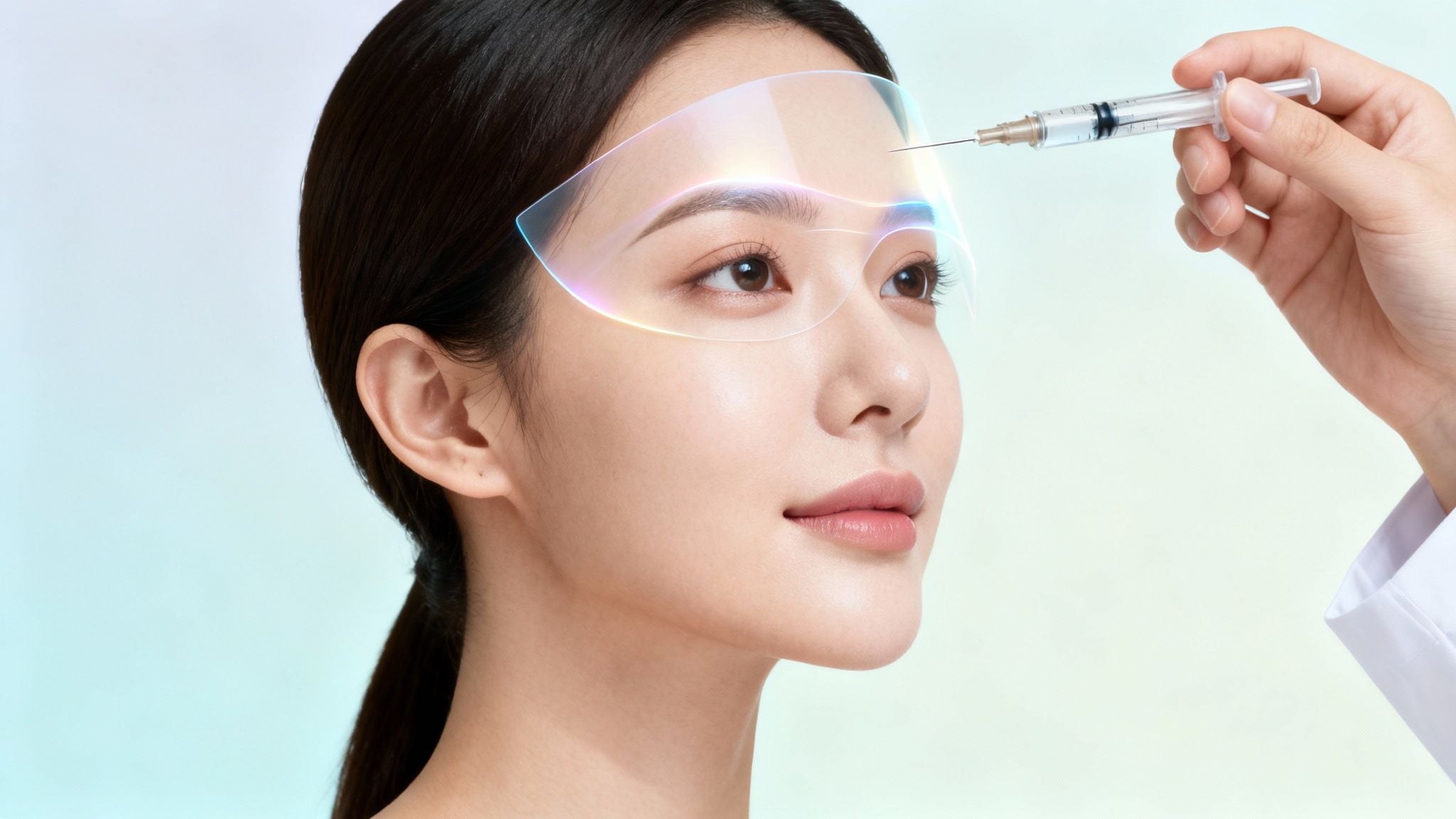
- Neuromodulators (Botox & Dysport): These are absolute game-changers for dynamic wrinkles. We're talking about the lines etched in from years of smiling, frowning, and squinting. By gently relaxing the specific muscles responsible for these movements, they can soften forehead lines, crow's feet, and the stubborn "11s" between the brows for a refreshed, rested look that no cream can replicate.
- Dermal Fillers: Over time, our faces naturally lose the supportive subcutaneous fat that creates a youthful contour. Hyaluronic acid fillers are expertly placed to bring back that lost volume in areas like the cheeks or temples. They can also fill deeper static lines, like laugh lines, and subtly redefine the jawline for a natural, rejuvenated look.
Bring the Clinic Home with LED Light Therapy
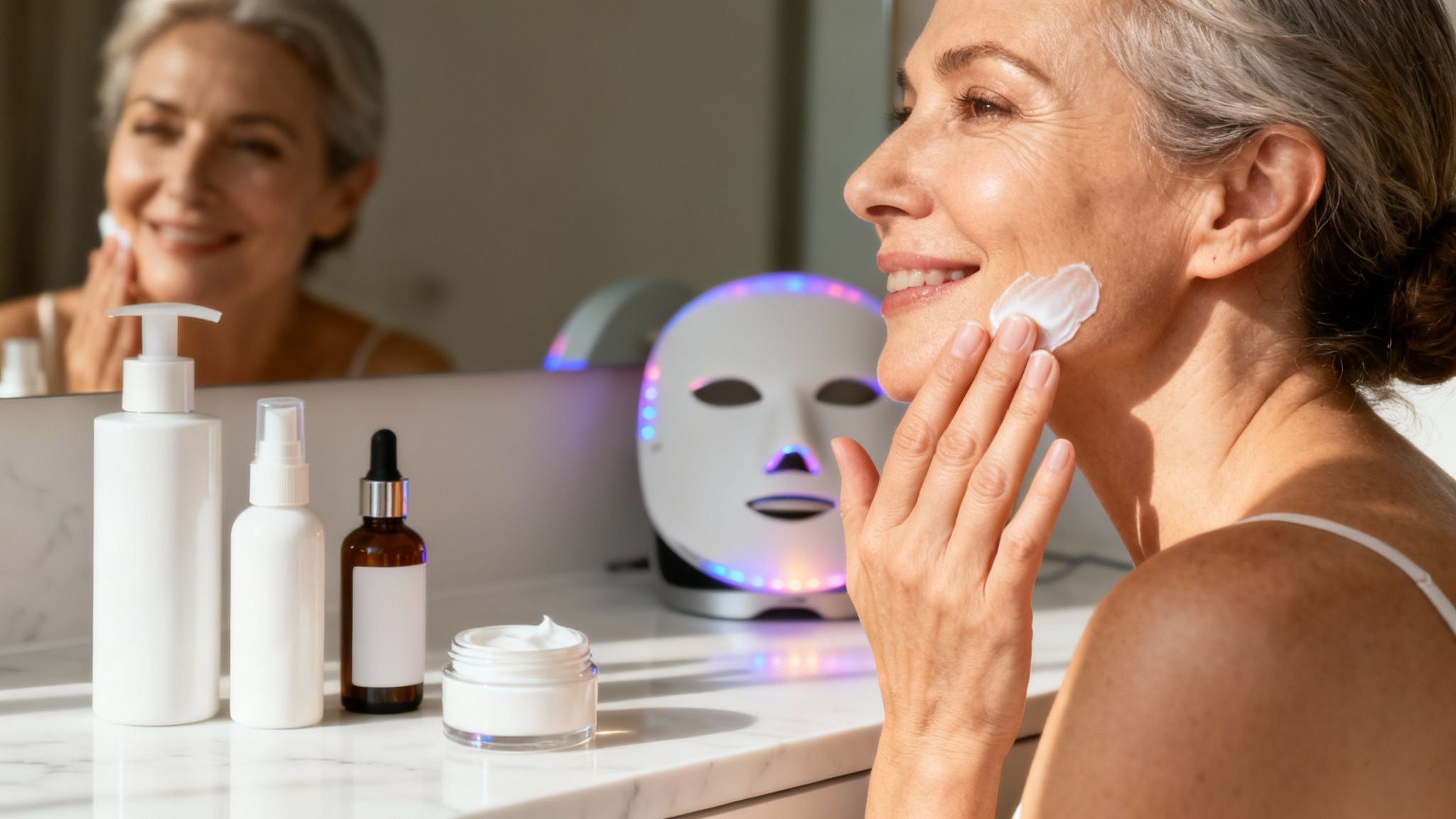
One of the most powerful ways to boost your daily routine without a clinic visit is with an at-home LED (Light Emitting Diode) mask. This technology, once only found in professional settings, is now accessible for daily use, letting you consistently supercharge your skin's natural repair cycles.
The Barb N.P. Facial Mask is a perfect example of how to bring professional-grade tech into your home. It's designed for real life. The mask is completely wireless, so you aren't stuck sitting next to an outlet. It’s also ergonomically designed to be comfortable on your face, making it effortless to slip into your evening routine while you unwind with a book or podcast.
This isn't just about maintaining results between appointments; it's about actively improving your skin's health on a daily basis. Consistent use leads to firmer skin, a clearer complexion, and a noticeable glow.
The mask is equipped with three specific light settings to address different skin needs:
- Red Light: This is the anti-aging workhorse. It penetrates deep into the skin to wake up your fibroblast cells—the little factories that produce collagen and elastin. More collagen means firmer, plumper skin and a real reduction in fine lines over time.
- Blue Light: If you still deal with hormonal or stress-related breakouts, blue light is your best friend. It targets and neutralizes acne-causing bacteria on the skin’s surface, helping to clear up your complexion and keep future blemishes at bay.
- Amber Light: Think of this as the "calm down" setting. Amber light helps reduce inflammation and redness while promoting healing. It's perfect for soothing sensitive skin or helping your skin recover faster after a professional treatment.
Using a device like this just three to five times a week can make a huge difference in how well your other products work. By boosting cellular activity and circulation, it helps those potent serums and creams penetrate deeper, giving you better, faster results from the products you've already invested in.
For those looking to get the most out of their advanced treatments, understanding key ingredients like Matrixyl peptides is also essential, as they work hand-in-hand with therapies like red light to support new collagen.
By combining a diligent at-home regimen with powerful devices and occasional professional treatments, you build a 360-degree strategy. This multi-pronged approach ensures you’re fighting skin aging from every angle—from surface texture to deep structural support—for results you can truly see and feel.
How to Make Your Skincare Routine Work For You
Your skin isn’t a static thing. It's a living organ that changes with the weather, your stress levels, and even your diet. That’s why a rigid, one-size-fits-all routine will almost always fall short. The real secret to great skin is learning to listen to what it’s telling you and making smart adjustments along the way.
Once you get the hang of this, you’ll feel so much more confident personalizing your regimen. You'll know exactly what your skin needs, when it needs it. This adaptability is what turns a good routine into a great one that serves you for the long haul.
Tailoring Your Routine to Your Skin Type
Even though we're talking about "mature skin," there's a world of difference between individual complexions. What works for dry, sensitive skin would be a disaster for someone with an oily T-zone. Let's break down how to tweak the core morning and evening steps for your specific needs.
-
For Dry or Dehydrated Skin: Your entire focus should be on replenishing moisture and supporting your skin's protective barrier. Look for creamy, hydrating cleansers and rich moisturizers loaded with ceramides and shea butter. I often suggest adding a hydrating essence or a hyaluronic acid serum right after cleansing to give your other products a hydrated base to work with.
-
For Oily or Combination Skin: The name of the game is balance. You need hydration without adding extra oil that can lead to congestion. Lightweight gel or lotion moisturizers are your best friend here. An ingredient like niacinamide is fantastic for helping regulate sebum, and gentle foaming cleansers will do the job without stripping your skin, which can backfire and trigger even more oil.
-
For Sensitive Skin: If your skin is easily upset, "less is more" is your mantra. Always introduce new active ingredients one at a time, and always patch-test first. Look for products with calming ingredients like centella asiatica (often called cica) or colloidal oatmeal. You'll also want to be extra cautious with high-strength retinoids and acids—start low and go slow.
How to Safely Layer Active Ingredients
One of the most common questions I get is how to mix and match powerful ingredients without turning your face into a red, irritated mess. The good news is, you absolutely can—you just need a smart strategy.
The golden rule is to avoid layering multiple potentially irritating ingredients in the same routine (meaning, in the same morning or same evening).
Instead, alternate them. For example, you might use your retinoid on Monday, Wednesday, and Friday nights. On Tuesday and Saturday, you could use an exfoliating acid like glycolic or lactic acid. The other nights are for rest and recovery. This approach lets you get the benefits of both worlds without overwhelming your skin.
A quick note on a common point of confusion: Is it "purging" or irritation? When you start a retinoid, purging is a temporary flare-up of pimples in your usual breakout spots. It happens because the retinoid is speeding up cell turnover and pushing congestion to the surface. It should calm down within a few weeks. True irritation, on the other hand, looks like widespread redness, stinging, peeling, or rashes in places you don't normally break out. That’s a clear sign you need to pull back.
Adjusting Your Skincare with the Seasons
Just as you wouldn’t wear a wool sweater in July, your skincare needs to adapt to the seasons.
In the colder, drier winter months, moisture evaporates from your skin much faster. This is the perfect time to switch to a richer, more emollient moisturizer. You might also swap your foaming cleanser for a hydrating cream version and maybe cut back on exfoliation to keep your skin barrier happy.
Conversely, during the heat and humidity of summer, your skin might feel oilier. You can switch to a lightweight gel moisturizer, double-check that your sunscreen is non-comedogenic, and you'll likely find your skin can tolerate more frequent exfoliation.
To help you navigate which actives play well together in your routine, here’s a quick guide I give my clients.
Layering Skincare Actives: A Quick Guide
Trying to figure out what goes with what can feel like a chemistry experiment. This table simplifies the most common pairings so you can layer with confidence.
| Ingredient A | Ingredient B | Can They Be Used Together? | Expert Tip |
|---|---|---|---|
| Retinoids | AHA/BHA Acids | No (Use on alternate nights) | Both are powerful exfoliants and can be irritating. Separating them allows your skin barrier time to recover. |
| Vitamin C | Retinoids | No (Use C in AM, Retinoid in PM) | Think of it this way: Vitamin C is for daytime protection (antioxidant shield), while retinoids are for nighttime repair. |
| Hyaluronic Acid | Retinoids | Yes | This is a great trick. Applying hyaluronic acid on damp skin before your retinoid can help buffer potential irritation. |
| Niacinamide | Retinoids | Yes | This is a fantastic power couple. Niacinamide can help calm the skin and support the barrier, minimizing retinoid-related dryness. |
Remember, these are general guidelines. The most important rule is to always listen to your skin and adjust as needed.
Your Top Questions, Answered
Diving into anti-aging skincare can feel like you need a science degree. Between confusing ingredient names and conflicting advice online, it’s easy to feel stuck. I get these questions all the time, so let's clear up the confusion with some straightforward, practical answers.
Think of this as your go-to cheat sheet for the real-world questions that pop up when you're standing in front of your bathroom mirror.
How Long Until I Actually See a Difference?
This is the big one, and the honest answer is: it takes patience. While some products give you that instant gratification of a plump, hydrated look, the ingredients that create real, structural change—like retinoids and peptides—are playing the long game.
- Hydration & Glow: You can expect to see a softer, brighter look within 1-2 weeks. This is your hyaluronic acid and Vitamin C kicking in.
- Texture & Fine Lines: To see a noticeable improvement in skin texture and a softening of fine lines from retinoids, you need to stay consistent for at least 3-6 months.
- Dark Spots & Sun Damage: Fading stubborn hyperpigmentation is a marathon, not a sprint. This can take anywhere from 6 months to a year of diligent use of targeted treatments and, most importantly, daily sunscreen.
The golden rule is that consistency is far more powerful than intensity. A simple routine you stick with every single day will always beat a complicated, expensive one you only do now and then.
Do I Really Need a Separate Eye Cream?
The skin around your eyes is incredibly thin and delicate—it has fewer oil glands and is one of the first areas to show fine lines and crow’s feet. Because of this, it's also much more likely to get irritated by the potent actives you use on the rest of your face.
So while you can carefully pat your regular moisturizer around your orbital bone, a dedicated eye cream is almost always a smarter choice. They’re formulated to be gentler while packing a punch with ingredients like peptides or caffeine specifically to tackle puffiness and dark circles.
Can I Use My LED Mask with Retinoids?
Yes, you absolutely can! In fact, it’s a powerhouse combination I often recommend to amplify results. Red light therapy works beautifully with your retinoid treatment.
The red light from the mask helps stimulate collagen and reduce inflammation, which perfectly complements the cell turnover and collagen-building work your retinoid is already doing. They support each other.
A fantastic, easy-to-use option is the Barb N.P. Facial Mark. It's wireless and comfortable, so you can just pop it on for a few minutes while you relax. The red light setting is your go-to for anti-aging, the blue light is great for calming breakouts, and the amber light helps soothe any irritation.
Quick pro tip: To use them together safely, always cleanse your skin, use the LED mask on your bare face, and then apply your serums, retinoid, and moisturizer. Never apply a retinoid before the mask.
If I Only Do One Thing, What Should It Be?
Sunscreen. Without a doubt. You could be using the most scientifically advanced, expensive serums in the world, but if you skip daily sun protection, you’re basically canceling out all your hard work.
UV exposure is the culprit behind up to 80% of the visible signs of skin aging—we’re talking wrinkles, sagging, and brown spots. Applying a broad-spectrum sunscreen with an SPF of at least 30 every single morning is the most effective anti-aging step you can take. It is completely non-negotiable.
At BotoxBarb, we're all about creating skincare plans that deliver real results without being overwhelming. From professional in-clinic treatments to a curated shop of medical-grade products, we’re here to give you the expert guidance you need to feel amazing in your skin.