How Often Should You Exfoliate Your Face: Your Skin Type Guide
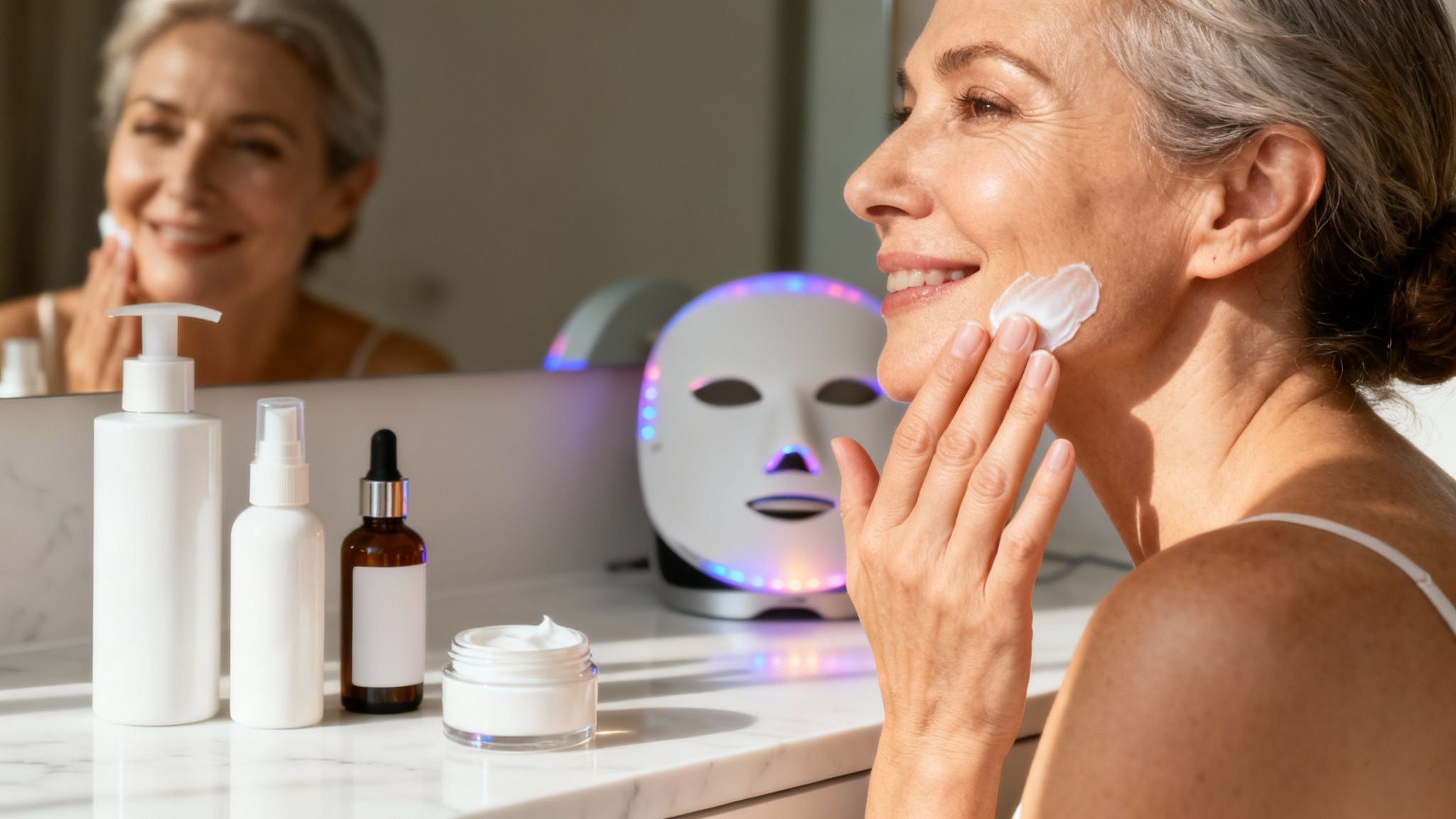
Figuring out how often you should exfoliate your face can feel like a guessing game. The simplest answer? Start with 1-2 times per week and pay close attention to how your skin responds. The goal is always a healthy, radiant glow—not redness and irritation.
Your skin type is the single most important factor in finding that sweet spot. This isn't about following a generic rule; it's about creating a personalized approach that prevents damage and unlocks all the beautiful benefits of exfoliation without any of the drawbacks.
Your Quick Guide to Exfoliation Frequency
Think of exfoliation like a workout for your skin. The right amount builds strength and resilience, revealing a healthier complexion. But going too hard, too often, will only lead to injury.
The process itself is simple: you’re gently removing the top layer of dead skin cells that can cause dullness, clog pores, and create a rough texture. When you get the frequency just right, you reveal brighter, smoother skin and even help your other skincare products—like your favorite serums and moisturizers—absorb and work better.
But there's no magic number that works for everyone. Your skin’s needs are shaped by genetics, your environment, and your overall lifestyle. Someone with oily, more resilient skin can typically handle more frequent exfoliation than a person with dry or sensitive skin. Trying to force a one-size-fits-all routine is the fastest way to a compromised skin barrier, which shows up as redness, tightness, and even breakouts.
Finding Your Starting Point
To make things easier, I've created this simple guide to help you find a safe and effective starting point. Think of this as your baseline—a reliable place to begin your journey to a more radiant complexion.
Below is a breakdown of recommended frequencies and the best types of exfoliants for different skin profiles.
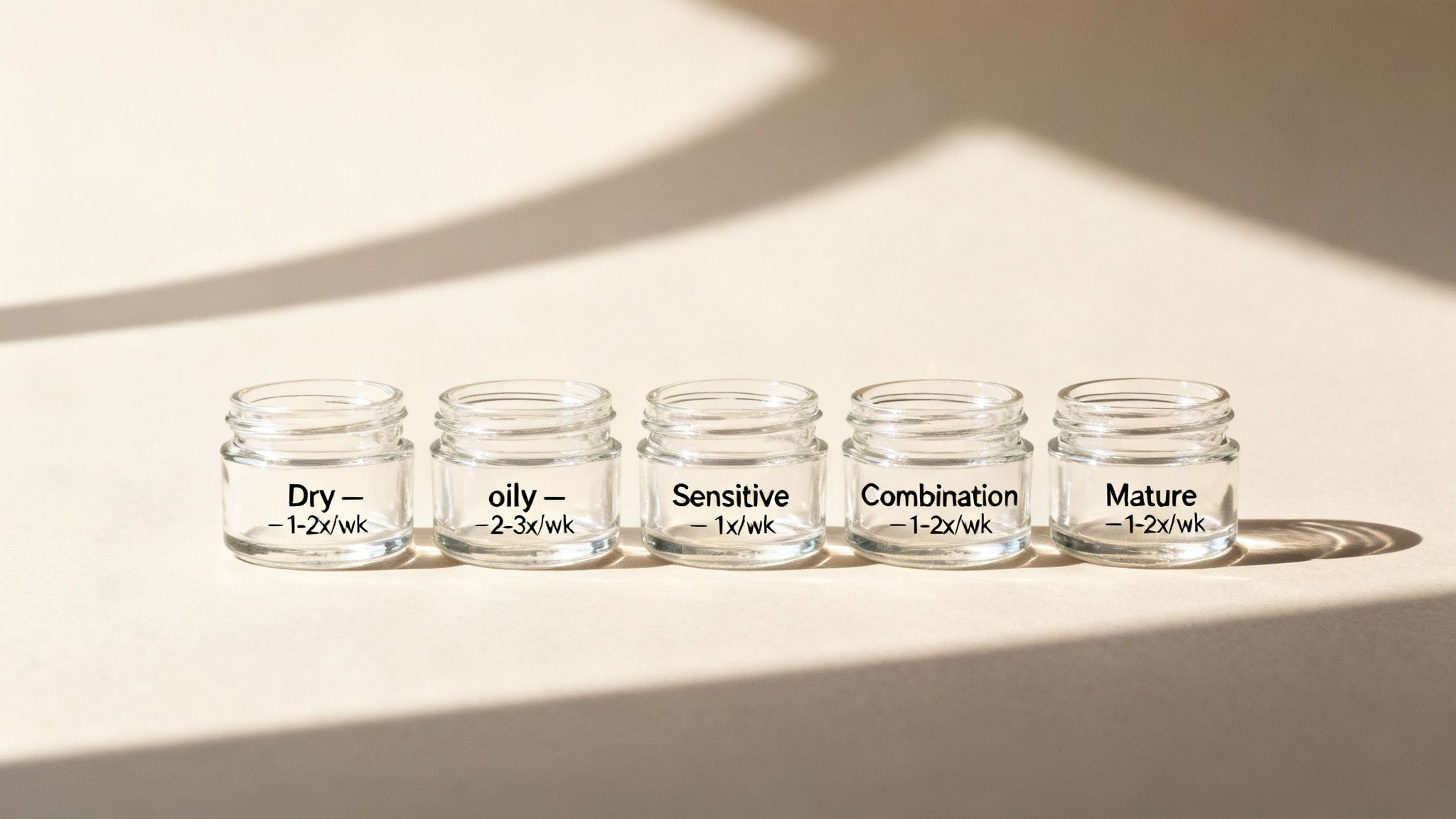
Exfoliation Frequency by Skin Type: A Starting Guide
Use this table to find a safe and effective starting point for exfoliating based on your specific skin type. Always adjust based on your skin's response.
| Skin Type | Recommended Frequency | Best Exfoliant Type |
|---|---|---|
| Dry Skin | 1-2 times per week | Gentle chemical exfoliants (AHAs like Lactic Acid) |
| Oily Skin | 2-3 times per week | Chemical exfoliants (BHAs like Salicylic Acid) |
| Sensitive Skin | Once per week or less | Mild enzymes or low-concentration PHAs |
| Combination Skin | 2 times per week (focus on T-zone) | Combination of AHAs and BHAs |
| Mature Skin | 1-2 times per week | Gentle chemical exfoliants (Glycolic or Lactic Acid) |
This table provides an excellent foundation. But remember, the real success in skincare comes from listening to your skin. As you become more familiar with its tolerance, you can fine-tune this schedule to achieve the best possible results. Give it exactly what it needs, when it needs it.
Why Exfoliation Is Your Skin's Secret Weapon
So, what’s the real deal with exfoliation? Think of your skin like a beautiful hardwood floor. Over time, a layer of dust and grime builds up, hiding the rich, vibrant grain underneath. Exfoliation is your way of gently polishing that floor to reveal its natural glow. It’s your skin’s essential reset button.
Our skin is brilliant—it naturally sheds dead cells in a process called desquamation. But as we age, or due to things like sun exposure and stress, this process slows way down. That buildup is what causes a dull, lackluster look, rough texture, and clogged pores. Exfoliation just gives that natural process a much-needed helping hand.
Unlocking Your Skin’s Potential
When you slough away that top layer of dead, tired cells, you’re not just uncovering fresh, vibrant skin. You're also clearing the runway for your other skincare products to do their job properly. Your expensive serums and moisturizers can finally penetrate deeper and deliver their active ingredients where they matter most, instead of just sitting on a surface-level barrier of buildup.
This magic happens in two main ways:
- Physical Exfoliation: This is the manual approach, using tools like brushes or products with fine granules to physically scrub away dead skin cells.
- Chemical Exfoliation: This method uses gentle acids—like alpha-hydroxy acids (AHAs) and beta-hydroxy acids (BHAs)—to dissolve the "glue" holding dead cells together, letting them shed effortlessly.
Finding the Right Balance
While exfoliation is a game-changer, the key is not to overdo it. Finding the right frequency is everything. For oily and acne-prone skin, a common concern for millions, exfoliating 2-3 times per week often hits that sweet spot. It’s just enough to manage oil and keep pores clear without sending your skin into a panic and triggering even more oil production.
Because acne affects so many people, it's critical to avoid the temptation to scrub too hard or too often, which can just make inflammation worse. Finding a smart, multi-tasking product is a great way to stay consistent without overwhelming your skin.
One of our go-to recommendations for breakout-prone skin is the BARB N.P. Purifying Gel Cleanser. It’s formulated with Salicylic Acid (a BHA) to gently exfoliate inside the pore to clear out congestion, plus Lactic Acid (an AHA) to smooth the skin’s surface. It's the perfect solution for hitting that exfoliation sweet spot in your routine. Consistent, correct exfoliation truly is the secret to a brighter, smoother complexion.
Tailoring Exfoliation to Your Skin Type
There’s no one-size-fits-all answer in skincare, and that’s especially true for exfoliation. Your skin has its own unique personality, and your routine should listen to its needs. This is where we move past generic advice and create a personalized strategy just for you.
Figuring out how often you should exfoliate your face is all about understanding what your specific skin type is telling you.
For Oily and Acne-Prone Skin
If your skin leans oily or is prone to breakouts, you're constantly battling excess sebum that loves to clog pores. It’s a frustrating cycle.
To break it, a more frequent exfoliation schedule of 2-3 times per week is often the sweet spot. This consistency helps keep your pores clear of the gunk that leads to blemishes, but it's gentle enough to avoid stripping your skin and causing more irritation.
Chemical exfoliants are your best friend here. If you want to dive deeper, you can learn more about what chemical exfoliation is and how acids get down into the pore to dissolve debris, stopping breakouts before they even have a chance to surface.
For Dry and Sensitive Skin
On the flip side, if you have dry or sensitive skin, your mantra should be "less is more." The number one goal is to protect your delicate skin barrier—the gatekeeper that locks in moisture and keeps irritants out.
Exfoliating too often can easily compromise this natural shield, stripping away essential oils and leaving you with redness, tightness, and irritation. And you're not alone; an estimated 60-70% of women and 50-60% of men report having some degree of skin sensitivity.
That’s why a gentle touch is non-negotiable. Aim to exfoliate just 1-2 times per week. Overdoing it is a huge culprit behind barrier damage, affecting nearly 88.7% of sensitive skin patients according to clinical reports.
The flowchart below can help you visualize the two main paths for exfoliation, whether you choose a gentle scrub or a targeted acid.

Making this choice is the first step toward building a routine that truly respects your skin's limits.
For Combination and Mature Skin
Combination skin is all about targeted treatment. You're dealing with two different skin types on one face, so you need a smart strategy. You might exfoliate your oilier T-zone more often (around 2 times per week) while giving your drier cheeks a gentler touch.
Mature skin also sees incredible benefits from regular exfoliation. As we get older, our natural cell turnover process starts to slow way down. A consistent, gentle exfoliation schedule of about 1-2 times per week helps kickstart that renewal process. The payoff? It can soften the look of fine lines and reveal a much brighter, more vibrant complexion.
Reading the Warning Signs from Your Skin
Your skin is constantly talking to you, sending subtle (and sometimes not-so-subtle) cues about what it needs. When it comes to exfoliation, learning to decode these messages is the key to getting your frequency just right. Think of it as your skin’s built-in check-engine light.
Paying close attention lets you fine-tune your routine for optimal health, preventing irritation before it starts and making sure you get that perfect, healthy glow.
Signs of Over-Exfoliation
Going too hard with scrubs or acids is an easy mistake to make, but trust me, your skin will let you know when you’ve crossed the line. If you’re exfoliating too often, you’re stripping away your protective skin barrier, leaving it vulnerable, angry, and stressed out.
Keep an eye out for these tell-tale signs:
- Redness and Irritation: Your skin looks flushed, feels sensitive to the touch, and might even sting when you apply other products.
- A Tight, 'Waxy' Appearance: Instead of a healthy glow, your skin looks unnaturally shiny and almost plastic-like. This is a classic signal of a compromised barrier.
- Increased Breakouts: While proper exfoliation helps keep acne at bay, overdoing it triggers inflammation and can actually cause new pimples.
- Dryness and Flaking: Your skin feels stripped of its natural moisture, leading to rough patches and peeling.
If you recognize these symptoms, it’s time to hit the brakes. Your number one goal is to focus on barrier repair. Stop all exfoliation immediately and switch to a simple, gentle routine packed with hydrating and soothing ingredients. Learning how to repair a damaged skin barrier is an essential skill for anyone serious about their skin’s long-term health. Once your skin feels calm and happy again, you can slowly reintroduce a mild exfoliant just once a week.
Signs of Under-Exfoliation
On the flip side, not exfoliating enough can cause its own set of problems. Without a little help, dead cells pile up on the surface, creating a barrier that keeps your skin from looking and feeling its best.
Just as your routine needs to adapt to your skin type, it also needs to adjust for factors like age and environment. By age 40, for instance, your skin's natural turnover process slows by about 15%. Cold, dry weather can also reduce your skin’s tolerance, making it crucial to adjust your frequency to avoid irritation. You can discover more insights about how skin changes over time on PMC NCBI.
This buildup can show up in several ways:
- A Dull, Lackluster Complexion: Your skin loses its natural radiance and just looks tired or flat.
- Rough, Uneven Texture: Your face feels bumpy or coarse to the touch because of the layer of dead cells.
- Clogged Pores and Breakouts: Without exfoliation, oil and debris get trapped in your pores, leading to blackheads and pimples.
- Products Sit on Top of Skin: Your expensive serums and moisturizers don't seem to absorb properly, which means a layer of dead skin is blocking their path.
If this sounds familiar, it's a clear signal to gently bring exfoliation back into your routine. Start slowly—maybe once or twice a week—and watch as your skin's texture and tone begin to improve.
Pairing Exfoliation with Your Skincare Routine
Exfoliation is a powerhouse step, but it doesn't work in a vacuum. Think of it as a key player in your skincare lineup; its success hinges on how well it plays with the other products on your vanity. When you get the timing and combinations right, you unlock all the glow-boosting benefits without tipping your skin into irritation.
Properly integrating exfoliation prepares your skin to better absorb all the goodness from your other treatments. It can even amplify the results of your favorite in-clinic procedures, making it a truly foundational step for a healthy, balanced complexion.
Balancing Actives Like Retinoids and Acids
One of the biggest questions I get is how to juggle exfoliants with other potent ingredients like retinoids. Both are phenomenal for skin renewal, but using them together without a smart plan is a fast track to over-exfoliation.
The golden rule? Give your skin a night off between strong actives. If you use a retinoid one evening, don't follow it up with an exfoliating acid in the same routine. Instead, alternate them on different nights to avoid overwhelming your skin barrier.
This simple separation strategy allows each product to do its job effectively without competing or causing unnecessary stress. For instance, if you're exploring different acids, it's helpful to understand what is glycolic acid to appreciate why it needs its own dedicated spot in your routine.
Here’s a sample schedule that works beautifully for most people:
- Monday: Gentle Cleanser, Hydrating Serum, Retinoid, Moisturizer
- Tuesday: Gentle Cleanser, Hydrating Serum, Moisturizer (Rest Day)
- Wednesday: Gentle Cleanser, Exfoliating Treatment, Hydrating Serum, Moisturizer
- Thursday: Gentle Cleanser, Hydrating Serum, Moisturizer (Rest Day)
This alternating rhythm is a safe and highly effective way to incorporate powerful ingredients without ever compromising your skin’s health.
Supercharge Your Recovery with LED Therapy
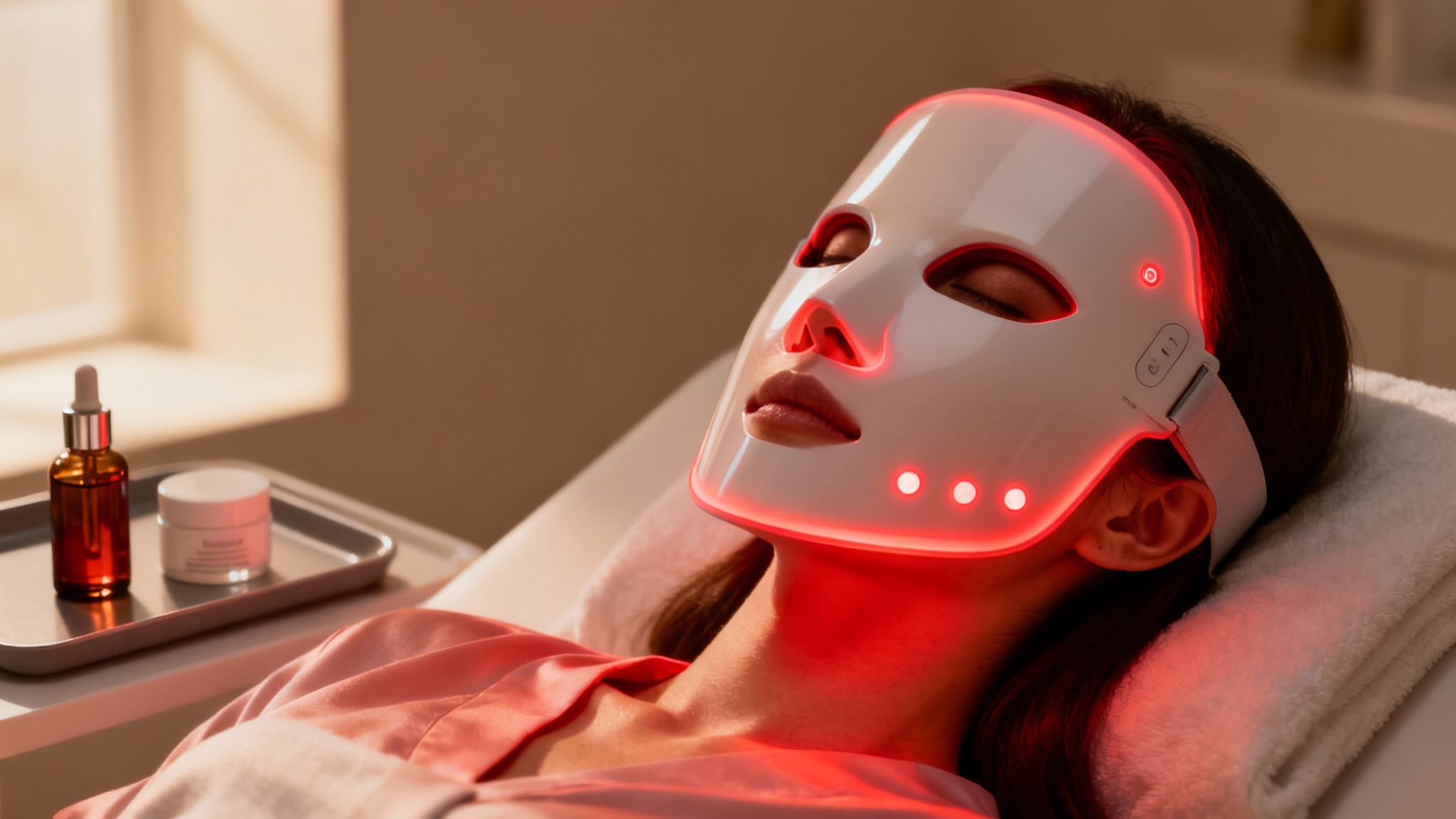
After a good exfoliation session, your skin is perfectly primed and receptive. This is the absolute best time to introduce restorative treatments that calm, heal, and boost cellular repair. And in my opinion, the ultimate post-exfoliation recovery tool is the BARB N.P. Facial LED Mask.
Using this mask immediately after exfoliating takes your routine to another level. The red light setting is fantastic for soothing any potential inflammation while kickstarting collagen production—which is essential for keeping skin firm and elastic. To double down on that collagen support, you could also layer on a high-quality collagen for face serum to give your skin’s structure everything it needs.
So what makes the BARB N.P. Facial LED Mask an essential for any modern skincare routine?
- Total Freedom: Its wireless design means you can catch up on emails, read a book, or walk around the house without being stuck by an outlet.
- Exceptional Comfort: The mask is engineered for a comfortable and secure fit, contouring to your face so it stays perfectly in place during your treatment.
- Versatile Treatments: It comes with three different light settings—red for collagen, blue for tackling acne-causing bacteria, and amber for reducing redness and promoting healing.
Pairing smart exfoliation with an advanced recovery tool like an LED mask creates a complete cycle of renewal and repair. It’s how you elevate your results far beyond what any single product can achieve on its own.
Building Your Perfect Weekly Skincare Schedule
Alright, let's put all this knowledge into action. It's one thing to understand the why behind exfoliating, but seeing it laid out in a simple weekly schedule makes it so much easier to stick with.
Think of these routines as starting points—you can and should adjust them to fit your skin and your lifestyle. The real magic happens with consistency and making sure every step in your routine supports the others. A key tip? Always exfoliate at night. This gives your skin the entire night to repair and regenerate without interruption, maximizing the benefits of both your exfoliant and your other nighttime products.
The Gentle Glow Routine for Sensitive Skin
When your skin is easily irritated or reactive, the "less is more" philosophy isn't just a suggestion—it's a rule. The goal here is to gently nudge along cell turnover without ever stressing out your delicate skin barrier.
- Exfoliation Day (e.g., Wednesday PM): After cleansing, apply a super-mild exfoliant like a low-strength PHA or an enzyme-based formula. Follow it up immediately with a hydrating serum and seal everything in with a nourishing moisturizer.
- Non-Exfoliation Days (All Other Days): Keep it simple. Stick to your core routine of a gentle cleanser, a hydrating serum, and a trusted moisturizer.
- Every Single Morning: Sunscreen. This is non-negotiable. Applying a broad-spectrum SPF is the most important thing you can do to protect those fresh, new skin cells from sun damage.
The Clear Skin Routine for Oily or Combination Skin
If you're dealing with excess oil, stubborn blackheads, or clogged pores, your skin can likely handle more frequent exfoliation. The trick is to space out your sessions to give your skin a breather and avoid accidentally triggering more inflammation.
Pro Tip: Never exfoliate on back-to-back days. Even if your skin feels tough as nails, this one simple rule is your best defense against over-exfoliation and the key to keeping your complexion balanced and healthy long-term.
Here’s a sample schedule of what that might look like in practice.
Sample Weekly Exfoliation Schedule
This is just an example of how to weave exfoliation into a routine for combination skin. Feel free to adjust the days based on your schedule and how your skin responds.
| Day of the Week | AM Routine | PM Routine |
|---|---|---|
| Monday | Cleanse, Hydrating Serum, Moisturizer, SPF | Cleanse, Hydrating Serum, Moisturizer |
| Tuesday | Cleanse, Hydrating Serum, Moisturizer, SPF | EXFOLIATE: Cleanse, use BARB N.P. Purifying Gel Cleanser, follow with a lightweight serum & non-comedogenic moisturizer. |
| Wednesday | Cleanse, Hydrating Serum, Moisturizer, SPF | REST: Cleanse, Hydrating Serum, Moisturizer |
| Thursday | Cleanse, Hydrating Serum, Moisturizer, SPF | REST: Cleanse, Hydrating Serum, Moisturizer |
| Friday | Cleanse, Hydrating Serum, Moisturizer, SPF | EXFOLIATE: Repeat Tuesday's exfoliation routine. |
| Saturday | Cleanse, Hydrating Serum, Moisturizer, SPF | REST: Cleanse, Hydrating Serum, Moisturizer |
| Sunday | Cleanse, Hydrating Serum, Moisturizer, SPF | REST & RECOVER: Cleanse, Hydrating Serum, use the BARB N.P. Facial LED Mask, Moisturizer. |
On your "rest" days, the focus is purely on cleansing, hydrating, and moisturizing to support your skin's recovery. And remember, every single morning, finish your routine with a broad-spectrum SPF to shield your skin from UV damage.
Your Top Exfoliation Questions, Answered
Let's clear up some of the most common questions that come up when you're trying to nail down the perfect exfoliation routine. Getting these details right is the key to building a safe, effective habit that leaves your skin looking its absolute best.
Can I Use a Physical and Chemical Exfoliant Together?
I get this one a lot. While it might seem like a good way to get double the benefits, it’s generally not a good idea to use both a physical scrub and a chemical exfoliant (like an AHA or BHA) in the same session. Think of it as a double whammy for your skin—it can easily lead to over-exfoliation, damage your delicate skin barrier, and leave you with redness and irritation.
If you love both types, the safest way to incorporate them is to alternate. Use your physical scrub on Monday and your chemical exfoliant on Thursday, for example. But honestly, for most people, simply choosing one type that truly suits their skin is the most effective (and foolproof) path to that glow.
Should I Exfoliate in the Morning or at Night?
Hands down, exfoliating at night is almost always the better choice. When you exfoliate, you're revealing fresh, new skin cells that are more sensitive to the sun. Sloughing away dead skin in the evening gives your skin a full night to rest, recover, and repair itself without the added stress of UV exposure.
Another huge plus? Exfoliating at night clears the path for your powerhouse serums and treatments to penetrate deeper and work more effectively while you sleep. If you absolutely must exfoliate in the morning, applying a broad-spectrum sunscreen with a high SPF is completely non-negotiable.
When Should I See a Professional?
A great at-home routine is your foundation, but there are times when you need to call in an expert. It's time to consult a professional like me if you're dealing with persistent concerns like severe acne, rosacea, or extreme sensitivity that just won't quit.
Expert advice is also crucial if you're feeling lost in a sea of products or if your skin has had a negative reaction to something you've tried. A licensed provider can give you a personalized assessment, cut through the noise, and recommend powerful in-clinic treatments that you just can't get at home.
Ready to take your post-exfoliation recovery to the next level? The BARB N.P. Facial LED Mask uses targeted light therapy to calm inflammation and boost collagen for a truly radiant complexion. Its wireless design, comfortable fit, and versatile 3-light system make it the perfect addition to any serious skincare routine. Discover the benefits of the BARB N.P. Facial LED Mask today.