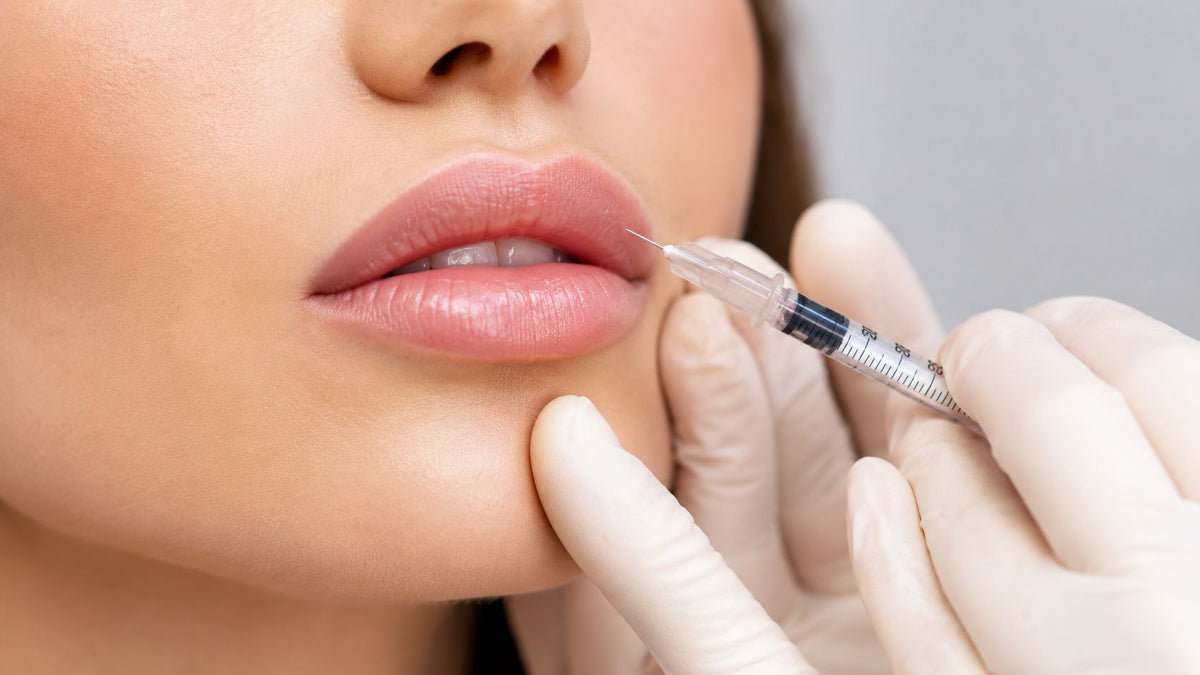
Article: Botox for Forehead Lines: What to Expect
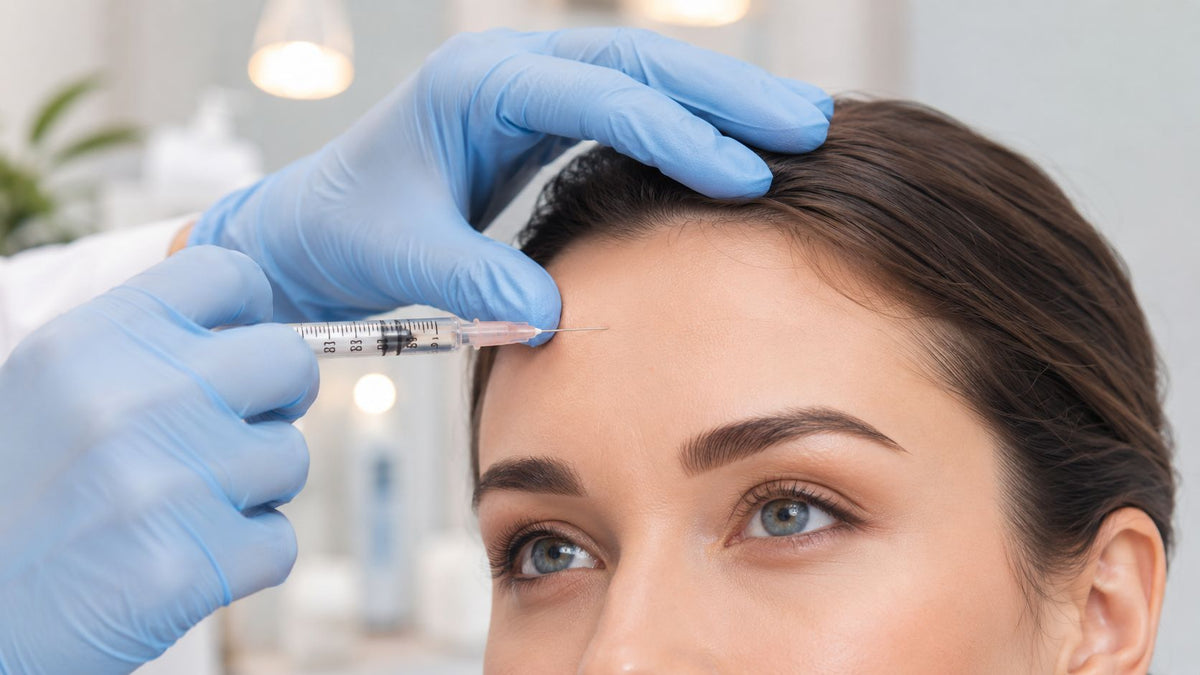
Botox for Forehead Lines: What to Expect
You're standing in front of the mirror, relaxed, yet the horizontal lines across your forehead still show. They may have started as brief creases whenever you raised your eyebrows. Now, some remain visible during rest, especially under bright bathroom lighting or in photographs. Botox for forehead lines can soften that pattern, but the best result isn't created by erasing every trace of movement. It comes from understanding the muscle beneath the skin and relaxing it without sacrificing your brow position or natural expression.
Why Forehead Lines Form and How Botox Changes the Picture
A patient may arrive concerned about one deep horizontal line, then raise her eyebrows while explaining when she first noticed it. The movement immediately gathers the skin across the forehead. That response points to the frontalis muscle, the broad muscle responsible for lifting the eyebrows. Every expression of surprise, concentration, or emphasis activates it.
These are initially dynamic lines, meaning they appear or deepen during muscle contraction. Repeated folding, combined with sun exposure and changes in skin structure over time, can turn dynamic creases into static lines that remain visible even when the face is still. Botox can reduce the muscular activity contributing to the crease, but it can't instantly replace lost skin volume or erase an etched mark.

What happens beneath the skin
Botulinum toxin is a neuromodulator. Injected into carefully selected portions of the frontalis, it temporarily interrupts the nerve signal that tells the muscle to contract. The muscle becomes less active, and the skin above it has less repeated folding to perform.
That mechanism explains why Botox works best for expression-related forehead lines. If a crease is present only when you lift your brows, reducing frontalis activity often creates a clear softening. If the line remains at rest, treatment may still improve it, but the skin may need time and additional skin-quality support to look smoother.
You can read a broader explanation of this medication category in what neuromodulators are. The important practical point is that Botox doesn't fill a line. It changes the movement pattern that keeps making the line.
Why forehead treatment requires restraint
The frontalis is the only muscle that lifts the brow. That creates a built-in trade-off. Relax too little, and the lines remain active. Relax too much or inject too low, and the brows may feel heavy or sit lower than before.
For that reason, a natural forehead result preserves some movement and keeps the eyes looking open. The goal isn't a motionless forehead. It's a softer surface with facial expression that still belongs to you.
The Science and History Behind Forehead Line Treatment
A patient may arrive wanting every forehead line erased, yet the safest and most natural plan often leaves some movement. Botox for forehead lines has a longer clinical history than its specific cosmetic labeling suggests. BOTOX Cosmetic was first approved by the U.S. FDA on April 12, 2002, for moderate to severe glabellar lines, the frown lines between the eyebrows. It later received a specific FDA approval for forehead lines on October 2, 2017. That timeline is documented in this BOTOX onabotulinumtoxinA drug pipeline review.
The distinction matters because forehead lines were not part of the original cosmetic indication. Their labeled use followed more than 15 years of aesthetic use, anatomical study, and refinement. The 2017 approval addressed temporary improvement of moderate to severe forehead lines associated with frontalis activity. Clinically, the task remains balancing line reduction with preserved brow elevation.

How to interpret the clinical evidence
A placebo-controlled analysis summarized in a Cochrane review reported a risk ratio of 35.94, with a 95% confidence interval of 5.14 to 251.27, for forehead-line improvement at week 4 among 156 participants. The statistic is reported in the Cochrane review of botulinum toxin for forehead lines, rather than attributed to a later review. It supports assessing treatment response with defined outcomes instead of relying only on subjective impressions.
Another result from the same body of evidence found that 70% of participants maintained at least a 1-point improvement at week 16, while 50% still had at least a 2-point improvement. Duration and degree of smoothing still vary between patients. Muscle strength, baseline line depth, brow position, and compensatory movement all affect the result.
What the approval doesn't guarantee
Regulatory approval defines an appropriate use. It does not mean one injection map suits every face. Brow height, eyelid weight, existing asymmetry, muscle strength, and frontalis compensation shape the plan.
Assessment should include the forehead at rest and during brow elevation. Static photographs cannot show how strongly the frontalis works or whether it is helping keep the brows and upper eyelids open. A conservative treatment may therefore produce a better balance than chasing complete wrinkle elimination.
For further context on potential outcomes and treatment considerations, see the benefits of Botox injections. Product evidence matters, but anatomy-based judgment determines how that evidence is applied safely.
Dosing Strategy and Injection Precision for Natural Results
Forehead dosing should follow brow mechanics, not just the number of lines visible in a photograph. The FDA-recommended forehead protocol is 20 Units total, delivered as 4 Units at each of 5 forehead sites. The lower injection row should sit at least 2 cm above the eyebrow, a placement requirement intended to reduce the risk of brow ptosis. The current FDA BOTOX Cosmetic label provides this labeled protocol and emphasizes placement.
That protocol is a reference point, not a dose every patient must receive. The frontalis can be broad and powerful, delicate, or heavily involved in keeping the brows and upper eyelids open. Naturally low brows, eyelid heaviness, pre-existing asymmetry, and strong compensatory movement all support a more conservative plan.

Why less can look better
A 2024 review reported an average dose of 13.2 ± 3.8 units with a low-anatomy-dose strategy, compared with 20.7 ± 7.3 units reported previously. The review appears in Toxins. These findings do not make a lower dose universally superior. They support matching dose, injection height, and distribution to the individual rather than weakening more muscle than necessary.
The frontalis lifts the brow. Excessive weakening of the lower forehead can let the brows descend, creating heaviness, increasing upper-eyelid hooding, or exposing asymmetry. Some patients recruit this muscle unconsciously to keep their eyelids open, so complete wrinkle elimination may create a less comfortable and less natural result.
Practical rule: Use the smallest effective dose that softens the lines while preserving a balanced, mobile brow.
What precision looks like in practice
Assessment should cover the forehead at rest and during brow elevation. An experienced practitioner evaluates:
- Brow position: Resting height, shape, and pre-existing asymmetry.
- Frontalis recruitment: How strongly and evenly the forehead contracts.
- Eyelid heaviness: Whether forehead lift helps keep the upper eyelids open.
- Line distribution: Central, lateral, deep, fine, or uneven creases.
- Treatment priorities: Maximum smoothing or a softer result that preserves expression.
The discussion of Botox forehead dosing explains why unit counts vary between patients. Injection precision matters as much as the total dose, because a small change in height or distribution can alter brow position. The goal is controlled improvement, not a frozen forehead.
Comparing Botox With Dysport Fillers and Topical Alternatives
The right forehead treatment depends on what creates the visible problem. Botox and Dysport reduce muscle activity. Fillers add volume. A topical such as SkinCeuticals P-Tiox works at the skin-care level and doesn't produce the same neuromuscular effect as an injectable.
Diffusion also matters. Comparative research found that, when equal labeled units were injected isovolumetrically, onabotulinumtoxinA produced a larger diffusion field than abobotulinumtoxinA. The same research found that higher-volume, lower-concentration injections increased the affected area in dynamic forehead lines, as described in this comparative diffusion study. In a forehead, where small placement differences can affect brow position, volume and technique deserve as much attention as brand selection.
Forehead Line Treatment Options Compared
| Treatment | Mechanism | Onset | Duration | Best For |
|---|---|---|---|---|
| BOTOX Cosmetic | Temporarily reduces frontalis muscle activity | Gradual, as the muscle relaxes | Usually temporary, with duration varying by patient | Dynamic forehead lines when precise, anatomy-driven control is appropriate |
| Dysport | Temporarily reduces muscle activity through another botulinum toxin type A formulation | Gradual, with timing varying by person | Usually temporary, with duration varying by patient | Patients whose injector feels its formulation and distribution suit their movement pattern |
| Dermal filler | Adds volume beneath the skin | Depends on product and treatment area | Varies by filler and patient | Selected static depressions that remain after muscle activity has been addressed |
| SkinCeuticals P-Tiox | Topical skin-care support aimed at the appearance of expression lines | Gradual with consistent use | Depends on continued use and skin response | People who want a needle-free starting point or complementary topical routine |
How I frame the choice
If your forehead lines appear mainly when you animate, a neuromodulator is usually the most direct category of treatment. If deep grooves remain at rest, filler may be considered carefully, but forehead filler isn't a casual add-on. The anatomy is unforgiving, and the decision requires a qualified medical assessment.
Topicals can support texture and hydration, but they won't switch off the frontalis. They make more sense for someone not ready for injections or for a patient building a broader skin-quality plan.
Brand choice comes after movement assessment. A wider diffusion profile isn't automatically better, and a more targeted approach isn't automatically safer. The injector's mapping, concentration, volume, and understanding of your brow mechanics determine whether the product behaves appropriately.
Your Treatment Timeline From Consultation to Full Results
A well-run appointment starts before the needle. During consultation, the practitioner observes your forehead at rest, during brow elevation, and during ordinary conversation. That assessment reveals whether your lines are predominantly dynamic, whether you use the frontalis to compensate for eyelid heaviness, and whether one brow already sits differently from the other.
Dose planning follows the examination. The injection itself is brief, and most patients describe the discomfort as manageable. You may notice small raised areas, mild redness, or tenderness soon afterward, but the visible treatment effect develops progressively rather than immediately.

A practical calendar
- Before your appointment: Tell your injector about medications, supplements, prior toxin treatments, allergies, pregnancy, nursing, and neuromuscular conditions. Don't independently stop a prescribed medication. Your medical professional should advise you.
- At the visit: Expect facial assessment, brow-mechanics review, marking, and a personalized injection plan.
- Early recovery: Follow the specific instructions from your injector. Avoid pressing, rubbing, or manipulating the treated area, especially while the product is settling.
- Initial change: Many patients begin to notice softening after several days, although timing varies.
- Full assessment: The final effect is commonly evaluated around 2 weeks, when the injector can check movement, symmetry, and whether a conservative adjustment is appropriate.
- Maintenance: Benefit is temporary. A 2025 review describes forehead-line benefit as usually lasting 3 to 4 months, while a real-world upper-face analysis found at least a 1-point improvement at week 16 in 70% to 80% of participants. Those findings are reported in this 2025 upper-face analysis.
What affects longevity
Muscle strength, individual metabolism, treatment strategy, sun exposure, and the depth of the existing crease can all influence how long the result looks favorable. Repeating treatment too early can create unnecessary stiffness, while waiting until every line has fully returned may allow the original movement pattern to become more pronounced again.
I prefer a review based on your actual movement and goals rather than an automatic calendar. A patient seeking subtle softening may not need the same maintenance approach as someone pursuing stronger relaxation.
Enhancing Results With LED Light Therapy at Home
Botox changes muscle movement. LED light therapy supports the skin itself, which makes it a useful complement rather than a substitute. A neuromodulator can reduce the repeated folding that contributes to forehead lines, while a consistent skin routine helps address texture, elasticity, and the visible effects of environmental exposure.
A clinical validation of a face-conforming LED mask reported significant anti-aging improvements across six facial areas, including a maximum 340% enhancement in deep skin elasticity in the perioral area compared with a conventional LED mask group. The findings are summarized in this clinical validation of a face-conforming LED mask. That result concerns perioral elasticity, not a guaranteed forehead outcome, so I'd present LED as a skin-quality tool, not as a replacement for toxin treatment.
Why the device design matters
The Barb N.P. Facial Mask is one option for patients who want an at-home LED device between appointments. Its practical features include:
- Wireless use: You can move around without being tethered to a power source.
- Face-conforming comfort: A close-fitting design can make longer-term routine adherence easier and support even light placement.
- Three lighting settings: Red light is positioned for collagen-support and anti-aging routines, blue light for acne and bacteria control, and near-infrared light for deeper tissue support.
The mask should feel comfortable, not painfully tight or excessively hot. Follow the manufacturer's directions, protect your eyes as directed, and don't assume more frequent use will produce faster results.
Building it into a Botox routine
After injections, wait until your practitioner clears you to resume the mask. A cautious routine is to wait 24 to 48 hours after treatment, then use sessions of 10 to 15 minutes, 3 to 5 times per week. Those timing and frequency recommendations should be treated as a practical routine, not a guarantee of a particular cosmetic outcome.
LED won't relax the frontalis, fill a crease, or correct brow asymmetry. It can complement Botox by working on a different part of the problem. The most coherent plan often combines controlled muscle relaxation, daily sun protection, appropriate topical care, and a device you'll use consistently.
Safety Considerations and How to Book Your Consultation
Common short-term effects can include mild bruising, tenderness, redness, or a temporary headache. Slight asymmetry can also appear while the treatment is settling. More important risks include brow ptosis and eyelid droop, which is why forehead injections shouldn't be treated as a one-size-fits-all service.
A qualified medical professional should assess whether treatment is appropriate if you're pregnant or nursing, have a neuromuscular disorder, or have an active skin infection near the injection sites. Bring a complete medication and treatment history, including previous neuromodulators and fillers.
A lower price doesn't compensate for poor anatomy assessment or an injector who can't explain the brow trade-off.
Ask who will inject you, what product will be used, how the dose was selected, and how follow-up is handled. Pricing varies by market and units used. Be cautious with flat-fee promotions if they make the treatment plan unclear or seem designed to encourage unnecessary treatment.
At BotoxBarb, Barb N.P. brings experience in interventional spine and orthopedic care, along with aesthetic specialization, to facial assessment and treatment planning. A consultation should include evaluation of brow mechanics, discussion of your preferred level of movement, and honest guidance about whether Botox, Dysport, filler, LED therapy, or skin care best fits your forehead concerns.
Visit BotoxBarb to explore Botox and Dysport consultations, dermal fillers, LED light therapy, and medical-grade skin-care options for forehead rejuvenation. Book an assessment with Barb N.P. so your treatment plan can prioritize smoother lines without overlooking brow position, eyelid comfort, or natural expression.