Botox for Frown Lines Between Brows: A Patient's Guide
You catch your reflection in a car mirror or your phone camera and notice it again. Those two vertical lines between your brows are still there, even when you're not upset, concentrating, or squinting. A lot of patients call them the “11s,” and many tell me the same thing: “I feel fine, but I look tense.”
That concern is more common than often realized. Frown lines between the brows can make a rested face look irritated, stressed, or tired. For many people, skincare helps the surface of the skin, but it doesn't stop the repeated muscle movement underneath that keeps folding the same area day after day.
That's where Botox becomes useful. In the right hands, Botox for frown lines between brows is not about erasing personality or making your face look stiff. It's a precise medical treatment that softens the pull of the muscles creating those lines, so your expression looks calmer and more refreshed.
Some patients come in because the lines show only when they frown. Others have reached the point where the lines sit there at rest. Both situations can be treatable, but the plan isn't identical. Good results depend on timing, anatomy, dose, injection pattern, and knowing when a single-area treatment isn't enough.
Erasing the 11s Between Your Brows
A first-time patient usually arrives with a very specific frustration. She's tried better moisturizer, retinol, facials, sunscreen, maybe even changing how she holds tension in her face. But the crease between the brows stays put. Sometimes makeup settles into it. Sometimes friends ask if she's worried about something when she's in a great mood.
The glabella, the area between the eyebrows, is one of the most expressive parts of the face. It reacts when you focus, squint, get annoyed, or think hard. Over time, that repeated motion can leave lines that linger longer and longer.
What makes Botox so appealing for this area is that it addresses the source of the movement. It doesn't fill the skin. It doesn't resurface the top layer. It reduces the overactive muscle action that's driving the crease.
Many people aren't trying to look different. They want to stop looking upset when they're not.
That distinction matters. A good treatment plan for the 11s should preserve expression while taking away the constant tension. Most patients don't want a “done” look. They want the face in the mirror to match how they feel.
For a new patient, the emotional side matters too. You should feel ready for the treatment, not pressured into it. The best Botox appointments start with clarity: what bothers you, what you want to keep expressive, what you're hoping changes, and what you'd consider overdone.
What patients are usually hoping to improve
- A softer resting face so they don't look angry or exhausted.
- Less visible vertical creasing when they frown or concentrate.
- A smoother makeup application through the center of the brows.
- A refreshed appearance that still looks like them.
Botox can be an excellent option for that goal. It works best when it's planned with restraint and with a full-face view, not a tunnel-vision focus on a single wrinkle.
Understanding How Botox Smooths Frown Lines
A patient will often tell me, “I'm fine with having expression. I just don't want that tense look living between my brows all day.” That is exactly the problem Botox is designed to treat in the glabella.
Botox is the brand name for onabotulinumtoxinA. In this area, it temporarily reduces the chemical signal that tells specific muscles to contract. For the 11s, the main targets are the corrugator and procerus muscles. The FDA prescribing information for BOTOX Cosmetic in glabellar lines describes this effect as a temporary improvement in moderate to severe frown lines by treating the muscles that create them.
The result is straightforward. The muscles pull less. The skin folds less. Dynamic lines soften because the repeated motion driving them is reduced.

The muscles that matter
The corrugators draw the brows inward and slightly downward. The procerus pulls down at the center of the brows and creates that pinched, frustrated look. Some patients also recruit nearby muscles differently, which is why two people with similar lines may need different injection patterns.
This is also where good technique matters more than patients realize. Treating only the strongest frown muscle without respecting the surrounding brow depressors and elevators can leave the area looking heavy, flat, or oddly shaped. A natural result usually comes from balancing muscle groups, instead of weakening one crease-making spot.
What the timeline usually looks like
For many patients, movement starts to soften within several days. Full settling takes longer, and the result is usually judged around the two-week mark in practice. The effect is temporary, so repeat treatment is needed to maintain the improvement.
Depth matters here too. If the line is present only when you frown, Botox may smooth it very well on its own. If the crease is etched into the skin at rest, Botox still helps, but it may soften the line more than erase it. That is an important expectation to set early.
Practical rule: The goal is a rested brow, not a stiff one.
“Frozen” is usually a dosing or assessment problem. It is not the default outcome of thoughtful treatment. If you want a clearer baseline on the product category itself, this guide to neuromodulator treatments and how they work is a helpful place to start.
Your Botox Appointment From Consultation to Aftercare
You arrive a little nervous, sit down, and expect the needles to be the hard part. For most first-time patients, the harder part is uncertainty. Once you know how the visit is structured, the appointment usually feels straightforward and very manageable.

During the consultation
The visit starts with an assessment. I want to know what you see in the mirror, what kind of result you want, and whether the line bothers you only when you frown or also when your face is fully at rest. Medical history, prior treatment, pregnancy or breastfeeding status, certain neurologic conditions, and current medications also affect whether treatment makes sense that day.
Then I study the upper face in motion. You may be asked to frown, raise your brows, squint, and relax. That part matters because the glabella should never be treated in isolation. If the muscles pulling the brows down are softened without respecting the muscles that lift and shape the brow, the result can look heavy, peaked, or flat. Natural-looking Botox depends on balance.
If you want a clearer sense of the visit before you come in, this patient guide to getting ready for Botox treatment explains what to expect.
The injection part
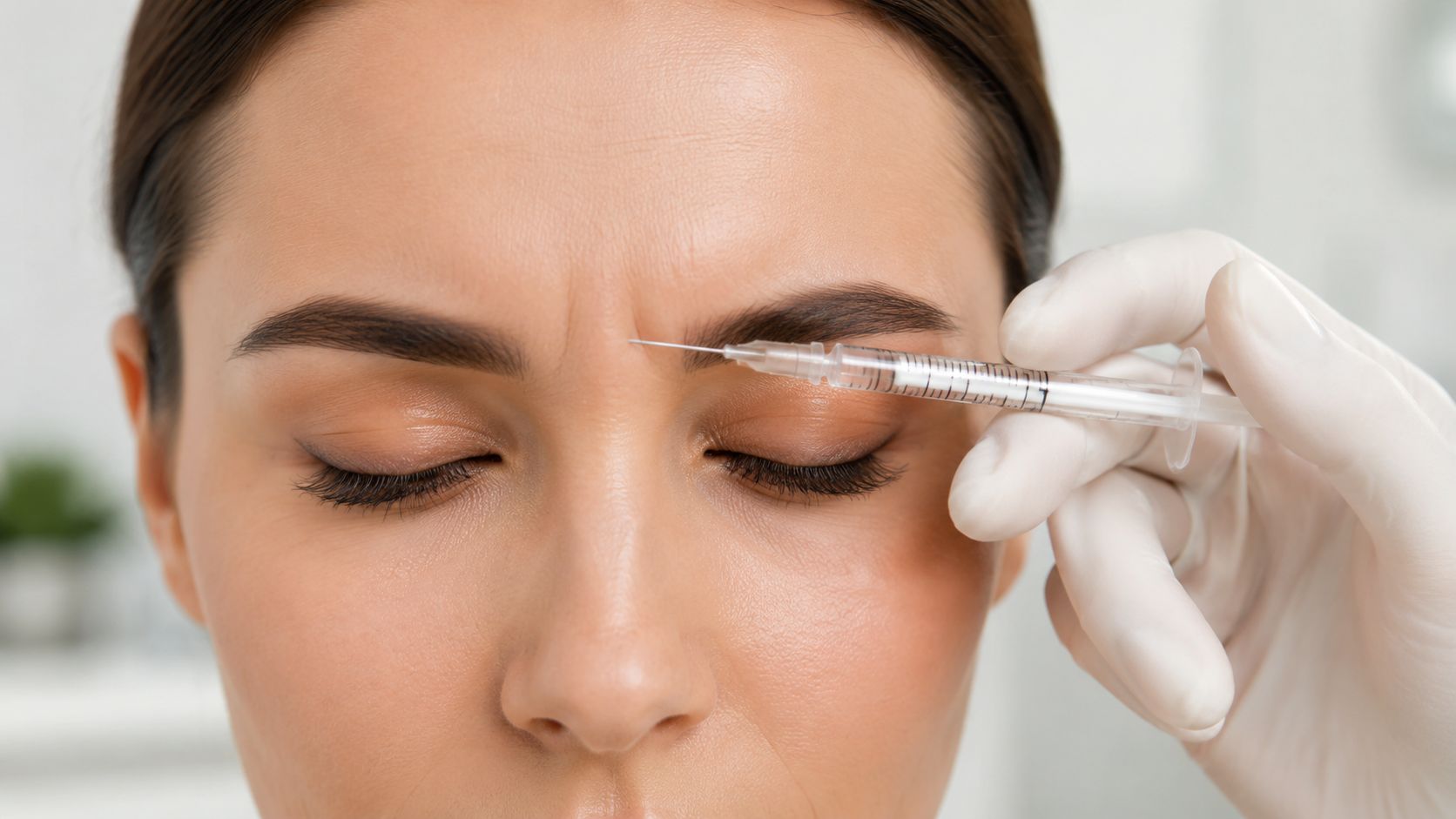
The treatment itself is brief. The skin is cleaned, injection points are mapped, and small amounts of product are placed into selected muscles with a very fine needle. Patients usually describe each injection as a quick pinch or tiny sting.
This part is fast, but it is not one-size-fits-all. Two patients can both have "11 lines" and still need different placement or dosing based on muscle strength, asymmetry, brow position, forehead compensation, and whether there is already any upper-lid heaviness. That is why a careful plan matters more than counting units alone.
The first few hours after treatment
After Botox, most patients go right back to their day with a short list of precautions. The American Academy of Dermatology advises patients to avoid rubbing the treated area, avoid lying down for several hours, and hold off on intense physical activity for the rest of the day after injections, based on its aftercare guidance for Botox and fillers.
A simple aftercare checklist looks like this:
- Do not press, rub, or massage the area unless your injector gives you different instructions.
- Stay upright for the first several hours after treatment.
- Skip strenuous exercise until the next day unless your clinician advises otherwise.
- Expect mild redness, swelling, tenderness, or small pinpoint marks that usually settle quickly.
Do not judge the result on day one.
Tiny bumps at injection sites, a feeling of tightness, or no visible change yet are all normal early reactions. Botox needs time to bind and start affecting muscle activity.
What follow-up is for
A follow-up visit gives your injector a chance to see how your face settled in real life, not just on the treatment chair. New patients, patients with very strong glabellar pull, and patients with baseline asymmetry often benefit most from that check.
This is also the point where the full patient experience matters. Good results come from more than the injections themselves. Sleep, sun protection, a steady skincare routine, and supportive at-home care can help the skin look better while the muscle activity is reduced. I often remind patients that Botox relaxes the cause of the crease, but the skin still benefits from daily care while it recovers from years of repeated folding.
The Results What to Expect and When
The hardest part for many first-time patients is patience. Botox doesn't act like filler, where you often see an immediate change because volume has been added. Botox works by changing muscle activity over time.

For frown lines between the eyebrows, visible improvement usually shows up within 3 to 5 days, with full results in about two weeks, and the effect lasts 3 to 4 months on average, according to this patient treatment timeline for glabellar Botox.
A realistic result timeline
- First several days. Movement starts to soften.
- About two weeks. The result is easier to judge.
- Following months. Muscle action gradually returns and lines may slowly reappear.
That return of movement is normal. Botox is temporary by design. When patients know that from the start, they usually feel much more comfortable with maintenance.
What satisfaction data tells us
In clinical trials for moderate to severe frown lines, approximately 90% of patients reported being “Very Satisfied” or “Mostly Satisfied” with BOTOX Cosmetic, and patients reported looking approximately 5.6 years younger on average, according to the BOTOX Cosmetic upper facial lines clinical study.
That kind of satisfaction usually comes from the same factors I see in practice: expectations were realistic, the dose matched the anatomy, and the patient understood that softening is the goal. Deep static lines can improve significantly, but they may not disappear completely in one visit if the crease has been etched into the skin for a long time.
A good Botox result often looks subtle in photos and meaningful in person. People may say you look rested without knowing why.
Botox vs Dysport vs Fillers for Frown Lines
Patients often walk in knowing the names but not the differences. That's normal. The most useful way to compare these options is by asking what problem each one solves.
Botox and Dysport are both neuromodulators. They reduce muscle movement. Fillers do something entirely different. They add volume to support areas that have lost structure or to soften lines that remain even when the muscle has already been addressed.
The core difference
For the 11s, Botox or Dysport is usually considered first when the main issue is dynamic muscle pull. If the line is present at rest and prominently etched, a patient may need a broader plan. Sometimes that still means neuromodulator alone. Sometimes it means combining treatments over time, but only after anatomy and safety are evaluated carefully.
If you're weighing the two neuromodulators side by side, this guide on Botox or Dysport and which is better is a helpful comparison.
Frown Line Treatment Comparison
| Treatment | How It Works | Best For | Typical Duration |
|---|---|---|---|
| Botox | Relaxes the muscles that create frown lines by interrupting the nerve signal to the treated muscle | Dynamic glabellar lines caused by repeated frowning | Temporary |
| Dysport | Also relaxes the muscles that create expression lines between the brows | Dynamic frown lines, especially when a neuromodulator is appropriate but product selection depends on injector preference and anatomy | Temporary |
| Fillers | Add volume rather than reducing muscle movement | Selected static lines at rest, or concerns where structural support is the issue rather than muscle pull | Varies by product and treatment plan |
What works and what doesn't
- Botox works best when the crease is driven by muscle action.
- Dysport can also work well for the same pattern of movement.
- Fillers don't replace neuromodulators if the muscle is still actively folding the skin.
- Skincare alone won't stop a glabellar muscle contraction. It can improve skin quality, but it won't turn off the repetitive pull underneath.
A consultation is vital. Two patients can both say “I hate my 11s” and need different treatment strategies.
Candidacy Risks and Preventing Unnatural Results
You may be a good candidate on paper and still need a more careful plan in the chair. That distinction matters with frown line treatment.
The right patient for Botox between the brows wants a temporary treatment, understands that results wear off, and is comfortable with a maintenance routine. Some patients should wait or avoid treatment, including those who are pregnant, those with certain neuromuscular disorders, and those with medical or medication-related factors that change the safety picture. A proper consultation also includes a conversation about expectations. If the goal is to look completely frozen or to erase every line at rest in one visit, that usually needs a reset before any injection is placed.
Common side effects are usually mild and short-lived. Bruising, tenderness at the injection site, and headache can happen after treatment. A published safety summary on upper facial lines also reported temporary headaches in some treated patients in this upper facial lines safety summary.
What patients often miss is that a natural result is not just about softening the "11s." It is about preserving balance across the upper face.
In practice, the glabella does not act alone. The muscles between the brows pull down and inward. The frontalis lifts. If an injector relaxes the frown muscles without respecting brow position, forehead movement, and the strength of the opposing muscles, the result can look heavy, flat, or lower than expected. I spend a lot of time watching patients animate before treatment for this reason. A few seconds of frowning, lifting, and resting often tells me more than a static photo.
This balancing step is one of the most overlooked parts of good Botox work. It does not mean every patient needs forehead treatment. It means every patient needs an assessment of whether treating the glabella alone will look harmonious on their face.
A technically correct injection can still look wrong.
That is why thoughtful planning matters more than copying a standard map or chasing a certain number of units. Patients with pre-existing brow heaviness, asymmetry, strong compensatory forehead movement, or a low-set brow need extra caution. In those cases, restraint is often the better choice. Less can look better, especially on a first treatment when we are learning how your muscles respond.
Signs of thoughtful treatment planning
- Your injector studies movement, not just the line at rest
- Brow position and eyelid heaviness are checked before treatment
- Dose and injection points are adjusted to your anatomy
- Natural expression stays part of the treatment goal
- A follow-up plan is discussed, because small refinements are sometimes safer than trying to do everything in one visit
The best result usually looks rested, not altered. Patients should still look like themselves, just less tense between the brows.
Maintaining Your Glow The Role of At-Home Care
Office treatment handles muscle activity. At-home care supports the skin around it. Those are different jobs, and they work well together.
A thoughtful home routine won't replace Botox for frown lines between brows, but it can help the skin look smoother, brighter, and healthier overall. That matters because even a well-relaxed glabella can still look dull, dry, or textured if the surrounding skin isn't cared for.
Where LED fits in
One at-home option I often like as a complement is an LED facial mask. The Barb N.P. Facial Mask is a practical example because it's designed for real-life use, not just shelf appeal. It's wireless, so you're not tied to a cord during treatment. It's built for comfort on the face, which matters because a device only helps if you'll use it consistently. It also offers 3 lighting settings for different treatments.

A simple maintenance approach
Each light setting serves a different purpose:
- Red light is commonly used when the goal is supporting collagen-focused, age-management routines.
- Blue light is often chosen by patients dealing with acne-prone skin.
- Amber light fits well into rejuvenation-focused care when you want an overall refreshed look.
LED doesn't weaken the glabellar muscles, so it isn't an alternative to neuromodulators. What it can do is complement your results by supporting skin quality and helping your whole face look more polished.
A strong maintenance plan usually includes:
- Consistent sunscreen use so UV exposure doesn't add to visible aging.
- Medical-grade skincare chosen for your skin type rather than trends.
- An LED routine if you want an easy add-on that supports texture and glow.
- Timely maintenance appointments instead of waiting until the lines fully settle back in.
Frequently Asked Questions and Your Next Steps
One of the most common questions is when to start. Emerging evidence suggests that early intervention with neurotoxins can prevent dynamic frown lines from etching into static, permanent wrinkles, making preventative treatment in the late 20s or early 30s an increasingly popular strategy, according to this discussion of early neurotoxin treatment trends. That doesn't mean everyone should start then. It means treatment can make sense before lines become firmly fixed.
Another common fear is looking frozen. Most natural-looking results come from careful dosing and good muscle balance. If your treatment is planned well, you should still look like yourself. You'll have less aggressive pulling between the brows.
Patients also ask what happens if they stop. The answer is straightforward. Your muscles gradually regain activity, and the lines return to their usual pattern over time. Stopping Botox doesn't make the area worse than where you started. It just means the temporary benefit wears off.
Quick answers patients want most
- Will it hurt? It is generally described as brief and very tolerable.
- Will I still have expression? You should, if the treatment is done thoughtfully.
- Can deep lines improve? Yes, though older static creases may need time and a broader plan.
- Is one area enough? Sometimes. Sometimes balance requires a more complete upper-face approach.
The most useful next step is a personalized consultation. A real assessment looks at your anatomy, your brow position, your movement pattern, and the kind of result you want to see in the mirror.
If you're ready to talk through your options, book a consultation or explore supportive skincare and devices through BotoxBarb. The right plan should feel personal, balanced, and easy to understand.