Article: Botox Injections Masseter Muscle: A Complete Guide
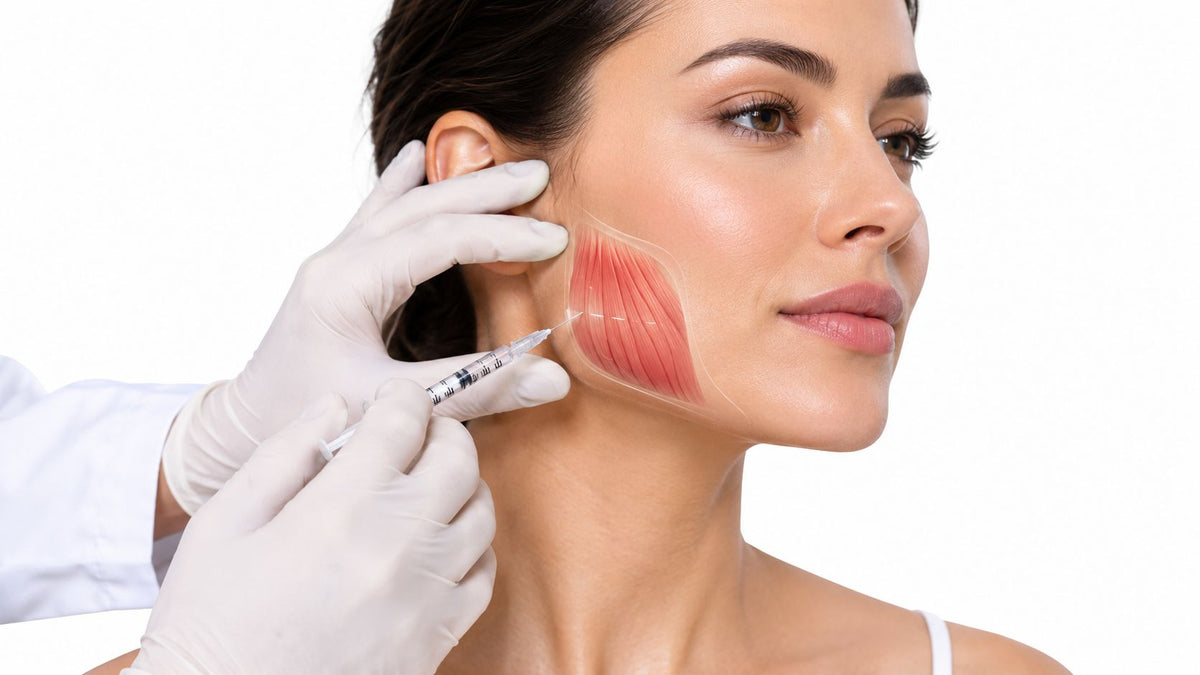
Botox Injections Masseter Muscle: A Complete Guide
You're touching the corner of your jaw in the mirror, wondering whether it's always looked that square. Or you're waking up with tired chewing muscles and wondering whether the jaw-slimming treatment you've seen online might also help the clenching. Both concerns can lead to masseter Botox, but they shouldn't lead automatically to the same treatment plan.
Why People Ask About Masseter Botox in the First Place
A request for “jaw Botox” often starts with a goal rather than a diagnosis. You might want your lower face to look softer in photographs. You might be more concerned about waking up uncomfortable, or your dentist may have raised concerns about grinding.
Those are different conversations. Cosmetic contouring asks whether reducing muscle bulk would create a facial shape you want. Functional treatment asks whether weakening an overactive chewing muscle is a reasonable way to manage symptoms after identifying their cause.
Start with the concern, not the injection
If you've already looked through social posts, you probably know the treatment can make a bulky jaw muscle smaller. What those posts rarely establish is whether the person being treated had the same anatomy, symptoms, or priorities as you.
A useful consultation leaves room for answers other than injections. Someone seeking a narrower face may have little muscular enlargement. Someone seeking pain relief may need a dental or joint assessment before an aesthetic appointment makes sense.
Practical rule: A slimmer jaw and a more comfortable jaw are separate outcomes. Decide which matters most before choosing treatment.
The decisions worth discussing are straightforward:
- Intent: Are you primarily seeking a change in appearance, symptom relief, or both?
- Intensity: What degree of muscle weakening is acceptable given your chewing needs and facial proportions?
- Commitment: Are you considering a cautious trial, or assuming you'll continue maintenance indefinitely?
My approach is to make those expectations explicit before discussing units. A returning client may already be comfortable with forehead Botox, but treating a chewing muscle introduces a different functional trade-off. Familiarity with injections doesn't remove the need for a fresh assessment.
You shouldn't have to leave that assessment with a promise of dramatic results. You should leave knowing what the treatment could reasonably change, what it won't address, and how you'll judge whether it was worthwhile.
The Masseter Muscle and Why It Gets So Big
Think of the masseter as a substantial muscle along the outside of the jaw, extending from the cheekbone region toward the jaw angle. When you clench, you may feel it firm up beneath your fingertips. Its job is to help generate the force needed for chewing.
Hypertrophy means enlargement of the muscle. Repeated loading from clenching or other chewing habits can contribute, but appearance alone doesn't tell us how much someone clenches or why their lower face looks broad.
Fullness isn't always muscle
The useful distinction is between muscular prominence, skeletal width, and glandular fullness. These can occupy a similar area in a photograph, yet they require different clinical reasoning. Published treatment literature specifically emphasizes confirming muscular enlargement rather than assuming that skeletal or glandular fullness will respond to injections.
During an assessment, the injector asks you to clench and relax while examining the area. That helps identify the muscle's borders, compare sides, and determine how much of the visible contour changes with contraction.
- A firm bulge with clenching: This supports investigating a muscular contribution, rather than making a diagnosis from a selfie.
- Width that remains structurally prominent: The clinician should consider whether the jaw's underlying shape limits the expected cosmetic change.
- Unexplained or unusual fullness: This deserves assessment rather than treatment based on an online comparison.
For a separate discussion of jaw tension, the Pain and Sleep Therapy Center jaw tension resource can help you prepare questions about relaxation and habits. It doesn't replace an examination when discomfort or enlargement needs a diagnosis.
The practical takeaway is simple: a wide lower face isn't automatically a large-masseter problem. Before discussing a smaller jawline, ask the injector to explain what they believe is creating the width and what evidence they're using from your examination.
That explanation should make sense without a sales pitch. If the proposed treatment targets muscle, the clinician should be able to show you where the relevant muscular prominence is.
Cosmetic Slimming Versus Bruxism Relief
For cosmetic treatment, the desired outcome is a change in contour. For bruxism-related treatment, the desired outcome is better function or comfort. The same intervention can influence both, but evidence of facial slimming shouldn't be presented as proof that someone's headaches, grinding, or joint symptoms will resolve.
What the contouring evidence shows
A 12-month randomized, double-blind, placebo-controlled Phase 2 study enrolled 187 participants with bilateral masseter prominence in Australia, Taiwan, and Canada; a later Phase 3 trial found that at Day 90, 51.2% of treated participants achieved at least a two-grade improvement, versus 2.2% with placebo, while mean lower-facial width decreased 5.24 mm versus 0.04 mm, as reported in the controlled onabotulinumtoxinA research.
That's meaningful evidence that contour change can be measured. It isn't a guarantee that your face will change by the study average, or that maximum narrowing will suit your proportions.
| Primary concern | What to assess | What counts as a useful outcome |
|---|---|---|
| Cosmetic prominence | Muscular bulk and overall facial balance | A contour change you prefer |
| Clenching or grinding | Muscular symptoms and previous treatment | Better comfort without unacceptable chewing difficulty |
| Joint-related pain | Whether symptoms arise from muscle, joint, or another cause | A diagnosis-led treatment plan |
Functional treatment needs a different threshold
The clinical decision-making literature supports considering injections for therapy-resistant, muscle-dominant symptoms after structured conservative care, rather than treating every complaint labeled “TMJ.” That distinction matters because reducing muscle activity doesn't necessarily address why the activity occurs.
If nighttime symptoms are your main concern, use the Pain and Sleep Therapy Center resource on how to stop clenching jaw at night to organize questions for your dental assessment. Don't interpret quieter or weaker clenching as proof that the underlying problem has disappeared.
Name the primary goal before choosing the plan. Cosmetic photographs and a symptom journal answer different questions, and you may need both if appearance and comfort matter equally.
What Actually Happens During the Appointment
A careful appointment starts with conversation and examination, not a preselected syringe. Bring your health history, medication and supplement list, previous injectable records, and any relevant dental information. Mention previous chewing problems, facial weakness, and treatments you've already tried.
Assessment and consent come first
The clinician should evaluate your masseters at rest and during clenching, document baseline appearance, and ask about chewing function. Baseline photographs help separate an actual treatment change from differences in lighting, expression, or camera angle.
Consent should cover the proposed product, intended outcome, off-label use where applicable, alternatives, and the possibility that a cosmetic benefit may come with functional inconvenience. It should also explain what happens if the result is uneven or your smile feels different.
Published protocols describe approximately 24 to 60 units of onabotulinumtoxinA or incobotulinumtoxinA per side, often across three injection points; the FDA's initial Botox marketing approval was December 29, 1989, for strabismus associated with dystonia, not masseter contouring, as summarized in the masseter treatment evidence and regulatory history.
That range is context, not a personal dosing recommendation. There's no universally optimal masseter dose, and more units aren't automatically more appropriate.
- Product identification: Ask whether the proposed treatment is Botox, Dysport, or Xeomin. Don't compare their unit counts as though they're interchangeable.
- Individual selection: The plan should account for muscle size, baseline asymmetry, bite strength, anatomy, and treatment goals.
- Follow-up arrangements: Know how to contact the practice and what the clinician wants to reassess before considering additional treatment.
The injection itself
After identifying the treatment area, the clinician cleans the skin and marks the intended sites. Expect needle pinches rather than pressure from a volume-building treatment. Discuss comfort measures beforehand instead of assuming everyone needs, or doesn't need, numbing.
The important part isn't how quickly someone can inject. It's whether the assessment supports the treatment and whether you understand the trade-offs.
Review the guide to preparing for Botox before your visit, then follow the instructions provided for your particular treatment. Don't stop prescribed medication on your own to prepare for an aesthetic appointment.
When Results Show Up and How Long They Last
Masseter contouring is gradual. Botox temporarily inhibits acetylcholine-mediated neuromuscular transmission, reducing muscle activity; subsequent muscle atrophy can reduce prominence. That's different from removing tissue or immediately changing facial volume.
You may therefore notice a difference in muscle function before you're confident that your jawline looks different. Don't use an early mirror check as a reason to request more treatment.
Separate chewing effects from appearance
A review of bigonial-width reduction reports that mastication commonly decreases two to four weeks after injection, reaches its strongest reduction around week three, and lasts approximately eight to twelve weeks; it also reports painful masseter bruising in about 2.5% of cases.
Those overlapping time windows describe reported patterns, not a precise schedule for every patient. They also describe chewing effects, which shouldn't be treated as an exact timetable for visible slimming.
Judge appearance with comparable photographs, and judge function by what you can comfortably chew. Neither should be assessed from memory alone.
A useful review considers more than whether the jaw looks narrower. Tell the clinician if normal meals feel tiring, if the sides feel different, or if the cosmetic change is more pronounced than you wanted.
Maintenance shouldn't run on autopilot
Visible reduction may begin over several weeks and often persists for about six months, although published protocols and responses vary, according to the review of masseter treatment mechanisms and outcomes. Duration is a reason to reassess, not a promise that you'll need another appointment at a fixed interval.
- Before retreatment: Compare your current appearance and chewing function with baseline.
- If symptoms return: Reconsider the diagnosis and what improved rather than repeating the previous dose.
- If you're satisfied: Discuss whether observation is preferable to adding treatment before it's needed.
The broader guide to how long Botox lasts offers additional context, but masseter decisions should remain specific to this muscle and your experience. A calendar reminder isn't a clinical indication.
Risks, Side Effects, and the Questions Most Articles Skip
“Temporary” doesn't mean “without consequences.” Reducing the force of a chewing muscle is part of how this treatment works, so changes in function deserve the same attention as changes in appearance.
Clinical literature reports up to a 20% reduction in maximum bite force and reduced chewing performance; it also identifies myasthenia gravis, Lambert-Eaton syndrome, motor neuropathies, and multiple sclerosis as conditions requiring particular caution, according to the clinical decision-making review. That review also states that Botox isn't indicated for degenerative TMJ disease because it doesn't repair structural joint damage.
What the bone research actually means
A 2024 systematic review reported approximately 6% lower mandibular cortical thickness in human studies without clear changes in overall bone volume or density, while a 2025 double-blind, placebo-controlled 12-month study of healthy adults receiving one or two bilateral treatments at 48, 72, or 96 units found no clinically significant density changes in the condyle, premolar region, or ramus, as discussed in the mandibular bone evidence.
Cortical thickness and bone density aren't the same measurement. A finding about one doesn't automatically establish a change in the other, and a statistically detectable difference doesn't by itself establish clinically meaningful injury.
The reassuring trial also doesn't settle the question of indefinite repeated treatment. Existing reviews describe mixed findings, limited randomized evidence, and greater concern around repeated exposure than a single application.
A reasonable boundary: Don't call bone damage inevitable, and don't promise that repeated treatment has no bone implications.
Make the safety discussion personal
The earlier treatment review also describes a randomized trial using 75 units of abobotulinumtoxinA per masseter that found benefit alongside impaired masticatory performance and reduced muscle activity. That combination illustrates why effectiveness and tolerability must be evaluated separately.
Discuss the following before treatment:
- Health circumstances: Disclose pregnancy, breastfeeding, active infection near the proposed injection area, and neurological diagnoses.
- Functional priorities: Explain if chewing is already difficult or if modest weakness would interfere with daily life.
- Bone and dental history: Raise osteoporosis risk, previous dental problems, and concerns about ongoing maintenance.
For additional preparation, review the Botox side-effects guide. Changes in smile, significant weakness, or unexpected symptoms deserve direct contact with your treating clinician, not reassurance from a comment thread.
Aftercare, Maintenance, and the At-Home Support That Actually Makes Sense
Leave with written aftercare instructions and a clear contact route. Ask specifically about touching the area, exercise, meals, and when the clinician wants an update. A personalized plan is more useful than collecting conflicting rules from social media.
If chewing feels tiring, don't deliberately test your strength with tough foods. Report changes that interfere with ordinary eating, persistent discomfort, or an altered smile rather than assuming they're signs that treatment is working particularly well.
Track the outcome you wanted
For cosmetic treatment, use photographs with consistent lighting, head position, and expression. For functional treatment, keep a brief record of morning discomfort, perceived clenching, chewing fatigue, and any advice from your dentist.
- Record benefit: Note what became easier or more comfortable, not just what changed.
- Record compromise: Include foods or activities that became harder.
- Review before repeating: Bring those observations to the follow-up so maintenance reflects your experience.
This is also a sensible time to keep skincare simple. An at-home device may support a separate skin goal, but it shouldn't be presented as a way to correct masseter weakness, treat bruxism, or protect jawbone.
Where an LED mask fits
The Barb N.P. Facial Mask is an option for a separate at-home skincare routine, with a wireless, comfortable wearable design and three lighting settings for different treatment goals. Its place is alongside appropriate skincare, not as a substitute for diagnosis or as a proven masseter-recovery treatment.

A randomized acne trial used blue light at 414 nm and 17.6 J/cm² every other day for eight weeks, reporting a 52% lesion-count reduction versus control; a separate home-use study used 633 nm red and 415 nm blue light four times weekly, no more than once daily, illustrating protocol-specific effects in the LED facial-mask research.
Those results aren't product-specific evidence for this mask and don't establish benefits after masseter injections. Follow the device's own instructions, and ask your clinician when to resume a face-contact device after treatment. Wavelength, dose, exposure time, and frequency matter, not just the presence of colored light.
Deciding Whether Masseter Botox Is Right for You
If you searched “Botox injections masseter muscle,” you probably wanted a practical answer about your own jaw, not just a description of the procedure. The most useful answer depends on whether the proposed treatment matches your anatomy, your symptoms, and the compromise you're prepared to accept.
Clear muscular prominence can make a cosmetic discussion reasonable. Persistent muscle-dominant symptoms after appropriate conservative care can justify a different discussion. Neither situation makes treatment obligatory.
What to bring to a consultation
Bring information that helps the clinician distinguish a worthwhile trial from a poorly matched treatment:
- Your priority: Describe whether appearance, discomfort, or another concern matters most.
- Your history: Include dental findings, previous conservative treatment, medical conditions, medications, and prior injectable details.
- Your reference point: Bring relevant photographs and a short symptom record rather than relying only on an idealized result.
- Your limits: Explain what you don't want, such as excessive narrowing or difficulty enjoying normal meals.
A quality response should connect the proposed treatment to examination findings. The injector should explain why the chosen product and dose fit you, how off-label use applies, and what would make them delay, modify, or decline treatment.
Know when another first step makes sense
Unexplained swelling, suspected glandular fullness, predominantly skeletal width, or symptoms suggesting joint disease call for assessment rather than a cosmetic shortcut. Tooth wear also deserves dental attention even if you're considering injections.
You don't need to decide on lifelong maintenance at the initial consultation. Ask what a conservative trial would look like, how success would be assessed, and which findings would argue against repeating it.
The right outcome isn't necessarily the narrowest possible jaw or the weakest possible clench. It's a result that addresses the concern you came with while respecting the function you need to keep.
BotoxBarb offers in-clinic injectable consultations and treatment planning for clients considering masseter treatment. Visit BotoxBarb to book a consultation and discuss whether your jawline concern or muscle-related symptoms warrant injections, further evaluation, or a different first step.