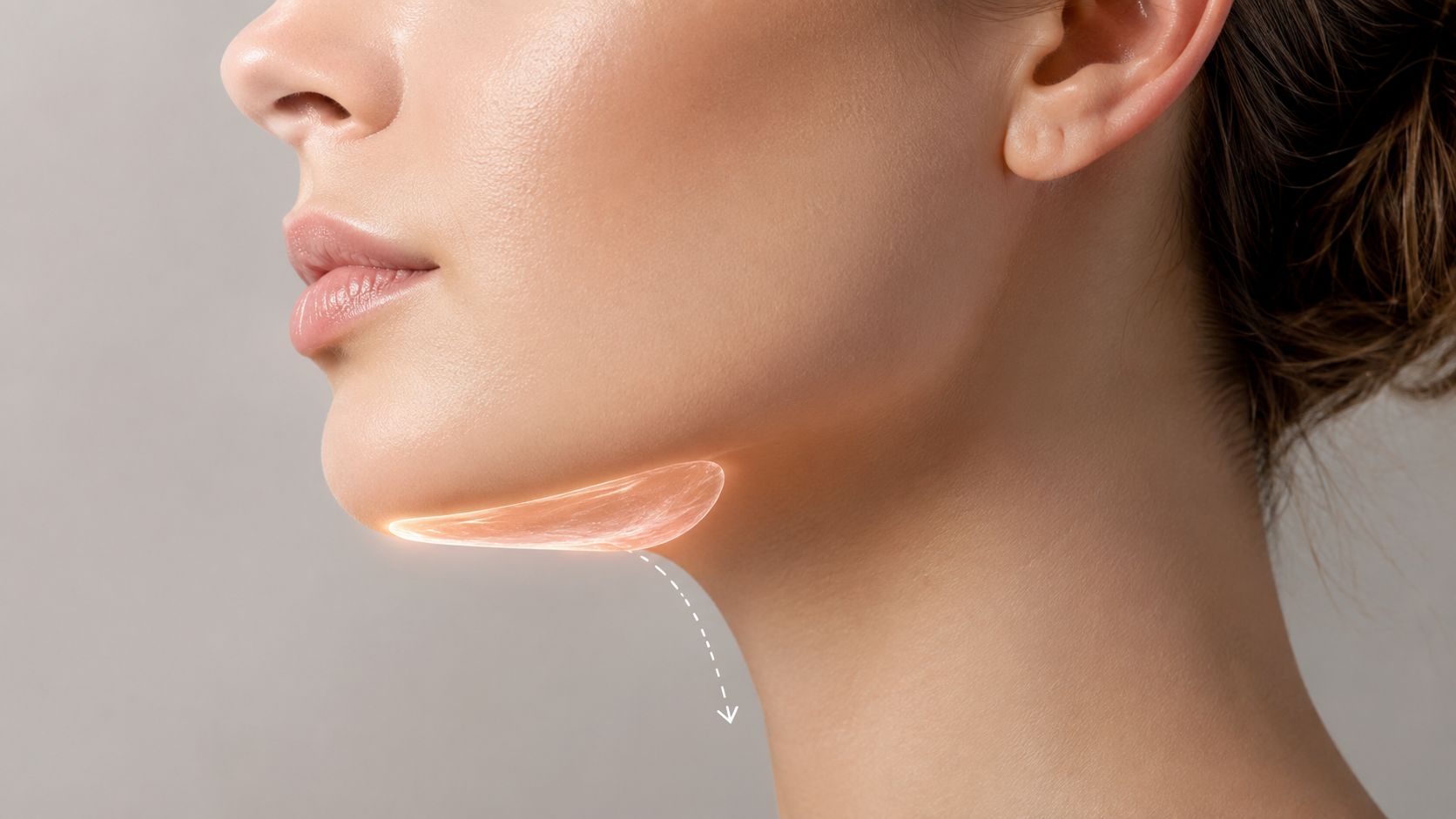
Do Chin Fillers Migrate? Signs, Causes, and Prevention
True chin filler migration is rare, with around 1% incidence overall, and when it does happen it usually stays close to the original injection site. What feels like migration at first is often normal swelling or settling, which usually improves within about two weeks.
A patient might look in the mirror a few days or even a couple of weeks after chin filler and notice the lower face seems heavier, softer, or a little uneven. That moment can feel unsettling, especially if the chin looked sharp right after treatment and then changed shape as the days passed. The good news is that the chin often goes through a predictable healing phase, and timing tells you a lot about what you're seeing. chin filler before and after examples can help you understand how much change can still fall within normal healing.
Why Your Chin Might Look Different After Filler
A lot of people notice the change the same way. They're fine for the first day, then they wake up one morning, check their profile, and think the filler has “moved.” The chin can look fuller under bright bathroom lighting, the jawline can seem softer, and one side may appear a little more prominent than the other.
What early changes usually mean
That first reaction doesn't automatically point to migration. Swelling, tissue response, product settling, and breakdown account for many early changes after treatment, and the clinical review in the brief emphasized that true migration is uncommon when filler is placed correctly. In plain terms, the chin is adjusting to a new product, and the tissue around it needs time to calm down.
The biggest clue is timing. Swelling shows up right away and usually settles within about two weeks, while true migration tends to become obvious later, after that early window has passed, according to the revision-focused source in the brief. If a chin looks puffy on day two, that's a very different story from a chin that slowly develops unusual fullness a month later.
A simple way to think about it
The first two weeks are about healing. The weeks after that are about pattern recognition. If the contour improves as swelling fades, that usually fits normal recovery. If the shape keeps drifting, especially with new firmness or fullness in an untreated area, that deserves a follow-up with your injector.
Practical rule: Don't judge chin filler by the first mirror check. Judge it by the trend across days and weeks.
That timeline-based mindset calms a lot of unnecessary worry. It also helps you ask a better question than “Did it migrate?” The more useful question is, “Does this look like normal recovery, or does it look like something that stayed or changed after the healing window?” When you frame it that way, the next step becomes much clearer.
What Actually Causes Chin Filler Migration
Migration isn't a defect in the product by itself. It's usually a mechanical issue, which means the outcome depends on how the filler was chosen, where it was placed, and how the tissue responded afterward. The surgical source in the brief describes migration as filler moving away from its intended site into an adjacent or distant area, and says that whether it happens depends on filler type, injected volume, placement depth, technique, treated area, and tissue characteristics.

Why depth and volume matter
Think of chin filler like building a foundation. If the support is placed at the right depth, the structure stays stable. If it's placed too superficially, there's less tissue support, so the product is more likely to spread or look irregular. That's why the review in the brief flagged superficial placement and large volumes as factors linked with migration.
The chin has a structural advantage compared with more mobile areas like the lips or under-eyes. The practical source in the brief notes that the chin is not a high-mobility area, which works in your favor. That doesn't mean movement can't happen, but it does mean the chin is generally less prone to dramatic displacement when technique is sound.
Why repeated treatments can change the picture
Repeated sessions matter because cumulative filler load changes how the tissue behaves. The brief notes a dose-response relationship between higher total volume and more visible migration-like contour changes. That's one reason a chin that once looked balanced can start to look softer or wider after several rounds of treatment.
A few risk factors sit on the injector's side of the needle, not yours. Those include how much product was used, how deep it was placed, and whether the product choice matched the anatomy. Your role is to be honest about prior filler, avoid chasing volume too quickly, and choose someone who plans conservatively rather than maximally.

Clinical reality: Most chin “migration” concerns are really about placement, volume, and anatomy working against each other.
How To Tell Migration from Swelling and Normal Settling
The easiest way to sort this out is by time. Swelling starts immediately after treatment, then usually eases over about two weeks. True migration tends to show up later, after the early healing phase, when the product should have settled and the tissue should be calmer.
Signs that point more toward migration
Look for changes that develop gradually instead of all at once. The brief's practical surgical source lists gradual asymmetry, fullness or firmness in untreated areas, a heavier-looking face, and lumpy or uneven skin below the surface as concrete signs that can fit migration. In chin filler, that may feel like a contour that starts to drift below or beside the treated zone rather than looking puffy everywhere.
A few features are more reassuring. Temporary tenderness, mild tightness, and a chin that looks a bit fuller right after treatment all fit the healing window. So does a result that softens week by week without creating new fullness outside the treatment area.
A simple self-check you can use
- Check the timing. Changes in the first several days usually fit swelling or settling. Changes that keep emerging after that need more attention.
- Compare both sides. Mild asymmetry can happen early, but persistent unevenness deserves a review.
- Feel for location. Fullness in an area that wasn't injected is more suspicious than even puffiness inside the chin itself.
- Track the trend. Improving shape usually means recovery. Worsening shape suggests a check-in.
If there's any uncertainty, an experienced provider can use imaging to sort it out. The brief notes that ultrasound is often used first to locate product, and MRI is generally reserved for cases where ultrasound doesn't show the filler clearly but symptoms persist. That matters because the visual exam alone can be misleading when swelling, overfill, and migration overlap.
A patient's timeline often tells the story before any machine does.
Treatment Options When Migration Does Occur
If the product is hyaluronic acid, the usual corrective route is hyaluronidase, which breaks down displaced filler so the area can fully clear before any retreatment. That approach is specifically noted in the brief as the standard pathway because it can target the product precisely rather than guessing at the contour. For readers who want to understand that enzyme in a clinical context, this Hylenex resource is a useful reference point.
Watch and wait versus dissolve
Not every unusual contour needs immediate intervention. If the issue still looks like early settling, a qualified injector may recommend observation first, especially when the change is mild and the timing still fits recovery. But if the chin shows clear displacement, persistent asymmetry, or fullness outside the intended zone, active treatment is often more appropriate.
For non-hyaluronic acid fillers, the path is different. The brief notes that these products can't be dissolved with hyaluronidase in the same way, so management may require other strategies, including more advanced correction. That's one reason identifying the filler type matters before anyone tries to “fix” the result.
What not to do at home
Do not start pressing, rubbing, or aggressively massaging the chin on your own. The brief specifically warns that heavy post-procedure pressure and aggressive manipulation can worsen displacement during the healing window. What feels like a harmless attempt to smooth the area can make contour issues more obvious.
If the change is mild and early, your provider may recommend observation. If the change is clear and persistent, dissolution is often the cleanest reset for hyaluronic acid filler, because it lets the tissue return to baseline before any new plan is made.
Prevention Strategies for Long-Lasting Chin Results
Prevention starts before the syringe comes out. The safest chin results usually come from conservative planning, the right product, and a patient who understands that filler needs time to settle before anyone judges the final shape. A thoughtful injector will also ask about prior treatments, because repeated volume changes the way tissue behaves over time.
What helps before and during treatment
Choose a provider who plans by anatomy, not by how much product can be used in one visit. The brief's clinical sources point to large volume, superficial placement, and poor tissue-plane choice as recurring risk factors, so the safest approach is usually measured, not maximal. If you have had chin filler before, tell the injector exactly what you remember, even if the details are incomplete.
During treatment, ask what filler they plan to use and why. For structural chin work, the injector should be thinking about stability, depth, and how the product will sit in the tissue rather than creating more projection. That conservative mindset matters more than any trendy technique.
What helps after treatment
The early healing period is where a lot of preventable problems begin. Avoid heavy pressure on the chin, skip aggressive massage, and don't test the area repeatedly in the mirror. If possible, sleep on your back and give the tissue time to integrate without constant compression.
The broader aftercare habits that support clean results are covered in BotoxBarb's dermal filler aftercare guidance. The common thread is simple. Respect the first two weeks, because that's when swelling settles and the final shape starts to declare itself.
Practical rule: If you're unsure whether a chin looks overfilled, wait for the tissue to settle before asking for more volume.
Choosing the Right Injector and Questions to Ask
The person holding the syringe matters more than the brand name on the product. Chin filler depends on facial anatomy, tissue depth, and restraint, so the injector's judgment is a major part of the risk equation. A skilled nurse practitioner, physician assistant, or physician with focused aesthetic training is far more likely to plan conservatively than a discount clinic that treats volume as the goal.
Questions worth asking in consultation
- How often do you treat the chin? A provider who does this regularly is more likely to understand the subtle differences between chin projection, under-chin fullness, and true displacement.
- How do you decide on volume and depth? You want an answer that mentions anatomy, not just aesthetics.
- What do you do if swelling or irregularity shows up later? A good injector has a clear follow-up plan.
- How do you review prior filler history? They should ask, listen, and document.
- What product are you choosing, and why for my chin specifically? Product choice should match the tissue, not the other way around.
You can also use the consultation to compare standards of care. For example, the same kind of attention you'd want from a medical-grade supplement provider who emphasizes safe supplements with GMP testing is the level of scrutiny you want from an injector. The common thread is verification, not hype.
A cautious provider won't promise a dramatic change in one visit. They'll talk about balance, spacing, and what happens if the chin needs refinement later. That's the kind of conversation that usually leads to more stable results.
Supporting Your Skin Health Between Aesthetic Treatments
Chin filler does best when the surrounding skin is healthy, calm, and not constantly irritated. That doesn't prevent migration by itself, but it does support a smoother overall result and can make healing feel more predictable between visits. Good at-home care also helps you separate normal texture changes from changes that deserve a follow-up.
A simple support tool for home care
One option is the Barb N.P. LED Facial Mask, which uses a wireless design so you're not tethered to a cord during use. It's designed for a comfortable fit that contours to the face without adding pressure, and it offers three lighting settings for different skin goals, including red light for collagen support, blue light for clarity, and near-infrared for deeper tissue wellness.
That kind of device can fit into a steady skin routine between injector appointments. It's not a substitute for clinical evaluation if you suspect migration, but it can be a practical part of a broader plan that keeps skin feeling supported and cared for. The same goes for consistent basic habits, gentle cleansing, sun protection, and not overhandling treated areas.
The main takeaway is simple. True chin filler migration is uncommon, and when it does happen, it's often manageable. Most early changes are still just swelling or settling, which is why timing, texture, and location matter so much.
If you're comparing your own chin filler results and want a careful, anatomy-aware opinion, BotoxBarb offers aesthetic services that include chin filler, along with supportive at-home wellness tools and skin care. Visit BotoxBarb to explore options that fit your treatment goals and recovery routine, and bring your questions to a provider who takes timing, placement, and prevention seriously.