Do Fillers Migrate? Get the Facts Here
You're probably here because you saw a dramatic before-and-after online, zoomed in on a puffy upper lip or swollen under-eye, and wondered if filler can suddenly drift all over the face. That fear is common. It's also one of the biggest reasons people delay a treatment they were otherwise excited about.
As a Nurse Practitioner, I'd rather give you a calm answer than a viral one. Yes, filler can migrate. But the more useful question is this: why does it happen, where does it happen, and how much of that risk is preventable? In real practice, migration isn't a random event that strikes out of nowhere. Most of the time, it tracks back to injector technique, product choice, area selection, or repeated overfilling.
That's good news for patients, because it means you have more control than social media makes it seem. If you want a broader primer before deciding whether filler is right for you, I also recommend reviewing what dermal fillers are used for and pairing that with a patient-friendly guide like your dermal filler questions answered from Face Studio and Wellness Center.
The Worry Over Filler Migration
A patient usually doesn't ask me, “Can filler shift by a millimeter or two?” They ask after seeing a photo labeled “botched filler,” and what they really mean is, “Could this happen to me, and would I be stuck with it?”
That concern deserves a straight answer. Filler migration is real, but it's not the horror-story mystery people think it is. It's a known complication with recognizable causes, recognizable patterns, and, in many cases, a clear solution.
Why online photos create so much anxiety
Photos on social media often collapse several different issues into one scary label. Swelling gets called migration. Poor product choice gets called migration. Overfilled lips get called migration. Sometimes old filler that was never fully addressed gets blamed on one recent appointment.
Practical rule: Don't diagnose yourself from a screenshot. Early swelling and true migration are not the same thing.
What matters most is context. Which product was used? In what area? How much volume was placed? Was the injector conservative? Was the filler layered repeatedly before the tissue settled? Those details change the picture completely.
The reassuring part patients should hear first
The goal isn't to pretend migration never happens. The goal is to understand that safe filler starts long before the syringe touches the skin. It starts with anatomy knowledge, restraint, and choosing the right product for the right tissue plane.
That's the frame I want you to keep while reading the rest of this. If you've been asking, “Do fillers migrate?” the answer is yes, sometimes. But the more reassuring truth is that prevention usually depends far more on the provider than on bad luck.
What Filler Migration Actually Is
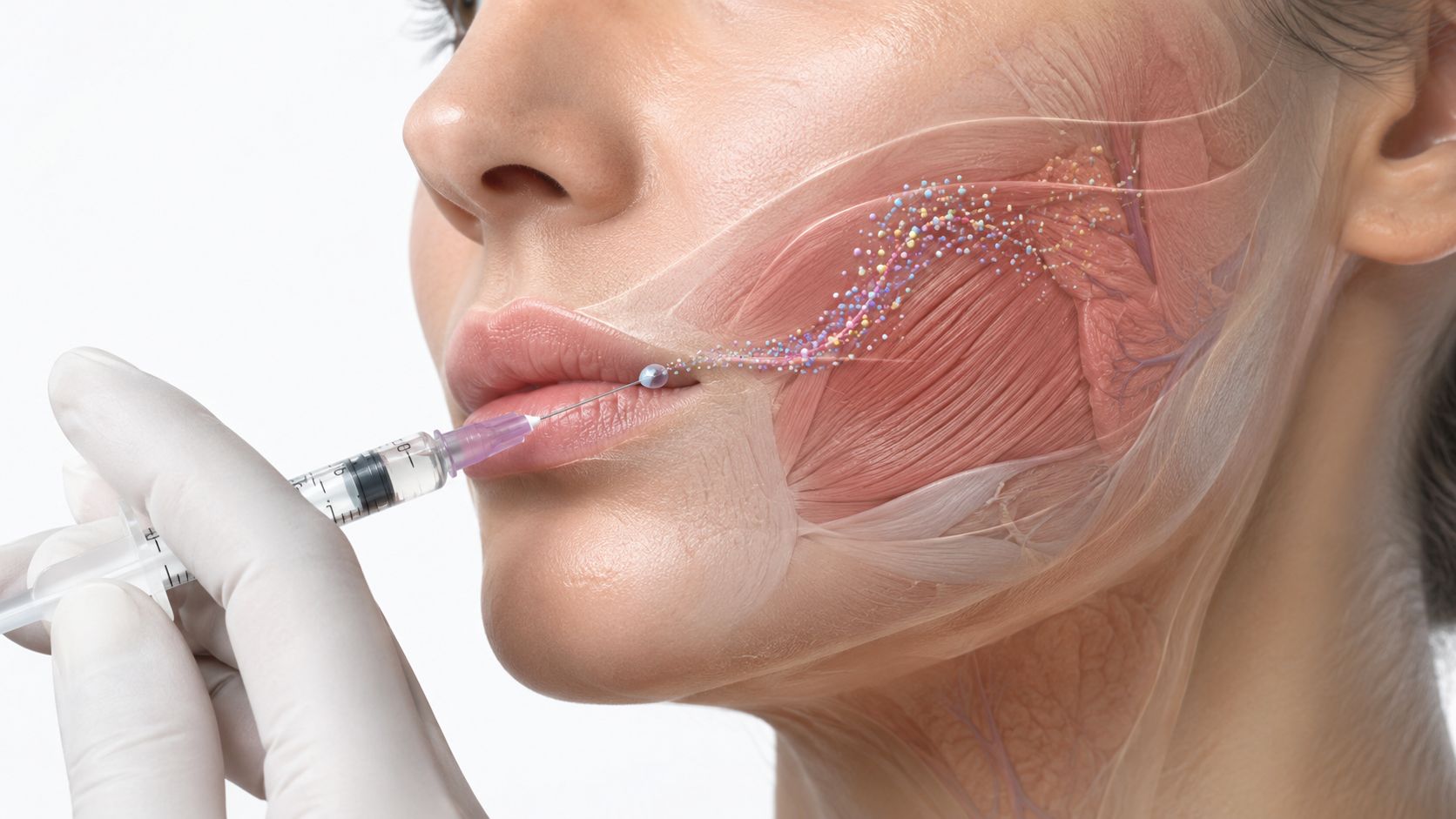
Filler migration means the product doesn't stay exactly where it was intended to sit. One clear description is that dermal filler migration occurs when hyaluronic acid-based product shifts from its injection site to nearby tissues, causing unnatural swelling or distortion, with softer fillers, like those used in lips, more prone to movement than firmer types because they have lower viscosity and are more affected by facial motion, as explained by Kovak Cosmetic Center's overview of dermal filler migration.

A simple way to picture it
Think of filler placement like honey sitting neatly in one section of a honeycomb. When it's placed correctly, it stays in the right compartment and supports the shape you want. When it's placed too superficially, pushed with too much pressure, or packed into an area that can't comfortably hold it, that honey can seep into the next cell.
That seepage is what patients often notice as blurred borders, puffiness, or fullness where they didn't expect it.
What migration is not
Migration is not the same as normal healing. Right after treatment, you can see:
- Temporary swelling that makes the area look larger than the final result
- Minor asymmetry while one side holds more fluid than the other
- Bruising or firmness from the injection process itself
Those early changes usually calm down as the tissue settles. Migration tends to look more persistent and more patterned.
A useful question is not “Do I look swollen today?” It's “Does the shape still look off after healing should have passed?”
Why some areas are more vulnerable
Areas with frequent movement are trickier. Lips move when you talk, eat, sip, smile, and sleep on your side. Under-eyes are delicate and can look puffy if product sits too superficially. Those zones demand precision, patience, and restraint.
If you're comparing treatments, it can also help to understand where filler fits in the larger world of Non-surgical anti-ageing treatments from Skin Revision, because not every concern should be treated with volume in the first place. And if you want to understand the materials themselves, this breakdown of what dermal fillers are made of gives helpful context for why one product behaves differently from another.
The Four Main Reasons Filler Migrates
Migration doesn't happen for one single reason. It usually shows up when several decisions stack in the wrong direction. One of the clearest summaries is that filler migration is a rare complication, occurring in only approximately 1% of patients who receive dermal fillers, and in most cases the product moves no more than a couple millimeters, with incorrect placement and overfilling named as major contributors, especially around dynamic areas like the mouth and eyes, according to Cosmetic Laser Centers.

Injector technique
This is the biggest factor. Not the logo on the syringe. Not the trend on TikTok. Technique.
If filler is placed in the wrong tissue plane, too superficially, or with too much pressure, it's more likely to end up where it shouldn't. Repeated topping off before the area has fully settled also creates trouble. A skilled injector works conservatively, respects anatomy, and avoids chasing fullness at the expense of structure.
Filler type and characteristics
Not all fillers behave the same way. Softer formulas can be excellent in the right place, but they aren't ideal for every area. A product that works beautifully for subtle hydration in one patient may be too mobile for another patient with stronger movement or thinner tissue.
Here's the practical takeaway:
| Factor | Lower-risk choice | Higher-risk choice |
|---|---|---|
| Texture match | Product selected for the specific area | Product chosen for convenience or trend |
| Volume plan | Conservative build over time | Too much in one visit |
| Support | Product suited to tissue depth and motion | Soft filler in a high-motion zone without proper support |
Patient movement and anatomy
Your face isn't static. Some people have stronger lip movement, thinner skin, more under-eye hollowing, or tissue characteristics that make certain areas less forgiving. That doesn't mean they can't have filler. It means the treatment plan has to match their anatomy, not someone else's before-and-after photo.
In practice, this is why a good consultation matters so much. Two patients can ask for the same result and need completely different approaches.
Inflammation and swelling
Inflammation doesn't cause every migration problem, but it can make a borderline placement look worse. Tissue that's already reactive or overworked from repeated treatment doesn't handle filler as predictably as calm, healthy tissue.
Less filler, placed correctly, almost always beats more filler placed hopefully.
A separate clinical summary notes that migration risk goes up when filler is overused in one area, placed too superficially, injected into the wrong tissue plane, layered repeatedly without enough settling time, or added too frequently, as described by Advanced Aesthetics Ocala. That lines up with what experienced injectors see every day. Most migration problems don't begin with one mysterious event. They begin with a series of preventable choices.
How to Recognize Potential Migration
Most patients first notice migration visually. They don't usually say, “I think this entered the wrong compartment.” They say, “My lip border looks blurry,” or “The under-eye still looks puffy,” or “That area feels full in a strange way.”

One helpful point from expert consensus is that migration doesn't mean filler randomly spreads everywhere. It tends to stay localized and predictable within closed deep fat compartments, creating more of a misplaced “filled pocket” than a chaotic facial change, as discussed in this expert consensus summary.
Signs that deserve a provider review
These are the patterns I take seriously in clinic:
- Blurred lip border that creates a shelf above the natural lip line
- Persistent under-eye puffiness that doesn't behave like simple swelling
- A visible lump or fullness nearby rather than at the intended treatment point
- Asymmetry that stays put instead of improving as healing progresses
What often turns out to be normal healing
A lot of panic happens in the first days after treatment. That's understandable, but early swelling is common. The area can look firmer, bigger, or uneven before it looks better.
A simple comparison helps:
| Likely healing | Possible migration |
|---|---|
| Changes day to day | Looks consistently misplaced |
| Tenderness from injections | A fuller pocket in an adjacent area |
| Improves as swelling settles | Persists or becomes more obvious |
When to check in
If something looks odd, don't press on it repeatedly, don't aggressively massage it on your own, and don't crowdsource your face to strangers online. Contact the injector who treated you, or get a second opinion from an experienced medical injector if you've lost confidence in the original plan.
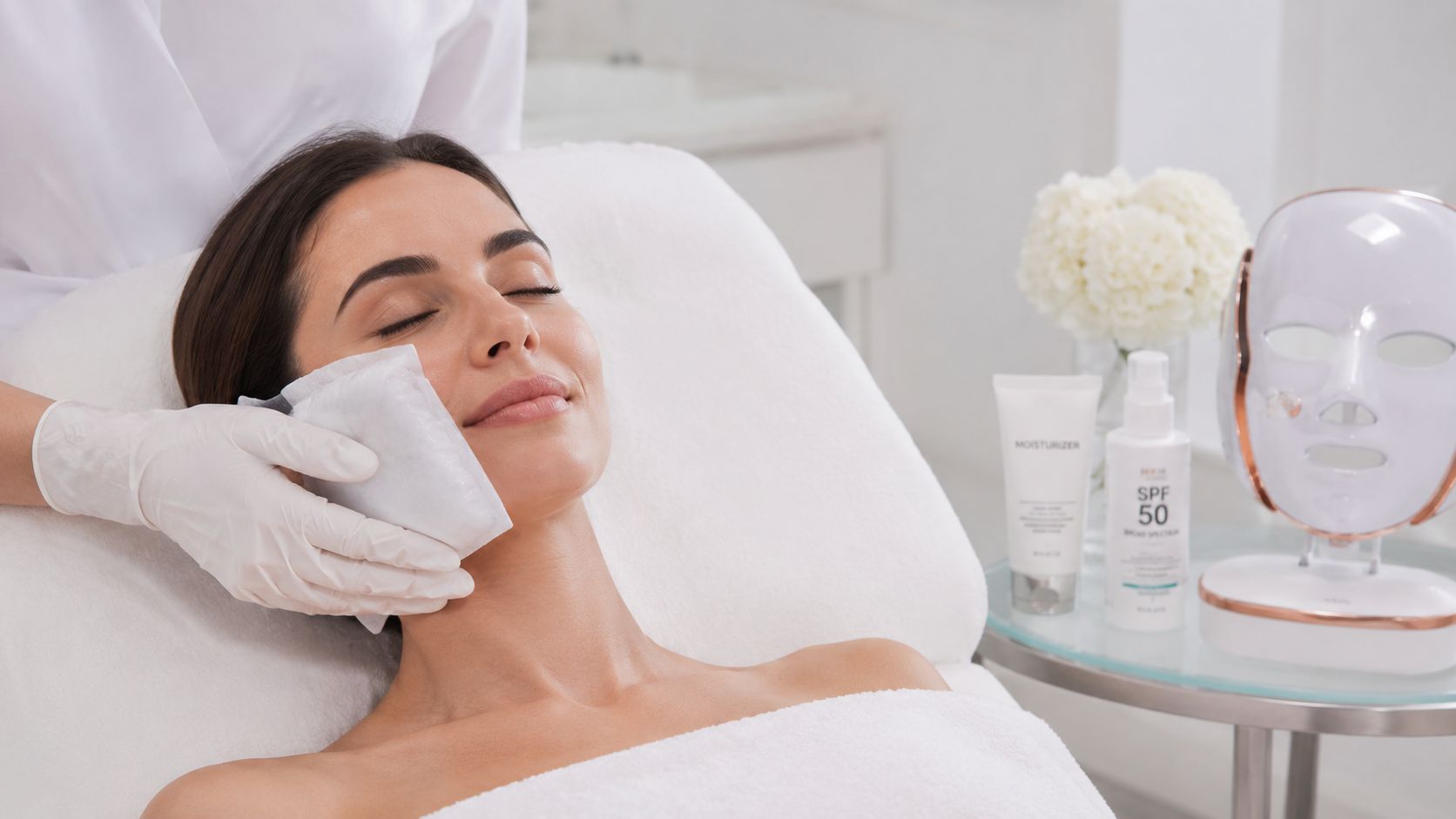
For general skin recovery after procedures, LED can be a useful support tool for calming the skin barrier and helping you maintain overall skin quality. I often like an LED mask as part of aftercare because it supports the skin without adding more trauma. The Barb N.P. Facial Mask is a strong at-home option because it's wireless, comfortable to wear on the face, and offers 3 lighting settings for different treatments. It's not a treatment for migration itself, but it can fit nicely into a thoughtful post-procedure routine.
Your Action Plan for Prevention and Treatment
If you want the shortest version of this section, it's this: the best treatment for migration is prevention, and the best prevention is injector selection.

Prevention starts before the appointment
A good consultation should include a discussion of area, product, depth, amount, and long-term plan. If the conversation is only about “how many syringes do you want,” that's not enough.
Look for these signs of a safer approach:
- Anatomy-based planning that explains why a product is being used in a specific area
- Conservative dosing instead of overcorrection in one session
- Respect for settling time before adding more product
- Honest treatment alternatives when filler isn't the right answer
If migration happens with HA filler
For hyaluronic acid fillers, the main corrective tool is hyaluronidase, an injectable enzyme used to dissolve the product. In practice, that can be paired with massage and time to help the area fully settle, which is one reason HA fillers remain a manageable option when correction is needed. If you're researching this treatment, a medical overview of Hylenex hyaluronidase gives you a sense of how dissolution is approached clinically.
What patients often want to know is whether dissolving means failure. It doesn't. Sometimes dissolving is the smartest, cleanest reset. When shape, placement, or old product is getting in the way of a natural result, starting fresh is often better than trying to camouflage a problem.
The goal isn't to “save” filler at all costs. The goal is to restore harmony in the tissue.
Why non-HA fillers change the conversation
This distinction matters. While HA fillers get most of the discussion, non-HA fillers such as silicone carry significantly higher migration risks and can form calcified cysts that require surgical removal, which is why material choice matters so much, as noted in this discussion of migration risks with non-HA fillers.
That's one reason I'm careful about what kind of product is being placed, where, and why. A patient may only hear “longer lasting,” but medically the trade-off can be reduced reversibility and a more difficult correction path.
Where LED fits in aftercare
LED isn't a dissolver, and it doesn't move filler back into place. That's not its job. Its value is in supporting skin recovery and reducing the sense that every post-treatment change needs another invasive step.
For patients who want a polished home routine after injectables, the Barb N.P. Facial Mask is worth considering because it's wireless, comfortable across the face, and has 3 lighting settings for different treatments. Used appropriately, it can support skin wellness while your provider handles the actual filler plan.
Common Myths About Filler Migration
Social media has made filler migration sound both more dramatic and more random than it usually is. Let's clean that up.
Myth one, filler in the lips always migrates
Not true. For HA fillers, migration is rare in the lips when the product is placed at the correct depth on the bone, while tear troughs are more vulnerable when filler is placed too superficially or by someone without strong anatomy training, as explained by Lansdowne Aesthetic Center.
That's an important distinction. The lip itself is not the problem. Poor placement is the problem.
Myth two, if filler migrates it goes everywhere
Patients often imagine product floating unpredictably around the face. In reality, migration is usually much more localized than that. It tends to show up in nearby tissue in a pattern that makes anatomical sense.
This is why trained assessment matters. A provider isn't just looking at “swelling.” They're looking at shape, borders, depth, and where product likely settled relative to the original plan.
Myth three, every lump means permanent damage
Also not true. A lump can be swelling, a bruise, product sitting superficially, or product that needs time to settle. Some findings need treatment. Some need patience. Some need dissolving.
The worst move is panic treatment by impulse. The best move is careful assessment.
“If it doesn't look right, don't guess. Get examined.”
Myth four, the only way to avoid migration is to avoid filler
That's too simplistic. The better answer is to avoid bad filler planning. Fillers remain useful tools when the area, product, injector, and volume all match the anatomy.
A patient who chooses wisely, asks questions, and accepts a conservative approach lowers risk dramatically compared with someone who chases volume, trends, or bargain pricing.
Partnering for Safe and Confident Results
When patients ask, “Do fillers migrate?” they're usually trying to answer a larger question. “Can I do this safely without ending up with a result I regret?”
The honest answer is yes, if you treat filler as a medical procedure and not a casual beauty add-on. Migration is uncommon, usually localized, often preventable, and frequently treatable when the product is HA. The biggest difference-maker is provider judgment. Product choice, depth, restraint, and knowing when not to inject all matter.
That's why the safest path isn't fear. It's partnership. An informed patient notices changes early, asks better questions, and doesn't chase overcorrection. An experienced injector respects anatomy, uses the right product, and keeps the plan conservative.
If you're still comparing options or trying to build a broader skin strategy before committing to injectables, this guide to skin care alternatives in Florida from Lumina Skin Sanctuary can help you think more broadly about provider selection and treatment fit.
The goal isn't perfection. It's natural, confident results that still look like you.
If you want a thoughtful filler consultation, post-treatment support, or curated skincare and wellness tools, explore BotoxBarb. You'll find aesthetic services, the Barb N.P. Facial Mask, and carefully selected products that support healthy skin, strong recovery, and a more confident treatment experience.