Does Botox Cause Bruising and How to Prevent It
Of course. Here is the rewritten section, crafted to sound like an experienced human expert in the style of the provided examples.
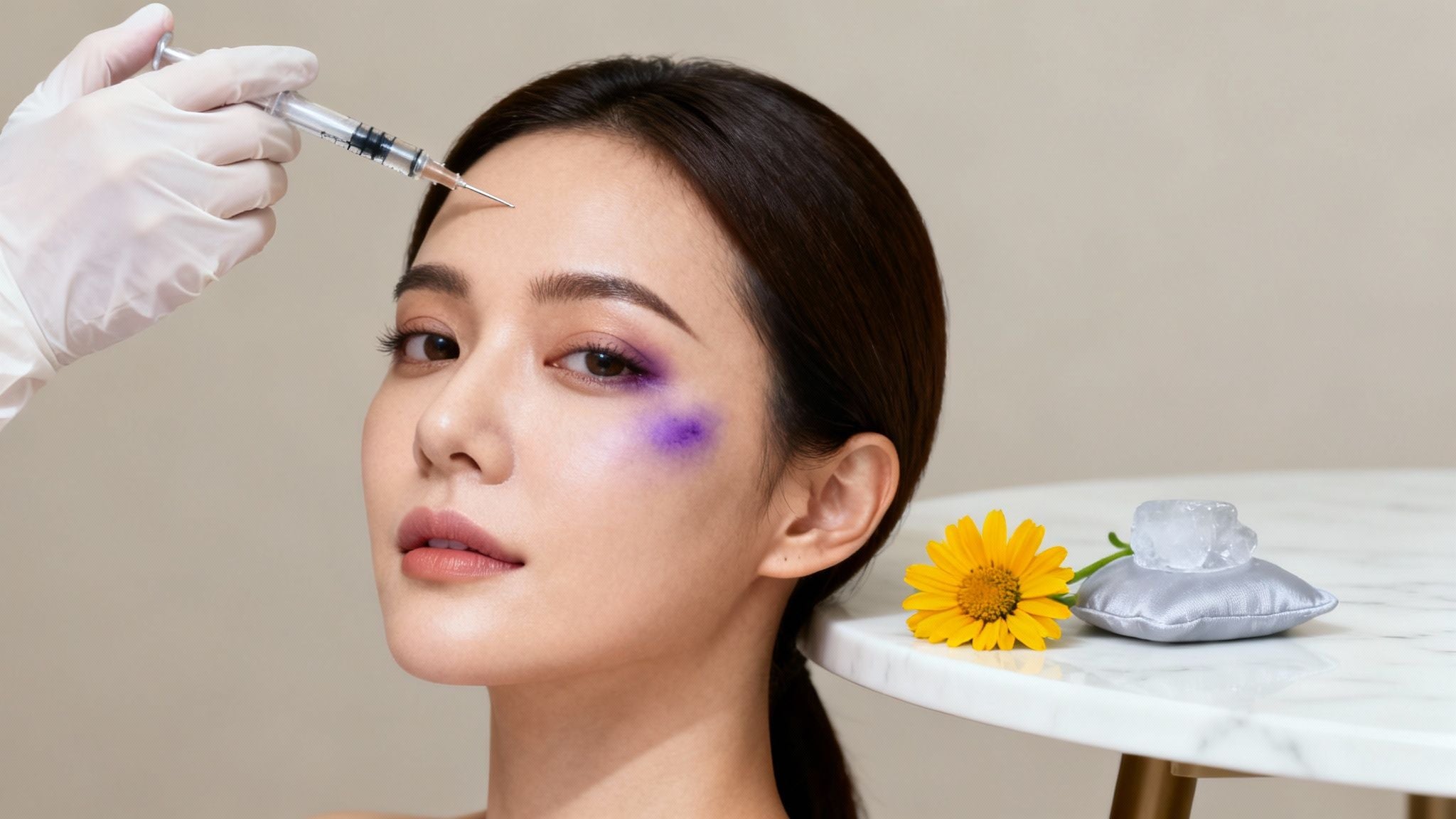
Let’s talk about one of the most common questions I get from my clients: “Will Botox give me a black eye?” It’s a totally fair question, especially if it’s your first time. The short answer is yes, bruising can happen, but it’s absolutely not a sign that something went wrong.
Think of it as a temporary and manageable side effect. When that tiny, ultra-fine needle goes in, it’s navigating a complex map of invisible blood vessels just beneath your skin. Even with the steadiest hand, sometimes a tiny capillary gets nicked. It’s a normal part of the process.
Why a Little Bruise After Botox is Normal
If you’re thinking about getting Botox, the idea of walking out with a bruise is probably on your mind. Let's clear the air so you know exactly what to expect.
Your face is full of tiny capillaries. When we do injections, a small amount of blood can sometimes leak into the surrounding tissue, creating that familiar blue or purple spot. It’s simply your body’s natural response. The good news? It’s usually minor, easy to hide, and gone before you know it.
So, What Are the Actual Chances of Bruising?
Bruising is hands-down the most common side effect with Botox, but that doesn’t mean everyone gets one. Far from it.
Research shows bruising happens in about 6-25% of Botox treatments. Some studies have noted it can be as high as 68%, but this really depends on where you’re getting injected and your own body’s tendencies. It all comes down to that needle-and-capillary interaction under the skin. You can read more about the science behind injection-related bruising if you love the details.
To make it simple, here are the key facts at a glance.
Botox Bruising At a Glance
Here's a quick cheat sheet that breaks down everything you need to know about post-Botox bruising.
| Aspect | Summary |
|---|---|
| Likelihood | Common, but not guaranteed. It occurs in a notable percentage of treatments. |
| Cause | A fine needle nicking a small, superficial blood vessel during injection. |
| Typical Duration | Usually fades within 5 to 10 days, following the normal healing cycle of any bruise. |
| Severity | Generally minor, often just a small spot that can be easily covered with makeup after 24 hours. |
While a small bruise is always a possibility, a skilled injector knows techniques to minimize the risk, and with the right prep and aftercare, you can significantly reduce your chances of seeing one. It’s a tiny potential trade-off for beautifully smooth results.
Why Bruising Happens After an Injection
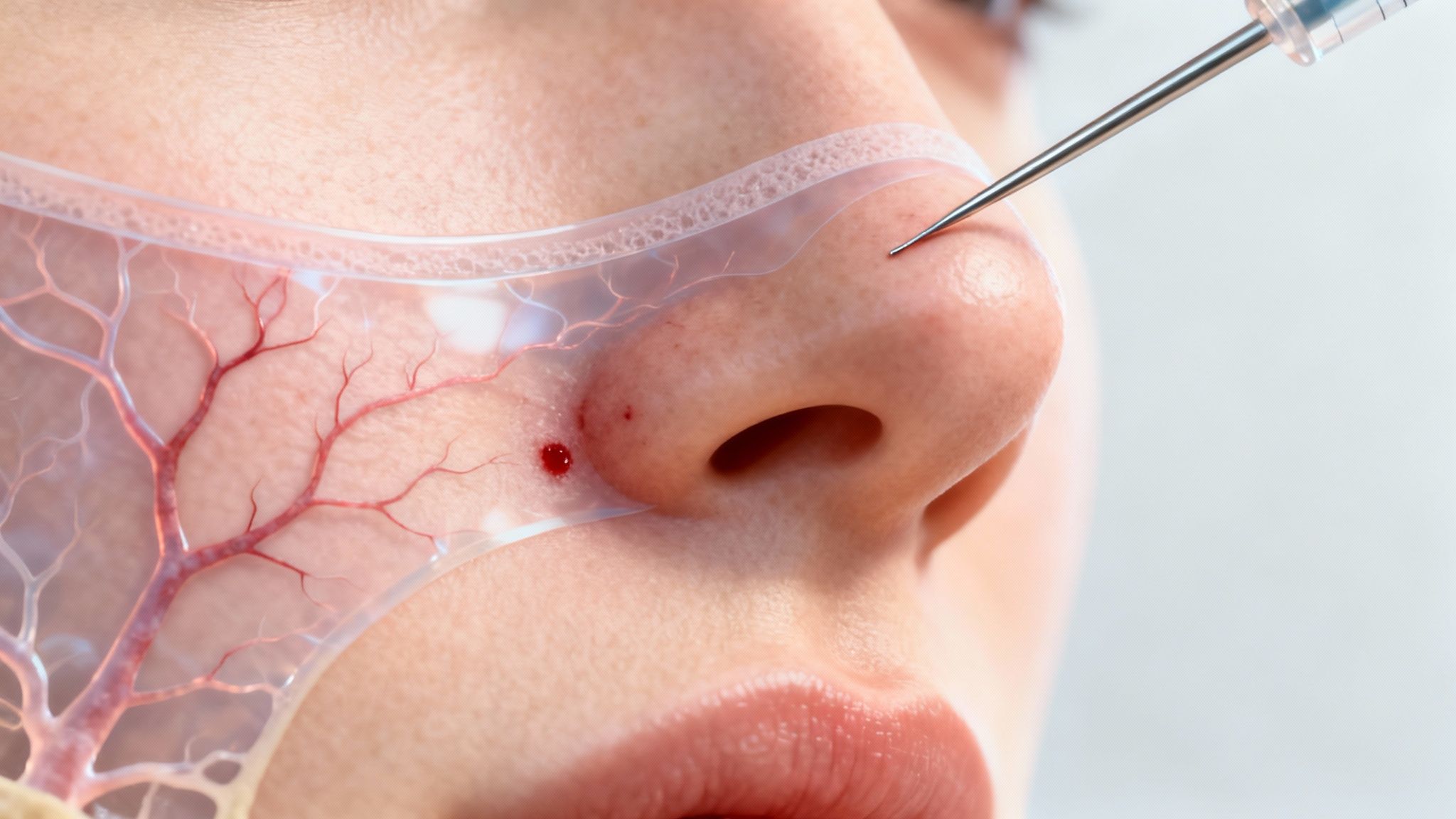
To really get why a small bruise might pop up after your Botox treatment, let's take a look at what’s happening just beneath the surface of your skin. Picture it like a complex, invisible roadmap of tiny capillaries, all working to deliver nutrients and keep your skin healthy. It's a delicate, intricate web.
When an injector like myself administers Botox, we're using an ultra-fine needle to navigate this hidden network. Even with the steadiest hand and an expert knowledge of facial anatomy, that needle tip can sometimes gently bump into one of these microscopic vessels. It’s not an error—it's just a reality of working within such a dense and delicate structure.
The result is a tiny puncture that allows a very small amount of blood to seep into the surrounding tissue. That’s what you see as a bruise, which is also known as a hematoma. It’s your body’s completely normal, healthy response to a minor disruption.
The Lifecycle of a Bruise
Once that little bit of blood is under the skin, your body’s amazing cleanup crew—your immune system—gets right to work. The colorful show you see on your skin is actually a visual timeline of this healing process in action.
The color of a bruise comes from hemoglobin, the protein in your red blood cells that carries oxygen. As your body breaks down these trapped cells, the hemoglobin transforms, creating a pretty predictable pattern of colors.
- Day 1-2 (Dark Blue or Purple): At first, the pooled blood is full of oxygen, which gives it a reddish look that quickly deepens to blue or purple as the oxygen fades.
- Day 5-10 (Greenish): As your body continues to break down the hemoglobin, it converts it into a compound called biliverdin, which has a distinct green color.
- Day 10-14 (Yellow or Brown): Finally, biliverdin is broken down even further into bilirubin, which looks yellowish or brownish. This is the last stop before the bruise disappears completely.
Understanding this process helps reframe a bruise not as a complication, but as a sign that your body is actively and effectively healing itself. It's just a temporary mark on the path to smoother skin.
"Seeing a bruise can be alarming, but it's a natural biological event. Your body is designed to handle these minor traumas efficiently. The color changes are visible proof that your internal healing mechanisms are functioning perfectly."
Why Some Areas Are More Prone to Bruising
Ever notice how a bump on your shin seems to bruise more dramatically than one on your arm? The same idea applies to your face. Certain spots are just more susceptible to bruising from injections, and there are a few good reasons why.
The delicate skin around the eyes, where we treat crow's feet, is a perfect example. This area has:
- Thinner Skin: The skin here is some of the thinnest on your entire body, which means the blood vessels are much closer to the surface.
- Higher Vascularity: There is a much denser network of capillaries packed into this small space, which naturally increases the chances of a needle nicking a vessel.
Because of these factors, a small bruise is more likely to show up here than, say, on the forehead, where the skin is thicker and has fewer vessels. Knowing the details of common Botox injection sites and their facial diagrams helps you understand why your injector might take extra care in these specific zones. This anatomical awareness is key to minimizing bruising risk and getting you the best possible results.
Understanding Your Personal Bruising Risk Factors
So, does Botox cause bruising? The honest answer is: it depends a lot on you.
While your injector’s technique is a huge piece of the puzzle, your own body and lifestyle choices play a massive role. Think of it this way: some people get a paper cut and barely see a drop of blood, while others seem to bruise just by looking at a table corner. It’s the same idea here.
Understanding what makes you more likely to bruise is empowering. It lets you take back some control and work with your injector to stack the odds in your favor for a flawless recovery. These factors fall into two camps: things you can change, and things you can't.
Controllable Risk Factors You Can Manage
Here’s the great news: many of the common things that lead to bruising are completely within your control before you even walk into the clinic. Most of them have to do with substances that make your blood a little "thinner" or less likely to clot quickly.
When your blood is thinner, it flows more freely. If a tiny, microscopic blood vessel gets nicked during an injection—which is sometimes unavoidable—thinner blood is more likely to leak out and form that tell-tale purple spot before your body can seal it up.
Here’s what you’ll want to steer clear of for a few days before your appointment:
- Medications: Common over-the-counter pain relievers like aspirin, ibuprofen (Advil, Motrin), and naproxen (Aleve) are famous for their blood-thinning effects.
- Supplements: Many popular health supplements do the same thing. Be mindful of high-dose Vitamin E, fish oil, ginkgo biloba, and even turmeric.
- Alcohol Consumption: That glass of wine the night before might seem harmless, but alcohol is a vasodilator. It temporarily widens your blood vessels, which can increase bleeding if one is pricked.
Taking a short break from these can make a world of difference. Of course, always talk to your doctor before you stop taking any prescribed medication.
Uncontrollable Factors That Play a Role
While you can skip the wine and fish oil, some things are just part of your unique makeup. Knowing about these helps set realistic expectations. A small bruise isn’t a sign of a bad injection; it’s just your body doing its thing.
Genetics are a big one. If you come from a family of easy bruisers, you probably inherited that trait. Age is another factor. As we get older, our skin thins out and we lose some of the natural collagen and fat that once acted as a cushion for our blood vessels, leaving them more exposed and fragile.
A huge 2022 analysis found that while Botox is incredibly safe, skin reactions like bruising happen in about 3.8% of patients. It’s one of the most common—and most minor—side effects. You can dig into the Botox treatment findings in the full study here.
On top of that, some of us are just born with more delicate capillaries. These tiny vessels are simply more likely to break from the minor poke of a needle, no matter how skilled and gentle the injector is.
Supporting Your Skin for Better Recovery
Even if you know you’re prone to bruising, you can still give your skin a helping hand. One of the best at-home tools for this is LED light therapy. Devices like the Barb N.P. LED Facial Mask are specifically designed to support recovery and boost overall skin health.
The mask is completely wireless and designed for comfort, so you can pop it on and relax without being tethered to a wall. It has three different light settings, but for post-Botox care, the red light is your best friend. It helps calm inflammation and kickstarts cellular repair, which can help any bruises that do appear fade that much faster.
Your Pre-Treatment Plan to Prevent Bruising
While you can't guarantee a completely bruise-free experience, you can absolutely stack the deck in your favor. A little bit of smart prep goes a long way in making sure your skin is in the best possible shape for your Botox appointment.
Think of it as creating the perfect canvas for your injector. By making a few simple adjustments in the days and weeks leading up to your treatment, you can seriously reduce your chances of seeing a bruise pop up.
Two Weeks Before Your Appointment
Your game plan should kick off about two weeks before your treatment. This is the time to take a close look at any medications and supplements you’re taking. Many common, over-the-counter products can thin your blood, which makes it much harder for it to clot if a tiny vessel is nicked during the injection.
Always check with your doctor before pausing any prescribed medication. But if you get the green light, consider temporarily stopping these:
- NSAIDs: This includes things like aspirin, ibuprofen (Advil), and naproxen (Aleve).
- Supplements: Be especially mindful of fish oil, high-dose Vitamin E, ginkgo biloba, and St. John's Wort.
This is also a great time to start adding some bruise-fighting foods to your diet. Leafy greens like spinach and kale are loaded with Vitamin K, which is a key player in helping your blood clot properly.
48 Hours Before and The Day Of
As your appointment gets closer, the focus shifts to avoiding anything that temporarily increases blood flow to your face. For at least 48 hours beforehand, it’s best to skip alcohol completely. That glass of wine might seem relaxing, but it acts as a vasodilator, widening your blood vessels and making a bruise much more likely to form.
On the day of your treatment, try to arrive with clean, makeup-free skin. It's a simple step that just makes the whole process smoother for everyone and avoids any harsh rubbing at the clinic that could irritate the area.
This timeline breaks down the most important steps to take before your appointment to keep bruising to a minimum.
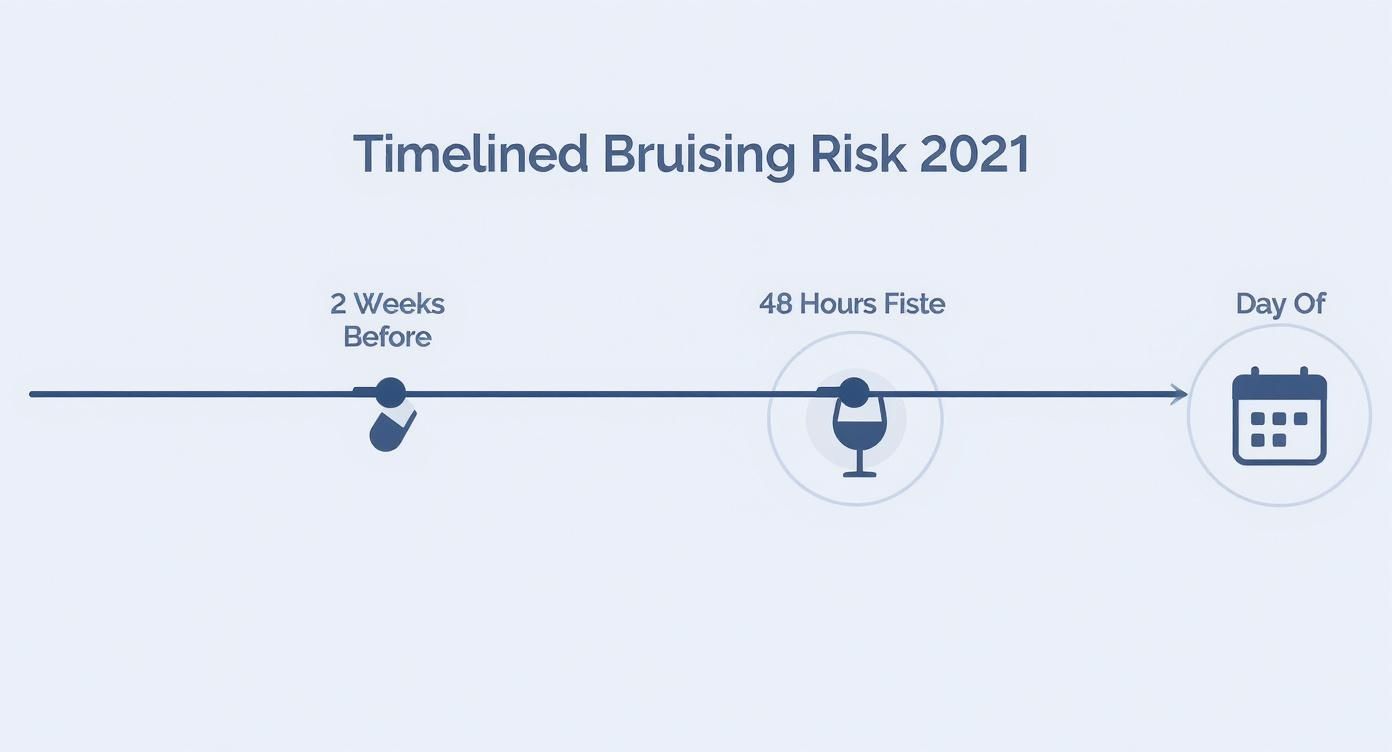
The key takeaway is that simple, well-timed actions—like pausing certain supplements and skipping that pre-appointment cocktail—can make a huge difference in your recovery. For an even more detailed checklist, check out our complete guide on how to properly prep for Botox.
A bit of planning doesn't just help prevent bruises; it helps you actively participate in getting the absolute best results from your treatment.
Smart Aftercare for a Bruise-Free Recovery
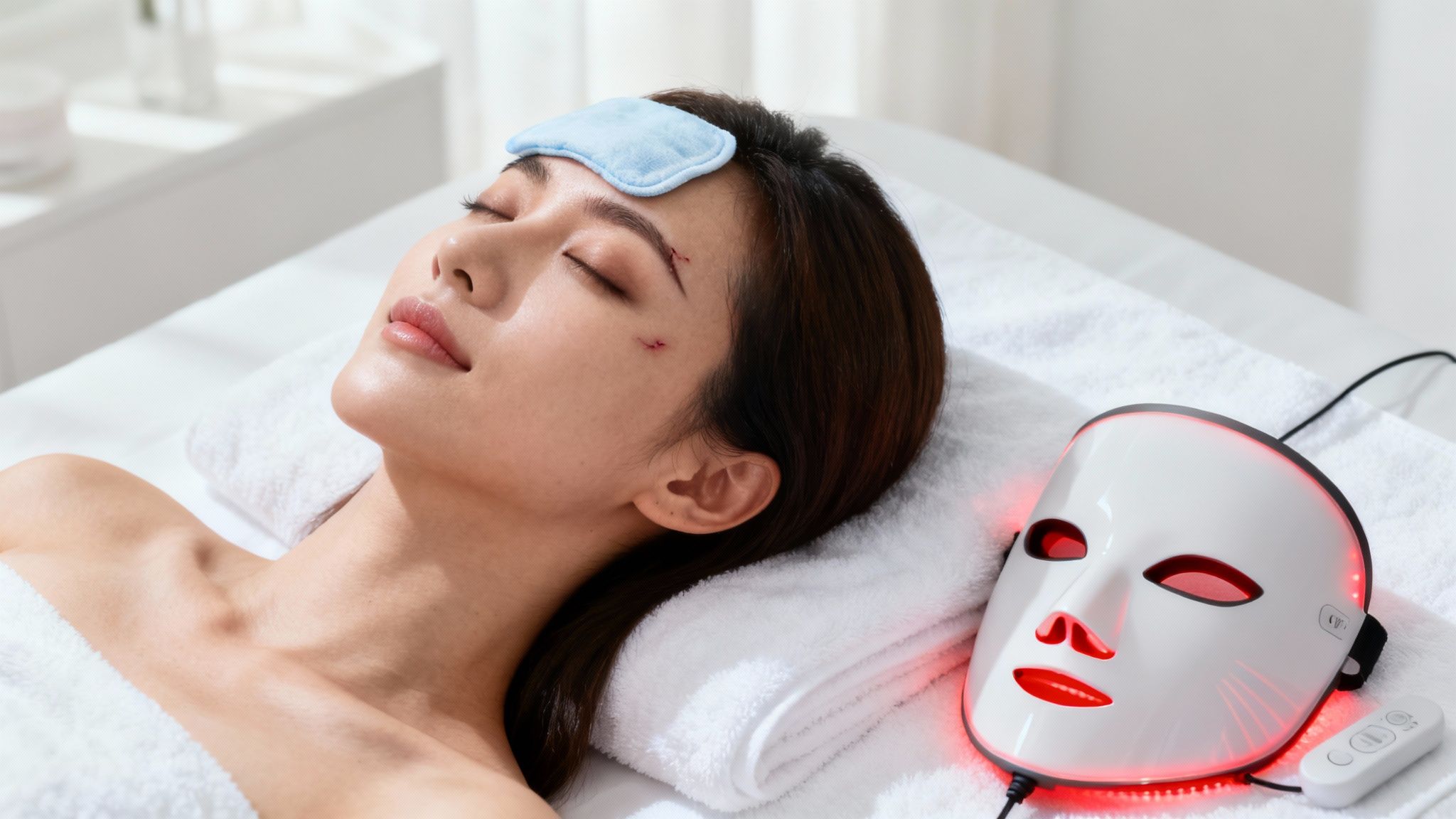
The success of your Botox treatment doesn’t end when you walk out of my clinic. Honestly, what you do in the hours and days that follow is just as critical as the prep work. Your aftercare routine is your best defense against bruising and your secret weapon for a smooth, swift recovery.
Think of the post-injection period as a crucial healing phase. Your actions can either calm the skin down for a quick recovery or accidentally invite a bruise to the party. By following a few simple but powerful steps, you take control of your results and get to enjoy that refreshed look even sooner. Let’s walk through exactly what to do.
Immediately After Your Injection
The first hour is all about damage control. Our main goal here is to constrict the tiny blood vessels that might have been disturbed during the injections. This helps stop any minor, under-the-skin bleeding in its tracks before it has a chance to pool and turn into a visible bruise.
Your best friend in this initial window? A cold compress.
Applying gentle, cool pressure to the treated areas helps shrink those capillaries, reducing blood flow to the site—which is exactly what we want. Just be careful not to press too hard or massage the area, as this can cause the Botox to migrate. A light, delicate touch is all you need.
- How to Apply: Grab an ice pack or a bag of frozen peas and wrap it in a soft, clean cloth.
- Duration: Gently hold it against the treated areas for about 10-15 minutes at a time.
- Frequency: Feel free to repeat this every hour for the first few hours after your appointment.
This simple step is one of the most effective things you can do right away to shut down a potential bruise before it even thinks about forming.
Navigating The First 48 Hours
Once you’re past the initial few hours, your focus shifts to creating a calm environment for your skin to heal. For the next 24 to 48 hours, the golden rule is to avoid anything that dramatically increases blood flow or pressure to your face. Bumping up circulation can put stress on those delicate, healing capillaries, which can either trigger a new bruise or make an existing one worse.
To keep things calm, stick to these key guidelines:
- Avoid Strenuous Exercise: This is your hall pass to skip the high-intensity workout, hot yoga, or heavy lifting for at least a full day. A gentle walk is perfectly fine, but anything that gets your heart pumping hard should be postponed.
- Stay Upright: For at least four to six hours after your treatment, try to avoid lying down flat or bending over. Keeping your head elevated helps prevent blood from rushing to your face.
- Sleep Smart: When you go to bed that first night, prop your head up with an extra pillow. It’s a simple trick that really helps reduce swelling and fluid buildup while you sleep.
Following these steps helps ensure the Botox settles exactly where I placed it and gives your skin the best possible chance for a bruise-free result. For a more exhaustive checklist, our guide to Botox after-care instructions covers every little detail you need to know.
Elevate Your At-Home Healing Routine
For ongoing care that supports and even accelerates your skin’s recovery, bringing a little advanced technology into your at-home routine can make a world of difference. This is where tools designed for skin rejuvenation truly shine, helping to manage inflammation and promote cellular repair from the inside out.
The Barb N.P. Facial Mask is the perfect addition to your post-Botox aftercare. Its comfortable, completely wireless design means you can easily wear it while relaxing, reading, or catching up on emails—no need to be plugged into a wall.
The mask features three distinct lighting settings for targeted treatments, but its Red Light Therapy mode is a game-changer after injectables. Red light works at a cellular level to calm inflammation, gently boost circulation in a controlled way, and stimulate collagen production. This not only helps any potential bruises heal faster but also enhances the overall health and radiance of your skin, beautifully supporting your Botox results.
How to Heal Botox Bruises Faster
Even with the steadiest hand and perfect prep, a small bruise can sometimes pop up after a Botox treatment. It happens. When it does, your focus naturally shifts from prevention to damage control. The good news? You have several fantastic options to help that little spot fade away quickly.
Instead of just waiting it out, you can take active steps to support your body's natural healing process. We’re talking about everything from targeted topical creams to advanced light therapy that works on a cellular level. These strategies can seriously shorten a bruise's lifespan.
Topical Treatments to Accelerate Healing
When a bruise appears, certain topical treatments are brilliant at speeding up the breakdown of that pooled blood under your skin. Two of the most effective and popular choices are Arnica and Vitamin K cream. Think of them as your skin’s specialized cleanup crew.
Arnica gel, which comes from the Arnica montana plant, is a go-to for its anti-inflammatory powers. Gently applying it to the bruised area helps reduce swelling and discomfort, which in turn helps the discoloration resolve faster.
Vitamin K cream works a little differently. Your body already uses Vitamin K for blood clotting. When you apply it topically, you’re giving that process a boost, helping your body reabsorb the trapped blood more efficiently and fade the bruise from the outside in.
The Role of Temperature Therapy
Knowing when to grab an ice pack versus a warm compress makes a huge difference in managing a bruise. To really get it right, understanding when to use ice and heat for injuries is a great resource.
For the first 24-48 hours, cold is your best friend. An ice pack constricts the blood vessels, which minimizes swelling and stops the bruise from getting bigger. After 48 hours, you can switch to a warm compress. This boosts circulation, helping to clear away the old blood cells and speed up healing.
Advanced At-Home Technology for Faster Recovery
Beyond traditional remedies, you can give your skin’s recovery a serious upgrade with advanced tools like LED therapy. This is where a high-quality device can truly change the game for your healing journey.
The BARB N.P. Facial Mask is an incredible tool for post-Botox care. It’s completely wireless, so you can use it while relaxing without being tethered to a wall, and its comfortable design rests gently on your face.
The mask has three lighting settings, but the Red Light Therapy mode is the real star for healing. This specific wavelength penetrates the skin to calm inflammation and stimulate cellular repair, helping your body clear that bruise much more quickly and efficiently.
To help you decide which approach is best for you, here’s a quick comparison of the most common and effective treatment options.
Comparing Bruise Treatment Options
| Treatment Method | How It Works | Best Time to Use | Expected Outcome |
|---|---|---|---|
| Cold Compress | Constricts blood vessels to limit swelling and internal bleeding. | Immediately and for the first 24-48 hours. | Minimizes the initial size and severity of the bruise. |
| Arnica Gel | Reduces inflammation and can help alleviate minor discomfort. | Can be applied a few times daily as soon as a bruise appears. | May reduce swelling and help the bruise fade faster. |
| Red Light Therapy | Stimulates cellular repair and reduces inflammation at a deeper level. | After the first 48 hours, as part of a daily routine. | Accelerates the body's natural healing process for quicker resolution. |
Each of these methods offers unique benefits, from immediate damage control with a cold compress to accelerated healing with red light therapy. Using them together can give you the best and fastest results.
Got Questions About Botox Bruising? We Have Answers.
Even after walking through the details, it’s completely normal to have a few more questions pop into your head. This is the spot for quick, clear answers to the most common concerns we hear from our BotoxBarb clients about bruising. We want you to feel totally confident and prepared.
How Long Does a Botox Bruise Typically Last?
Most of the time, a small bruise from a Botox needle will stick around for about 5 to 10 days. Just like any other bruise, you’ll watch it go through a color-changing journey—from a dark blue or purple to a greenish-yellow before it vanishes completely.
Of course, the exact timing depends on the size of the bruise and how quickly your body naturally heals. Sticking to the aftercare advice, like using a cold compress right away, can definitely help speed things up.
Is Bruising a Sign of a Bad Injection?
Absolutely not, and this is a big one to remember. A little bruising is a very common, known side effect of any injection and says nothing about your injector's skill level. The face is packed with tiny, invisible blood vessels, and even the most experienced, steady hand can nick one.
A true professional, like our team at BotoxBarb, will always be upfront about this possibility and use expert techniques to keep the risk as low as possible. But it’s a normal part of the process that can never be 100% avoided.
Can I Use Makeup to Cover a Bruise After Botox?
Yes, you can—but patience is key here. We always advise waiting at least 24 hours after your treatment. That little bit of time allows the tiny injection points on your skin to fully close up, which is crucial for preventing any chance of infection.
Once you get the green light, be gentle. Use a clean brush or sponge to lightly dab or pat concealer on, never rubbing or pressing hard. For the first couple of days, you want to avoid putting any firm pressure on the treated spots to let the Botox settle perfectly into place.
Are Some Facial Areas More Likely to Bruise?
They sure are. If you’re going to see a bruise, it's most likely to be around the eyes where we treat crow’s feet. It’s the number one spot.
Why? The skin there is incredibly thin and delicate, with a dense web of capillaries sitting right under the surface. It’s just more susceptible. In contrast, areas with thicker skin, like the forehead, don’t tend to bruise nearly as often.
At BotoxBarb, our goal is to empower you with knowledge and support your skin’s health long after you leave our clinic. To give your recovery a boost and keep your skin glowing, consider the BARB N.P. LED Facial Mask. The Red Light Therapy setting is fantastic for calming inflammation and speeding up healing, helping you see your gorgeous, smooth results even sooner. You can explore our hand-picked selection of medical-grade products at https://barbnp.shop.