How to reverse sun damage on face: Easy skincare tips
So, can you actually reverse sun damage on your face? The answer I give my clients is a confident yes. While we can't turn back the clock completely, we can make incredible strides in improving skin tone, texture, and fine lines.
It takes a smart combination of daily protection, targeted topical treatments, and powerful professional procedures. This is your roadmap to reclaiming your skin's health and radiance.
Confronting Sun Damage to Restore Your Skin
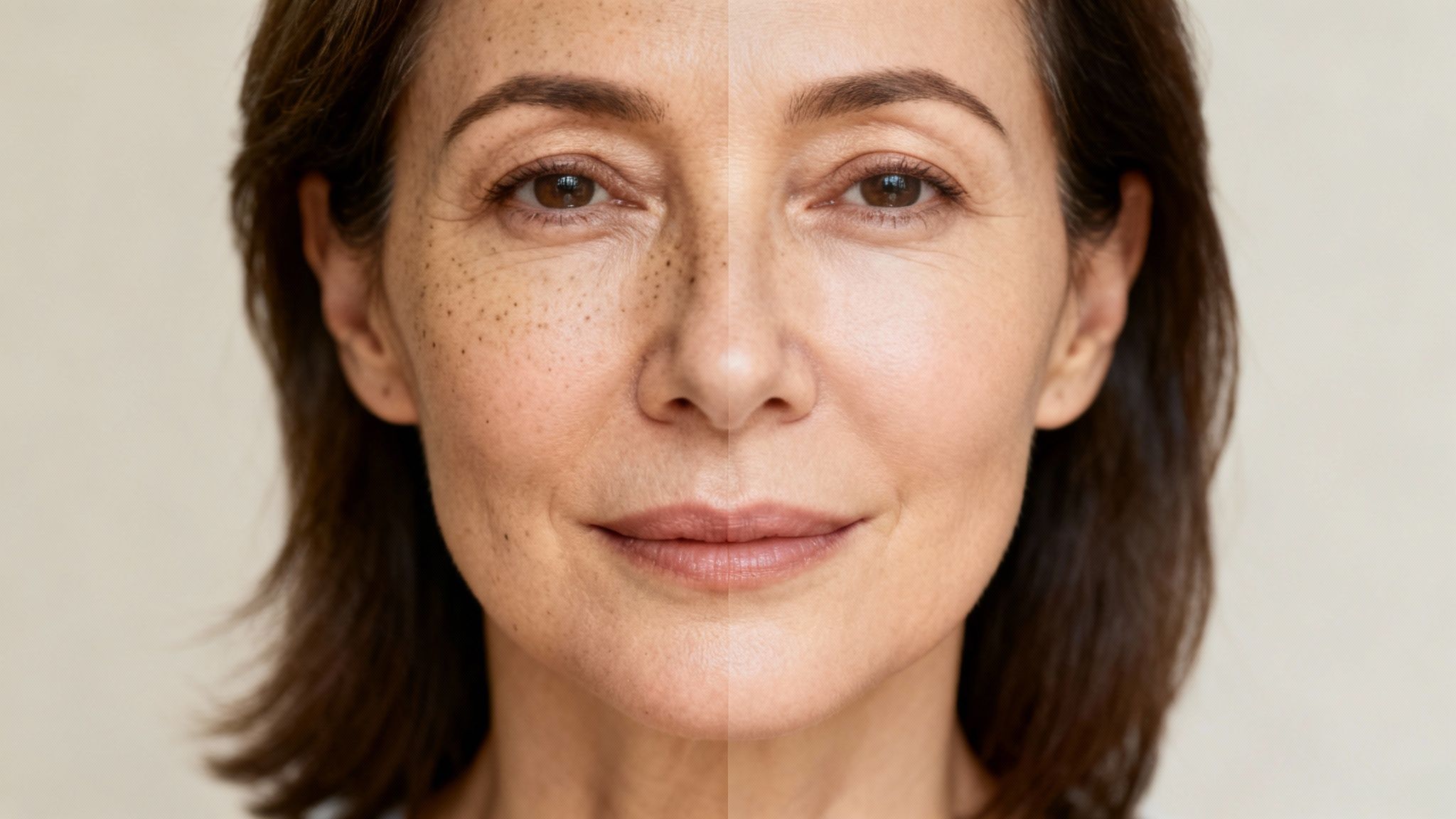
The fine lines, dark spots, and uneven texture you see today didn't just show up overnight. They're the result of years of cumulative sun exposure, a process we call photoaging. Understanding this is the first real step toward creating a strategy that works.
Every minute your skin spends in the sun without protection contributes to this damage. UV rays break down the essential collagen and elastin that keep skin firm, plump, and smooth. The visible signs often don't appear for years, making prevention just as crucial as reversal.
The Cumulative Effect of Sun Exposure
The tricky thing about sun damage is how it sneaks up on you. Research has shown that a staggering 80% of visible skin aging in Caucasian women is a direct result of sun exposure. What’s even more surprising is that most of us only get about 23% of our total lifetime UV exposure by the time we're 18. The damage we see in our 30s, 40s, and beyond is the bill coming due from our teens and twenties.
But here’s the good news: people who consistently use sunscreen with SPF 15 or higher show 24% less skin aging than those who don't. That statistic alone proves that it's never too late to start protecting your skin and that a good defense is your best offense. You can find more skin cancer facts and stats on skincancer.org.
Sun damage is a long-term conversation your skin has with the sun. The goal of any treatment plan is to interrupt that conversation with powerful repair signals and consistent protection.
A successful plan isn’t about a single magic bullet. It’s about a multi-faceted approach combining daily habits, potent ingredients, and sometimes, a little help from professional-grade technology. This guide will walk you through each piece of the puzzle, so you can make real, visible changes.
For a quick reference, here's a breakdown of the core strategies we'll be discussing. Think of this as your cheat sheet for mapping out your plan.
Your Sun Damage Reversal Cheat Sheet
| Strategy | Primary Target | Effort Level |
|---|---|---|
| Daily SPF | Prevention, Fine Lines, Discoloration | Low (Daily Habit) |
| Antioxidants | Cellular Repair, Brightening | Low (Daily Habit) |
| Retinoids | Wrinkles, Texture, Collagen | Medium (Requires Consistency) |
| LED Therapy | Collagen Production, Inflammation | Medium (Consistent Use) |
| Professional Treatments | Deep Wrinkles, Stubborn Pigment | High (Scheduled Appointments) |
This table helps put things in perspective. A solid routine starts with the "low effort" daily habits and builds from there, incorporating more intensive treatments as needed to meet your specific goals.
Your At-Home Sun Damage Repair Arsenal
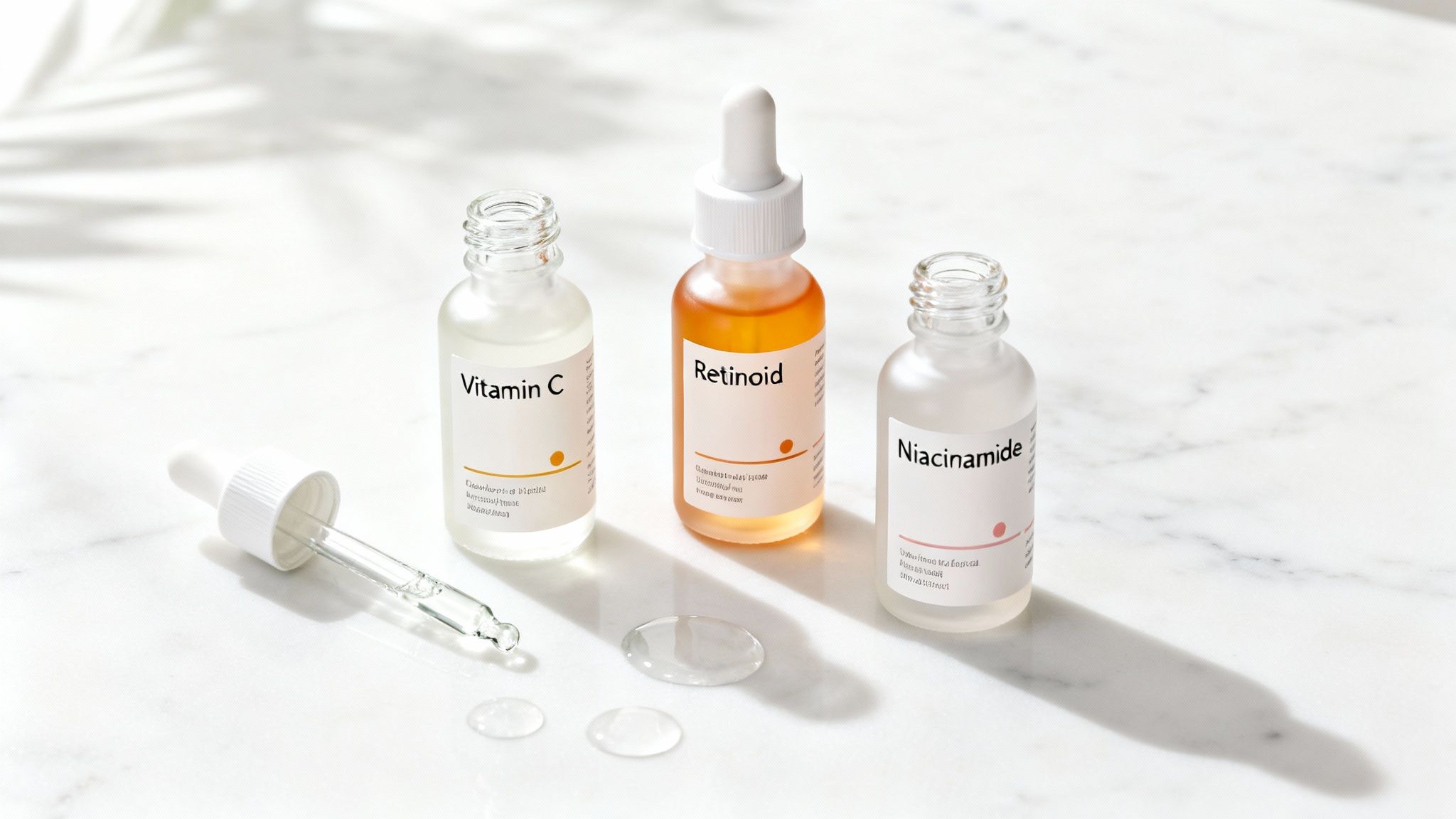
If you're serious about reversing sun damage, your bathroom counter needs to become a command center. Building a smart, consistent daily routine is your first and most powerful line of defense and repair.
This isn't about collecting a dozen random products. It's about strategically deploying a few key, clinically-proven ingredients. Think of it as your elite skincare team, where each player has a specific mission to restore your skin's health and radiance. Let's focus on the non-negotiable trio: Vitamin C, Retinoids, and Niacinamide.
Vitamin C: The Daytime Protector
Think of Vitamin C as your skin’s morning bodyguard. Its main job is to act as a potent antioxidant, neutralizing the destructive free radicals that UV exposure generates all day long. These unstable molecules are like tiny wrecking balls, breaking down precious collagen and leading directly to wrinkles and brown spots.
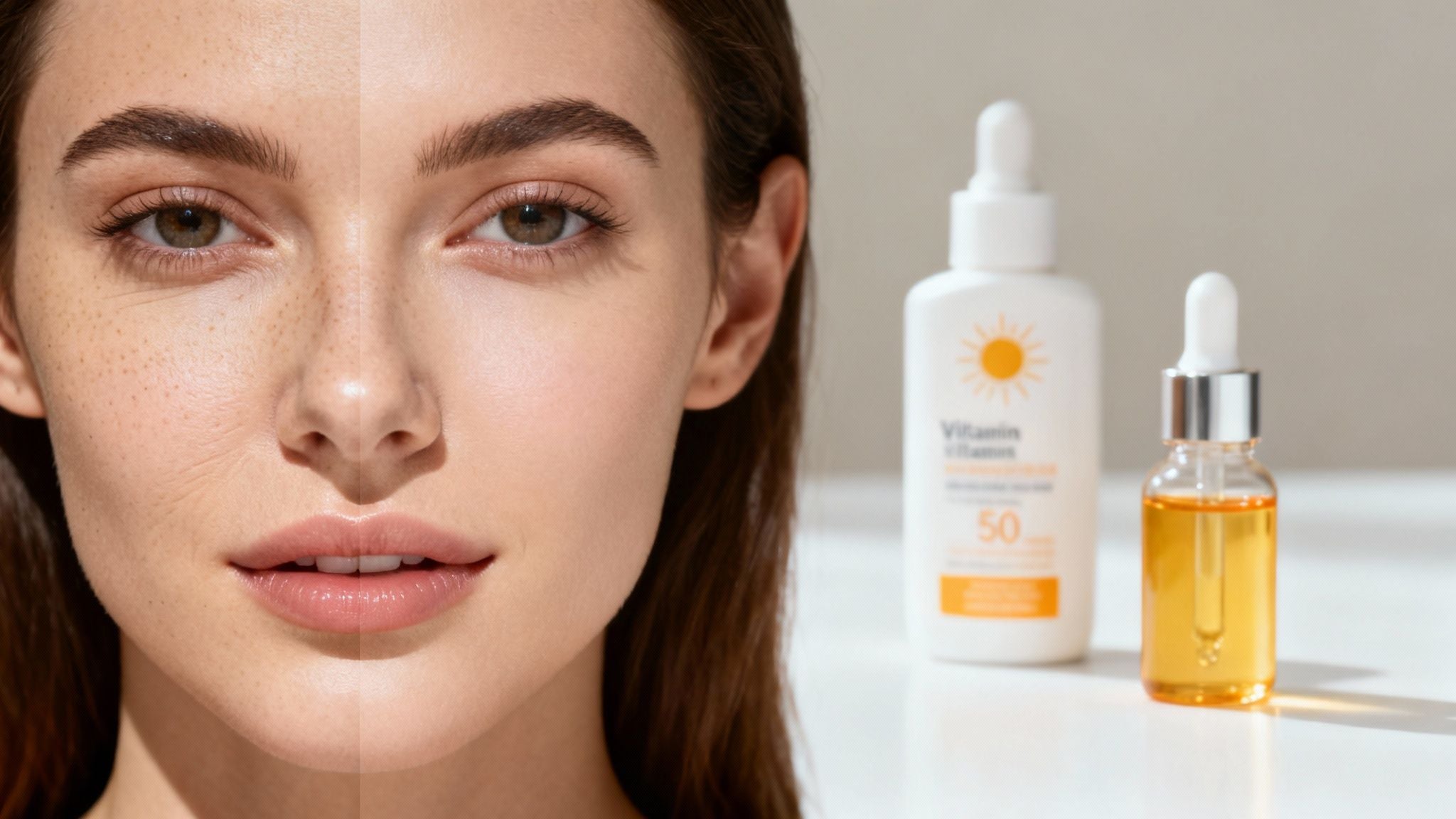
When you apply a Vitamin C serum every morning (right before your sunscreen!), you’re adding an essential shield. This powerhouse ingredient also gets in the way of excess melanin production, which is a fancy way of saying it helps fade existing dark spots and stop new ones from appearing. The result? A brighter, more luminous complexion.
For a formula that truly delivers, I recommend the BARB N.P. Vitamin C E + Ferulic Acid Serum. This isn't just Vitamin C; it's a gold-standard combination. Ferulic Acid and Vitamin E work to stabilize the Vitamin C, making it far more effective at fighting off environmental damage.
Retinoids: The Nighttime Rebuilder
While Vitamin C is on guard duty during the day, retinoids are the hardworking night crew, repairing and rebuilding your skin while you rest. As a class of Vitamin A derivatives, retinoids are one of the most studied and respected anti-aging ingredients in all of skincare. There's a reason we recommend them so often.
Their primary function is to speed up cellular turnover. This process pushes your skin to shed old, damaged cells on the surface more efficiently, revealing the fresher, smoother skin underneath. It’s a game-changer for improving rough texture and softening fine lines.
But retinoids don't just work on the surface. They dive deeper to stimulate the production of new collagen—the very protein that gives your skin its firmness and bounce. With consistent use, skin becomes visibly thicker, stronger, and more resilient.
A word of advice: start slow. Introduce a retinoid just two or three nights a week at first, and slowly work your way up as your skin gets used to it. This helps minimize potential irritation like dryness or peeling. Patience is key here.
Niacinamide: The Master Diplomat
So, Vitamin C protects and retinoids rebuild. Where does niacinamide fit in? Think of this form of Vitamin B3 as the ultimate peacekeeper, making sure everything in your routine works together smoothly. It's an incredibly versatile ingredient that tackles multiple signs of sun damage without causing irritation.
First, niacinamide strengthens your skin's natural moisture barrier. A healthy, robust barrier is crucial because it keeps hydration locked in and defends against environmental stress. This is especially important when you're using powerful actives like retinoids, as it helps calm potential dryness.
It’s also celebrated for its anti-inflammatory properties, which help dial down the redness and blotchiness often left behind by years of sun exposure. Even better, niacinamide can help regulate oil production and minimize the look of enlarged pores—which tend to become more obvious as sun damage weakens the skin's supportive collagen structure.
Looking to build out a complete routine? Our guide on the best skincare for sun damage offers more product recommendations and tips on how to layer everything effectively.
By bringing these three power players into your daily lineup, you create a formidable at-home system that actively repairs visible damage while fortifying your skin against what's to come. This is the foundation for making a real, lasting change in your skin's health.
Elevating Your Routine with LED Light Therapy
Once you have a solid foundation of powerful topical ingredients, it’s time to amplify your results at home. To truly fast-track reversing sun damage, you need something that bridges the gap between your daily serums and more intensive professional procedures. This is where at-home LED light therapy comes in.
It’s a safe, non-invasive technology that works at a cellular level to kickstart repair and regeneration. Think of it this way: your serums are the high-quality fuel, and LED therapy is the engine that helps your skin use that fuel more efficiently.
Supercharge Your Skincare with Targeted Wavelengths
A high-quality at-home device can make this sophisticated technology a seamless part of your regular routine. I specifically recommend the BARB N.P. Facial Mask because it’s designed for real life. The standout feature is its comfortable, wireless design, which is a total game-changer.
You’re not tethered to a wall, so you can easily wear it while reading, meditating, or catching up on emails. That convenience makes consistency effortless.
The mask comes equipped with three distinct light settings, each targeting different aspects of skin health to help reverse sun damage.
- Red Light Therapy: This is the MVP for anti-aging. Red light penetrates deep into the skin to reach the fibroblasts—the cells responsible for creating collagen. By stimulating these cellular powerhouses, it helps visibly soften fine lines, improve skin firmness, and restore a more youthful texture.
- Blue Light Therapy: While not a direct treatment for sun damage, blue light is incredibly beneficial for maintaining clear skin. It targets and neutralizes acne-causing bacteria on the surface, helping prevent breakouts that can lead to post-inflammatory hyperpigmentation.
- Amber Light Therapy: This wavelength is the ultimate peacemaker for stressed skin. Amber light works to calm inflammation, reduce redness, and accelerate the skin's natural healing processes. This is especially helpful for soothing skin that may be sensitized from retinoid use or other active treatments.
By integrating a device like this into your regimen, you’re making a strategic investment in your skin's long-term health. It elevates the performance of your topical products, ensuring they deliver maximum benefits.
Maximizing Your At-Home LED Treatments
To get the most out of your LED mask, consistency is everything. Aim for several sessions per week—typically 10-20 minutes each—on clean, dry skin. Using the mask before applying your serums can also help improve their absorption.
For those interested in exploring advanced at-home devices, you can gain deeper insights by understanding the nuances of red light therapy and how different devices offer varying benefits.
Think of at-home LED therapy as your personal skin trainer. It consistently pushes your cells to perform better, building strength and resilience over time to effectively fight back against the visible signs of sun damage.
This technology offers a powerful, proactive way to take control of your skin's health from the comfort of your home. It perfectly complements your daily skincare and prepares your skin for more advanced professional treatments if you choose to pursue them.
To dive deeper into the science, you can learn more about what LED light therapy is and how it benefits your skin in our detailed guide.
Professional Treatments for Deeper Repair
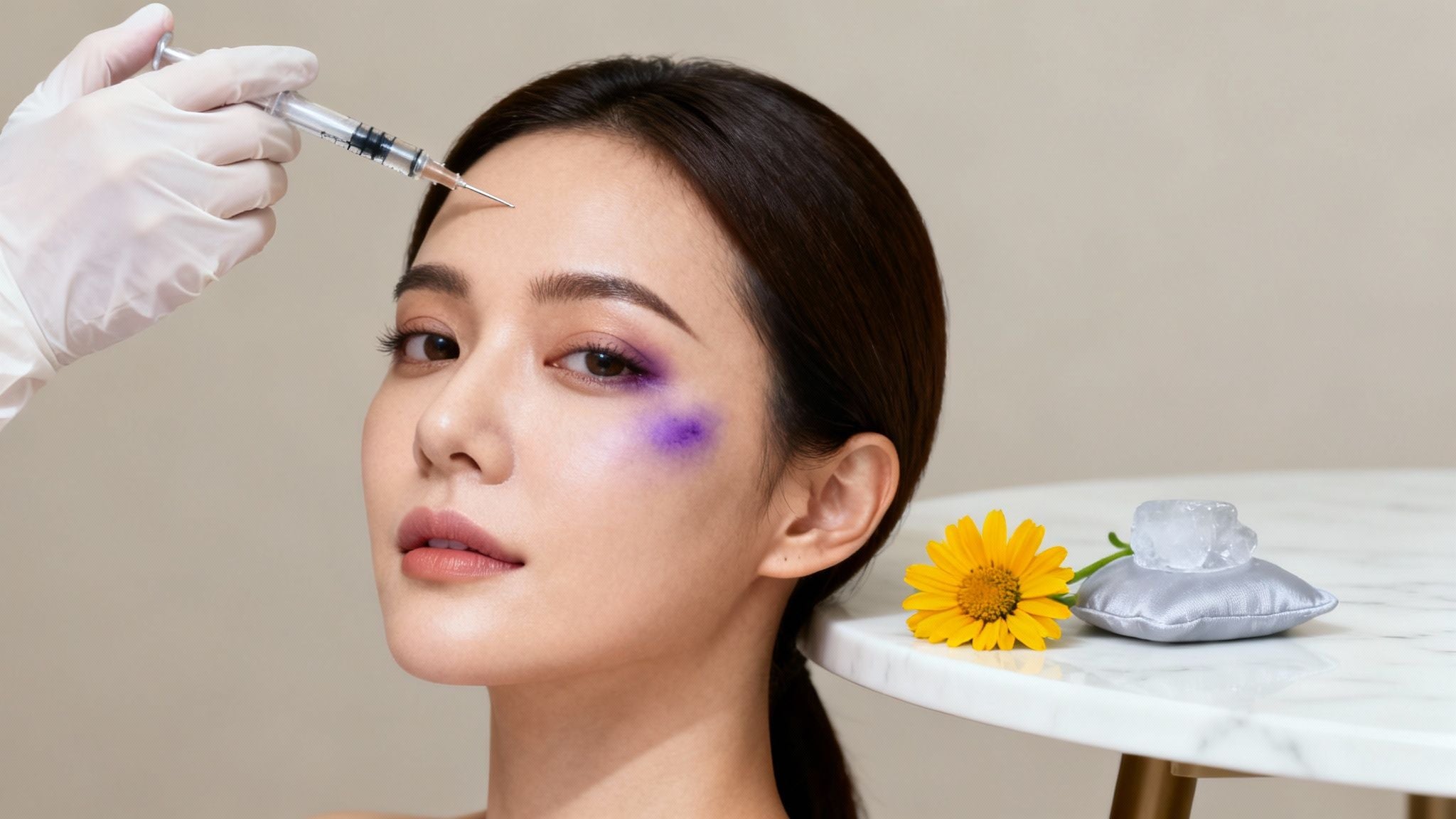
A dedicated at-home routine is your foundation for reversing sun damage, but sometimes it just isn't enough to tackle deeper, more stubborn issues. For significant improvements in texture, tone, and deep-set wrinkles, professional treatments deliver more powerful and rapid results.
Stepping into a clinic means accessing technologies and concentrations of active ingredients that simply aren't available for home use. Think of it as a controlled reset for your skin, prompting it to build new, healthy collagen and clear away years of accumulated photodamage. Understanding your options is the first step toward having an informed conversation with a professional.
Chemical Peels for Resurfacing
Chemical peels are a time-tested method for accelerating cell turnover and revealing brighter, smoother skin beneath. They use a specific chemical solution—often glycolic acid, salicylic acid, or trichloroacetic acid (TCA)—to exfoliate the top layers of damaged skin. The intensity of the peel dictates the depth of the treatment and the results you can expect.
- Light to Medium Peels: These are fantastic for addressing mild to moderate sun damage, like fine lines, uneven texture, and surface-level pigmentation. They require minimal downtime—often just a few days of redness and light flaking—making them a popular choice.
- Deep Peels: Reserved for more severe sun damage, including deeper wrinkles and significant hyperpigmentation, deep peels penetrate further into the skin. While the results can be dramatic, they involve a more considerable recovery period.
The right peel depends entirely on your skin type and the extent of the damage. A consultation is key to determining the most effective and safest approach for you.
Microneedling to Rebuild Collagen
Microneedling, also known as collagen induction therapy, is one of my favorite procedures for improving skin texture and firmness. It uses a device with fine, sterile needles to create tiny, controlled micro-injuries in the skin. While that might sound intimidating, it's a brilliant way to kickstart your skin's natural healing response.
When your skin senses these micro-injuries, it goes into repair mode, ramping up the production of new collagen and elastin. This influx of fresh structural proteins helps fill in fine lines, smooth out rough texture, and create a firmer, more resilient skin surface. For even better results, many of my clients combine this with other treatments; for example, microneedling with PRP for comprehensive skin rejuvenation is an incredible option for targeting deeper damage.
A series of microneedling treatments can fundamentally change the texture of your skin from the inside out. You're not just treating the surface; you're rebuilding the foundation.
Advanced Laser and Light Therapies
Laser and light-based treatments offer a highly targeted way to address specific signs of sun damage. They work by delivering focused energy into the skin, which is absorbed by specific targets like pigment (melanin) or broken blood vessels.
- Intense Pulsed Light (IPL): Often called a photofacial, IPL uses broad-spectrum light to zap brown spots and redness. It’s excellent for evening out skin tone and reducing that mottled, blotchy appearance sun damage often causes.
- Fractional Lasers (like Fraxel): These lasers are powerhouses. They create microscopic treatment zones deep within the skin while leaving the surrounding tissue untouched. This fractional approach promotes rapid healing and stimulates significant collagen remodeling, making it highly effective for treating wrinkles and stubborn pigmentation.
These advanced technologies offer incredible precision, but they absolutely require the expertise of a trained professional to ensure safety and effectiveness.

Each wavelength penetrates the skin at different depths to kickstart a specific biological response, whether that's boosting collagen, killing bacteria, or promoting healing.
Choosing a professional treatment is a significant step, but it can yield transformative results that build upon the foundation you've established with your daily at-home care. A thorough consultation will help you weigh the benefits, downtime, and cost to create a plan that aligns perfectly with your goals for healthier, revitalized skin.
Why Sunscreen Is Your Most Powerful Tool
Every serum you apply and every treatment you receive is fighting a losing battle without a rock-solid prevention plan. Think of it this way: sunscreen is the final, crucial step that protects your investment in your skin. To see real, lasting change, daily sun protection is absolutely non-negotiable.
Let’s move past the generic "wear sunscreen" advice. I want to give you practical guidance that actually fits into your life, safeguarding the youthful glow you're working so hard to restore.
More Than Just a Beach Day Essential
Here’s the biggest mistake I see clients make: they reserve sunscreen for vacations or pool days. But the truth is, most sun damage comes from small, incidental moments—driving to work, sitting by a window, or walking to grab lunch.
These little doses of UV radiation add up over the years, quietly breaking down your collagen and triggering those stubborn dark spots. Making sunscreen a non-negotiable part of your morning routine, just like brushing your teeth, is the single most powerful habit you can adopt. It’s the only way to stop the cycle of damage and give your repair-focused products a fighting chance to work.
Debunking Common Sunscreen Excuses
We've all been there, making excuses to skip SPF. But once you understand the science, those justifications quickly fall apart.
- "But it's cloudy outside." This is a big one. Up to 80% of the sun's UV rays slice right through clouds, fog, and haze. You are still getting hit with damaging radiation, even on the greyest days.
- "My foundation has SPF." While it’s a nice bonus, you would need to apply a cake-like layer of makeup to get the protection stated on the bottle—far more than anyone actually wears. Think of it as a backup, not your primary defense.
- "I have a darker skin tone." More melanin offers some natural protection, but it isn't enough to prevent photoaging or skin cancer. For my clients with deeper skin tones, sun damage often shows up as stubborn hyperpigmentation and unevenness that can be difficult to treat.
The reality is, there's no good reason to skip it. The key is finding a formula you genuinely love applying every single day.
Sunscreen isn't just about preventing sunburn; it's your daily anti-aging, anti-pigmentation, and anti-cancer treatment all in one bottle. It protects the progress you've made and prevents future setbacks.
Choosing Your Daily Defender
Walking down the sunscreen aisle can feel overwhelming, but it really boils down to a few key things. First, always look for “broad-spectrum” on the label. This is non-negotiable, as it means the product shields you from both UVA (aging) and UVB (burning) rays. For daily use, I always recommend an SPF of 30 or higher.
From there, you’ll generally find two main types of sunscreen.
Mineral vs. Chemical Sunscreens
| Type | How It Works | Key Ingredients | Best For |
|---|---|---|---|
| Mineral | Sits on top of the skin and physically blocks UV rays. | Zinc Oxide, Titanium Dioxide | Sensitive or acne-prone skin |
| Chemical | Absorbs UV radiation and converts it into heat. | Avobenzone, Oxybenzone, Octinoxate | Active lifestyles, sheer finish |
Neither one is inherently "better"—the best sunscreen is the one you'll actually wear consistently. For a deeper dive into finding your perfect match, check out my guide on how to choose the right sunscreen for your skin type and concerns.
The global impact of sun exposure is staggering. Worldwide statistics from 2020 revealed over 1.5 million diagnosed skin cancers and more than 120,000 associated deaths. Excessive UV radiation led to approximately 1.2 million new cases of non-melanoma skin cancers and 325,000 melanomas globally that year alone. These figures from the World Health Organization about ultraviolet radiation underscore why this is about so much more than aesthetics—it’s a critical part of your long-term health.
Finally, remember that application is everything. Use about a nickel-sized amount for your face and don’t forget to reapply every two hours when you’re outdoors, or right after swimming or sweating. Protecting your skin is the ultimate commitment you can make to its health and beauty.
Your Sun Damage Questions, Answered
When you decide to tackle sun damage, a million questions can pop into your head. It’s totally normal. Knowing what to expect is a huge part of staying motivated, so let's get into the most common questions I hear from my clients every day.
Can I Really Erase Sun Damage for Good?
This is always the first question, and I believe in being completely honest: you can't turn back the clock to erase every bit of cellular damage. But what you can do is dramatically improve what you see in the mirror.
With a smart, consistent plan, you can significantly fade brown spots, smooth out those frustrating fine lines, and get back a much healthier, more even complexion. I like to think of it less like a complete reversal and more like a major skin renovation. You're rebuilding your skin’s strength and bringing back its natural glow.
Okay, Realistically, How Long Will This Take?
Patience is everything here. While some things, like a light chemical peel, can give you a nice immediate brightening effect, the deep, lasting changes take time to reveal themselves. Skin repair is a marathon, not a sprint.
Here’s a general timeline to keep in mind:
- At-Home Skincare (Retinoids, Vitamin C): You'll probably start to notice better brightness and a smoother texture within 4-8 weeks. But for the big stuff—fading significant pigment and softening lines—you need to give it 3-6 months of consistent use.
- At-Home LED Therapy: If you're using it regularly (a few times a week), many people see less redness and a subtle glow in the first month. The real collagen-boosting benefits usually become more obvious after 2-3 months.
- In-Office Treatments: After a procedure like IPL or Fraxel, you’ll see initial results as the skin heals over a week or two. But the best is yet to come—the full effects from all that new collagen can take up to 6 months to fully appear.
Do I Have to Spend a Ton on In-Office Treatments?
Absolutely not. While professional treatments can fast-track your results, a dedicated at-home routine is the true foundation of any successful plan. In fact, if you skip the daily work, the benefits of those in-office procedures simply won't last.
Your non-negotiables are a high-quality, broad-spectrum sunscreen, a powerful antioxidant serum, and a retinoid. These are the workhorses that do the heavy lifting day in and day out, protecting your skin and encouraging repair for the long haul.
It's just like fitness. Professional treatments are your sessions with a personal trainer—they give you a huge push. But your daily skincare is your healthy diet and regular exercise. You need both to get and maintain the best results.
A fantastic way to elevate your home routine is with a device like the BARB N.P. Facial Mask. Its wireless, comfortable design actually makes it easy to stay consistent. With three targeted light settings—red for collagen, blue for clarity, and amber for calming—it gives your routine a serious boost. It helps you get more out of your topical products and protects the investment you make in any professional treatments. It's that perfect bridge between your daily skincare and clinical procedures.
Ready to create a plan that works for you? The experts at BotoxBarb are here to guide you through our curated selection of medical-grade skincare and the most effective in-office treatments. Explore our products and book your consultation today.