Article: Dysport Eyebrow Lift: What to Expect in 2026
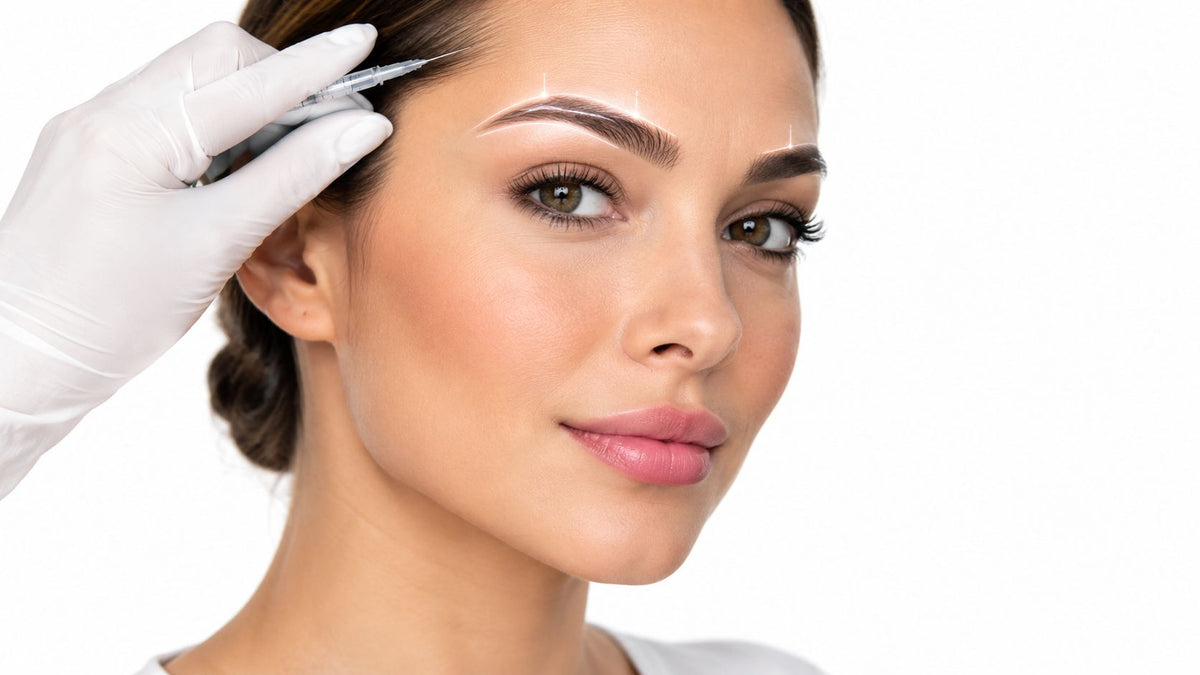
Dysport Eyebrow Lift: What to Expect in 2026
A Dysport eyebrow lift usually creates a subtle lateral lift averaging a few millimeters, roughly 1 to 5 mm, rather than a surgical transformation. It can soften a heavy or tired appearance, but it won't replace a surgical brow lift when the brow has significant descent or the eyelid skin is hooded.
You may be considering treatment after noticing that your brows sit lower in photos, your upper eyelids look heavier, or your expression seems stern even when you feel relaxed. The appeal is understandable. Dysport can refresh the upper face without incisions, but the best result is a restrained adjustment that respects your anatomy, not an exaggerated arch or permanently surprised expression.
What a Non-Surgical Brow Lift Can and Cannot Do
A client once arrived hoping to look less tired, but her reference photo showed a dramatically raised brow. Her goal was reasonable; the example reflected a surgical-level change that a neuromodulator could not safely reproduce. Assessment of her resting brow, forehead movement, eyelid anatomy, and asymmetry supported a conservative Dysport plan to reduce downward tension and create modest openness around the eyes.
A Dysport eyebrow lift is an aesthetic use of glabellar-line treatment, not a separate FDA-labeled brow-lift procedure. Dysport received U.S. FDA approval on April 30, 2009 for the temporary improvement of moderate to severe glabellar lines in adults younger than 65, as well as for cervical dystonia, according to the FDA Dysport prescribing information. The label describes glabellar-line improvement lasting up to four months, which provides a useful reference for discussing how long an eyebrow-lift-adjacent result may last.
Refinement, not reconstruction
Treatment is most useful when dynamic heaviness comes partly from muscles pulling the brow downward. It may make the eyes appear more open, soften frown lines, and improve the outer brow contour. It cannot remove excess skin, reposition the brow surgically, or correct every cause of eyelid hooding.
The physical change remains limited. A nonsurgical toxin lift usually produces only a few millimeters of movement, commonly around 1 to 5 mm, while surgery can create a substantially larger repositioning of tissue. That distinction matters for true brow ptosis, marked asymmetry, or excess upper-eyelid skin. If volume loss is the main concern rather than muscle pull, compare this approach with a dermal filler eyebrow lift before choosing treatment.
Practical rule: A goal that requires physically moving tissue may call for an eyelid evaluation or surgical consultation, rather than more neuromodulator.
Dysport belongs to a well-established aesthetic treatment category. Galderma reported that Dysport and Azzalure had been approved in 72 countries and used in more than 40 million glabellar-line treatments across Europe and the United States by 2019 in its announcement about the product's decade of glabellar-line treatment. That history indicates broad use, not a predictable brow response for every patient.
Ask what improvement your anatomy can support before treatment. A careful injector should explain that the lift may be subtle, asymmetry may remain, and another procedure may better match your goal. The Dysport injection guide offers further background on how the medication is used in aesthetic care.
How Dysport Works for Brow Elevation
Brow position depends on a tug-of-war between muscles that raise the forehead skin and muscles that pull the brows downward. Dysport can shift that balance by weakening selected depressors, allowing the remaining frontalis activity to raise the brow slightly. The effect is created through muscle control, not by physically lifting loose skin.
The frontalis is the only true brow elevator. It spans the forehead and raises the eyebrows, so placing too much product into it can remove the support needed for a lifted appearance. Treatment planning also considers the orbicularis oculi, corrugator supercilii, procerus, and depressor supercilii, which can contribute to downward pull around the eyes and between the brows.
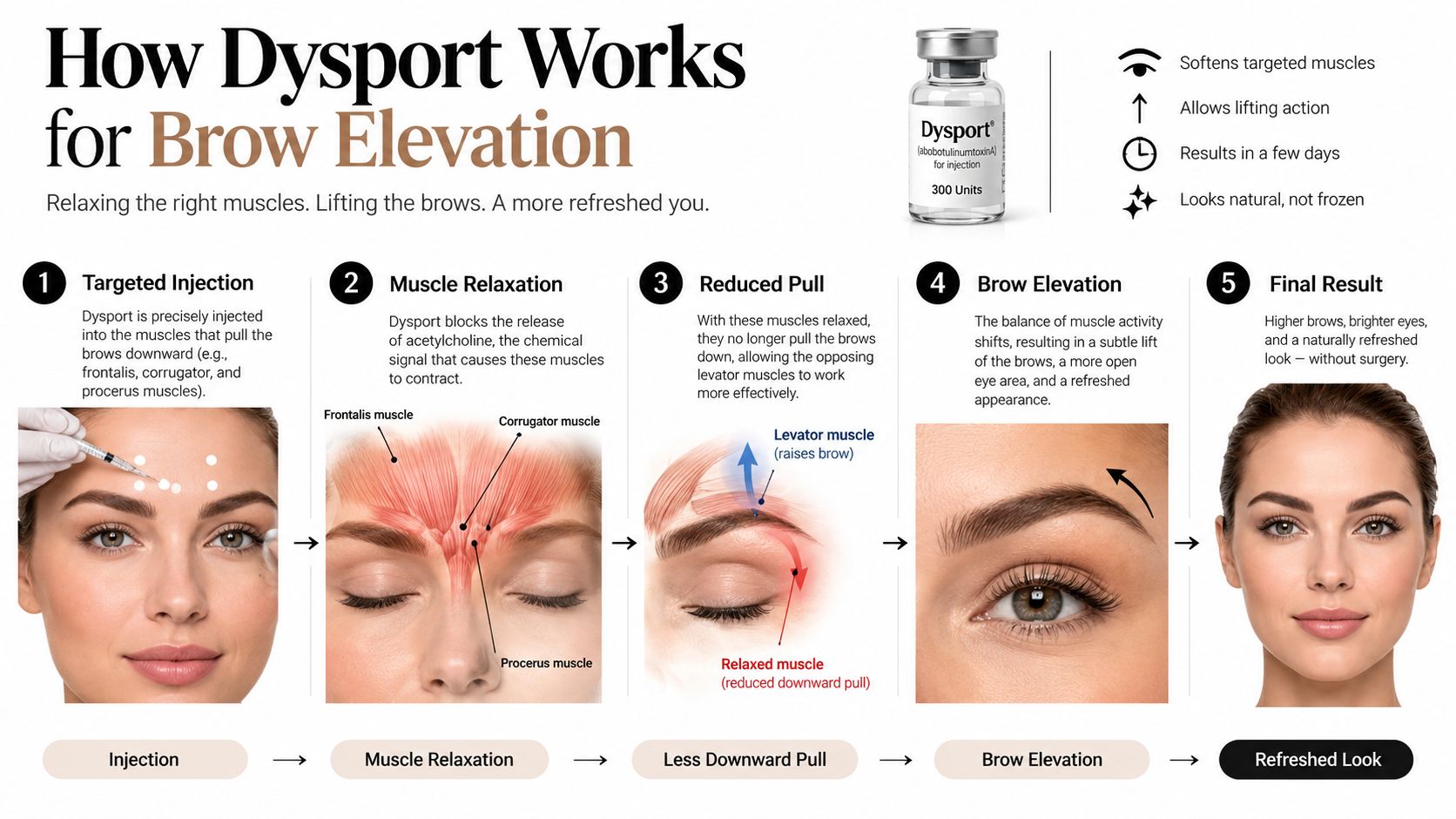
The muscle balance behind the result
A safe plan starts with movement assessment rather than a fixed injection pattern.
- Assess movement. The provider observes your brows at rest, while frowning, and during forehead elevation. This shows which muscles create downward tension and whether one side is stronger.
- Map the depressors. The corrugators draw the inner brows together, the procerus adds central downward tension, and the orbicularis oculi surrounds the eyes and may pull the outer brow lower.
- Preserve the elevator. The injector limits treatment of the frontalis. Excessive weakening can reduce forehead support and leave the brows looking heavy or low.
- Use selective chemodenervation. Dysport temporarily reduces nerve signaling in the chosen muscles. The visible change comes from altering muscular balance, not from pulling the skin upward.
- Reassess after onset. The result develops over several days. Any decision about an adjustment should wait until the product has had time to take effect.
A published review reports average movement of about 1 mm in the central brow and 4.8 mm in the lateral brow when botulinum toxin A is used in the glabellar and crow's-feet regions. The figures appear in this review of nonsurgical brow lifting. They describe average results, not a guarantee. The outer brow often shows more visible change because the lateral orbicularis oculi can exert stronger downward influence there.
Why injection mapping matters
The plan should account for forehead height, brow shape, eyelid weight, muscle strength, and existing asymmetry. The same pattern may open one patient's eyes while making another patient's brows feel heavier. The provider must also separate dynamic brow descent from structural changes related to skin laxity, orbital anatomy, or excess eyelid tissue. More information about Dysport use is available in this Dysport injection guide.
Dose estimates from the internet cannot replace clinical assessment. In one registered Dysport brow-lifting study, 50 to 80 units in females and 60 to 80 units in males were divided across five glabellar injection sites. A separate forehead-lift study used 40 units of prepared abobotulinumtoxinA at four hair-bearing scalp points and measured changes in frontal height at two weeks, as reported in the published forehead-lift study. Those protocols do not establish a universal cosmetic dose. They show why product preparation, placement, muscle anatomy, and treatment goals must be considered together.
Dysport vs Botox Which Is Better for Your Brows
Neither Dysport nor Botox is automatically better for every brow. The more useful question is which product and injection plan suit your muscle strength, brow shape, desired softness, and tolerance for a gradual or more targeted change.
Dysport and Botox are both botulinum toxin products used to temporarily reduce selected muscle activity. Their unit systems aren't directly interchangeable, so a higher number of Dysport units doesn't mean the treatment is necessarily stronger or more expensive. The provider should discuss the product, dose, treatment points, and total fee as one plan rather than encouraging you to compare unit counts alone.
Spread and precision
Many injectors describe Dysport as having a useful spread in areas where a blended effect is desirable. That can be helpful when the goal is to soften a broad glabellar pattern or reduce lateral downward pull without creating a sharply segmented result. The same property requires careful placement around the eyes and forehead, where unwanted diffusion can affect nearby muscles.
Botox may appeal when the provider wants a more tightly targeted approach. That doesn't make it safer or more effective. Injection depth, dilution, needle placement, anatomy, and injector experience often matter as much as the brand selected.
| Decision point | Dysport | Botox |
|---|---|---|
| Desired appearance | Can suit a soft, blended reduction in downward tension when the injector plans the spread carefully. | Can suit a more localized strategy when precise targeting is the priority. |
| Unit comparison | Uses its own unit system, so the number of units shouldn't be compared directly with Botox. | Uses a separate unit system and requires an individualized plan. |
| Onset expectations | Manufacturer information cited in clinical literature says many users see improvement within 2 to 3 days. | Onset varies by patient, dose, and treatment area. |
| Price discussion | The per-unit price may be lower in some practices, but the number of units and total cost must be assessed together. | The per-unit price may be higher in some practices, but fewer units may be used. |
The product choice should follow the treatment goal. Someone seeking a gentle, diffused softening may prefer Dysport if the provider believes its behavior fits the anatomy. Someone with a narrowly defined area or a history of unwanted spread may prefer Botox. Those are treatment-planning considerations, not universal rules.
Timing and expectations
Available references report that neuromodulator effects may begin in 1 to 2 days, 2 to 3 days, or reach their fuller effect around 7 to 14 days, depending on the product, source, and individual response. The variation is one reason you shouldn't judge a brow treatment the same day or ask for immediate corrective injections.
The Botox or Dysport comparison guide offers another way to think about the brand decision. In practice, a careful facial assessment should come before a product preference. A provider who promises that one brand always produces a higher lift is oversimplifying a result controlled by anatomy and technique.
What to Expect During the Procedure
The safest appointment starts before the needle appears. During consultation, the medical provider should review your health history, medications, allergies, previous toxin treatments, pregnancy or breastfeeding status when relevant, and any history of neuromuscular conditions or swallowing and breathing problems. The provider should also examine your brows at rest and in motion rather than treating from a standard template.
Bring a clear description of the change you want. “I want to look less tired” gives the injector room to assess the cause, while “I want this exact arch” may lead to a plan that doesn't fit your natural brow. Photos can help communicate your preference, but they shouldn't override your anatomy.
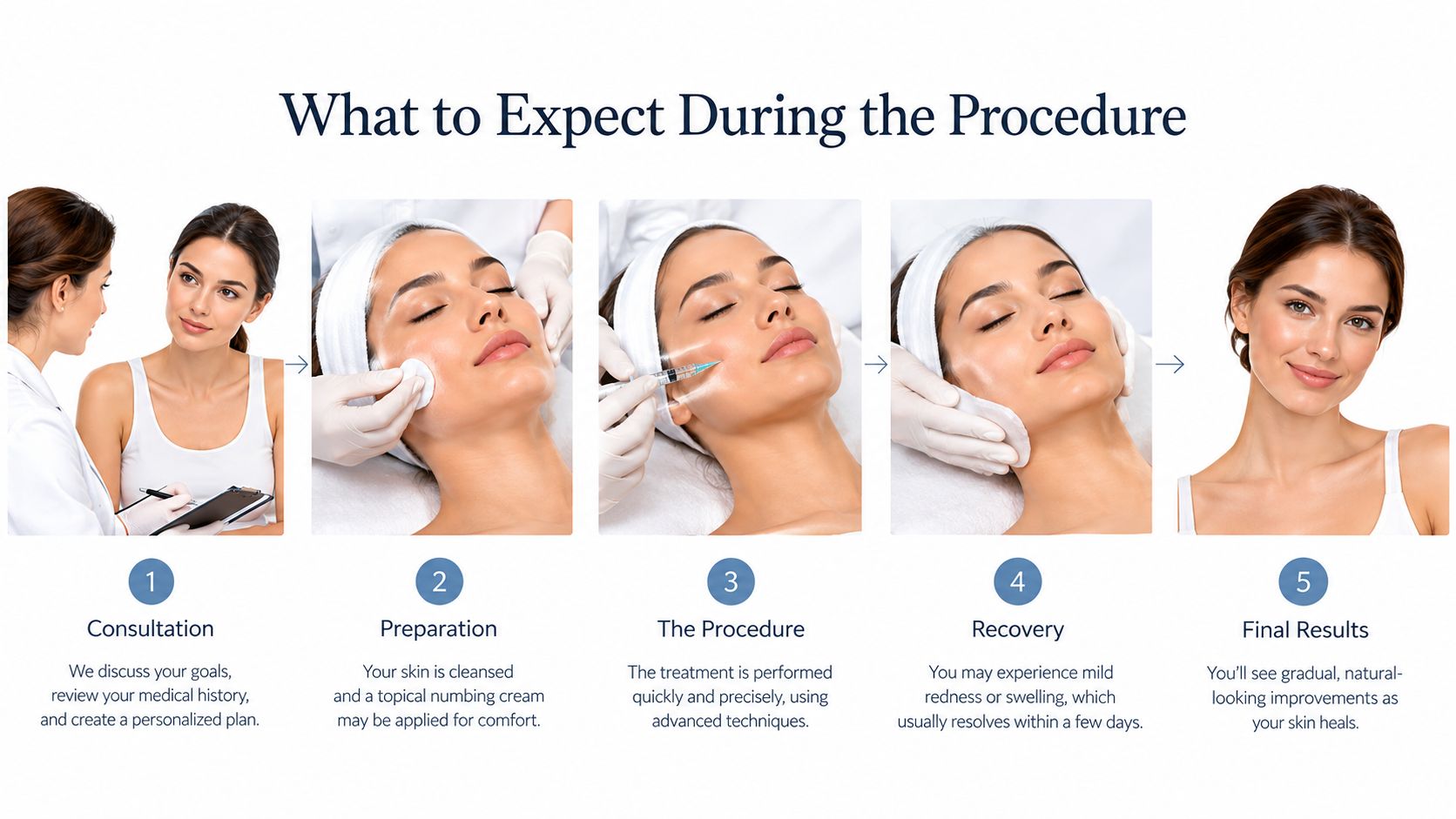
The appointment sequence
Consultation and examination: The provider observes your frontalis, corrugator, procerus, and orbicularis oculi activity. They should identify baseline asymmetry, discuss the possibility of a subtle result, and explain what the treatment cannot correct.
Preparation: The skin is cleansed, and the planned points are reviewed. Tell the provider about medicines and supplements that may increase bruising. Don't stop a prescribed medication without guidance from the clinician who manages it.
Injection: A fine needle delivers small amounts into selected muscles. You may feel brief pinches or pressure. The number and location of injections depend on the plan, not on a universal brow-lift recipe.
Immediate observation: Mild redness, swelling, tenderness, or bruising can occur around injection points. Many patients can leave the clinic soon afterward, but you should follow the specific instructions given by your provider.
Early aftercare: Remain upright for the period your clinician recommends, avoid rubbing or pressing on the treated area, and postpone strenuous exercise and excessive heat exposure according to the clinic's protocol. These instructions are intended to reduce unnecessary irritation and help you avoid manipulating freshly treated areas.
Safety matters more than speed
A short appointment doesn't mean a simple one. The brow sits close to the eyelids and forehead, and excessive relaxation in the wrong location can contribute to heaviness, asymmetry, or an unwanted change in expression. Seek medical attention promptly for unusual vision changes, significant eyelid drooping, difficulty swallowing, difficulty breathing, or widespread weakness after treatment.
Don't use a social-media diagram as your injection map. Product authenticity, proper storage, clinical assessment, and the provider's anatomical judgment all matter. A reputable practice should document the product used, explain follow-up timing, and give you a way to contact the clinic if your response concerns you.
Longevity, Maintenance, and Realistic Results
A Dysport brow lift fades because treated muscles gradually recover their nerve activity. The FDA label describes improvement in glabellar lines for up to four months. In practice, maintenance is often discussed at 12 to 16 weeks, or about 3 to 4 months, depending on the individual, treatment area, muscle activity, and desired degree of movement. The American Academy of Ophthalmology guidance on nonsurgical brow lifting also supports setting expectations around a temporary, carefully planned result.
The change develops over time rather than appearing fully formed at the appointment. Some references describe early visible improvement within 1 to 2 days, while others place early changes at 2 to 3 days and the fuller effect at 7 to 14 days, as summarized in this clinical overview of Dysport. That range is expected. A review appointment should allow the product time to settle before anyone considers whether the brow needs adjustment.
Why one person's result differs from another's
Muscle strength, metabolism, previous treatments, dose distribution, facial expressions, and baseline brow position all affect the outcome. Someone with strong corrugator activity may need a different plan from a patient whose primary concern is lateral orbicularis oculi tension. A low forehead, heavier eyelid tissue, or pre-existing asymmetry can also limit visible elevation.
The practical ceiling is anatomical. Dysport may produce a modest change, often measured in only a few millimetres, while surgery changes supporting tissue and can create a different scale of lift. Forehead-height research also indicates that baseline anatomy affects the visible response, with people starting at different forehead heights showing different degrees of change. That finding matters for maintenance planning because a small initial improvement may remain useful without resembling a surgical brow lift.
A return of muscle movement does not automatically mean the treatment failed. It signals that the neuromodulator's effect is wearing off, and repeating treatment too soon can make assessment more difficult.
A realistic maintenance plan preserves a modest improvement. It does not turn a temporary neuromodulator into a permanent structural lift.
For broader healthy-aging interests, Peptides Longevity The Anti Aging Craze offers a separate discussion of longevity-focused wellness. It does not replace a consultation about brow anatomy, toxin safety, or whether an eyelid or brow evaluation is more appropriate.
Complementing Your Treatment with At-Home Care
Dysport changes muscle activity, while skincare and light-based devices address the condition of the skin itself. An at-home LED facial mask won't lift a drooping brow or substitute for a properly selected injection plan, but it can fit into a broader routine focused on texture, tone, and skin support.
LED photobiomodulation studies use defined wavelengths, energy doses, output, and schedules rather than treating all “light therapy” as identical. One randomized, double-blind home-mask trial used red light at 660 nm, a dose of 8.02 J/cm², an output of 6.4 mW/cm², and 21-minute sessions, comparing use 2 times per week with 3 times per week over 4 weeks, as described in the published LED mask trial. Independent literature has reported facial benefits over 1 to 3 months, including a 15.6% decrease in crow's-feet depth, a 12.5% increase in skin elasticity, a 32.7% improvement in skin tone homogeneity, and a 26.4% increase in dermal density, while emphasizing that outcomes depend on the device and protocol, according to this review of LED photobiomodulation.
Choosing a practical device
The Barb N.P. Facial Mark is a wireless LED mask designed for hands-free use. Its comfortable fit can make it easier to keep the mask in place during a routine, and its three lighting settings are intended for different treatment preferences. Use it as an at-home skin-care complement, not as a replacement for medical assessment or injectable treatment.
Keep expectations separate. LED may support a skin-focused routine, while Dysport addresses selected muscle activity. Continue sun protection and follow the device's instructions, especially if you use photosensitizing medication or have a condition affected by light exposure.

BotoxBarb offers in-clinic Botox and Dysport services alongside dermal fillers, PRP treatments, LED light therapy, and medical-grade skincare. Visit BotoxBarb to book a consultation, discuss whether your brow concern is muscular or structural, and choose an evidence-informed plan that keeps the result subtle and safe.