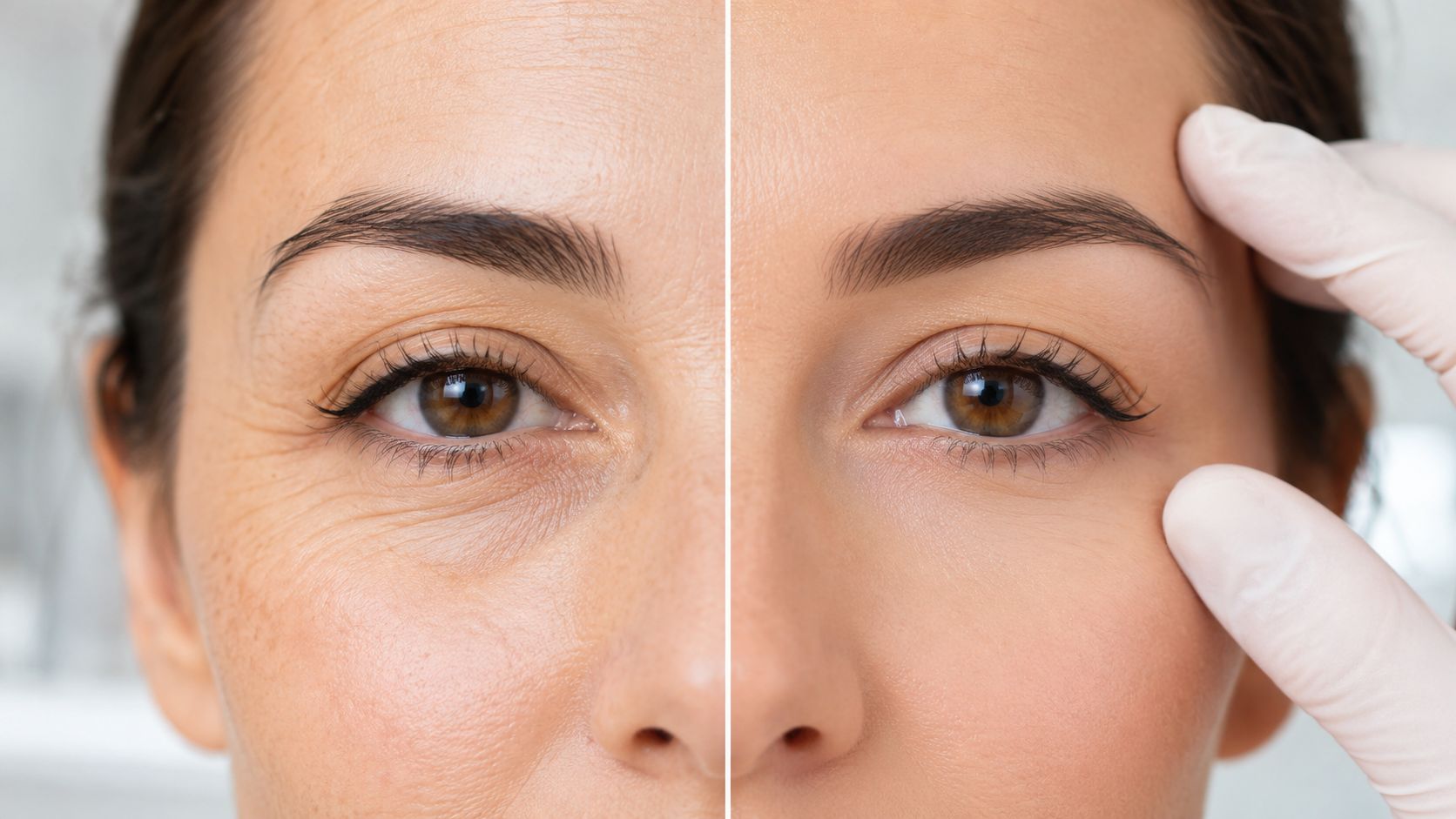
Dysport for Crows Feet: Expert Guide to Smooth Results
Crow's feet usually show up in a very ordinary moment. You catch your reflection in bright bathroom lighting, smile, and notice the lines at the outer corners of your eyes are lingering longer than they used to. Individuals aren't trying to erase that expression. They want the same face, just less etched.
That's where Dysport for crows feet can make sense. In practice, it's a treatment for people who still want to look like themselves when they laugh, squint, and smile, but want those movement-based lines to soften. The difference between a natural result and an obvious one usually isn't the product alone. It's the injector's judgment, the way your eye muscles move, and whether the plan fits your face instead of a standard template.
Clients often come in after reading broad advice about unit ranges and timing, but what they really want to know is simpler. Will it look natural? How quickly will I see it? How often will I need to keep it up? If you're weighing your options, this guide on treatments for crow's feet is a useful starting point before deciding whether Dysport is the right fit for you.
Your Guide to Smoothing Expression Lines
Crow's feet are one of the most personal areas to treat because they're tied to expression. These lines develop from years of smiling, squinting, and normal facial movement. That doesn't make them a flaw. It just means the skin around the eyes, which is thin and active, starts to hold onto repeated motion.
Dysport is a common choice when someone wants softer lateral eye lines without changing the character of their smile. Around the eyes, the goal is rarely total stillness. Most patients want a rested look, not a blank one.
Why people choose treatment
Some people are bothered only when they wear makeup and see product settle into the lines. Others notice their eyes look more tired in photos, even when they feel fine. The motivation is usually subtle.
A good treatment plan respects that subtlety.
The best cosmetic work around the eyes doesn't announce itself. It just makes the whole eye area look less strained.
What a natural result really means
For crows feet, natural usually means three things:
- You still look expressive. Your smile shouldn't disappear.
- The skin creases less profoundly. Movement remains, but the wrinkle pattern softens.
- The result fits your anatomy. Broad lines, stronger muscle pull, and lower-set brows all change how a provider approaches dosing and placement.
Experience proves essential. A fixed-unit mindset often misses the details that shape the result, especially near the eyes where a few millimeters can change the outcome.
How Dysport Works to Relax Crow's Feet
Dysport is a neuromodulator. It works by interrupting the signal that tells a targeted muscle to contract as strongly as it normally would. For crow's feet, that target is the lateral orbicularis oculi, the circular muscle around the eye that creates those fan-shaped lines when you smile or squint.
A simple way to think about it is a dimmer switch. Dysport doesn't need to shut the muscle down completely. It just turns down the intensity of contraction so the skin doesn't keep folding as sharply.

Dynamic lines versus resting lines
Dysport works best on dynamic wrinkles, meaning lines caused by movement. If your crow's feet deepen when you smile and soften when your face is at rest, that's the pattern neuromodulators are designed for.
If lines are already etched into the skin when your face is fully relaxed, Dysport can still help, but it won't act like a resurfacing treatment. In those cases, treatment often improves the wrinkle-forming motion while skincare, collagen support, and texture-focused treatments address the skin itself. If you want a simple overview of the product, this page on what Dysport injections are used for gives helpful background.
Where it's placed and why placement matters
For crow's feet, Dysport is commonly injected into the lateral orbicularis oculi at about 10 Dysport units per point, with 2 to 5 points per side, for a total of 40 to 100 units across both eyes, according to Practical Dermatology's dosing guidance. That range exists for a reason. The goal is to weaken the muscle enough to smooth dynamic wrinkles while limiting excess spread.
That last part matters. Around the eyes, wider diffusion can be helpful if the lines extend broadly beyond the outer corner. It can be less helpful if the injector needs very tight control in a patient who is prone to heaviness or has anatomy that requires more conservative placement.
What Dysport can and can't do
Here's where expectations stay realistic:
- It can soften movement-based lines.
- It can reduce the crinkling effect when you smile.
- It can create a smoother transition from the outer eye into the upper cheek.
- It can't replace skin tightening, fillers, or resurfacing when those are the primary concern.
Practical rule: If the wrinkle appears mostly when you move, Dysport is usually a stronger fit than if the issue is loose skin or volume loss.
Your Dysport Treatment Session Explained
Patients are less nervous once they know what the appointment looks like. The treatment itself is brief. The important part is the assessment before the first injection.
The consultation comes first
The first thing I want to see is how your face moves naturally. Not just at rest. I'll ask you to smile fully, squint lightly, and relax again. That tells me whether your crow's feet are concentrated right at the outer corner, whether they fan out toward the temple, and how strongly the muscle contracts.
I'm also watching what your cheeks do when you smile and whether the lower eyelid already sits on the heavier side. That matters because treating the eye area isn't only about lines. It's about preserving balance.
What happens during the appointment
Once the treatment plan is set, the appointment is straightforward:
- Your skin is cleansed. This removes makeup, oil, and sunscreen from the area.
- Injection points are mapped. These are based on your muscle pattern, not a one-size-fits-all template.
- The product is placed in small amounts. Each injection is generally experienced as a quick pinch.
- The session ends within minutes. The eye area doesn't take long when the plan is clear.
The procedure is quick, but the decision-making behind it isn't casual. A provider may adjust placement outward for broader lines, stay tighter for a more controlled effect, or reduce total dosing if preserving a little more movement is the priority.
How anatomy changes the plan
The same product can look very different depending on the face it's used on. That's why generic advice often falls short.
A personalized approach usually considers:
- Muscle strength. Stronger orbicularis activity may need more support than very fine movement.
- Line pattern. Some crow's feet are compact. Others extend farther toward the temple or down into the cheek.
- Smile dynamics. If the upper cheek lifts strongly, the treatment has to respect that movement.
- Risk tolerance. Some patients want maximum smoothing. Others would rather keep more motion and accept a lighter result.
If a patient says, “I don't want to look frozen,” that usually guides me toward conservative placement and a result that still lets the smile read clearly.
Right after treatment
After the injections, you can usually return to normal daily activities. The treatment doesn't require a recovery period in the way resurfacing or surgery would. You may see tiny bumps at the injection points for a short time, and some patients experience temporary redness or bruising. Those effects are usually mild, but they're part of informed planning.
The eye area rewards precision. That's why the session feels simple to the patient, but should never feel rushed on the provider side.
The Timeline of Your Dysport Results
One of the most common frustrations after treatment is checking the mirror too early. Dysport works quickly around the eyes, but it still unfolds over days, not hours.

The first several days
Clinical and expert guidance indicates that visible improvement often starts in 2 to 4 days, peaks in 7 to 14 days, and persists for about 3 to 4 months, as outlined in this Dysport timing overview for crow's feet.
That means the earliest phase is usually subtle. You may notice that smiling doesn't crease the skin as sharply, but the full softening often isn't there yet.
A simple timeline looks like this:
- Days 2 to 4: early softening starts to show
- Days 7 to 14: the result matures and is much easier to judge
- Around months 3 to 4: movement gradually returns
If you've ever researched other aesthetic treatments and wondered why timelines vary so much, the same principle applies broadly. Response takes time to develop, which is why guides like this PRP For HairLoss article on treatment duration can be helpful for understanding why patience matters in cosmetic medicine too.
When to evaluate your result
Don't judge Dysport the day after your appointment. Don't even judge it too aggressively at day three. Around the eyes, early improvement can be noticeable, but the final look is better assessed once the product has fully settled.
That's especially true if your provider treated conservatively. A natural plan can feel understated at first, then look exactly right once the full effect appears.
If you're planning ahead for photos, events, or travel, this overview of how long Dysport lasts can help you time appointments more intelligently.
What fading looks like
Dysport doesn't usually stop all at once. A gradual return of movement is typically observed. You may first see a little more crinkling with a big smile, then a slow return of the original line pattern.
That gradual fade is normal. It also means maintenance works best when you plan proactively instead of waiting until everything is fully back.
Dysport Compared to Botox and Other Options
Most readers ask about Dysport and Botox in the same breath, which makes sense. They're both neuromodulators, but they don't behave identically in practice.

Dysport versus Botox around the eyes
A study discussed in surgeon commentary included 90 patients, made up of 77 women and 13 men, and patients preferred Dysport results two times out of three for crow's-feet treatment, as summarized in this comparison discussion from Burgess Plastic Surgery.
That preference signal is interesting, but it doesn't mean Dysport is automatically the right answer for every eye area. Around crow's feet, the product choice often comes down to the pattern of lines and how broad or controlled the injector wants the effect to be.
Where each option tends to fit
Here's the practical comparison:
| Treatment | Where it may help most | Main trade-off |
|---|---|---|
| Dysport | Broader crow's feet patterns and patients who want a quick visible start | Spread can be helpful or too permissive, depending on anatomy |
| Botox | More localized targeting when precision is the priority | May be less ideal when broader softening is the goal |
| Dermal filler | Volume loss, support issues, or deeper static changes near the midface | Doesn't treat muscle-driven crow's feet directly |
| Topical skincare | Texture, hydration, brightness, and long-term skin quality | Won't relax the muscle causing dynamic lines |
What works and what doesn't
What works is matching the tool to the problem.
- Dysport works well when the issue is dynamic wrinkling from smiling and squinting.
- Botox may make more sense when a provider wants a tighter, more localized pattern.
- Fillers help a different problem. They're about support and volume, not muscle relaxation.
- Topicals are supportive, not equivalent. They can improve skin quality but won't mimic neuromodulator results.
A product can be technically effective and still be the wrong choice if it doesn't match the patient's anatomy or the look they want.
The biggest mistake is treating every outer-eye line as if it's the same. It isn't. Some patients need a broad softening strategy. Others need restraint and precision more than spread.
Aftercare and Enhancing Long-Term Results
A good result is not decided only at the moment of injection. The first 24 to 48 hours affect how comfortably you recover, and your routine between visits affects how the eye area looks as the medication gradually wears off.
I tell patients to keep the plan simple after treatment. Protect the area, avoid unnecessary heat and friction, and follow any instructions that were adjusted for your anatomy or injection pattern.
The first day or two
The outer eye is delicate skin, so small choices matter.
Avoid rubbing, massaging, or putting pressure on the injection sites. Hold off on intense exercise until your provider says it is fine, especially if you tend to flush easily or swell after cosmetic treatments. Many patients are also advised not to lie flat right away, because early movement and pressure are avoidable variables.
If you notice a little swelling, pinpoint bruising, or mild tenderness, that can happen and usually settles on its own.
Simple aftercare that helps
A practical checklist usually works better than trying to do too much:
- Keep your hands away from the treated area. No pressing, rubbing, or massage.
- Pause workouts briefly if your provider recommends it. Heat and increased circulation can make early swelling more noticeable.
- Skip facials and devices over the eye area for the moment. Fresh injection sites do better with less manipulation.
- Use cool, gentle care. Mild cleansing and a bland moisturizer are usually enough right after treatment.

Supporting the skin between appointments
Longer-term results are partly about scheduling. If your crow's feet typically return on the earlier side of the expected window, maintenance may feel different over a year than it does for someone whose result fades more slowly. That is why I encourage patients to think beyond a single appointment and ask what their treatment calendar and budget look like across the full year.
Skin quality also matters. Dysport reduces the muscle activity that folds the skin, but it does not address dryness, rough texture, sun damage, or dullness. Patients usually get the best overall cosmetic improvement when they pair neuromodulator treatment with daily sun protection, consistent skincare, and realistic maintenance timing.
One practical add-on is the Barb N.P. LED Facial Mask, available through BotoxBarb. It is a wireless at-home light therapy device with different settings for concerns such as collagen support, breakout-prone skin, and visible redness. It does not make Dysport last longer, but it can support the skin side of the equation between visits.
For readers interested in routines that support skin from another angle, I also like sharing resources such as this Japanese beauty secret on collagen powder.
The goal is to keep roles clear. Dysport softens expression-driven lines. Good aftercare protects your result. Consistent skin maintenance helps the area look healthier throughout the months between treatments.
Frequently Asked Questions About Dysport
How do providers personalize Dysport so it doesn't look frozen
A natural result starts with muscle assessment, not product selection alone. The injector needs to see how strongly you contract the orbicularis oculi, where your lines start, how far they extend, and how your cheeks lift when you smile.
Providers also personalize by adjusting both placement and intensity. Someone with stronger pull and broad fan-shaped lines may need a different pattern than someone with fine lines limited to the outer corner. The goal isn't to remove every crease. It's to reduce the wrinkle-forming force while protecting normal expression.
How much Dysport will I need for crows feet
There isn't one universal answer. Real dosing depends on anatomy, movement strength, and how soft or how dramatic you want the result to be. Around the eyes, subtle changes in placement can matter as much as the quantity used.
That's why online unit comparisons can be misleading. A number without context doesn't tell you whether the plan suits your face.
What is the real annual commitment
This is the budgeting question most first-time patients should ask sooner. Guidance on maintenance notes that if Dysport lasts about 3 to 4 months, many people should expect roughly 3 to 4 treatments per year, which is important for planning both cost and scheduling, as discussed in this crow's-feet maintenance guide.
That annual rhythm matters more than the single appointment. If you love a fast onset but don't want regular maintenance, that trade-off should be part of the decision. Some patients are happy to keep a steady schedule. Others prefer to treat only before certain events or seasons.
What side effects should I realistically expect
The most common short-term issues are usually minor and local, such as temporary redness, swelling, tenderness, or bruising at injection sites. Around the eyes, technique matters because the area is delicate and nearby muscles affect both expression and eyelid balance.
This is why injector selection matters so much. The eye area has less room for careless placement than broader parts of the face.
Good outcomes around the eyes come from restraint, anatomy knowledge, and a plan that matches the way your face actually moves.
Is Dysport better than other wrinkle treatments for everyone
No. It's better for a specific problem. If your concern is muscle-driven creasing with expression, Dysport is often a strong fit. If your main issue is etched-in skin texture, laxity, or volume loss, a different treatment or combination plan may make more sense.
The right choice isn't the one with the most name recognition. It's the one that matches what your mirror is showing you.
If you're considering Dysport for crows feet and want a plan based on facial movement, maintenance timing, and natural-looking results, you can explore treatment options and supportive skin tools through BotoxBarb.