
Article: Dysport Injections After Care That Protects Results
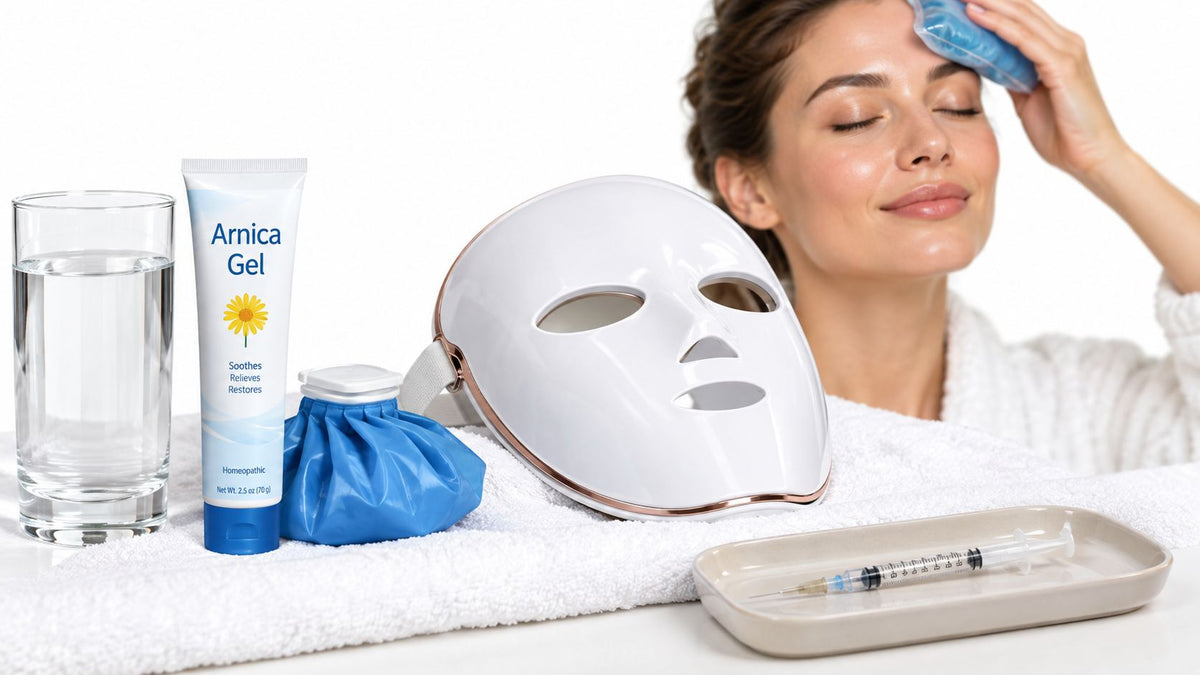
Dysport Injections After Care That Protects Results
You've just left your Dysport appointment, your forehead feels slightly tight, and you're wondering whether you can bend over to tie your shoes, wash your face, or still make it to the gym. This is the moment when good Dysport injections after care matters most. The aim isn't to freeze your day. It's to protect the placement of the product while your skin settles, then return to normal routines without unnecessary pressure, heat, or friction.
The recovery plan is easiest to follow as a timeline. Treat the first 4 hours as the highest-priority window, the first 24 hours as the main period for avoiding exercise and manipulation, and the following 7 to 14 days as the time to pause treatments that press, exfoliate, or heat the injected areas.
What to Expect Right After Your Dysport Appointment
You may leave the clinic with tiny raised bumps at the injection points, mild redness, or a sensation of tightness. These effects usually feel more noticeable when you make facial expressions or touch the treated area, but they generally settle as the skin recovers. Mild bruising, tenderness, or a headache can also occur during the early recovery period.
A patient I commonly see after a forehead and glabellar treatment is someone who checks the mirror repeatedly during the drive home. She may notice that one eyebrow looks slightly higher or that one side feels different. That early appearance doesn't predict the final result. Dysport's effect develops progressively, so the face can look uneven while the muscles are beginning to respond.
The early settling period
The first 4 hours deserve the most attention. Clinical aftercare guidance consistently recommends staying upright for about 4 hours and avoiding rubbing or pressure on the treated areas. The practical reason is simple: early manipulation, heat, or vigorous activity may contribute to unwanted spread, flushing, swelling, or bruising. Clinical Dysport aftercare guidance repeatedly uses the 4-hour upright and 24-hour activity benchmarks.
You won't see the complete result immediately. Some people notice softening relatively soon, while others need more time for the effect to become clear. Don't judge the treatment from the first evening, and don't press on the skin to “check” whether the product is working.
Barb N.P. perspective: Your job after Dysport is gentle protection, not constant monitoring. Leave the treated muscles alone, follow the time windows, and let the result develop before deciding whether anything needs adjusting.
A small bump at an injection site is different from rapidly worsening swelling. Mild local discomfort can be expected, but difficulty swallowing, breathing changes, pronounced generalized weakness, or significant neck weakness require prompt medical attention rather than home observation.
The First 24 Hours and How to Protect Your Results
The most useful plan is to divide the day into two parts. During the first 4 hours, protect placement. During the remaining 20 hours, reduce behaviors that increase blood flow, pressure, friction, or facial manipulation.

Your first 4 hours
Stay upright. Sitting at a desk, walking gently, or reclining without lying flat is usually compatible with this window. Avoid repeated bending at the waist, lying flat, or resting your face against a pillow.
Some clinical protocols allow gentle facial muscle movement during the first hour, while still advising against pressure, rubbing, facial devices, and heat-based treatments. Follow your injector's specific instructions if they differ, particularly if your injections were near the lips, eyes, or lower face.
Use this quick checklist:
- Keep your head elevated: Work, read, or watch television while seated rather than lying down.
- Use a light touch: Don't massage, press, rub, or repeatedly inspect the injection points.
- Choose gentle movement: A relaxed walk is different from a workout that raises your heart rate and body heat.
- Delay facial products if your clinic advised it: When you do resume them, apply cleanser and makeup without scrubbing or vigorous blending.
From hour 4 through the first day
Skip strenuous exercise for 24 hours, including activities that cause substantial sweating or facial flushing. Avoid hot baths, saunas, steam rooms, and other heat exposure during this period. Alcohol can also increase flushing and bruising, so it's sensible to avoid it during the same window.
Sleeping face-down creates unnecessary pressure. Sleep on your back if that's comfortable, and avoid a tight headband, helmet strap, or device pressing across a treated forehead.
The trade-off is minor inconvenience now versus a calmer recovery. You can move a workout, choose a lukewarm shower, and replace a facial massage with quiet rest. You can't undo vigorous rubbing once it has irritated a fresh injection site.
Managing Swelling Bruising and Tenderness at Home
Small bruises and mild swelling are common local reactions after injections. They often improve over a few days, while injection sites typically heal in about 24 hours, according to clinical aftercare guidance from Waterfront Hospital's botulinum toxin advice.
A cold compress can make the area feel more comfortable during the early period. Wrap it in a clean cloth, apply gentle contact without pressing, and take breaks rather than holding heavy ice directly against the skin. Elevating your head while resting may also reduce the sensation of facial fullness.

Comfort measures that respect the treatment
Hydration supports general comfort, but it won't make Dysport work faster. The more important choices are mechanical: don't rub the bruise, don't use a hot compress early, and don't apply a vibrating or cleansing device over the treated skin.
If bruising is your main concern, some aftercare protocols mention arnica lotion or tablets as an option. Ask your clinician or pharmacist before using any supplement, particularly if you take prescription medication or have a condition that affects bleeding.
Keep the rest of your skincare routine quiet. A bland cleanser, a simple moisturizer, and careful sun protection are preferable to a complicated rotation of acids, scrubs, or active treatments while the skin is tender. If your barrier feels dry or reactive, this guide may help you unlock calm, resilient skin without turning recovery into an aggressive treatment project.
If a bruise appears, don't chase it with friction. Pressing, scraping, or repeatedly applying products won't speed healing and may make the discoloration more noticeable.
For a focused explanation of why bruising can occur with injectable treatments, see does Botox cause bruising. The same practical principle applies here: protect the area and give the skin time to settle.
Skincare Makeup and When to Use the Barb N P LED Facial Mask
Skincare and devices follow a different timetable from basic comfort care. Gentle cleansing can usually resume once your injector permits it, but the application should be light, with no scrubbing, facial massage, or concentrated pressure over the injection points. Makeup should also be applied with a clean tool and a soft touch, especially around the forehead, glabella, and crow's-feet areas.
Treatments that manipulate the skin need a longer pause. Facials, massage, microneedling, and chemical peels are commonly deferred for 7 to 14 days after injection, depending on the treatment area and your clinician's advice. An aftercare guide specifically recommends avoiding facials, microneedling, and chemical peels for 2 weeks after botulinum toxin injections. Botulinum toxin aftercare guidance supports taking that conservative approach.

Where LED fits
An LED mask is not the same as a massage device or peel, but early use still isn't necessary. I prefer patients to wait until the initial 24-hour recovery window has passed and the skin is no longer tender, then confirm timing with the treating clinician. The mask should sit comfortably without forcing pressure across fresh injection points.
The Barb N.P. Facial Mask is a wireless device designed for a more comfortable hands-free fit, with 3 lighting settings intended for different treatment routines. Its structured protocol matters. FDA device records describe at least one cleared LED facial mask with red and near-infrared light, used twice per week for a treatment duration measured in minutes, showing that these products are protocol-based devices rather than generic skincare gadgets. FDA device documentation for an LED facial mask provides that regulatory context.
Compare the options this way:
| Activity | Early recovery choice | Why |
|---|---|---|
| Gentle cleansing | Preferable after the initial period, with light hands | Minimizes friction |
| Makeup | Apply carefully once permitted by your clinician | Avoids rubbing fresh sites |
| Facial massage | Pause during the early window | Adds pressure and manipulation |
| Microneedling or chemical peel | Defer for the recommended treatment pause | Creates more skin irritation |
| Wireless LED mask | Consider after the early window, if comfortable and cleared by your provider | Avoids unnecessary pressure during settling |
For a broader explanation of light-based skincare, what is LED light therapy offers useful background. LED can complement a thoughtful routine, but it shouldn't replace sensible injection aftercare.
Normal Healing Versus Warning Signs to Watch For
Most early reactions remain local and manageable. Mild redness, tiny bumps, tenderness, a small bruise, or a headache can fit within normal recovery, especially when the symptoms are stable or gradually improving. Slight asymmetry can also appear while the muscles respond at different rates, so the right question is whether the pattern is settling, not whether your face looks perfectly symmetrical immediately.
A 2025 cross-sectional study of 5,014 patients reported an overall adverse-event incidence of 6.0%, including bruising at 3.0%, headache at 1.8%, eyebrow ptosis at 0.4%, dry eye at 0.3%, and other effects including flu-like symptoms and muscle weakness at 0.5%. These figures come from the study itself, not a guarantee of what any individual patient will experience. The 2025 botulinum-toxin adverse-event study also supports taking medical history seriously, because autoimmune, endocrine, neurological, and mental-health comorbidities were associated with worse outcomes in a separate UK survey discussed in that research.

A practical escalation guide
| What you notice | What to do |
|---|---|
| Mild redness, small bumps, limited tenderness, or a small bruise | Monitor at home and use gentle comfort measures |
| Symptoms that worsen, persistent asymmetry, marked eyelid drooping, or concerning eye symptoms | Contact your injecting clinician promptly |
| Difficulty swallowing, breathing compromise, generalized weakness, marked bilateral ptosis, or neck weakness | Seek urgent medical care |
Rare complications deserve clear instructions because cosmetic aftercare shouldn't stop at bruising. Broader botulinum-toxin safety literature documents serious symptoms including dysphagia, respiratory compromise, generalized weakness, pronounced bilateral ptosis, and neck weakness. Botulinum-toxin safety review explains why these symptoms require escalation rather than reassurance.
If you have a neurological, endocrine, autoimmune, or other significant medical condition, tell your injector before treatment and use a lower threshold for contacting the clinic. For a fuller overview of possible reactions, see Dysport injection side effects, but don't use online information to delay urgent evaluation when breathing or swallowing is affected.
Your Simple Plan for Smooth Long Lasting Results
Think of your aftercare as three short commitments:
- First 4 hours: Stay upright, keep your hands off the treated areas, and avoid pressure, heat, and unnecessary manipulation.
- First 24 hours: Skip strenuous exercise, alcohol, hot baths, saunas, massage, and face-down pressure.
- Following 7 to 14 days: Postpone facials, microneedling, chemical peels, and other treatments that exfoliate or manipulate the skin.
Keep skincare simple while the injection sites settle. Once the early window has passed and your provider agrees, the wireless Barb N.P. LED Facial Mask can fit into a structured routine, using its comfortable design and 3 lighting settings without pressing or rubbing the treated areas. Follow the device protocol rather than adding extra sessions.
Schedule injections with enough breathing room before important events, workouts, facials, or travel. Take photos in consistent lighting instead of judging your face from memory, and contact BotoxBarb for follow-up if the result seems uneven, a symptom concerns you, or you're unsure when to resume a treatment.
The best aftercare is calm, consistent, and specific. Protect the placement first, protect the skin next, and ask questions before a small concern becomes a stressful one.
BotoxBarb offers Dysport appointments, personalized injectable guidance, LED light therapy, and curated skincare that can support a careful recovery routine. Visit BotoxBarb to explore treatment booking and products, and contact the practice with any aftercare concern that doesn't feel typical.

