Hair Care Routine for Fine Hair: A Practitioner's Guide
Fine hair often behaves like it's ignoring your effort. You wash it, style it, get a little lift at the root, and within an hour it starts lying closer to the scalp. By the next morning, it can look flat at the crown and oily at the hairline even when the lengths still feel clean.
That pattern is frustrating, but it isn't random. Fine strands have a different set of needs, and the usual advice to “wash less” or “use more moisture” can make the problem worse. As Aesthetic Nurse Practitioner Barb, I look at fine hair the same way I look at skin and scalp health in clinic. Structure matters. Product placement matters. Consistency matters. A good hair care routine for fine hair should protect the strand, support the scalp, and help you build volume without creating buildup.
The Fine Hair Dilemma From Flat to Full
A common scenario goes like this. Hair looks fresh after washing, soft after styling, and then starts collapsing by lunchtime. Many people with fine hair also notice that the roots look greasy long before the ends need more hydration. That mismatch is where routine mistakes usually begin.

In practice, I see people swing between two extremes. They either over-wash and rough up the cuticle, or they try to stretch wash days too long because they've been told it's healthier. Fine hair doesn't respond well to blanket advice.
A useful distinction comes from L'Oréal Paris on fine hair care routines, which notes that while many guides recommend washing 2–3 times weekly to avoid dryness, fine hair can look greasy faster because of its smaller diameter, so daily washing may be the right exception for many with oily scalps. That nuance matters more than any trend.
Why fine hair gets mismanaged
Fine hair usually needs a lighter hand and a more targeted plan. The strand doesn't tolerate heavy residue well, and the scalp often becomes the deciding factor in whether hair keeps movement or falls limp. If your roots get oily quickly, skipping washes can leave hair looking fuller in theory but flatter in reality.
Fine hair isn't asking for more products. It's asking for better placement and better restraint.
That's why I like to connect topical hair care with broader wellness habits too. If you're also paying attention to nutrition, Nutrition Geeks' advice on vibrant hair is a helpful companion read because healthy-looking hair rarely comes from styling alone.
The goal is lift with integrity
Volume isn't just about teasing or mousse. Healthy fine hair needs a routine that does four things well:
- Cleanses the scalp efficiently so oil doesn't collapse the root.
- Protects the fragile strand so daily care doesn't create breakage.
- Uses less product overall so the hair stays mobile.
- Supports the scalp environment so your hair looks healthier over time.
When those pieces line up, fine hair starts behaving differently. It won't feel heavy, sticky, or coated. It will move more, hold shape better, and look cleaner for longer.
Master Your Wash Routine for Lasting Volume
By 7 a.m., fine hair can already tell you whether wash day is working. The roots sit close to the scalp, the crown looks separated, and styling has less to work with before you even pick up a dryer. In clinic, I see the same pattern often. Fine hair rarely needs more effort. It needs a cleaner wash routine, better product placement, and less residue left behind.

Set your schedule by what your scalp does
Your scalp sets the pace. If oil shows up quickly, daily or every-other-day washing often gives fine hair more lift, not less. Cleveland Clinic advises washing fine hair every one to two days because oil and buildup become visible faster on smaller-diameter strands (Cleveland Clinic guidance on hair washing frequency).
The trade-off is straightforward. Washing too infrequently can collapse the root and leave the hair looking stringy. Washing too aggressively, with harsh cleansers or rough technique, can leave the lengths dry and static-prone. The right rhythm usually becomes obvious within a week because your roots either stay airy or fall flat by midday.
Cleanse the scalp thoroughly and leave the lengths alone
Shampoo has one main job on fine hair. Clean the scalp well enough that oil, sweat, and product film do not interfere with lift.
I tell patients to apply shampoo only where buildup collects. That means the scalp, crown, hairline, and the area behind the ears. The lengths do not need direct scrubbing. They get clean as the lather rinses through, and that reduces wear on strands that already have less structural bulk.
A wash routine that works well for fine hair looks like this:
- Saturate the hair fully. Unevenly wet roots make shampoo harder to distribute and easier to overuse.
- Lather in your palms first. Then press it into the scalp instead of piling product onto the top layer of hair.
- Use the pads of your fingers. A firm scalp massage lifts oil and residue better than scratching with nails.
- Give the rinse extra time. Fine hair loses bounce quickly when any cleanser is left behind.
For patients who need a more targeted scalp cleanse, I often recommend a root-focused purifying shampoo for buildup-prone fine hair. It fits well into a clinical-aesthetic routine because it addresses what fine hair struggles with most at the wash stage, excess oil and residue at the root.
Condition with precision
Conditioner should support the strand without softening the root so much that volume disappears. Placement matters more than quantity.
Keep conditioner on the mid-lengths and ends, where fine hair tangles, frays, and dries out first. If you feel slip right at the scalp, move lower on the next wash. That small adjustment can change how the crown holds shape throughout the day.
I also prefer lightweight conditioning formulas over rich masks for regular use. Fine hair usually responds better to a controlled amount of softness than a heavy coating. If you want to compare a lighter option, you can explore this natural hair care product and look at how the texture and intended finish align with volume goals.
A few details make a visible difference on wash day:
- Use warm water, not hot water. Hot water can leave the scalp feeling reactive and the cuticle rougher.
- Rinse conditioner completely. A partial rinse often feels silky in the shower but flat once the hair dries.
- Add a clarifying wash when hair starts looking coated. Fine hair shows buildup early, especially if you use dry shampoo, styling creams, or mineral-heavy water.
This daily routine also connects to the bigger picture. Fine hair tends to perform best when scalp care, internal support like Nutrafol, and at-home tools such as LED wellness devices are working together. Good washing does not replace those medical-grade strategies, but it gives them a cleaner foundation and helps volume last longer between appointments.
Choosing Ingredients That Lift vs Weigh Down
A common fine-hair complaint shows up after the wash routine is already right. Hair looks clean, soft, and promising in the morning, then the roots separate, the crown goes limp, and the ends start to look piecey by lunch. In clinic conversations, that pattern usually points to product selection more than hair texture itself.
Fine hair does best with ingredients that support the strand without leaving a film behind. The goal is simple: keep the cuticle light, keep the root area clean, and add structure where the hair needs help holding shape.
I tell patients to judge products by performance, not by how nourishing the label sounds. Many rich formulas are marketed as healthy, but fine hair often pays for that richness with lost volume. A scalp serum, leave-in, cream, and oil can all be good products on their own. Layered together on fine hair, they often create the same result. collapse.
Crown Affair's guidance on fine hair supports a restrained approach. Fewer styling products and smaller amounts usually preserve more lift, and oil-heavy formulas at the scalp can make sebum more visible faster (Crown Affair's fine hair routine guidance).
What I look for in a fine hair formula
I want each product to solve one problem cleanly.
A shampoo should remove residue without leaving the hair rough. A conditioner should soften the ends without migrating up to the root. A styling product should create hold or fullness without turning tacky once it dries. For heat protection, I prefer lightweight formulas that add some reinforcement to a delicate strand, especially those built around proteins such as rice protein or hydrolyzed wheat protein.
That ingredient logic also fits the broader clinical picture. If you are investing in Nutrafol for internal support or using an LED wellness device at home to support scalp health, it makes sense to keep your topical routine efficient. Medical-grade strategies can support healthier growth conditions over time, but heavy daily styling products can still make existing fine hair look flatter than it needs to.
Fine Hair Ingredient Cheat Sheet
| Ingredients to Embrace (for Lift & Strength) | Ingredients to Avoid (Especially Near Roots) |
|---|---|
| Rice proteins | Coconut oil on the scalp |
| Hydrolyzed wheat protein | Argan oil on the scalp |
| Lightweight volumizing polymers | Heavy root-applied oils |
| Gentle or balancing shampoos matched to scalp needs | Rich, dense styling creams near the crown |
| Lightweight conditioners used only on mid-lengths and ends | Heavy silicones if they leave visible coating or drag |
Edit the routine until the hair responds better
Fine hair usually improves when the routine gets tighter.
Keep the products that clearly do a job:
- Detangler if your ends knot easily
- Mousse or root lift spray if your style needs shape
- Heat protectant if you use hot tools
- Flexible hold spray if your volume drops quickly
Then watch the hair for feedback. If the roots feel waxy, the crown separates, or your fingers pick up residue by midday, the formula or the amount is off. In practice, that is often a product-load problem, not a sign that your hair is difficult.
Strategic Styling to Amplify and Protect Your Hair
You wash, add a volumizer, blow-dry for lift, and an hour later the crown falls flat or the ends look frayed. That pattern is common with fine hair because the strand gets weighed down easily and shows heat stress quickly. Styling has to create shape without roughing up a fragile fiber.

Start with controlled drying, not immediate heat
Real Simple notes that fine hair does better when you let it air-dry to about 75% before using hot tools, and when flat irons stay in the 150°C to 170°C range, or about 302°F to 338°F, if heat styling is necessary (Real Simple fine hair care recommendations).
In practice, I see the same issue over and over. Fine hair is at its weakest when it is still very wet, so high heat at that stage often trades a few minutes of convenience for more breakage, flyaways, and a thinner-looking finish. Lower heat usually gives a better cosmetic result because the cuticle stays smoother and the style keeps more movement.
A styling sequence that gives lift without overload
Use a simple order of operations:
- Let the hair dry until it feels damp, not soaked.
- Apply mousse or root lift spray at the roots only.
- Apply heat protectant through mid-lengths and ends.
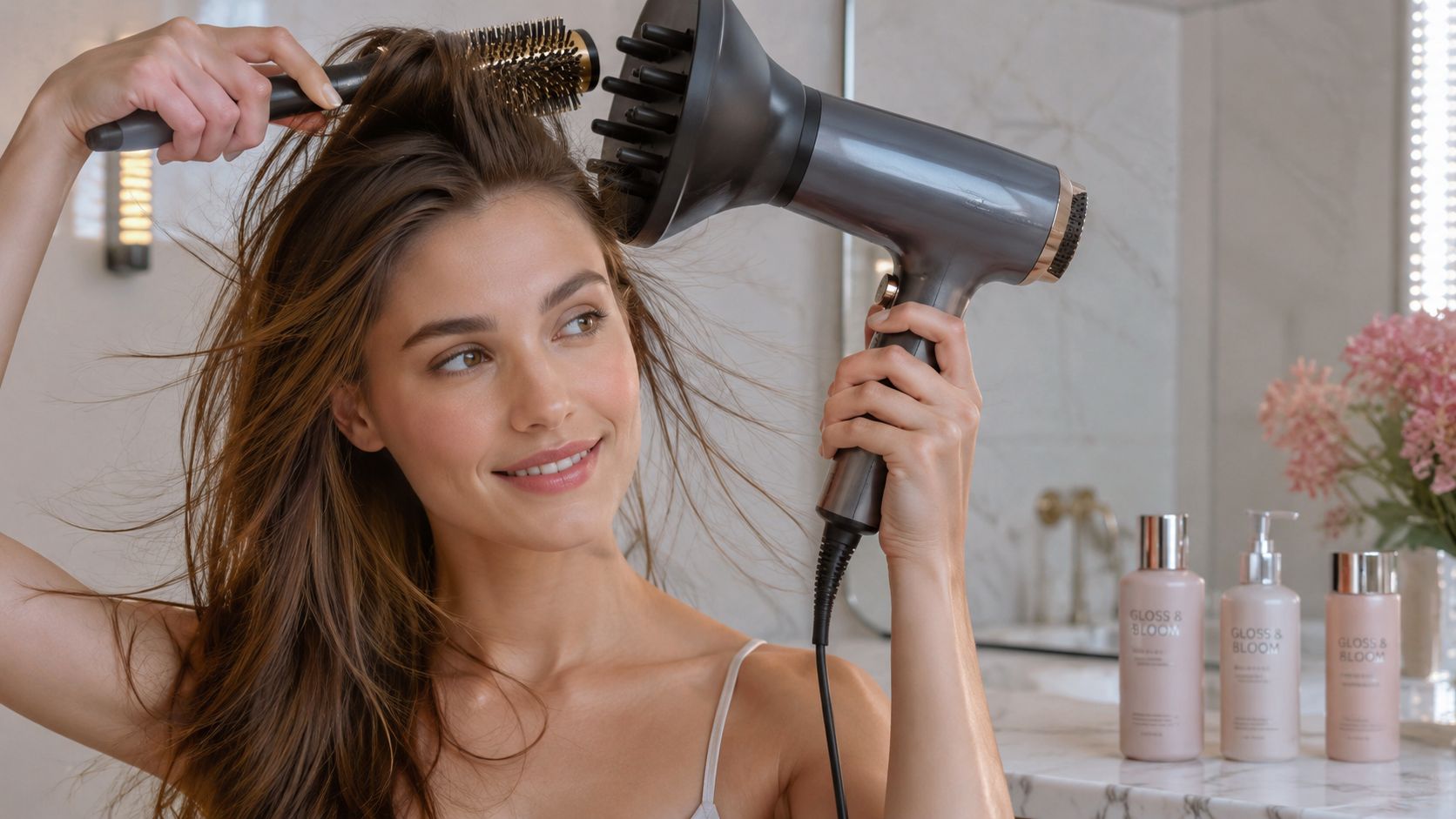
- Blow-dry in sections on low to medium heat, directing the roots up and away from the scalp.
- Let each section cool before touching it too much.
- Finish with a flexible spray if you need hold.
Turning the roots upward while drying helps set lift where fine hair needs it most. If you flip the head over to dry, keep the airflow controlled so you build volume without creating tangling through the ends.
Protect the strand while you style
Technique matters as much as product choice.
- Keep hot tools at the lowest setting that gives you the result.
- Use heat protectant every time you blow-dry, curl, or straighten.
- Detangle gently, starting at the ends and working upward.
- Skip dense waxes, pomades, and oily finishing serums near the crown.
- Refresh volume with a light root spray or a cool-air pass instead of restyling with more heat.
I also tell patients to look at styling as part of the bigger hair wellness plan. If you are pairing a careful routine with internal support such as Nutrafol, review a clinical guide to supplements for hair growth, or using LED therapy at home to support scalp health, daily heat habits still matter. Medical-grade support can improve the environment for healthier hair over time, but rough styling can make the hair you have right now look thinner, flatter, and more fragile.
The best result is visible lift with soft movement and less breakage. Fine hair responds well when styling stays light, intentional, and repeatable.
Building Healthy Hair From the Inside Out
Topical care does a lot, but it isn't the whole picture. Fine hair responds best when your routine supports the strand externally and the scalp environment internally.

Internal support matters when hair feels fragile
People often think the answer to fine hair is only in the shower. In reality, I think of hair the same way I think about skin quality. The visible result depends on what's happening underneath.
That's where medical-grade nutraceutical support can fit in. Nutrafol is one of the supplement approaches I discuss because it's built around hair wellness from the inside out, and it belongs in the conversation when someone wants a more well-rounded strategy. If you want a deeper clinical overview, I recommend reading this guide to supplements for hair growth.
Fine hair still needs targeted hydration
One myth I correct often is that fine hair should avoid masks altogether. That usually leads to brittle ends, flyaways, and breakage through the lower lengths. A more useful approach comes from the guidance that fine hair benefits from targeted, in-shower deep conditioning applied ends-up, not root-to-end, and that this pairing of a clean scalp plus deeper hydration at the ends is often missing from mainstream routines (YouTube discussion on fine hair hydration strategy).
That means you don't need more heaviness. You need smarter placement.
Use that concept like this:
- Keep the scalp clean. Don't let buildup sit at the root.
- Treat the ends with intention. Fine ends can be delicate even when roots are oily.
- Use masks in the shower, not as a coating after styling. That usually keeps the finish lighter.
The healthiest fine hair routine usually looks balanced, not minimal. Clean scalp, protected lengths, hydrated ends.
A clinical-aesthetic view of scalp wellness
This is also where at-home wellness devices can support the broader ritual. I often explain that the scalp is skin. If you're investing in skin health, circulation, and a more consistent self-care practice, that mindset can benefit your hair foundation too.
The Barb N.P. Facial Mask is a device I like for overall aesthetic wellness because it's wireless, comfortable to wear on the face, and offers 3 lighting settings for different treatments. While it's designed as a facial device, many clients appreciate having one tool that makes their routine feel more intentional and consistent. In a broader red-light wellness conversation, that kind of consistency can support how people care for both their skin and the scalp environment around the hairline.
Long-Term Care and When to Consult a Professional
Fine hair doesn't hide damage well. Split ends, roughness, and breakage make the hair look thinner fast, even when shedding hasn't changed. Regular trims matter because they keep the perimeter looking healthier and prevent worn ends from making the full head of hair look sparse.
Maintenance also means paying attention to changes in pattern, not just changes in style. If your usual routine suddenly stops working, look closer. A flatter crown from buildup is one thing. A widening part, visible scalp in new areas, patchy thinning, or a meaningful increase in shedding is different.
Signs that deserve a professional assessment
Watch for patterns like these:
- A widening part line that wasn't there before.
- Noticeable thinning at the temples or crown.
- Shedding that feels different from your baseline.
- Scalp discomfort or persistent irritation.
- Breakage that continues despite gentler styling.
When those signs show up, don't keep changing shampoos and hoping for a reversal. That's the point where clinical evaluation helps. A more advanced conversation may include scalp health, internal factors, or procedures designed for hair support. If you're curious about regenerative options, this overview of PRP treatment for hair is a good place to start.
The best hair care routine for fine hair should make your hair easier to live with, not harder. If your routine is precise and your hair still keeps losing density or fullness, get expert eyes on it. There's no downside to catching a real issue early.
If you're ready to build a smarter beauty and wellness routine, BotoxBarb offers curated support across hair, skin, and self-care, including medical-grade options like Nutrafol, advanced LED devices, and in-clinic aesthetic services that help you feel more confident from root to glow.