Skin Care for Women Over 40: Your Radiant Guide 2026
You're probably noticing it in small ways first. Your makeup doesn't sit the same. A cleanser you've used for years suddenly leaves your face tight. Fine lines look more obvious by the end of the day, and your skin can feel dry even when you're using moisturizer.
That shift is common, and it doesn't mean your skin is failing. It means your routine needs to match the biology you're in now. Good skin care for women over 40 is less about doing more and more about doing the right things consistently, with a stronger focus on barrier support, collagen-friendly habits, and smart treatment choices.
Welcome to Your 40s Your Skin Is Changing and That Is Okay
One of the most common conversations I have in clinic starts with a woman telling me her skin changed within a year. The cleanser she used for a decade suddenly leaves her tight and uncomfortable by noon. Her makeup catches on dry patches. The fine lines that used to show up only when she smiled now seem to stay put.

That shift is common after 40, and it usually has a clear biologic reason. Skin makes less oil, cell turnover slows, collagen loss becomes more visible, and perimenopause can push dryness and sensitivity even further. I see the same pattern in women who are doing many things right at home, but are using a routine built for their 30s instead of the skin they have now.
Why your old routine may stop working
After 40, the main complaints tend to cluster around a few predictable changes:
- Dryness that lasts all day: Moisturizer may seem to disappear within hours.
- Fine lines that look deeper by evening: Especially around the eyes, mouth, and forehead.
- Less firmness and recovery: Skin can look more tired, even after good sleep.
- More reactivity: Products that used to feel harmless may now sting, peel, or leave redness.
Perimenopause is often part of the story. If skin changes are arriving alongside sleep disruption, cycle changes, mood shifts, or hot flashes, the hormonal piece deserves attention too. A helpful place to start is this essential guide for perimenopause at 40, especially if your skin concerns showed up with other body changes.
Healthy skin after 40 comes from matching treatment intensity to barrier strength. That trade-off matters. Many women try to correct wrinkles with stronger acids, more exfoliation, or frequent retinoid use, then end up with a drier, angrier face that looks older, not better.
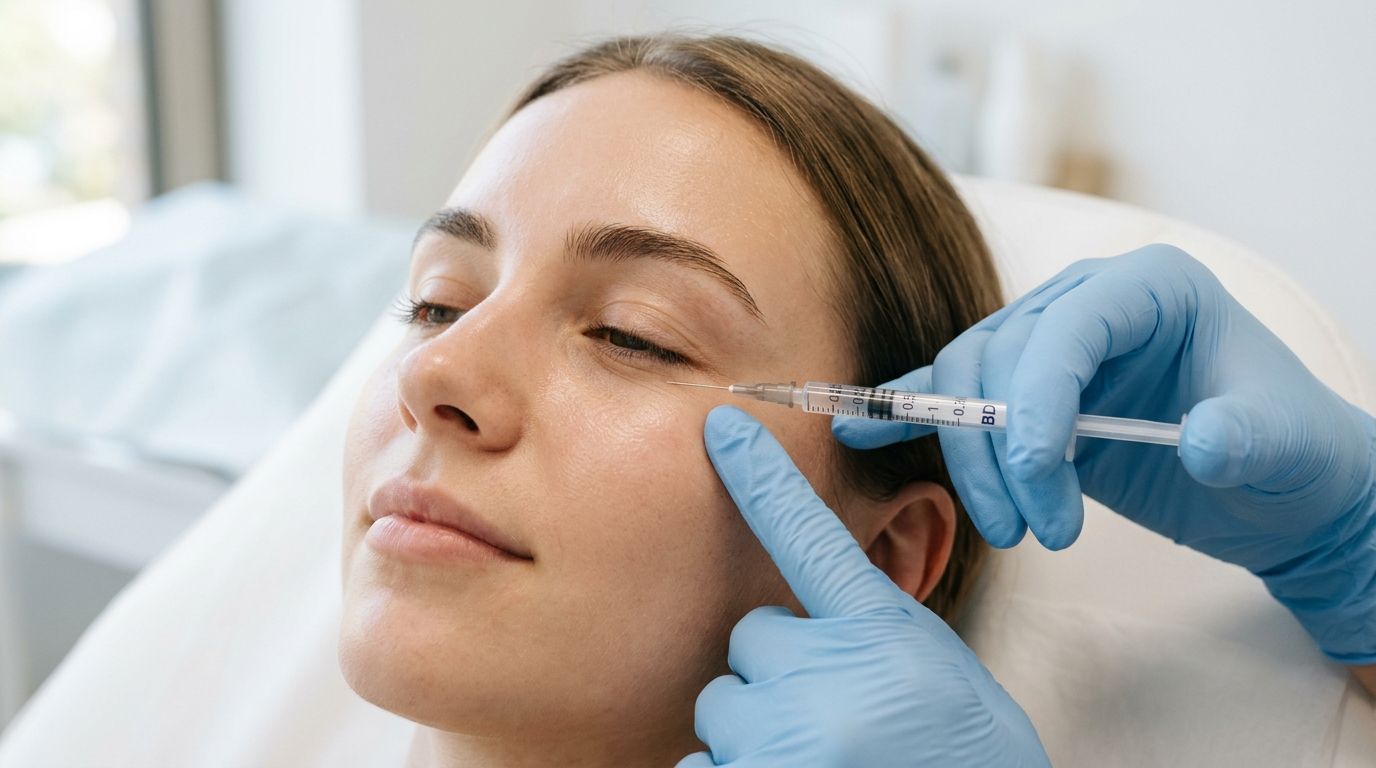
I address this every day in practice. At home, the goal is a routine that supports the skin barrier while still giving you proven anti-aging ingredients. In clinic, treatments at BotoxBarb can help target muscle movement, texture, pigment, and collagen loss with more precision, so you are not asking your nightly routine to do everything by itself. If you want a practical starting point, this guide on how to build a skincare routine lays out the basics clearly.
What I want patients to know early
Midlife skin responds best to consistency, restraint, and a plan that fits hormonal dryness. Daily sunscreen is required. A retinoid is still one of the best tools for collagen support and fine lines, but the schedule and strength have to match your tolerance. Exfoliation has a place, though more is rarely better once the barrier is struggling.
The question I want women asking is simpler and more useful: which routine can you follow for months without triggering dryness, burning, or peeling? That is the routine that gives real results.
The Four Pillars of Your Foundational Skincare Routine
A solid routine after 40 needs to do two jobs at once. It has to address collagen loss, uneven tone, and expression lines, while also respecting a drier, more reactive barrier that often shows up in perimenopause. In practice, many women struggle. They use stronger anti-aging products, then end up too irritated to stay consistent.
The fix is a routine built on four pillars: cleanse, treat, hydrate, and protect.

Cleansing
Cleansing should leave skin clean, calm, and comfortable. If your face feels tight right after washing, the cleanser is working against you.
After 40, I usually steer patients toward cream cleansers or gentle gel cleansers that remove sunscreen, makeup, and oil without stripping the barrier. Fragrance-free formulas are often easier to tolerate, especially if your skin has become more reactive with hormonal shifts. Lukewarm water helps. Rough washcloths and scrub particles do not.
Watch for these common mistakes:
- Using foaming cleansers meant for teenage acne: These often pull too much oil from already dry skin.
- Scrubbing to chase “glow”: Mechanical exfoliation can worsen redness and make fine lines look sharper.
- Cleansing too often: Twice daily is enough for most women. Some very dry patients do well with only a light rinse in the morning.
Treating
Treatment is where strategy matters. You do not need every trending active. You need the right one for your main concern, used at a frequency your skin can handle.
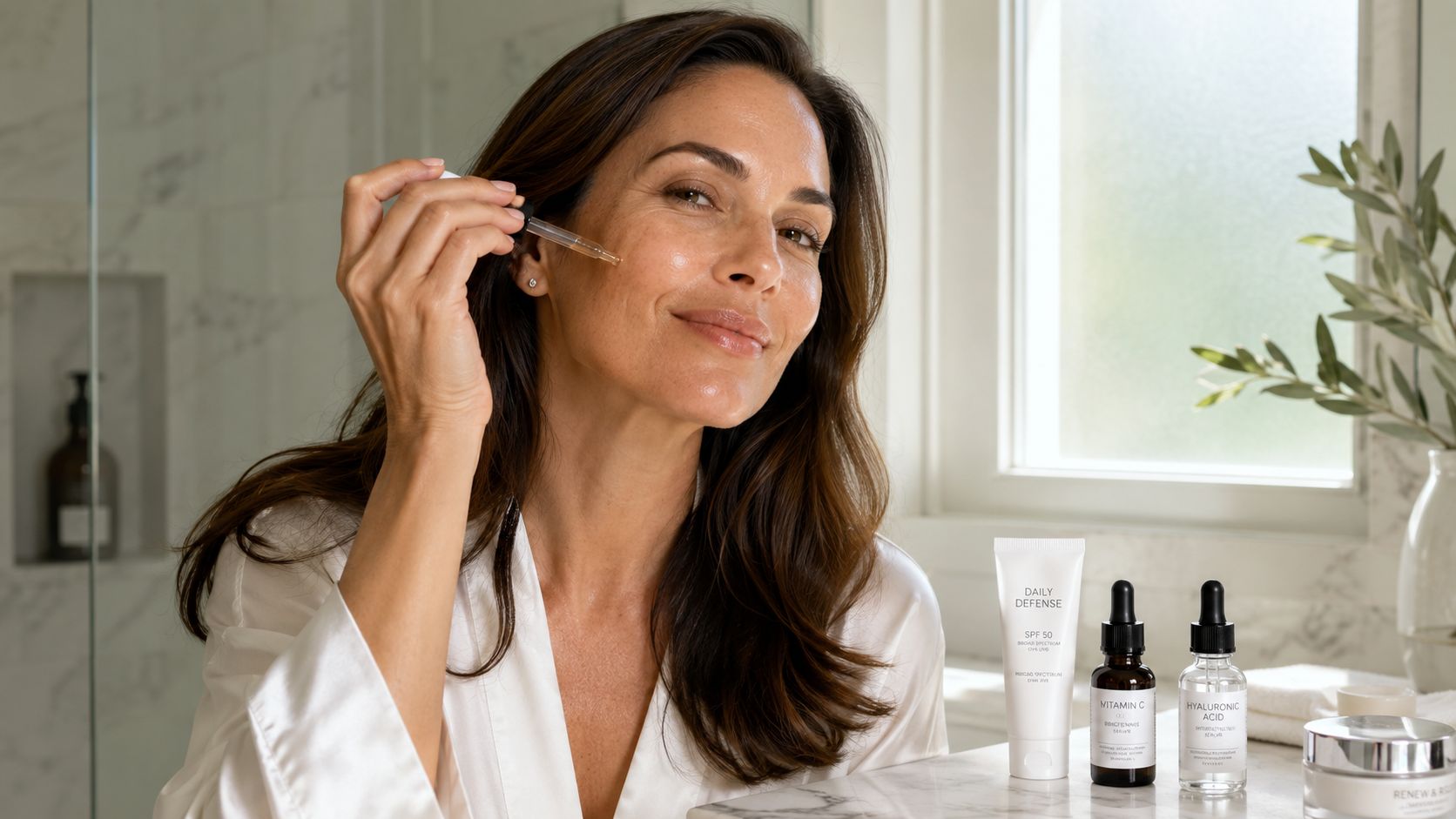
For daytime, antioxidant support can be useful, especially if you are dealing with dullness or pigment. Vitamin C is a common first choice because it targets oxidative stress and helps brighten uneven tone. If hyperpigmentation is part of your concern, it helps to understand how skin responds to inflammation and UV over time. This overview on understanding skin biology for dark spots gives useful context before you start layering brightening products.
Expression lines are a different problem. They come from repeated muscle movement, so a peptide-based serum can make more sense than relying on vitamin C alone. SkinCeuticals P-TIOX Serum is one option I discuss with patients who want help with forehead lines, crow's feet, or the early etched look around the mouth. Peptides work by signaling the skin in a different way than antioxidants do. Vitamin C is mainly used for environmental defense and brightness. Peptides are used to support smoother-looking skin and soften the look of repeated facial movement. That makes a peptide serum a reasonable at-home partner for in-clinic wrinkle treatments at BotoxBarb, especially if you want a plan that addresses both muscle movement and skin quality without pushing your barrier too hard.
Keep the trade-off in mind. If you are dry, stinging, or peeling, adding more actives is rarely the answer.
Practical rule: Start with one treatment product. Keep it steady for a few weeks before adding anything else.
Hydrating
Hydration is not just a comfort step. It is what makes treatment possible long term.
A good moisturizer reduces water loss, supports the barrier, and helps fine lines look less obvious because the skin surface is less dehydrated. This matters even more in perimenopause, when skin often becomes thinner, drier, and less forgiving.
Look for:
- Hyaluronic acid: Helpful for drawing water into the upper layers of skin.
- Ceramides: Useful for reinforcing the barrier and reducing that tight, fragile feeling.
- Creams instead of lightweight gels: Often a better match for hormonally dry skin, especially at night.
- Ingredients like glycerin and squalane: Good options if your skin feels rough or easily irritated.
Here is the quick framework I use with patients:
| Pillar | What it should do | Common mistake |
|---|---|---|
| Cleanse | Remove buildup gently | Using stripping cleansers |
| Treat | Address lines, discoloration, or texture | Layering too many active products |
| Hydrate | Reduce water loss and support the barrier | Choosing formulas that are too light |
| Protect | Limit UV damage and prevent setbacks | Skipping SPF because makeup has some in it |
For a simple breakdown of product order, I often send patients to this guide on how to build a skincare routine.
Protecting
Protection is the step that keeps all your other work from being undone. Daily sunscreen is required if you are serious about preventing pigment, collagen breakdown, and the slow deepening of fine lines.
Choose a broad-spectrum SPF 30 or higher and apply enough to cover the face, neck, and chest if those areas are exposed. Mineral sunscreens with zinc oxide or titanium dioxide are often easier for sensitive skin, particularly after retinoids, exfoliation, or in-clinic treatments. If you are using products to brighten skin or stimulate cell turnover, sunscreen becomes even more important because unprotected UV exposure can quickly erase progress.
In clinic, I remind women of this all the time. Botox can soften movement. Retinoids can improve texture. Good moisturizers can support the barrier. None of them replace sunscreen.
Crafting Your Perfect AM and PM Skincare Rituals
A strong routine should feel repeatable on a busy Tuesday, not just on a quiet Sunday. Morning and evening need different priorities. Morning is about defense. Night is about repair, treatment, and protecting a more fragile barrier.

Your morning routine
In the morning, keep it clean and efficient:
- Gentle cleanse: If your skin is very dry, a light rinse or very mild cleanser may be enough.
- Antioxidant serum: Vitamin C or niacinamide can support the day's defense strategy.
- Eye cream if needed: Useful if that area feels dry or crepey.
- Moisturizer: Choose texture based on how your skin feels, not what worked five years ago.
- Broad-spectrum SPF: Every day, even when the weather isn't impressive.
The women who struggle most with visible aging often aren't missing expensive products. They're missing consistency with protection.
Your evening routine
At night, your skin needs a little more patience.
- First cleanse: Remove sunscreen, makeup, and the day's residue.
- Second cleanse if needed: Especially if you wear long-wear makeup or heavier SPF.
- Treatment step: Retinoid on scheduled nights, or a gentler serum if your barrier is stressed.
- Eye cream: Optional, but reasonable for dryness-prone skin.
- Night moisturizer: Usually richer than your daytime formula.
If you're unsure about order, this guide on layering skin care helps simplify what goes on first and what should wait.
The perimenopause trade-off most women miss
I observe the most significant errors in this area: Existing content rarely addresses the specific conflict between perimenopausal hormonal dryness and aggressive exfoliation or retinization protocols. Estrogen decline in perimenopause reduces skin hydration by up to 30%, yet most routines prioritize “cell turnover” without mandating a barrier-first approach (clinical discussion of perimenopausal skin changes).
That matters in real life. If your skin is already dry, and you add exfoliating pads, nightly retinol, an acid cleanser, and a peel “for glow,” your barrier usually loses that fight.
If your skin burns when you apply moisturizer, that isn't a sign the product is working. It's a sign your barrier needs a pause.
A barrier-first version that works better
When skin is reactive, simplify first:
- Use one active at a time: Don't start retinoid and exfoliating acids in the same week.
- Take rest nights: Plain moisturizer nights are part of a smart routine.
- Choose creamy support products: Ceramide-rich creams often outperform lightweight formulas for this stage of life.
- Watch your signals: Tightness, stinging, and persistent flaking mean you need less intensity, not more discipline.
A lot of women feel guilty when they need to scale back. Don't. Your skin doesn't care about ambition. It responds to what it can tolerate consistently.
Elevate Your Routine with Weekly Targeted Treatments
Once your core routine is steady, one or two weekly treatments can improve tone, texture, and clarity without pushing dry midlife skin into irritation. I tell patients to earn the right to add extras. If your skin is still stinging, flaking, or feeling tight most days, weekly treatments are too much for now.
LED at home and why it fits this stage of life
At-home LED works best for women who want a treatment they will keep using. Consistency matters more than buying the most complicated device. A good mask should be comfortable, easy to wear, and simple enough to use while reading, answering emails, or winding down at night.
The Barb N.P. LED Facial Mask is a solid example because it's wireless, sits comfortably on the face, and includes 3 lighting settings for different treatments. Those details matter in real life. If a device feels bulky or inconvenient, it usually ends up in a drawer.

For women over 40, that flexibility helps. Red light is commonly used in collagen-supportive routines. Blue light is often chosen when breakouts are still part of the picture. Amber light can be useful when skin looks stressed or feels reactive.
Retinoids done the right way
Retinoids still do a lot of heavy lifting after 40, but midlife skin usually tolerates a slower start. Dryness from perimenopause changes the plan. The women who do well with retinoids are rarely the ones using them hardest. They are the ones using them steadily.
A practical schedule looks like this:
- Weeks 1 to 2: Apply retinoid on dry skin two nights a week.
- Weeks 3 to 4: Move to every other night only if your skin stays calm.
- Weeks 5 and beyond: Increase carefully if you are tolerating it well.
- Use moisturizer strategically: Many women do better with moisturizer before and after retinoid application.
- Keep the rest of the night simple: Skip exfoliating acids on retinoid nights.
If you want more guidance on building a realistic plan that combines home care with procedures, review these anti-aging treatments for your 40s.
What usually goes wrong
I see the same errors again and again, especially in women trying to treat wrinkles and dryness at the same time.
| Mistake | What happens instead |
|---|---|
| Starting too often | Redness, peeling, and quitting before results show |
| Applying to damp skin | More irritation, especially in already dry skin |
| Using exfoliants on the same night | Barrier disruption and longer recovery time |
| Skipping moisturizer | Tightness, stinging, and poor long-term adherence |
Weekly treatments should support your in-clinic plan, not compete with it. If laser resurfacing is on your radar, Understanding CO2 laser recovery and costs can help you set expectations before you book.
Partnering with a Pro In-Clinic Treatments for Maximum Impact
You may be doing many things right at home and still feel frustrated. The moisturizer helps for a few hours. The retinoid is slowly improving texture. But the crease between your brows is still there, your cheeks look less supported, and dry perimenopausal skin gets irritated fast if you push too hard.
In clinic, I sort those concerns into categories first, because each one responds to a different tool. Movement lines respond to Botox® or Dysport®. Volume loss and facial hollowing call for dermal fillers such as Restylane®, JUVÉDERM®, or Revanesse Versa. Dullness, uneven texture, and slow recovery can make PRP or professional LED light therapy worth discussing.
Creams improve skin function. Procedures can also change muscle activity, restore support, and treat damage at a deeper level.
What in-clinic care can do that home care cannot
A woman in her 40s often has more than one issue happening at once. Fine lines may be partly from sun exposure, partly from repeated facial movement, and partly from skin that has become thinner and drier with hormonal shifts. A single serum cannot address all of that.
That is why a coordinated plan works better. BotoxBarb's in-clinic services are most useful when they are matched to the specific problem, timed around healing, and supported by a steady home routine instead of aggressive product stacking.
Menopause changes how I approach treatment plans
Perimenopause and menopause change the rules. Skin usually becomes drier, more reactive, and slower to recover. I see many women assume they need stronger peels, more exfoliation, or more frequent retinoid use because the skin looks older. In practice, that often backfires.
If your barrier is already strained, adding an energy-based procedure or resurfacing treatment without adjusting your home routine can leave you red, tight, and disappointed. I usually scale back exfoliation, protect hydration carefully, and choose treatment intensity based on how the skin is behaving now, not how it handled products five years ago.
For women considering resurfacing, downtime matters too. If laser is on your radar, this article on Understanding CO2 laser recovery and costs is worth reading before you decide whether that level of treatment fits your life.
The value of a coordinated plan
A strong practitioner-led plan usually includes a few clear steps:
- Stabilize dryness first: Skin that burns, flakes, or stings is harder to treat well.
- Match the procedure to the specific concern: Expression lines, volume loss, pigment, and laxity each need different treatment choices.
- Adjust actives around appointments: Skin often needs a simpler routine before and after procedures.
- Maintain results at home: Sunscreen, moisturizer, and a well-tolerated retinoid help protect the investment.
If you want help comparing options, this guide to anti-aging treatments for your 40s gives a practical overview of what each approach is designed to do.
Your Top Questions Answered by Nurse Practitioner Barb
Can I still use active ingredients if I have rosacea or very sensitive skin
Yes, but the plan has to be quieter. I usually tell patients to stop trying to “catch up” with strong products. Start with a gentle cleanser, barrier-focused moisturizer, and daily sunscreen. Add only one active at a time, and space it out enough that you can tell whether your skin tolerates it.
For many sensitive patients, niacinamide is easier to start with than jumping straight into multiple acids or frequent retinoid use. If redness is ongoing, that's a good time for a professional evaluation rather than guessing.
What should I do for my neck and chest
Treat them like an extension of your face, but with more caution. The skin there is often thinner and gets irritated faster. Apply moisturizer and sunscreen to the neck and chest daily, and introduce actives more gradually than you would on the face.
A common mistake is treating the face carefully and forgetting the neck until the signs of aging feel advanced. Prevention works better than trying to reverse a neglected area later.
How soon should I think about Botox or Dysport
Think about it when expression lines start lingering after your face is at rest, or when they begin to bother you consistently. There isn't one right age. The decision depends on what you're seeing, how much movement you have, and what kind of result you want.
If you're already using sunscreen, a moisturizer that supports your barrier, and a sensible treatment routine, injectables become easier to use thoughtfully instead of reactively.
Do I need exfoliation if my skin is already dry
Sometimes yes, but less often than you think. Dry skin can still benefit from gentle exfoliation, especially when buildup is making it look dull. The mistake is using exfoliation as a substitute for hydration.
When I guide dry or menopausal patients, I prefer a limited schedule and very clear separation from retinoid nights. If your skin stings or flakes persistently, pull back and rebuild your barrier first.
My skin looks tired no matter what I put on it. What am I missing
Usually one of three things is happening. You're under-moisturizing, you're overusing actives, or your concern is no longer just topical. Volume loss, deeper expression lines, and skin laxity don't respond the same way dullness or mild dryness do.
That's also the point where broader support can help. Some women in this age group are also dealing with hair thinning, and a clinically oriented supplement such as Nutrafol may be worth discussing if that's part of the picture too.
What's one product category worth the money after 40
If I had to keep it practical, I'd prioritize these in order:
- Sunscreen: An essential daily step.
- A moisturizer your skin likes: One you'll use generously and consistently.
- One treatment serum: Antioxidant by day or retinoid by night, depending on tolerance.
- A support product for your specific concern: That may be an eye cream, peptide serum, or hair-support product.
Good skin care for women over 40 is rarely built on novelty. It's built on adherence, tolerance, and choosing the products that solve your actual problem.
If you're ready to simplify your routine, add a targeted device, or explore professional treatment options alongside medical-grade skin care, browse BotoxBarb for products and services that support a practical, clinician-guided plan.