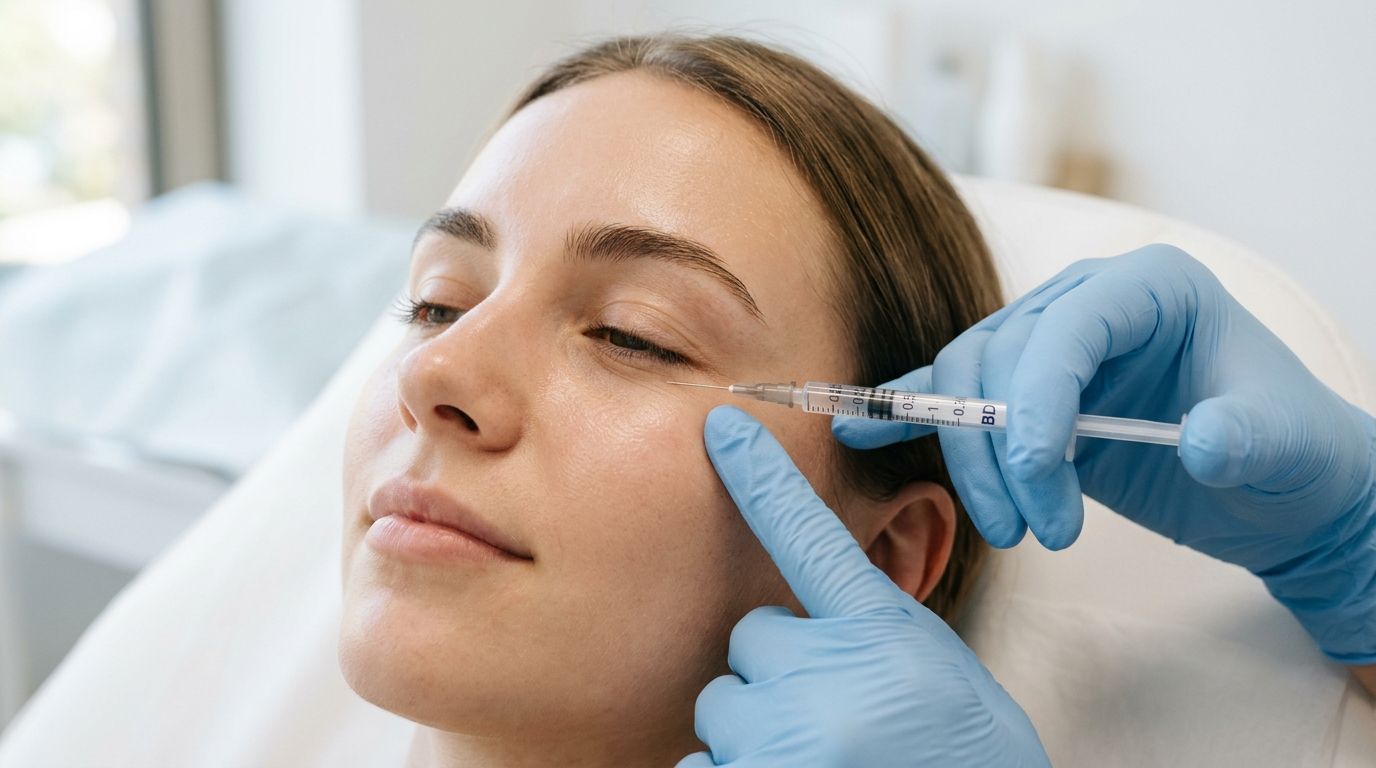
Tear Trough Filler Risks: An Expert Guide to Safety
You're probably here because the mirror keeps showing the same thing every morning. Hollow under-eyes, a tired look you don't feel, and the nagging question of whether tear trough filler is worth it. The question isn't usually "do it" or "don't do it," but rather whether the treatment can be trusted to be safe in such a delicate area.
That hesitation is reasonable. The under-eye area can look beautifully refreshed with filler in the right patient, but it's also one of the least forgiving places to inject. Small errors in depth, volume, or patient selection can create visible problems fast. Bigger errors can become urgent medical issues.
As an experienced aesthetic Nurse Practitioner would tell you in consultation, the goal isn't to fear this treatment. The goal is to understand it clearly. Patients make better decisions when they know which side effects are expected, which risks are serious, and why this area behaves differently than cheeks or lips.
Considering Tear Trough Fillers What You Need to Know First
Under-eye filler appeals to people for a simple reason. It can soften hollows that cast shadows and make you look exhausted even when you're rested. When the issue is true volume loss, it can be a very elegant treatment.
The problem is that many people search for tear trough filler risks only after seeing scary stories online. That creates two extremes. One side acts like under-eye filler is effortless. The other treats it like disaster is inevitable. Neither is accurate.
What matters most before treatment
A good decision starts with one question. What specifically is causing your under-eye concern? Filler works best for hollowness. It doesn't reliably fix every form of dark circle, and it can worsen the look of puffiness if bags or fluid retention are the underlying issue.
That's why the consultation matters more here than in many other cosmetic treatments. A careful injector has to assess skin thickness, degree of hollowing, existing puffiness, symmetry, and how the cheek supports the lower lid. If someone is a poor filler candidate, the safest plan may be no filler at all.
Clinical perspective: The best under-eye filler result often comes from treating less, or deciding not to treat, rather than forcing filler into the wrong anatomy.
A balanced way to think about risk
Most tear trough filler risks fall into two groups. The first is inconvenient but common, such as bruising and swelling. The second is severe but rare, such as vascular occlusion.
Knowing that difference changes how people approach treatment. It helps you expect some visible short-term recovery without panicking, while also understanding the warning signs that should never be ignored.
If you're considering the procedure, don't ask only, “Is it safe?” Ask better questions. Am I a good candidate? Is my provider experienced specifically in under-eyes? What happens if I swell badly, get the Tyndall effect, or need the filler dissolved? Those answers usually tell you more than a before-and-after photo ever will.
Why the Under-Eye Area Is So Delicate
The tear trough looks small, but anatomically it's complicated. This area combines very thin skin, a dense vascular network, loose tissue that can hold fluid, and close proximity to the eye itself. That combination is why under-eye filler requires restraint and precision.

Skin that shows everything
Under-eye skin behaves almost like tissue paper. If filler sits too close to the surface, you may see it. If there's even mild swelling, you may notice it longer than you would in a thicker area of the face.
That's one reason some patients think they need more filler when they need less. In this region, subtle changes read loudly. A tiny contour irregularity can become visible because the skin doesn't hide much.
For many patients, the issue they call a “bag” is a mix of hollowing, skin quality, and cheek support. If you're trying to sort out that difference, this explanation of what causes under-eye bags is useful background before any injector evaluates the area.
A busy highway of blood vessels
The under-eye region also has important vessels crossing through it, including branches around the angular artery. This intricate vascularity resembles a tight highway system with very little room for error. A misplaced injection can bruise easily. In the worst-case scenario, filler can enter or compress a vessel.
That's why anatomy knowledge is not optional here. Vascular occlusion in the tear trough region poses a unique risk of central retinal artery occlusion leading to permanent blindness, and the mechanism can involve retrograde embolus migration into the central retinal artery. Risk is minimized with minute quantities, slow pressure, needle tip movement, and cannula use rather than needles in expert hands, as described in this review of tear trough filler vascular anatomy and technique.
The danger isn't just that the area is close to the eye. It's that the wrong product placement can affect blood flow in pathways connected to vision.
Tissue that holds onto fluid
Loose connective tissue around the lower eyelid allows fluid to collect. That's why some patients stay puffy longer than expected, and why people prone to morning swelling or allergy-related fullness often struggle with filler in this area.
The anatomy also includes structures that influence how the lower lid meets the cheek. If that transition is weak, crowded, or already puffy, adding volume can blur the contour instead of improving it. In practical terms, the same syringe that looks elegant on one patient can look heavy on another.
Common vs Rare Tear Trough Filler Risks
A typical under-eye filler recovery is inconvenient, not dangerous. A bruise before a wedding, morning puffiness that lasts longer than expected, or tenderness when you smile are the issues patients usually call me about. The serious problems are different in both severity and urgency, and patients should understand that distinction before treatment.
Tear Trough Filler Risks A Realistic Breakdown
| Risk Type | Common Risks (Higher Probability, Lower Severity) | Rare Risks (Lower Probability, Higher Severity) |
|---|---|---|
| What you're more likely to see | Bruising, swelling, temporary tenderness, visible short-term recovery | Vascular occlusion, tissue ischemia, vision-threatening events |
| How often it happens | Mild short-term effects such as bruising and edema are reported often in published studies, with technique and patient anatomy affecting what shows up most, as reviewed in this tear trough filler outcomes study | The most feared complication is vascular occlusion, which can lead to blindness, but it is described as extremely rare, and post-2015 reviews note that tear trough injections are not among the top four sites linked to visual complications in this analysis of filler-related visual risk |
| What it usually means | A visible but expected recovery period that may last days and sometimes longer | A medical emergency that needs immediate evaluation and treatment |
| Typical response | Cold compresses, head elevation, aftercare, patience, and follow-up if swelling lingers | Contact the treating provider immediately and seek urgent care |
What's common and usually manageable
Bruising and swelling matter because they affect daily life. Patients are often less upset by the idea of filler itself than by looking more tired, puffy, or uneven for a week while the area settles.
In practice, I also see a trade-off between techniques. Needles tend to bruise more easily. Cannulas can reduce some bruising but may still leave patients with edema, especially in people who already hold fluid under the eyes. Neither approach guarantees a perfect recovery. The better choice depends on anatomy, product selection, and how conservative the treatment plan is.
Short-term tenderness, asymmetry during early healing, and fullness that looks worse in the morning can also fall into the expected range. That does not mean every swollen result is acceptable. It means the under-eye area often needs time, good aftercare, and a scheduled reassessment before anyone decides the filler “failed.”
If you want a broader frame of reference, this guide to dermal filler side effects shows how under-eye recovery compares with filler used in other facial areas.
What's rare and should never be minimized
The rare complications are mostly blood-flow problems. If filler blocks or significantly compresses a vessel, the issue is no longer cosmetic. Skin may turn pale, dusky, or gray, pain can escalate quickly, and visual symptoms need emergency evaluation right away.
Patients sometimes hear “rare” and assume the risk is theoretical. It is not. It is uncommon, but it is real enough that every injector treating tear troughs should have a clear emergency plan, access to hyaluronidase when using hyaluronic acid filler, and a process for urgent follow-up.
This is also why good consent should feel calm and specific. Patients need to know which reactions fit normal healing, which symptoms deserve a same-day call, and when filler should be avoided in favor of lower-risk options such as skincare, energy-based treatments, or leaving the area untreated.
Risk discussions in aesthetics should stay honest across the board. This summary of IV glutathione adverse events data is a useful example of how patients can judge whether a treatment conversation is balanced or promotional.
The Hidden Causes Behind Filler Complications
Complications don't appear out of nowhere. Most happen because product was placed at the wrong depth, the wrong volume was used, the patient's anatomy wasn't ideal for filler, or the area responded in a predictable but unwanted way.

When filler sits too close to the surface
One of the most recognizable issues is the Tyndall effect. This is a blue-gray discoloration that happens when hyaluronic acid filler is placed too superficially and light scatters through it. It can create what's been described as a “bluish sausage or nodule” appearance in this discussion of tear trough filler complications and solutions.
This situation is comparable to placing blue gel under a thin sheet of paper. The product may not be bad. The depth is bad.
That's why under-eye filler can't be approached like lips or marionette lines. In thicker areas, shallow placement may be forgiven. Here, it often announces itself.
When hyaluronic acid attracts water
Hyaluronic acid is hydrophilic, which means it attracts water. That property is useful in many areas because it supports soft hydration and contour. Under the eyes, though, it can become the reason a patient looks puffy rather than rested.
If too much product is used, or if the patient already has a tendency toward fluid retention, overcorrection can lead to persistent malar edema. In plain language, the filler doesn't just fill the hollow. It can hold water and create fullness where you didn't want it.
What works: conservative volume, proper depth, and careful patient selection.
What doesn't: chasing every shadow with more filler.
Why migration, lumps, and nodules happen
Migration is often described like the filler “moving around,” but that makes it sound random. It's usually more mechanical than mysterious. Product can shift when it's placed in a plane that doesn't hold it well, when too much is used, or when the local anatomy already pushes against smooth placement.
Lumps and nodules may reflect uneven placement, product accumulation, swelling around the filler, or a delayed tissue response. They don't all mean the same thing, which is why self-diagnosis from social media photos is rarely helpful.
A practical consultation should cover these possibilities before treatment. Ask what the injector does if the filler looks blue, stays puffy, or becomes palpable. In the under-eye area, the answer shouldn't be “we'll just add more.”
How to Prevent Complications and Choose a Provider
The biggest safety variable in tear trough filler isn't the brand name on the box. It's the person holding the syringe. This area rewards judgment more than aggression. Skill shows up in patient selection, product choice, depth control, and knowing when to stop.

Start with prevention before the appointment
Some risk reduction begins before the injector ever sees you. Prevention strategies for bruising and staining include firm pressure and ice packs before and after treatment, discontinuing anticoagulants seven days prior, and using smooth, gentle injection technique at the correct depth to avoid superficial placement that can trigger Tyndall effect or hemosiderin staining, according to this article on periorbital rejuvenation technique and prevention.
That doesn't mean every patient should stop every medication on their own. It means this needs to be discussed properly in advance. Under-eyes are not the place for casual prep.
Needle versus cannula in real practice
Patients often hear that a cannula is “safer,” and there's truth in that, but the full answer is more nuanced. Cannulas can reduce the risk of vascular injury in expert hands, yet they don't erase anatomy, bad judgment, or overfilling. A provider who uses a cannula poorly can still create a bad result.
What matters is whether the injector can explain why they prefer one technique for your anatomy. A thoughtful answer sounds specific. A weak answer sounds rehearsed.
Choose the provider who can explain their plan, not the one who just names a tool.
Questions worth asking in consultation
Bring a short list. You don't need to interrogate anyone, but you do need clear answers.
- How often do you treat under-eyes specifically: Experience with filler in general isn't the same as experience in the tear trough.
- Am I a good candidate for filler: If you have puffiness, fluid retention, or prominent bags, the safest answer may be no.
- Which hyaluronic acid filler are you considering and why: Product softness, behavior, and reversibility matter in this area.
- Do you use a needle, a cannula, or both: The explanation should be anatomy-based, not trend-based.
- What is your plan if I bruise, swell, or develop a visible contour issue: You want a concrete follow-up process.
- What do you do if vascular compromise is suspected: The provider should be prepared to act immediately, including having hyaluronidase available.
Red flags patients should take seriously
A few signs should push you elsewhere fast:
- Discount-first marketing: The under-eye area is not where price should lead the decision.
- Overpromising: No ethical injector should imply zero risk.
- Pushing more syringes than your anatomy needs: In this area, excess is often the start of regret.
- Skipping discussion of dissolution or emergency management: If complications aren't mentioned, preparation probably isn't there either.
Managing Side Effects and Safer Alternatives for Under Eyes
If you do have filler, most short-term side effects are managed with patience and simple care. If you decide filler isn't right for you, there are non-invasive ways to improve the look and quality of the under-eye area without adding volume.

What to do after treatment
Mild bruising and swelling usually don't require intervention beyond cold compresses, sleeping with your head raised, and following your injector's aftercare instructions. If swelling seems persistent or the contour feels irregular, don't massage aggressively unless your provider specifically tells you to.
For delayed concerns, the pattern matters. A delayed complication study found that swelling was the most common issue at 42.3% (22 out of 52 patients), followed by lumps or nodules at 25.0% (13 out of 52) in this study on delayed tear trough filler complications. Those numbers are useful because they remind patients that ongoing swelling is a real issue worth evaluating, not something to dismiss automatically.
When filler may not be the best route
Some under-eye concerns improve more from skin-focused treatment than from volume. If discoloration, fine lines, or skin quality are the bigger issue, non-invasive options may be the smarter starting point.
LED therapy can be part of that strategy. The Barb N.P. Facial Mask is a practical option for patients who want at-home support for overall skin rejuvenation. Its main strengths are convenience and compliance. It's wireless, it sits comfortably on the face, and it includes 3 lighting settings for different treatments. Many patients like red light support for skin rejuvenation and blue light settings as part of blemish-focused care. It's not a replacement for filler when true hollowing is the problem, but it can fit well into a broader under-eye and skin maintenance routine.
A topical approach can also help if your concern is dryness, crepey texture, or general under-eye skin support. This guide to natural eye cream is a useful starting point for evaluating ingredients and texture if you want something gentle for daily use.
Other options worth discussing
If your main problem is bagginess or lower-lid laxity, filler may not be the right answer at all. Depending on the anatomy, collagen-stimulating treatments, skin tightening approaches, or supportive procedures may be more appropriate. For some patients, this overview of PDO threads for under-eyes is worth reading as part of a broader treatment discussion.
The best plan is the one that matches the cause. Under-eyes respond poorly when people treat shadows, puffiness, pigmentation, and skin texture as if they were the same problem.
Your Path to a Safe and Confident Decision
Tear trough filler can be an excellent treatment. It can also be the wrong treatment. That's the main takeaway.
The risks are real, but they aren't all equal. Bruising and swelling are common and often temporary. Problems like superficial placement, puffiness, or delayed lumps usually come back to anatomy, product behavior, and injector technique. Severe complications such as vascular occlusion are extremely rare, but they demand serious respect and immediate action if warning signs appear.
A safe result usually starts long before the injection. It starts with an honest consultation, conservative planning, and a provider who understands when not to place filler. Patients do best when they stop searching for reassurance alone and start looking for good judgment.
If you're considering under-eye treatment, go in informed. Ask direct questions. Make sure the plan fits your anatomy, not just your goal photo. That's how you move from anxious decision-making to confident decision-making.
If you want personalized guidance on under-eyes, injectables, LED light therapy, or curated skincare, book a consultation or explore treatment options and wellness products at BotoxBarb.