How Often to Reapply Sunscreen: The 2026 Expert Guide
You probably know this routine. You apply sunscreen in the morning, head out feeling responsible, and by late afternoon your face feels warm, tight, or a little more flushed than it should. That doesn't mean sunscreen “didn't work.” It usually means it was treated like a one-time step when it's really a maintenance step.
In practice, sun protection works more like brushing your teeth than checking a box. One good pass in the morning helps, but it doesn't carry the whole day for you. Skin gets exposed, products wear down, and real life gets in the way.
As an aesthetic nurse practitioner, I see this misunderstanding all the time. Patients invest in good skincare, procedures, and corrective treatments, then lose ground because they assume one morning layer of SPF is enough. If your goal is healthy skin, even tone, slower visible aging, and better long-term results from your skincare routine, reapplication matters just as much as the first application.
Why Your Morning Sunscreen Application Is Not Enough
A common example is the person who does almost everything right. She follows her cleanser, serum, moisturizer, and sunscreen in the morning, then leaves for work. She commutes, grabs coffee, walks to lunch, sits by a bright office window, and drives home. By evening, her cheeks look pink.
That's not carelessness. That's a misunderstanding of how sunscreen behaves over time.
Sunscreen is a temporary protective film sitting on the skin. It doesn't become permanent because you applied a higher SPF in the morning. It gets disrupted by daylight, skin oils, facial movement, touching your face, and the simple fact that your day keeps going.
Good intentions fail when the routine stops too early
Sunscreen is often considered the final step in a morning skincare routine. That part is correct. The mistake is assuming the morning step is the whole strategy.
If you've ever said, “But I put sunscreen on already,” you're in the majority. The issue isn't whether you applied it. The issue is whether that layer is still intact enough to protect you when you need it.
Sunscreen is a shield, not a tattoo. It needs upkeep.
What works and what doesn't
A few patterns show up again and again in real life:
- What works: Applying sunscreen in the morning, then planning reapplication around your day.
- What doesn't: Applying once at 8 a.m. and expecting it to carry you through commuting, lunch, errands, driving, and outdoor time.
- What works: Matching your sunscreen habits to your environment.
- What doesn't: Using the same logic for beach days, gym days, and windowless office days.
The people who protect their skin best don't just buy SPF. They understand that sunscreen has a lifespan on the skin. Once you think of it that way, the rules stop feeling random and start making sense.
The Golden Rule of Sunscreen Reapplication
The baseline rule is simple. The universal medical standard for consistent sun protection requires reapplying sunscreen every two hours, regardless of the SPF value used, from SPF 15 to SPF 100, as confirmed by the FDA, American Academy of Dermatology, and Cleveland Clinic in this Cleveland Clinic guidance on sunscreen reapplication.
That rule surprises people who assume SPF 100 buys them an all-day pass. It doesn't. Higher SPF changes the level of protection under testing conditions. It doesn't make the sunscreen film permanent.

Think of sunscreen like a thin coat of paint
If you paint a fence, the coverage looks even at first. Then weather, friction, and time start wearing that layer down. Sunscreen behaves in a similar way, just on a microscopic level.
Your sunscreen layer gets interrupted by:
- UV exposure that gradually weakens the protective film
- Movement from facial expressions and normal skin motion
- Friction from clothing, towels, hands, phones, or sunglasses
- Natural skin oils that make the layer less even over time
Why the two-hour rule matters more than the SPF label
A well-reapplied SPF 30 usually protects skin better in practice than a high SPF product that went on once and then got ignored. That's the trade-off people miss. Label strength matters, but routine matters more.
Practical rule: Don't ask, “What SPF did I use this morning?” Ask, “Is the layer I applied still intact?”
This is the mental model I want patients to keep. Sunscreen protection is not static. It's dynamic. If your day includes sun exposure, the protection needs reinforcement.
Here's the easiest way to remember how often to reapply sunscreen outdoors:
- Apply your base layer in the morning.
- Start your clock when sun exposure begins.
- Reapply at the two-hour mark.
- Reapply sooner if sweat, water, toweling, or rubbing remove product.
That's the foundation. Then you adjust for specific situations.
How to Adjust Reapplication for Water Sweat and Indoors
The two-hour rule is the baseline, not the whole story. Real life changes the schedule. Water, sweat, office windows, and children's activity levels all shift what “enough protection” looks like.
Swimming and sweating
This is the most common place people get burned despite using sunscreen. When exposed to water or sweat, sunscreen reapplication frequency must increase significantly to every 80 minutes, as water-resistant sunscreens tested by regulatory bodies are certified for protection lasting a maximum of 80 minutes under such conditions, according to Colorescience's explanation of water-resistant sunscreen timing.
If you swim, sweat heavily, or towel off, don't wait for the normal outdoor schedule. Water-resistant doesn't mean waterproof. It means the product has a tested limit.
If you've been in the pool, dripping after a workout, or rubbing down with a towel, your sunscreen schedule resets immediately.
Office days and window exposure
Indoor sunscreen advice gets oversimplified. There's a real difference between working in a deep interior office and sitting beside bright glass.
The Skin Cancer Foundation's indoor sunscreen guidance notes that if you're indoors all day and not near a window, reapplication can be reduced to every 4 to 6 hours. If you are near a window, stick with the standard every 2 hours.
That distinction matters. If you work away from windows, your skin isn't dealing with the same exposure pattern as someone commuting, taking patio breaks, or sitting in direct daylight through glass.
Children need a simpler rule
Kids don't follow clocks well, and that's why parents need a routine that's easy to repeat. Apply before outdoor play. Reapply on schedule for the setting. Reapply right away after swimming, sweating, or toweling off.
Children also miss spots more often because adults rush the process. Ears, cheeks, shoulders, neck, tops of feet, and the part line on the scalp often get overlooked.
Here's a quick reference that works in clinic conversations and in real life:
| Scenario | Reapplication Frequency |
|---|---|
| Outdoors in regular dry conditions | Every 2 hours |
| Swimming or heavy sweating | Every 80 minutes |
| Indoors near a window | Every 2 hours |
| Indoors away from windows | Every 4 to 6 hours |
| Kids during active outdoor play | Follow the setting, and reapply immediately after water, sweat, or toweling |
The best sunscreen rule is the one that matches the day you're having.
Choosing and Applying Sunscreen for All-Day Protection
Timing matters, but product choice and application amount often decide whether your sunscreen routine succeeds or fails. I'd rather see someone use a cosmetically elegant sunscreen generously and reapply it reliably than buy a strong formula they hate wearing.
Real-world user behavior studies show applications are often only 0.25 to 0.5 oz, or 25% of the recommended dose, effectively reducing SPF to SPF 7 to 8 and causing protection to fail well before the 2-hour mark, based on this Mahoney Dermatology review of sunscreen application habits.

The biggest mistake isn't forgetting. It's underapplying
Patients often get frustrated. They think they're using SPF 30 or SPF 50, but if the layer is too thin, the skin isn't getting label-level protection.
That's why I tell people to stop thinking in tiny dabs. Your morning sunscreen should look deliberate, not cautious. If a formula pills badly or feels greasy enough that you avoid using enough, it's the wrong formula for you.
A strong morning base matters. Medical-grade options with a comfortable finish often make compliance easier, and that's the whole game.
Build a sunscreen wardrobe
One product doesn't have to do every job. A practical routine often includes:
- A base-layer lotion or cream for your full morning application
- A reapplication-friendly format for midday touch-ups
- A backup option that lives in your bag, desk, or car
For readers comparing filters and skin feel, this guide on mineral sunscreen vs chemical sunscreen helps clarify which format may fit your skin type and daily routine better.
If you prefer a spray texture for body reapplication, Kiss My Face SPF 30 is one example worth looking at because it suits the practical need for quick, convenient touch-ups when lotion application isn't practical.
The best sunscreen is the one you'll apply generously and reapply without resistance.
For the face, reapplication over makeup is where many routines collapse. In that situation, sticks, powders, cushions, and mists can help preserve consistency. They're not an excuse to skip your proper morning layer. They're the tool that keeps you from giving up halfway through the day.
Supporting Skin Health Beyond Sunscreen
Sunscreen is prevention. It's the frontline defense. But skin health doesn't stop at blocking UV exposure.
Even people who do a good job with SPF still deal with heat, pollution, inflammation, and incidental exposure. That's why I like patients to think in two lanes. First, protect skin well. Second, support recovery so the skin barrier stays calm and resilient.

Where LED light therapy fits
LED therapy can complement a prevention routine by supporting skin that feels stressed or looks dull after chronic daily exposure. It's not a substitute for sunscreen, and I never present it that way. It's a supportive tool.
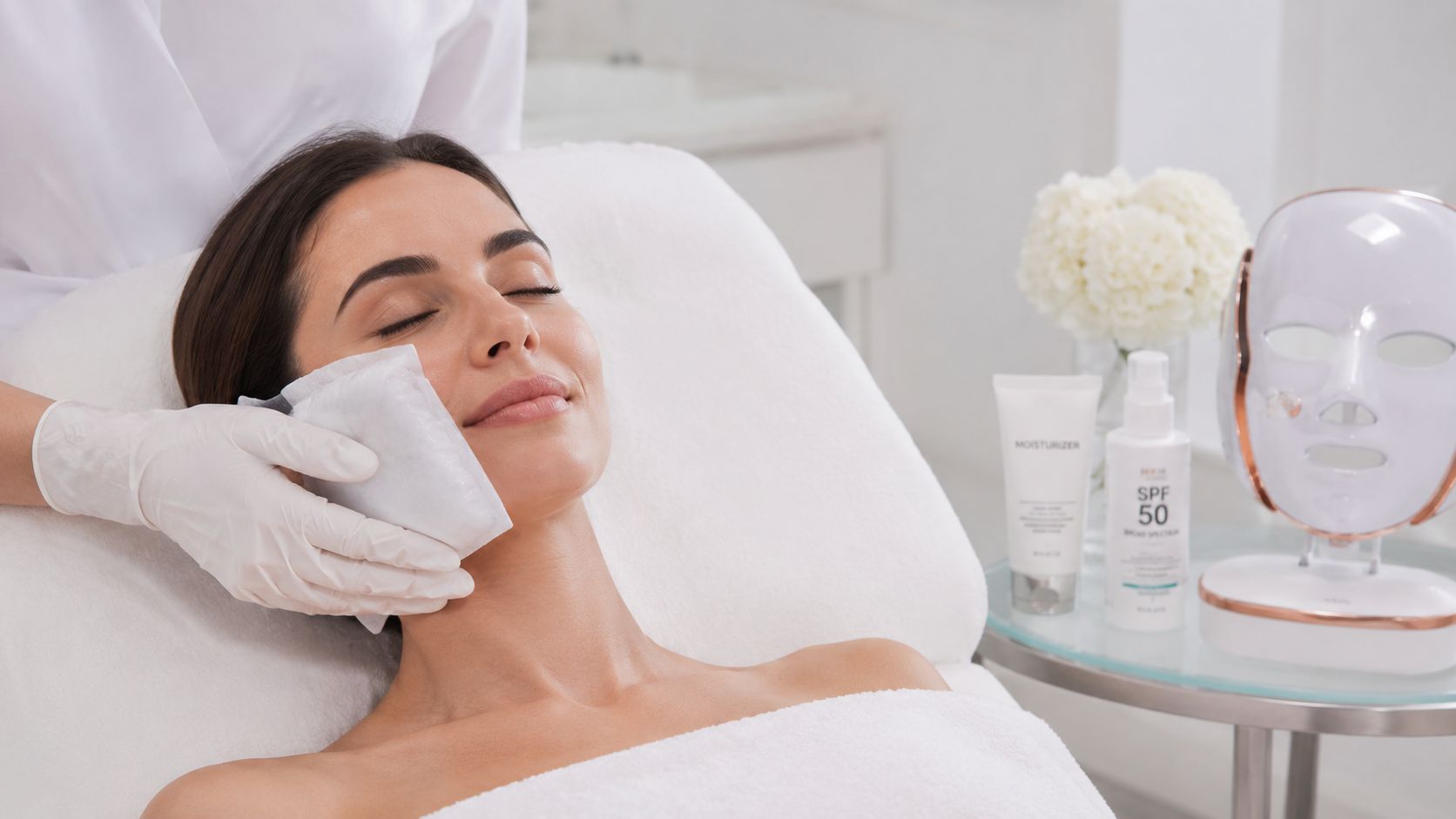
The Barb N.P. Facial Mask is a useful at-home option because it's wireless, comfortable to wear, and designed with 3 lighting settings for different treatment goals. In a practical routine, that matters. If a device is bulky, stiff, or annoying to use, people stop using it.
A smarter recovery mindset
Think of sunscreen as your shield and recovery tools as your maintenance plan. Patients who combine consistent UV protection with calming, restorative care usually keep their skin looking steadier over time.
That can include barrier-supportive skincare, gentle post-sun habits, and tools that help skin look refreshed. If your broader goal is to achieve a radiant, healthy glow, that conversation has to include both prevention and recovery.
For anyone already seeing uneven tone or visible sun wear, guidance on the best skincare for sun damage can help connect your sunscreen routine to corrective care.
Recovery doesn't erase preventable damage. It supports healthier skin so your daily protection strategy works better.
Your Action Plan for Perfect Sun Protection
The easiest sunscreen routine to follow is the one you can remember without effort. Keep the rules short and specific.
Current clinical guidelines recommend an early reapplication strategy of 15 to 30 minutes after initial sun exposure begins to achieve 60% to 85% greater reduction in ultraviolet exposure compared to the standard 2-hour delay, based on this PubMed-indexed study on sunscreen reapplication timing. That doesn't replace your later reapplications. It sharpens your protection early, when the film is already changing on the skin.

The checklist that keeps people consistent
Use this as your quick reference:
- Apply generously in the morning. A thin layer gives you a false sense of security.
- Use the two-hour outdoor rule. That's the baseline schedule for dry conditions.
- Switch to the water rule when needed. Swimming and heavy sweating require a faster turnaround.
- Adjust for indoor reality. Window proximity changes the plan.
- Carry a reapplication format you'll use. Convenience improves follow-through.
Watch for skin signals
Your skin sometimes tells you the layer is no longer reliable. Dryness, a prickly feeling, or visible redness mean it's time to reapply, regardless of what the clock says.
Consistency beats occasional perfection. A repeatable SPF routine protects skin better than a high-SPF product used casually.
That's the answer to how often to reapply sunscreen. Follow the standard rule. Adjust for water, sweat, and windows. Apply enough. Reapply before damage catches up with you, not after.
As a practitioner, my advice is simple. Don't chase the highest number and hope for the best. Build a sunscreen routine you can repeat on ordinary days, because ordinary days are where long-term skin health is won or lost.
If you want medical-grade skincare, sun protection support, and expert-picked wellness tools in one place, explore BotoxBarb. You'll find curated products, treatment options, and practical favorites selected by Barb N.P. to help you protect your skin, support recovery, and stay consistent with a routine that works in real life.