How to Boost Collagen Production Naturally for Radiant Skin
Ever wondered what gives skin that plump, firm, and youthful look? The answer is collagen. It's the most abundant protein in our bodies, and you can think of it as the essential scaffolding holding your skin together. It provides the structure and elasticity that keeps everything smooth and resilient—it’s quite literally the glue supporting your skin, joints, bones, and muscles.
But here's the catch: our natural collagen production starts to slow down as early as our mid-20s. This decline is a primary reason we start seeing fine lines, wrinkles, and a loss of firmness over time. It's no surprise that this growing awareness has fueled a massive shift toward natural wellness solutions.
The global natural collagen market exploded to USD 4.5 billion in 2024 and is barreling toward USD 9.2 billion by 2034. This surge is powered by everyday folks ditching synthetic fixes for natural ways to crank up their body's collagen production. You can learn more about the rising trend in the natural collagen market.
This guide is your roadmap to fighting back, naturally. We'll skip the quick fixes and dive into real, sustainable strategies that empower you to support your skin from the inside out and the outside in.
Before we get into the "how," let's quickly cover the core strategies you can start thinking about.
Your Core Strategies for Natural Collagen Enhancement
Here’s a quick look at the proven pillars for boosting collagen that we'll explore in this guide.
| Strategy | What It Does | Real-World Examples |
|---|---|---|
| Diet & Nutrition | Provides the essential building blocks for collagen synthesis. | Bone broth, citrus fruits, leafy greens, lean proteins. |
| Strategic Supplementation | Fills nutritional gaps to support collagen production. | Hydrolyzed collagen peptides, vitamin C, zinc. |
| Topical Skincare | Stimulates collagen directly in the skin where signs of aging appear. | Retinoids, vitamin C serums, copper peptides. |
| Lifestyle Habits | Protects existing collagen from degradation and supports repair. | Daily SPF 30+, 7-8 hours of quality sleep, stress management. |
| Professional Treatments | Creates controlled micro-injuries to kickstart the body's healing and collagen-building response. | Microneedling, LED light therapy, PRP facials. |
These pillars work together, creating a holistic system that not only boosts new collagen but also protects what you already have.
Why Your Body's Collagen Production Slows Down
The slowdown isn't just about getting older; it's also accelerated by our lifestyle and environment. After age 25, our bodies lose collagen at a rate of about 1-1.5% per year, but certain habits can speed this up significantly.
Here are the main culprits that degrade collagen:
- Sun Exposure: UV radiation is collagen's number one enemy. It breaks down its delicate fibers, leading directly to premature aging—what dermatologists call "photoaging."
- High Sugar Intake: A diet high in sugar leads to a process called glycation. This is where sugar molecules attach to collagen, making it stiff and brittle, which shows up on your skin as wrinkles.
- Chronic Stress: High levels of the stress hormone cortisol have been shown to break down both collagen and elastin in the skin, thinning it over time.
- Poor Sleep: During deep sleep, your body goes into repair mode, which absolutely includes producing new collagen. Consistently missing out on quality sleep disrupts this vital process.
Understanding these factors is the first step. You have more control over how your skin ages than you think, and this guide will show you how to take charge. This journey is about nurturing your body's innate ability to rejuvenate itself for long-lasting skin health and vitality.
Eat Your Way to Better Skin with Collagen-Rich Foods
You can't build a strong house without the right bricks and mortar, and the same rule applies to your skin. To really get your body making more collagen on its own, you have to give it the right nutritional building blocks. Think of your diet as the primary construction crew for creating firm, resilient skin from the inside out.
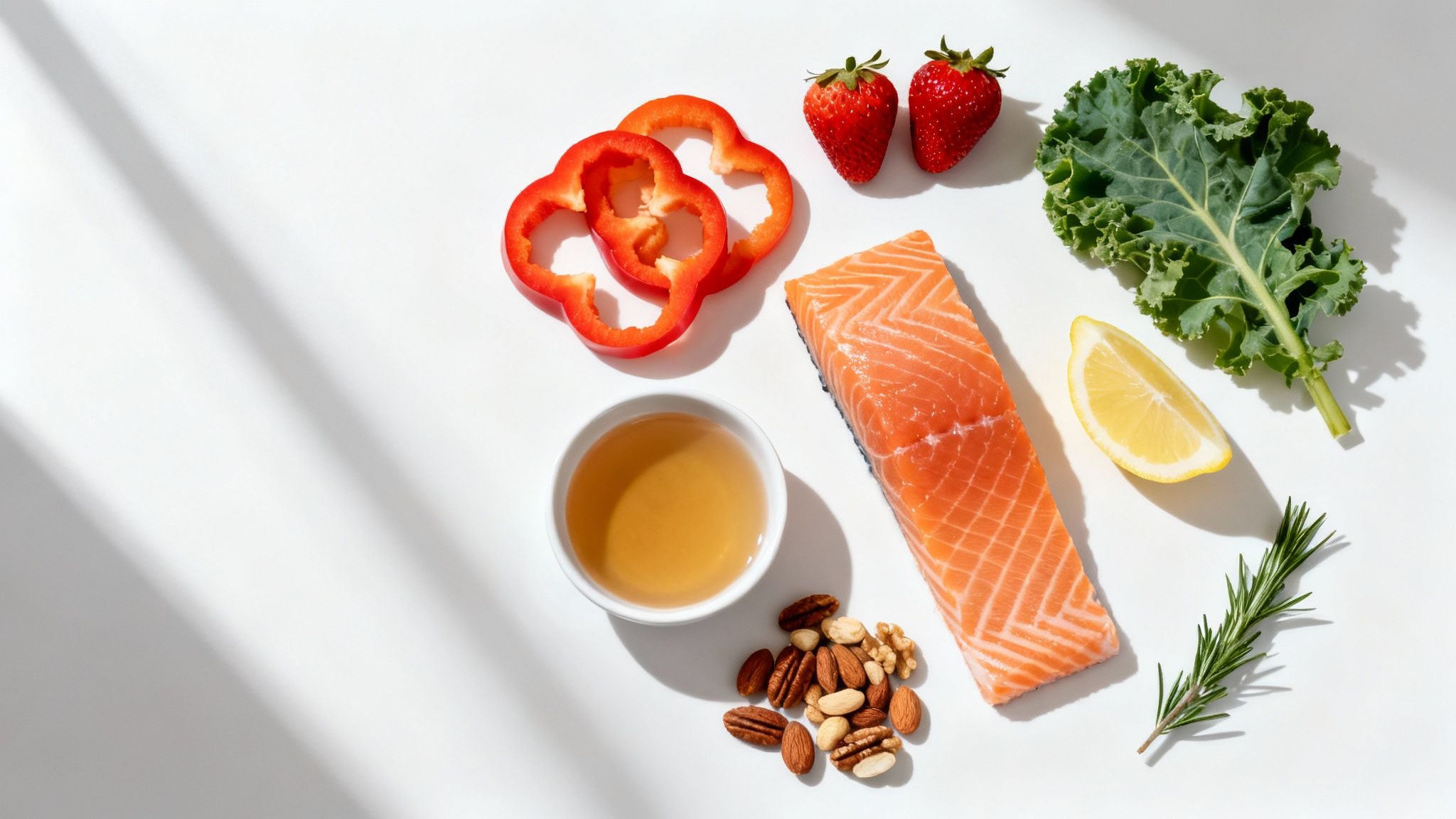
This isn’t about going on some restrictive diet or following a complicated meal plan. It's about strategically adding specific, powerful nutrients to the meals you already enjoy. Once you understand what each component does, you can make simple swaps that deliver huge benefits for your skin's health and glow.
The Essential Amino Acid Foundation
Collagen is a protein, which means it’s built from amino acids. For this job, two of the most critical players are glycine and proline. These are the literal bricks your body uses to assemble strong, new collagen fibers.
Without enough of these amino acids, your body's collagen-building factory just can't run at full capacity. This is where protein-rich foods become your best friends.
- Bone Broth: Often called "liquid gold" for skin, bone broth is a fantastic, direct source of glycine, proline, and even readily available collagen.
- Lean Meats: Chicken, turkey, and lean cuts of beef provide the complete amino acid profile your body needs for tissue repair and growth.
- Fish: Fatty fish like salmon are a double win—rich in protein and omega-3 fatty acids, which help keep skin hydrated and fight inflammation.
- Eggs: The whites are particularly high in proline, making them an easy and excellent addition to your skin-supportive diet.
Vitamin C: The Master Builder
If amino acids are the bricks, then vitamin C is the mortar holding everything together. This crucial antioxidant plays a non-negotiable role in collagen synthesis by linking those amino acids into stable, strong collagen helices. If you're low on vitamin C, your body simply can't produce new collagen effectively, no matter how much protein you eat.
Try to weave these vitamin C powerhouses into your daily routine:
- Citrus Fruits: Oranges, grapefruits, and lemons are the obvious classics.
- Berries: Strawberries, blueberries, and raspberries are packed with both vitamin C and other protective antioxidants.
- Bell Peppers: A single red or yellow bell pepper contains even more vitamin C than an orange.
- Leafy Greens: Kale, spinach, and broccoli are nutritional multitaskers, offering vitamin C alongside a host of other skin-loving nutrients.
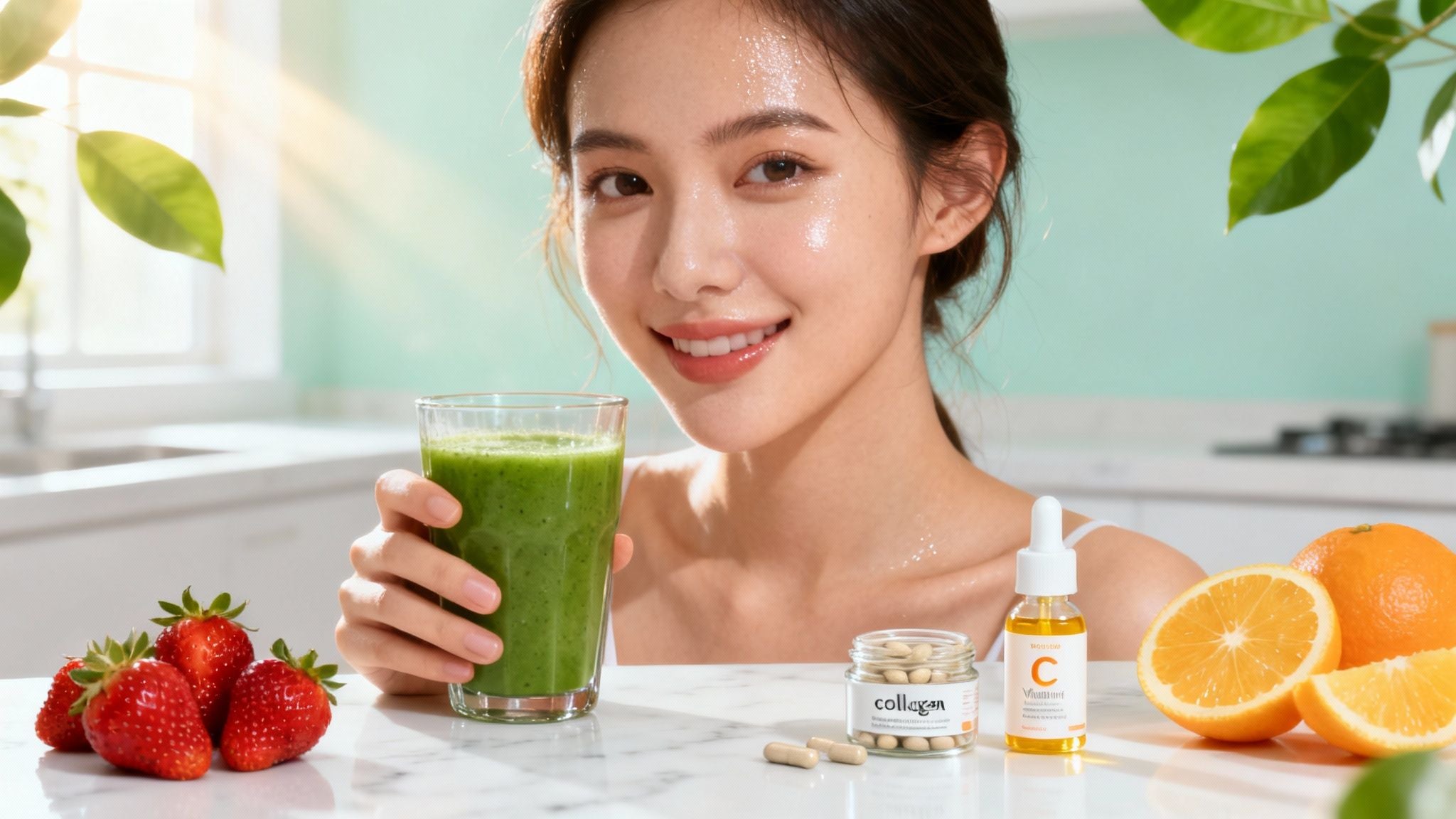
Think of your morning smoothie as a collagen-boosting cocktail. A blend with berries and a scoop of hydrolyzed collagen has been shown in some European trials to increase dermal collagen density by 12% in just three months.
The Critical Supporting Minerals
While amino acids and vitamin C are the stars of the show, certain minerals act as essential co-factors, or helpers, in the whole process. Zinc and copper are two of the most important, as they help activate the enzymes needed for collagen formation to happen.
- Zinc Sources: Find this mineral in nuts (like cashews and almonds), seeds (especially pumpkin seeds), whole grains, and shellfish.
- Copper Sources: You can get your daily dose from leafy greens, shiitake mushrooms, and even a little dark chocolate.
Globally, the food and beverage sector dominates 56.8% of the collagen market, with people increasingly reaching for foods and supplements that support skin from within. Adding something as simple as chicken bone broth, packed with glycine and proline, can make a real difference. Beyond just collagen-specific foods, remember that incorporating nutrient-dense oils can also do wonders; it's worth exploring olive oil's benefits for radiant skin. Making these small, consistent dietary choices is one of the most powerful things you can do to support your skin’s structure for the long haul.
Power Up Your Skincare with Collagen-Boosting Ingredients
While a nutrient-rich diet builds healthy skin from the inside out, the right topicals send a direct signal to your dermis to ramp up collagen production. This is where your daily skincare routine becomes a serious tool.
When you choose products with science-backed ingredients, you’re not just moisturizing—you’re directly targeting the skin cells responsible for creating that firm, youthful structure. Let's move past the marketing hype and focus on the true power players that actively work to build and protect your skin’s collagen reserves.
Vitamin C: The Essential Protector
Think of Vitamin C as your skin’s frontline defender. As a potent antioxidant, its main job is to neutralize free radicals—those unstable molecules from UV rays and pollution that actively destroy your existing collagen. Without this protection, all your other efforts are constantly being undermined.
But its role goes much deeper. Vitamin C is also a critical co-factor in the collagen synthesis process itself, helping to stabilize the new collagen molecules so they are strong and well-formed. A high-quality, stable L-ascorbic acid serum is non-negotiable for any serious collagen-boosting plan.
Retinoids: The Gold Standard for Renewal
Retinoids, a class of Vitamin A derivatives, are probably the most studied and proven topicals for stimulating collagen production. They work by binding to receptors in your skin cells, essentially flipping a switch that accelerates cell turnover and, most importantly, kickstarts the synthesis of new Type I and Type III collagen.
This dual action not only builds new collagen but also helps preserve what you already have by inhibiting certain enzymes that degrade it. Whether you start with an over-the-counter retinol or a prescription-strength tretinoin, consistency is everything for seeing a real improvement in skin texture and firmness.
Expert Tip: When starting with retinoids, go slow. Apply a pea-sized amount just two or three nights a week and gradually increase how often you use it as your skin adapts. This minimizes potential irritation while still delivering powerful results.
Peptides: The Cellular Messengers
If retinoids flip the main switch, peptides are the specific messengers delivering targeted instructions to your skin cells. These short chains of amino acids act as signals, telling fibroblasts (your collagen-producing cells) to get to work.
Different peptides have different jobs. Some signal the need for repair, while others specifically prompt the creation of new collagen and elastin. To dive deeper into how these smart ingredients function, you can read our complete guide on what a peptide serum does. For a targeted boost, consider adding specialized formulas like the Pep Up Collagen Boost Face & Neck Treatment to your daily regimen.
Putting It All Together: A Simple Daily Routine
Layering these ingredients correctly ensures you get the maximum benefit from each one without causing irritation. Here’s how I often recommend structuring it for my clients:
- Morning Routine: Start with a gentle cleanser, then apply your Vitamin C serum to dry skin. Let it absorb for a minute before following with your moisturizer and—the most critical step—a broad-spectrum sunscreen with at least SPF 30.
- Evening Routine: After cleansing, apply your peptide serum first. Follow up with your retinoid, and finish with a nourishing moisturizer to support your skin barrier while it works.
By turning your daily skincare into a targeted, collagen-building ritual, you create a powerful synergy between your internal health and external care.
Simple Lifestyle Habits That Protect Your Collagen
You can eat all the right foods and use the best serums, but certain lifestyle habits can silently sabotage your efforts. Think of your collagen as a precious investment—protecting it is just as important as building more of it.
Your first line of defense isn't a pricey cream; it's the small, consistent choices you make every single day. These are what stand between you and the factors that actively degrade your skin's support structure.

The good news? You have more control than you think. This isn't about a drastic life overhaul. It's about making smarter, skin-conscious decisions that add up beautifully over time.
Make Sun Protection Your Non-Negotiable Priority
Let's be clear: sun exposure is collagen's number one enemy. The sun’s UVA rays penetrate deep into the dermis, where they trigger enzymes that literally chew up your existing collagen and elastin.
This process, known as photoaging, is responsible for up to 80% of the visible signs of aging we see, like wrinkles and sagging.
Making a broad-spectrum sunscreen with at least SPF 30 a non-negotiable part of your morning routine is the single most powerful thing you can do to protect your collagen. It’s a simple habit that shields you from that daily, cumulative damage.
Manage Stress to Protect Your Skin's Foundation
Chronic stress doesn't just mess with your mood; it has a direct, physical impact on your skin. When you're constantly frazzled, your body pumps out high levels of the hormone cortisol.
Cortisol is a collagen killer. It’s been shown to break down both collagen and elastin, thinning the skin over time and crippling its ability to repair itself. Finding healthy ways to manage your stress is a crucial step in any plan for how to boost collagen production naturally.
Consider weaving these simple stress-reducers into your day:
- Mindful Moments: Just five minutes of deep breathing or meditation can help lower those cortisol levels.
- Gentle Movement: A quick walk, a few stretches, or a short yoga session releases tension and gets your blood flowing.
- Digital Detox: Purposefully setting aside time away from screens gives your mind a much-needed break.
These practices aren't just for mental clarity—they are a legitimate form of skincare.
Prioritizing these lifestyle tweaks makes a scientifically proven impact. Research shows that consistently sleeping 7-9 hours a night can enhance collagen production, while daily sun protection is absolutely key. In fact, UV rays can damage skin collagen daily, but a diet rich in zinc from sources like nuts and seeds has been shown to cut that damage significantly in people who also use sunscreen. Discover more insights about the impact of lifestyle on the collagen market.
Embrace At-Home Technology for an Extra Edge
Beyond those foundational habits, you can amplify your results with smart at-home devices. LED light therapy, once confined to professional clinics, is now an accessible and powerful tool for stimulating collagen right from your couch.
For those serious about their skin, the BARB N.P. Facial Mask is an excellent choice. Its innovative wireless design means you aren't tethered to a wall, making it incredibly comfortable and convenient for consistent use.
It features three targeted light settings to address different concerns, allowing you to personalize your treatment. This kind of non-invasive therapy beautifully bridges the gap between your daily routine and professional procedures, giving your skin that extra push to stay firm and vibrant.
Amplify Your Results with At-Home Light Therapy
So, you've dialed in your diet and your skincare is creating the perfect foundation for healthy, firm skin. Ready to really take things to the next level? This is where at-home technology comes in, giving you the power to supercharge your results.
LED light therapy, a treatment that used to be exclusively found in professional clinics, is now an incredible tool you can use right from the comfort of your couch to stimulate collagen.
This non-invasive approach works by sending specific wavelengths of light deep into your skin. Your cells absorb this light energy, which essentially gives them a jolt to perform their functions more efficiently—including the all-important job of producing new collagen and elastin.
How LED Therapy Wakes Up Your Skin Cells
I like to think of our skin's fibroblast cells as tiny collagen factories. As we age, their production naturally slows down. Red light therapy acts like a new factory manager, coming in to energize the workers and get the assembly line moving at full speed again.
This process is called photobiomodulation. It’s a gentle but powerful way to encourage your skin to rebuild its own support structure from within, which leads to better firmness and a visible reduction in fine lines. It works at a cellular level without ever damaging the skin’s surface.
For anyone serious about seeing a real change with this technology, consistency is everything. That’s why choosing a device designed for real life is so important.
"The convenience of modern at-home devices has been a game-changer. A user-friendly design means clients are more likely to stick with the treatment, and with LED therapy, consistent use is what delivers those visible, long-lasting improvements in skin density and glow."
Choosing the Right At-Home Device
We specifically recommend the BARB N.P. Facial Mask. Its best feature, by far, is the completely wireless and ergonomic design. It's incredibly comfortable and easy to wear.
You’re not tethered to a wall, so you can relax on the sofa, answer emails, or just move around freely during your 15-minute session. This convenience is what makes it easy to build into a regular habit.
The mask comes equipped with three targeted light settings, letting you customize your treatment based on what your skin needs that day. For a deeper dive into how each light works, you can explore our detailed guide on the benefits of LED light therapy for skin.
Here's a quick look at what each setting does:
- Red Light: This is your primary wavelength for collagen synthesis. It penetrates deep into the skin to energize those fibroblast cells, directly helping you in your quest to boost collagen naturally.
- Blue Light: Perfect for days you're dealing with blemishes. Blue light targets and helps neutralize acne-causing bacteria on the skin's surface.
- Amber Light: This setting is ideal for calming inflammation and reducing redness, promoting a more even and rejuvenated complexion.
Integrating a simple 15-minute treatment into your week is a smart, effective way to enhance skin firmness and radiance. It's the perfect bridge between your daily skincare routine and professional treatments, amplifying the results of all your hard work.
Partner with a Pro for Advanced Collagen Stimulation
While your diet, skincare, and lifestyle are the foundation of healthy skin, sometimes you need to call in the experts. Think of professional treatments as the perfect complement to your at-home efforts—a way to amplify your results when you're targeting stubborn issues like uneven texture or scarring.
At BotoxBarb, we focus on procedures that kickstart your body’s own incredible healing and regeneration processes. It’s all about working with your skin, not against it.
Kickstarting Your Natural Repair Mechanisms
One of the most effective ways to wake up your skin’s repair system is with treatments like microneedling. This procedure creates tiny, controlled micro-channels in the skin, which your body immediately recognizes as mini-injuries. The response? A surge of fresh collagen and elastin rushes to the area, leaving you with smoother, firmer, and more resilient skin.
Ready to take it a step further? Pairing microneedling with Platelet-Rich Plasma (PRP) is like giving your skin a supercharged dose of its own growth factors. The PRP, which we derive from a small sample of your own blood, turbocharges the healing response and makes the entire process even more effective. You can dive deeper into this powerful combination and learn more about microneedling with PRP here.
At-home devices, like those using light therapy, are fantastic for supporting the results you get in the clinic. This decision tree helps show how different light therapies can be used to target specific concerns between your professional appointments.
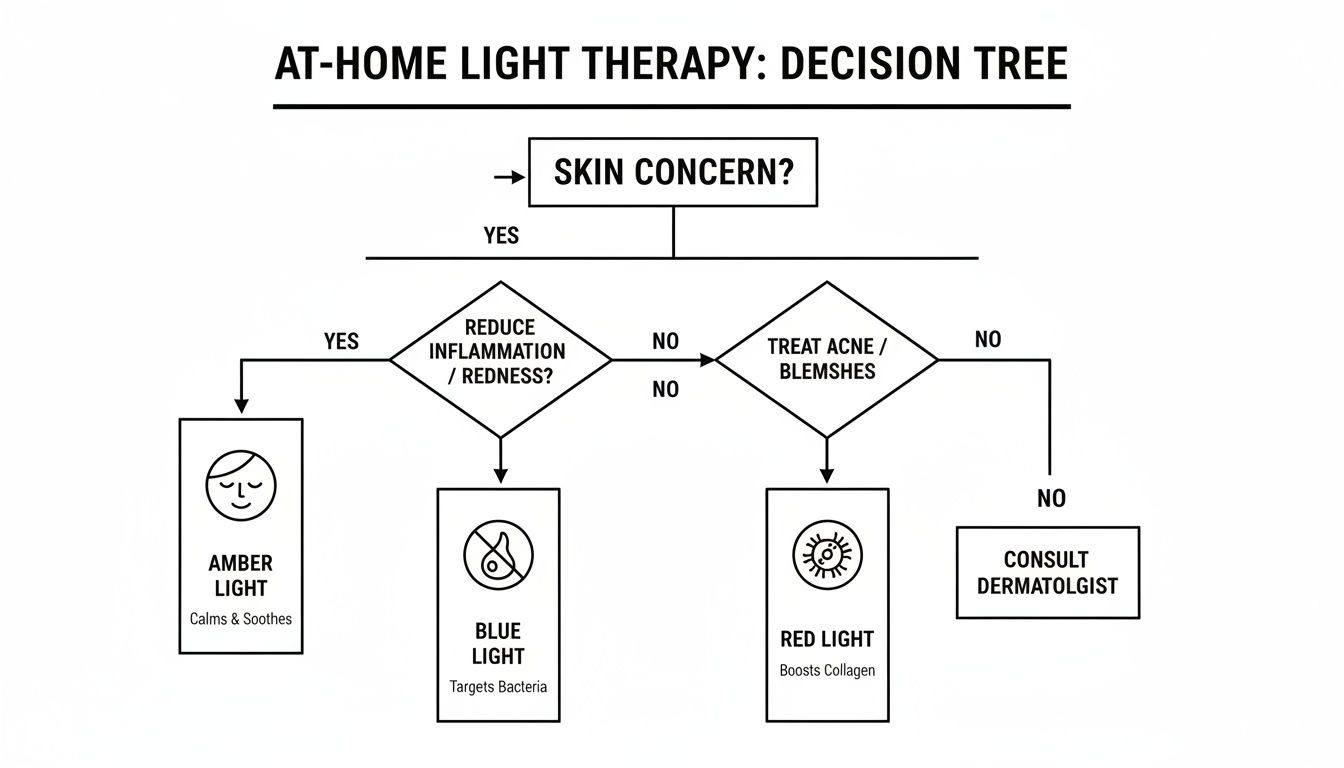
As you can see, you can easily customize your routine by selecting red light for collagen, blue for blemishes, or amber for calming inflammation.
The Power of a Combined Approach
Professional treatments and at-home care are a true dream team. Microneedling provides that powerful reset, while consistent use of a device like the BARB N.P. Facial Mask maintains and enhances those results. Its comfortable, wireless design and three lighting settings make it an effortless addition to your daily ritual.
Expert Insight: I always tell my clients that what you do at home is just as crucial as what happens in my chair. Consistent use of red light therapy, for example, helps sustain the collagen-building momentum that a treatment like microneedling initiates.
This combined strategy ensures you’re not just stimulating new collagen but protecting your investment for lasting results. When you partner with a professional, you get access to advanced tools and expert guidance, allowing you to build a truly personalized and effective plan. It’s the ultimate way to get the most out of your journey to healthier, more radiant skin.
Your Collagen Questions Answered
When you start diving into the world of collagen, a lot of questions pop up. I hear them from my clients all the time. To help you feel confident and clear about your new routine, I’ve put together answers to some of the most common ones.
How Long Does It Take to See Results?
Consistency is the name of the game when you want to boost collagen production naturally. While you might feel a difference in skin hydration or see a subtle glow within a few weeks, the real structural changes take time. We’re talking months, not days.
Most people start seeing noticeable improvements—think better skin firmness and softer fine lines—after three to six months of dedicated effort. Remember, you're rebuilding your skin's foundation from the inside out. It's a gradual process, but the payoff is absolutely worth it.
Are Collagen Supplements More Effective Than Food?
I always tell my clients to start with a food-first approach. Whole foods give you the complete package: vitamins, minerals, and antioxidants that all work together to support amazing skin health. Your body is designed to use these nutrients synergistically.
That said, high-quality hydrolyzed collagen supplements can be a fantastic wingman. They provide a direct, concentrated source of the specific amino acids your body needs to build new collagen. They’re especially helpful if you find it hard to get enough protein in your diet, but they shine as a booster, not a replacement for good nutrition.
Key Takeaway: Think of supplements as a valuable assistant to your diet, not the star of the show. Your body is incredibly smart and knows how to best use nutrients from whole foods to build strong, healthy tissue.
Can I Use a Retinoid and an LED Mask Together?
Absolutely—and it’s a powerhouse combination! The trick is to use them at separate times. This way, you avoid any potential irritation and let each product do its best work without interference.
Here’s a great strategy I recommend: alternate your nights. Use your retinoid one evening, then your Barb N.P. Facial Mask the next. Another option that works really well is using the LED mask on clean, dry skin in the morning and saving your retinoid for your nighttime routine. You get all the unique benefits of both without overwhelming your skin.
Will These Methods Erase Deep Wrinkles?
Natural collagen-boosting strategies are phenomenal for improving your overall skin quality. They make your skin firmer, soften fine lines, and build a healthy, resilient foundation that genuinely slows down the aging process.
When it comes to deeper, more established wrinkles, these methods will definitely soften their appearance, but they may not erase them completely. That's where professional treatments, like the ones we offer, can work in perfect harmony with your at-home care. They deliver more targeted, significant results for those specific concerns that bother you most.
Ready to create a personalized plan that combines the best of at-home care with professional treatments? The experts at BotoxBarb are here to guide you toward your healthiest, most radiant skin. Explore our services and book your consultation today.