Your Guide to Food and Environmental Allergy Testing
When you’re dealing with stubborn bloating, strange skin rashes, or a nose that won’t stop running, your body is trying to tell you something. These aren't just random annoyances; they're often signals that your immune system is overreacting to something you're eating or breathing in.
Think of your immune system as a highly sensitive security alarm. When it mistakes something harmless—like dust mites or a certain type of food—for a genuine threat, it triggers an inflammatory response. That's when you start feeling (and seeing) the uncomfortable symptoms.
Food and environmental allergy testing is how we find out exactly what’s setting off that alarm. It's the first real step toward figuring out the root cause, so you can finally get some relief and feel good in your own skin again.
Why You Might Need Allergy Testing
So many of us live with nagging symptoms for years, chalking them up to stress, getting older, or just bad luck. But more often than not, there's a specific trigger flying under the radar.
Decoding Your Body's Signals
If any of these sound familiar, an allergy or sensitivity could be the culprit:
- Digestive Discomfort: Are you constantly bloated, gassy, or just feel "off" after eating? This is a classic sign your body isn't happy with a particular food.
- Skin Irritation: Unexplained eczema, hives, and even some forms of acne are often your skin's way of showing an internal immune reaction.
- Respiratory Issues: That chronic stuffy nose, constant sneezing, and sinus pressure could be from airborne allergens in your own home. Things like mold or dust can be major triggers, which is why understanding indoor air pollution is so important.
It's not just you. The need for clear answers is growing worldwide. The allergy diagnostics market is expected to jump from USD 6.54 billion to a massive USD 11.63 billion by 2030. With experts predicting that over half the population in Europe will have an allergy, the demand for good, reliable testing has never been higher. You can read more about the growing allergy diagnostics market and see just how common this has become.
Taking the First Step with Confidence
Figuring out your triggers starts with simple, reliable testing. The idea might seem a little intimidating, but modern options have made the process incredibly straightforward.
An allergy test is more than just a diagnosis—it's your personal roadmap to feeling better. It gives you the power to make smart, targeted changes to your diet and environment that lead to real, lasting improvements.
At-home testing, like our Barb N.P. Food and Environmental Allergy Panel, is a powerful and convenient way to start. You can collect your sample right from home, giving you crucial insights before you even come into the clinic. Once you know what’s causing your body’s distress signals, you can finally start a plan that works for you.
How Different Allergy Tests Uncover Triggers
Trying to find the source of your chronic symptoms—the sneezing, the bloating, the skin issues—can feel like you're a detective chasing down a phantom culprit. You know something is wrong, but you can’t quite put your finger on it. This is where food and environmental allergy testing comes in, giving us the concrete clues we need to identify what’s really bothering your system.
Think of it like this: an investigator at a crime scene doesn’t rely on just one piece of evidence. They look for fingerprints, talk to witnesses, and review camera footage to build a complete picture. Allergy tests work the same way, using different methods to gather evidence about how your immune system is reacting to the world around it. Let's break down the most common approaches.
This map helps visualize how everything is connected—from the triggers you encounter to the symptoms they cause and the tests that finally give you answers.
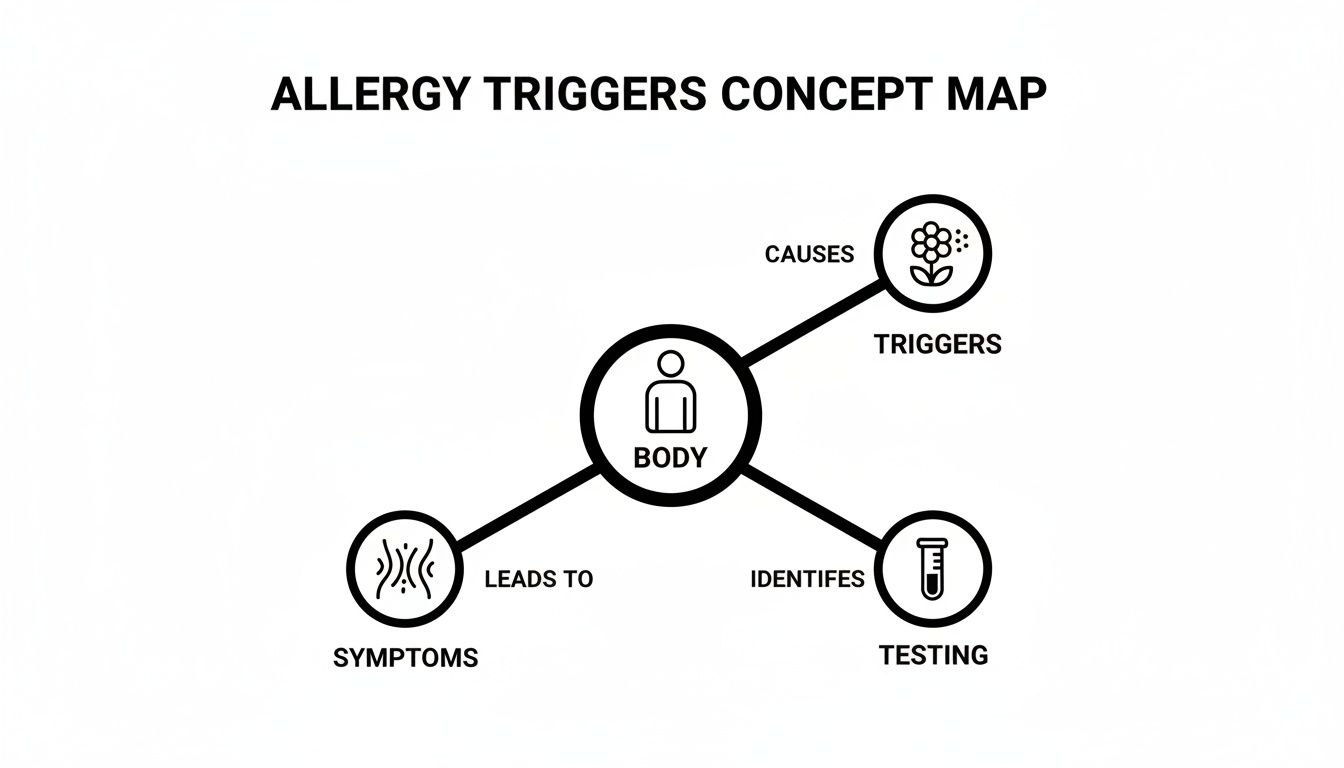
As you can see, what you’re exposed to directly influences your body's reactions. Getting the right test is the key to finally breaking that frustrating cycle.
Skin Prick Tests: A Direct Approach
The skin prick test is probably the one you’ve seen in movies. It’s like a controlled "fire drill" for your skin to see how it responds to potential threats. A clinician places tiny droplets of purified allergens—like pollen, mold, or food proteins—onto your skin, usually on the forearm or back. Then, a small, sterile probe gently pricks the surface through each drop.
If you have an allergy, your immune system springs into action. Within 15-20 minutes, a small, raised, reddish bump called a "wheal" will appear at the site. The size of that wheal gives us a clue about how sensitive you are. It's a fast and effective way to spot immediate allergic reactions.
IgE Blood Tests: An Internal Investigation
While skin tests check for reactions on the surface, an IgE blood test goes deeper. This method is like sending a spy into your bloodstream to see what your immune system has been fighting off. When your body mistakenly identifies a harmless substance as a threat, it creates specific antibodies called Immunoglobulin E (IgE) to "tag" it for attack.
A blood test measures the amount of these IgE antibodies linked to specific foods and environmental triggers. Higher levels of IgE for, say, peanuts or dust mites, strongly suggest your immune system has been primed to react to them.
This is an incredibly useful method because a single blood sample can screen for dozens of potential triggers at once. The Barb N.P. Food and Environmental Allergy Panel, for instance, uses this exact science to give you a clear, comprehensive overview of what’s happening inside your body.
To make things simpler, here’s a quick side-by-side look at the main testing methods.
A Quick Comparison of Allergy Testing Methods
This table helps you see at a glance how each test works and what it’s best suited for, so you can understand which approach might be right for your unique situation.
| Test Type | How It Works | Best For Identifying | Pros | Cons |
|---|---|---|---|---|
| IgE Blood Test | Measures specific IgE antibodies in the blood that react to allergens. | Immediate-type food and environmental allergies (e.g., pollen, pet dander, peanuts). | One blood draw tests for many allergens; not affected by antihistamines. | Results can take days; may show sensitization without clinical symptoms. |
| Skin Prick Test | A tiny amount of allergen is pricked into the skin's surface. | Immediate allergic reactions (Type 1 hypersensitivity) like hay fever. | Fast results (within 20 mins); highly sensitive. | Requires stopping antihistamines; can cause uncomfortable skin reactions. |
| Patch Test | Allergens are applied to patches and placed on the back for 48 hours. | Delayed skin reactions (Type 4), like contact dermatitis from metals or fragrances. | Identifies causes of chronic rashes and skin irritation. | Takes several days and multiple clinic visits; can be itchy. |
| Elimination Diet | Suspected foods are removed from the diet, then reintroduced one by one. | Food sensitivities and intolerances causing digestive or other chronic issues. | Can pinpoint non-allergic food triggers and is highly personalized. | Time-consuming; requires strict adherence and careful monitoring. |
Each test provides a different piece of the puzzle. An IgE blood test, however, often gives the most comprehensive and convenient starting point for most people.
Other Specialized Testing Methods
Beyond the main two, a couple of other methods are used for more specific situations.
-
Patch Tests: This is the go-to for delayed allergic reactions that show up on your skin, often hours or even days after contact. Think of that mystery rash you got from a new piece of jewelry or lotion. Allergens are put on patches, stuck to your back for about 48 hours, and then checked for reactions like contact dermatitis.
-
Elimination Diets: This is less about true allergies and more about identifying food sensitivities. It involves completely removing suspected trigger foods from your diet for a few weeks, then reintroducing them one at a time to see what happens. It demands patience and careful tracking but can be incredibly insightful. You can learn more about the differences in our guide on food sensitivity testing accuracy.
Choosing the right test really depends on your specific symptoms and history. For many of my clients, an IgE blood test provides the most detailed, data-driven starting point. It gives a broad look at both food and environmental triggers without the hassle of stopping medications like antihistamines.
By understanding how these tests work, you can feel much more confident in the process. Each one offers a unique window into your immune system, bringing you one step closer to finally pinpointing the culprits and getting the relief you deserve.
Your Step-By-Step Guide to Getting Tested
Deciding to finally get answers about your health is a huge first step. The good news? The actual process of food and environmental allergy testing is far less intimidating than you might think.
Whether you prefer a quick in-clinic visit or the privacy of an at-home kit, knowing exactly what to expect demystifies the whole thing. Let's walk through it, from prep to sample collection, so you can feel totally confident moving forward.
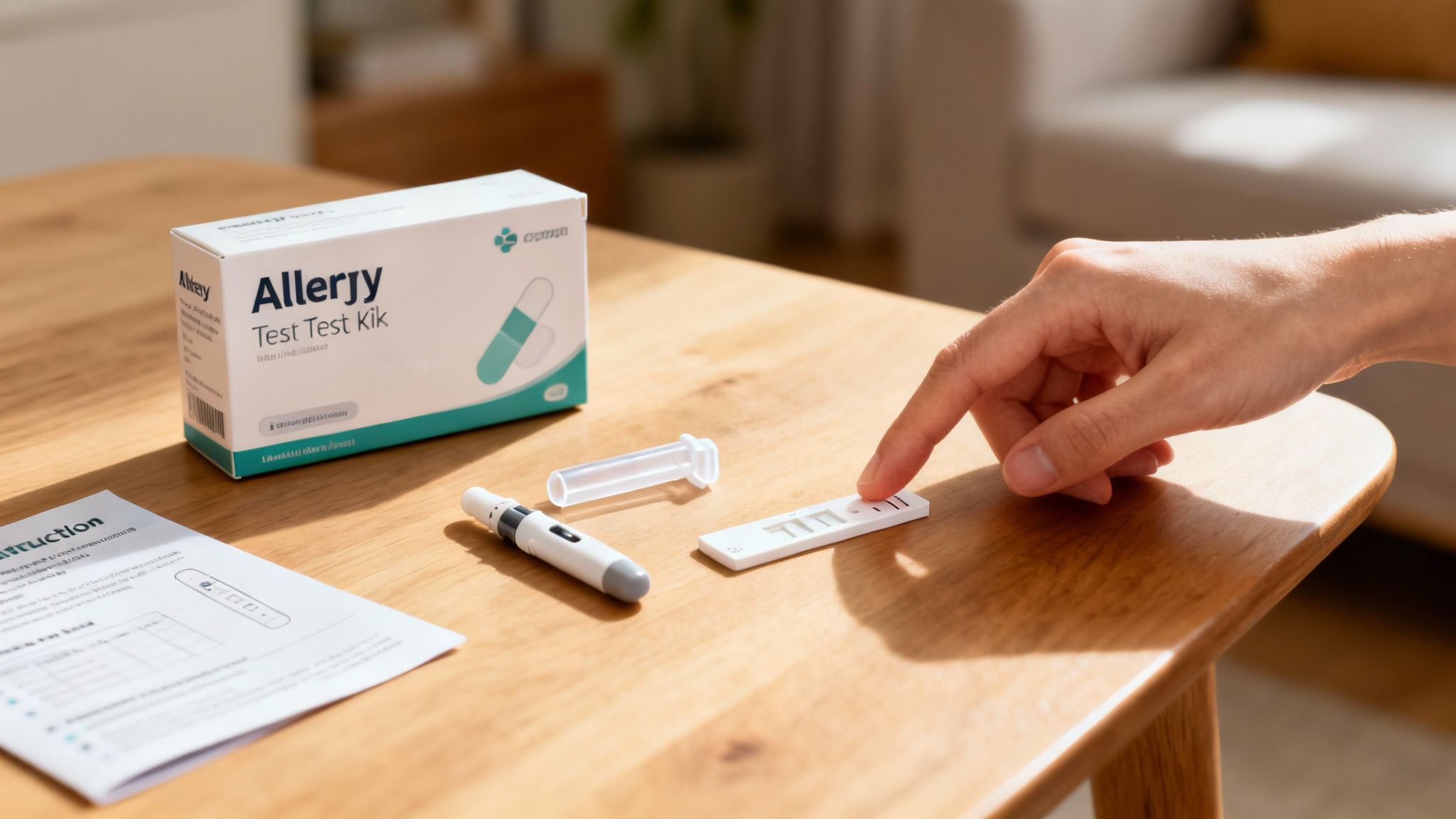
We want to remove any guesswork or anxiety by giving you a clear roadmap. From a few simple prep steps to what happens during the test itself, you'll have all the info you need.
Preparing for Your Allergy Test
Getting accurate results all comes down to proper preparation. Think of it like tuning an instrument before a performance; a few small adjustments ensure everything is calibrated just right.
For certain tests, especially the traditional skin prick test, the single most important step is to pause any antihistamine medications you're taking. These drugs are designed to block the exact immune reactions we need to measure. Taking them can easily lead to a false negative, making it look like you're not allergic to something when you actually are.
Your provider will give you specific timing, but typically you'll need to stop taking antihistamines for 3 to 7 days before your appointment. Always check with your healthcare professional before stopping any prescribed medication to make sure it's safe for you.
One of the big advantages of blood tests, including at-home kits, is that this step usually isn't necessary. That’s a game-changer for anyone who relies on daily allergy meds to get through the day.
The In-Clinic Testing Experience
If you go the in-clinic route for a skin prick test, the process is surprisingly quick and straightforward. A clinician will clean a small area of your skin (usually your forearm or back) and place tiny droplets of purified liquid allergens on the surface.
Next, they'll use a tiny, sterile device to make a very light scratch through each drop. It's not a shot—the sensation is more like a momentary prickle. Most people find it completely tolerable. Within about 15 to 20 minutes, the clinician will check the area for any reactions, which look like small, raised red bumps.
The At-Home Testing Process with Barb N.P.
For anyone who values convenience and privacy, an at-home test like the Barb N.P. Food and Environmental Allergy Panel is a fantastic option. This modern approach strips away the complexity without sacrificing accuracy. The kit arrives at your door with everything you need.
Here’s a quick rundown of what to expect:
- Simple Sample Collection: The kit uses an easy finger-prick method. A small, spring-loaded lancet provides a tiny drop of blood with minimal discomfort.
- Secure Packaging: You’ll collect the sample on a special card, let it dry, and pop it into the secure, pre-paid return mailer. The instructions are crystal clear.
- Lab Analysis and Results: Once your sample reaches the lab, it’s analyzed for IgE antibody responses to a huge range of allergens. You’ll typically get your detailed results back within a few weeks.
This method puts powerful data directly in your hands, giving you a solid foundation for a productive conversation with a healthcare professional. To learn more about what our panels cover, you can explore the details on our food allergy panel test. It's all about empowering you with knowledge, right from the comfort of home.
Making Sense of Your Allergy Test Results
So, your allergy test report is here. It’s that big moment you’ve been waiting for—a page full of answers right in front of you. But looking at a long list of potential triggers can feel more confusing than clarifying. Let's break down what it all really means, because interpreting these results is the first step toward building a plan that actually works.
The most important thing to understand is that a "positive" result on food and environmental allergy testing shows sensitization, not necessarily a full-blown clinical allergy. It means your immune system has created IgE antibodies against something, like almonds or dust mites. But just because your body is sensitized doesn’t guarantee you'll have a reaction every single time you’re exposed.
This is exactly why you need a professional to connect the dots. Data without context is just noise. An expert like Barb N.P. can look at your report and link it back to your real-life symptoms—the bloating, the rashes, the constant sniffles. They translate the science into a story about your health.
From Sensitization to Symptom
Think of your test results as a lineup of potential suspects in a mystery. A positive result for "cat dander" doesn't automatically mean you have to rehome your beloved pet. It just tells us your immune system has flagged it as a potential troublemaker.
The next step is to match that finding with your actual experiences. Do you start sneezing every time you visit a friend with a cat? Do your eyes get itchy and watery? If so, the test has likely nailed a true trigger. If not, it might just be a sensitization that isn't causing any problems right now. Making that distinction is critical to avoid making unnecessary, restrictive changes to your life.
Building Your Action Plan, Together
Your results are the blueprint, not the finished house. With this new clarity, you and your provider can build a targeted plan to finally reduce your symptoms and boost your overall wellness. This isn’t about cutting everything out at once; it’s about making smart, manageable adjustments that fit your lifestyle.
A solid action plan usually includes a few key pieces:
- Strategic Avoidance: This is all about mindfully reducing your exposure to confirmed triggers. For environmental allergies, it might mean investing in a HEPA filter or using dust-mite-proof bedding. For food allergies, it could be as simple as reading labels more carefully or learning a few new ingredient swaps.
- Symptom Management: Your provider might suggest over-the-counter or prescription options like antihistamines or nasal sprays to give you relief while you work on long-term solutions.
- Potential Treatments: For significant environmental allergies, you might discuss treatments like immunotherapy (allergy shots or under-the-tongue drops) to help desensitize your immune system over time.
This collaborative approach ensures your plan is something you can actually stick with.
Knowing When to See a Specialist
While a knowledgeable provider can help manage many food and environmental allergies, some situations call for a specialist. If your results point to a severe allergy—especially a food allergy that could cause anaphylaxis—the next step is a referral to a board-certified allergist. They can perform more advanced tests, like a supervised oral food challenge, to confirm the allergy and create an emergency action plan.
The need for this kind of clear, guided process is growing. Diagnosed food allergy cases are on the rise, expected to climb from a baseline of over 60 million worldwide through 2034. In the U.S., where shellfish is a major trigger, data also shows big differences in allergy rates among various ethnic groups, which just reinforces why personalized diagnostic care is so important. You can discover more insights about the food allergy market and these growing trends.
Your allergy test results are not an endpoint; they are a powerful starting point. They provide the clarity needed to stop guessing what's wrong and start taking precise, effective steps toward feeling your best.
Ultimately, your journey doesn't end with a lab report. It begins there. By working with a professional to interpret your findings, you transform that raw data into a personalized roadmap for a healthier, more comfortable life—free from the chronic symptoms that have been holding you back.
The Hidden Link Between Allergies and Skin Health
You're investing in your skin and your confidence with aesthetic treatments, but what if something you can't see is working against you? That stubborn acne, frustrating rosacea flare-up, or persistent puffiness might not be just a skin-deep issue. Often, it’s a sign that chronic, low-grade inflammation from a hidden food or environmental allergy has your immune system working overtime.
When your body is constantly exposed to a trigger—whether it’s a food you eat every day or pollen in the air—it launches an inflammatory response. This internal battle can directly sabotage your skin's health, undermining the very results you're trying to achieve. It’s like trying to build a beautiful house on a shaky foundation.
This is where food and environmental allergy testing becomes an essential piece of a truly integrated wellness and beauty plan. By figuring out exactly what's triggering you, we can calm that internal inflammation and create a solid foundation for healthier, more radiant skin to emerge.
Calming Your Skin From The Inside Out
Once you have the clarity from your allergy test results, you can start making targeted changes. Removing or reducing your exposure to your triggers helps dial down your body's overall inflammatory load. And the result? Your skin finally gets a chance to heal and respond so much better to the care you’re giving it.
Think of it as quieting the background noise. With less internal static, your skin can become clearer, calmer, and less reactive. It’s a powerful way to support your aesthetic goals by getting to the root cause, not just chasing surface-level symptoms.
By managing your allergies, you're not just easing sneezing or bloating—you're creating the optimal internal environment for your skin to thrive. This proactive approach ensures your investments in your skin's appearance deliver the best possible results.
Of course, not all skin reactions are allergic. Sometimes, external factors can mimic these responses. Learning to tell the difference, for example, by identifying bed bug bites and their skin manifestations, helps you pinpoint the true source of your skin issues.
Enhance Your Results With Targeted Light Therapy
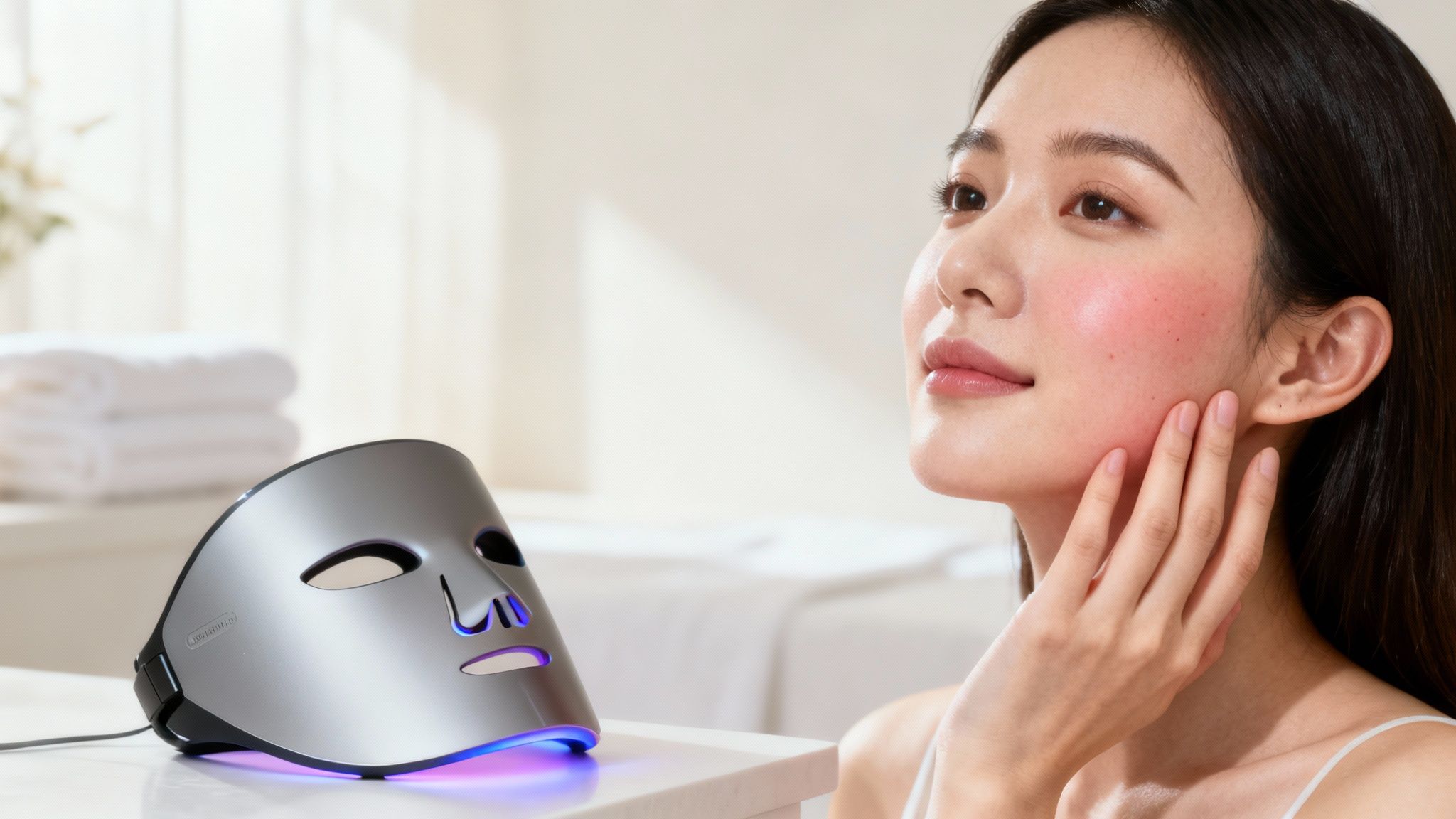
As you work on calming your system internally, you can give your skin’s recovery a major boost from the outside. To complement your new wellness strategy, we highly recommend the Barb N.P. LED Facial Mask. This device is the perfect partner for anyone looking to reduce skin inflammation and boost radiance after getting their allergies under control.
This mask isn't just effective; it's designed for your real life. It’s completely wireless and ergonomically designed for maximum comfort, so you can easily use it while relaxing, reading, or moving around your home.
It has three specialized light settings to target key skin concerns:
- Red Light: Penetrates deeply to stimulate collagen production, helping firm the skin and soften fine lines that chronic inflammation can make worse.
- Blue Light: A powerhouse against acne-causing bacteria on the skin's surface, making it an excellent choice for clearing up allergy-related breakouts.
- Amber Light: Specifically works to calm redness and reduce inflammation, soothing irritated skin and promoting a more even, glowing complexion.
By combining the internal clarity from allergy testing with the external healing power of the Barb N.P. LED Facial Mask, you create a powerful, dual-action approach. You’ll be addressing your skin health from every angle for a calm, clear, and radiant future.
Choosing Between At-Home and In-Clinic Testing
When it comes to your health, figuring out the next step can feel overwhelming. Deciding between an at-home food and environmental allergy test and a traditional office visit really comes down to your lifestyle, comfort level, and what you’re hoping to achieve. Both paths lead to the same destination: clarity and relief. It’s just about picking the route that feels right for you.
The demand for clear, accessible health information is booming. In fact, the global market for food allergen testing is expected to blow past USD 2 billion by 2035. This isn’t just a trend; it’s a sign that more people are taking control of their wellness journey. You can read more about the future of food allergen testing and see just how big this movement is.
The Power of At-Home Testing
Let's be honest, life is busy. At-home allergy tests, like the ones offered by Barb N.P., put the power of discovery directly into your hands. This approach is built for real life—it’s all about convenience and privacy, letting you take that critical first step without rearranging your whole schedule.
The benefits are pretty clear:
- Accessibility: Order a kit online, collect your sample when it works for you. No need to take time off work or sit in a waiting room.
- Privacy: It’s completely normal to want to gather your own health data first, in a comfortable setting, before bringing it to a professional.
- Empowerment: Walking into a consultation already armed with your results is a game-changer. You can ask specific, targeted questions and have a much more productive conversation.
An at-home test is an incredible starting point. It gives you the hard data you need to kickstart your wellness journey. For a closer look, check out our guide on allergy testing at home.
The Value of In-Clinic Visits
While at-home tests provide a fantastic foundation, there's a unique value to an in-clinic visit. The biggest advantage is the immediate, face-to-face guidance from a healthcare professional. They can interpret your results on the spot and connect the dots between the data, a physical exam, and your personal symptom history.
In-clinic testing is the best choice for anyone who needs immediate answers or might require more specialized procedures. For example, if a severe food allergy is suspected, an allergist might recommend an oral food challenge—something that absolutely must be done in a controlled medical setting.
Here’s the thing, though: you don’t have to choose one over the other. The two approaches work beautifully together.
Many of our clients use the Barb N.P. at-home test as a powerful screening tool. They gather reliable, comprehensive insights on their own time and then bring that report to their consultation. This simple step makes the entire conversation more focused and effective, ensuring you leave with a clear, actionable plan for your health.
Your Allergy Testing Questions, Answered
Stepping into the world of food and environmental allergy testing naturally brings up a lot of questions. Getting clear, straightforward answers is the first step to feeling in control of your health. Let’s tackle some of the most common questions we hear from clients just like you.
How Accurate Are Allergy Tests Anyway?
This is always the number one question, and for good reason. Gold-standard methods like IgE blood tests and in-clinic skin prick tests are highly reliable for spotting true allergies. It's important to know, though, that a "positive" result doesn't always mean you'll have a reaction—sometimes, it just shows sensitization.
This is exactly why professional interpretation is so important. At-home tests from trusted providers, like our Barb N.P. Food and Environmental Allergy Panel, use certified labs to give you an accurate snapshot of what your body is reacting to. Think of this report as a critical piece of the puzzle, ready for a healthcare professional to connect it to your unique health story.
Is Allergy Testing Painful?
The idea of needles or pricks can be a little intimidating, but I promise the discomfort is minimal. A skin prick test feels like a tiny, quick scratch on the skin’s surface—it's nothing like getting a shot.
For a blood test, it’s the same quick prick you’d get during a routine physical. Even better, our at-home kits use a simple, spring-loaded finger-prick device designed to be fast and virtually painless. The whole process is built around your comfort and safety.
If a Food Shows Up as Positive, Do I Have to Avoid It Forever?
Not necessarily! A positive test shows that your immune system has created antibodies against that food, but it doesn't automatically sentence you to a lifetime of avoidance, especially for milder sensitivities. This is where a clinical expert comes in.
A provider will help you match the test results with your actual symptoms. For less severe reactions, they might suggest a temporary elimination diet followed by a careful, guided reintroduction of the food. This process helps us figure out what you can truly tolerate, so your diet isn't any more restrictive than it absolutely needs to be.
Ready to get the answers you need to start feeling your best? At BotoxBarb, we offer reliable, convenient at-home testing panels to uncover your unique food and environmental triggers. Explore our options and take the first step toward a clearer, healthier future.