Dermal Filler Side Effects A Guide to Risks and Safety
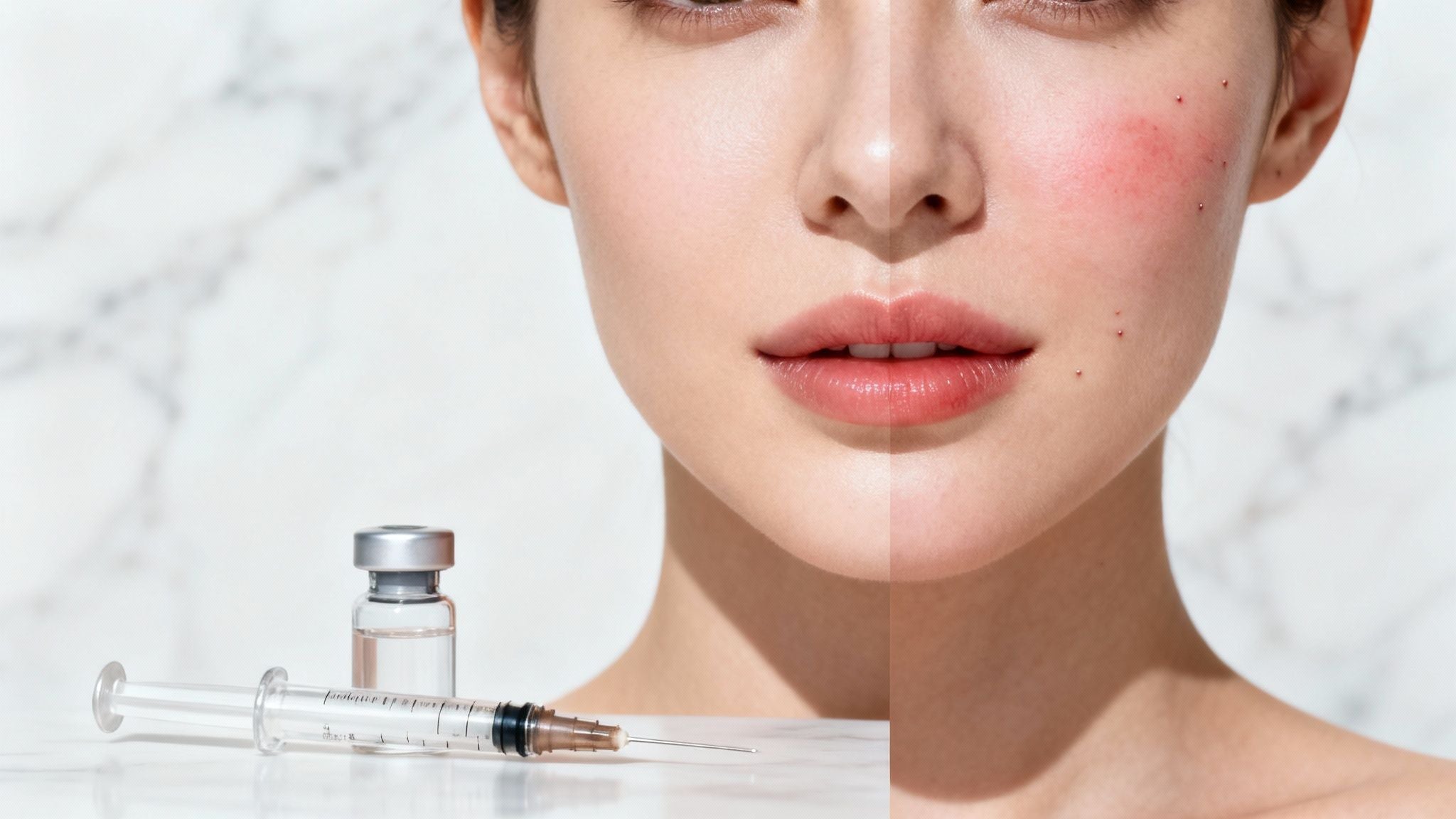
Dermal filler side effects are almost always temporary and mild. Think swelling, bruising, redness, and a bit of tenderness right where the injections were done. These are all completely normal signs of your body’s healing process and usually clear up on their own within a week or two.
What to Expect After Dermal Fillers Normal vs Not Normal

So, you’ve taken the exciting step to refresh your appearance with dermal fillers. Now comes the recovery, and it’s totally natural to wonder what’s normal and what’s not. Knowing the difference is the key to a calm, confident healing journey.
Think of that initial swelling and bruising like the muscle soreness you feel after a really good workout—it’s just a sign your body is responding and healing. This is the natural inflammatory reaction as the filler settles into your tissue. Most of these common side effects are easy to manage and don’t last long.
On the other hand, some signs are more like a sharp, sudden injury that needs a professional’s attention right away. These red flags include intense or worsening pain, skin that looks pale or develops a blotchy, lace-like pattern, or any changes to your vision. Recognizing these symptoms empowers you to act fast if you ever need to.
To make it even clearer, here’s a quick reference table. It’s designed to help you instantly tell the difference between a normal, temporary reaction and a rare, urgent issue that requires a call to your provider.
Dermal Filler Reactions At a Glance
| Reaction Category | What It Looks or Feels Like | Typical Duration | When to Call Your Provider |
|---|---|---|---|
| Common & Expected | Mild to moderate swelling, pinpoint bruising, redness, tenderness. | 24 hours to 2 weeks | If symptoms feel excessive or don't improve after 2 weeks. |
| Rare but Urgent | Severe pain, pale or mottled skin, vision changes, signs of infection. | Onset can be immediate or delayed. | Immediately. These signs require urgent medical assessment to rule out complications. |
Knowing these distinctions gives you peace of mind during your recovery, allowing you to focus on enjoying your beautiful results.
Understanding the Spectrum of Outcomes
The journey with dermal fillers comes with a range of possible outcomes, from the perfectly expected to the extremely rare. Your injector’s skill and deep anatomical knowledge are the most important factors in keeping you safe and delivering those gorgeous, natural-looking results.
A qualified provider like Barb N.P. doesn’t just master injection techniques; she excels at patient communication. This ensures you’re fully informed about every step, from the initial puffiness to your final, settled look. Open dialogue and great patient education resources are the bedrock of managing expectations and ensuring a positive experience.
Your safety and satisfaction are paramount. A great injector prepares you for the entire process, ensuring you can distinguish between normal healing and a sign that requires a follow-up call.
The Role of Aftercare in Healing
Following your aftercare instructions is your part of the bargain for a smooth recovery. Simple steps truly make a huge difference in managing those common side effects.
For instance, applying a cold compress helps calm swelling, while avoiding a tough workout for the first 24-48 hours will minimize bruising. A solid aftercare plan helps your body heal efficiently and protects the investment you've made in yourself.
If you had lip filler, remember that this delicate area has its own unique healing timeline. You can dive deeper into what to expect after lip fillers here: https://barbnp.shop/blogs/news/what-to-expect-after-lip-fillers. This knowledge will help you navigate recovery with confidence, knowing exactly what’s normal for your treatment.
Navigating Common and Temporary Side Effects

It’s completely normal for your skin to react a bit after a filler treatment. Think of it less as a “side effect” and more as your body’s natural response to the process. These temporary, predictable signs are simply part of the healing journey.
When a needle and filler are introduced, your skin kicks into gear, sending healing resources to the area. This natural inflammatory response is what causes the immediate effects you’ll notice, and it's a sign that your body is starting to integrate the new filler.
These reactions usually hit their peak within the first 24 to 48 hours and then slowly fade over the next one to two weeks. The right aftercare is your best friend here, helping to minimize discomfort and get you to your final, gorgeous result even faster.
Swelling and Bruising: The Most Common Reactions
Swelling is pretty much a given. It happens for a couple of reasons: first, there's the physical volume of the filler itself, and second, your body sends fluid to the area as part of its normal inflammatory response. Plus, hyaluronic acid (HA) fillers are hydrophilic, meaning they attract water, which can add to that initial puffiness.
Bruising happens when the tip of the needle nicks a tiny, invisible blood vessel under the skin. Even the most skilled injectors can’t see every single vessel, so a little bit of bruising is common, especially in delicate spots like under the eyes or around the lips.
A little bit of swelling and bruising isn't a complication—it's an expected outcome. It’s your body's way of saying, "We're on it!" and is a standard part of the healing process.
Managing these common issues is usually straightforward. Simple things like using a cold compress, staying hydrated, and sleeping with your head slightly elevated can make a huge difference. For a detailed healing timeline, check out our guide on lip filler recovery time.
Redness, Tenderness, and Lumpiness
Along with the swelling, expect some localized redness and tenderness. The redness (or erythema) is just a sign of increased blood flow to the injection sites. The area will also likely feel a bit tender to the touch for a few days, which is perfectly normal.
You might also feel some small lumps or bumps under the skin where the filler was injected. This is usually just the product settling into your tissue. Your provider may recommend a gentle massage after a few days, but it’s crucial to follow their specific instructions so you don’t accidentally move the filler.
These effects are incredibly common. A systematic review of hyaluronic acid fillers found that mild side effects like lumpiness, tenderness, swelling, and bruising affect millions of people every year. The same research noted that certain lifestyle factors, like being a smoker (18.5%) or vaper (27.8%), can increase this risk. You can find out more about the research behind these adverse events.
Enhancing Recovery with At-Home Care
Supporting your skin post-treatment can go beyond just ice packs and rest. Once you get the green light from your provider, incorporating gentle, healing technologies can help calm inflammation and speed up your recovery.
This is where a device like the Barb N.P. LED Facial Mask can be a great addition to your routine. This comfortable, wireless mask offers three different light settings to target various skin concerns. Its red light therapy mode is especially helpful after filler, as it works at a cellular level to reduce inflammation and accelerate healing. This can help soothe redness and support your skin’s recovery, making the whole experience smoother and more comfortable.
What About Complications That Show Up Later?
While most of the obvious side effects from fillers—like swelling and little pinprick bruises—show up right away and fade within a week or two, some issues can take their sweet time to appear. These are called delayed complications, and they can surface weeks, months, or even years after your treatment. It can be startling, but understanding what’s happening is the first step to resolving it.
Think of it like this: your body’s immune system is incredibly busy. Sometimes, it doesn’t “notice” the filler gel right away. Long after the initial healing is done, it might suddenly recognize the filler as something foreign and decide to react to it. Other times, these late-onset issues are tied to how the filler settles over time or the initial injection technique.
The good news? Even though they show up late, these complications are almost always manageable with the right expert care.
Lumps and Bumps: Nodules vs. Granulomas
Two of the most common delayed issues you might hear about are nodules and granulomas. Both can feel like a small lump under the skin, but they’re two very different things. Figuring out which one it is helps your provider choose the best way to treat it.
A nodule is usually just a small collection of the filler itself. It’s typically non-inflammatory, meaning it isn’t red or sore. This can happen if the filler was injected a bit too superficially, forms a small clump, or doesn't quite blend into the tissue as smoothly as intended.
A granuloma is a completely different story. This is an active inflammatory reaction where your immune system builds a wall of cells around the filler to try and contain it. Granulomas often feel firmer, can be tender to the touch, and might look red. They are much, much rarer than simple nodules.
According to FDA data, simple nodule formation is the most frequently reported serious adverse event with dermal fillers. One analysis highlighted nodules as the top issue, with 1,038 serious injury reports. Some studies show these mid- to late-stage side effects (including granulomas and the Tyndall effect) impact up to 24.2% of cases, especially with certain hyaluronic acid fillers. You can read the full report on dermal filler adverse events to get a deeper look at the data.
The Tyndall Effect: That Bluish Tint Under the Skin
Ever seen a faint, bluish discoloration under someone’s eyes after filler? That’s the Tyndall effect. This isn’t a lump but a visual issue that can pop up weeks or months later.
It happens when a hyaluronic acid (HA) filler is placed too close to the surface in areas where the skin is very thin, like the tear troughs. The clear gel scatters light differently than your natural tissue does, creating a subtle blue-gray shadow that looks a bit like a bruise that won’t go away.
This is almost exclusively a technique-related issue. A highly skilled injector knows the precise depth needed to place filler for a smooth, natural look without causing this unwanted side effect.
How to Handle Delayed Filler Complications
If you feel a new lump or see discoloration weeks after your appointment, your first call should be to your provider. Don’t panic. An experienced practitioner like Barb N.P. has seen it all and knows exactly how to diagnose and manage these issues.
For nodules or the Tyndall effect caused by HA fillers, the fix is often surprisingly simple: an injection of an enzyme called hyaluronidase.
Think of hyaluronidase as a targeted eraser for hyaluronic acid. It dissolves the filler gel precisely where it's injected, resolving unwanted lumps or bluish tints without affecting your own tissue. The results are often very quick.
For inflammatory granulomas, the treatment plan is different. It might start with steroid injections to calm the immune response or sometimes involve prescription medications. The absolute key is getting a proper diagnosis from a qualified professional who can create a plan just for you.
Recognizing Rare and Serious Filler Risks
The vast majority of dermal filler treatments go off without a hitch. But while serious complications are rare, it’s smart to know what to look for. This isn’t about scaring you—it’s about empowering you to spot a problem early so you can act fast.
The most critical risk to understand is vascular occlusion. Think of the blood vessels in your face as a network of tiny highways delivering oxygen to your skin. A vascular occlusion happens when filler is accidentally injected into one of these highways, creating a roadblock. This is a true medical emergency because it chokes off the skin’s lifeline.
This is precisely why your choice of injector is non-negotiable. An expert like Barb N.P. has a deep, working knowledge of facial anatomy—she knows where those highways are and how to navigate around them safely.
Immediate Warning Signs of Vascular Occlusion
This isn’t the typical, dull ache you might feel after an injection. The signs of a vascular occlusion are sharp, sudden, and can't be ignored. If a blockage happens, you would likely notice one or more of these symptoms almost immediately:
- Sudden, severe, or radiating pain that feels completely out of proportion to a normal injection poke.
- Immediate skin blanching, where the skin in the area (or even a spot farther away) abruptly turns pale, white, or has a dusky, purplish hue.
- A blotchy, web-like pattern on the skin called livedo reticularis, which looks like a purple lace doily spreading across the area.
If you experience any of these symptoms during or right after your appointment, you must tell your provider immediately. This is not a "wait and see" situation.
A vascular occlusion is an urgent medical event. A prepared injector will have an emergency plan ready, which includes immediately dissolving the filler with hyaluronidase to get blood flowing again.
The Critical Role of Hyaluronidase in Emergencies
For hyaluronic acid (HA) fillers—the most common type—we have an incredible safety tool: an enzyme called hyaluronidase. You can think of it as a targeted "dissolver" that melts away HA filler on contact. When a vascular occlusion occurs, a skilled injector can use it to break down the filler blocking the vessel, clearing the roadblock and preventing permanent damage.
This is why your provider must have hyaluronidase in the clinic at all times. It's a fundamental part of patient safety. You can learn more about this emergency enzyme and its properties by reading about Hylenex (hyaluronidase).
Other Serious but Uncommon Risks
While vascular occlusion gets the most attention, a few other rare risks are worth knowing about. They highlight why a sterile environment and a qualified medical professional are so important.
An infection can happen if bacteria get into the injection points. The signs are redness, warmth, swelling, and pain that get worse over a few days, sometimes with pus. A severe allergic reaction, while very uncommon with today's HA fillers, is also possible and would cause major swelling, hives, or trouble breathing. This requires immediate medical help.
The data backs this up. One review of dermal filler reports found 17,768 cases of serious injuries, with impaired blood flow being a major concern. In one analysis, complications from blocked vessels (ischemia) affected 51.9% of patients, and the overwhelming majority (87.2%) were linked to HA fillers. This really drives home the need for an injector who knows how to handle these emergencies. You can dive deeper into these findings and the specific risks in areas like the nose by reviewing the full analysis on filler complications.
The infographic below shows how a provider manages other delayed issues that can pop up.
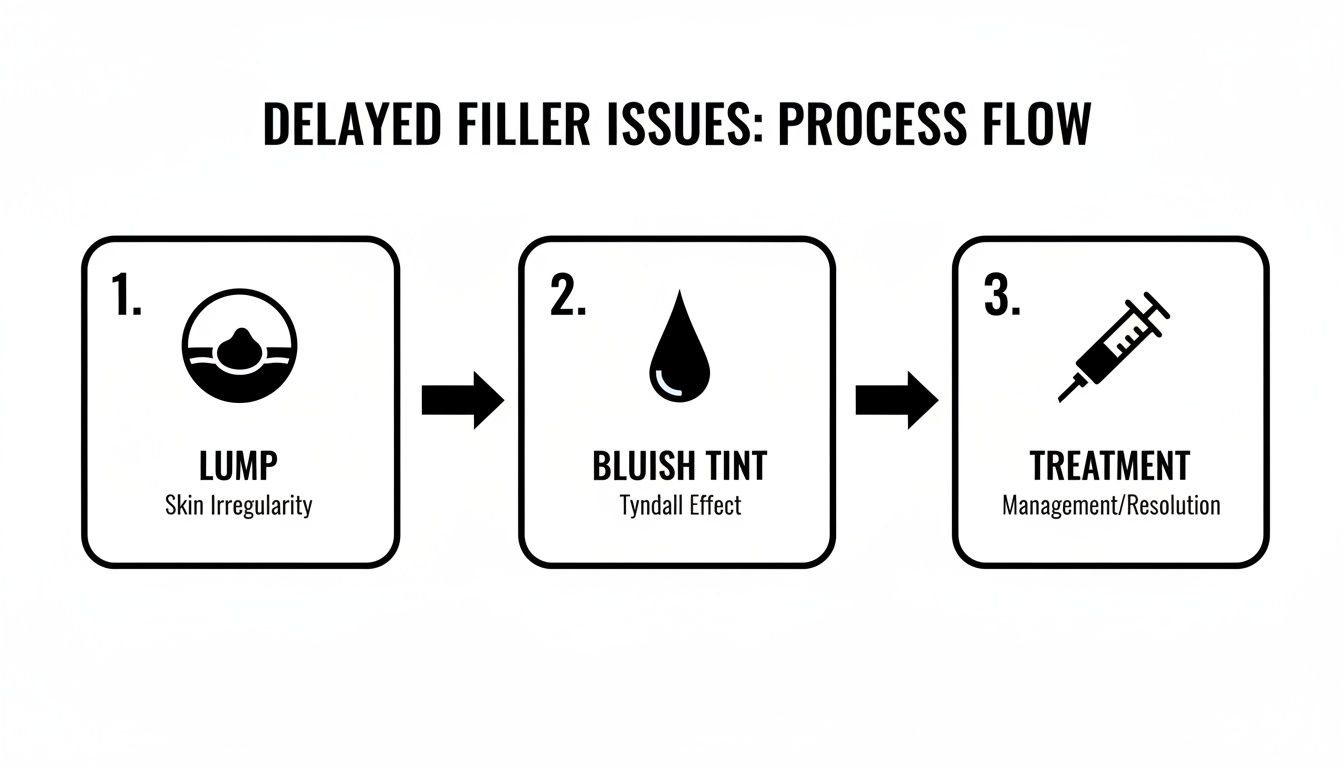
As you can see, even a simple-looking lump or bluish tint requires a professional diagnosis and a clear treatment plan, which often involves using hyaluronidase to correct the issue.
A Proactive Guide to Minimizing Filler Risks
Knowing what side effects could happen is one thing. Actively preventing them is where the real power lies. A safe, beautiful outcome doesn’t just happen in the treatment chair—it starts long before your appointment and continues well after you leave.
Think of it like preparing for a big event. You plan the details to make sure everything goes smoothly. The same mindset applies here. By taking control of the process with a simple checklist for before, during, and after your procedure, you can dramatically lower your risks and set yourself up for a fantastic experience.
Before Your Filler Appointment
The single most important decision you'll make is choosing who holds the needle. This one choice has a massive impact on your safety and the quality of your results.
- Do Your Homework on Your Provider: Look for a licensed medical professional with deep, specialized training in cosmetic injectables. This means a Nurse Practitioner, Physician, or Physician Assistant who lives and breathes aesthetics. Ask about their experience, look through their portfolio of before-and-after photos, and make sure they have an expert-level grasp of facial anatomy.
- Be an Open Book: Your consultation is not the time to be shy. Be completely honest about your medical history—every medication, supplement (yes, even fish oil or ginkgo biloba, which thin the blood), allergy, and previous cosmetic treatment. This information is critical for your provider to tailor the treatment safely for you.
- Follow Pre-Treatment Rules: Your provider will give you a list of things to pause, usually starting a week before your appointment. This almost always includes avoiding alcohol, aspirin, and other blood thinners to keep bruising to an absolute minimum.
During Your Treatment
On the day of, a few final checks are all it takes to ensure everything is perfect. Remember, you are your own best advocate. Don’t ever feel shy about being an active participant in your own care.
A safe procedure is a partnership between you and your injector. Feeling empowered to ask questions and confirm details is a sign of a high-quality practice that prioritizes your well-being.
- Confirm the Product: Ask to see the box of filler being used. It should be a well-known, FDA-approved brand, and the packaging must be sealed and sterile before it’s opened right in front of you.
- Check for a Clean Environment: The treatment room should look and feel like a medical space—clean, organized, and clinical. Your provider must use sterile, single-use needles and gloves. This is non-negotiable for preventing infection.
After Your Treatment
Your role in a great result isn't over when the injections are finished. Proper aftercare is what ensures optimal healing and helps you manage those common, temporary side effects like swelling and bruising.
Your provider will give you a specific set of instructions, which usually includes:
- Applying cold compresses on and off for the first 24-48 hours to calm swelling.
- Skipping strenuous exercise, saunas, and alcohol for at least 24 hours.
- Sleeping with your head slightly propped up on the first night to help minimize morning puffiness.
To give your recovery an extra boost at home, you can add gentle, healing technologies into the mix. The Barb N.P. LED Facial Mask is an amazing tool for post-filler care. It’s comfortable, completely wireless, and makes at-home light therapy effortless.
The mask features 3 distinct lighting settings, including a red light therapy mode that’s specifically designed to reduce inflammation and speed up the healing process. Using it a few days after your treatment (once your provider gives you the green light) can help soothe the skin and lock in your beautiful results long after you've left the clinic.
My Philosophy on Safety and Results
When it comes to dermal fillers, the single most important decision you’ll make isn't about the product—it's about the provider. Your results, your safety, and your confidence are all in the hands of your injector. At BotoxBarb, my entire practice is built on a foundation of medical excellence and the trust you place in me.
That commitment comes directly from my background as a licensed Nurse Practitioner. My deep, clinical knowledge of facial anatomy isn't just a talking point; it's the core of how I practice. Understanding the intricate network of vessels and muscles beneath the skin is a non-negotiable for minimizing risks and achieving beautiful, natural outcomes.
We’re Partners in Your Care
A successful treatment doesn’t start with the first injection. It starts with a conversation. My consultation process is a true partnership where I listen to your aesthetic goals and conduct a thorough review of your health history. This is where we create a personalized plan that’s not only effective but designed to minimize risk from the very beginning.
This thoughtful approach ensures every treatment is tailored to your unique facial structure and medical profile, dramatically reducing the chances of unwanted side effects.
Your safety isn't just a priority; it's the entire philosophy. My goal is to blend artistry with medical precision to deliver results that are both beautiful and responsibly achieved.
Supporting Your Results Long After Your Appointment
My commitment to you doesn't end when you walk out the door. Beautiful results are protected and maintained with exceptional at-home care, which is why I offer a curated selection of medical-grade skincare from brands I trust, like SkinCeuticals and Epicutis.
These powerful formulations are hand-picked to support healing, protect your investment, and keep your skin healthy. By integrating products that calm inflammation and promote skin integrity, we can work together to help you enjoy your gorgeous, natural-looking results for as long as possible.
Your Top Filler Safety Questions, Answered
Stepping into the world of dermal fillers is exciting, but it’s completely normal to have a few questions swirling around. Even after learning about potential side effects, you want clear, direct answers. Let's tackle some of the most common concerns so you can move forward with total confidence.
How Long Do Common Filler Side Effects Typically Last?
Most of the usual suspects—like swelling, a bit of bruising, and some redness right at the injection sites—are very temporary. You can expect them to clear up within 7 to 14 days.
Sometimes you might feel a little lumpiness under the skin. This can take a few weeks to fully resolve as the filler settles in and integrates with your own tissue. The timeline can also depend on the area treated (lips, for instance, are known to swell more) and your body’s unique healing process. Following your aftercare advice, like using a cold compress and skipping that intense workout, really does help speed things along. If anything lingers past that two-week mark, it's always smart to give your provider a call.
Can I Get Dermal Fillers If I Have Sensitive Skin or Allergies?
Yes, in many cases you absolutely can, but this is where a thorough consultation with an expert like Barb N.P. is non-negotiable. The first and most critical step is a deep dive into your full medical history, covering everything from skin conditions to known allergies.
Modern hyaluronic acid (HA) fillers are generally very well-tolerated, mainly because HA is a substance your body already produces naturally. It's worth knowing that some fillers include lidocaine to make the treatment more comfortable, and a very small number of people are allergic to it. Being completely open with your provider is the key to making sure your treatment is both safe and beautiful.
What Is Hyaluronidase and When Is It Used?
Think of hyaluronidase as a targeted eraser for hyaluronic acid (HA) fillers. It’s an enzyme that can dissolve HA gel, making it an indispensable safety tool for any expert injector.
We typically use it in two main scenarios:
- Emergency Response: In the extremely rare case of a vascular occlusion, hyaluronidase is injected right away to dissolve the filler blocking a blood vessel. This restores blood flow and is a critical emergency measure.
- Cosmetic Adjustments: It can also be used to fine-tune your results. If you’re unhappy with the outcome—perhaps there’s too much filler, some asymmetry, or a lump that won’t settle—it can be used to correct it.
The fact that we have this "antidote" is a huge reason why HA fillers are considered the safest and most forgiving injectable option on the market. For a look at how advanced technology helps address patient questions and improve safety in aesthetics, check out these insightful AI Beauty Assistant case studies.
At BotoxBarb, your safety and stunning results are what matter most. To give your skin the best support after treatment, consider the Barb N.P. LED Facial Mask. This comfortable, wireless mask features three light settings, including red light therapy known to reduce inflammation and promote a smoother, faster recovery. You can explore our curated medical-grade products at https://barbnp.shop to protect and enhance your investment.