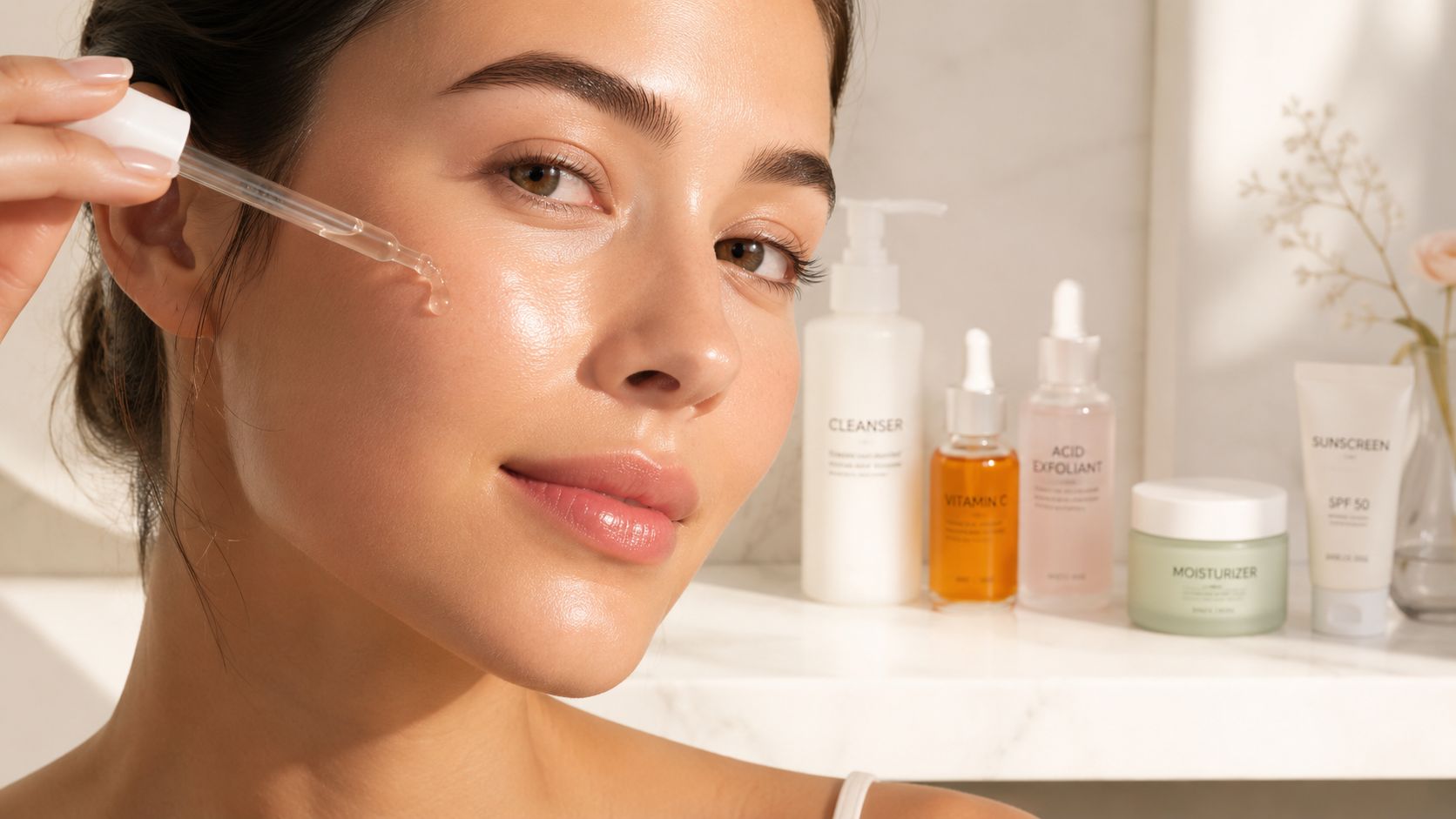
How to Layer Tretinoin: A Pro's Guide to Glowing Skin
You've finally picked up your first tretinoin prescription. You're hopeful because you've heard about smoother texture, fewer breakouts, and that clear, polished look people call the “tretinoin glow.” You're also nervous because you've heard the other side of the story: peeling, redness, stinging, and a routine that suddenly feels far more complicated than washing your face and putting on moisturizer.
That mix of excitement and hesitation is normal. Tretinoin is one of the most effective topical medications we use in aesthetic practice, but it isn't forgiving when people improvise. The difference between a good experience and a miserable one usually isn't the prescription itself. It's how you layer it, how often you use it, and whether you protect your skin barrier while your skin learns to tolerate it.
Tretinoin Is Powerful But Demands a Smart Routine
Tretinoin works best when you treat it like a skill, not a dare. New clients often assume success means pushing through irritation. In practice, the opposite is usually true. The clients who do best are the ones who follow a calm, repetitive routine and make fewer changes, not more.
The first rule of how to layer tretinoin is simple. Your skin barrier comes first. If your barrier is inflamed, dehydrated, or stripped by too many active products, tretinoin becomes hard to tolerate. If your barrier is supported, tretinoin becomes much easier to use consistently.
Why beginners struggle
Most mistakes happen before the tretinoin even touches the skin. People start too often. They apply too much. They layer it over damp skin. They add exfoliating acids because they want results faster. Then they assume tretinoin “isn't for them” when their face becomes hot, flaky, and reactive.
That's not a character flaw or a weak skin type. It's usually a routine problem.
Tretinoin rewards patience. It punishes overconfidence.
If you're still deciding whether tretinoin is the right retinoid for your skin goals, Neutralyze's guide to acne retinoids gives a helpful comparison between adapalene and tretinoin. It's a useful read when you want context before committing to a full prescription-strength routine.
What a smart routine looks like
A well-built tretinoin routine does three things at the same time:
- Controls exposure: You don't start with nightly use.
- Controls placement: You use a small, even amount instead of spot-treating randomly.
- Controls irritation: You buffer with moisturizer when your skin needs support.
That's the mindset I want clients to have from day one. Tretinoin isn't something you “survive.” It's something you learn to use well.
When clients approach it this way, the process feels much less chaotic. You stop reacting to every dry patch like something has gone wrong, and you stop chasing shortcuts that make irritation worse. You start following a method. That's where the glow comes from.
Building Your Tretinoin Foundation Core Principles
A good tretinoin routine is built before the first night you apply it. In clinic, the clients who do best are rarely the ones using the strongest plan. They are the ones following the most disciplined one.
That matters because tretinoin is a prescription treatment, not a casual add-on. If you want a quick refresher on how it differs from over-the-counter retinol, this overview of tretinoin cream basics will help.

Start slowly and build tolerance with intention
Early success with tretinoin usually comes from restraint. New users often do best starting a few nights per week, then increasing only after the skin stays calm at the current schedule.
I tell clients to treat frequency like a prescription variable, not a personal challenge. If your skin is still stinging, peeling heavily, or staying red between applications, you have not earned the next step up yet.
That slower start can feel conservative. It also prevents the common cycle of overuse, irritation, stopping, and restarting.
Use a small amount and place it evenly
Dose control is one of the first skills to learn. For the full face, a pea-sized amount is usually enough.
Spread it with intention so you get a light, even film instead of a heavy patch in the areas you are most eager to treat. In practice, that means dotting small amounts across the forehead, cheeks, nose, and chin, then smoothing it out gently. More cream does not improve your result. It usually buys you more dryness around the mouth, nose folds, and under-eye area.
Keep those reactive zones protected. If needed, place moisturizer on the corners of the nose, around the lips, and near the eyes first so tretinoin does not migrate there as easily.
Buffer based on your skin, not your pride
Some clients can apply tretinoin directly to dry skin once they have adjusted. Many beginners do better with a moisturizer sandwich, especially if they have dry, sensitive, mature, or easily inflamed skin.
A practical method is simple. Cleanse. Let skin dry fully. Apply a thin layer of moisturizer, then tretinoin, then a second layer of moisturizer. Heally's guide to layering tretinoin safely outlines this approach clearly.
Buffering may slow irritation more than it slows progress, which is a trade-off I will take any day for a first-time user. Consistent use on a tolerable schedule beats aggressive use that forces you to quit.
Protect the barrier in the morning
Clients often focus so hard on the night routine that they neglect the morning repair work. That is a mistake.
Your skin needs hydration, barrier support, and daily sunscreen while adjusting to tretinoin. Sun exposure and repeated irritation make redness linger longer and can leave the skin looking rough and uneven. If you need a reminder of the benefits of daily sunscreen use, that guide is worth your time.
In my practice, I pair tretinoin with a gentle cleanser, a plain moisturizer that does not sting, and a broad-spectrum sunscreen the client will wear every day. Fancy routines fail when the skin barrier is unstable. A simple routine usually wins.
Your AM and PM Tretinoin Layering Blueprint
The routine usually breaks down on night three.
A new tretinoin user feels fine the first couple of evenings, gets confident, applies it right after washing, adds a few extra products, then wakes up with stinging, redness, and flakes around the mouth and nose. In clinic, that pattern is common. The fix is not a longer routine. The fix is better technique.

Your recovery morning routine
Morning care has one job. Help skin recover so you can keep using tretinoin consistently.
For many first-time clients, I keep the AM routine very plain:
- Gentle cleanse or rinse: If skin is dry or comfortable, lukewarm water may be enough. If you wake up oily, use a non-stripping cleanser.
- Optional antioxidant serum: A morning vitamin C serum can fit here if your skin tolerates it and you are not already irritated.
- Barrier-supportive moisturizer: Choose a cream that reduces tightness without stinging.
- Broad-spectrum sunscreen: Apply enough to cover the face well, then reapply if you are outdoors.
If your skin is prickly, flaky, or burning, skip the optional serum and keep the routine stripped down. Early tretinoin success comes from restraint.
Your tretinoin night routine
Night application is where skill matters most. Good layering controls how much irritation you create while still giving the medication room to work.
For beginners, this is the order I usually recommend:
- Cleanse gently.
- Wait until skin is fully dry. Do not apply tretinoin to damp skin.
- Apply a thin layer of moisturizer if you are using the sandwich method.
- Use a pea-sized amount of tretinoin for the full face, not a pea-sized amount per area.
- Follow with a second layer of moisturizer if your skin runs dry, sensitive, or easily inflamed.
That sequence is simple on purpose. Clients who try to freestyle the order often create their own irritation.
The main trade-off is straightforward. Applying tretinoin directly to dry skin may feel stronger and can work well for experienced users with resilient skin. Buffering with moisturizer usually feels gentler and helps new users stay on schedule. I would rather see steady progress three nights a week than a harsh routine that gets abandoned in two weeks.
For a broader overview of product order, this guide on how to layer skin care products in the right sequence can help if the steps still feel confusing.
Let the skin dry completely, use less tretinoin than you think you need, and keep the rest of the routine quiet.
Sample Tretinoin Skincare Schedule
| Time | Routine Step |
|---|---|
| Morning | Gentle cleanse or rinse |
| Morning | Optional antioxidant serum such as SkinCeuticals C E Ferulic |
| Morning | Barrier-supportive moisturizer such as Epicutis Lipid Recovery Mask |
| Morning | Broad-spectrum sunscreen |
| Evening on tretinoin nights | Cleanse and let skin dry fully |
| Evening on tretinoin nights | Thin layer of moisturizer |
| Evening on tretinoin nights | Tretinoin |
| Evening on tretinoin nights | Second layer of moisturizer |
| Evening on non-tretinoin nights | Gentle cleanse, hydration, barrier repair |
Where LED fits in
LED belongs on recovery nights, not as a way to pile more treatment onto irritated skin.
Some clients like adding LED light therapy on non-tretinoin nights because it gives them a treatment step without acids, scrubs, or another strong topical. The Barb N.P. LED Facial Mask is a practical option if you want that kind of support at home. It is wireless, comfortable to wear on the face, and has 3 lighting settings for different treatments.
I usually frame red light as a calming add-on, not a shortcut. If the barrier is struggling, the answer is still fewer irritating products, a simpler schedule, and better recovery habits.
How to Safely Combine Tretinoin With Other Actives
A common first-month mistake happens right after a prescription starts working. Skin looks a little smoother, so the temptation is to add back every acid, spot treatment, and brightening serum at once. In clinic, that is the point where a good routine often turns into an irritated one.

Using tretinoin well is a skill. Part of that skill is knowing that products can be effective on their own and still be a poor match in the same routine. I coach clients to add one variable at a time, watch the skin for a couple of weeks, and keep the routine boring enough that you can tell what is helping and what is causing trouble.
Vitamin C belongs in the morning
Vitamin C usually pairs best with tretinoin when the timing is split. Use vitamin C in the morning and tretinoin at night. That schedule is easier to tolerate and easier to troubleshoot if redness or stinging starts.
Clients with dry, reactive, or rosacea-prone skin do not need to force a strong vitamin C serum just because it is popular. A gentler antioxidant or no morning active at all can be the better call until the skin is steady. If you want help with the order of those products, this guide on retinol before or after Vitamin C explains the sequencing clearly.
Acids should not come back too early
Glycolic acid, lactic acid, salicylic acid, peels, scrubs, and cleansing brushes are the pairings I pause first. Tretinoin already increases cell turnover. Adding extra exfoliation too soon often leads to burning, prolonged redness, and that shiny, overworked look clients mistake for glow.
My rule in practice is simple. If skin is still peeling, stinging, or getting pink easily, it is too early for acids.
Once tretinoin feels comfortable, an acid can sometimes be added on a separate night, not layered in the same application window. Start with low frequency. One night a week is plenty for many people. If your main issue is persistent flushing or sensitivity, review effective treatments for facial redness before assuming you need more exfoliation.
Benzoyl peroxide can help acne, but spacing matters
Benzoyl peroxide creates the most confusion for acne patients because it is a legitimate treatment, just not one to pile on casually. I do not usually start a new tretinoin patient on both in the same evening unless there is a clear plan and the skin can handle it.
A safer approach is separation by time or by day:
- Morning benzoyl peroxide, evening tretinoin if skin is more oily and resilient
- Alternate nights if dryness has already been an issue
- Spot treatment only instead of full-face use if breakouts are limited
That trade-off matters. More acne treatment is not always better acne control if the barrier gets inflamed and the patient quits the routine.
The easiest pairings are usually the best pairings
The products that combine most smoothly with tretinoin are the least flashy ones. Hyaluronic acid, niacinamide, ceramide-rich moisturizers, and plain hydrating serums usually fit without much friction. These support tolerance, and tolerance is what keeps tretinoin on the skin long enough to do its job.
If a client wants one rule to remember, I give them this one. Pair tretinoin with hydration first. Earn the right to add stronger actives later.
Troubleshooting Irritation Redness and Peeling
Even when someone follows directions closely, the adjustment period can still feel uneven. A little peeling can happen. Some dryness can happen. What matters is learning the difference between expected adjustment and a routine that's pushing too hard.

When to stay the course
If your skin is mildly flaky, a little tight, or slightly pink after application, that usually means you need more support, not necessarily a full stop. Go back to basics:
- Reduce frequency: Drop back to fewer tretinoin nights.
- Increase barrier care: Use a richer moisturizer consistently.
- Keep cleansing gentle: Avoid foaming or harsh cleansers that leave skin squeaky.
Mild purging also confuses people. If breakouts are surfacing in familiar areas, don't start picking and don't attack them with more acids. That almost always creates a second problem on top of the first.
When your barrier is asking for a break
A compromised barrier feels different. Skin burns when water touches it. Moisturizer stings. Redness looks angry instead of mild. The face feels hot, over-polished, or shiny in a stressed way.
That's when I tell clients to stop tretinoin temporarily and focus on recovery only. A short break can be smarter than trying to push through.
Use a plain cleanser, a barrier-focused moisturizer, and sunscreen. Skip the extras until the skin feels normal again.
If moisturizer burns, your skin isn't asking for more actives. It's asking for rest.
If facial redness becomes a recurring issue, some readers also find it helpful to review broader approaches to effective treatments for facial redness. It gives useful context for managing reactive skin outside the retinoid conversation alone.
Supportive tools that don't pile on more product
This is one place where LED can make sense for the right client. The Barb N.P. LED Facial Mask offers 3 lighting settings for different treatments, so it can be used strategically when your skin needs support without another topical active. The red light setting can be a calming option when skin looks inflamed, while the blue light setting may be useful for clients navigating breakout-prone periods during purging. The fact that it's wireless and designed for comfort also makes it easier to use consistently.
The bigger point is this: irritation isn't always failure. It's feedback. If you respond early and adjust the routine, you can usually get things back on track before the skin becomes fully reactive.
Your Tretinoin Questions Answered by Barb N.P.
Clients usually ask these questions after week two or three. The routine felt manageable at first, then they start wondering whether they should spread tretinoin to the neck, add an oil, or fix a setback by using more. That is the point where technique matters most.
Tretinoin works best when you treat it like a prescription skill, not a casual add-on. In clinic, I would rather see a simple routine done correctly for months than an ambitious routine that irritates the skin by week three.
Can I use tretinoin around my eyes, neck, or chest
Use caution with all three areas. They usually tolerate tretinoin less easily than the central face, so I want the face routine stable first before any expansion.
If you later extend use, use far less than you expect and buffer well with moisturizer. Keep tretinoin away from the immediate eyelid area, the corners of the nose, and the corners of the mouth. Those are often the first places to sting, peel, and become persistently irritated.
The neck and chest also sound simple but often behave differently than the face. I usually advise clients to trial those areas slowly, on separate nights at first, so it is clear what the skin can handle.
How long until my skin adjusts
There is no single timeline. Adjustment depends on your skin, the strength and vehicle of the prescription, how often you apply it, and how disciplined you are with the rest of the routine.
The first win is tolerance.
If you can use tretinoin on a steady schedule without your skin feeling tight, shiny, hot, or flaky all the time, that is progress. Smoother texture, clearer pores, and more even-looking skin usually follow after that foundation is in place. Clients who rush this stage often end up needing more recovery time, which slows results more than a conservative start would have.
My skin was doing fine, then suddenly got irritated. Why
Usually, something in the routine or environment changed. I see this after clients add an exfoliating acid, switch to a foaming cleanser, spend more time in the sun, skip moisturizer, or start applying more tretinoin than prescribed. Remember, a pea-sized amount is the total face dose, not per cheek or problem area.
Weather can shift tolerance too. Skin that handled tretinoin well in humid months may become reactive in winter or during periods of heavy indoor heat.
Do a full routine audit. Check the cleanser, moisturizer, sunscreen, frequency, amount used, and any new treatment products. In practice, that review often identifies the trigger faster than guessing.
Can I use facial oil with tretinoin
Yes, but I do not use oil as a replacement for moisturizer in a beginner tretinoin plan. Oil can help soften and reduce water loss, but it does not always give the same barrier support as a well-formulated cream.
For new users, I usually keep the pairing simple. Gentle cleanser, moisturizer, tretinoin, sunscreen. Once that is working well, an oil can be added as a finishing step on non-irritated skin or on nights when tretinoin is not being used.
That order matters. A crowded routine makes it harder to tell what is helping and what is causing trouble.
BotoxBarb makes it easier to build a tretinoin routine that doesn't feel overwhelming. You can shop curated skincare and tools at BotoxBarb, including medical-grade options from brands like SkinCeuticals and Epicutis, plus the Barb N.P. LED Facial Mask for recovery-focused treatment nights. If you want a simple routine instead of a crowded shelf, it's a practical place to start.