How to Prepare for Botox Your Complete Pre-Treatment Guide
Getting the absolute best results from your Botox treatment doesn't start in the chair—it begins with a little prep work beforehand. The right preparation can make a world of difference, dramatically cutting down on the chances of bruising or swelling and just making the whole experience smoother.
Think of it like preparing a perfect canvas. A few simple steps in the weeks and days leading up to your appointment will help your injector do their best work and ensure you walk out thrilled with your results.
Your Essential Pre-Botox Checklist And Timeline
To make it easy, I've broken down the key actions into a simple timeline. Following these guidelines ensures your skin is calm, your body is ready, and you can walk into your session with total confidence.
Here’s a quick overview of what to do and when to do it.
Your Botox Preparation Timeline
| Timeframe | Action Required | Reason |
|---|---|---|
| 2 Weeks Before | Schedule a consultation (if it's your first time). | Align on goals and review your medical history with your provider. |
| Pause harsh skincare like retinoids or chemical peels. | Reduces skin sensitivity and potential irritation. | |
| 1 Week Before | Stop taking blood-thinning medications & supplements. | This is the #1 way to minimize bruising. |
| (Aspirin, ibuprofen, fish oil, vitamin E, ginkgo biloba) | These can interfere with blood clotting. | |
| 24-48 Hours Before | Avoid all alcoholic beverages. | Alcohol increases blood flow and dehydration, worsening bruising. |
| Stay well-hydrated by drinking plenty of water. | Hydrated skin can respond better to treatment. | |
| Day of Appointment | Arrive with a clean, makeup-free face. | Provides a sterile area for injections and saves time. |
This timeline gives you a clear, at-a-glance guide. Let's dive a little deeper into each phase.
Two Weeks Before Your Appointment
This is the time for big-picture planning. If you haven't already, your top priority is to schedule a thorough consultation. This is your chance to really connect with your provider, discuss your aesthetic goals, and go over your complete medical history. It's a crucial step for a safe and successful outcome.
Around this time, it’s also a great idea to start simplifying your skincare routine. Hit pause on any aggressive treatments—think retinoids, strong chemical exfoliants, or scrubs. Giving your skin a break now ensures it’s calm and less reactive on the day of your injections.
One Week Before The Big Day
Now, we get serious about minimizing the risk of bruising. The single most important thing you can do is avoid medications and supplements that thin your blood.
I always tell my clients to stop taking things like aspirin, ibuprofen (Advil, Motrin), fish oil, vitamin E, and even herbal supplements like ginkgo biloba for at least a week before their appointment. These can all make you more prone to bruising at the injection sites. For a deeper dive, I've covered the connection in my article on what causes bruising after Botox.
This visual breaks down the most critical windows for preparation.
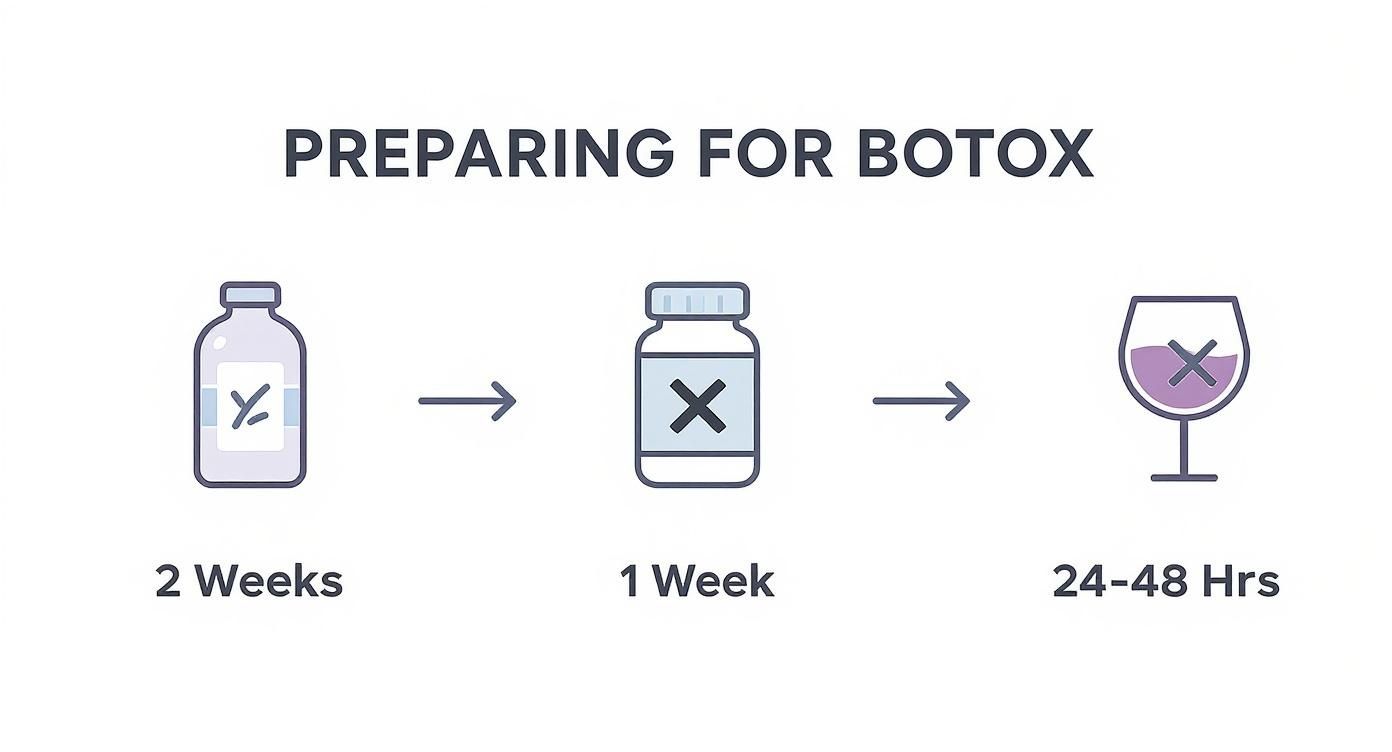
As you can see, the final week is when the most impactful steps happen. If you're on a prescription blood thinner, never stop taking it without talking to your primary doctor first! Safety is always the top priority.
The Final 24 To 48 Hours
Your appointment is just around the corner! A couple of final tweaks will set you up for success.
The golden rule here is to avoid alcoholic beverages. That glass of wine can wait. Alcohol increases blood flow and dehydrates your skin, a combination that can definitely worsen potential bruising and swelling.
Instead, focus on drinking plenty of water. On the day of, please arrive with a clean, makeup-free face. It ensures we have a sterile canvas to work with and makes the entire process quicker and smoother. A calm, prepared mindset is the final touch for a fantastic Botox experience.
What to Stop Taking Before Your Botox Appointment
One of the biggest questions I get from clients is, "What medications and supplements do I need to stop before my treatment?" It’s a great question, and getting this part right is one of the easiest ways to ensure a smooth, nearly bruise-free recovery.
The main goal is simple: avoid anything that thins your blood. Think of it this way—when we use a super-fine needle for injections, there's always a tiny chance of nicking a small blood vessel. If your blood is thinned, it won't clot as quickly, and that's when a bruise can pop up. By pausing a few common things, you set yourself up for a flawless result.
The Usual Suspects: Over-the-Counter Pain Relievers
The most common culprits are the anti-inflammatory pain relievers you probably have in your medicine cabinet right now. I always recommend clients stop taking these about one week before their appointment.
- Aspirin: This one is a well-known blood thinner.
- Ibuprofen: Think brands like Advil and Motrin.
- Naproxen: The main ingredient in Aleve.
If you find yourself needing pain relief during that week, acetaminophen (Tylenol) is generally a safe bet because it doesn't have the same blood-thinning effect. Of course, it's always best to run that by your primary care doctor first.
Sneaky Supplements: Vitamins and Herbals to Pause
It’s not just pills from the pharmacy you need to watch. Many popular vitamins and herbal supplements—the very things you take to be healthy—can also thin the blood and increase your chances of bruising.
My Two Cents: So many "natural" and "healthy" supplements can impact your treatment. It's so important to tell your injector everything you take—even if it seems minor. We can create a safe plan together.
Plan to take a break from these common supplements about a week before you come in:
- Fish Oil and Omega-3s: Fantastic for your heart, but they are potent blood thinners.
- Vitamin E: Great for skin health, but it can also interfere with clotting.
- Ginkgo Biloba: A popular herbal supplement often used for memory.
- Ginseng and St. John's Wort: These can also play a role in blood flow.
The Golden Rule for Prescription Medications
This is the most critical part: never, ever stop taking a prescribed medication without talking to the doctor who prescribed it. Your overall health is the number one priority.
If you're on a daily aspirin for heart health or a prescription anticoagulant like Warfarin or Eliquis, that's not something you should pause on your own.
Make sure you bring a complete list of all your medications to your Botox consultation. Your injector will work with you—and your doctor, if needed—to figure out the safest approach. Sometimes it's about adjusting the timing, or maybe just taking extra care during the injections. Open communication is key to a safe and beautiful result.
Optimizing Your Skincare Routine Pre-Injection
The way you treat your skin in the days leading up to your Botox appointment can make a huge difference in your results. Think of it like prepping a canvas before painting—you want it calm, healthy, and resilient. This means simplifying your routine for a bit to avoid any last-minute irritation.
Basically, you’re giving your skin a mini-vacation before the main event, letting it rest and recharge.
Give Your Skin a Break from Actives
Potent skincare ingredients that speed up cell turnover or exfoliate can leave your skin a little more sensitive than usual. The best move is to press pause on these for about three to five days before your appointment. This simple step dramatically reduces the risk of extra redness or irritation at the injection sites.
Here’s what to temporarily shelve:
- Retinoids: This includes everything from prescription Tretinoin to your favorite over-the-counter retinol serum.
- Alpha-Hydroxy Acids (AHAs): Look for ingredients like glycolic acid and lactic acid.
- Beta-Hydroxy Acids (BHAs): Salicylic acid is the big one here.
Instead, switch over to a gentle cleanser and a simple, nourishing moisturizer. Your goal is to get your skin barrier strong and happy. If you’re unsure about a specific product, just ask during your consultation. For more personalized advice, especially if you have sensitive skin, you can always consult an online dermatologist. You can also learn more about managing potential retinol serum side effects in our detailed guide.
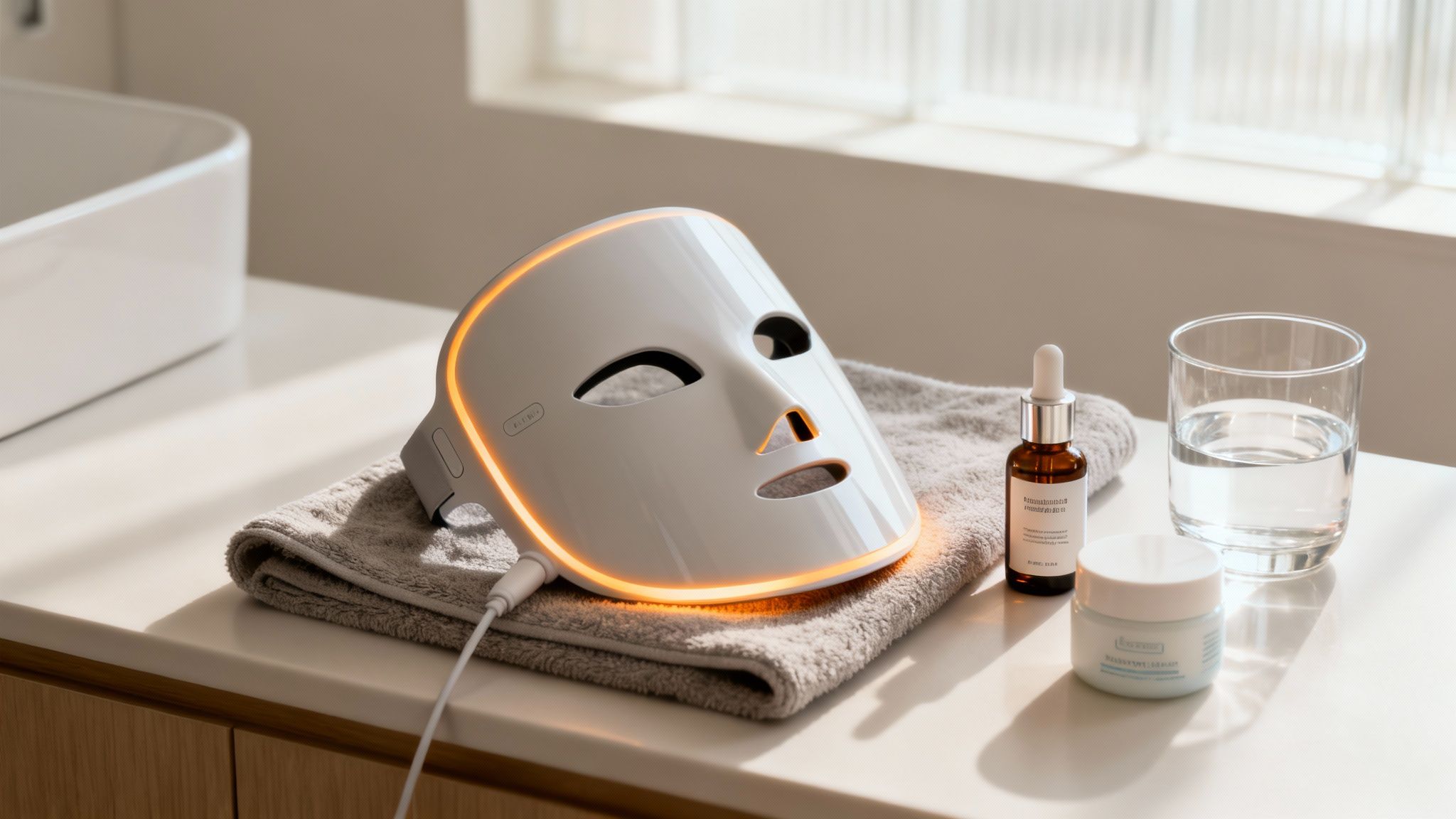
Elevate Your Prep with LED Therapy
Want to take your pre-treatment prep to the next level? LED light therapy is a fantastic, non-invasive way to boost your skin’s overall health and resilience before you even walk into the clinic.
The BARB N.P. Facial Mask is a perfect tool for this. It’s wireless, so you can comfortably wear it while relaxing at home. The mask features three targeted light settings to get your skin in prime condition.
I often recommend the Red light setting to my clients before a treatment. It’s excellent for stimulating collagen and reducing inflammation, which creates a stronger foundation for the Botox. The Blue light is perfect for calming the skin right before, and the Amber light helps with overall rejuvenation.
Using the mask a few times in the week leading up to your appointment helps ensure your skin is in optimal shape. It’s a simple step that can support a smoother recovery and give you an extra glow, making your professional treatment that much more effective.
Navigating Your Botox Consultation Like A Pro
Think of your Botox consultation as the creative brief for your face. This is where you and your injector collaborate to design a personalized treatment plan. It’s so much more than a simple formality—it’s the single most important conversation you’ll have to ensure you get the beautiful, natural-looking results you’re dreaming of.
When you come prepared, you can articulate your goals clearly, which helps your provider understand your unique facial anatomy and exactly what you’re hoping to achieve. A great consultation truly sets the stage for a fantastic outcome.
Come Prepared to Discuss Your Goals
Just walking in and saying, “I want Botox,” isn’t quite enough to get you the best, most customized results. The magic happens when we have a detailed chat about what you're looking for. Vague requests can lead to generic outcomes, so specificity is your best friend here.
For instance, which one of these gives a clearer picture?
- "I want to look younger."
- "I’d like to soften the deep frown lines between my brows because they make me look tired or angry all the time."
The second example gives your injector a precise target and, just as importantly, the feeling you want to change. Before your appointment, take a moment to think about the specific areas that bother you. Are you hoping for a super subtle, "refreshed" look? A preventative "baby Botox" approach? Or are you aiming for a more significant smoothing of lines that have been there for a while?
Pro Tip: Bring in a few photos of yourself from a few years back where you loved how you looked. Visuals are incredibly helpful for getting you and your provider on the exact same page.
Key Questions to Ask Your Provider
A great consultation is a two-way street. You should feel completely comfortable asking anything and everything to make sure you're in the right hands and that you fully understand the process. Don't hold back—a true professional will welcome your questions and give you transparent answers.
Here’s a quick checklist of must-ask questions:
- Provider Experience: "How many years have you been performing Botox injections, and how frequently do you do them?"
- Product Details: "Which neurotoxin do you recommend for me—Botox, Dysport, Xeomin—and why?"
- Expected Results: "Based on what we've discussed, what kind of results can I realistically expect? And how long will they last for someone like me?"
- Follow-Up Care: "What’s your policy on follow-up appointments or touch-ups if I feel I need one?"
- Cost and Units: "How many units do you think I'll need for this treatment, and what will the total cost be?"
Getting a clear picture of the financial side is a crucial part of the plan. For a complete breakdown, check out our guide on how much you can expect Botox to cost. This knowledge empowers you to move forward confidently, without any surprises, ensuring you’re comfortable with every part of your treatment plan.
The Day Of Your Appointment And Immediate Aftercare
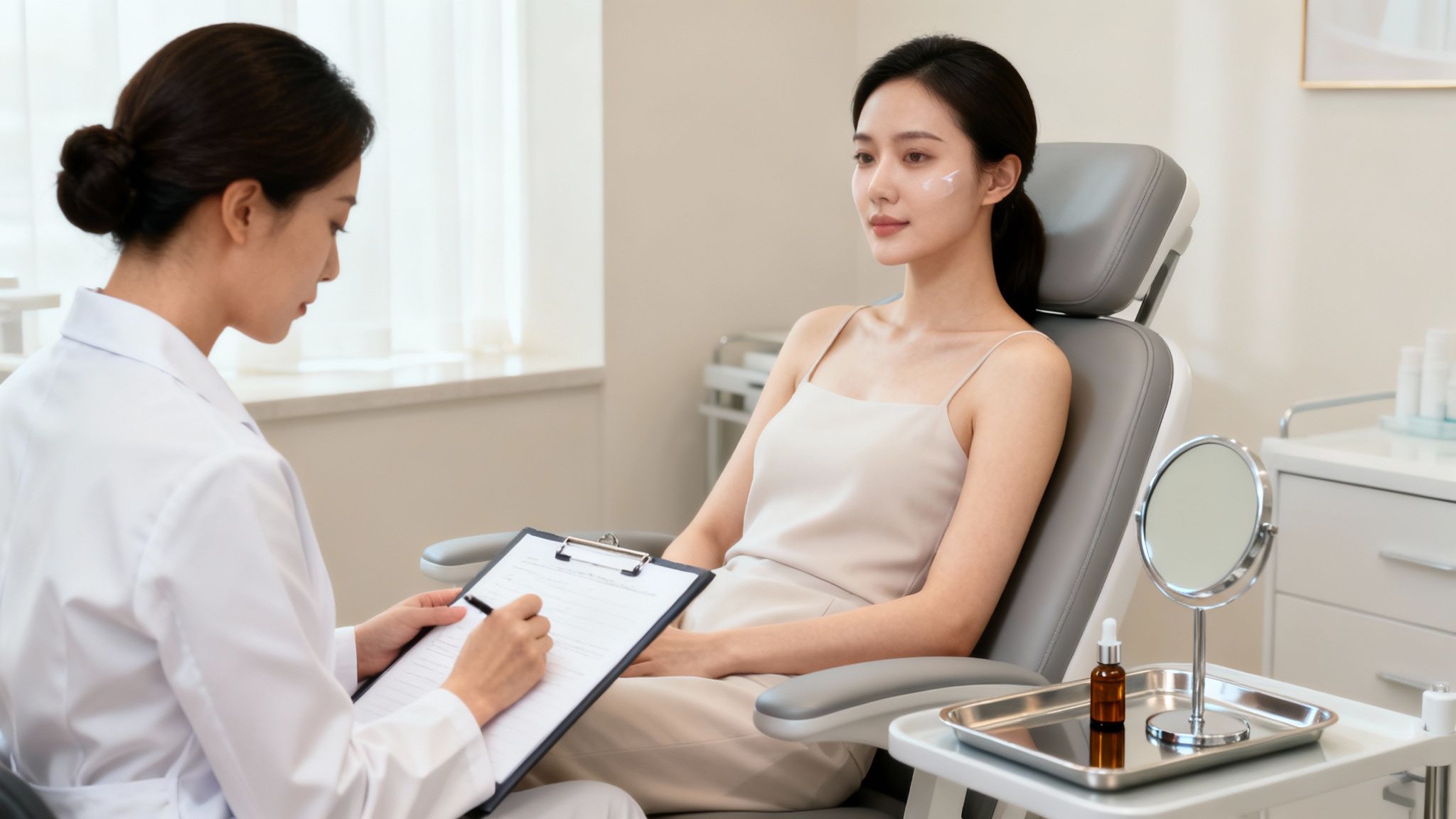
The day you’ve been looking forward to has finally arrived. Knowing exactly what to do on treatment day and immediately after is the final piece of the puzzle for a fantastic outcome. These simple guidelines are designed to make your experience completely seamless and ensure the neurotoxin works exactly as intended.
On the big day, the single most important step is arriving with a clean, makeup-free face. This gives your provider a clear canvas to accurately assess your facial anatomy and ensures the injection sites are sterile, which dramatically reduces the risk of any post-treatment blemishes or infection. It’s also a good idea to have a light meal and drink plenty of water to prevent feeling lightheaded during the quick procedure.
Rules For The First Few Hours
The first four hours after your injections are the most critical. This is the window where the product settles, and your main job is to make sure it stays precisely where it was placed. Your injector will give you specific instructions—following them is the key to preventing the Botox from migrating to unintended muscles.
The number one rule? Remain upright. Avoid lying down, taking a nap, or doing any activities that involve bending over for at least four hours. This simple precaution gives the Botox time to bind properly to the targeted muscles.
You can also gently exercise your facial muscles—think smiling, frowning, and raising your eyebrows—for about an hour after your treatment. Some practitioners believe this helps the product bind more effectively to the muscle receptors.
Your 24-Hour Post-Treatment Plan
For the first 24 hours, you’ll need to be mindful of a few key activities. These "don'ts" are all about minimizing any potential swelling, preventing bruising, and ultimately, protecting your results.
- Avoid Strenuous Exercise: Hitting the gym can wait for a day. Increased blood flow from intense physical activity can dilute the Botox and increases the risk of it spreading. Light walking is perfectly fine, but save that spin class for tomorrow.
- Don't Rub or Massage: Resist the urge to touch, rub, or apply any pressure to the treated areas. This also means avoiding facials, facial massages, or using exfoliating scrubs for at least 24 hours.
- Skip the Alcohol: Just as you avoided it before your appointment, continue to steer clear of alcohol for another 24 hours. This will help keep potential swelling and bruising at bay.
Aftercare is just as important as the prep. Your goal is to create a calm, stable environment for the neurotoxin to work its magic. Think of it as protecting your investment in yourself.
Your Top Questions About Botox Prep, Answered
Even with the best checklist, questions always come up—especially if it’s your first time. Think of this as your final check-in, a place to get clear, straightforward answers to those last-minute "what ifs" so you can walk into your appointment feeling totally confident.
Does Getting Botox Hurt?
This is easily the most common question we hear, and I get it. The good news? For the vast majority of people, it’s more of a quick, minor pinch than real pain.
The needles we use for Botox are incredibly fine—much, much thinner than what you’d get with a flu shot. Most of my clients describe it as a tiny, sharp poke that's over in a second. If you know you're sensitive or feeling a bit anxious, just let us know. We can apply a topical numbing cream or a cold pack to the area beforehand to make you even more comfortable.
When Will I Actually See the Results?
Patience is key here. Unlike dermal fillers that offer some instant plumping, Botox works its magic gradually. It's so important to have the right expectations on the timeline so you aren't second-guessing your treatment.
You’ll probably start to notice a subtle softening of your expression lines within 3 to 5 days. But the neurotoxin needs a little more time to fully relax those targeted muscles and smooth everything out.
You’ll see the full, final result of your Botox treatment right around the 10 to 14-day mark. This is when the smoothing effect is at its peak. I always recommend scheduling a two-week follow-up to assess your results and see if any tiny touch-ups are needed.
This slow and steady onset is what creates such a natural, refreshed look.
Can I Wear Makeup to My Appointment?
This is a great practical question, and the answer is a firm no—please arrive with a clean, makeup-free face. There are a couple of really important reasons for this.
- We Need to See Your Face: A clean slate allows your provider to accurately assess your natural muscle movements and skin.
- Safety First: We have to sterilize the injection sites to minimize any risk of infection or irritation. Injecting through makeup can push bacteria into the skin.
After your treatment, you'll need to wait at least 4 to 6 hours before applying any makeup. Honestly, waiting until the next morning is even better. The rubbing and pressure from applying makeup could potentially cause the Botox to migrate before it has fully settled into place.
Is There a "Right" Age to Start Botox?
So many people wonder if they're too young or too old, but the decision is less about your chronological age and more about your personal anatomy and goals.
While the average age for Botox is around 43, it's becoming incredibly popular with younger people as a preventative step. In fact, 24% of treatments are now for people aged 19–34 who want to stop deep lines from forming in the first place. You can dive deeper into the latest Botox trends and demographics on skinworksmed.com.
The best time to start is when the lines you see with expression—like frowning or raising your brows—start to linger even when your face is at rest. A one-on-one consultation is the only way to know for sure if it’s the right move for you.
At BotoxBarb, we believe preparation is the first step toward incredible, confidence-boosting results. We pair expert care with premium products to support you every step of the way. To elevate your skincare routine before and after your treatment, explore our handpicked collection of medical-grade essentials. Shop our products at BotoxBarb today