Liquid Facelift Cost in 2026: Expert Budget Tips
A typical liquid facelift in the U.S. costs $2,000 to $12,000, and the average patient spends about $3,100. The final price depends on how many filler syringes and neuromodulator units you need, not on a flat fee.
That's the part most price guides bury. A liquid facelift isn't one standardized procedure, it's a customized mix of injectables, so every added syringe changes the bill. If you want to budget correctly, you have to think in product volume, treatment zones, and injector expertise, not just in “getting a facelift without surgery.”
Understanding the True Liquid Facelift Cost Range
The liquid facelift cost usually lands far below surgical facelift pricing, but the spread is wide because there isn't one fixed procedure. Major U.S. pricing guides put the nonsurgical treatment at about $283 to $4,389 in some guides, while broader market ranges often show $2,000 to $12,000 depending on how much filler, neuromodulator, and add-on treatment is used. The American Society of Plastic Surgeons lists the average cost of a traditional facelift at $11,395 for surgeon fees alone, which is why liquid facelifts are often positioned as an entry point for facial rejuvenation rather than a direct replacement for surgery. CareCredit's facelift cost guide

Why the range is so wide
A liquid facelift is built from individual components, not one bundled operation. That means the final bill moves with product volume, injector expertise, and city-level pricing. If someone needs more structural support through the cheeks or jawline, the injectable volume rises, and so does the cost.
The other common mistake is assuming every quote includes the same products. It doesn't. One practice may lean on filler-heavy treatment plans, while another uses fewer syringes with more wrinkle relaxation, and that changes the total sharply. For a plain-English overview of the treatment itself, it's worth browsing liquid facelift details before you compare quotes.
Practical rule: if a clinic won't tell you how many syringes and units are included, the quote is not transparent enough to trust.
If you want another anchor point, the cost of Botox alone can help you understand how quickly neuromodulator pricing adds up. This Botox pricing guide is useful because liquid facelift pricing often bundles Botox or Dysport with filler rather than separating them clearly.
What that means for your budget
A liquid facelift is not a bargain-bin procedure, but it can still make sense if you want visible facial balancing without surgery. The right way to shop it is to ask what the plan includes, then judge whether the number of syringes matches the result you want. A low quote that leaves out enough product to correct volume loss is not a deal, it's a setup for disappointment.
What Drives the Price of Your Treatment
The final bill comes down to how much product is used, where it goes, and who is injecting it. U.S. sources describe liquid facelift pricing as primarily volume-based, with a national range of $2,000 to $12,000 for full treatment and the fee driven by the number of filler syringes, neuromodulator units, facial zones treated, and injector expertise. In practice, the price climbs fast when a plan needs both volume restoration and wrinkle relaxation, because filler and Botox or Dysport are usually billed separately or bundled by total product use rather than appointment time. CareCredit's liquid facelift cost guide

Syringe count is the biggest driver
Patients often get surprised here. One 2026 guide says a standard liquid facelift using Botox plus 2 to 3 syringes of filler typically costs $2,000 to $4,000, while a fuller protocol with 6 to 10 syringes can reach $5,000 to $12,000 in concierge practices. Another source notes that hyaluronic acid filler syringes in large U.S. cities commonly run $700 to $1,500 per syringe, which is why multi-syringe plans climb so fast. Cosmetic Surgery Cost Guide
That math matters because a treatment plan is rarely “just one syringe more.” If your injector recommends shaping cheeks, softening lines around the mouth, and restoring lower-face support, every added syringe changes the total. That is not padding, it is the cost structure of injectable facial balancing.
Neuromodulator units add a separate layer
Botox and Dysport are usually priced per unit or folded into a package based on total product used. Market estimates put Botox or Dysport at about $13 to $20 per unit, and in high-cost markets that helps push maintenance spending to $1,000 to $6,000 annually if touch-ups are needed. RealSelf's liquid facelift cost page
A provider who quotes filler only and ignores neuromodulator needs is not giving you the full picture.
Location and clinic type matter
Big-city pricing tends to run higher, and concierge practices usually charge more than volume-driven medspas. That is not automatically a problem, but you should know what you are paying for. If a clinic charges premium rates, the injector should be able to explain why the treatment plan calls for that amount of product and how it fits your anatomy.
Product choice changes the total
Not all fillers are priced the same, and not all faces need the same combination. Some plans rely on standard hyaluronic acid fillers, others use a mix of volumizers and wrinkle relaxers, and the price tracks with that complexity. For a broader view of how injectables fit into facial refreshment, this facial rejuvenation guide is useful context. A vague quote is a warning sign. You want line items, not a guess.
Liquid Facelift vs Surgical Facelift Comparison
A liquid facelift and a surgical facelift solve different problems, and the price gap tells you a lot. Surgical facelift fees are much higher upfront, but the tradeoff is longer-lasting structural change. A liquid facelift costs less, has little to no downtime, and works well when you want refreshment without incisions. For a broader view of facial rejuvenation options, this facial rejuvenation guide helps frame where each choice fits.
| Factor | Liquid Facelift | Surgical Facelift |
|---|---|---|
| Cost | Usually $2,000 to $12,000 for a full treatment, with average patient spending around $3,100 in U.S. data | $11,395 average for surgeon fees alone, per the American Society of Plastic Surgeons |
| Downtime | Little or no downtime, according to New Beauty | Recovery is longer and more involved than injectables |
| Longevity | About one year on average, per New Beauty | Longer-lasting than injectable maintenance cycles |
| Experience | Scarless, customizable, office-based treatment | Operative procedure with a bigger recovery commitment |
The strongest case for a liquid facelift is convenience. New Beauty describes it as having little or no downtime and says results last about one year on average. New Beauty's liquid lift overview That makes it attractive if you want a subtle refresh, need to keep working, or don't want the risks and recovery of surgery.
The strongest case for surgery is durability. If your main concern is significant laxity or deeper tissue descent, injectables can only do so much. A liquid facelift can improve contours and soften lines, but it won't duplicate the lift a surgeon can create.
If you want a subtle result and a fast return to normal life, injectables make sense. If you need real repositioning of tissue, surgery is the more honest tool.
The right choice depends on whether you want volume restoration and soft contouring, or a more dramatic structural change. Don't let anyone sell you a liquid facelift as a substitute for surgery if your face needs surgery.
Real-World Budget Scenarios by Treatment Tier
Budgeting gets easier once you stop thinking in broad ranges and start thinking in treatment tiers. Clinics price liquid facelift plans by product volume because that is how the treatment is built. A plan with 2 to 3 syringes is a very different bill from one that uses 6 to 10 syringes, and that jump shows up fast in the final quote.

The refresh tier
This lighter plan usually fits early volume loss, softer smile lines, or selective touch-up work. A standard liquid facelift with Botox plus 2 to 3 syringes of filler typically falls around $2,000 to $4,000 in many practices, according to one pricing guide. Cosmetic Surgery Cost Guide
That kind of budget makes sense when you want a visible change without trying to rebuild the whole face. It is the right tier for mild contour loss and early aging, not for major hollowing or more advanced lower-face descent.
The standard full-face tier
Most consultations land here. RealSelf reports a typical full-face liquid facelift around a $3,100 average in patient-reported U.S. data, which fits a moderate plan that treats several areas without moving into high-volume territory. RealSelf's liquid facelift cost page
This tier is usually the sweet spot for patients who want cheeks, lower face, and wrinkle softening addressed together. The quote should be straightforward at this level, because the injector should know how many syringes and units the plan calls for.
The full concierge tier
If you need deeper contouring, broader facial balancing, or more product across several zones, the bill climbs quickly. RealSelf notes that more intensive urban treatments can run $4,000 to $20,000 when 6 to 10 filler syringes and 50 to 80 neuromodulator units are used, while some concierge practices price fuller protocols at $5,000 to $12,000.
This tier is where overpaying becomes easy if the clinic does not explain the product math. Ask whether the quote is tied to the actual syringe count or to a loose estimate that can rise after you are already in the chair.
Questions to Ask During Your Consultation
A consultation is where price either becomes clear or starts to wobble. If the injector can't explain the recommendation in product terms, that's a problem. A liquid facelift is a customized combination of injectables, so you should get a plan that names the filler, the expected syringe count, and whether neuromodulator is included.

Ask these questions before you agree to treatment
- What is the exact cost per syringe for the recommended product? If they dodge this, they're not being transparent.
- How many syringes do you estimate I'll need for my goals? You need a product count, not a vague promise.
- Are there any additional fees for the consultation or follow-up? Hidden fees are where simple quotes stop being simple.
- What financing or payment plan options do you offer? You should know your out-of-pocket path before booking.
- What brand of filler are you using, and why that one? Product choice affects both cost and outcome.
Red flag: if the provider pushes you to book immediately without explaining the treatment plan, walk away.
Check credentials, not just confidence
Credentials matter because this treatment depends on facial anatomy and injector judgment. A board-certified dermatologist, plastic surgeon, or highly trained aesthetic injector should be able to explain where product goes, why that amount makes sense, and what happens if you need less or more.
You also want a clinic that can discuss touch-up strategy with candor. Some patients need maintenance sooner than others, and if the office can't explain how they handle adjustments, you're buying blind. The safest consults feel specific, not salesy.
Read the room before you commit
If the front desk gives you one number and the injector gives you another, ask why. If the quote changes because they decide to “build it out” after you arrive, that's a sign the practice doesn't price clearly. A real consultation should leave you knowing the product mix, the expected total, and the reason behind both.
Financing Options and Extending Results at Home
Cosmetic injectables are paid out of pocket, and that includes a liquid facelift. Clinics often offer financing or payment plans, which matters when your treatment plan calls for multiple syringes and neuromodulator units. If you want to see how a practice can structure monthly payments without forcing the full bill upfront, review BotoxBarb's payment plans page.
Budget for the maintenance cycle, not just the appointment. Liquid facelift results are temporary, and follow-up work is part of the total cost. The true bill grows fastest when people ignore the next round of product, then act surprised when the face starts to soften sooner than expected.
Budget like a patient, not a shopper
Price the whole plan before you sit in the chair. Ask for the exact syringe count and neuromodulator units, then decide whether you want a light refresh or a fuller correction. That matters more than chasing the lowest quote, because a cheap visit that under-treats the face often leads to another visit sooner.
A ceiling helps. Set one before your consult, then hold to it when the injector starts building the treatment out. If the quote creeps upward because the plan is getting expanded on the spot, you are no longer comparing the same treatment, and you are at real risk of overpaying for product you did not intend to buy.
Use at-home care to protect the investment
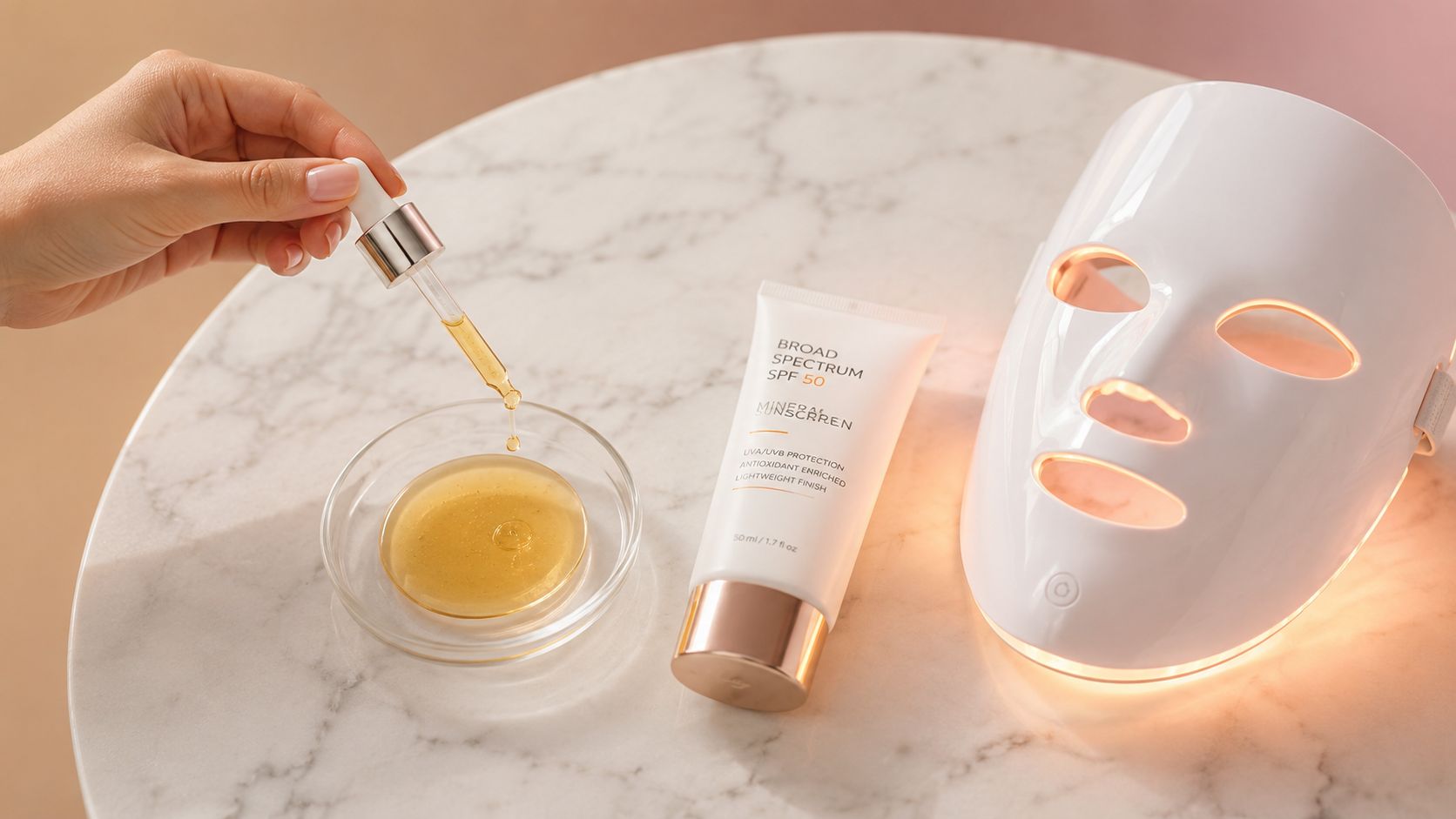
Injectables do the heavy lifting, but good skin care keeps the result looking better between visits. The Barb N.P. LED Facial Mask is one device worth considering because it is wireless, made for a comfortable fit on the face, and has 3 lighting settings for different treatment goals. Used consistently, it helps you keep your skin looking polished while you wait for the next injectable session.
At-home care also changes how often you feel tempted to book extra in-office fixes. If your skin looks calmer, brighter, and better maintained, you are less likely to spend on minor concerns that could have been handled with a steady routine. That is the smarter way to protect the money you already put into the treatment.
Spend on the injectable plan first, then support it with a routine you can consistently maintain.
Making Your Decision with Confidence
A liquid facelift makes sense when you want volume restoration, line softening, and a faster recovery than surgery can offer. It does not make sense if you need dramatic lifting or are shopping only for the cheapest quote. The right decision comes from matching your goals to the amount of product your face needs.
Use three filters. First, make sure the injector can tell you the syringe count and neuromodulator units. Second, compare the plan against surgery, because surgical facelift fees are much higher but the longevity is different. Third, decide whether you're comfortable paying for ongoing maintenance, not just the first appointment.
If a quote is vague, keep asking until it isn't. If the provider can't explain why you need the product amount they recommend, move on. A good liquid facelift consult should leave you informed, not confused.
BotoxBarb offers injectable treatments, payment options, and at-home support products that fit into a real facial rejuvenation plan, not just a one-time appointment. If you're mapping out your own liquid facelift budget, visit BotoxBarb to compare treatment and skincare options in one place.