Best Skincare for Dark Spots a 2026 Evidence Guide
You're standing in the bathroom, the breakout is finally flat, and the brown mark it left behind is still there a week later. That's the part nobody warns people about. Dark spots aren't one thing, so the best skincare for dark spots starts with naming the problem correctly, then matching the routine to the cause, whether that's post-inflammatory hyperpigmentation, melasma, or sun damage.
Why Dark Spots Are Three Problems in One
A client will often point to one stubborn patch and call it “a spot,” but treatment gets more precise when you sort that spot into the right bucket. A mark left after acne is not the same as the broader cheek patch that shows up with hormones, and neither behaves exactly like the flat, sun-driven spot on the temple. The practical difference matters because the best skincare for dark spots is really a triage plan, not a shopping spree.
Post-inflammatory hyperpigmentation, melasma, and sun spots can overlap on the same face, especially if the skin has seen both inflammation and UV exposure. That's why one serum can look brilliant for one person and underwhelming for another. The 12-week study on a targeted dark-spot treatment showed that measurable improvement can begin by Week 2, with dark-spot size improving from Week 4 through Week 12, which is a good reminder that real change usually takes steady use over time (study).
What clients usually notice first
The first win is often subtle, not dramatic. A spot looks a little less sharp around the edges, or the overall tone looks more even before the mark is fully gone. That's the kind of progress people miss when they switch products too fast.
Practical rule: if the mark is getting darker every time you skip sunscreen, the routine isn't failing, it's being outvoted by UV.
The right plan also depends on skin tone. Melanin-rich skin tends to hold pigment longer after irritation, so a harsh routine can create more discoloration than it removes. That's why the rest of this guide leans on a simple idea, prevention and correction work together, and the routine has to fit the spot in front of you, not the trend on social media.
How Pigmentation Actually Works in Your Skin
Think of melanocytes as tiny pigment factories sitting in the epidermis. They take cues from the outside world, then send out melanin as a protective response. UV light, hormones, and inflammation are the main supply orders that tell those factories to speed up production, and once the pigment is dropped into nearby skin cells, the area starts looking darker.

A pimple is the easiest example to picture. The breakout heals, the inflammation settles, but the pigment signal lingers, so a brown echo remains where the bump used to be. In a different person, months of sun exposure can create a patchy pattern across the cheeks or forehead, and in hormonal melasma the trigger is more persistent, which makes the pigment harder to calm down.
Why the trigger matters
The biology is simple enough to guide daily choices. If UV is the driver, the routine has to lean hard on sunscreen and brightening support. If inflammation is the driver, the routine needs to calm the skin first, because irritation can keep the pigment signal turned on.
The American Academy of Dermatology makes sunscreen the foundation of dark-spot care and recommends broad-spectrum sunscreen, including tinted formulas with iron oxide for darker skin tones, plus reapplication every 2 hours and after swimming or sweating (AAD). It also lists azelaic acid, glycolic acid, kojic acid, retinoids, and vitamin C as ingredients that can fade existing dark spots, which is why a good routine is really prevention plus correction, not one miracle bottle.
Melanin-rich skin deserves one more note. Because pigment can deepen after irritation, the gentlest effective routine often wins. That means choosing actives carefully, spacing them out, and resisting the urge to stack everything at once.
Matching the Right Active to Your Type of Spot
The fastest way to waste time is to treat melasma like post-acne marks, or sun spots like a breakout aftermath. The better move is to match the active to the cause, then keep the routine boring enough to stick with. That's where the best skincare for dark spots becomes practical instead of confusing.
Active Ingredients by Dark Spot Type
| Spot type | First-line active | Supportive active | Avoid if sensitive |
|---|---|---|---|
| PIH | Azelaic acid or niacinamide | Tranexamic acid | Heavy exfoliation |
| Melasma | Tranexamic acid | Gentle vitamin C, tinted sunscreen | Over-exfoliation and irritation |
| Sun spots | Retinoids or exfoliating acids | Vitamin C | Layering too many strong actives |
| Melanin-rich skin | Barrier-friendly actives and tinted SPF | Tranexamic acid, niacinamide | Aggressive scrubs and frequent acid stacking |
PIH usually needs anti-inflammatory support first, because the pigment followed irritation. Melasma often responds best when the plan is gentle, consistent, and obsessive about UV and visible-light protection. Sun spots, by contrast, often benefit from more texture-driven renewal, which is where retinoids and exfoliating acids earn their place.
Clinical shortcut: if the skin stings, peels, or looks red all the time, the routine is probably too aggressive for the amount of pigment you're trying to move.
A second clinical consensus also points to the same ingredient group. A Delphi study of cosmetic dermatologists identified azelaic acid, glycolic acid, niacinamide, retinoids, and vitamin C as recommended ingredients for dark spots, which supports a layered approach instead of a one-product fantasy (Delphi consensus).
The contrarian part matters most for melanin-rich skin. More actives don't automatically mean better results, especially if irritation is the thing triggering more pigment. A calm barrier, good sunscreen, and the right active for the right spot usually beat a harsh routine every time.
The Six Actives Worth Your Money
A good dark-spot routine starts with the right active for the right stain. Tranexamic acid, niacinamide, vitamin C, retinoids, azelaic acid, and exfoliating acids cover most of the terrain, but they do different jobs, and the skin pays for it when they are used out of order. A practical comparative buying guide points to the same ingredient families for hyperpigmentation, while also showing why packaging matters for sensitive formulas. Oxygen and light can break down actives such as L-ascorbic acid, kojic acid, and alpha-arbutin, so opaque, airless containers are worth paying attention to, and low-pH vitamin C does not always fit neatly into a layered routine (comparative buying guide).
The pigment-correction workhorses
Tranexamic acid is the quiet overachiever. It suits discoloration that keeps returning, especially when the skin is prone to flare-ups and you need an ingredient that plays well with the rest of the routine. Niacinamide is the compatibility champion, useful for acne-prone, reactive, or easily irritated skin because it supports the barrier while you work on pigment. Vitamin C belongs in the morning because it brightens and adds antioxidant support, but stable packaging and a calm routine matter if the formula is going to hold up.
Azelaic acid earns its place when redness and pigment show up together. Retinoids are stronger for stubborn texture and long-term turnover, but they can be drying, so they are not the first choice for every face. Glycolic and lactic acids can lift surface pigment, though they are also the easiest to overuse.
The pairing rules stay simple in practice. Tranexamic acid and niacinamide make the safest all-purpose duo. Vitamin C works best when the rest of the routine is steady. Retinoids and exfoliating acids need separate nights, because irritation is not a shortcut to clearer skin.
A useful product example
For a clinical-style pigment serum, SkinCeuticals Discoloration Defense Serum 30ml fits as a day-side anchor because it sits in the ingredient family most associated with discoloration support. In practice, it layers cleanly under moisturizer and sunscreen across skin types, as long as the rest of the routine does not push the barrier too hard.
If you want a tighter ingredient breakdown, the practical guide on best ingredients for hyperpigmentation is worth reading alongside this routine. The takeaway is that compatibility matters as much as potency.
A Daily Routine That Actually Fades Spots
A good dark-spot routine doesn't feel busy. It feels repeatable. The morning protects, the evening treats, and the skin gets enough breathing room that you're not creating new pigment while trying to fade the old.

Morning and night without the guesswork
In the morning, start with a gentle cleanse, then apply a pigment-correcting serum before moisturizer and SPF. This is the right place for SkinCeuticals Discoloration Defense Serum 30ml if you want a day-side anchor, because the routine's job is to support correction without provoking irritation. If you use vitamin C, keep the formula stable and let it dry before layering anything heavier.
At night, pick one lane. Use a retinoid on some evenings, an exfoliating acid on other evenings, and keep barrier repair in the routine either way. If your skin is sensitive, slip in niacinamide or tranexamic acid on the calmer nights instead of trying to force more exfoliation.
Barrier first: if a product leaves you raw, tight, or itchy, the pigment problem usually gets worse before it gets better.
Where LED fits in
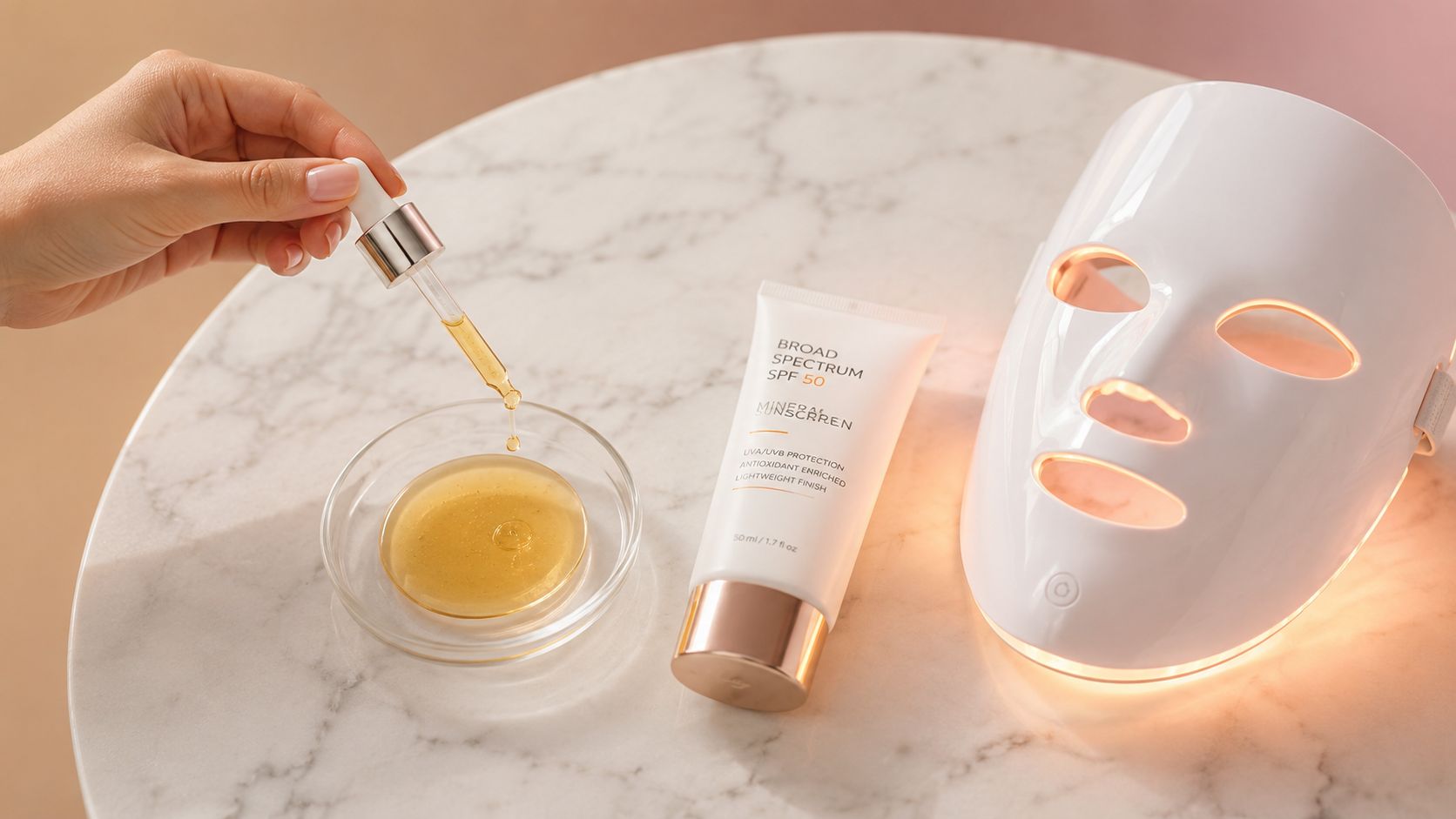
An at-home device can fit into this rhythm without complicating it. The Barb N.P. Facial LED Mask is wireless, comfortable on the face, and includes three lighting settings for different goals, red for collagen and recovery, blue for clarifying, and near-infrared for deeper repair. It works best as a support tool on non-irritated skin, not as a replacement for sunscreen or pigment actives.
For clients who want a broader at-home option, BotoxBarb also carries a practical device and skincare mix, including LED and clinical-grade topicals, so the routine can stay cohesive instead of random.
The 12-week study on a targeted dark-spot treatment found measurable improvement by Week 2, with dark-spot size improving from Week 4 through Week 12 (study). That timeline tracks with what happens in real life, the skin changes first, then the spot softens gradually. The routine only works if it's calm enough to repeat for months, not just exciting for a week.
Why Sunscreen Is the Key to Success
No serum outworks a skipped sunscreen day. UV exposure keeps pigment production active, and visible light matters too, especially in melanin-rich skin where tinted formulas with iron oxide help block the light that can deepen discoloration. If the goal is the best skincare for dark spots, sunscreen is not the last step, it is the step that makes the rest of the routine worth repeating.
A strong daily option is SkinCeuticals Advanced Brightening UV Defense Sunscreen SPF 50. It gives broad-spectrum protection, includes brightening support, and wears well enough to stay on through a normal day. If a formula leaves a white cast, people use it less, and a perfect product that sits in the drawer does nothing for pigmentation.
How to use it without messing up the finish
Apply it after moisturizer, then let it set before makeup. Reapply every two hours when you're in active sun, and reapply after swimming or sweating, following the American Academy of Dermatology's guidance (AAD). That same guidance also supports tinted broad-spectrum formulas with iron oxide for darker skin tones, which matters when visible-light pigmentation is part of the picture.
For a practical overview of ingredients and labels, the guide on how to choose sunscreen is a useful companion read. For readers who like pairing sunscreen with soothing support, maximum sun protection with aloe fits naturally beside a brightening plan.
The trade-off is simple. You can use the strongest active on the shelf, but if UV keeps landing on the skin all day, the mark keeps getting reinforced. Prevention is half of treatment, and sunscreen is the part that protects the progress you're paying for.
When to Step Up to Clinical Treatments
At-home skincare handles a lot, but some spots need more than pigment control. Once the skin has plateaued, or the discoloration is deeper, a clinic-based approach can make sense. BeautyGuide's overview of pigmentation treatment options is a helpful way to compare the broader options before booking.
Chemical peels are usually the first escalation for surface pigment because they help lift the top layers where discoloration sits. Microneedling with PRP is a stronger choice when the skin needs remodeling along with tone improvement, especially if the surface issue comes with texture. Laser or IPL can be considered for deeper or sun-driven spots, but those options need a careful assessment of skin tone and pigment history.
What a smart escalation path looks like
The home routine still matters before and after every procedure. Pre-treating with pigment-safe actives can make the skin more predictable, and a solid sunscreen habit helps keep the results from getting lost to new UV exposure. If a spot changes shape, bleeds, or starts to look different from the rest of your pigmentation, that's not a skincare problem anymore, it's a provider visit.
Downtime and cost vary by treatment, and the right option depends on the spot type, skin tone, and how much irritation the skin can tolerate. A clinic should not replace the routine, it should build on it.
For readers comparing clinical age-spot options specifically, the internal breakdown on laser for age spots removal gives a clearer look at when laser is worth the step up. In practice, the best outcomes usually happen when the home plan is already stable and the skin is not actively inflamed.
Your Dark Spot Plan and When to Call a Provider
If you want a simple rule you can screenshot, use this. Identify the spot type, pick two stack-safe actives, commit to 12 weeks, wear tinted broad-spectrum SPF every day, and add LED two to three times per week when your skin is calm enough to tolerate it. That's the kind of routine that gives pigment time to respond instead of bounce around.

Call a provider if the spot grows, itches, bleeds, or ignores consistent care after three months. That's the point where the plan needs a clinical eye, not another serum swap. BotoxBarb brings together medical-grade products, pigment-friendly routines, and in-clinic options, so you can move from boutique skincare to treatment without starting over.
If you're ready to build a dark-spot routine that fits your skin, visit BotoxBarb for medical-grade skincare, sunscreen, and LED support that can work together instead of against each other. If your pigmentation has been stubborn for months, book a consult and let a provider help you choose the right path from home care to clinic care.