Hair Growth Supplements for Women Over 50: 2026 Guide
The first thing many women notice isn't the mirror, it's the shower drain. The part looks a little wider, the ponytail feels smaller in your hand, and the hair on the pillow starts feeling like a daily accusation. For women over 50, that moment usually isn't vanity, it's the first sign that midlife hair biology has shifted, and the supplement aisle has already started shouting at you before you've had a chance to ask the right questions.
The problem is that most advice starts with a bottle and works backward. That's backwards care. For hair growth supplements for women over 50, the smarter order is lab work, cause, timeline, and only then a supplement that matches what's going on. The evidence base is real, but it's narrower than marketing suggests, and the women who get the best results usually treat supplements as one part of a longer plan, not a miracle fix.
Why Midlife Hair Changes Feel So Sudden
A woman can keep the same shampoo, the same brush, and the same part for years, then notice her hair has changed faster than she expected. The drain looks fuller. The crown feels flatter. The ponytail no longer fills the hand the way it did. What changed is not only the hair itself, but the follicle environment around it, which can shift quickly during perimenopause and menopause.
What women usually notice first
The first signs are usually practical, not dramatic. The part line opens up, the ponytail gets smaller, and bright bathroom light makes the crown look thinner than it used to. That pattern is common in midlife, and it is part of why oral hair-support products are aimed so heavily at women in the menopause years (PubMed review).
That also explains why the category feels crowded. Brands speak to a real concern, but they often skip the question that matters most, whether the thinning is being driven by hormone change, a deficiency, genetics, thyroid issues, or a combination of those factors.
Practical rule: if the change feels sudden, do not assume it is just aging. Sudden-looking hair loss in midlife often means more than one factor is acting at once.
Why the market feels so noisy
Consumer marketing tends to use one simple message, hair loss is common, so a supplement must be the answer. The clinical picture is more complicated. Reviews of female hair loss show that it becomes more common with age and is especially frequent after menopause. A separate clinical review reports that by age 60, many women are living with some degree of hair loss, and another review places female pattern hair loss in a substantial share of women over 60 (PubMed review, PubMed review).
That prevalence explains why so many formulas are aimed at post-menopausal women. It also explains why you see so many bottles promising thicker-looking hair without naming the cause they are trying to address. A formula can be well made and still be the wrong fit for the woman taking it.
The more useful question is simple. What type of thinning is this, and what does the timeline suggest? The answer changes whether a supplement is worth trying, whether lab work should come first, and whether you should be thinking about hormone-related hair loss treatment such as BotoxBarb's guide to hormonal hair loss treatment alongside scalp care, nutrition, and other midlife habits.
How Menopause Reshapes Hair Biology
Estrogen acts like the follicle's maintenance crew. It helps hair stay in its growth phase longer, and when estrogen declines, that steady support becomes less reliable. Hair doesn't fall out in one dramatic wave for most women, it cycles differently, more hairs spend time resting, and the result is a thinner, slower-looking head of hair.
The growth cycle in plain English
Hair follicles move through three basic phases. Anagen is the growth phase, catagen is the short transition phase, and telogen is the resting and shedding phase. In midlife, the growth phase often shortens and the rest phase can feel longer, which means less time spent building length and density before a strand is released.
That's why the same hair can suddenly seem less “full” even when you're not losing clumps. It's not only about how much hair falls, it's also about how long each follicle stays active before it lets go.
Pattern thinning versus diffuse shedding
The part line and temples often thin first in female pattern hair loss, while the frontal hairline may stay relatively spared. That's different from diffuse shedding, which tends to show up all over the scalp and is often triggered by hormones, stress, illness, nutritional drift, or thyroid issues. If you want a deeper look at overlapping causes, the overview of hair loss causes from thyroid is a useful clinical primer.

The practical takeaway is simple. Diffuse shedding often responds better to correcting an internal trigger, while pattern thinning usually needs more than a bottle. That distinction determines whether supplements make sense at all, and it's why a midlife hair plan should start with the cause, not the product name.
Women also need a realistic roadmap for related evaluation, and a helpful clinical overview is the article on hormonal hair loss treatment, which fits neatly with the kind of lab-first thinking that saves time and money.
The Ingredients With Clinical Evidence
A lot of bottles use the same cast of characters, biotin, collagen, iron, vitamin D, B12, zinc, saw palmetto, and botanical blends. The label may look reassuring, but the ingredient list alone does not tell you whether the formula fits your hair loss pattern or whether it addresses the root cause of shedding.
A better starting point is the cause. If the thinning follows low iron, low vitamin D, thyroid drift, or another measurable gap, the formula needs to match that problem. If the pattern is more consistent with menopause-related hair change or female pattern thinning, a supplement may help support the hair cycle, but it is unlikely to carry the whole plan by itself. For readers comparing products after labs and a pattern review, the best hair supplements for women guide can help narrow the field without pretending every bottle works the same way.
What tends to help, and when
The strongest pattern in the evidence is conditional benefit. The systematic review of nutritional interventions for alopecia found 30 eligible studies, including 17 randomized clinical trials, and concluded that commercial oral nutraceuticals can produce modest but significant improvements in hair density, thickness, and shedding versus placebo (systematic review). That same review also noted that biotin has little evidence of benefit in healthy individuals without documented deficiency, and it can distort lab testing (systematic review).
That is the filter I use in clinic. If a supplement is built around biotin megadosing and your labs are normal, the formula may be doing more for marketing than for your hair.
Ingredient by ingredient
Iron, vitamin D, and zinc are the ingredients I look at first when a midlife patient has documented deficiency or a strong suspicion of one. They are not magic, but they are biologically plausible and often useful when the gap is real. The International Society of Hair Restoration Surgery notes that routine use is supported mainly for vitamin D, iron, and vitamin C, while biotin lacks evidence in people without deficiency and can interfere with lab interpretation (ISHRS nutrition guidance).
Collagen peptides, including marine collagen, are popular because they are easy to market and easy to take. Some women like them because they may improve the feel or appearance of hair, but the more practical question is whether the formula includes the studied dose and whether the rest of the diet already supplies enough protein.
B12 matters most when there is low intake, absorption trouble, or a lab result that supports replacement. Saw palmetto and similar botanicals are plausible for hormone-patterned thinning, but the evidence base is still thinner than many labels imply. I treat them as add-ons, not the center of treatment.
Supplements help most when they correct a deficiency, not when they guess.
A practical way to read a label is to ask three things. Does it address a documented deficiency or a plausible gap? Does the formula list actual doses instead of hiding behind a proprietary blend? Does it include ingredients that can complicate lab work, especially biotin?
Women who want a brand-level example often see Nutrafol Women's Balance 45+ used in midlife hair discussions, and BotoxBarb stocks Nutrafol among its medical-grade brands. That does not make it the right choice for every woman. The question is still whether the product matches the likely cause of thinning.
Lab Tests to Ask Your Clinician For First
A supplement decision is only as good as the data behind it. If you skip lab work, you're usually guessing between three different problems at once, deficiency, hormonal shift, and female pattern thinning. That's expensive, and it often leads to the wrong bottle.
The panel that actually changes decisions
The most useful midlife hair workup usually starts with ferritin, not just hemoglobin, because stored iron can be low even when a standard blood count looks fine. Add 25-hydroxyvitamin D, TSH with thyroid follow-up as needed, B12, and zinc. In some women, a basic hormone read can also help clarify whether the pattern tracks more with menopause-related change than with something nutritional.
Here's a practical way to think about each test.
| Test | Why it matters for hair | Typical target range |
|---|---|---|
| Ferritin | Reflects iron stores that follicles depend on | Ask your clinician what's appropriate for you |
| 25-hydroxyvitamin D | Low levels are common and can overlap with shedding | Ask your clinician what's appropriate for you |
| TSH and thyroid follow-up | Thyroid imbalance can mimic or worsen hair loss | Ask your clinician what's appropriate for you |
| B12 | Low B12 can contribute to fatigue and overall hair quality issues | Ask your clinician what's appropriate for you |
| Zinc | Deficiency can affect follicle turnover and scalp health | Ask your clinician what's appropriate for you |
How to use the results
A normal lab report is not the same thing as an ideal hair-support range. That's why interpretation matters. A clinician can tell the difference between a number that's technically in range and one that's low enough to matter for shedding or regrowth.
Bring this question list: Which labs should I order first, what result would change treatment, and which findings mean I should see dermatology instead of buying a supplement?
The best follow-up question is simple, what's the cause most likely to be in my case? If the answer is iron deficiency, you treat that differently than thyroid dysfunction or female pattern thinning. And if multiple causes are present, you stop expecting one capsule to do all the work.
Realistic Timelines for Visible Results
The quickest way to end up frustrated is to judge a hair supplement at week four. Hair shifts slowly because follicles cycle slowly, and the stronger clinical studies measure change over months rather than days. That feels inconvenient, but it also keeps you from paying for products that have not been given a fair trial.
What the clinical timelines show
In one randomized, placebo-controlled trial, the treated group's mean terminal hair count rose from 271.0 at baseline to 571 after 90 days and 609.6 after 180 days, while placebo stayed near baseline, from 256.0 to 245.0 and 242.2 (randomized trial). In a separate long-term study in peri- and post-menopausal women, total hair counts increased by 11.7% over 12 months, terminal hair counts improved by 13.4%, and shedding decreased by 43.2% by day 180.
A different six-month randomized, double-blind, placebo-controlled trial in peri-, menopausal, and postmenopausal women reported statistically significant increases in terminal and total hair counts by day 90 and day 180, with hair shedding falling by 32.41% at day 180 versus placebo and good tolerability (JDD study).
What those numbers mean in real life
If thinning is driven by deficiency, some women notice early change in 2 to 4 months once the deficiency is corrected. If thinning is pattern-related or more multifactorial, a better expectation is 6 to 12 months of steady use, and the gains may be modest rather than dramatic.
A separate clinical report documented a mean increase in terminal hairs from 68.1 at day 0 to 77.2 at day 360, which the authors described as a 13.4% improvement after 12 months, with no reported adverse events (Dermatology Times summary of the clinical study). That kind of result matters because it shows how a reasonable product can still produce a subtle outcome. It also helps patients set expectations before they spend money.
The stopping rule is practical. If documented deficiencies have been corrected, the product has been used consistently, and nothing has shifted by month six, supplements alone probably are not the answer. Recheck the diagnosis instead of assuming a different bottle will change the outcome. For patients who also ask could supplements cause adverse effects, that question belongs in the same conversation, because tolerability and benefit need to be judged together.

How to Evaluate Supplement Quality Before You Buy
The supplement aisle is crowded with products that look clinical and behave like marketing. For women over 50, the concern is greater because you're more likely to have medication interactions, lab work in play, and a real hormonal component that won't be fixed by a trendy label.
Five quick filters that matter
Start with third-party testing. Look for products verified by groups like USP, NSF, or ConsumerLab, because independent testing helps reduce the chance that what's on the label and what's in the bottle are wildly different.
Then check the dose versus the trial dose. A formula can name the right ingredients and still underdose them. That matters especially for collagen products and broad “hair, skin, and nails” blends that scatter tiny amounts across too many ingredients.
After that, inspect the proprietary blend language. If the company hides per-ingredient amounts, you can't compare it to the evidence.
What to skip or question
Be careful with biotin-heavy formulas if you don't have a documented deficiency. The evidence for healthy people is weak, and biotin can distort lab results, which is a serious problem if your clinician is checking thyroid or cardiac markers (systematic review). Also watch for marine collagen products that don't disclose enough peptide detail, and for blends that use trendy herb names but provide no clear dosing logic.
If you want a clinical example of a studied blend, Nutrafol is one of the medical-grade brands stocked at BotoxBarb. That doesn't make it right for everyone, but it does make it a more thoughtful comparison point than a random pharmacy bottle.
The final quality check is simple. Ask whether the product is designed to correct a known problem or just to appeal to everyone with thinning hair. If it's the second one, keep walking.

A separate resource on could supplements cause adverse effects is worth reading if you've ever felt worse after starting a new bottle, because the wrong ingredient, dose, or interaction can muddy the picture.
Beyond the Pill
Supplements can help, but they rarely solve midlife hair loss by themselves. The strongest plans usually combine oral support with a follicle-directed treatment and a scalp routine that you can sustain.
The ladder of options
For women with female pattern hair loss, topical minoxidil is the first over-the-counter treatment most dermatologists consider because it has the longest track record. If the loss is hormonally patterned, some women also discuss spironolactone or, in selected cases, finasteride, though those are prescription decisions and not one-size-fits-all choices.
PRP, or platelet-rich plasma, is another option in clinical settings. It's more of a procedural route than a supplement route, and it usually makes sense when you want a physician-supervised adjunct instead of another capsule.
Low-level LED light therapy sits in a different lane. It doesn't replace medical care, but it can fit well into an at-home routine because it doesn't add drug interactions, and it's easy to keep consistent.
A practical device example
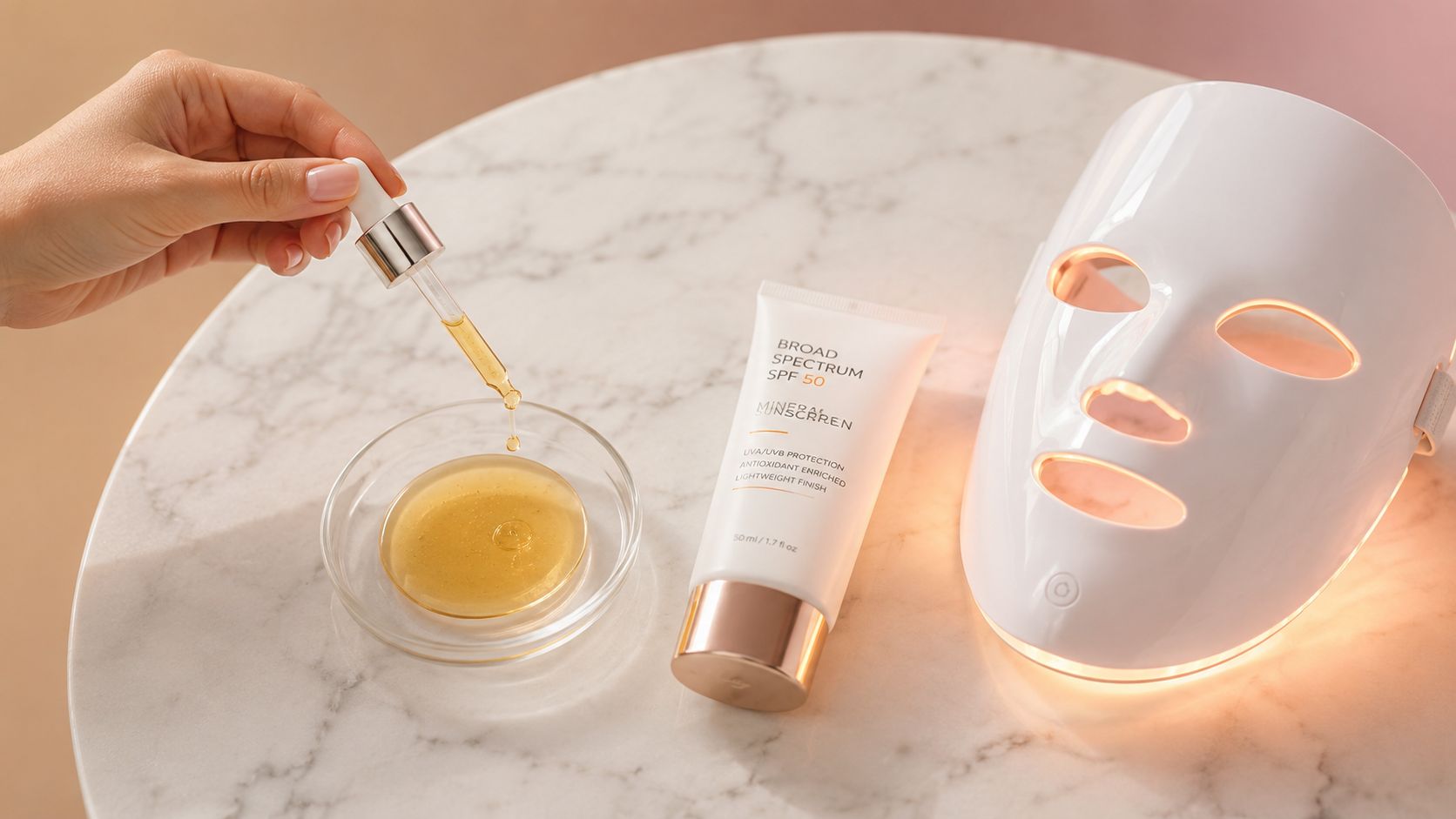
For women already managing skin and hair care together, the BARB N.P. Facial Mask is a reasonable at-home adjunct to consider. It's wireless, designed for comfortable wear, and offers three lighting settings for different treatment goals, including red light commonly used in routines focused on circulation and collagen support. Used thoughtfully, it's an add-on to an oral plan, not a substitute for diagnosing the cause of shedding.
BotoxBarb also keeps an internal reference on at-home hair growth treatments, which fits the same philosophy, combine tools rather than betting everything on one bottle.
Lifestyle floor: enough protein, decent sleep, gentler handling, less heat, and fewer tight styles. No supplement overcomes daily mechanical damage.
For readers who want a broader context on why midlife hair often needs a layered strategy, the guide from Venus Health Co. on postpartum hair loss is useful as a comparison point, because the same principle applies, internal support works best when the trigger is identified.
Your Clinician Conversation Checklist and FAQs

Bring these five questions to your appointment. Which labs should I order first, what ferritin level matters for hair, do I need dermatology, how should I layer supplements with any prescriptions, and does LED, PRP, or minoxidil belong in my plan? If you're already taking biotin, tell the clinician before testing thyroid labs.
FAQ, how long should I wait before stopping a supplement? Usually long enough to judge consistency and labs, not just a few weeks. FAQ, do women on hormone therapy need a different plan? Sometimes, because the cause of thinning may still be nutritional or pattern-based. FAQ, what if biotin is already affecting thyroid tests? Stop and tell your clinician before retesting. FAQ, which BARB N.P. mask setting fits the goal? Red is the most relevant for circulation-focused routines, while the other settings are for skin-tone and pigmentation goals.
BotoxBarb offers medical-grade support for women who want a more structured hair plan, from clinically studied supplements to at-home LED care and office-based PRP options. If you're ready to stop guessing and start with labs, timelines, and a realistic routine, visit BotoxBarb and choose the products and treatments that match the cause of your thinning, not just the label on the bottle.